
Introduction
Direct-to-Consumer (DTC) marketing is revolutionizing brand-consumer relationships, allowing businesses to engage with their audiences in unprecedented ways. By eliminating the middleman, brands can leverage personalized communication, targeted advertising, and real-time feedback. This approach not only enhances customer loyalty but also boosts profit margins.
However, as competition heats up, brands must consider: what innovative strategies can they adopt to capture attention and cultivate lasting connections in this dynamic marketplace? The answer lies in understanding the evolving needs of consumers and adapting accordingly.
Furthermore, successful brands are those that embrace change and prioritize direct engagement. By doing so, they not only stand out but also foster deeper relationships with their customers. Are you ready to explore how your brand can thrive in this new era of marketing?
Define Direct-to-Consumer (DTC) Marketing
is revolutionizing the way companies connect with their customers. By selling products directly to consumers, businesses bypass traditional retail channels, leveraging digital platforms to foster direct relationships. This model not only enhances engagement but also allows brands to .
thrive on , , and a strong focus on . These elements combine to create powerful that are essential in today’s digital landscape. For instance, brands can tailor their marketing efforts based on , leading to higher conversion rates and customer loyalty.
Furthermore, the ability to interact directly with consumers opens up opportunities for feedback and improvement, ensuring that brands can adapt swiftly to changing preferences. As we move forward, embracing DTC promotion is not just an option; it’s a necessity for businesses aiming to thrive in a competitive market. Are you ready to engage with your customers like never before?

Highlight Benefits of DTC Marketing
DTC marketing presents a wealth of advantages that can significantly impact your business:
- : Cultivating not only enhances loyalty but also fosters and . How can your brand leverage this to build ?
- : By eliminating intermediaries, companies retain a larger share of their revenue, leading to improved profit margins. Imagine the possibilities when you keep more of what you earn!
- Improved Data Gathering: Direct interactions provide invaluable , guiding product development and promotional strategies. What insights could you uncover to refine your offerings?
- : DTC companies can swiftly adapt their promotional strategies based on real-time feedback and data, resulting in more effective campaigns. Are you ready to respond to your audience's needs in real-time?
- Stronger : Engaging directly with consumers allows companies to craft a unique identity and narrative, setting them apart in a crowded marketplace. How does your brand story resonate with your audience?
In conclusion, embracing not only enhances customer loyalty and profit margins but also empowers companies to gather critical data and adapt swiftly to market demands. Are you prepared to take action and transform your marketing strategy?

Implement Proven DTC Marketing Strategies
To effectively implement DTC marketing strategies, consider the following:
- Utilize : Harness the power of platforms like TikTok, Instagram, and Snapchat, where user engagement is surging. Did you know that by 2026, social commerce is projected to account for $114.7 billion in the U.S. market? This statistic underscores the necessity of creating ads that resonate with your audience's interests and behaviors.
- : Ensure your website is user-friendly and mobile-optimized, complete with clear calls-to-action. In 2026, DTC marketing strategies implemented on optimized websites are expected to achieve significantly higher conversion rates than their less optimized counterparts. This improvement is driven by seamless purchasing experiences and fast loading times. Mid-market clothing labels are targeting gross profit margins of 60-70% by 2026, highlighting the critical importance of effective website optimization for profitability.
- Engage in : is essential for nurturing leads and cultivating client relationships. Automated keeps your brand top-of-mind, enhancing engagement throughout the client lifecycle with personalized content and exclusive offers.
- Incorporate : Encourage clients to share their experiences with your products. UGC not only enhances authenticity but also builds trust, as consumers increasingly rely on peer opinions over traditional advertising. Brands that utilize UGC often observe .
- Run : Leverage data analytics to identify audience segments and tailor promotions that resonate with specific groups. This targeted approach maximizes engagement and conversion rates, particularly when aligned with current trends and consumer preferences. The success of companies like Dollar Shave Club illustrates the effectiveness of DTC strategies in nurturing direct connections with clients and managing narratives.

Leverage Data for Strategic Optimization
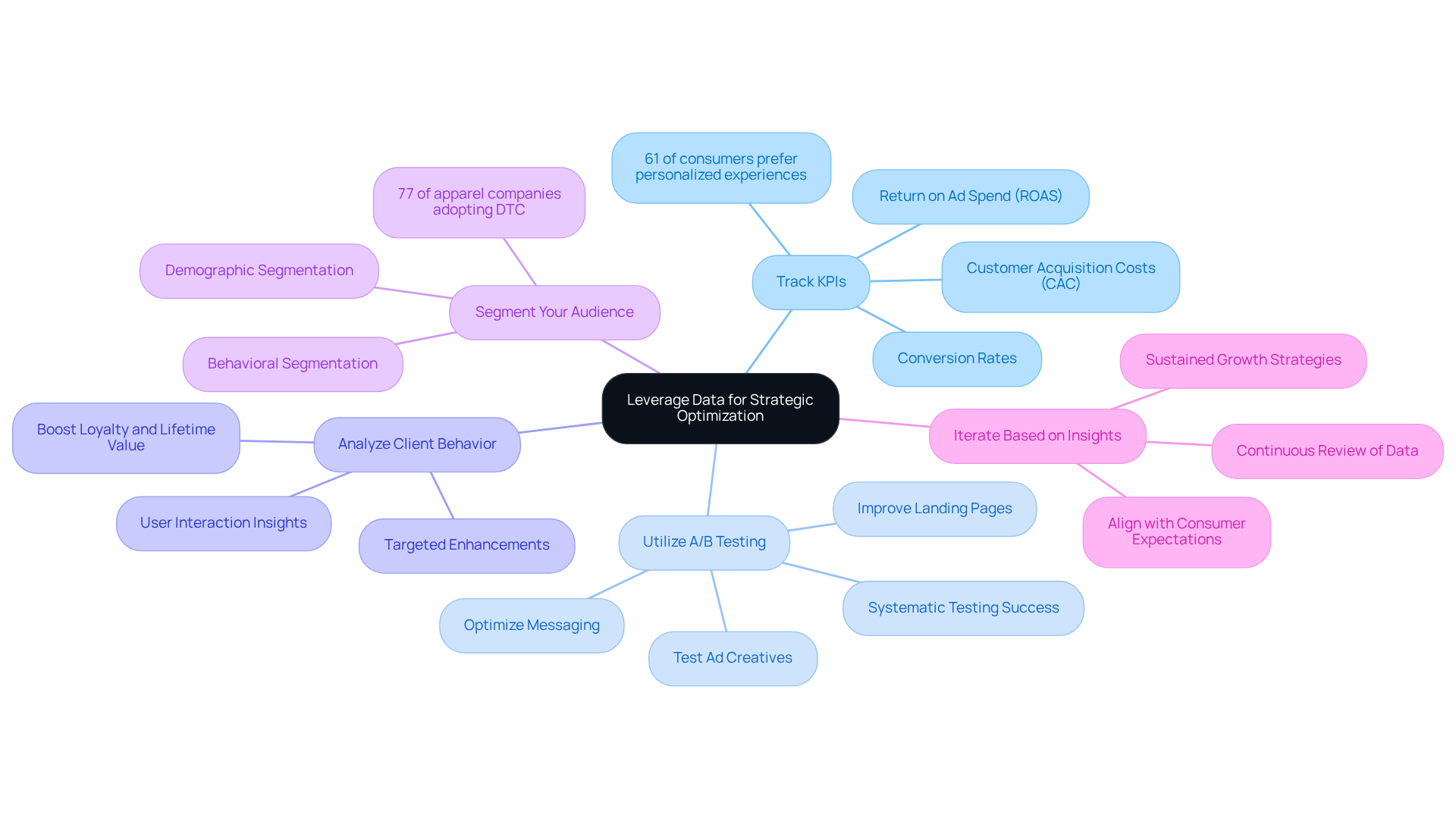
Data serves as the backbone of , empowering companies to make informed decisions and refine their strategies. To fully leverage its potential, consider these approaches:
- : Regularly monitor essential metrics like conversion rates, , and . These indicators offer a clear view of campaign effectiveness and pinpoint areas for improvement. Notably, 61% of consumers report that , underscoring the significance of tailored marketing efforts.
- : Implement A/B testing to explore various ad creatives, messaging, and landing pages. This method allows companies to discover which elements resonate most with their audience, leading to heightened engagement and conversion rates. Successful DTC companies have seen marked improvements in performance by fine-tuning their campaigns through systematic testing. For instance, , as noted by Camphouse, are better positioned to forge direct relationships with clients and enhance their promotional effectiveness.
- Analyze Client Behavior: Leverage analytics tools to gain insights into user interactions with your website and content. Understanding user behavior facilitates targeted enhancements that align with consumer preferences, ultimately driving superior results. As highlighted by Camphouse, helps brands cultivate direct, personalized relationships with their clients, boosting loyalty and lifetime value.
- : Divide your audience into distinct segments based on demographics, behaviors, and preferences. Tailoring promotional efforts to these segments increases relevance and effectiveness, fostering deeper connections with potential customers. With 77% of companies in the apparel sector shifting towards a , segmentation becomes crucial for standing out in a competitive landscape.
- Iterate Based on Insights: Continuously review data insights to refine your strategies. By aligning promotional efforts with evolving consumer expectations and market trends, companies can maintain a competitive edge and ensure sustained growth. The future of DTC marketing is poised for ongoing expansion, with companies harnessing data, technology, and innovative marketing channels to adapt to shifting consumer behaviors and preferences.
Create Engaging and Authentic Content
To create content that engages and resonates with your audience, consider the following strategies:
- : Craft narratives that connect emotionally with consumers. How do your products fit into their lives? By showcasing relatable stories, you can create a deeper connection with your audience.
- : Invest in , including videos and images. These elements capture attention and convey your message effectively, making your content more memorable.
- : Create campaigns that invite customers to share their stories or experiences. This fosters a sense of community and authenticity, enhancing engagement and loyalty.
- : Ensure that all content reflects your brand's values and personality. Consistency across all platforms not only builds trust but also reinforces your .
- : Stay updated on industry trends and cultural shifts. By creating timely and relevant content, you can ensure that your messaging resonates with your audience and meets their evolving needs.

Conclusion
Embracing Direct-to-Consumer (DTC) marketing is not just essential; it’s a game-changer for brands aiming to deepen customer relationships and excel in a competitive marketplace. This innovative approach empowers businesses to engage directly with consumers, fostering loyalty, enhancing profit margins, and leveraging invaluable consumer insights. The shift towards DTC marketing is far more than a trend; it signifies a fundamental transformation in how brands connect with their audience.
Key strategies highlighted in this article - such as personalized communication, effective use of social media, and the significance of data-driven decision-making - underscore the multifaceted advantages of DTC marketing. By optimizing websites for conversions, utilizing user-generated content, and executing targeted promotions, brands can dramatically boost their engagement and conversion rates. Furthermore, the ability to analyze consumer behavior and adapt based on insights ensures that companies remain agile and responsive to market demands.
Ultimately, the success of DTC marketing hinges on authenticity and the capacity to forge meaningful connections with consumers. Brands are urged to tell compelling stories, produce engaging content, and stay attuned to industry trends to truly resonate with their audience. By implementing these strategies, businesses can not only enhance their customer relationships but also position themselves for sustained growth in the ever-evolving landscape of DTC marketing.
Frequently Asked Questions
What is Direct-to-Consumer (DTC) marketing?
Direct-to-Consumer (DTC) marketing is a strategy where companies sell products directly to consumers, bypassing traditional retail channels. This approach leverages digital platforms to build direct relationships with customers.
What are the key elements of DTC marketing strategies?
Key elements of DTC marketing strategies include personalized communication, targeted advertising, and a strong focus on client experience, which together enhance engagement and customer loyalty.
How does DTC marketing improve customer loyalty?
DTC marketing cultivates direct relationships with consumers, leading to personalized experiences and targeted communication that enhance customer loyalty.
What financial benefits does DTC marketing offer businesses?
DTC marketing allows companies to eliminate intermediaries, which means they can retain a larger share of their revenue, resulting in improved profit margins.
How does DTC marketing enhance data gathering?
By interacting directly with consumers, DTC marketing provides invaluable consumer insights that can guide product development and promotional strategies.
In what way does DTC marketing enable agility in promotion?
DTC companies can quickly adapt their promotional strategies based on real-time feedback and data, leading to more effective marketing campaigns.
How does DTC marketing contribute to a stronger product identity?
Engaging directly with consumers enables companies to craft a unique identity and narrative, helping them stand out in a crowded marketplace.
Why is embracing DTC marketing considered necessary for businesses today?
Embracing DTC marketing is essential for businesses aiming to thrive in a competitive market, as it enhances customer loyalty, profit margins, and the ability to gather critical data.
List of Sources
- Define Direct-to-Consumer (DTC) Marketing
- admetrics.io (https://admetrics.io/en/post/marketing-trends-2026-dtc-ecommerce-70307)
- emarsys.com (https://emarsys.com/learn/blog/dtc-marketing-statistics)
- spxcommerce.com (https://spxcommerce.com/blog/direct-to-consumer-how-the-dtc-business-model-works)
- admetrics.io (https://admetrics.io/en/post/latest-marketing-news-2026-dtc-ecommerce-31794)
- Highlight Benefits of DTC Marketing
- admetrics.io (https://admetrics.io/en/post/latest-marketing-news-2026-dtc-ecommerce-31794)
- yotpo.com (https://yotpo.com/blog/dtc-brand-comparison)
- prophet.com (https://prophet.com/2020/11/dtc-marketing-benefits-best-practices-examples)
- spxcommerce.com (https://spxcommerce.com/blog/direct-to-consumer-how-the-dtc-business-model-works)
- shamrockcompanies.net (https://shamrockcompanies.net/blog/how-dtc-brands-build-customer-loyalty)
- Implement Proven DTC Marketing Strategies
- admetrics.io (https://admetrics.io/en/post/latest-marketing-news-2026-dtc-ecommerce-31794)
- spxcommerce.com (https://spxcommerce.com/blog/direct-to-consumer-how-the-dtc-business-model-works)
- wearetag.co (https://wearetag.co/insights/12-e-commerce-trends-for-dtc-brands)
- admetrics.io (https://admetrics.io/en/post/social-media-marketing-trends-2026-dtc-ecommerce-77372)
- ainvest.com (https://ainvest.com/news/social-media-niche-consumer-trends-reshaping-cpg-landscape-dtc-retailer-owned-brands-outperform-legacy-giants-2601)
- Leverage Data for Strategic Optimization
- admetrics.io (https://admetrics.io/en/post/marketing-efficiency-dtc-ecommerce-77582)
- camphouse.io (https://camphouse.io/blog/dtc-marketing)
- digiday.com (https://digiday.com/sponsored/the-state-of-dtc-marketing-2025)
- spxcommerce.com (https://spxcommerce.com/blog/direct-to-consumer-how-the-dtc-business-model-works)
- admetrics.io (https://admetrics.io/en/post/latest-marketing-news-2026-dtc-ecommerce-31794)
- Create Engaging and Authentic Content
- syntacticsinc.com (https://syntacticsinc.com/news-articles-cat/digital-marketing-trends-2026)
- The Power Of Storytelling In Modern Marketing (https://forbes.com/councils/forbescommunicationscouncil/2024/08/05/the-power-of-storytelling-in-modern-marketing)
- wordstream.com (https://wordstream.com/blog/2026-content-marketing-trends)
- The recipe for going viral in 2026—revamping social strategy for modern algorithms (https://adage.com/ad-age-video-podcast/insider/aa-going-viral-2026-strategy)