
Introduction
Understanding consumer behavior is crucial in a marketplace overflowing with choices. The B2C marketing funnel serves as an essential framework for brands navigating this complexity. This structured approach not only outlines the stages of a buyer's journey - from initial awareness to post-purchase advocacy - but also provides companies with the tools to enhance engagement and boost conversion rates.
However, as consumer expectations evolve and the digital landscape shifts, brands must ask: how can they effectively navigate each phase of the funnel to foster loyalty and drive sales? By delving into the intricacies of this framework, businesses can better position themselves to meet the demands of today's consumers.
Furthermore, leveraging data and insights can illuminate the path forward, ensuring brands remain relevant and competitive. Engaging with this framework not only enhances understanding but also empowers brands to take actionable steps toward success.
Define the B2C Marketing Funnel
The b2c marketing funnel serves as a crucial framework that outlines the buyer's journey, starting from the initial awareness of a product or service to the final purchasing decision. This model is divided into distinct stages:
- Awareness
- Interest
- Desire
- Intent
- Evaluation
- Purchase
- Loyalty
- Advocacy
Each stage represents a unique phase in the decision-making process. As potential clients progress through these stages, the number of individuals typically decreases, highlighting the necessity for companies to effectively engage and connect with their audience at every step.
Understanding the b2c marketing funnel is vital for brands, as it empowers them to tailor their marketing strategies and guide individuals seamlessly through their journey. This ultimately enhances conversion rates and fosters long-term loyalty. In 2026, the importance of this model is underscored by the evolving landscape of buyer behavior, where personalized experiences and trust-building are essential for successful engagement.
Furthermore, as brands adapt to these changes, they must consider how to leverage insights from each stage to refine their approach. By doing so, they not only improve their marketing effectiveness but also cultivate deeper relationships with their customers.

Contextualize the Importance of the B2C Marketing Funnel
In today's fiercely competitive landscape, understanding buyer behavior is essential, and the B2C marketing funnel serves as a cornerstone for this process. With digital marketing expanding the choices available to consumers, brands must not only capture attention but also adeptly guide potential clients through the B2C marketing funnel during their decision-making journey. By dissecting each phase of the B2C marketing funnel, companies can identify opportunities for improvement, refine their marketing strategies, and ultimately enhance the client experience. This deep understanding empowers brands to craft targeted campaigns that resonate with consumers throughout the B2C marketing funnel, leading to increased conversion rates and stronger loyalty.
Furthermore, consider how effectively your brand engages with its audience. Are you merely presenting options, or are you creating a compelling narrative that draws them in? By leveraging insights from buyer behavior, you can transform your marketing efforts into a powerful tool for connection and growth.

Outline the Stages of the B2C Marketing Funnel
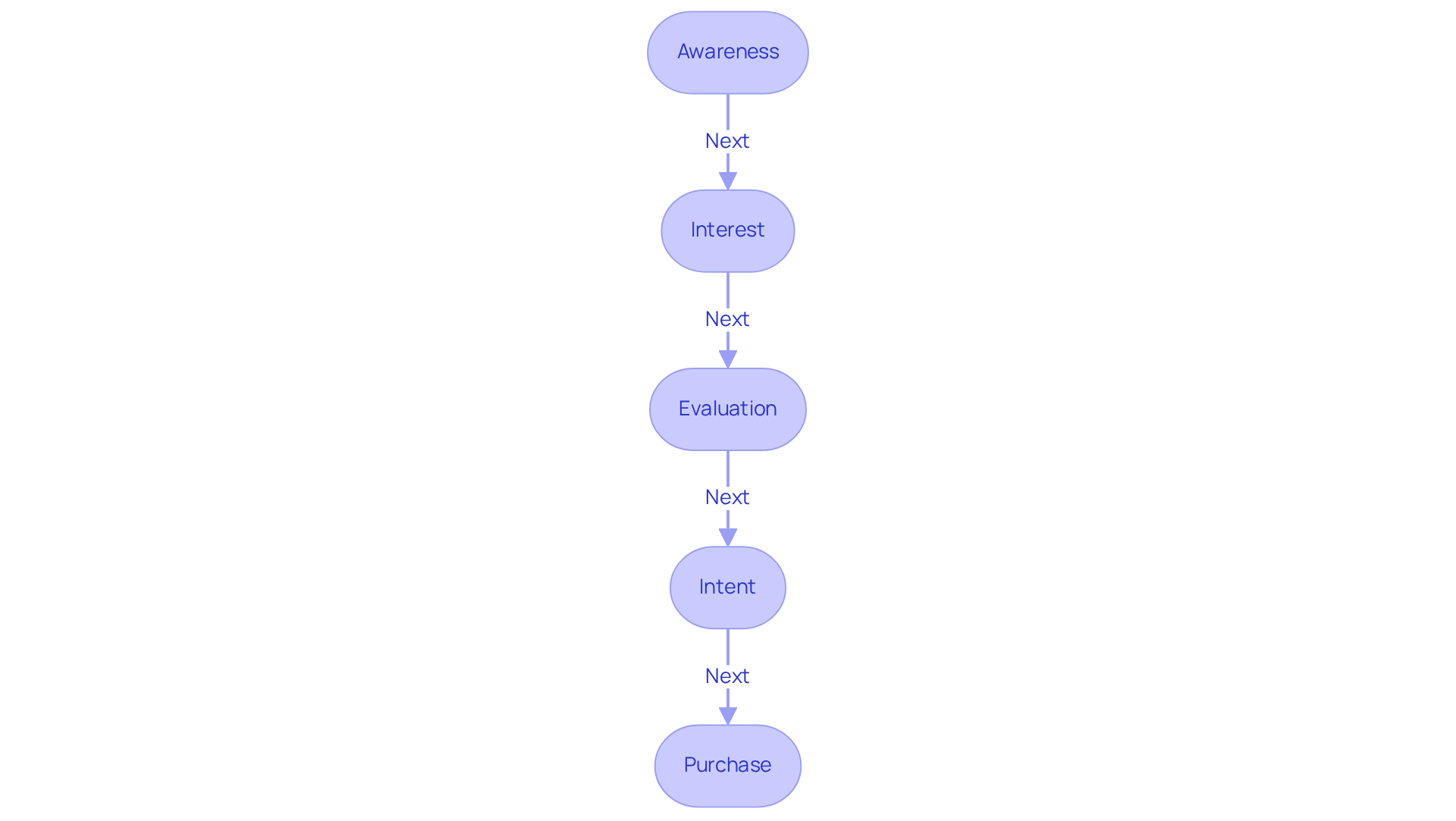
The B2C marketing funnel serves as a critical framework that includes several essential phases:
- Awareness
- Interest
- Consideration
- Intent
- Evaluation
- Purchase
In the Awareness phase, potential customers first discover a brand or product through various channels, including social media, advertisements, and word-of-mouth. This initial exposure is crucial; effective tactics like SEO-driven content and social media advertising can significantly boost brand visibility.
As individuals transition into the Interest phase, they actively seek additional details, engaging with material that piques their curiosity. This engagement is vital - nearly 48% of U.S. online shoppers abandon their carts due to unexpected costs. This statistic underscores the need for transparent pricing and informative content. Offering incentives, such as free shipping, can also help mitigate cart abandonment issues and improve conversion rates.
During the Evaluation phase, individuals compare options and assess various products or services. Tailored content and social proof, such as testimonials, play a significant role in enhancing credibility and influencing purchasing decisions. In fact, strategically placed client testimonials can increase conversions by 34%. Pages that include social proof, like testimonials or reviews, boast an average conversion rate of 12.5%, compared to 11.4% for those without.
The Intent phase is characterized by buyers showing a distinct interest in completing a purchase, often indicated by actions such as adding items to their cart. Following this, the Evaluation phase involves final assessments before making a decision, where factors like return policies and customer support significantly reassure potential buyers.
Ultimately, the Purchase phase marks the culmination of the process, where the buyer finalizes the transaction. Understanding these phases of the B2C marketing funnel enables brands to tailor their marketing strategies effectively, ensuring they connect with consumers at every stage of their journey and enhance conversion rates. Moreover, advancements in tracking technologies by 2025 have increased the accuracy of retargeting campaigns, further amplifying the effectiveness of strategies within the sales process.

Discuss the Implications of Each Funnel Stage
Each phase of the b2c marketing funnel carries distinct implications for marketing strategies. In the Awareness phase, brands must prioritize creating captivating content that not only captures attention but also sparks interest. This can be achieved through strategic use of social media platforms, influencer collaborations, and targeted advertising campaigns. For instance, leveraging user-generated content (UGC) can significantly enhance trust and engagement during this phase.
Transitioning into the Interest phase, it is essential to offer valuable information and captivating content that nurtures prospective clients, fostering a deeper connection with the brand. Personalization plays a vital role here; tailored content resonates more effectively with individual preferences, making it crucial for brands to understand their audience.
During the Evaluation phase, brands must enable informed decision-making by providing product comparisons, client testimonials, and thorough product details. Statistics indicate that brands such as Petco Mexico have experienced a 15% rise in regained customers through effective engagement strategies at this point. This highlights the importance of transparency and trust in the consumer journey.
The Intent phase emphasizes establishing a seamless shopping experience. Optimizing websites for effortless navigation and checkout is crucial to minimize friction and improve user satisfaction. Addressing potential consumer objections is vital during the Evaluation stage. This can be achieved through well-crafted FAQs, responsive client support, and showcasing positive reviews to build trust. Recognizing the challenges B2C marketers encounter in reaching and engaging clients amidst digital noise is essential, as these factors can influence the effectiveness of strategies employed.
Finally, in the Purchase stage, ensuring a smooth transaction process is key. Following up with post-purchase engagement, such as thank-you emails or loyalty program invitations, can significantly enhance customer satisfaction and encourage repeat business. By understanding these implications and implementing targeted strategies, brands can effectively guide consumers through the b2c marketing funnel, ultimately driving conversions and fostering long-term relationships.
Conclusion
Understanding the B2C marketing funnel is crucial for businesses that want to effectively navigate the complexities of consumer behavior. This framework not only outlines the stages from awareness to advocacy but also underscores the necessity of engaging potential customers at each phase. By recognizing the unique characteristics of each stage, brands can tailor their marketing strategies to enhance the customer journey and drive conversions.
Key insights throughout this discussion highlight the importance of crafting compelling narratives, providing transparent information, and optimizing the shopping experience. From the initial awareness stage to fostering loyalty post-purchase, each phase presents distinct opportunities for brands to connect with consumers. Strategies such as personalized content, social proof, and seamless navigation are vital in guiding potential clients through the funnel and ultimately encouraging repeat business.
In a landscape where consumer choices are abundant, leveraging the B2C marketing funnel is not just beneficial; it is essential. Brands must commit to deeply understanding their audience and continuously refining their approaches based on insights gained from each stage. By doing so, they can transform their marketing efforts into powerful tools for building lasting relationships and driving sustainable growth. Embracing this model empowers businesses to thrive in an ever-evolving marketplace, making the B2C marketing funnel an invaluable asset for success.
Frequently Asked Questions
What is the B2C marketing funnel?
The B2C marketing funnel is a framework that outlines the buyer's journey from initial awareness of a product or service to the final purchasing decision.
What are the stages of the B2C marketing funnel?
The stages of the B2C marketing funnel are Awareness, Interest, Desire, Intent, Evaluation, Purchase, Loyalty, and Advocacy.
Why is it important for companies to engage with their audience at every stage of the funnel?
It is important because the number of individuals typically decreases as they progress through the stages, so effective engagement is necessary to guide potential clients and enhance conversion rates.
How does understanding the B2C marketing funnel benefit brands?
Understanding the funnel allows brands to tailor their marketing strategies to guide individuals seamlessly through their journey, ultimately enhancing conversion rates and fostering long-term loyalty.
What trends in buyer behavior are influencing the importance of the B2C marketing funnel in 2026?
In 2026, the importance of the B2C marketing funnel is influenced by the evolving landscape of buyer behavior, where personalized experiences and trust-building are essential for successful engagement.
How can brands leverage insights from each stage of the funnel?
Brands can leverage insights from each stage to refine their marketing approaches, improve effectiveness, and cultivate deeper relationships with their customers.