How CTV creative helped PureGym win new members in New York
PureGym, the UK's largest gym chain, was opening 50 locations in New York and needed to build demand in a crowded market. MediaNug produced the connected TV creative for a 54 day Roku campaign combining awareness spots with interactive Action Ads. The campaign drove 963 attributed memberships at a $62.23 cost per acquisition.
- A 54 day Roku campaign drove 963 attributed membership purchases at a $62.23 cost per acquisition.
- The buy reached 390,000 viewers that PureGym's YouTube buy was not reaching.
- 80% of budget went to awareness video and 20% to retargeted interactive Action Ads.
Creative under wraps.
Some work speaks for itself.
Some stays between us and our clients.
The challenge
PureGym was opening 50 locations in New York City. Awareness of the brand in the US was still low, and the New York fitness market is crowded. The campaign had to introduce the brand to people who had never heard of it, then get them to buy a membership, inside a 54 day window.
The creative approach
MediaNug produced the campaign creative. The work was built for connected TV rather than adapted from paid social, so it had to hold up on a big screen in a lean back viewing environment and still carry a membership offer inside 15 and 30 second formats.
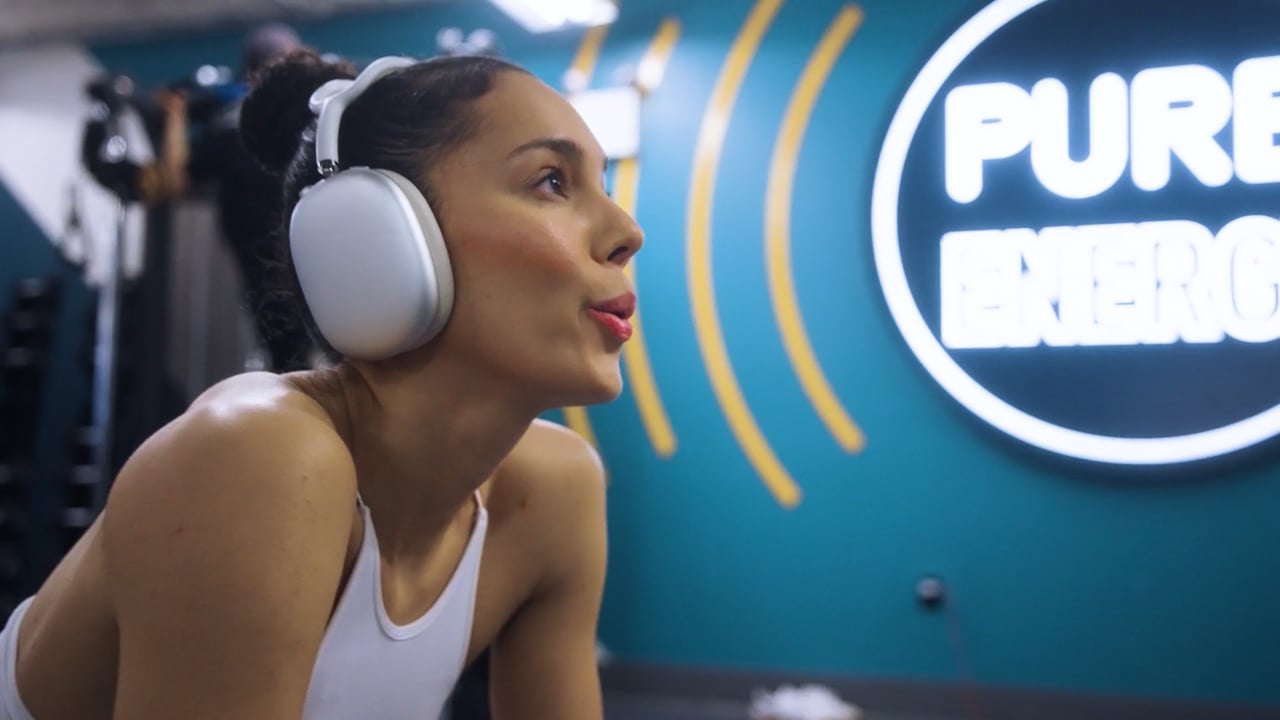
The spots sold the experience of joining PureGym. What the gym floor actually feels like, 24 hour access, new equipment, the scale of the space. They were shot as a commercial rather than as social content, because on a large screen alongside premium programming anything less polished reads as filler.
The performance requirement was built into that commercial from the start. Every spot still had to carry the membership offer and a reason to act now. That is what separates this from a brand film, and it is the difference from the Snapchat and TikTok work MediaNug produced for the same client, where creative is built to look native to a feed and survive a scroll.
The Action Ads cut needed a different build again. An awareness spot has room to establish a scene. A retargeted interactive ad does not, because the viewer already knows the brand and the only job is to get a response on the remote. That cut was paced faster throughout.
The media plan gave the creative two jobs. Awareness spots carried 80% of budget. Retargeted Action Ads carried the remaining 20%. The offer was 50% off the first month with no joining fee.
The results
Campaign performance reported by Roku Advertising. MediaNug produced the campaign creative. Campaign level results reflect the full media programme, not creative alone.
- 963 attributed membership purchases
- $62.23 cost per acquisition
- 149,276 page views
- 9,590 add to cart and payment info events
- 390,000 viewers not reached by the YouTube buy
- More than 7 million impressions
The campaign ran for 54 days against Peacock, The Roku Channel and Hulu inventory. It targeted adults 18 to 44 across 170 ZIP codes around the 50 new locations, with a frequency cap of 10 impressions per 7 days. Current members and anyone who had purchased in the prior 90 days were excluded.
Source: Roku Advertising, 26 August 2026.
This campaign was produced by MediaNug's performance creative team, which builds connected TV and paid social creative for brands entering new markets.
Related work: PureGym x Snapchat, a separate UK social campaign documented by Snapchat.
Frequently asked questions
Does connected TV advertising work for gyms?
It can, when the buy is tied to real locations and the creative carries a clear membership offer. PureGym ran connected TV across 170 ZIP codes around 50 new New York locations and recorded 963 attributed membership purchases in 54 days.
What is a reasonable cost per acquisition for a gym membership on CTV?
It varies by market and offer, so treat any single figure as a reference point rather than a benchmark. On this campaign the reported cost per acquisition was $62.23 for a membership sale, against an offer of 50% off the first month with no joining fee.
How is CTV creative different from paid social creative?
Paid social is watched close up on a small screen, often with the sound off, and it competes with a scroll. CTV is watched from across a room on a large screen with the sound on, and nobody can scroll past it. That changes pacing, type size, how early the brand appears and how the offer is stated.
What are Roku Action Ads and when should a brand use them?
Action Ads let a viewer respond on screen with the remote instead of reaching for a phone. They work best as a retargeting layer behind an awareness buy. On this campaign 20% of budget went to retargeted Action Ads and 80% to awareness video.
Can connected TV reach people that YouTube does not?
Often yes, because streaming apps and YouTube have different logged in audiences. Roku reported that this campaign reached 390,000 viewers who were not reached by PureGym's YouTube buy.