
Introduction
In the competitive landscape of digital marketing, grasping the intricacies of cost-per-click (CPC) on Facebook is not just beneficial - it's essential for optimizing advertising strategies. This article explores ten pivotal metrics that empower marketers to elevate their campaigns, uncovering opportunities for enhanced performance and cost efficiency.
With CPC rates fluctuating and industry benchmarks varying, brands face a pressing question: how can they effectively navigate these complexities to achieve their advertising goals?
Let's delve into the insights that can transform your approach.
MediaNug PerformanceNug Creative Packages: Optimize Your Facebook CPC
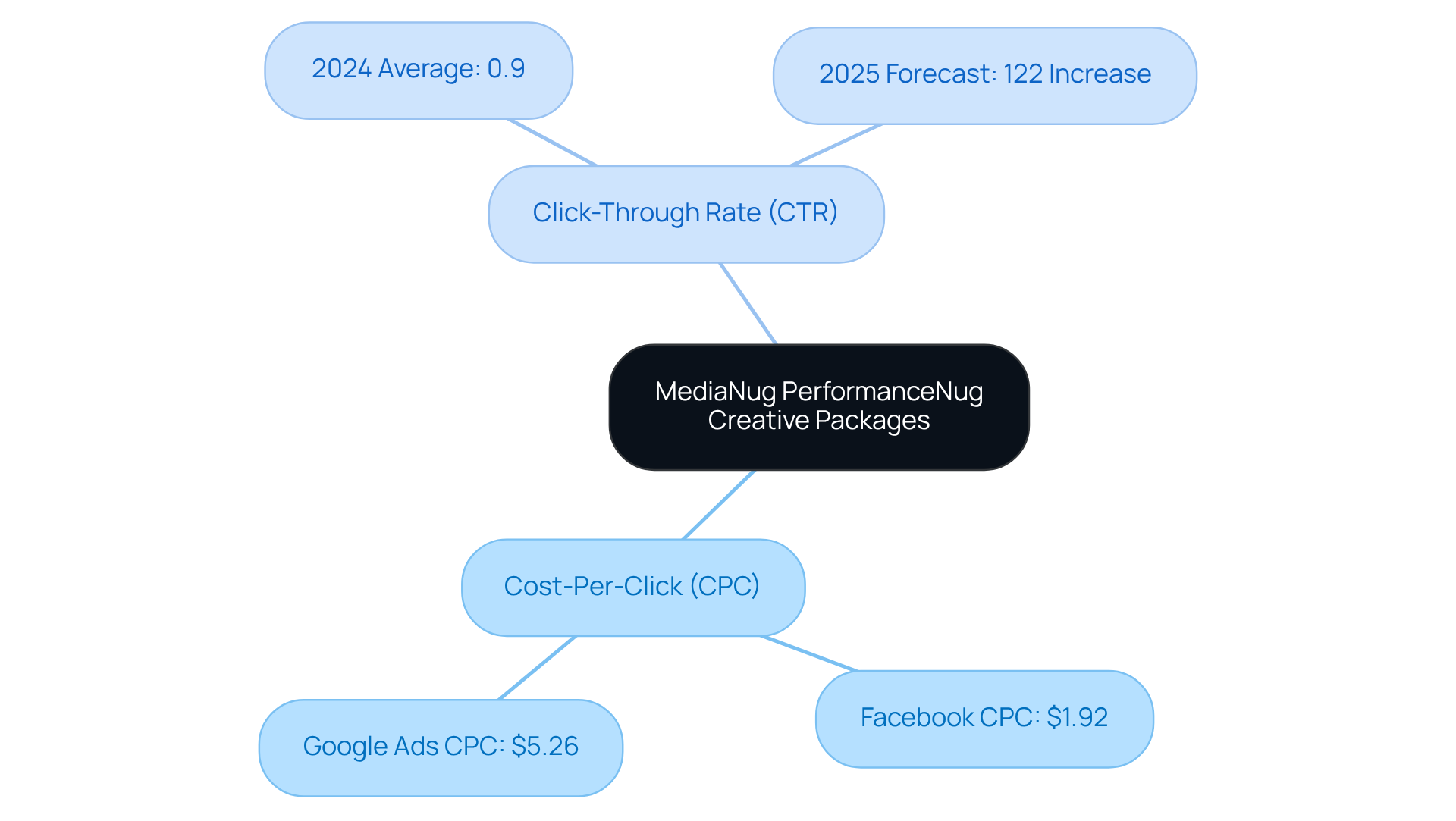
MediaNug's are expertly designed to elevate the creation of . By merging innovative planning with comprehensive data analysis, these packages pinpoint what truly resonates with target audiences. This approach leads to a remarkable reduction in . For instance, the average CPC for Facebook leads campaigns stands at $1.92, significantly lower than the $5.26 average for Google Ads. This stark contrast underscores the cost-effectiveness of strategies that utilize .
Marketers can leverage these insights to refine their targeting and creative elements, ensuring that every advertising dollar is strategically allocated for maximum impact. This systematic approach not only enhances ad effectiveness but also lays a solid foundation for , aligning with the latest trends in creative performance for Facebook ads in 2025. As industry experts highlight, personalized and compelling ad creatives are essential for . This further validates the effectiveness of in driving measurable results.
Moreover, the was 0.9%, with forecasts indicating a substantial increase of 122% in 2025. This projection emphasizes the potential for improved engagement through refined advertising strategies. Are you ready to harness these insights and transform your advertising approach? Engage with MediaNug today to explore how PerformanceNug can elevate your campaigns.
Average Cost Per Click (CPC) on Facebook: Key Metrics for Marketers
In 2025, the is around $1.05, indicating a slight decrease from previous years. However, this figure varies significantly based on several factors, including industry, audience targeting, and ad quality. For example, industries like retail and e-commerce often enjoy , while sectors such as healthcare may encounter increased costs stemming from stringent compliance requirements.
Marketers should leverage this benchmark to assess their own and identify areas for improvement. Understanding the is crucial for setting realistic budgets and expectations for project outcomes. Notably, brands that prioritize frequently achieve lower CPCs, as higher-quality ads resonate better with audiences, leading to enhanced engagement and conversion rates. In fact, ads utilizing dynamic creative optimization demonstrate 18.4% lower CPCs compared to standard format initiatives, highlighting the significance of .
Recent trends reveal that CPC has exhibited variability over the years, with notable fluctuations driven by seasonal demand and market competition. For instance, , dipped to $1.04 in September, and then surged to $1.21 in November, marking the largest single-month increase of the year at 15%. This underscores the necessity for advertisers to remain agile and adapt their strategies in response to shifting market conditions. Furthermore, the average CPC on Facebook for lead initiatives is $1.92, which is essential for marketers looking to compare CPC on Facebook across different types of initiatives.
Industry leaders stress the importance of aligning CPC metrics with broader business objectives. As Brett McHale emphasizes, understanding the audience and maintaining ad quality are pivotal in effectively managing CPC. By focusing on these elements, brands can refine their strategies and enhance overall performance.

Average Click-Through Rate (CTR) on Facebook: Understanding Engagement
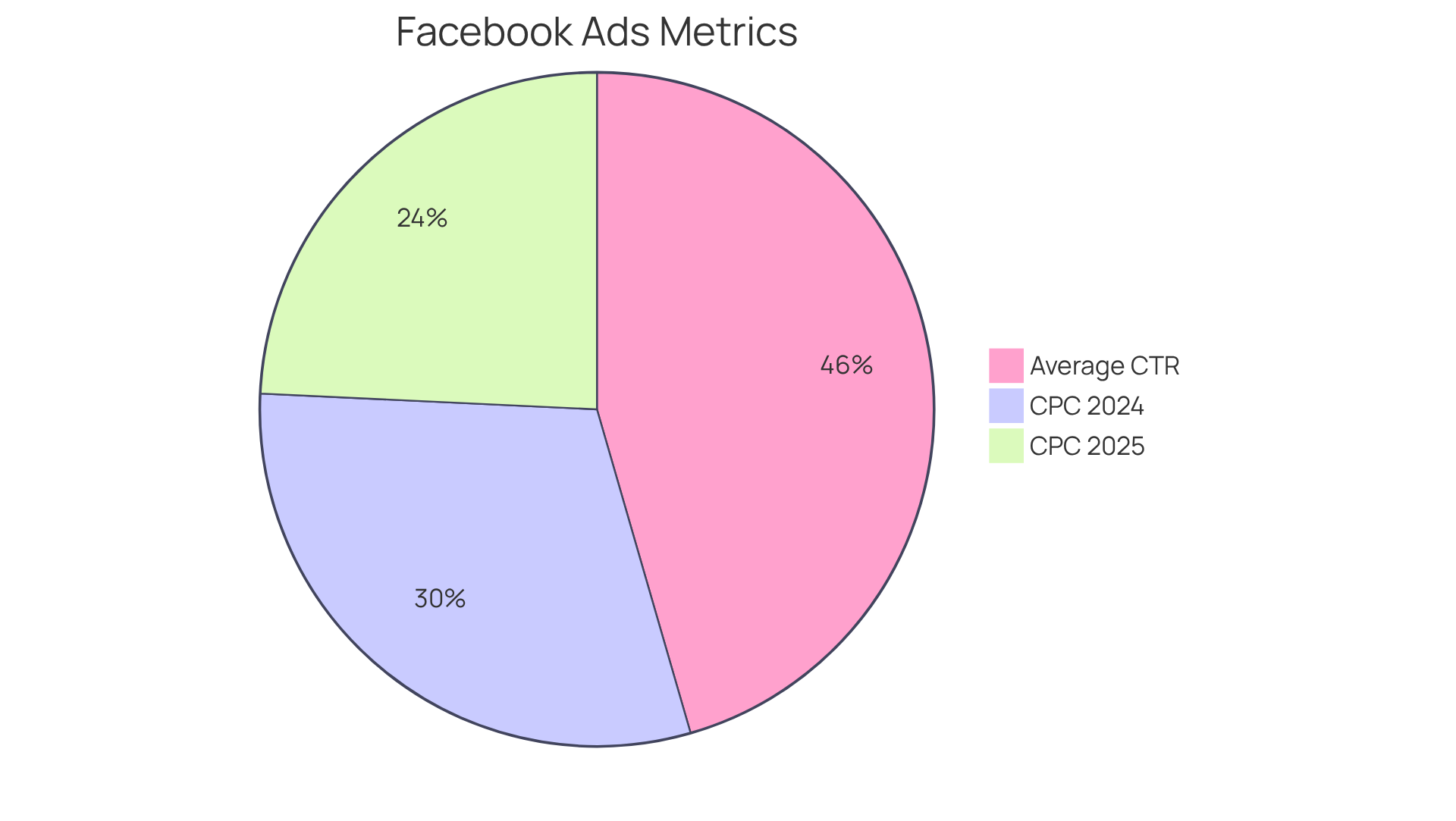
In 2025, the is approximately 2.59%. This figure serves as a . A higher CTR often correlates with a , as Facebook's algorithm favors ads that capture user interest. This results in better placement and reduced costs. Notably, the , illustrating the cost efficiency gained through .
Industries that prioritize engaging ad formats, such as , typically see significant improvements in CTR, which can lead to . For instance, traffic-oriented initiatives have an average CTR of 1.57%, reflecting the effectiveness of specific types of efforts. Marketers are encouraged to invest in . These elements not only enhance CTR but also contribute to the overall effectiveness of the initiative.
As noted by industry experts, maintaining a focus on audience relevance and is essential for achieving optimal results in Facebook advertising. Furthermore, the , underscoring the significance of in driving conversions. By consistently evaluating and improving ad approaches, brands can leverage the connection between CTR and CPC on Facebook to enhance their advertising ROI.
Average Conversion Rates on Facebook: Measuring Campaign Success
In 2025, the stands at an impressive 8.95%. This figure varies by sector, with e-commerce often achieving higher rates due to targeted initiatives. Why does this matter? Understanding is crucial for marketers aiming to assess the effectiveness of their ads in reaching specific objectives, such as . By analyzing conversion data, marketers can , .
Furthermore, this insight empowers marketers to make informed decisions. For instance, if a campaign underperforms, they can pivot their approach based on . This not only enhances their advertising efforts but also fosters a culture of continuous improvement. Are you ready to elevate your marketing game? to explore how we can help you achieve your goals.

Average Cost Per Action (CPA) on Facebook: Evaluating Ad Effectiveness
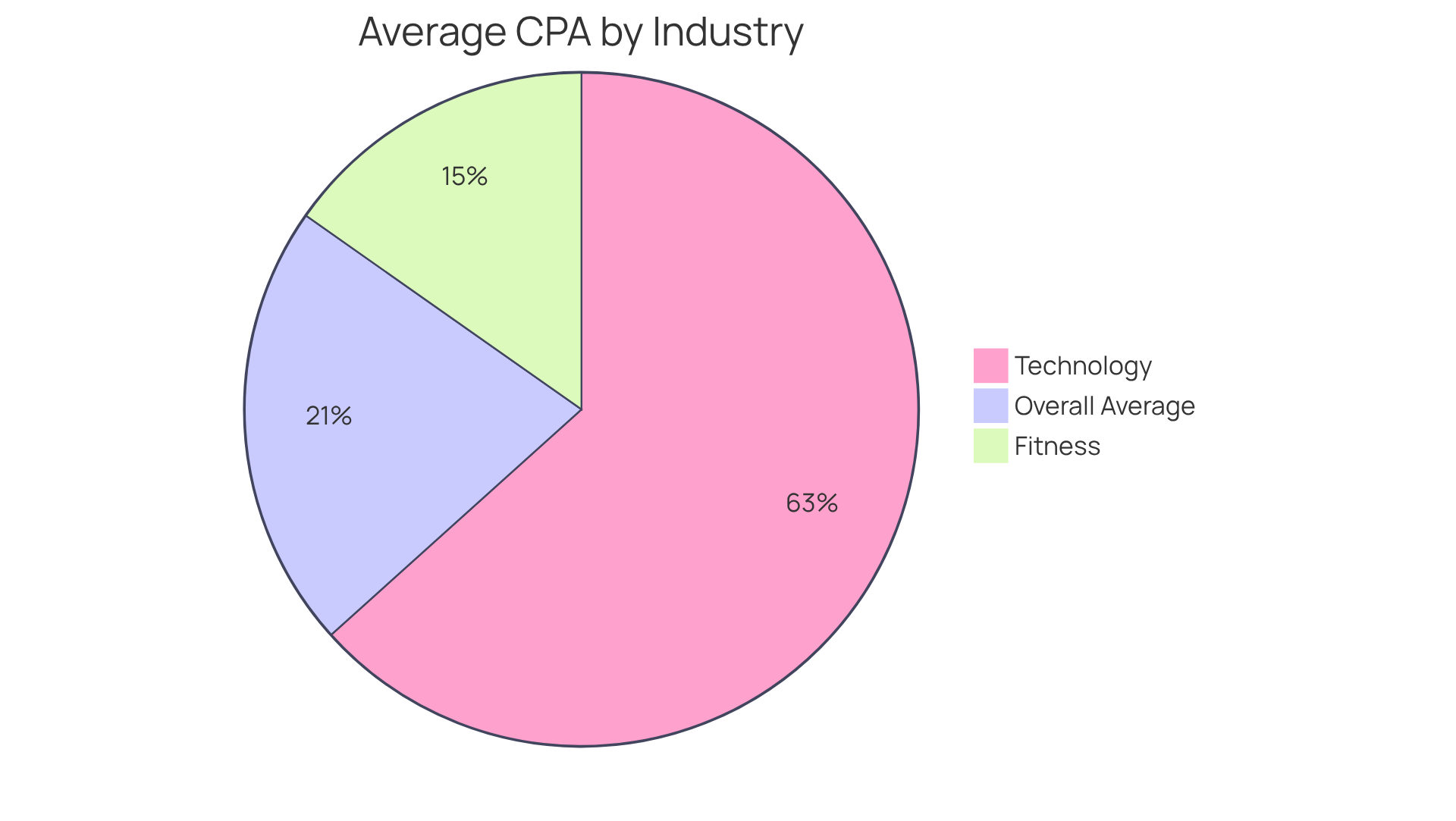
In 2025, the average for Facebook ads is approximately $18.68, revealing significant variations across different industries. This metric is crucial for assessing the cost-effectiveness of promotional efforts, especially in lead generation and sales. By closely , marketers can pinpoint which initiatives yield the best results relative to their spending, allowing for more and informed adjustments to their .
Successful campaigns often exhibit low CPA figures, showcasing effective targeting and creative execution. For example, businesses in the fitness sector achieve an , while the technology industry faces . These disparities highlight the importance of industry-specific strategies in optimizing ad performance.
Industry experts stress the significance of CPA in evaluating ad effectiveness. Paul Lipen noted, "The higher the relevance of ads, the lower the ad costs are," emphasizing the necessity for engaging and targeted content. Trends indicate that as advertisers refine their strategies and leverage - such as the to 0.9% in 2025 - they can anticipate improvements in CPA over time. Consistently tracking is vital for ongoing optimization, making CPA a central focus for marketers.
Interpreting Facebook CPC Metrics: What They Mean for Your Campaigns
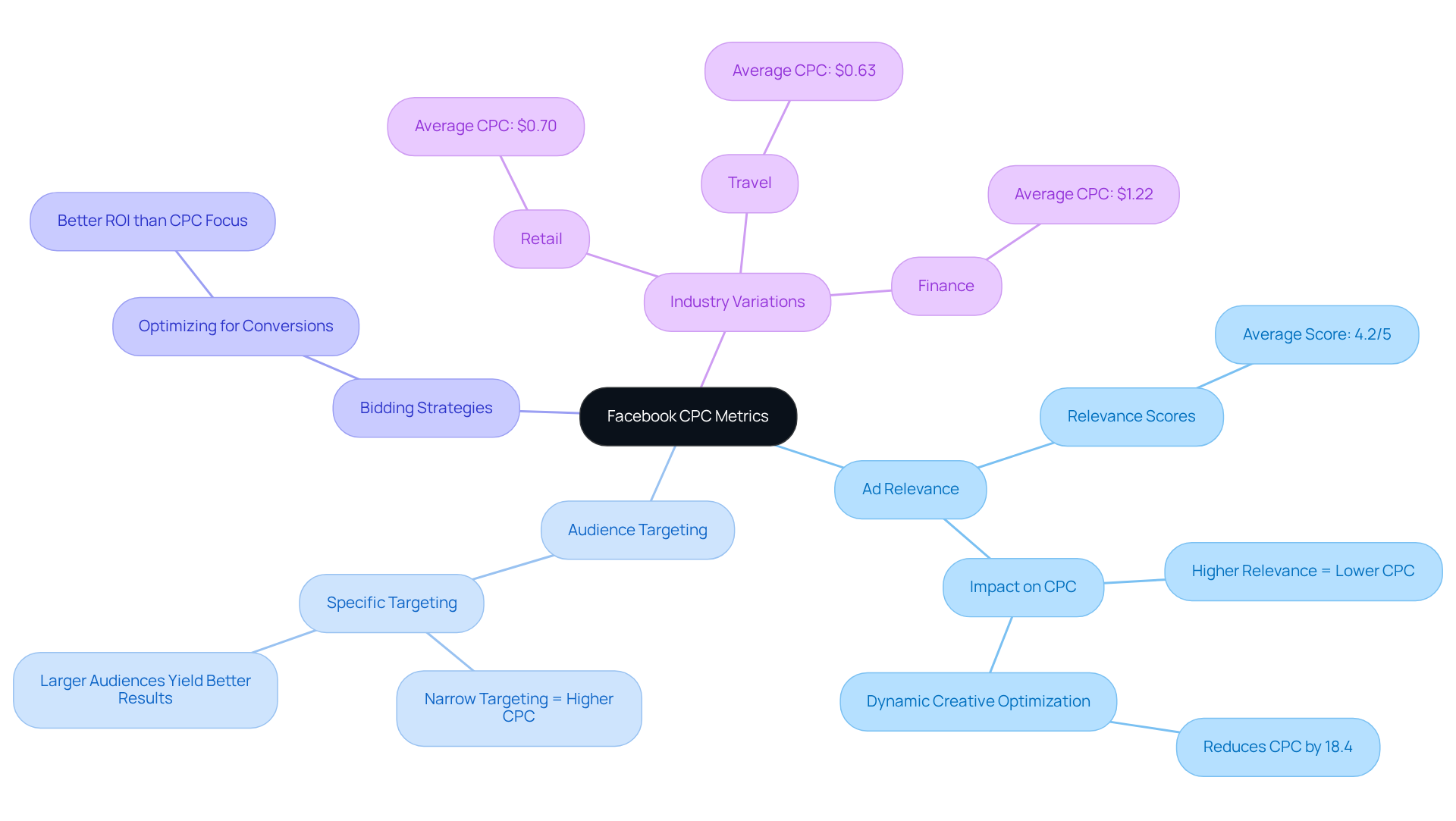
Interpreting metrics demands a nuanced understanding of the various factors influencing costs. Key elements such as , , and play a significant role in determining the . For example, ads with high relevance scores typically achieve lower CPCs because they resonate more effectively with the target audience. In 2025, the average is about $1.05, indicating a decrease from the prior year's $1.11. However, this figure can vary widely based on industry and specific marketing goals. Notably, user-reported average 4.2 out of 5, highlighting the critical role of in achieving lower .
Marketers must consistently evaluate these metrics to identify trends and make informed adjustments to their strategies. For instance, brands in the retail sector, which generally enjoy lower CPCs around $0.70, often adapt their approaches to leverage seasonal trends and audience engagement patterns. Apparel, travel and hospitality, and other retailers report the lowest CPCs on Facebook at $0.45, $0.63, and $0.70, respectively. Furthermore, has been shown to reduce CPC by 18.4%, with ads utilizing this method exhibiting significantly lower costs compared to standard format initiatives. This underscores the importance of in enhancing .
Understanding these nuances not only aids in but also boosts overall ad performance. As competition intensifies, particularly in high-stakes industries like finance and insurance-where can escalate to $1.22-brands must remain agile and responsive to fluctuations in their CPC. Seasonality in CPC trends reveals elevated pricing in late Q4 due to increased competition during peak retail periods. By focusing on and continuously refining targeting methods, marketers can enhance their efforts for improved ROI and sustained engagement. As industry experts note, "Different industries see varying ad costs due to market competition, user demographics, and conversion value.
Data Sources for Facebook Advertising Benchmarks: Ensuring Accuracy
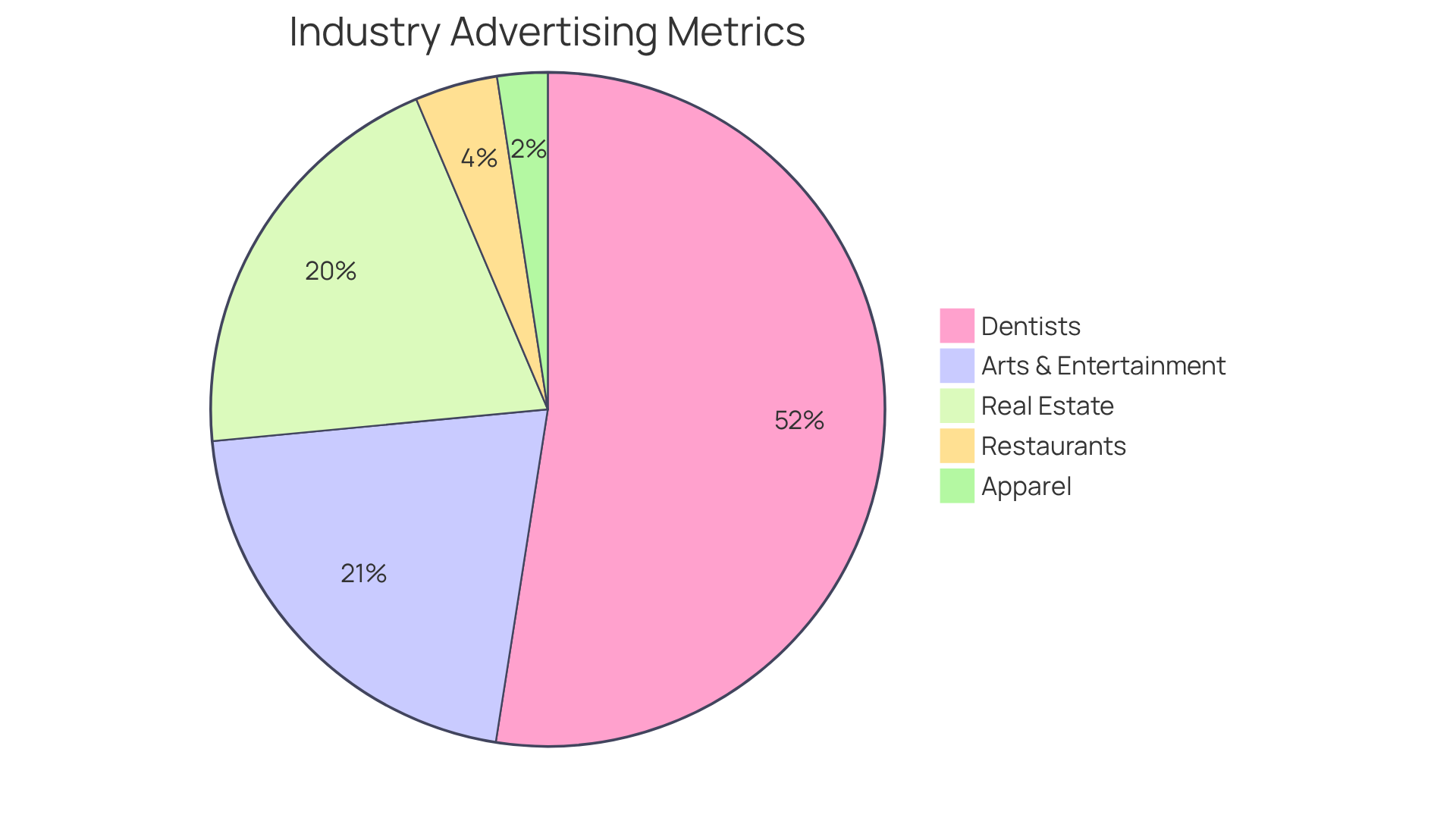
To achieve accurate , marketers must utilize reputable data sources, including industry reports, analytics platforms, and case studies. Platforms like WordStream and HubSpot provide critical insights into , , and conversion rates across various sectors. For instance, the average CPC on Facebook for ads across all industries is currently $1.72, with significant variations depending on the industry; the apparel sector enjoys a notably low CPC on Facebook of $0.45. Furthermore, the for lead initiatives stands at 2.59%, serving as a solid . By leveraging these resources, marketers can make informed decisions and establish realistic performance goals that reflect current market trends.
In addition, industry reports indicate that and can lead to higher CTRs, with the highest CTR of 3.92% found in Arts and Entertainment, contrasted by the lowest of 0.47% in employment and job training services. This method not only enhances promotional effectiveness but also ensures that align with evolving consumer behaviors and preferences. Notably, the year-over-year decrease in CPC on Facebook for Restaurants and Food, which has dropped by 61%, illustrates trends in that marketers should consider.
Frequently Asked Questions (FAQ) on Facebook CPC: Clearing Up Confusion
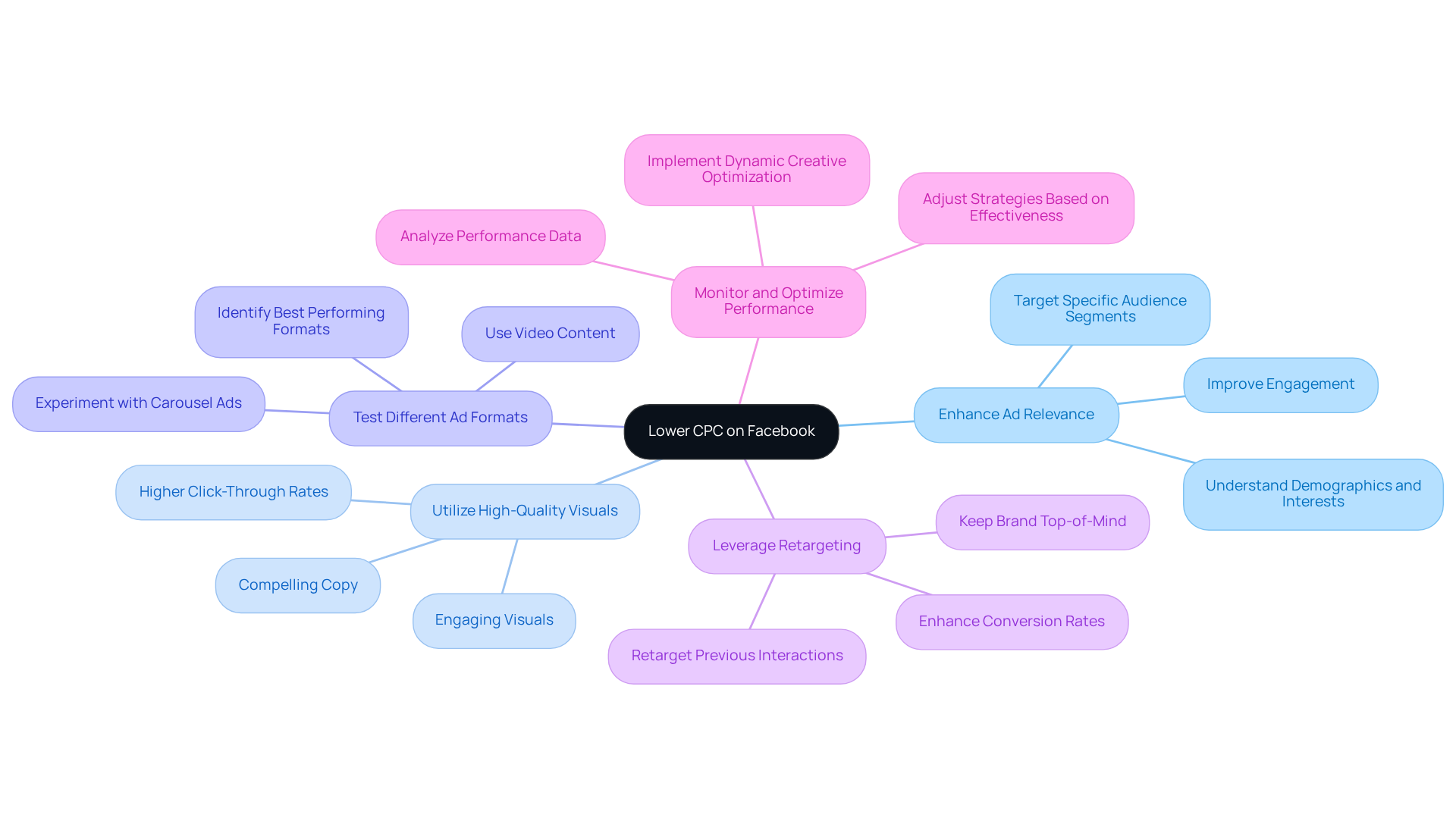
Understanding the factors that influence CPC on Facebook is crucial for marketers aiming to optimize their ad spend. Key elements include , , and competition. To effectively , consider these strategies:
- Enhance Ad Quality: High-quality visuals and compelling copy can significantly improve engagement rates, leading to better relevance scores and . Ads that resonate with the target audience are rewarded with reduced costs.
- Refine Targeting: Narrowing your audience minimizes wasted clicks and enhances initiative efficiency. By focusing on demographics and interests that align closely with your product, you can achieve better results.
- Utilize A/B Testing: - such as images, headlines, and calls to action - can help identify the most effective combinations. This iterative approach allows for data-driven decisions that optimize .
- Monitor and Adjust : Experimenting with different bidding types can yield better results within budget constraints. Setting bid caps and dynamically adjusting bids based on performance can help manage costs effectively.
Utilizing in and a 45% increase in Click-Through Rate (CTR), especially when optimizing CPC on Facebook, as highlighted in recent studies. These tools analyze user behavior and optimize ad delivery in real-time, ensuring your ads reach the right audience at the right time.
Industry best practices suggest that advertisers should focus on , as authenticity resonates with audiences. As marketing specialists emphasize, "It’s better to tell a good story than a perfect one," highlighting the significance of connection over flawlessness in advertisements. By applying these approaches, marketers can navigate the complexities of Facebook advertising and achieve more cost-efficient results.
Stay Updated: Latest Facebook Ads Benchmarks for Effective Campaigns
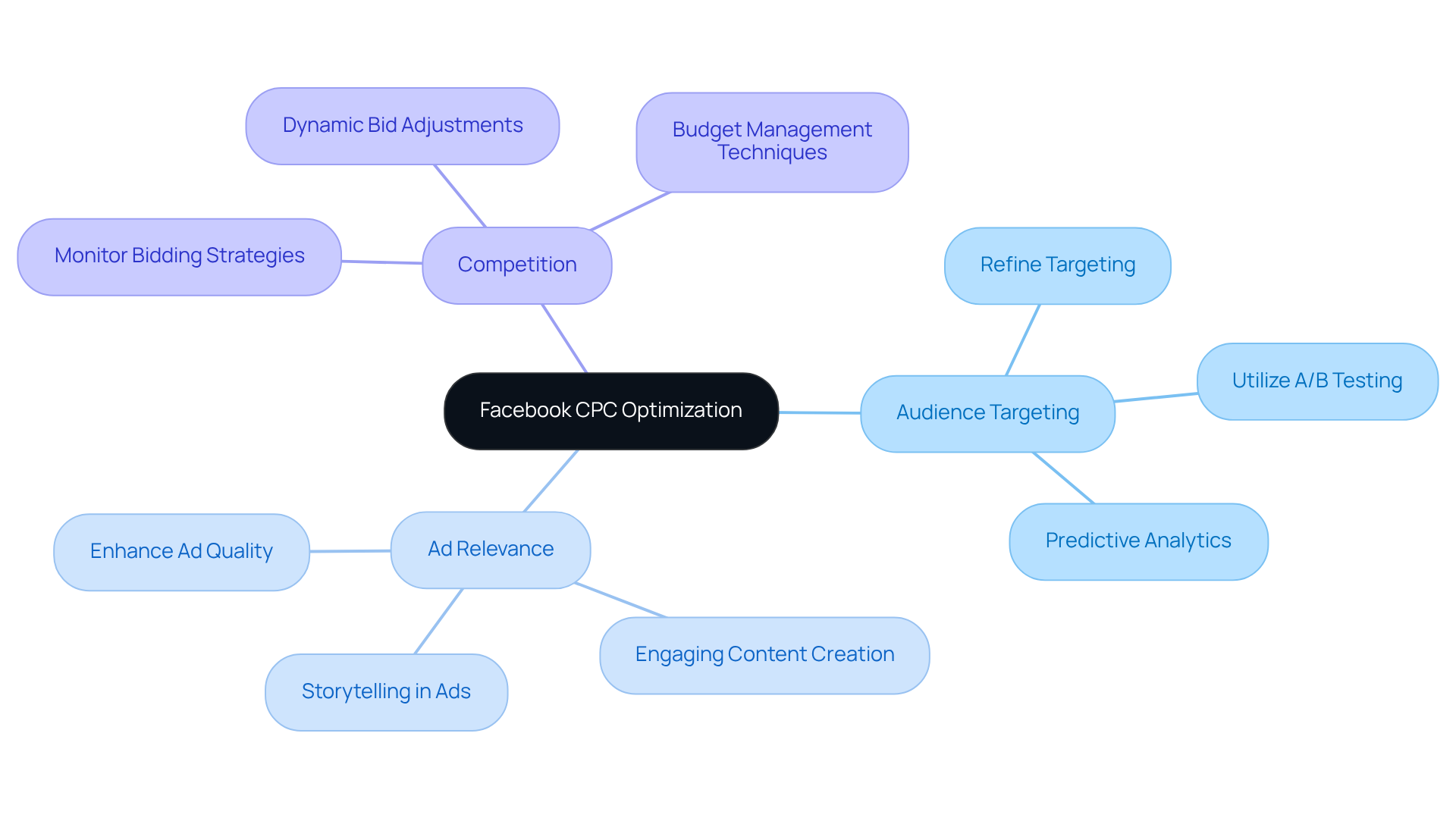
In the fast-evolving realm of digital advertising, staying updated on the latest is crucial for marketers. Regularly reviewing industry reports and not only deepens understanding but also highlights on Facebook, , and . For instance, the projected advertisements is expected to decrease to $1.38 in 2025, down from $1.72 in 2024. In contrast, the average for across all sectors is $0.70, indicating a shift that could significantly impact .
Engaging with resources like HubSpot and WordStream offers timely insights into these trends, empowering marketers to refine their strategies effectively. Brands that adapt to these evolving metrics - such as those utilizing carousel ads, which boast the lowest at just over $15 - illustrate the power of aligning advertising tactics with current performance data. As Cliff Sizemore, Senior Marketing Manager at LocaliQ, notes, " are becoming more efficient, but the rise in cost per lead (CPL) indicates that obtaining quality leads is becoming more difficult."
Moreover, the average conversion rate for is expected to decline from 8.67% to 7.72%, underscoring broader challenges in lead quality. By remaining informed and agile, marketers can sustain a competitive edge and optimize their campaigns for superior results.
Creative Strategies to Lower CPC on Facebook: Insights for Marketers
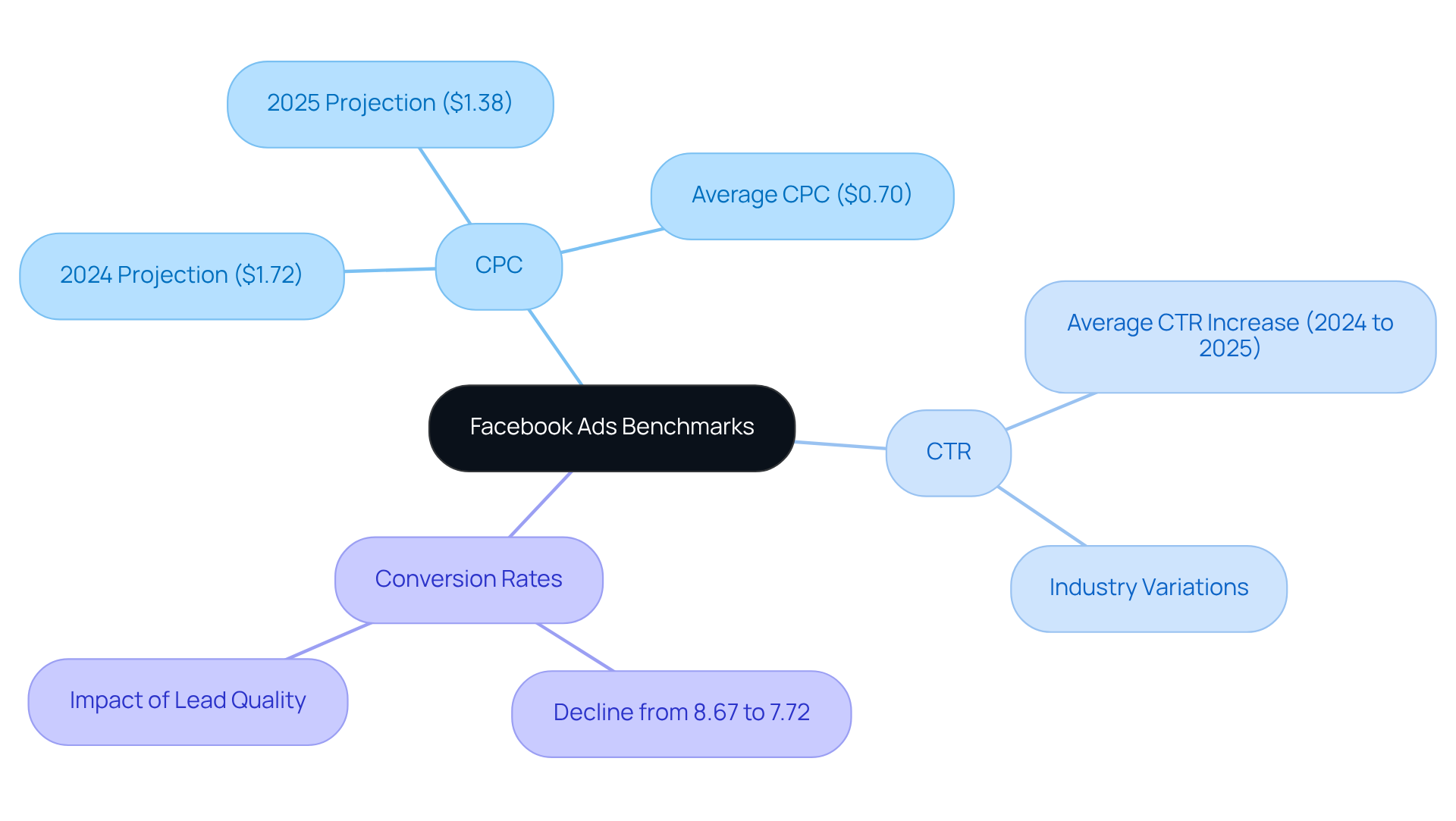
To effectively , marketers can adopt several creative strategies:
- Enhance Ad Relevance: Targeting specific audience segments is crucial. By understanding the demographics and interests of your audience, you can tailor your ads to resonate more deeply, thereby improving engagement and reducing costs. As noted, "Several factors affect CPC: your , competition in your industry, , and ."
- Utilize High-Quality Visuals and Compelling Copy: and persuasive copy are essential for capturing attention. Ads that stand out visually tend to perform better, resulting in higher click-through rates and a .
- Test Different Ad Formats: Experimenting with various ad formats, such as or video content, can help identify which types resonate best with your audience. For instance, have been shown to generate 1.6 times more clicks than single-image ads, making them a valuable option for marketers.
- Leverage : Retargeting users who have previously interacted with your brand can significantly enhance . This approach not only keeps your brand top-of-mind but also tends to lower the CPC on Facebook, as these users are already familiar with your offerings. A case study on retargeting website visitors demonstrates how this approach can result in higher and reduced costs.
- : Regularly analyzing performance data enables marketers to modify their approaches based on what is most effective. Implementing dynamic creative optimization can help tailor ad elements in real-time, ensuring that the most effective combinations are used.
By applying these strategies, marketers can effectively reduce their CPC on Facebook while simultaneously enhancing overall campaign performance, leading to better ROI and more qualified leads.
Conclusion
In the competitive landscape of digital marketing, mastering Cost Per Click (CPC) on Facebook is not just beneficial - it's essential for successful advertising campaigns. Effective strategies, such as leveraging MediaNug's PerformanceNug Creative Packages, can significantly reduce CPC while enhancing overall ad performance. By prioritizing ad relevance, creative quality, and precise audience targeting, marketers can maximize their advertising budgets and drive superior results.
Key metrics like average CPC, Click-Through Rate (CTR), and Conversion Rate (CVR) underscore the necessity of data-driven decision-making in Facebook advertising. It's crucial to recognize that performance varies across industries; for instance, retail and e-commerce often enjoy lower CPCs thanks to optimized targeting strategies. Furthermore, the projected increase in CTR for 2025 highlights the potential for improved engagement as marketers refine their approaches.
The call to action for marketers is unmistakable: staying informed about the latest benchmarks and continuously optimizing ad strategies is vital for success. By embracing innovative tactics and focusing on high-quality creatives, brands can not only lower their CPC but also enhance their overall marketing effectiveness. Engaging with resources like MediaNug can provide the essential support needed to navigate this dynamic environment and achieve sustainable growth in Facebook advertising.
Frequently Asked Questions
What are MediaNug's PerformanceNug Creative Packages?
MediaNug's PerformanceNug Creative Packages are designed to enhance the creation of high-performing ads on Facebook by combining innovative planning with data analysis to identify what resonates with target audiences, leading to reduced cost-per-click (CPC).
How does the cost-per-click (CPC) on Facebook compare to Google Ads?
The average CPC for Facebook leads campaigns is $1.92, which is significantly lower than the $5.26 average for Google Ads, highlighting the cost-effectiveness of Facebook advertising strategies.
What is the average CPC on Facebook in 2025?
In 2025, the average CPC on Facebook for ads is around $1.05, showing a slight decrease from previous years.
What factors influence CPC on Facebook?
CPC on Facebook varies based on industry, audience targeting, and ad quality. Industries like retail and e-commerce often have lower CPCs, while sectors like healthcare may face higher costs due to compliance requirements.
How can marketers improve their CPC performance on Facebook?
Marketers can improve their CPC performance by prioritizing ad relevance and quality, as higher-quality ads resonate better with audiences, leading to enhanced engagement and conversion rates.
What is the average Click-Through Rate (CTR) for Facebook ads in 2025?
The average CTR for Facebook ads in 2025 is approximately 2.59%, which is a key metric for measuring audience engagement.
How does CTR affect CPC on Facebook?
A higher CTR often leads to a lower CPC on Facebook because the algorithm favors ads that engage users, resulting in better placement and reduced costs.
What types of ad formats tend to improve CTR?
Engaging ad formats such as video and carousel ads typically see significant improvements in CTR, which can lead to lower CPC.
What is the average conversion rate (CVR) for Facebook leads initiatives?
The average CVR for Facebook leads initiatives is 7.72%, indicating the importance of high CTR in driving conversions.
What should marketers focus on to achieve optimal results in Facebook advertising?
Marketers should focus on audience relevance and creative quality to achieve optimal results in Facebook advertising, as these elements are crucial for enhancing CTR and overall ad effectiveness.
List of Sources
- MediaNug PerformanceNug Creative Packages: Optimize Your Facebook CPC
- 2026 Facebook Ads Benchmarks (https://theedigital.com/blog/facebook-ads-benchmarks)
- wordstream.com (https://wordstream.com/blog/facebook-ads-benchmarks-2025)
- graffiti9.com (https://graffiti9.com/blog/social-media-strategy)
- esgroupmarketing.com (https://esgroupmarketing.com/case_studies/clothing-retailer-shatters-ctr-goals)
- Average Cost Per Click (CPC) on Facebook: Key Metrics for Marketers
- superads.ai (https://superads.ai/facebook-ads-costs/cpc-cost-per-click)
- sqmagazine.co.uk (https://sqmagazine.co.uk/facebook-ad-statistics)
- wordstream.com (https://wordstream.com/blog/facebook-ads-benchmarks-2025)
- Average Click-Through Rate (CTR) on Facebook: Understanding Engagement
- wordstream.com (https://wordstream.com/blog/facebook-ads-benchmarks-2025)
- 2026 Facebook Ads Benchmarks (https://theedigital.com/blog/facebook-ads-benchmarks)
- weandgoliath.com (https://weandgoliath.com/average-ctr-of-facebook-ads)
- Average Conversion Rates on Facebook: Measuring Campaign Success
- wordstream.com (https://wordstream.com/blog/facebook-ads-benchmarks-2025)
- Average Facebook Ads Conversion Rate 2026 (https://influee.co/blog/average-conversion-rate-facebook-ads)
- sqmagazine.co.uk (https://sqmagazine.co.uk/facebook-ad-statistics)
- focus-digital.co (https://focus-digital.co/facebook-ads-average-conversion-rate)
- 39 Facebook statistics marketers should know in 2026 (https://sproutsocial.com/insights/facebook-stats-for-marketers)
- Average Cost Per Action (CPA) on Facebook: Evaluating Ad Effectiveness
- ninjapromo.io (https://ninjapromo.io/how-much-do-facebook-ads-cost)
- 2026 Facebook Ads Benchmarks (https://theedigital.com/blog/facebook-ads-benchmarks)
- smartmarketer.com (https://smartmarketer.com/2025-facebook-ads-report-part-1)
- Facebook Ad Benchmarks for YOUR Industry [Data] (https://wordstream.com/blog/ws/2017/02/28/facebook-advertising-benchmarks)
- purplexmarketing.com (https://purplexmarketing.com/news/facebook-announces-major-changes-that-will-affect-your-business)
- Interpreting Facebook CPC Metrics: What They Mean for Your Campaigns
- superads.ai (https://superads.ai/facebook-ads-costs/cpc-cost-per-click)
- Facebook Ad Benchmarks for YOUR Industry [Data] (https://wordstream.com/blog/ws/2017/02/28/facebook-advertising-benchmarks)
- sqmagazine.co.uk (https://sqmagazine.co.uk/facebook-ad-statistics)
- searchengineland.com (https://searchengineland.com/facebook-ad-costs-jump-beat-google-461690)
- Data Sources for Facebook Advertising Benchmarks: Ensuring Accuracy
- 2026 Facebook Ads Benchmarks (https://theedigital.com/blog/facebook-ads-benchmarks)
- wordstream.com (https://wordstream.com/blog/facebook-ads-benchmarks-2025)
- smartmarketer.com (https://smartmarketer.com/2025-facebook-ads-report-part-1)
- Facebook Ad Benchmarks for YOUR Industry [Data] (https://wordstream.com/blog/ws/2017/02/28/facebook-advertising-benchmarks)
- Frequently Asked Questions (FAQ) on Facebook CPC: Clearing Up Confusion
- Facebook Ad Benchmarks for YOUR Industry [Data] (https://wordstream.com/blog/ws/2017/02/28/facebook-advertising-benchmarks)
- carbonboxmedia.com (https://carbonboxmedia.com/how-to-reduce-cpc-in-meta-ads-effective-strategies-for-lower-costs)
- adamigo.ai (https://adamigo.ai/blog/7-ways-to-reduce-facebook-ad-costs-in-2025)
- wordstream.com (https://wordstream.com/blog/facebook-ads-benchmarks-2025)
- Stay Updated: Latest Facebook Ads Benchmarks for Effective Campaigns
- wordstream.com (https://wordstream.com/blog/facebook-ads-benchmarks-2025)
- 2026 Facebook Ads Benchmarks (https://theedigital.com/blog/facebook-ads-benchmarks)
- bestever.ai (https://bestever.ai/post/facebook-ads-benchmarks)
- Creative Strategies to Lower CPC on Facebook: Insights for Marketers
- superads.ai (https://superads.ai/facebook-ads-costs/cpc-cost-per-click)
- graffiti9.com (https://graffiti9.com/blog/social-media-strategy)
- wordstream.com (https://wordstream.com/blog/facebook-ads-benchmarks-2025)
- sqmagazine.co.uk (https://sqmagazine.co.uk/facebook-ad-statistics)
- 2026 Facebook Ads Benchmarks (https://theedigital.com/blog/facebook-ads-benchmarks)