Introduction
In the competitive landscape of e-commerce, brands leveraging Shopify must prioritize their search engine optimization (SEO) strategies to stand out and drive traffic. Did you know that nearly 75% of users never scroll past the first page of search results? This statistic underscores the importance of effective SEO. By implementing best practices tailored for Shopify, businesses can significantly enhance their visibility and attract more potential customers. However, with so many strategies available, how can brands effectively navigate the complexities of SEO to ensure they are not only seen but also preferred by search engines?
Furthermore, understanding the nuances of SEO can be daunting. Brands need to focus on:
- Optimizing their site structure
- Utilizing relevant keywords
- Creating high-quality content
In addition, leveraging analytics tools can provide insights into customer behavior, helping businesses refine their strategies. The goal is not just to appear in search results but to become the preferred choice for consumers.
Ultimately, the right SEO strategy can transform a Shopify store from obscurity to prominence. Are you ready to take your e-commerce business to the next level? Engage with MediaNug to explore tailored solutions that can elevate your online presence.
Identify and Optimize Target Keywords for Your Shopify Store
To effectively enhance your SEO performance, start with thorough . Tools like Google Keyword Planner, Ahrefs, and SEMrush are invaluable for uncovering that align with your product offerings. Furthermore, consider leveraging AI tools such as Yodel, Jasper, or Frase.io to streamline the process of generating .
Prioritize that capture buyer intent; these terms typically face less competition and yield higher . In fact, a staggering 91.8% of all search queries include . For instance, rather than targeting a broad term like 'shoes,' focus on a more specific phrase such as 'comfortable running shoes for women.' Once identified, seamlessly incorporate these terms into your , descriptions, and meta tags.
Regularly assess and refine your keyword strategy based on performance analytics to maintain relevance and effectiveness. As industry experts highlight, concentrating on long-tail keywords can significantly boost , making them an essential component of your SEO strategy. Are you ready to elevate your SEO game?

Establish a Logical Site Structure and Navigation
Establishing a concise and rational framework is essential for guiding visitors through your Shopify store seamlessly. Start by and then into specific subcategories. For instance, if you sell clothing, your structure might look like this: Home → Women → Dresses → Casual Dresses.
Ensure that your , with no more than 5-7 main items. This approach prevents overwhelming visitors and . Furthermore, implementing allows visitors to . Not only does this improve user experience, but it also aids search engines in understanding your site's hierarchy, ultimately enhancing your .

Optimize Product and Collection Pages for On-Page SEO
To enhance the SEO performance of your product and collection pages, it's vital to ensure that each page features a that incorporates key terms. Did you know that title tags are the most critical meta element for rankings? Research shows that optimized title tags can increase by as much as 35%, making them essential for visibility.
Furthermore, . Keep hero images under 200 KB and gallery images under 100 KB, while also providing descriptive alt text to boost both accessibility and SEO. Compelling should highlight benefits and features, seamlessly integrating relevant keywords to attract potential customers.
In addition, implementing is crucial. Including essential schemas like:
- Product
- Breadcrumb
- FAQ
can enhance your through rich snippets, such as ratings and pricing information, which can significantly elevate . not only keeps it fresh and relevant but also aligns with search engine preferences, ultimately driving more organic traffic to brands on Shopify. Are you ready to take your to the next level?

Identify and Resolve Technical SEO Issues on Shopify
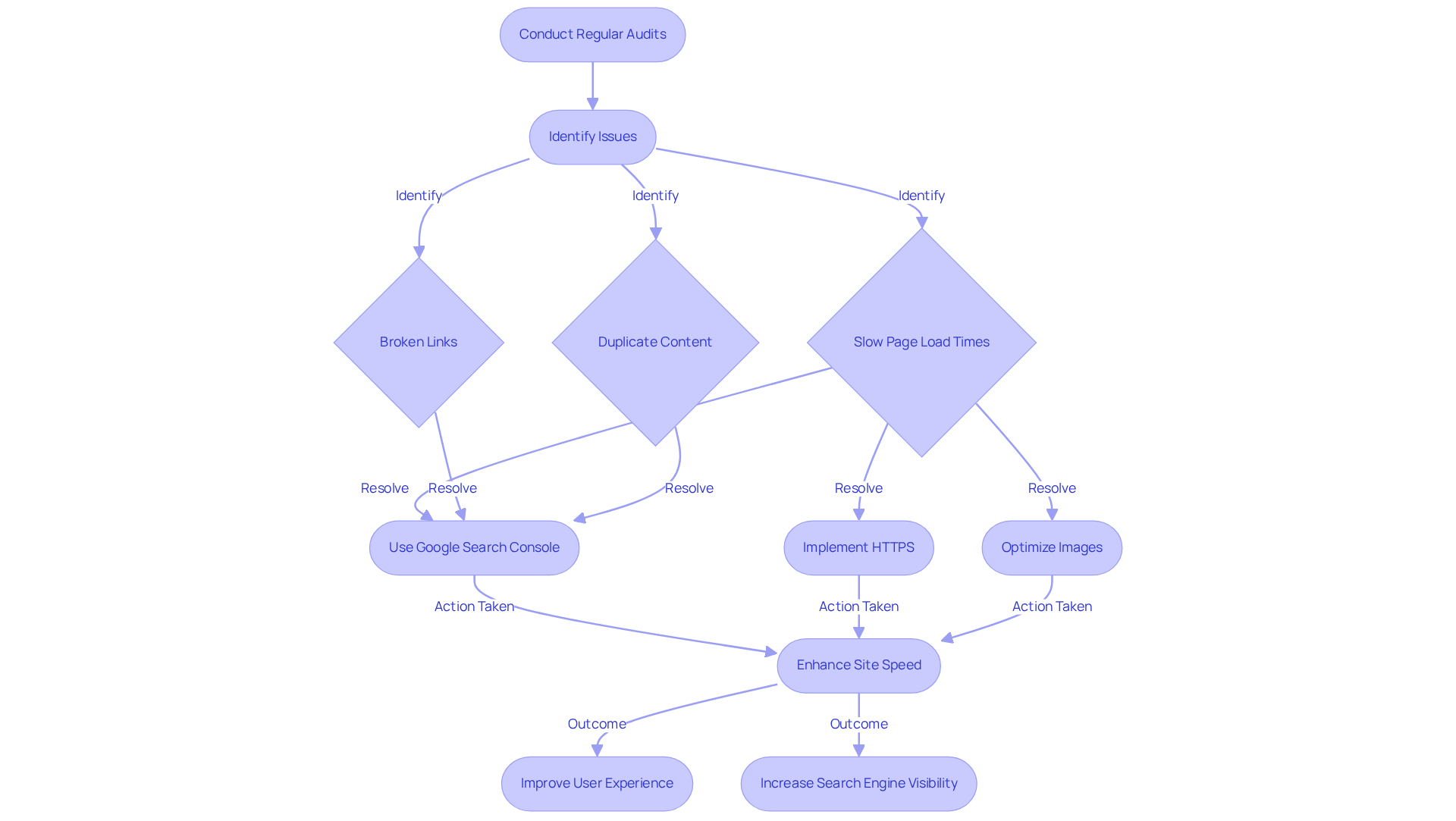
Conducting regular audits of your is not just beneficial; it’s essential for identifying and resolving that can hinder your performance. Did you know that common challenges like , broken links, and duplicate content can significantly impact user experience and search engine rankings? Tools such as are invaluable for pinpointing crawl errors and ensuring your webpage is indexed correctly.
Considering that , ensuring your platform is mobile-friendly is crucial. Implementing HTTPS not only secures your webpage but also serves as a ranking factor for Google. To enhance speed, focus on compressing images - unoptimized images are often the primary culprit behind sluggish s - and minimize the use of heavy scripts. For example, a case study revealed that replacing a homepage slider with a single hero image improved the Largest Contentful Paint (LCP) by 1.5 seconds, significantly boosting conversion rates.
Furthermore, adopting can dramatically decrease the 'Time to Interactive', enhancing the experience for users. Addressing broken links is equally important; research shows that 88% of online visitors are less likely to return to a webpage after encountering one. Utilizing a can further enhance site speed by delivering content from the nearest server location.
By tackling these technical issues, you not only improve user experience but also elevate the visibility of brands on Shopify in search engine results, ultimately driving more traffic and sales. Are you ready to take action and optimize your for success?
Conclusion
Boosting SEO performance on Shopify demands a strategic approach that integrates essential best practices. By honing in on keyword optimization, establishing a logical site structure, enhancing product and collection pages, and addressing technical SEO issues, brands can markedly elevate their visibility and attract more traffic. Each of these components is vital in crafting a seamless experience for users while ensuring that search engines can efficiently index and rank your store.
This article explores crucial strategies, such as the significance of:
- Identifying long-tail keywords that resonate with buyer intent
- Creating a user-friendly navigation system
- Optimizing title tags and meta descriptions for product pages
- Conducting regular audits to tackle technical issues
These insights underscore how a comprehensive SEO strategy can lead to increased conversion rates and improved overall performance for Shopify brands.
Implementing these best practices transcends merely keeping pace with trends; it’s about establishing a robust foundation for long-term success in the competitive e-commerce landscape. By prioritizing SEO, Shopify stores can amplify their online presence, draw in more customers, and ultimately drive sales. Brands are urged to take action now, refining their strategies and leveraging the tools at their disposal to ensure they stay ahead in the ever-evolving digital marketplace.
Frequently Asked Questions
What is the first step to enhance SEO performance for a Shopify store?
The first step is to conduct thorough keyword research using tools like Google Keyword Planner, Ahrefs, and SEMrush to uncover high-traffic terms that align with your product offerings.
What role do AI tools play in optimizing keywords for a Shopify store?
AI tools such as Yodel, Jasper, or Frase.io can help streamline the process of generating optimized content for your Shopify store.
What type of keywords should be prioritized for better SEO results?
Long-tail keywords should be prioritized as they capture buyer intent, typically face less competition, and yield higher conversion rates.
Why are long-tail keywords important?
Long-tail keywords are important because a staggering 91.8% of all search queries include them, and they can significantly boost conversion rates.
Can you provide an example of a long-tail keyword?
An example of a long-tail keyword is 'comfortable running shoes for women,' as opposed to a broad term like 'shoes.'
How should identified keywords be used in a Shopify store?
Identified keywords should be seamlessly incorporated into product titles, descriptions, and meta tags.
How often should the keyword strategy be assessed and refined?
The keyword strategy should be regularly assessed and refined based on performance analytics to maintain relevance and effectiveness.
List of Sources
- Identify and Optimize Target Keywords for Your Shopify Store
- blog.mastroke.com (https://blog.mastroke.com/shopify-ai/top-10-ai-seo-tools-for-shopify-stores-in-2026)
- thenightmarketer.com (https://thenightmarketer.com/blog/the-7-best-ai-seo-tools-for-shopify-in-2026)
- junia.ai (https://junia.ai/blog/seo-tools-for-shopify)
- 100+ SEO Statistics for 2026 (https://keyword.com/blog/useful-seo-statistics)
- brainstreamtechnolabs.com (https://brainstreamtechnolabs.com/shopify-store-optimization-guide-2026)
- Establish a Logical Site Structure and Navigation
- kidadigital.com.au (https://kidadigital.com.au/blog/menu-shopify)
- 40+ stats on e-commerce search and KPIs (https://algolia.com/blog/ecommerce/e-commerce-search-and-kpis-statistics)
- help.shopify.com (https://help.shopify.com/en/manual/promoting-marketing/seo/seo-overview)
- baymard.com (https://baymard.com/blog/ecommerce-navigation-best-practice)
- ecdigitalstrategy.com (https://ecdigitalstrategy.com/blog/shopify-optimization-2026)
- Optimize Product and Collection Pages for On-Page SEO
- easyshopbuilder.com (https://easyshopbuilder.com/en/blog-seo-shopify-2026)
- digitalapplied.com (https://digitalapplied.com/blog/shopify-seo-2026-product-page-optimization-guide)
- shopping-cart-migration.com (https://shopping-cart-migration.com/must-know-tips/seo-best-practices-for-shopify-stores-in-2025)
- webspidersolutions.com (https://webspidersolutions.com/what-are-meta-tags-seo-guide-marketers)
- charle.co.uk (https://charle.co.uk/articles/shopify-seo-guide)
- Identify and Resolve Technical SEO Issues on Shopify
- linkedin.com (https://linkedin.com/pulse/shopify-store-performance-optimization-best-practices-qdebc)
- rankai.ai (https://rankai.ai/articles/technical-seo-fixes-checklist-for-shopify-stores)
- websitespeedy.com (https://websitespeedy.com/blog/shopify-speed-optimization-tips)
- seomator.com (https://seomator.com/blog/load-speed-impacts-on-seo)
- ecomguideblog.wordpress.com (https://ecomguideblog.wordpress.com/2026/03/09/how-to-increase-shopify-website-speed)