
Introduction
Cookie pool retargeting stands as a pivotal strategy for advertisers navigating the complexities of today’s rapidly evolving digital landscape. By leveraging first-party data and insights into user behavior, brands can create personalized advertising experiences that truly resonate with potential customers. However, as privacy regulations tighten and third-party cookies become a thing of the past, the real challenge lies in adapting these strategies to ensure they remain effective and trustworthy.
What innovative approaches can marketers adopt to not only survive but thrive in this shifting environment? This question is crucial as it invites marketers to rethink their tactics and embrace new methodologies that align with the changing landscape.
Understand Cookie Pool Retargeting Mechanisms
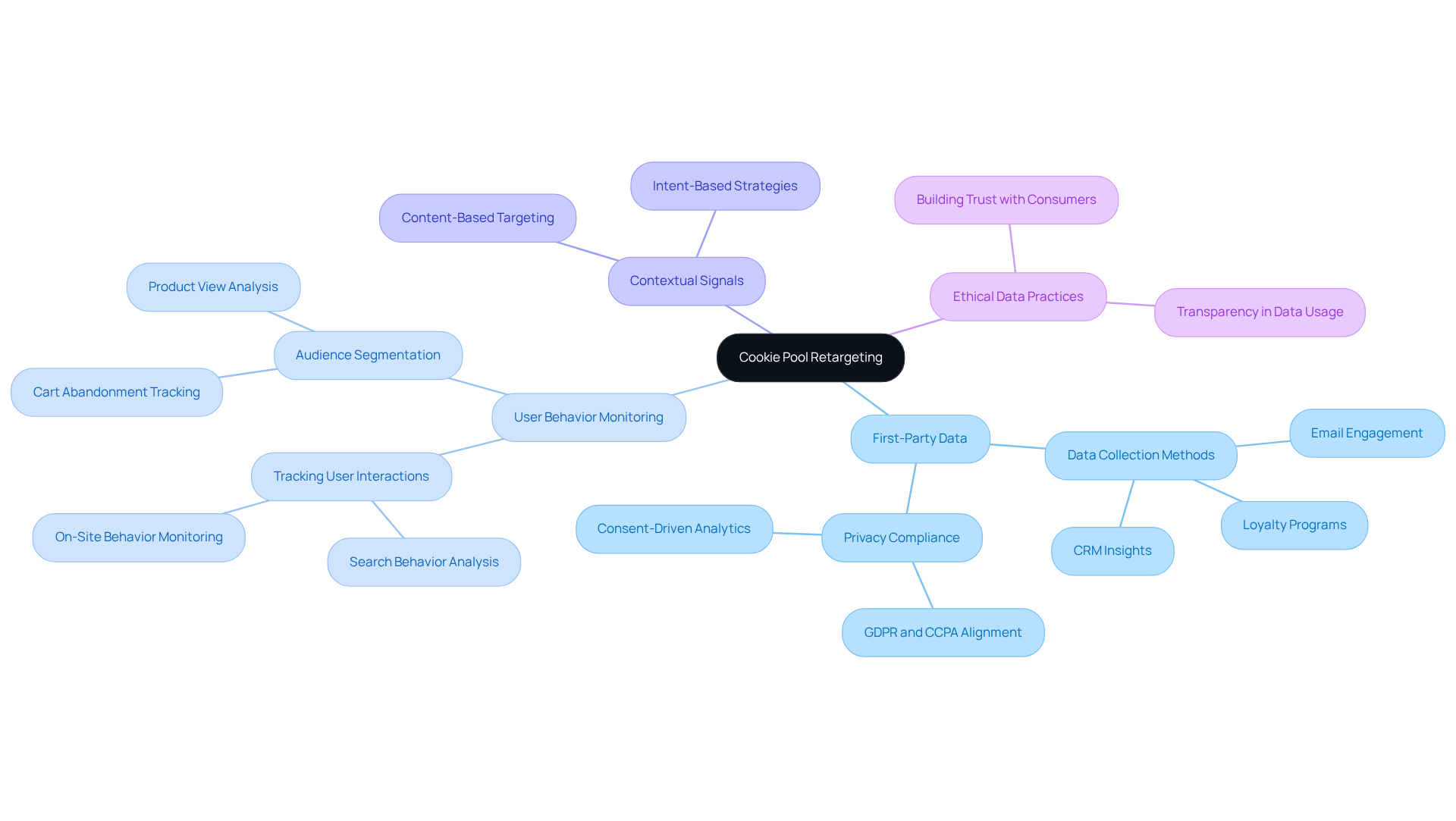
stands as a pivotal strategy in today’s advertising landscape, gathering insights from diverse sources to create a targeted group of potential clients who have expressed interest in a brand's offerings. This approach empowers advertisers to deliver personalized ads tailored to individuals' past interactions, effectively addressing the challenges posed by the decline of with .
As we look ahead to 2025, the success of hinges on the effective use of , meticulous , and contextual signals. These elements are crucial for crafting strategies that re-engage consumers meaningfully. Furthermore, as tighten, marketers must prioritize ethical data collection practices, ensuring compliance while leveraging their own resources to sustain .
This transition not only sharpens but also cultivates trust and engagement with consumers, ultimately driving enhanced campaign performance. Are you ready to adapt your strategies to thrive in this evolving landscape?
Implement Effective Data Management Strategies
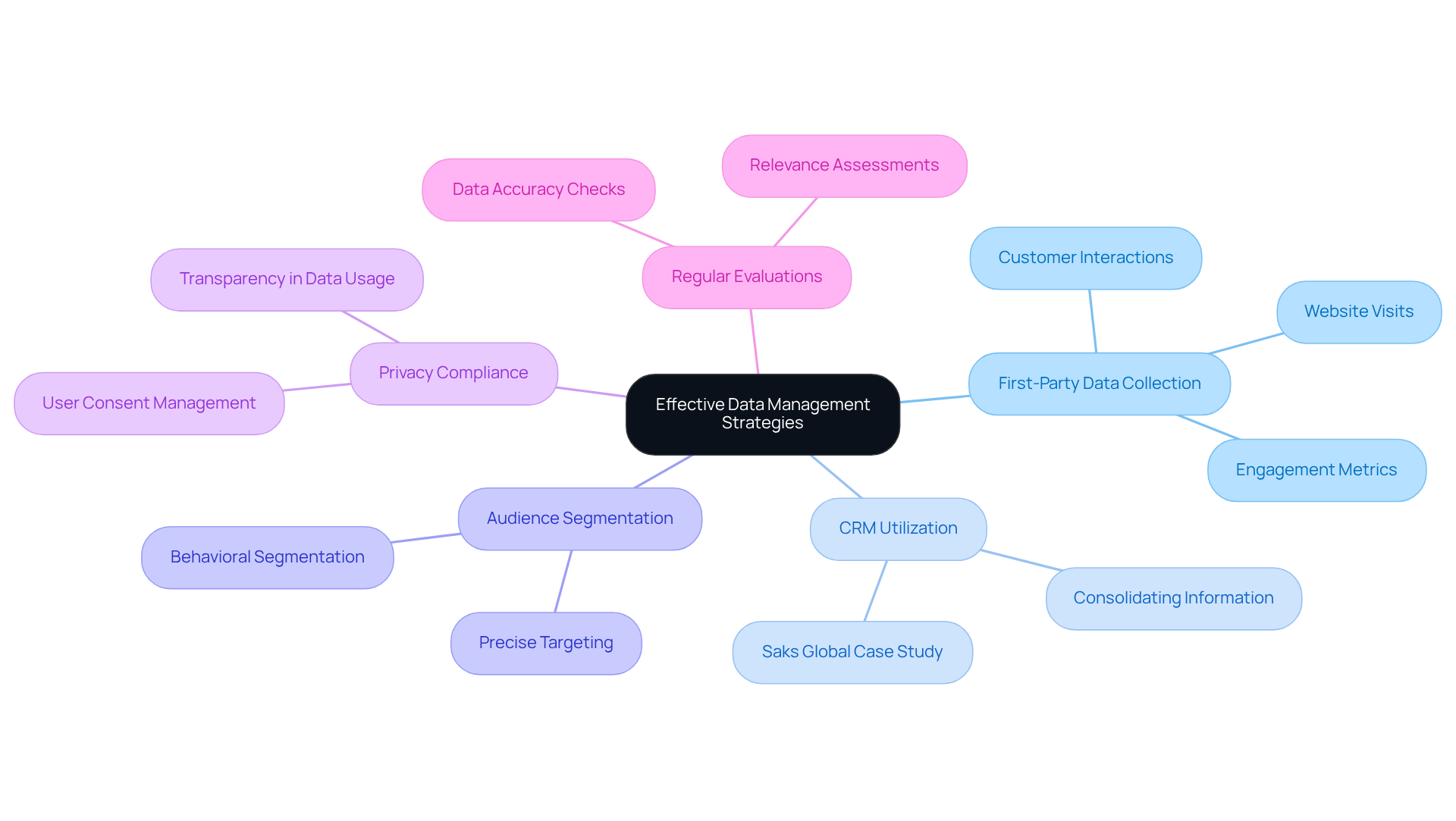
To enhance cookie pool retargeting, companies must implement strong information management strategies that focus on collecting . This approach entails gathering insights from customer interactions, website visits, and engagement metrics. Utilizing Customer Relationship Management (CRM) systems is crucial for consolidating this information, allowing for precise that boosts targeting effectiveness. For example, Saks Global has effectively leveraged to tailor their marketing efforts, leading to significant revenue growth.
Furthermore, prioritizing with regulations is non-negotiable. Companies should maintain transparency regarding and secure user consent. Regular evaluations of information practices ensure that the data used for and relevant, ultimately driving more successful advertising campaigns. As the digital landscape evolves, focusing on will be essential for brands striving to remain competitive and connect meaningfully with their audiences.
Explore Diverse Retargeting Strategies Using Cookie Pools
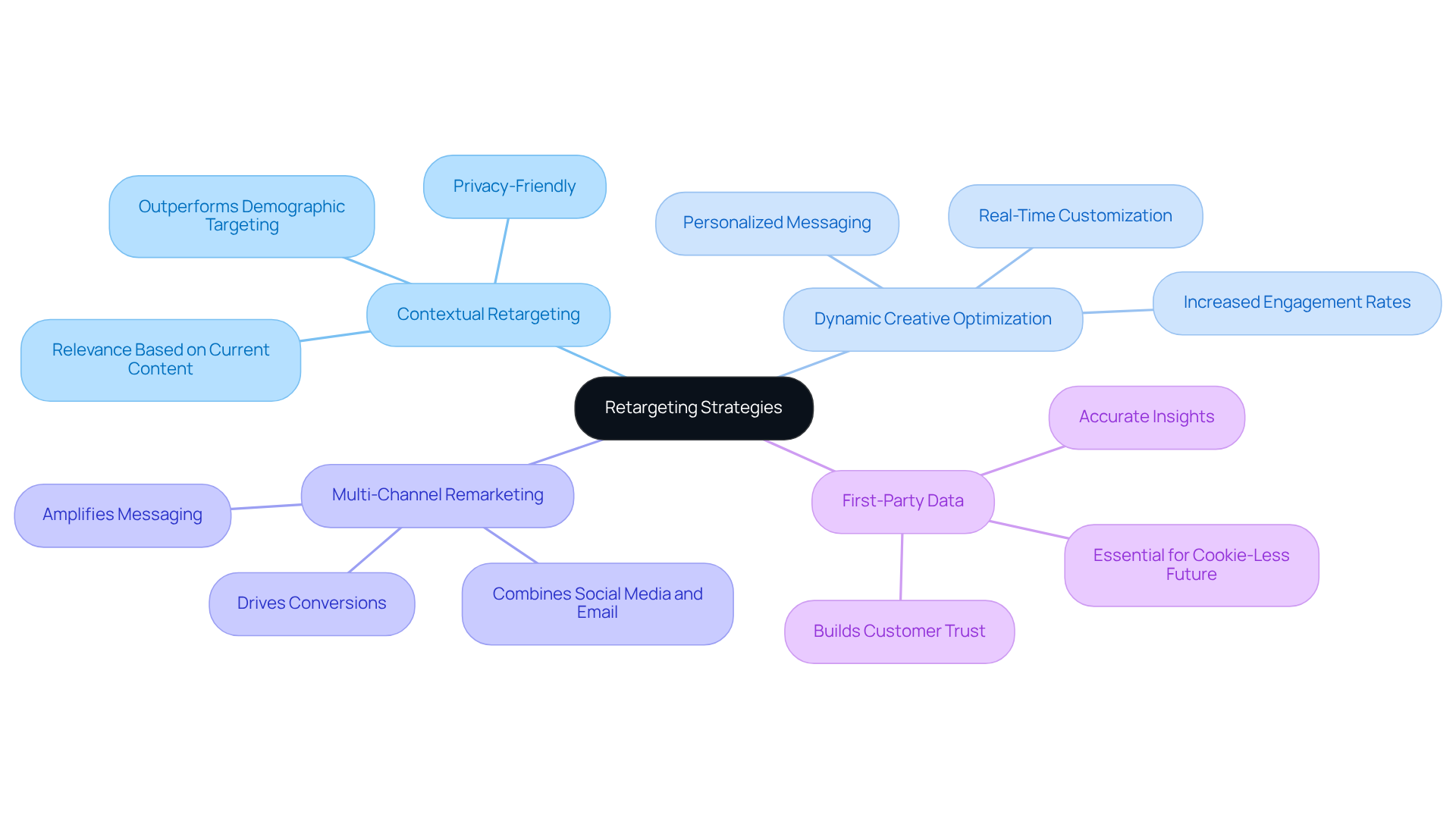
Brands can significantly enhance their advertising efforts by effectively utilizing a variety of strategies that incorporate . Consider : this approach focuses on displaying ads based on the content individuals are currently engaging with, rather than relying solely on their past behaviors. Not only does this method respect individual privacy, but it also guarantees that ads are relevant and timely.
In addition, allows companies to customize their messaging based on real-time user information, leading to increased engagement rates. Have you thought about the power of ? By combining with email promotions, brands can further amplify their messaging and drive conversions.
Moreover, constructing and utilizing is crucial for adapting to a cookie-less future. This data provides more than third-party sources, enabling brands to make informed decisions. By diversifying their and prioritizing transparency in data usage, companies can better navigate and preferences, positioning themselves for success in a privacy-conscious market.
Are you ready to take your to the next level? Engage with MediaNug to explore how these innovative approaches can transform your marketing efforts.
Optimize Campaign Performance Through Continuous Tracking
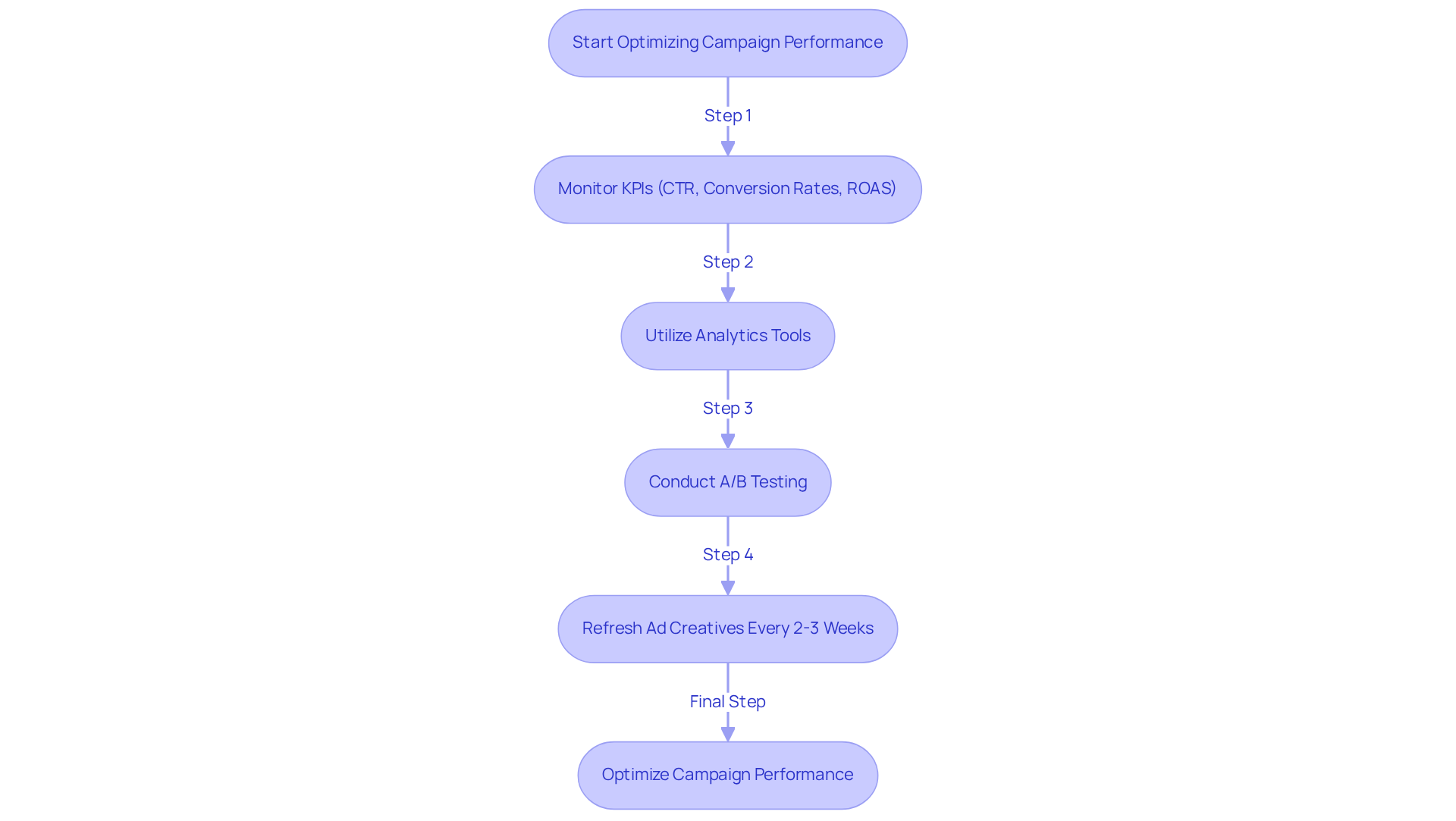
To guarantee the success of their strategies, companies must prioritize continuous tracking of campaign performance. such as , , and should be monitored regularly. Utilizing provides valuable insights into user behavior and campaign effectiveness, enabling marketers to make .
Furthermore, and targeting strategies can help identify the most effective approaches. For instance, companies that refresh their ad creatives every two to three weeks have reported a 22% decrease in . This is similar to a DTC clothing company that updated testimonial clips every two weeks. By maintaining a focus on performance metrics, companies can optimize their efforts, ensuring that they maximize their advertising spend and achieve desired outcomes.
In 2025, the emphasis on KPIs is more critical than ever. Brands are leveraging and AI-driven insights to refine their strategies and enhance overall campaign performance. Are you ready to take your retargeting efforts to the next level?
Conclusion
Adopting effective cookie pool retargeting strategies is not just beneficial; it’s essential for brands aiming to thrive in today’s privacy-conscious advertising landscape. By leveraging first-party data and committing to ethical data collection practices, marketers can craft personalized experiences that truly resonate with their target audiences. This approach not only enhances consumer trust but also significantly boosts overall campaign performance.
Key insights throughout this discussion highlight the critical nature of robust data management strategies, the exploration of diverse retargeting techniques, and the necessity of continuous performance tracking. Companies are strongly encouraged to implement comprehensive CRM systems, utilize contextual retargeting, and regularly evaluate their campaigns to ensure they remain relevant and effective. These best practices empower brands to adapt to the evolving landscape and optimize their advertising spend.
Ultimately, as the digital marketing landscape continues to shift, embracing these cookie pool retargeting strategies is not merely a choice; it’s a necessity. Brands must proactively refine their approaches and leverage insights to stay ahead of consumer preferences. By doing so, they can ensure their marketing efforts are not only impactful but also sustainable in a future that prioritizes user privacy and engagement.
Frequently Asked Questions
What is cookie pool retargeting?
Cookie pool retargeting is a strategy in advertising that gathers insights from various sources to create a targeted group of potential clients who have shown interest in a brand's offerings. It allows advertisers to deliver personalized ads based on individuals' past interactions.
Why is cookie pool retargeting important in today's advertising landscape?
It addresses the challenges posed by the decline of third-party cookies by enabling advertisers to use first-party data and other insights to effectively re-engage consumers with personalized advertising.
What are the key components for successful cookie pool retargeting by 2025?
Successful cookie pool retargeting relies on effective use of first-party data, meticulous monitoring of user behavior, and contextual signals to craft strategies that meaningfully re-engage consumers.
How do privacy regulations affect cookie pool retargeting?
As privacy regulations tighten, marketers must prioritize ethical data collection practices to ensure compliance while still leveraging their resources for impactful re-engagement efforts.
What are the benefits of adopting cookie pool retargeting strategies?
Adopting cookie pool retargeting strategies sharpens audience targeting, cultivates trust and engagement with consumers, and ultimately drives enhanced campaign performance.
List of Sources
- Understand Cookie Pool Retargeting Mechanisms
- ecommercegermany.com (https://ecommercegermany.com/blog/third-party-cookies-decline-impact-digital-marketing)
- americaneagle.com (https://americaneagle.com/insights/blog/post/search-intent-retargeting)
- madmenmarketinginc.com (https://madmenmarketinginc.com/the-shift-beyond-third-party-cookies-what-it-means-for-your-2025-marketing-strategy)
- usercentrics.com (https://usercentrics.com/guides/cookieless-marketing/cookieless-retargeting)
- postmediasolutions.com (https://postmediasolutions.com/en-ca/blog/the-impact-of-cookie-deprecation-what-marketers-need-to-know-in-2025)
- Implement Effective Data Management Strategies
- fifthcolor.com (https://fifthcolor.com/blogs/news/5-data-driven-marketing-trends-to-watch-for-the-rest-of-2025)
- gainshare.com (https://gainshare.com/blog/posts/the-importance-of-first-party-data-in-digital-advertising)
- metadata.io (https://metadata.io/resources/blog/the-new-era-of-retargeting-best-practices-for-2025)
- digitalmarketinginstitute.com (https://digitalmarketinginstitute.com/blog/why-first-party-data-is-more-important-than-ever-and-how-to-use-it)
- forbes.com (https://forbes.com/sites/google-ads/2025/08/14/strengthen-your-first-party-data-to-maximize-ai-powered-growth)
- Explore Diverse Retargeting Strategies Using Cookie Pools
- emfluence.com (https://emfluence.com/blog/the-cookieless-future-is-here-what-marketers-need-to-know-in-2025)
- adweek.com (https://adweek.com/media/contextual-signals-win-as-data-accelerates-marketing)
- redtrack.io (https://redtrack.io/blog/cookieless-retargeting-strategies)
- postmediasolutions.com (https://postmediasolutions.com/en-ca/blog/the-impact-of-cookie-deprecation-what-marketers-need-to-know-in-2025)
- jasminedirectory.com (https://jasminedirectory.com/blog/the-post-cookie-playbook-contextual-advertising-strategies-for-2026)
- Optimize Campaign Performance Through Continuous Tracking
- finance.yahoo.com (https://finance.yahoo.com/news/big-pivot-digital-ad-budgets-150000230.html)
- targetmarket.com (https://targetmarket.com/blog/the-most-important-digital-marketing-metrics-to-track-in-2025)
- execviva.com (https://execviva.com/executive-hub/retargeting-kpis)
- newswirejet.com (https://newswirejet.com/retargeting-statistics)
- linkedin.com (https://linkedin.com/pulse/q3-2025-digital-advertising-news-updates-trends-viden-newsletter-wfttf)