
Introduction
In an era where digital advertising is fiercely competitive, the success of paid media hinges on strategic execution. This article explores best practices that not only enhance the impact of campaigns but also ensure that marketing budgets are utilized efficiently. With countless options and techniques at their disposal, how can advertisers effectively navigate the complexities of paid media to ensure measurable success? Exploring these four essential practices could be the key to unlocking the full potential of advertising investments.
Understand the Fundamentals of Paid Media Advertising
Are you struggling to make your paid media advertising service pay off? Paid media advertising service encompasses marketing strategies that involve compensating for the display of promotional content across diverse channels, including social platforms, search engines, and display networks. Key components include:
- Types of Paid Media: Familiarize yourself with various types of paid media, such as pay-per-click (PPC), social media ads, and display advertising. Each type has unique characteristics and best practices that can significantly affect the effectiveness of your initiatives. For instance, PPC allows advertisers to bid on keywords, ensuring visibility when potential customers search for relevant terms. Meanwhile, social media ads leverage user demographics and interests for targeted outreach.
- Targeting and Segmentation: How well do you know your audience? Understanding them is critical for success. Utilize demographic, geographic, and psychographic data to create targeted initiatives that resonate with specific segments. Effective targeting can lead to higher engagement rates; for example, ads that utilize user-generated content (UGC) convert 102.4 percent higher than average, highlighting the importance of aligning content with audience preferences.
- Budgeting and Bidding: Discover various budgeting methods, including daily and lifetime budgets, and how bidding operates on platforms such as Google Ads and Facebook Ads. Efficient budget oversight is crucial; reallocating funds towards advertisements that yield results instead of raising expenditure on underperforming initiatives can improve overall performance. In 2026, understanding the nuances of CPC, CPM, and CPA bidding will be essential for optimizing ad spend. MediaNug has shown a 50% reduction in CPA and a 20% decline in CPC, showcasing the success of their approaches.
- Ad Formats: Explore various ad formats available on different platforms, such as video ads, carousel ads, and sponsored posts. Each format serves distinct purposes and can align differently with project objectives. For example, video ads are particularly effective on platforms like TikTok for brand awareness, while carousel ads can showcase multiple products, enhancing user engagement.
When you master these fundamentals and integrate performance-driven creative approaches, marketers can establish a robust base for their paid media advertising service efforts, leading to more effective initiatives. Without a strategic approach to paid media, your marketing dollars may be wasted, leaving potential customers untapped.

Develop a Structured Approach to Campaign Setup
A structured approach to campaign setup is essential for achieving measurable success in today's competitive landscape:
- Define Clear Objectives: Start by establishing specific, measurable, achievable, relevant, and time-bound (SMART) goals for your campaign. This clarity will guide all subsequent decisions and ensure alignment with overall business objectives. As industry experts note, defining SMART goals is crucial for effective advertising campaigns.
- Audience Research: Conduct thorough research to identify your target audience. Utilize resources like Google Analytics and social media insights to gather information on user behavior and preferences. In 2026, audience research tools are becoming increasingly essential, with around 75% of marketers relying on them to shape their strategies.
- Creative Development: At MediaNug, we believe that creative execution goes beyond just designing ads. It’s about aligning your creative strategy with media objectives and creating variations for controlled testing. Use A/B testing to evaluate different creatives, helping you identify which versions drive the best results and enhance engagement.
- Platform Selection: Choose the right platforms based on where your target audience spends their time. Each platform has unique characteristics and audience demographics that can influence the success of your initiatives. For example, platforms like TikTok and Meta are vital for reaching younger demographics, while LinkedIn excels in B2B engagement.
- Launch and Monitor: Once your initiative is live, monitor its performance closely. Use real-time analytics to track key metrics such as conversion rates and return on ad spend (ROAS). MediaNug prioritizes learning velocity over vanity metrics, focusing on actual sales data to gauge success effectively. Effective monitoring allows brands to adjust strategies in real-time, keeping them aligned with their goals.
By adhering to this organized method, brands can improve their promotional effectiveness and attain superior outcomes. Ultimately, a disciplined approach to campaign management can transform advertising efforts into powerful growth engines for your brand.

Implement Continuous Optimization and Testing Strategies
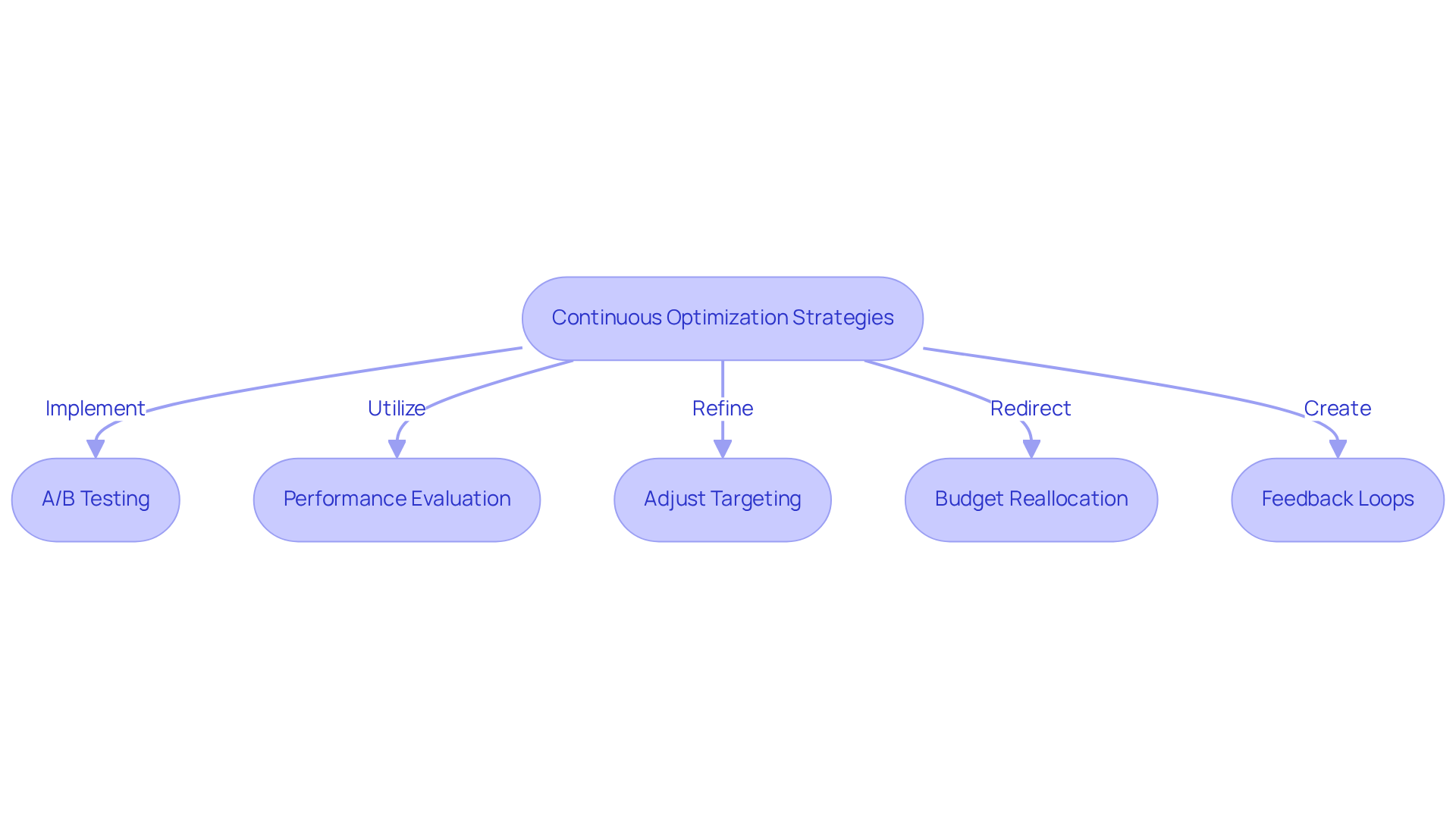
In the fast-paced world of digital advertising, employing a paid media advertising service for ongoing optimization is not just beneficial; it's essential for success. Here are key strategies to implement:
- A/B Testing: Regularly conduct A/B tests on various elements of your campaigns, including ad copy, visuals, and targeting parameters. This method allows for data-driven decisions, helping to identify what resonates best with your audience. For instance, changing a call-to-action from 'Request a quote' to 'Request pricing' has been shown to increase click-through rates by 162%.
- Performance Evaluation: Utilize analytics tools to track metrics related to initiatives such as click-through rates (CTR), conversion rates, and return on ad spend (ROAS). In 2026, average click-through rates for the paid media advertising service are anticipated to reflect the changing landscape, highlighting the necessity for continuous analysis to recognize trends and areas for enhancement.
- Adjust Targeting: Based on performance data, refine your audience targeting. Consider factors such as demographics, interests, and behaviors to ensure your ads reach the most relevant users. This targeted approach can significantly enhance engagement and conversion rates.
- Budget Reallocation: Be flexible with your budget allocation. Redirect resources to successful initiatives and pause or modify those that are not performing well to enhance ROI. Being flexible with your budget can make all the difference in a competitive landscape.
- Feedback Loops: Create feedback loops between creative and media teams to guarantee that insights from project outcomes influence future creative development and adjustments. This collaborative approach fosters continuous improvement and innovation in advertising efforts.
By applying these ongoing improvement techniques, brands can boost their efforts and attain lasting growth. Embracing these strategies will not only enhance your current campaigns but also position your brand for sustained success in the future.
Measure and Analyze Campaign Performance Effectively
Are your strategies for paid media advertising service truly delivering results? Effective measurement and analysis of initiative results are essential for optimizing the paid media advertising service strategies. Here are key practices to follow:
- Identify Key Performance Indicators (KPIs): Determine which KPIs are most relevant to your campaign goals. Common KPIs include Click-Through Rate (CTR), conversion rate, Cost per Acquisition (CPA), and Return on Ad Spend (ROAS). Focus on metrics that align with your objectives. For instance, a healthy ROAS for high-margin businesses typically hovers around 4:1, while low-margin businesses may need a ROAS of 10:1 to remain profitable.
- Utilize Analytics Tools: Leverage analytics platforms such as Google Analytics and Facebook Insights to gather data on project effectiveness. These tools provide valuable insights into user behavior and engagement, enabling marketers to track metrics effectively. In 2026, integrating various analytics tools will be essential for comprehensive evaluation, as organizations that assess across efficiency, effectiveness, and impact will outperform those concentrating on isolated metrics.
- Conduct Post-Event Analysis: After an initiative concludes, perform a thorough analysis to evaluate its success. Compare actual results against your initial objectives and identify lessons learned for future campaigns. This step is vital for understanding the effectiveness of your strategies and making informed adjustments.
- Create Dashboards: Develop dashboards that illustrate key metrics and trends. This allows for quick assessments and facilitates data-driven decision-making. Effective dashboards should link marketing activities to business results, ensuring clarity in evaluating effectiveness.
- Iterate Based on Insights: Utilize the insights obtained from evaluation analysis to guide future campaigns. Modify approaches, targeting, and creative according to what has been demonstrated to be effective. Ongoing optimization is vital, as effective marketing necessitates a cycle of testing, learning, and refining strategies to improve overall results.
Without a robust measurement framework, your marketing investments may not yield the returns you expect.

Conclusion
In the competitive arena of paid media advertising, neglecting best practices can lead to wasted budgets and missed opportunities. Understanding the fundamentals, setting up structured campaigns, and continuously optimizing are essential for brands to enhance their advertising efforts and achieve meaningful results. The strategic integration of these elements maximizes the effectiveness of paid media initiatives and ensures efficient use of marketing budgets.
Key insights highlighted throughout the article emphasize the importance of:
- Targeted audience segmentation
- Budget management
- Performance analysis
From utilizing various ad formats to conducting thorough audience research and leveraging A/B testing, each practice plays a vital role in refining campaigns. Moreover, measuring key performance indicators allows marketers to make informed decisions that align with business objectives, ultimately leading to improved ROI.
How can brands stay competitive in the ever-evolving landscape of digital advertising? By adopting these best practices. Prioritizing a data-driven approach and fostering a culture of continuous improvement empowers organizations to optimize their current campaigns and pave the way for sustained growth and success in the future. By embracing these strategies, brands can not only enhance their advertising effectiveness but also secure their position in an ever-evolving digital landscape.
Frequently Asked Questions
What is paid media advertising?
Paid media advertising involves marketing strategies that compensate for the display of promotional content across various channels, including social platforms, search engines, and display networks.
What are the main types of paid media?
The main types of paid media include pay-per-click (PPC), social media ads, and display advertising. Each type has unique characteristics and best practices that can affect the effectiveness of advertising initiatives.
How does pay-per-click (PPC) advertising work?
PPC allows advertisers to bid on keywords, ensuring their ads are visible when potential customers search for relevant terms.
Why is audience targeting important in paid media advertising?
Understanding your audience is critical for success. Utilizing demographic, geographic, and psychographic data for targeted initiatives can lead to higher engagement rates, with ads using user-generated content converting significantly better than average.
What budgeting methods are available for paid media advertising?
Various budgeting methods include daily and lifetime budgets. Efficient budget management involves reallocating funds to successful advertisements rather than increasing spending on underperforming ones.
What are CPC, CPM, and CPA bidding?
CPC (cost per click), CPM (cost per thousand impressions), and CPA (cost per acquisition) are bidding methods used on advertising platforms to optimize ad spending and performance.
What ad formats are commonly used in paid media advertising?
Common ad formats include video ads, carousel ads, and sponsored posts. Each format serves distinct purposes and aligns differently with project objectives.
How can mastering the fundamentals of paid media advertising benefit marketers?
Mastering these fundamentals and integrating performance-driven creative approaches can help establish a robust base for paid media advertising efforts, leading to more effective initiatives and better utilization of marketing budgets.
List of Sources
- Understand the Fundamentals of Paid Media Advertising
- greenlanemarketing.com (https://greenlanemarketing.com/resources/articles/paid-media-ppc-trends-predictions-for-2026)
- edensdigital.agency (https://edensdigital.agency/guide-to-paid-media-advertising)
- Mastering Social Media Advertising Campaigns in 2026: A Practical Guide (https://levitate.ai/blog-posts/mastering-social-media-advertising-campaigns-in-2026-a-practical-guide)
- neilpatel.com (https://neilpatel.com/blog/paid-media-trends)
- Paid Media Trends Shaping 2026 Advertising: How to Add Them into Your Marketing Strategy – Devaney & Associates (https://devaneyagency.com/paid-media-trends-shaping-2026-advertising-how-to-add-them-into-your-marketing-strategy)
- Develop a Structured Approach to Campaign Setup
- Advertising Trends & Best Practices for 2026 — Optimum Media (https://optimum.media/blog/advertising-trends-and-best-practices-for-2026)
- impressiondigital.com (https://impressiondigital.com/blog/whats-new-in-paid-media-january-2026-industry-updates)
- The ABCs of Paid Social Advertising Strategy: Revisited for 2026 | Z2A Digital (https://z2adigital.com/blog-content/paid-social-strategy-2026)
- Paid Media Trends Shaping 2026 Advertising: How to Add Them into Your Marketing Strategy – Devaney & Associates (https://devaneyagency.com/paid-media-trends-shaping-2026-advertising-how-to-add-them-into-your-marketing-strategy)
- digitalapplied.com (https://digitalapplied.com/blog/google-ads-performance-max-2026-campaign-guide)
- Implement Continuous Optimization and Testing Strategies
- 7 A/B testing best practices to drive greater ad performance (https://lunio.ai/blog/ab-testing-best-practices)
- A/B Testing & CRO Stats Every Optimizer Should Know (https://convert.com/blog/a-b-testing/ab-testing-stats)
- Paid Media Trends Shaping 2026 Advertising: How to Add Them into Your Marketing Strategy – Devaney & Associates (https://devaneyagency.com/paid-media-trends-shaping-2026-advertising-how-to-add-them-into-your-marketing-strategy)
- A/B Testing — What it is, examples, and best practices (https://business.adobe.com/blog/basics/learn-about-a-b-testing)
- A/B Testing to Improve Your Online Marketing (https://extension.psu.edu/a-b-testing-to-improve-your-online-marketing)
- Measure and Analyze Campaign Performance Effectively
- Paid Media Trends Shaping 2026 Advertising: How to Add Them into Your Marketing Strategy – Devaney & Associates (https://devaneyagency.com/paid-media-trends-shaping-2026-advertising-how-to-add-them-into-your-marketing-strategy)
- aimediagroup.com (https://aimediagroup.com/post/top-metrics-to-track-in-your-paid-media-campaigns-and-how-to-optimize-them)
- Performance Marketing Metrics You’ll Need in 2026 (https://idx.inc/newsroom/performance-marketing-metrics)
- How to Measure Digital Marketing Performance Accurately with 5 Essential Tools for 2026 (https://digitalagencybangkok.com/measure-digital-marketing-performance-2026)
Need Better Performing Social Content?
MediaNug helps brands scale through creator partnerships, performance creative, and platform-native content strategies built for modern social platforms.
Continue Reading
Influencer & Creator Marketing
- The Complete Guide to Influencer Marketing Strategy & Operations
- The Complete Guide to UGC Content Strategy for Brands
- Master UGC Creator Tools: Best Practices for Brand Success
Paid Social & Performance Creative
- The Complete Guide to Paid Social Creative Strategy
- Why Your Brand Needs a Performance Creative Agency for Growth
- What is an Ad Creative Agency and Why It Matters for Brands
Platform & Trend Insights
- UGC Creators for Paid Social Ads: How to Find, Vet, and Scale Winning Creative
- 4 Best Practices for Effective TikTok Creatives That Drive Engagement
- 10 Key Insights on Instagram Demographics for Brand Strategies
- The Role Of Visual Storytelling In Social Media
Strategy & Growth
- Understanding Creative Strategy: Key Concepts and Examples
- 6 Steps to Create an Effective Creative Strategy Sample
- Understanding eCommerce Brand Strategy: Importance and Key Components