Introduction
In today’s competitive landscape of social media advertising, businesses are confronted with the formidable challenge of distinguishing themselves amidst the noise. Success is not merely a product of creativity; it demands meticulous strategic planning and execution. This article explores four essential best practices that can empower brands to refine their advertising strategies.
- Establishing clear objectives
- Gaining a deep understanding of their target audience
- Crafting compelling content
- Leveraging data-driven insights
These practices are crucial. How can companies ensure their advertising efforts not only capture attention but also yield meaningful results?
Define Clear Objectives and KPIs for Advertising Success
To achieve , companies must establish clear objectives and . These objectives should adhere to the SMART criteria:
- Specific
- Measurable
- Achievable
- Relevant
- Time-bound
For example, rather than setting a vague goal like 'increase brand awareness,' a more effective objective would be 'aim to by 25% by Q1 2026.' Establishing KPIs such as , , and engagement rates is crucial for tracking progress. Regularly reviewing these metrics allows for , ensuring that remain aligned with business goals. Furthermore, brands can leverage tools like Google Analytics, CRM systems, and marketing automation platforms to effectively monitor these KPIs.

Identify and Analyze Your Target Audience
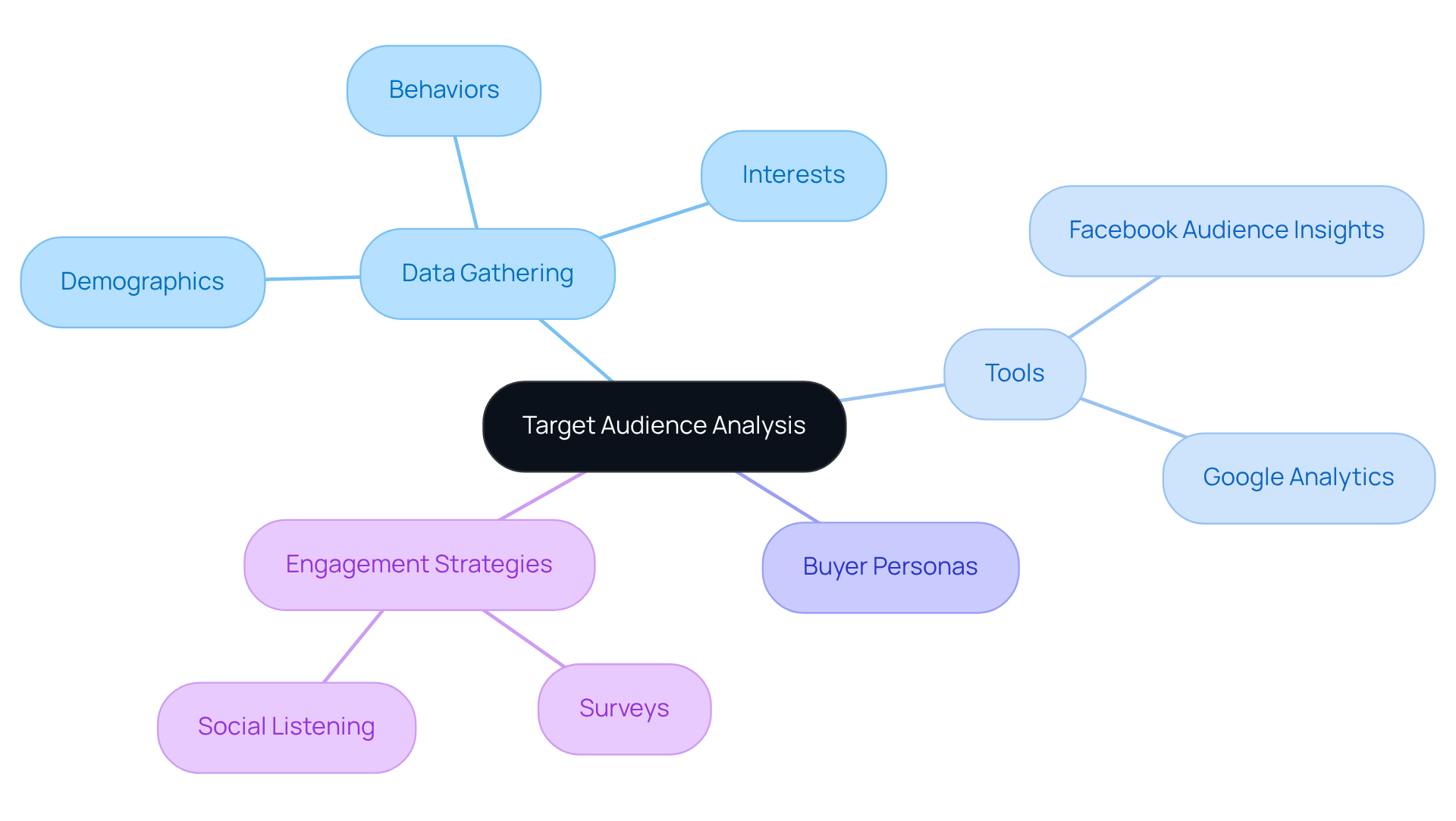
Identifying and analyzing your is crucial for . Gathering data on is the first step. Brands should leverage tools like Facebook Audience Insights and Google Analytics to segment their effectively. By creating detailed , companies can gain a deeper understanding of the motivations and pain points of potential customers.
For example, if a company targets young adults passionate about fitness, their must reflect this lifestyle. Utilizing that resonate with this demographic is essential. Furthermore, interacting with your can yield into their preferences and needs. This approach enables the development of more that truly connect with the audience.
Develop Compelling and Relevant Advertising Content
To create compelling , companies must focus on and authenticity. This approach not only captures attention but also builds trust with consumers. Content should be it will be displayed on. For instance, like TikTok and Instagram Reels, drawing in viewers effectively.
Incorporating significantly enhances authenticity and relatability. Consumers often place greater trust in peer recommendations than in company messaging. This shift in trust dynamics highlights the importance of . Furthermore, employing can effectively guide potential customers toward desired actions, such as visiting a website or making a purchase.
and messages is crucial. This ongoing assessment helps determine what resonates most effectively with viewers, ensuring that advertising efforts remain relevant and impactful. By focusing on these strategies, companies can create that not only engages but also converts.

Utilize Data-Driven Insights for Continuous Improvement
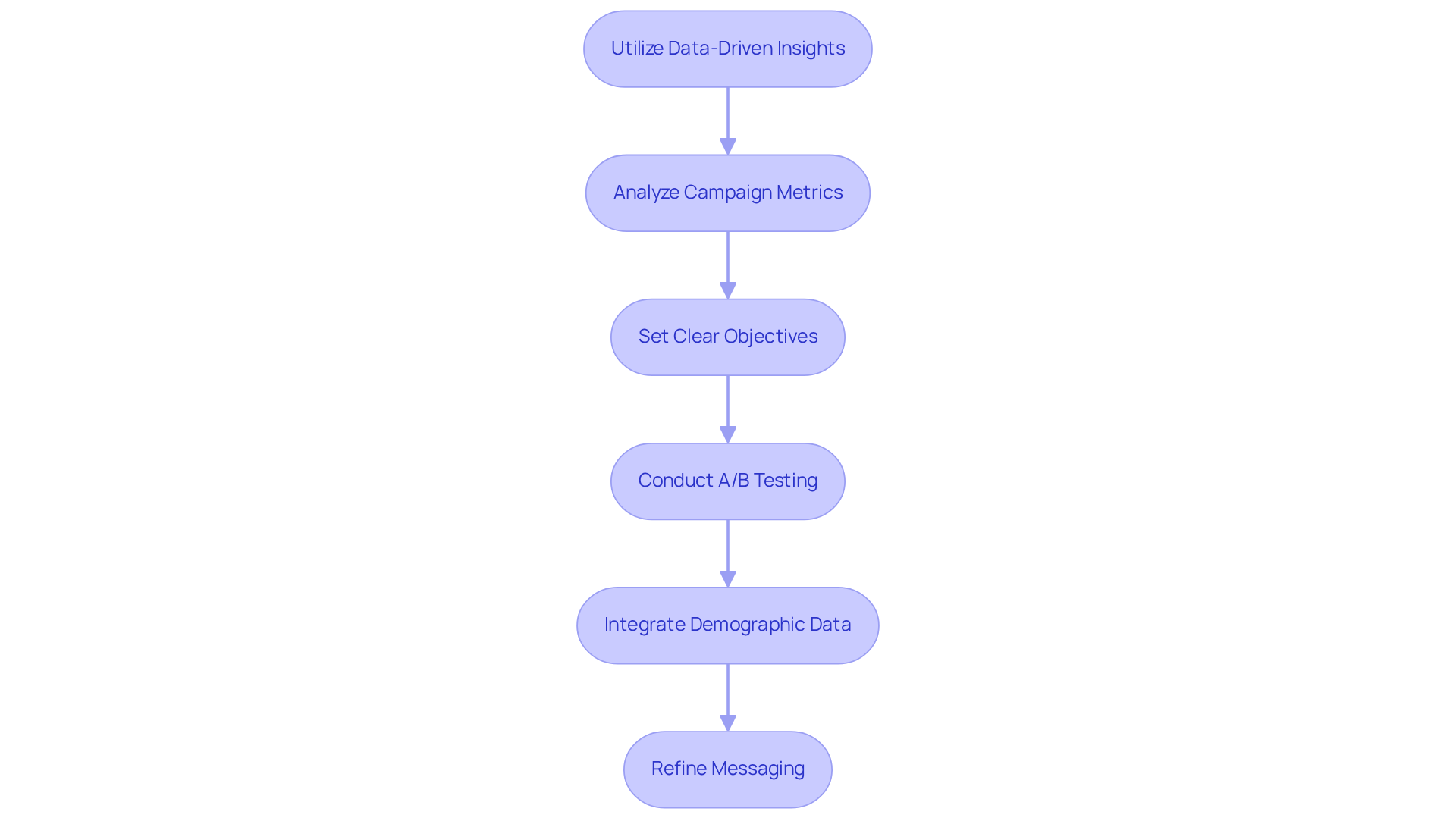
Harnessing is crucial for companies in the business that are looking to elevate their . Regularly not only uncovers trends but also highlights areas ripe for improvement. stands out as a powerful method for evaluating different ad variations, allowing companies to discern which elements resonate most effectively with their audience. Before embarking on A/B tests, it's vital for companies to set clear objectives - whether that's increasing click-through rates or .
Tools like Google Analytics and social media analytics platforms provide invaluable insights into , conversion rates, and overall . Furthermore, integrating both first- and third-party demographic data into media strategies can significantly enhance targeting and improve campaign outcomes. For example, a local restaurant discovered that an ad emphasizing family tradition resulted in 40% more orders compared to a generic message, illustrating the impact of .
However, companies must tread carefully to avoid common pitfalls in , such as testing too many variables at once or utilizing insufficient sample sizes, which can yield unreliable results. By consistently analyzing this data, companies can make informed decisions regarding resource allocation, scale successful strategies, and refine messaging to better align with audience preferences.
This iterative approach not only enhances current campaigns in the business but also informs future marketing efforts, ensuring brands maintain a competitive edge in the ever-evolving digital advertising landscape. Are you ready to leverage these insights for your next campaign?
Conclusion
Establishing a successful social media advertising business is not just about participation; it’s about mastering best practices that drive engagement and conversion. By setting clear objectives, understanding your target audience, crafting compelling content, and leveraging data-driven insights, brands can dramatically enhance their advertising effectiveness and achieve significant results.
The importance of defining SMART objectives and relevant KPIs cannot be overstated; these elements form the bedrock for measuring success. Furthermore, analyzing the target audience is crucial for tailoring marketing strategies that truly resonate with potential customers. The creation of engaging and authentic content, paired with a commitment to continuous improvement through data analysis, are essential components that can propel advertising efforts to new heights.
In today’s fast-paced digital landscape, leveraging these best practices is vital for brands striving to stand out. By prioritizing clear goals, audience insights, impactful storytelling, and data-driven decision-making, companies can not only optimize their current campaigns but also lay the groundwork for future success. Embracing these strategies ensures that social media advertising efforts are not merely effective but also sustainable, driving long-term business growth.
Frequently Asked Questions
What are the key components of effective advertising objectives?
Effective advertising objectives should be Specific, Measurable, Achievable, Relevant, and Time-bound, commonly referred to as the SMART criteria.
Can you provide an example of a clear advertising objective?
Instead of a vague goal like "increase brand awareness," a clearer objective would be "aim to increase website traffic by 25% by Q1 2026."
What are some important key performance indicators (KPIs) for advertising?
Important KPIs for advertising include Cost Per Acquisition (CPA), Return on Ad Spend (ROAS), and engagement rates.
Why is it important to regularly review advertising metrics?
Regularly reviewing advertising metrics allows for timely adjustments to strategies, ensuring that advertising efforts remain aligned with business goals.
What tools can be used to monitor advertising KPIs effectively?
Brands can leverage tools such as Google Analytics, CRM systems, and marketing automation platforms to effectively monitor their advertising KPIs.
List of Sources
- Define Clear Objectives and KPIs for Advertising Success
- markopolo.ai (https://markopolo.ai/post/important-marketing-kpis-you-should-be-tracking)
- ironmarkusa.com (https://ironmarkusa.com/setting-smart-goals-2025)
- redtrack.io (https://redtrack.io/blog/essential-advertising-kpis)
- cmswire.com (https://cmswire.com/digital-marketing/the-best-marketing-goals-and-kpis-to-set-for-2025)
- Identify and Analyze Your Target Audience
- blueconic.com (https://blueconic.com/resources/audience-segmentation-tools)
- newage.agency (https://newage.agency/en/blog/how-audience-segmentation-helps-increase-conversion)
- socialinsider.io (https://socialinsider.io/blog/social-media-target-audience)
- delve.ai (https://delve.ai/blog/audience-insights-tools)
- businessdasher.com (https://businessdasher.com/customer-segmentation-statistics)
- Develop Compelling and Relevant Advertising Content
- forbes.com (https://forbes.com/councils/forbescommunicationscouncil/2025/02/03/the-biggest-social-media-trends-shaping-2025)
- ppchero.com (https://ppchero.com/seven-social-media-marketing-trends-you-need-to-be-on-top-of-in-2025)
- The Power Of Storytelling In Modern Marketing (https://forbes.com/councils/forbescommunicationscouncil/2024/08/05/the-power-of-storytelling-in-modern-marketing)
- strikesocial.com (https://strikesocial.com/blog/7-social-media-advertising-trends-you-should-know-in-2025)
- slateteams.com (https://slateteams.com/blog/trends-in-social-media)
- Utilize Data-Driven Insights for Continuous Improvement
- nielsen.com (https://nielsen.com/insights/2025/maximizing-marketing-effectiveness-data-driven-decisions)
- info.zimmercommunications.com (https://info.zimmercommunications.com/blog/how-to-use-a/b-testing-to-refine-your-digital-campaigns)
- socialhospitality.com (https://socialhospitality.com/2025/10/a-b-testing-strategies-for-digital-growth)
- blog.socialmediastrategiessummit.com (https://blog.socialmediastrategiessummit.com/the-data-driven-marketer-in-2025-proving-impact-driving-strategy)
- invoca.com (https://invoca.com/blog/state-of-data-driven-marketing-update-your-strategy)