
Introduction
Playable ads represent a groundbreaking shift in digital marketing, seamlessly blending entertainment with advertising to forge immersive user experiences. By enabling potential customers to engage with a mini-version of a game or app, brands can dramatically boost engagement and conversion rates. But as the digital advertising landscape continues to evolve, how can brands effectively leverage the power of playable ads to distinguish themselves in a saturated market? This guide outlines four essential steps for crafting high-impact playable ads that not only capture attention but also drive measurable results.
Understand Playable Ads and Their Benefits
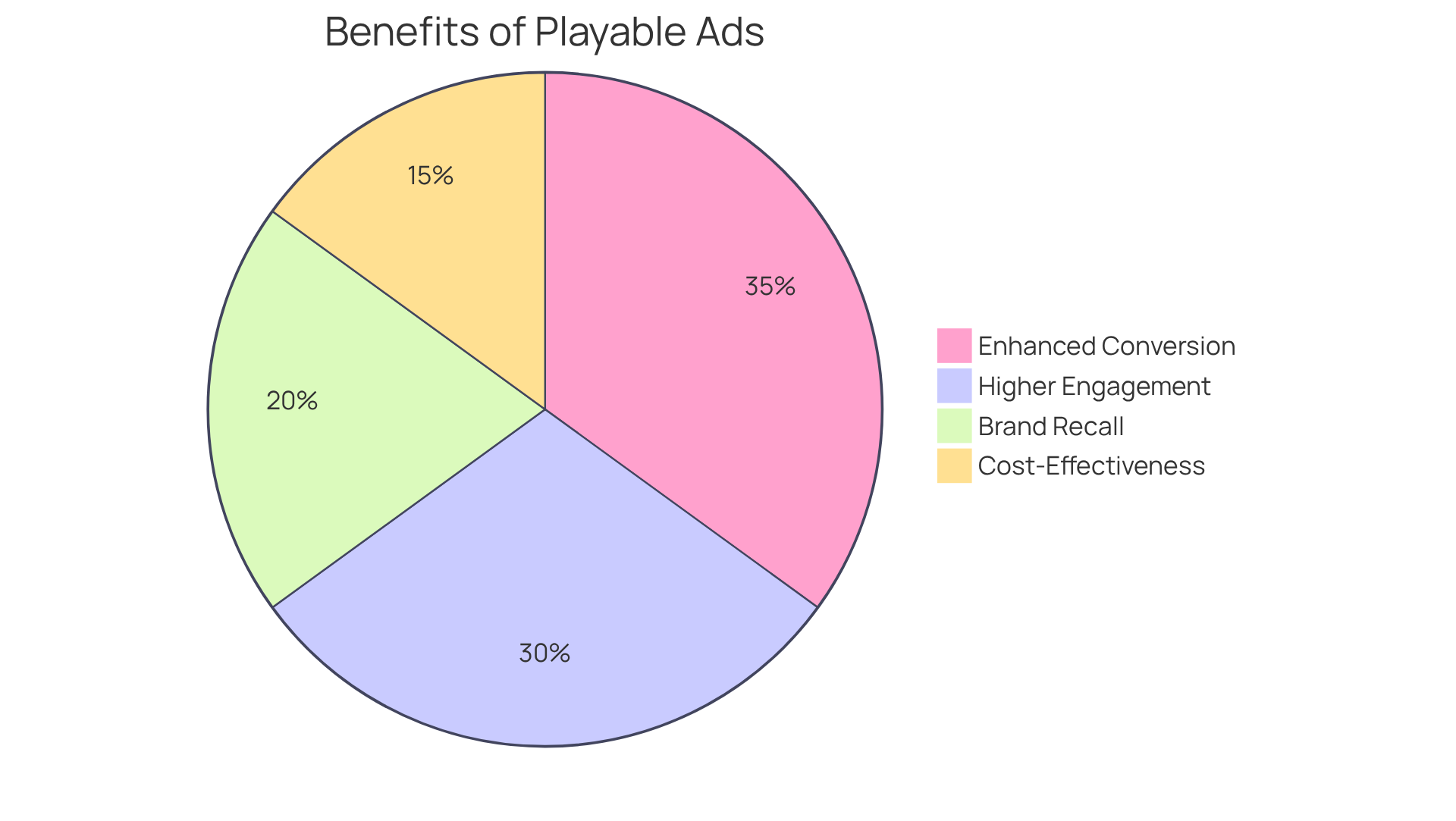
signify a groundbreaking shift in by enabling individuals to interact with a mini-version of a game or app directly within the playable ad. This innovative format not only captures attention but also drives engagement, creating a more immersive experience for users. The advantages of are significant:
- : can achieve engagement rates that are 2-3 times higher than traditional ad formats. Users are naturally drawn to content that allows them to play or .
- : Research shows that can yield conversion rates up to 319% higher than conventional video ads. This remarkable increase in effectiveness has been particularly notable following the recovery from financial challenges in 2023.
- : The engaging nature of interactive advertisements strengthens , leading to better retention and recall among consumers.
- Cost-Effectiveness: By engaging users more effectively, can lower and improve . They also tend to be more resource-efficient, resulting in a lower cost per install (CPI) compared to traditional advertising methods.
Understanding these benefits is crucial for brands aiming to capitalize on the latest trends in . Industry leaders, such as AppAgent, emphasize that creating is essential for fostering deeper user interaction and maximizing engagement and conversion rates. For instance, Gram Games experienced a 25% increase in paid conversions by utilizing , showcasing their effectiveness in real-world applications. Brands should consider these insights as they strategize their advertising efforts.
Design Your Playable Ad Concept
To design an effective , it’s essential to follow these strategic steps:
- Identify Your : Understanding your ideal individuals is paramount. Analyze demographics, interests, and behaviors to gain insights that are crucial for crafting ads that truly resonate and engage.
- by clearly articulating your goals for the playable ad. Whether your focus is on , audience acquisition, or product promotion, having well-defined objectives will guide your effectively.
- : Collaborate with your team in a brainstorming session to generate innovative concepts. Encourage creativity and focus on integrating that align with your product, making the ad both enjoyable and interactive.
- Sketch Your Concept: Develop rough sketches or storyboards to visualize the interaction flow of your ad. This step is vital for refining your ideas and identifying potential challenges early in the process.
- : Present your concept to stakeholders or potential users to collect valuable feedback. This input is invaluable for refining your idea and ensuring it meets audience expectations before production begins.
By following these steps, you can develop an that is not only engaging but also strategically aligned with your marketing objectives.

Build and Optimize Your Playable Ad
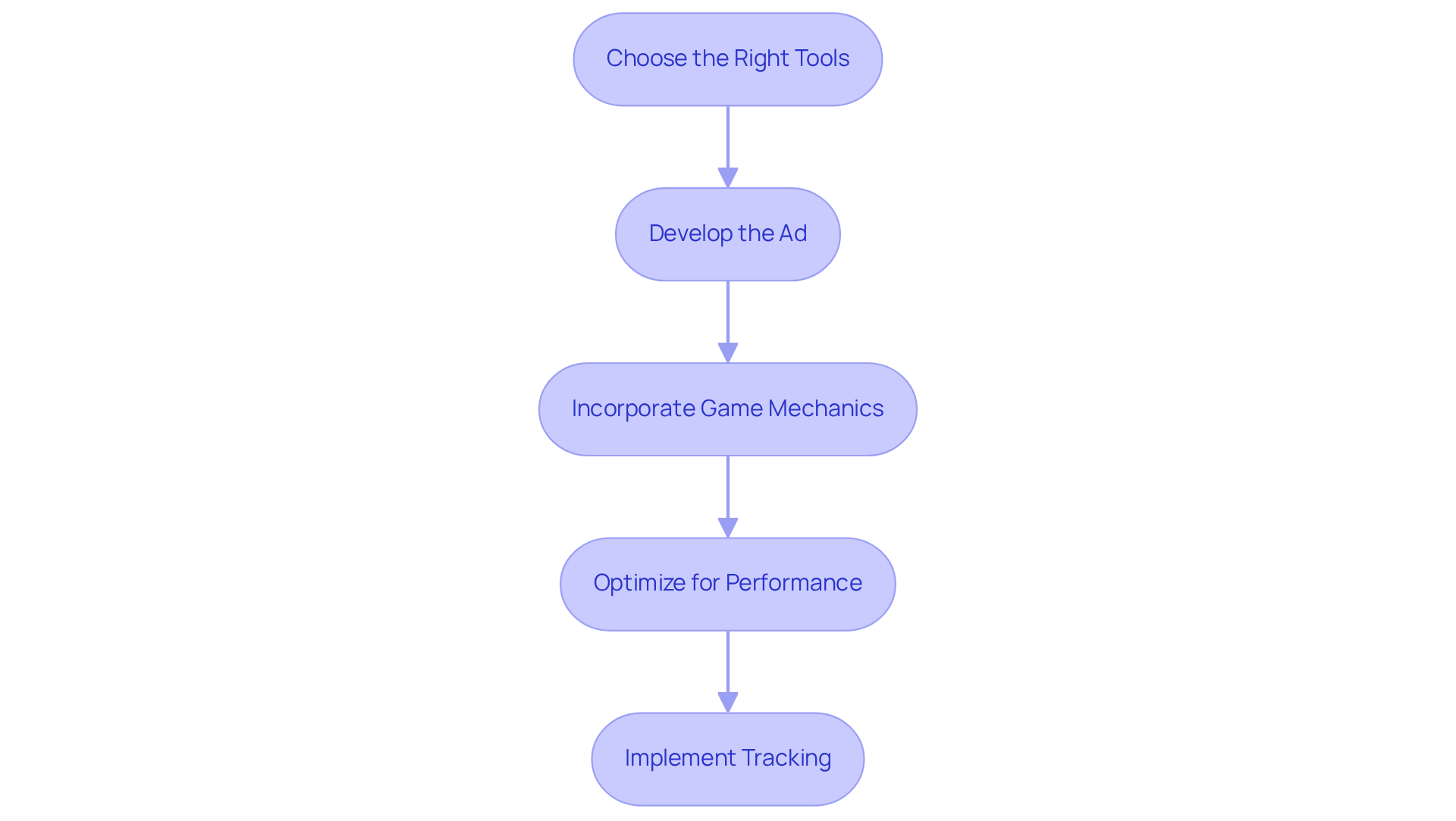
Building and optimizing your playable ad involves several key steps that can significantly enhance your :
- : Selecting a platform that simplifies the creation of interactive advertisements is crucial. Popular options like PlayableMaker, Unity, or custom HTML5 solutions cater to various skill levels and project requirements, ensuring you have the right tools at your disposal.
- Develop the Ad: Utilize coding or a drag-and-drop interface to craft your playable ad. It's essential that your ad is visually appealing and aligns with your brand's aesthetics. Engaging graphics can significantly enhance audience interest, making your ad stand out in a crowded marketplace.
- : Integrating interactive elements is vital for enhancing participant engagement. Consider adding challenges, rewards, or gameplay mechanics that mirror your product's features. Advertisements that include significant interactions have been shown to , creating an experience that feels seamless and natural.
- Optimize for : Rigorously testing your ad across various devices and platforms is necessary to ensure smooth operation. Focus on load times, responsiveness, and overall experience. can demonstrate the importance of by of approximately 17% when executed correctly.
- Implement Tracking: Establishing tracking parameters is essential for monitoring interactions and . This data is crucial for analyzing engagement and identifying areas for enhancement. Successful campaigns have observed a through iterative improvements based on this data.
By focusing on these aspects, you can develop an engaging ad that not only captivates users but also drives measurable results. Are you ready to elevate your advertising game?
Test and Analyze Ad Performance
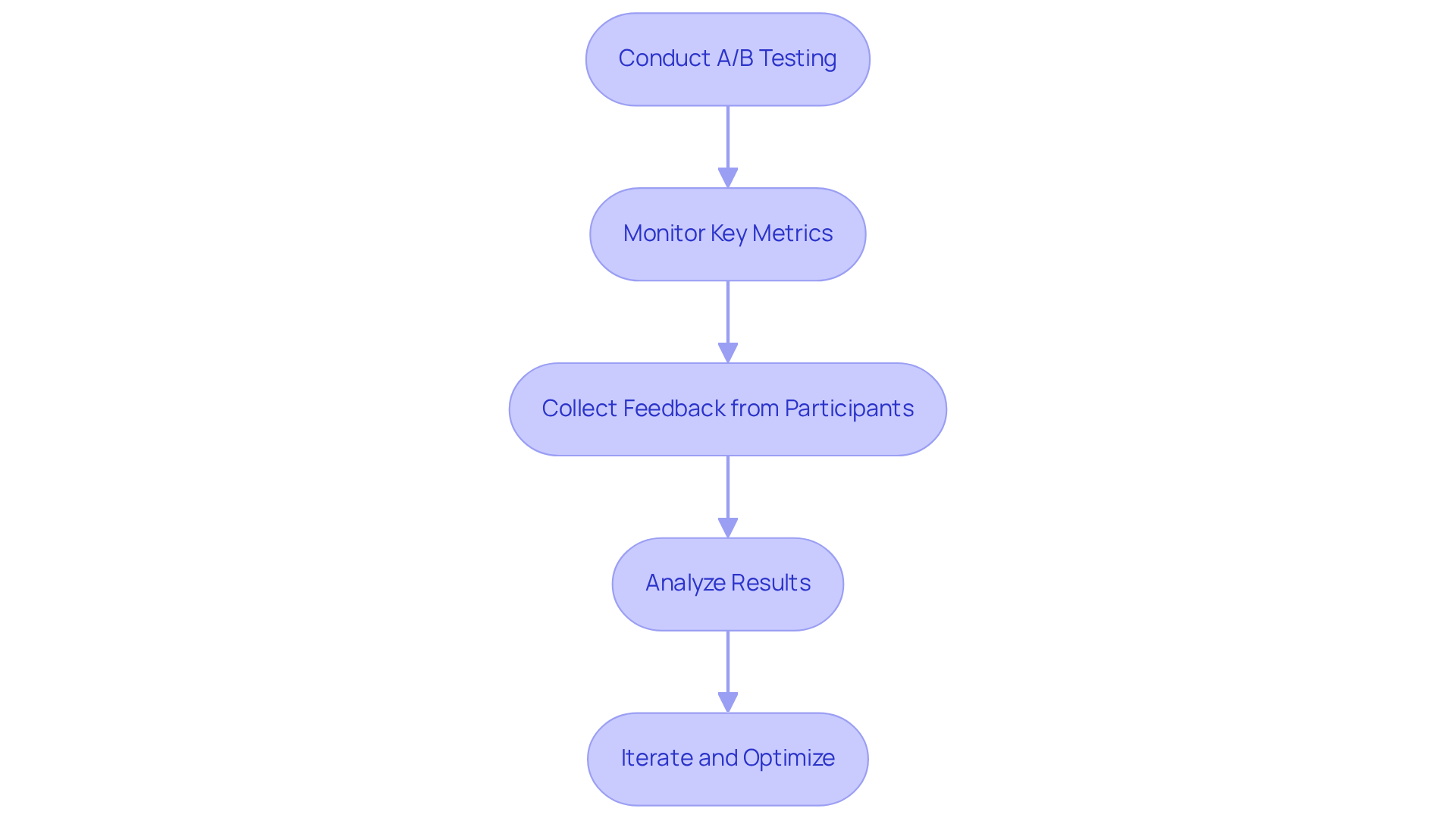
To ensure your performs at its best, follow these essential steps for testing and analysis:
- Conduct : Create multiple versions of your to test different elements, such as visuals, gameplay mechanics, and calls to action. This approach helps identify which variations resonate most with your audience. As Josh Gallant emphasizes, is crucial for determining the effectiveness of your experiments and hypotheses.
- Monitor Key Metrics: Track vital like click-through rates (CTR), conversion rates, and engagement time. Utilize analytics tools to gather data on interactions. Notably, ads that incorporate meaningful interactions have experienced a compared to those without.
- : Encourage individuals to share their feedback on their experience with the ad. This qualitative data can provide into what users appreciated or found lacking.
- : Review the data collected from your tests and feedback. Look for patterns and trends that indicate what works and what doesn’t. Research indicates that integrating advanced techniques can lead to a , underscoring the impact of effective analysis.
- : Use the insights gained from your analysis to make informed adjustments to your interactive ad. Continuous iteration will enhance performance over time.
By implementing these testing and analysis strategies, you can ensure that your ads are not only engaging but also effective in achieving your marketing objectives, especially when they are designed as s.
Conclusion
The creation of high-impact playable ads marks a pivotal shift in digital marketing. This innovative approach allows brands to engage users through interactive experiences, significantly enhancing user involvement. By harnessing the unique capabilities of playable ads, brands can capture attention and foster deeper connections with their audience, ultimately driving higher engagement and conversion rates.
Key strategies for designing, building, and optimizing playable ads have been outlined. Understanding the benefits of this ad format - from improved brand recall to cost-effectiveness - sets the foundation for successful campaigns. A structured approach to developing ad concepts, incorporating game mechanics, and rigorously testing ad performance ensures that brands can create compelling advertisements that resonate with their target audiences.
In a landscape where consumer attention is fleeting, embracing playable ads is not merely a trend; it is a necessity for brands aiming to stand out. By implementing the insights and strategies discussed, brands can elevate their advertising efforts, leading to measurable results and a more engaging user experience. Are you ready to take action? Explore the potential of playable ads to redefine your marketing strategy and connect with users in a meaningful way.
Frequently Asked Questions
What are playable ads?
Playable ads are a new format in digital advertising that allows users to interact with a mini-version of a game or app directly within the ad, creating a more immersive experience.
What are the benefits of using playable ads?
The benefits include higher engagement rates, enhanced conversion rates, improved brand recall, and cost-effectiveness.
How do playable ads compare to traditional ad formats in terms of engagement?
Playable ads can achieve engagement rates that are 2-3 times higher than traditional ad formats, as users are more attracted to interactive content.
What impact do playable ads have on conversion rates?
Research indicates that interactive ads can yield conversion rates up to 319% higher than conventional video ads.
How do playable ads affect brand recall?
The engaging nature of playable ads strengthens brand communication, leading to better retention and recall among consumers.
Are playable ads cost-effective?
Yes, by engaging users more effectively, playable ads can lower customer acquisition costs (CAC) and improve return on ad spend (ROAS), as well as result in a lower cost per install (CPI) compared to traditional advertising methods.
Can you provide an example of a brand that benefited from playable ads?
Gram Games experienced a 25% increase in paid conversions by utilizing interactive ads, demonstrating their effectiveness in real-world applications.
Why is it important for brands to understand the benefits of playable ads?
Understanding these benefits is crucial for brands aiming to capitalize on the latest trends in digital advertising and to foster deeper user interaction, maximizing engagement and conversion rates.
List of Sources
- Understand Playable Ads and Their Benefits
- appagent.com (https://appagent.com/blog/the-state-of-playable-ads-in-2025-mid-year-strategic-review)
- digiday.com (https://digiday.com/sponsored/how-playable-ads-are-converting-users-and-increasing-roi)
- mexc.co (https://mexc.co/en-IN/news/playable-ads-are-redefining-mobile-marketingand-they-actually-work/152284)
- playablefactory.com (https://playablefactory.com/how-playable-ads-are-transforming-the-future-of-in-game-marketing)
- Design Your Playable Ad Concept
- appagent.com (https://appagent.com/blog/the-state-of-playable-ads-in-2025-mid-year-strategic-review)
- playablemaker.com (https://playablemaker.com/mobile-ad-trends-2025-gaming-marketers)
- mindstamp.com (https://mindstamp.com/blog/examples-of-interactive-ads)
- lancaric.me (https://lancaric.me/playable-ads-trends-in-mobile-games-apps-august-2025)
- appier.com (https://appier.com/en/resources/mastering-playable-ads-a-guide-to-strategy-optimization-and-future-trends)
- Build and Optimize Your Playable Ad
- mexc.co (https://mexc.co/en-IN/news/playable-ads-are-redefining-mobile-marketingand-they-actually-work/152284)
- appagent.com (https://appagent.com/blog/the-state-of-playable-ads-in-2025-mid-year-strategic-review)
- pocketgamer.biz (https://pocketgamer.biz/interactive-ads-surge-20-among-top-apps-as-advertisers-bet-big-on-playables)
- lancaric.me (https://lancaric.me/playable-ads-trends-in-mobile-games-apps-july-2025)
- digiday.com (https://digiday.com/sponsored/how-playable-ads-are-converting-users-and-increasing-roi)
- Test and Analyze Ad Performance
- playablemaker.com (https://playablemaker.com/mobile-ad-trends-2025-gaming-marketers)
- appagent.com (https://appagent.com/blog/the-state-of-playable-ads-in-2025-mid-year-strategic-review)
- digiday.com (https://digiday.com/sponsored/how-playable-ads-are-converting-users-and-increasing-roi)
- unbounce.com (https://unbounce.com/a-b-testing/metrics-kpis)
- playturbo.com (https://playturbo.com/blog/how-to-measure-the-success-of-your-playable-ads-campaigns)