
Introduction
User-generated content (UGC) stands as a pivotal force in the digital marketing realm, fundamentally reshaping how brands engage with their audiences. By leveraging authentic contributions from consumers, companies not only bolster their credibility but also nurture deeper community connections. Yet, effectively navigating the intricacies of UGC demands a strategic mindset.
What best practices can ensure its success? This article explores essential strategies that not only amplify the impact of user-generated content but also foster brand loyalty through authenticity and meaningful interaction.
Define User-Generated Content and Its Importance
is any content produced by consumers or users of a company, instead of being created by the company itself. This encompasses images, videos, reviews, and social media posts that highlight authentic customer experiences. As digital marketing evolves, (UGC) is gaining prominence because it provides , enhances credibility, and fosters community engagement. In an era where consumers are skeptical of traditional advertising, serves as a powerful tool for companies to connect with their audience on a more personal level, thereby .
Statistics reveal that:
- 60% of consumers view UGC as the most (Salsify).
- 82% are more likely to purchase from brands that incorporate UGC into their marketing strategies (EnTribe).
- 55% of shoppers hesitate to buy a product without UGC, underscoring its .
Successful brands like GoPro, through initiatives such as the Million Dollar Challenge, and LEGO leverage UGC to engage with their communities. They showcase real user experiences that resonate with potential customers, illustrating the power of . By prioritizing , brands not only enhance their credibility but also develop a loyal customer base that feels valued and connected. Embrace UGC in your marketing approach to enhance engagement and drive sales.

Identify Types of User-Generated Content for Effective Use
Brands can harness various types of to elevate their marketing strategies.
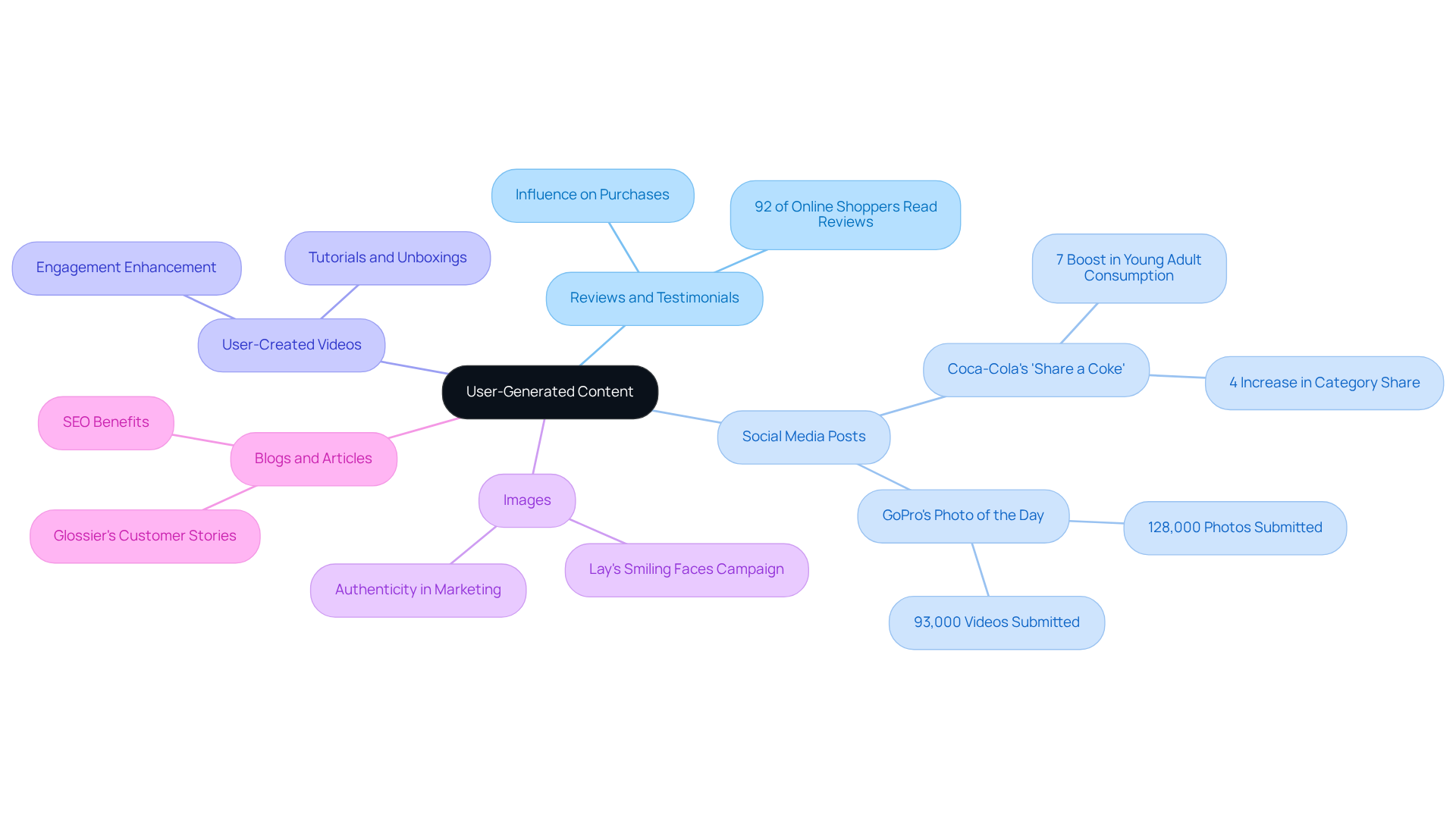
- : Written feedback from clients acts as powerful endorsements, boosting credibility and influencing potential buyers. Did you know that 92% of online shoppers read reviews before making a purchase? This statistic underscores the critical role reviews play in the decision-making process.
- : Content shared by users on platforms like Instagram and TikTok often showcases products in authentic, real-life scenarios. Campaigns that encourage , such as Coca-Cola's 'Share a Coke,' have demonstrated significant engagement increases, resulting in a 4% rise in category share and a 7% boost in young adult consumption in Australia.
- , such as videos that highlight product usage, tutorials, or unboxings, can dramatically enhance engagement. For instance, GoPro's Photo of the Day campaign successfully motivated users to share their experiences, leading to over 128,000 photos and 93,000 videos submitted by 2013. This clearly illustrates the campaign's impact.
- Images: Photos taken by users can be shared on social media or included in marketing materials. Companies like Lay's have effectively connected with consumers through campaigns that invite them to share their experiences, fostering a fun and relatable brand presence.
- : Longer-form content produced by users provides detailed insights and experiences related to the company. This type of material can enhance SEO and attract visitors, as seen in campaigns by companies like Glossier, which shares customer narratives to build community and trust.
By understanding and effectively curating , companies can forge genuine connections with their audiences, driving engagement and fostering loyalty. Furthermore, establishing clear goals and KPIs for is essential for measuring success and guiding strategy.
Implement Best Practices for Leveraging User-Generated Content
To effectively leverage , brands must adhere to several key practices:
- Set Clear Goals: Clearly defining objectives for your UGC initiatives is essential. Whether it’s , driving sales, or enhancing client engagement, establishing specific, measurable goals is crucial for assessing success.
- : Actively inviting customers to share their experiences can significantly enhance your UGC efforts. Engaging contests, branded hashtags, or direct outreach can stimulate contributions. In fact, 79% of consumers indicate that greatly influences their purchasing decisions, highlighting the importance of fostering participation.
- : Establish explicit guidelines for the type of content you wish to showcase. This ensures alignment with your company’s image and values, sustaining a cohesive narrative while boosting authenticity. Notably, 60% of consumers consider to be the most genuine form of content. Additionally, always obtain explicit permission before reposting UGC to respect user rights and comply with legal standards.
- : Acknowledging and interacting with users who create for your brand is vital. Personalized recognition can elevate contributors to influencer status within their communities, fostering deeper engagement and loyalty.
- : Utilize analytics tools to track the effectiveness of your UGC campaigns. Regularly assess - likes, shares, and comments - to refine your strategies based on real-time feedback. Brands executing thorough UGC strategies report approximately 29% more web conversions compared to those relying solely on conventional materials. Furthermore, UGC can lead to up to 70% cost savings on materials, making it a financially sound investment.
By implementing these practices, companies can cultivate a robust UGC strategy that not only drives results but also strengthens community ties and enhances authenticity.

Emphasize Authenticity to Build Brand Loyalty
Authenticity is crucial for effective , serving as a foundation for building . By focusing on the following key practices, brands can significantly enhance their connection with consumers:
- Showcase Real Experiences: Highlight rather than relying solely on polished marketing materials. UGC that reflects real interactions can by up to 73%. In fact, UGC-based ads achieve four times higher click-through rates (CTR) than traditional ads, making it a powerful tool for engagement.
- Be Transparent: Share and introduce the genuine individuals behind the company. This openness fosters connection and trust, as 72% of consumers find it more reliable when real people share their experiences instead of companies representing themselves.
- Encourage Honest Feedback: Allow clients to express both positive and negative experiences. This transparency shows that you value their opinions and are committed to improvement, which can significantly enhance . Notably, 75% of marketers endorse this strategy.
- Create a Community: Foster a sense of belonging among your clients by encouraging them to share their stories and connect with one another. Businesses that promote community involvement often see , as customers feel more invested in the organization. Remarkably, 64% of consumers have tagged a company on social media using a hashtag, demonstrating their engagement.
- Stay True to Core Values: Ensure that all UGC aligns with your organization's fundamental principles and messaging. This consistency reinforces authenticity and helps maintain a loyal clientele.
By prioritizing in these ways, companies can cultivate deeper connections with their audience, which leads to increased loyalty and advocacy. The #AerieREAL campaign exemplifies how successful companies showcase real customer experiences. As consumers continue to seek in 2026, those that effectively highlight these experiences will stand out in a crowded marketplace.

Measure the Impact of User-Generated Content on Performance
To effectively measure the impact of (UGC), brands must focus on several key metrics:
- : It's crucial to monitor likes, shares, comments, and overall interactions with UGC to assess audience interest. Did you know that UGC campaigns can achieve that are 28-70% higher than conventional branded material? Moreover, UGC garners , underscoring the importance of this metric.
- : Evaluating how UGC influences purchasing decisions is essential. By tracking sales directly attributed to UGC campaigns, organizations can see a significant impact. In fact, those utilizing UGC report around , showcasing its substantial effect on sales.
- Reach and Impressions: Analyzing the number of individuals exposed to UGC and its spread across social media platforms is vital. For instance, TikTok leads with an average organic engagement rate of 2.63% per post, while Instagram posts featuring UGC receive 70% more interaction than brand-exclusive content. Understanding reach is essential for .
- : Assessing the overall sentiment of comments and feedback related to UGC helps gauge audience perceptions. Positive sentiment can significantly enhance company credibility, as .
- : Collecting qualitative insights from customers about their experiences with UGC is crucial. This feedback shapes their perception of the company. Notably, 85% of shoppers consider negative reviews as important as positive ones, reinforcing the need for authenticity.
By implementing these measurement strategies, brands can gain a comprehensive understanding of UGC's effectiveness and optimize their marketing efforts accordingly.

Conclusion
User-generated content (UGC) has become an essential element in contemporary marketing strategies, enabling brands to forge authentic and impactful connections with their audiences. By harnessing content created by consumers, companies can significantly enhance their credibility, foster community engagement, and ultimately drive sales. Embracing UGC not only builds trust but also nurtures a loyal customer base that feels valued and heard.
To effectively leverage user-generated content, brands should focus on several key practices:
- Setting clear goals
- Encouraging participation
- Curating quality material
- Engaging with contributors
- Continuously monitoring performance
Implementing these strategies allows brands to establish a robust UGC approach that resonates with their audience and strengthens community ties. Furthermore, emphasizing authenticity in UGC fosters deeper connections with consumers, enhancing brand loyalty and advocacy.
As the digital marketing landscape continues to evolve, prioritizing user-generated content remains crucial for brands aiming to stand out. Companies that effectively showcase real experiences and promote genuine interactions will not only thrive but also cultivate lasting relationships with their customers. Embrace the power of UGC and discover its potential to transform your marketing strategy, elevating your brand in an increasingly competitive environment.
Frequently Asked Questions
What is user-generated content (UGC)?
User-generated content (UGC) is any content created by consumers or users of a company, rather than by the company itself. This includes images, videos, reviews, and social media posts that reflect authentic customer experiences.
Why is user-generated content important?
UGC is important because it provides genuine social proof, enhances credibility, and fosters community engagement. It helps companies connect with their audience on a personal level, building trust and loyalty, especially in an era where consumers are skeptical of traditional advertising.
What statistics highlight the effectiveness of user-generated content?
Statistics show that 60% of consumers view UGC as the most authentic form of marketing content, 82% are more likely to purchase from brands that incorporate UGC, and 55% of shoppers hesitate to buy a product without UGC.
How do successful brands utilize user-generated content?
Successful brands like GoPro and LEGO use UGC to engage with their communities by showcasing real user experiences, which resonate with potential customers and enhance brand credibility.
What types of user-generated content can brands use?
Brands can use various types of UGC, including: - Reviews and Testimonials: Written feedback that boosts credibility and influences buyers. - Social Media Posts: Content shared on platforms like Instagram and TikTok that showcases products in real-life scenarios. - User-created Videos: Videos highlighting product usage, tutorials, or unboxings that enhance engagement. - Images: Photos taken by users that can be shared on social media or in marketing materials. - Blogs and Articles: Longer-form content that provides insights and experiences related to the company.
How can user-generated content impact marketing strategies?
UGC can elevate marketing strategies by driving engagement, fostering loyalty, and enhancing SEO. Establishing clear goals and KPIs for UGC campaigns is essential for measuring success and guiding strategy.
Can you provide an example of a successful UGC campaign?
GoPro's Photo of the Day campaign is a notable example, where users submitted over 128,000 photos and 93,000 videos, demonstrating the campaign's significant impact on user engagement.
List of Sources
- Define User-Generated Content and Its Importance
- emarketer.com (https://emarketer.com/content/social-media-strategists-value-ugc-over-ai)
- The Impact of User-Generated Content on Customer-Centric Digital Marketing (https://thriveagency.com/news/the-impact-of-user-generated-content-on-customer-centric-digital-marketing)
- 24 Key User-Generated Content (UGC) Statistics for 2026 (https://backlinko.com/ugc-statistics)
- How User-Generated Content Helps You Build Trust and Credibility (https://entrepreneur.com/growing-a-business/how-user-generated-content-helps-you-build-trust-and/487866)
- almcorp.com (https://almcorp.com/blog/digital-marketing-news-january-1-10-2026)
- Identify Types of User-Generated Content for Effective Use
- storychief.io (https://storychief.io/blog/user-generated-content-guide)
- wisernotify.com (https://wisernotify.com/blog/ugc-examples)
- encompassagency.com (https://encompassagency.com/news/759-the-role-of-customer-reviews-and-testimonials-in-digital-marketing.html)
- youngurbanproject.com (https://youngurbanproject.com/user-generated-content-campaigns)
- User-generated content: Benefits, strategy, and examples (https://business.adobe.com/blog/basics/user-generated-content-ugc-a-guide-to-getting-started)
- Implement Best Practices for Leveraging User-Generated Content
- reputation.com (https://reputation.com/resources/articles/join-the-social-conversation-10-tips-for-leveraging-user-generated-content)
- storychief.io (https://storychief.io/blog/user-generated-content-guide)
- UGC Strategy: How to Build & Scale It in 2026 (https://flockler.com/blog/ugc-strategy-guide)
- 25 User-Generated Content (UGC) Engagement Statistics: Essential Data for Modern Brands in 2026 (https://archive.com/blog/user-generated-content)
- Emphasize Authenticity to Build Brand Loyalty
- Your 2026 Marketing Strategy Edge: Email, Education, And Authenticity (https://forbes.com/sites/lilianraji/2025/12/31/your-2026-marketing-strategy-edge-email-education-and-authenticity)
- socialpilot.co (https://socialpilot.co/blog/user-generated-content-ugc)
- digiday.com (https://digiday.com/media/after-an-oversaturation-of-ai-generated-content-creators-authenticity-and-messiness-are-in-high-demand)
- meetanshi.com (https://meetanshi.com/blog/user-generated-content-statistics)
- insideradio.com (https://insideradio.com/free/authenticity-drives-ad-trust-as-audiences-turn-to-user-generated-content/article_be2ead53-7109-401e-99d3-6019b133a553.html)
- Measure the Impact of User-Generated Content on Performance
- 25 User-Generated Content (UGC) Engagement Statistics: Essential Data for Modern Brands in 2026 (https://archive.com/blog/user-generated-content)
- almcorp.com (https://almcorp.com/blog/digital-marketing-news-january-1-10-2026)
- stackinfluence.com (https://stackinfluence.com/2026-influencer-marketing-predictions)
- tugagency.com (https://tugagency.com/tug-life/tug-blog/2026/01/05/taking-end-clothing-from-attribution-guesswork-to-statistical-business-proof-2)