
Introduction
Measuring the success of influencer marketing campaigns is not just beneficial; it's essential for brands aiming to connect effectively with their target audiences. With clear goals and key performance indicators in place, marketers can uncover valuable insights that propel their strategies forward. But here's the real question: how can brands navigate the complexities of measurement to ensure they're accurately assessing their campaigns' impact and optimizing for future success? This guide explores five crucial steps designed to empower marketers to evaluate their influencer marketing efforts with precision and confidence.
Define Clear Goals for Your Influencer Marketing Campaign
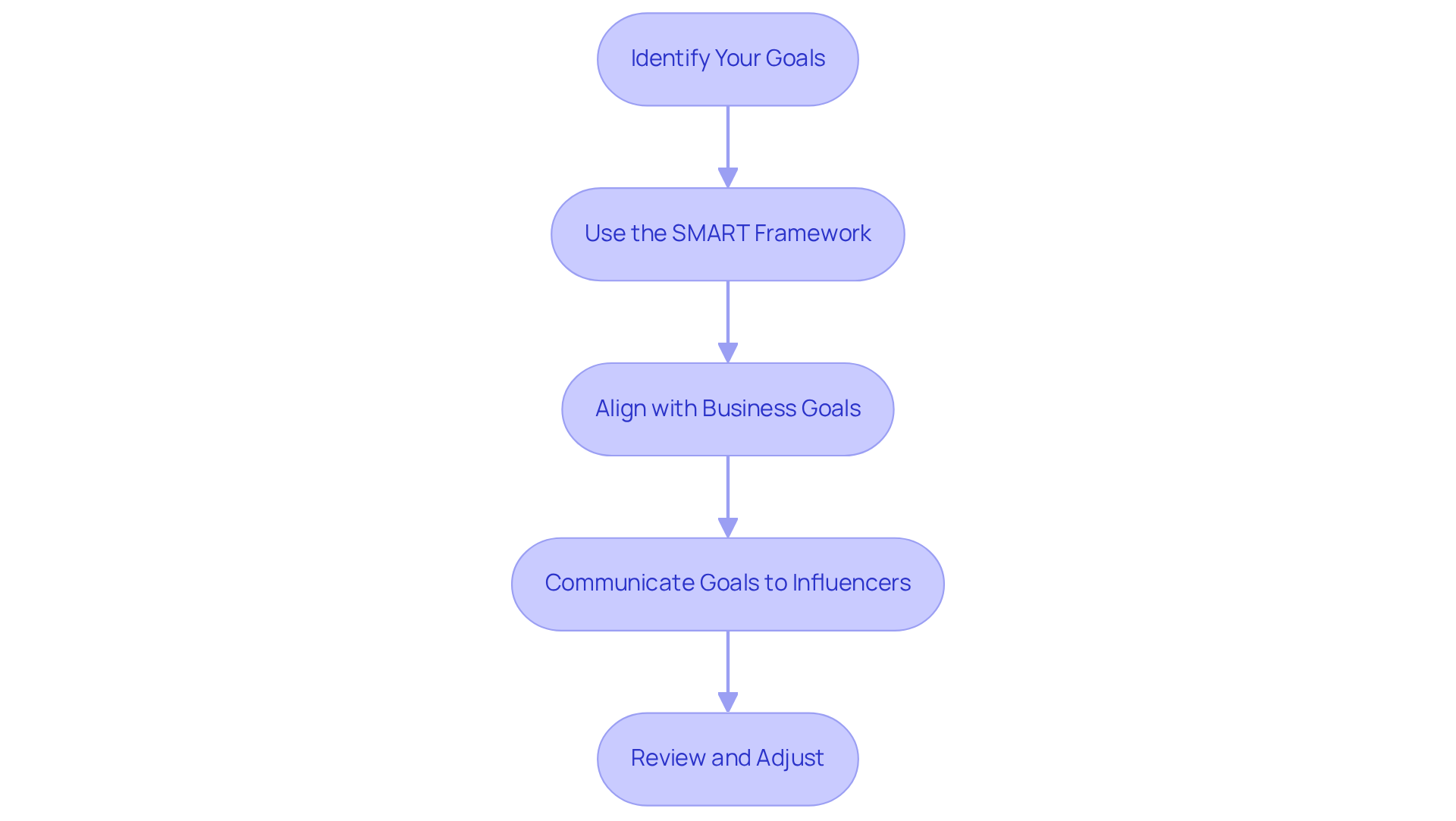
- Identify Your Goals: Start by clarifying what you aim to achieve with your promotion strategy. Common objectives include , driving website traffic, or . For instance, a vegan snack brand might set a goal to build awareness among Gen Z buyers within four weeks, targeting a total reach of over 100,000 across social media platforms. What specific outcomes do you envision for your brand?
- Use the SMART Framework: Make sure your goals are Specific, Measurable, Achievable, Relevant, and Time-bound. Instead of a vague aim like 'increase sales', specify ''. This clarity not only guides your strategy but also . How can you refine your goals to ensure they meet these criteria?
- Align with Business Goals: Your marketing objectives should . This alignment guarantees that your initiatives contribute to your brand's overall success. from their partnerships with social media personalities. Are your marketing goals in sync with your business strategy?
- Communicate Goals to Influencers: Clearly convey these goals to the . This ensures they grasp the expectations and can tailor their content accordingly. can significantly enhance the authenticity of the content produced. How effectively are you communicating your goals to your partners?
- Review and Adjust: and market changes. This flexibility allows you to remain relevant and efficient in your efforts. For example, a meal-kit service doubled their engagement rate by pivoting to Reels halfway through their campaign, demonstrating the importance of adaptability in influencer marketing. What adjustments can you make to optimize your strategy?
Set Key Performance Indicators (KPIs) to Track Success
- Choose Relevant s: Selecting the right s is crucial for connecting to your objectives. For instance, if your goal is to , focus on metrics like reach and impressions. The highlights that reach is a primary metric for success, showcasing how many unique individuals have seen your content.
- : It's essential to monitor . These figures reveal how effectively the audience interacts with the creator's content. In 2026, smaller creators are demonstrating greater effectiveness, achieving engagement rates of 4% to 8% on platforms like Instagram, outpacing larger influencers. As Rees notes, "Smaller creators provide depth, credibility, and intimacy," fostering stronger connections with their audience.
- Conversion Metrics: If your aim is to drive sales, is vital. Implement unique discount codes or affiliate links to measure direct sales from promotional efforts. This strategy enables brands to evaluate the tangible impact of their influencer partnerships, which is essential for measuring influencer marketing in alignment with the growing trend of prioritizing outcomes over outputs.
- : Keep an eye on the growth of your social media following during and after the initiative. This metric can indicate how effectively the campaign attracts new customers. is essential, as it provides insights into the effectiveness of your marketing strategy.
- Regular Reporting: Establish a reporting schedule to review these s consistently. This practice allows for based on performance data. As emphasized in external sources, evaluating metrics before, during, and after collaborations with promoters is crucial for sustained success. By setting clear standards for achievement, you can ensure that your promotional efforts remain aligned with your overarching business goals.

Utilize Tracking Tools for Accurate Measurement
- Select the Right Tools: Choosing the right . Google Analytics is indispensable for , while insights from provide essential engagement metrics. Specialized marketing platforms, such as HubSpot and Sprout Social, offer comprehensive tracking capabilities tailored to your needs, including audience verification and fraud detection features.
- Set Up UTMs: is vital for accurately and conversions from influencer posts. Be sure to include mandatory tags like
utm_source,utm_medium, andutm_campaignto effectively categorize and analyze your data. This practice allows you to pinpoint which influencers are driving the most traffic and sales, significantly enhancing your ability in effectiveness and return on investment (ROI). - Monitor Social Media Analytics: Regularly reviewing the analytics provided by is essential for assessing engagement and reach. Each platform provides distinct metrics that assist in and yield valuable insights into the effectiveness of your initiatives. Neglecting to utilize UTM parameters can result in misattributed traffic, complicating the distinction between paid and organic activity.
- Utilize Reporting Dashboards: Developing reporting dashboards that integrate data from multiple sources provides a comprehensive view of your initiative's performance. This integration facilitates easier analysis and decision-making based on real-time data. Tools that connect creator metrics to the broader promotional ecosystem can reveal compound effects across channels.
- Analyze Data Regularly: Scheduling consistent data analysis sessions is key to evaluating your initiatives' performance. This practice helps in and guiding necessary modifications to enhance outcomes, ensuring your marketing efforts are both effective and efficient. Industry insights indicate that most brands observe , with complete visibility requiring 60-90 days.

Calculate Your Influencer Marketing ROI
- : Start by calculating all expenses associated with the initiative. This includes influencer fees, production costs, and any that may arise.
- : It's crucial to . This encompasses direct sales, increased website traffic leading to sales, and any other financial benefits that may result.
- Use the ROI Formula: :
ROI = (Revenue - Cost) / Cost x 100. This calculation will yield a percentage that clearly indicates your return on investment. - Consider : Don't overlook the of new customers gained through the initiative. This perspective can provide a more , extending beyond immediate sales.
- : After calculating ROI, take the time to review the results. Identify what worked and what didn’t, and utilize these insights to .

Compare Results Against Industry Benchmarks
- Start by delving into the industry standards for through social media influencers. This includes by examining , , and . For instance, e-commerce brands typically see an ROI ranging from 5:1 to 10:1, as reported by InfluenceFlow, while B2B companies often achieve an ROI of 3:1 to 8:1 from their influencer initiatives.
- Analyze Your Results: Next, compare your project outcomes against these benchmarks. Identify where your performance stands above or below average. For example, if your initiative's engagement rate falls significantly short of the 2-5% average for micro-influencers, it may indicate a need for .
- Identify Trends: Look for patterns in your data that could explain why certain elements of your initiative excelled or struggled compared to industry standards. Notably, 71% of consumers report making a purchase shortly after viewing on platforms like Meta, according to Meta. This statistic underscores the in driving .
- Adjust Expectations: Use this comparative analysis to recalibrate your expectations for future initiatives. Understanding your position relative to competitors can aid in to . For example, 76.92% of brands planning to increase their endorsement budgets expect a return within one month, which can inform your strategic planning.
- Continuous Improvement: Finally, make benchmarking a regular part of your evaluation process. This ongoing analysis will keep you competitive and help refine your marketing strategies. With 89% of marketers believing that to other channels, leveraging these insights can lead to more effective future campaigns.

Conclusion
Establishing a robust framework for measuring influencer marketing success is not just beneficial; it’s essential for brands looking to maximize their investment. By defining clear goals, utilizing key performance indicators (KPIs), and employing effective tracking tools, businesses can gain invaluable insights into the effectiveness of their campaigns. This structured approach enhances accountability and aligns marketing efforts with broader business objectives, ultimately driving superior outcomes.
Throughout this article, we’ve outlined critical steps that underscore the importance of:
- Setting specific, measurable goals
- Selecting relevant KPIs
- Regularly analyzing performance data
Furthermore, understanding the return on investment (ROI) and comparing results against industry benchmarks are vital for refining strategies and ensuring sustained success. Each of these components contributes to a comprehensive understanding of influencer marketing effectiveness.
In a landscape where influencer marketing is increasingly competitive, embracing these strategies empowers brands to make informed decisions and optimize their campaigns. By committing to ongoing evaluation and adaptation, businesses can enhance their current initiatives and lay the groundwork for future success. Taking action today to implement these steps will ensure that influencer marketing efforts yield significant and measurable results, reinforcing the value of this dynamic marketing avenue.
Frequently Asked Questions
What are the main goals to consider for an influencer marketing campaign?
Common goals include increasing brand awareness, driving website traffic, and boosting sales. For example, a vegan snack brand might aim to build awareness among Gen Z buyers, targeting a reach of over 100,000 across social media platforms in four weeks.
What is the SMART framework for setting goals?
The SMART framework ensures goals are Specific, Measurable, Achievable, Relevant, and Time-bound. For instance, instead of a vague goal like 'increase sales,' a specific goal would be 'increase sales by 20% in the next quarter.'
Why is it important to align marketing goals with business objectives?
Aligning marketing goals with broader business aims ensures that initiatives contribute to the brand's overall success. Brands with specific objectives are four times more likely to achieve significant outcomes from partnerships with influencers.
How should brands communicate their goals to influencers?
Brands should clearly convey their goals to the influencers they collaborate with, ensuring that influencers understand expectations and can tailor their content to resonate with the brand's values.
Why is it important to review and adjust campaign goals?
Regularly assessing and adjusting goals based on performance data and market changes allows brands to remain relevant and efficient. For example, a meal-kit service increased engagement by pivoting to Reels halfway through their campaign.
What are key performance indicators (KPIs) in influencer marketing?
KPIs are metrics that help track the success of a campaign. Relevant KPIs can include reach, impressions, engagement metrics (likes, shares, comments, click-through rates), conversion rates, and audience growth.
How can engagement metrics be used in influencer marketing?
Engagement metrics reveal how effectively the audience interacts with the content. Smaller creators often achieve higher engagement rates (4% to 8%) compared to larger influencers, indicating a stronger connection with their audience.
What conversion metrics should brands track if their goal is to drive sales?
Brands should track conversion rates and revenue generated from the campaign. Implementing unique discount codes or affiliate links can help measure direct sales resulting from promotional efforts.
Why is audience growth an important metric during an influencer campaign?
Monitoring audience growth during and after the campaign indicates how effectively the initiative attracts new customers, providing insights into the effectiveness of the marketing strategy.
How often should brands report on their KPIs?
Brands should establish a reporting schedule to consistently review KPIs, allowing for timely adjustments to their strategy based on performance data before, during, and after collaborations with influencers.
List of Sources
- Define Clear Goals for Your Influencer Marketing Campaign
- thesocialcat.com (https://thesocialcat.com/blog/set-goals-for-influencer-marketing-campaigns)
- Influencer Marketing Trends 2026 (https://creatoriq.com/blog/influencer-marketing-trends-2026)
- Influencer marketing campaign goals: 6 Powerful Ways to Win 2025 (https://goelastic.com/influencer-marketing-campaign-goals)
- How Influencer Marketing Is Moving Into Scalable Performance Channels (https://forbes.com/councils/forbesagencycouncil/2026/02/09/beyond-the-feed-the-evolution-of-influencer-marketing-into-scalable-performance-channels)
- Set Key Performance Indicators (KPIs) to Track Success
- togetheragency.co.uk (https://togetheragency.co.uk/news/influencer-marketing-trends-for-2026)
- emarketer.com (https://emarketer.com/content/us-marketers-prioritize-reach-engagement-measure-influencer-campaign-success)
- 10 metrics to track influencer marketing success in 2026 (https://sproutsocial.com/insights/influencer-marketing-metrics)
- 6 Influencer Marketing Metrics To Watch and 5 Tools To Help (https://contentmarketinginstitute.com/analytics-data/6-influencer-marketing-metrics-to-watch-and-5-tools-to-help)
- campaignlive.com (https://campaignlive.com/article/influencer-marketing-evolving-vanity-metrics-tangible-impact/1946267)
- Utilize Tracking Tools for Accurate Measurement
- tatam.com (https://tatam.com/blog/utm-tracking-for-influencer-marketing)
- 4 Top Influencer Analytics Tools for Smarter Campaigns (2026) (https://meltwater.com/en/blog/influencer-analytics-tools)
- influenceflow.io (https://influenceflow.io/resources/best-influencer-marketing-tools-complete-guide-for-2026-4)
- boksi.com (https://boksi.com/blog/utms-for-influencer-marketing-guide)
- modo25.com (https://modo25.com/news-insights/insights/clear-practical-guide-to-utm-tracking-in-google-analytics-ga4)
- Calculate Your Influencer Marketing ROI
- socialnative.com (https://socialnative.com/articles/driving-creator-marketing-roi-in-2026-and-why-it-matters)
- inc.com (https://inc.com/annabel-burba/how-much-influencer-marketing-really-costs-in-2026-and-why-50000-is-the-magic-number/91296288)
- 34 Influencer Marketing ROI Statistics Every Brand Should Know in 2026 (https://archive.com/blog/influencer-marketing-roi-statistics)
- finance.yahoo.com (https://finance.yahoo.com/news/revenue-first-influencer-campaigns-redefine-121500327.html)
- How to Track Influencer Campaign Performance: Metrics That Actually Matter — ReferralCandy (https://referralcandy.com/blog/how-to-track-influencer-campaign-performance-metrics-that-actually-matter)
- Compare Results Against Industry Benchmarks
- socialinsider.io (https://socialinsider.io/social-media-benchmarks)
- influencermarketinghub.com (https://influencermarketinghub.com/influencer-marketing-benchmark-report)
- influenceflow.io (https://influenceflow.io/resources/influencer-marketing-benchmarks-and-industry-comparisons-2026)
- wearisma.com (https://wearisma.com/2026-beauty-influencer-marketing-benchmarks)