
Introduction
Crafting a commercial that truly resonates with an audience is both an art and a science. It demands a strategic blend of creativity and research. This guide serves as a comprehensive roadmap for marketers and creators alike, outlining five essential steps to develop a compelling advertisement that not only captures attention but also drives engagement.
However, with countless commercials competing for viewers' attention, how can one ensure their message stands out in an oversaturated market? By delving into the intricacies of objective setting, audience research, concept development, and editing, this article uncovers the secrets to creating commercials that not only inform but also inspire action.
Are you ready to elevate your advertising game? Let's explore how to make your commercials not just seen, but remembered.
Define Your Commercial's Objective
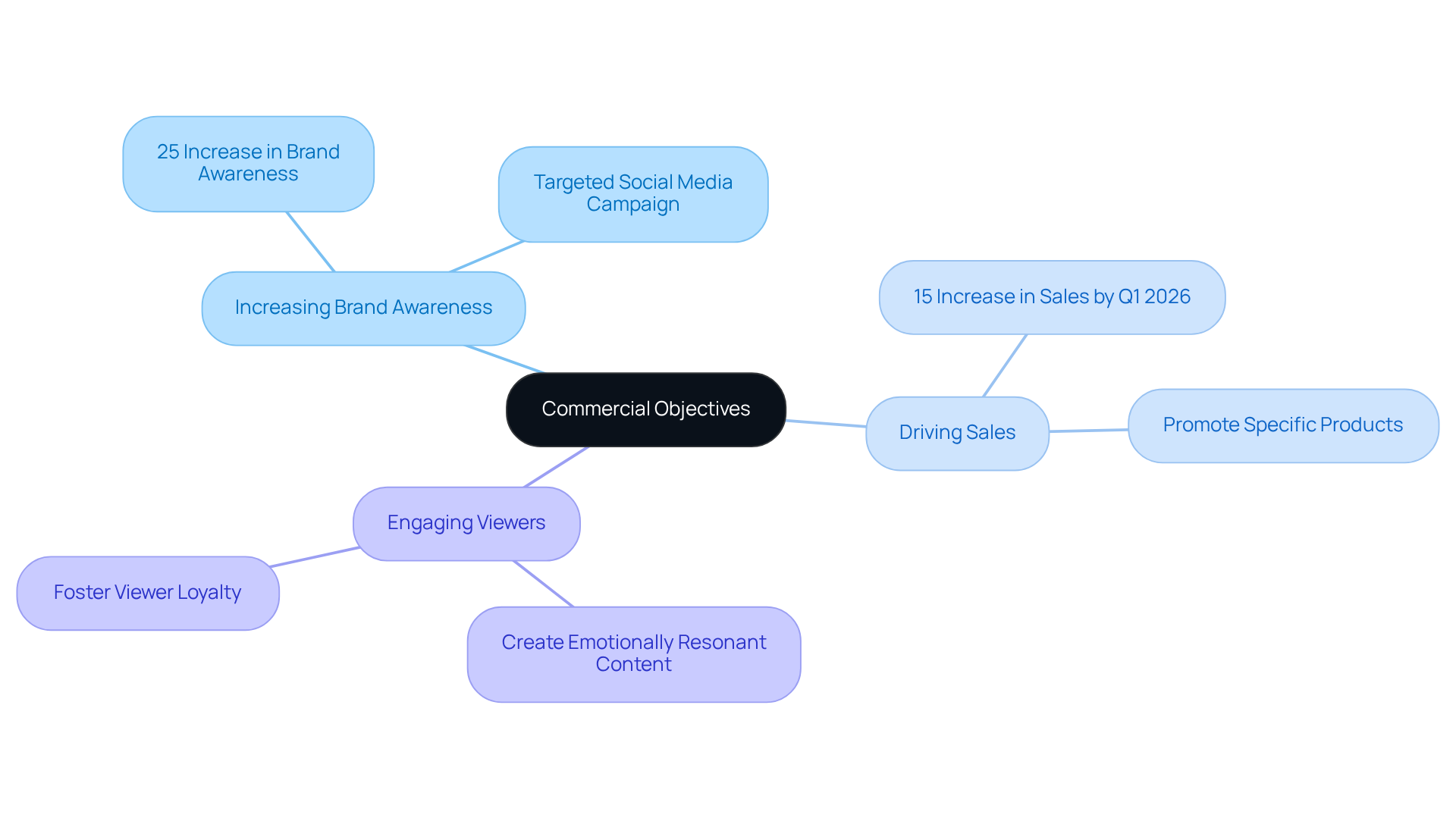
To begin, learn how to write a commercial by identifying its . Ask yourself: What do you want to achieve? Common objectives include:
- : Aim to introduce your brand to a wider audience. For instance, you might target a 25% increase in through a focused over the next three months.
- : Concentrate on promoting a specific product or service, with measurable goals such as achieving a 15% increase in sales by the end of Q1 2026.
- : Craft content that resonates emotionally with individuals, fostering a connection that encourages loyalty.
Once you have a , make sure to write it down and ensure it is . This will serve as a guiding principle throughout the production process. Furthermore, ensure compliance with relevant regulations, such as the FCC's TCPA rules, to avoid legal pitfalls in your marketing strategies. As Dr. Dave Chaffey states, ' ensures comprehensive coverage of objectives.' This clarity will guide your creative choices on how to write a commercial, ensuring that every element of your project aligns with your overarching goals and ultimately enhancing its effectiveness.
Research Your Target Audience
Understanding how to write a commercial involves conducting thorough research to define your , which is essential for creating impactful commercials. Why is this so crucial? Because understanding your audience lays the foundation for . Here’s how to approach it:
- : Start by identifying key factors such as age, gender, income level, and location. For instance, a clothing brand targeting women aged 20-45 can tailor its messaging to resonate with this specific demographic, ensuring that the content speaks directly to their needs and preferences.
- : Next, delve into the interests, values, and lifestyle choices of your . Recognizing that your ideal customer values sustainability and wellness can significantly enhance your marketing effectiveness. Consider the : personality, interests, lifestyle, attitudes, and social class. These elements provide a comprehensive view of consumer motivations, allowing for more targeted messaging.
- Behavioral Data: Finally, analyze purchasing habits and . For example, knowing that 63% of Gen Z users turn to TikTok for news can inform where to focus your advertising efforts. As Nic Newman observes, this shift towards social media for news consumption is significant in understanding viewer behavior.
Utilize tools like FullSession, which offers insights into , alongside surveys and social media analytics to gather this information. Developing comprehensive will assist in understanding how to write a commercial that effectively visualizes your , directing your creative choices and messaging tone. Market researchers emphasize that allows for a deeper understanding of consumer motivations, ultimately leading to more . Are you ready to take your advertising to the next level?

Develop Your Concept and Script
Start by brainstorming ideas that resonate with your objectives and audience insights. Follow these steps to create an :
- Brainstorm Concepts: Gather your team for a creative session to generate .
- Choose a Central Theme: Select a message that embodies your brand's identity and resonates with your target market.
- Write the Script: Ensure your script is concise and engaging by following a clear structure:
- Hook: Capture attention within the first few seconds to draw viewers in.
- Problem: Present a relatable issue that your audience faces, establishing a connection.
- Solution: Introduce your product or service as the ideal answer to the problem.
- : Encourage viewers to take the next step, whether it's visiting your website or making a purchase.
Statistics reveal that , underscoring the importance of effective scriptwriting in driving engagement. Furthermore, , and 46% of weekly podcast listeners have purchased a product or service after hearing a podcast ad. This highlights the significant impact of . demonstrate how to write a commercial by frequently employing storytelling methods that establish emotional bonds resonating with viewers. As Joan Weisman notes, " are crucial for crafting effective scripts." Scripts should not only inform but also inspire action, making every word count in guiding viewers toward a desired outcome.

Storyboard and Choose Technical Equipment
Developing a storyboard is essential for understanding by visually mapping out each scene and ensuring a coherent flow. Have you considered how a well-crafted storyboard can elevate your production? Focus on these key elements:
- Key Visuals: Sketch or describe the intended look of each shot to convey your vision clearly.
- Angles: Determine how to frame each scene effectively, considering the emotional impact and storytelling.
- Audio Cues: Document any dialogue or sound effects that will enhance the narrative.
Next, let’s discuss the :
- : Choose a that aligns with your budget and desired quality. The OBSBOT Tail 2 Live Production stands out as a strong option, offering 4K recording and advanced features like AI Tracking 2.0 for automatic subject framing.
- Lighting: . A three-point lighting system, utilizing key, fill, and backlight, is recommended to avoid shadows and enhance visibility. In fact, did you know that 93% of filmmakers believe ? This statistic underscores the in .
- Audio Equipment: Invest in to ensure clear sound capture. If purchasing equipment isn’t feasible, consider renting to maintain production quality.
Integrating these components will not only simplify your production process but also significantly enhance the overall quality of your advertisement, providing insights on that is more captivating for your viewers. As Andrew Palladino states, ", aligns with your brand identity, and captures your audience’s attention." Additionally, remember that can cut production costs by as much as 20% by reducing on-set errors and wasted resources. Are you ready to take your advertisement to the next level?

Edit and Finalize Your Commercial
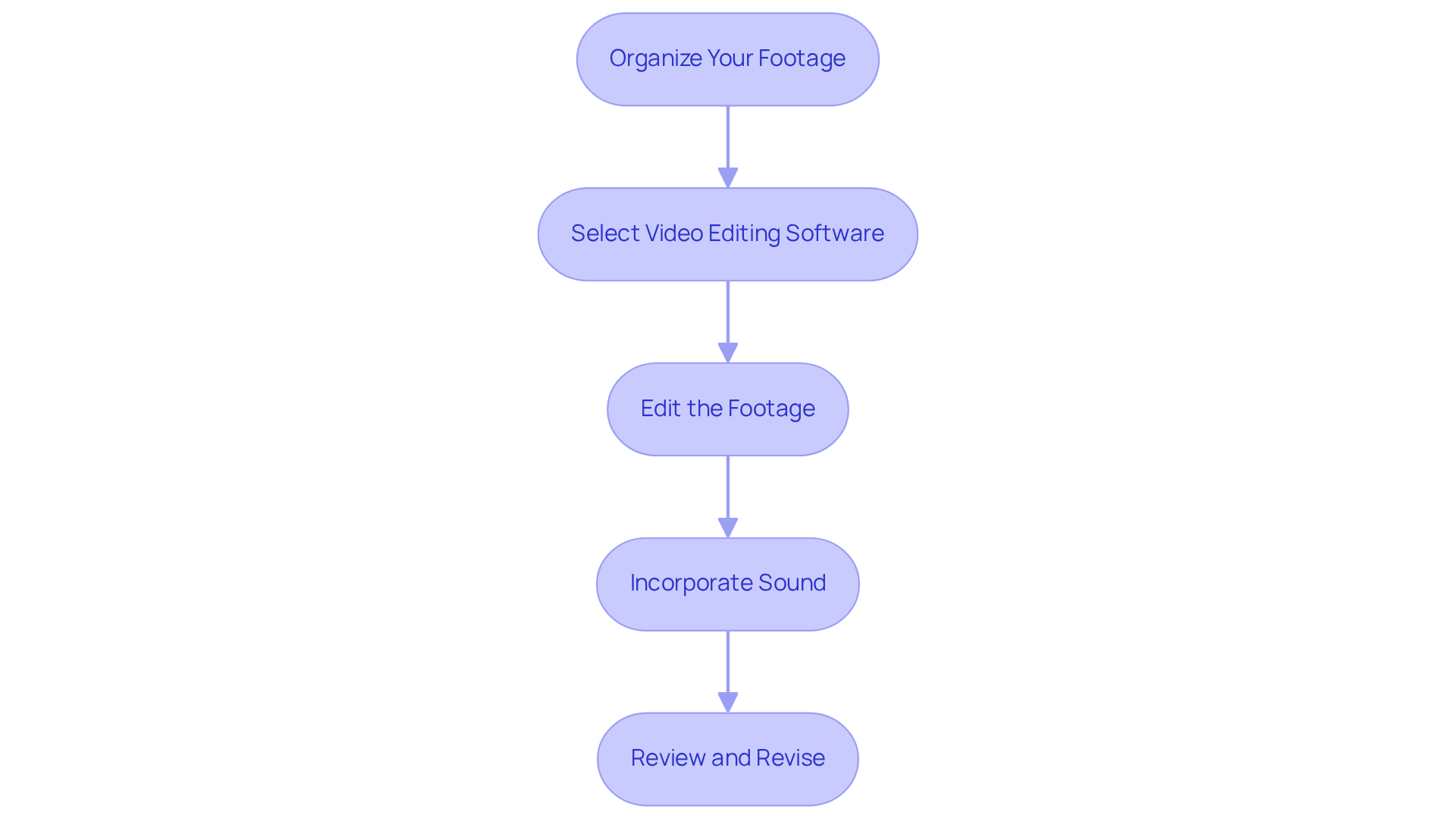
After filming wraps up, understanding becomes crucial during the editing phase to create a compelling . To enhance , follow these essential steps:
- Organize Your Footage: Start by sorting clips into clearly labeled folders. This organization facilitates quick access during the editing process, ensuring efficiency.
- Select : Choose software that aligns with your skill level and project requirements. Popular options include Adobe Premiere Pro, the leading software among professionals with a 35% market share, and Final Cut Pro, known for its user-friendly interface.
- Edit the Footage: Trim unnecessary scenes, incorporate transitions, and ensure a seamless narrative flow. Effective editing can significantly boost viewer retention; than those without, highlighting the impact of quality editing on engagement.
- Incorporate Sound: Enhance your visuals with that complement the overall tone. Sound plays a vital role in emotional engagement, making it essential to select tracks that resonate with your audience.
- Review and Revise: Gather feedback from team members and make necessary adjustments. This iterative process ensures that the final cut aligns with your original objectives and effectively engages your target audience.
By prioritizing these steps, you will understand that not only captures attention but also drives conversions. In fact, 96% of consumers watch videos before making purchasing decisions, underscoring the importance of .
Conclusion
Crafting an engaging commercial demands a structured approach, starting with clearly defined objectives and culminating in a polished final product. Understanding the significance of each step - from identifying goals to researching the target audience, developing concepts, storyboarding, and editing - enables marketers to create compelling advertisements that truly resonate with viewers and drive engagement.
This article outlines a comprehensive five-step process:
- Defining the commercial's objective
- Researching the target audience
- Developing a concept and script
- Creating a storyboard
- Finally, editing the commercial
Each step underscores the importance of aligning creative efforts with audience insights and measurable goals. This alignment ensures that the final product not only captures attention but also fulfills its intended purpose.
Incorporating these strategies is essential for anyone aiming to elevate their advertising efforts. By prioritizing audience engagement and adhering to best practices in commercial production, brands can create memorable content that informs and inspires action. Embrace these steps to unlock the potential of your commercials and foster deeper connections with your audience.
Frequently Asked Questions
What is the first step in writing a commercial?
The first step is to define the commercial's objective by identifying what you want to achieve, such as increasing brand awareness, driving sales, or engaging viewers.
What are some common objectives for a commercial?
Common objectives include increasing brand awareness, driving sales of a specific product or service, and engaging viewers emotionally to foster loyalty.
How can I ensure my commercial's objective is effective?
Write down your objective using the SMART criteria, ensuring it is specific, measurable, achievable, relevant, and time-bound.
Why is it important to research your target audience?
Researching your target audience is crucial because it lays the foundation for effective marketing strategies, allowing you to create impactful commercials that resonate with viewers.
What factors should I consider when analyzing demographics?
Key demographic factors include age, gender, income level, and location, which help tailor your messaging to specific audience segments.
What are psychographics, and why are they important?
Psychographics involve understanding the interests, values, and lifestyle choices of your target group. They are important because they enhance marketing effectiveness by allowing for more targeted messaging.
How can behavioral data inform my commercial?
Analyzing purchasing habits and media consumption patterns, such as knowing where your audience seeks information, can guide your advertising efforts and improve engagement.
What tools can help gather audience insights?
Tools like FullSession, surveys, and social media analytics can provide insights into user behavior and preferences, aiding in the development of effective commercials.
How do buyer personas contribute to writing a commercial?
Developing comprehensive buyer personas helps visualize your target group and directs your creative choices and messaging tone, leading to more effective marketing strategies.
What is the significance of integrating psychographics with demographics?
Integrating psychographics with demographic data allows for a deeper understanding of consumer motivations, ultimately leading to more effective marketing strategies.
List of Sources
- Define Your Commercial's Objective
- ironmarkusa.com (https://ironmarkusa.com/setting-smart-goals-2025)
- How to define SMART marketing objectives (with example RACE KPIs) (https://smartinsights.com/goal-setting-evaluation/goals-kpis/define-smart-marketing-objectives)
- evocalize.com (https://evocalize.com/blog/setting-objectives-for-paid-campaigns)
- Master SMART Goals for Content Marketing Success (https://siteimprove.com/blog/smart-goals-for-content-marketing)
- 2026 Marketing Statistics, Trends, & Data (https://hubspot.com/marketing-statistics)
- Research Your Target Audience
- fullsession.io (https://fullsession.io/blog/psychographics-examples)
- reutersinstitute.politics.ox.ac.uk (https://reutersinstitute.politics.ox.ac.uk/digital-news-report/2025)
- pewresearch.org (https://pewresearch.org/journalism/fact-sheet/social-media-and-news-fact-sheet)
- Social media demographics to inform your 2026 strategy (https://sproutsocial.com/insights/new-social-media-demographics)
- 2026 Marketing Statistics, Trends, & Data (https://hubspot.com/marketing-statistics)
- Develop Your Concept and Script
- contentwriters.com (https://contentwriters.com/blog/how-write-marketing-script)
- seo.com (https://seo.com/blog/digital-marketing-statistics)
- 2026 Marketing Statistics, Trends, & Data (https://hubspot.com/marketing-statistics)
- keywordseverywhere.com (https://keywordseverywhere.com/blog/advertising-stats)
- 57+ Content Marketing Statistics To Help You Succeed in 2025 (https://contentmarketinginstitute.com/content-marketing-strategy/content-marketing-statistics)
- Storyboard and Choose Technical Equipment
- Top 50 Filmmaking Quotes to Inspire - Indie Film Hustle (https://indiefilmhustle.com/filmmaking-quotes)
- obsbot.com (https://obsbot.com/blog/video-production/commercial-video?srsltid=AfmBOorjjMAk6gyZmgQeT_TgqYF6I981R82P6UjxqZRbQ6eyng8Bpgzm)
- robustbranding.com (https://robustbranding.com/why-storyboarding-matters-for-social-media-videos)
- pzaz.io (https://pzaz.io/producer-blog/storyboarding-statistics-usa)
- Edit and Finalize Your Commercial
- quotlr.com (https://quotlr.com/quotes-about-video-editing)
- sendshort.ai (https://sendshort.ai/statistics/video-editing-software)
- electroiq.com (https://electroiq.com/stats/video-editing-statistics)
- postud.io (https://postud.io/blog/best-video-editing-quotes)