
Introduction
Choosing the right internet advertising agency is a pivotal decision for any business aiming to enhance its online presence. In a digital landscape that’s constantly evolving, aligning your advertising goals with the capabilities of your chosen agency is essential for success. As organizations strive to boost brand awareness and drive sales, the challenge lies not only in setting clear objectives but also in finding an agency that can deliver measurable results.
What criteria should businesses consider to ensure their chosen partner can effectively navigate the complexities of digital marketing?
Define Your Advertising Goals and Needs
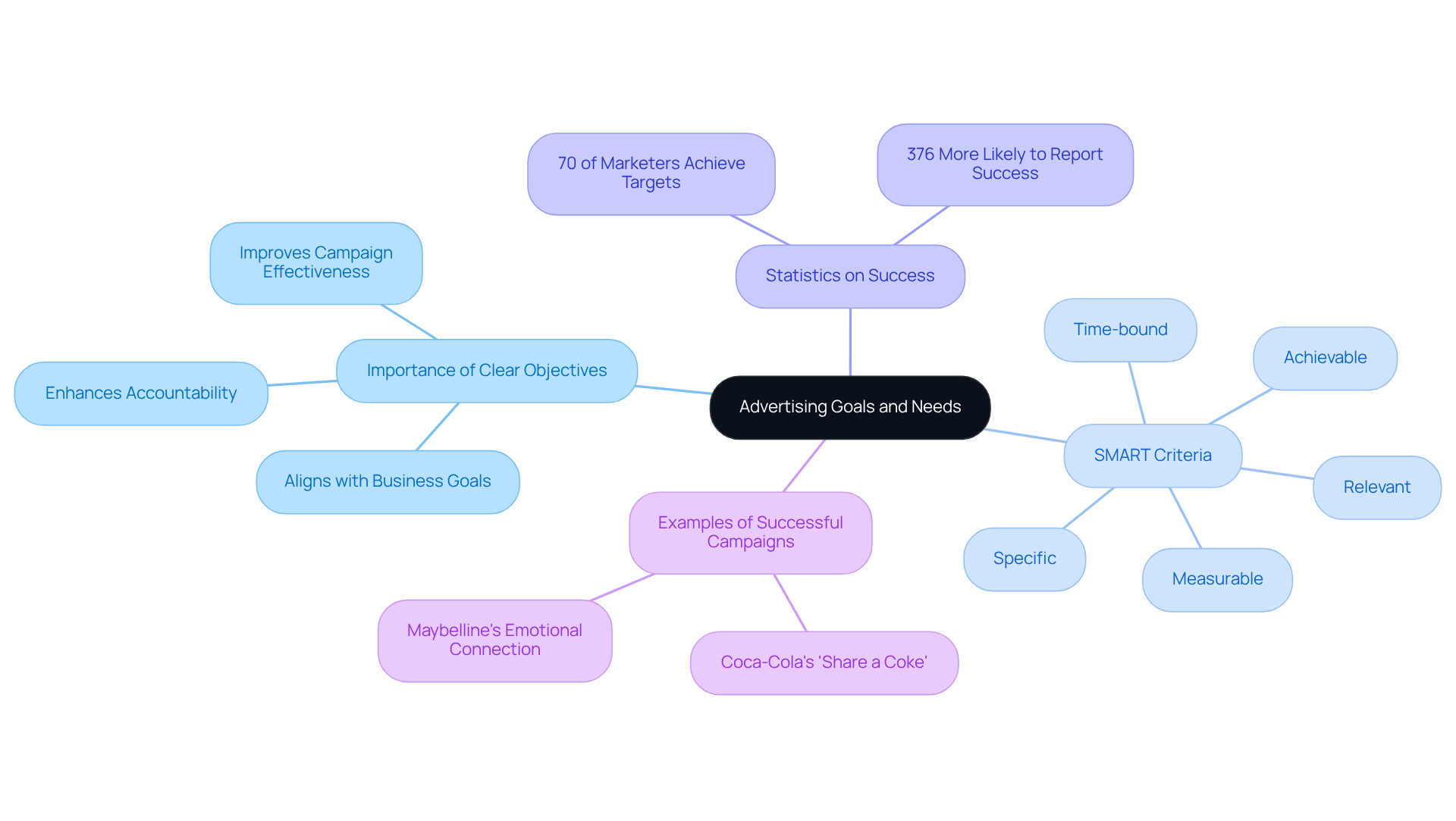
Establishing clear is crucial before partnering with an agency. What are your goals? Whether it’s , generating leads, or , identifying these objectives is the first step. Use the - Specific, Measurable, Achievable, Relevant, and Time-bound - to articulate these goals effectively. For example, instead of stating a vague aim like 'increase sales,' specify '.' This level of precision not only helps in selecting the right agency but also ensures their strategies align with your business objectives.
Statistics reveal that 70% of marketers who set objectives actually achieve their targets. Moreover, those who define are 376% more likely to report success compared to those who don’t. , such as Coca-Cola's 'Share a Coke,' illustrate how clear, measurable objectives can foster emotional connections and drive engagement.
Furthermore, transforming broad ambitions into SMART objectives, as shown in the case of ',' creates a roadmap that enhances accountability and performance. This ultimately leads to more . Are you ready to take your advertising strategy to the next level?
Evaluate Agency Portfolios and Case Studies
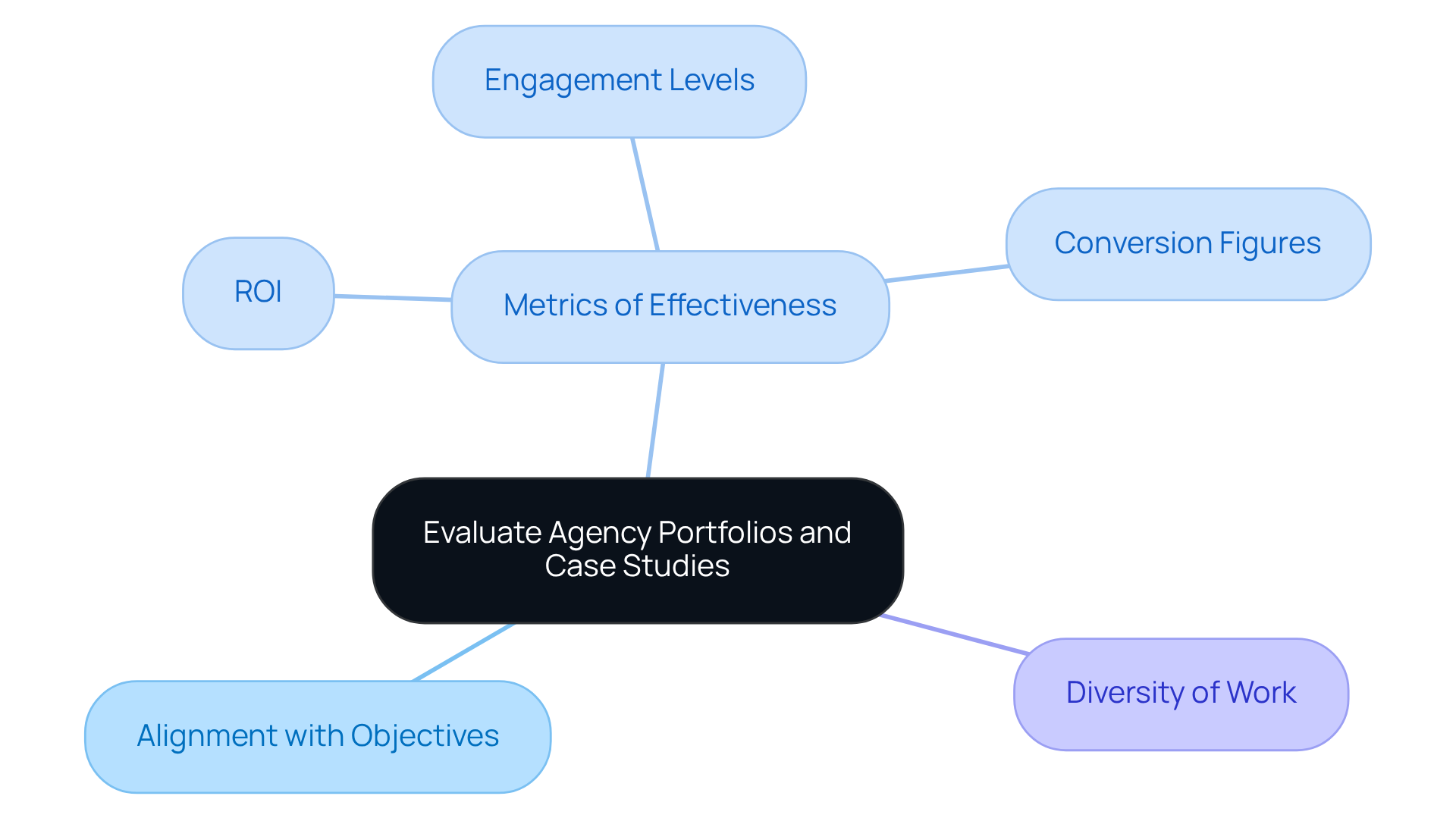
When evaluating potential , it’s crucial to thoroughly assess their portfolios and . Are their past successes aligned with your objectives? Look for examples that demonstrate their ability to achieve results similar to what you’re aiming for. , engagement levels, and conversion figures are essential indicators of effectiveness. A robust case study should not only highlight creative elements but also provide concrete data on . For instance, if an agency successfully increased a client's by 150% through , that’s a compelling sign of their capability.
Furthermore, consider the diversity of their work. Can they adapt to various formats and platforms? A versatile agency is more likely to tailor strategies that resonate with your target audience. By focusing on these aspects, you can make a more informed decision about which to partner with. Engage with to explore how we can help you achieve your advertising goals.
Establish Clear Communication and Collaboration
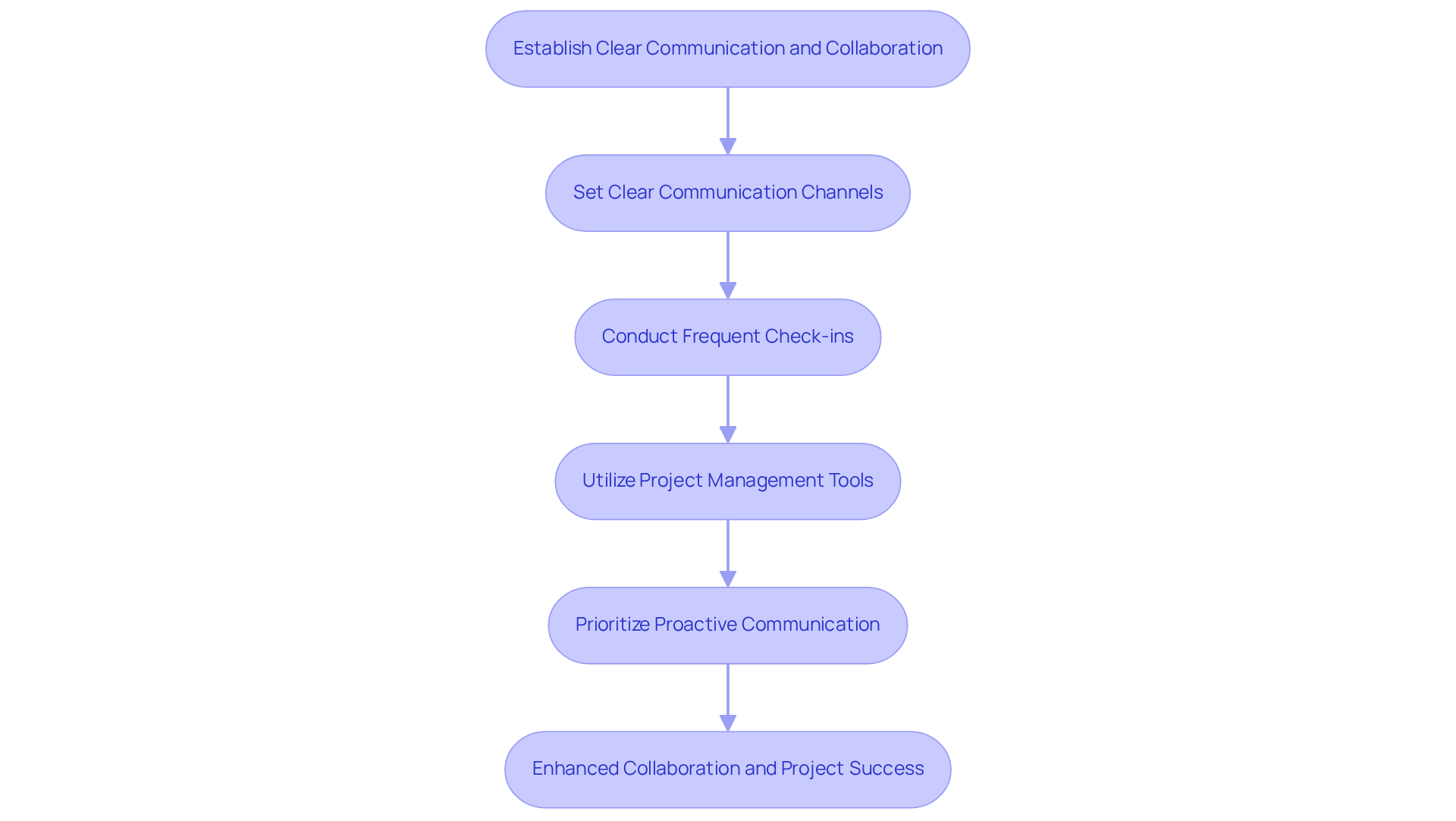
is the cornerstone of a . Establishing from the outset is crucial, as it sets expectations for updates, feedback, and decision-making processes. Frequent check-ins significantly enhance campaign success rates; research indicates that companies with tend to see a higher return on their marketing investments. For example, organizations that conduct weekly meetings to discuss progress and challenges cultivate a where both parties are committed to the project's success. This is supported by findings showing that 64.3% of marketers rated their communication practices above average, underscoring the effectiveness of regular interactions.
Furthermore, utilizing , ensuring all stakeholders are informed about timelines and deliverables. This structured approach not only promotes transparency but also , which is essential for . As Will Blunt noted, "Much of what a client 'wants' from a firm is unspoken," highlighting the need for proactive communication to truly understand client needs. By prioritizing these practices, agencies and clients can collaborate more effectively, ultimately driving better results.
Implement Continuous Performance Analysis and Optimization
To guarantee the success of your , it's crucial to implement a robust system for continuous . Start by utilizing analytics tools to meticulously track (KPIs) like:
Regularly reviewing this data not only helps identify trends but also highlights areas ripe for improvement. For instance, if a specific is lagging, consider or targeting options to boost effectiveness. This iterative approach empowers you to swiftly adapt to shifting market conditions and evolving consumer behaviors, ensuring that your consistently aligns with your defined goals.

Conclusion
Choosing the right internet advertising agency is not just a decision; it’s a pivotal step toward marketing success. By clearly defining advertising goals and needs, businesses can align their objectives with the strategies of potential partners. This alignment is essential for fostering effective collaboration and ensuring that the agency’s efforts are directed toward measurable outcomes that resonate with the brand's vision.
Throughout this discussion, we’ve emphasized the importance of:
- Setting SMART objectives
- Evaluating agency portfolios and case studies
- Establishing robust communication channels
Each of these elements plays a crucial role in the selection process, enabling businesses to identify agencies that not only demonstrate proven success but also prioritize transparency and collaboration. Furthermore, the need for continuous performance analysis ensures that campaigns remain agile and responsive to market dynamics, ultimately driving better results.
In a landscape where digital marketing is constantly evolving, taking the time to implement these best practices can significantly enhance the effectiveness of advertising efforts. Organizations are encouraged to approach agency selection with a strategic mindset, focusing on clear objectives and fostering open communication. By doing so, businesses can maximize their advertising investments and cultivate partnerships that lead to sustained growth and innovation in their marketing endeavors.
Frequently Asked Questions
Why is it important to define advertising goals before partnering with an agency?
Defining clear advertising goals is crucial as it helps in selecting the right agency and ensures their strategies align with your business objectives.
What framework can be used to articulate advertising goals effectively?
The SMART criteria - Specific, Measurable, Achievable, Relevant, and Time-bound - can be used to articulate advertising goals effectively.
Can you give an example of a SMART objective?
Instead of a vague aim like 'increase sales,' a SMART objective would be 'increase online sales by 20% over the next quarter.'
What percentage of marketers who set objectives achieve their targets?
Statistics reveal that 70% of marketers who set objectives actually achieve their targets.
How does defining clear objectives impact the likelihood of reporting success?
Those who define clear objectives are 376% more likely to report success compared to those who don’t.
Can you provide an example of a successful advertising campaign that utilized clear objectives?
Coca-Cola's 'Share a Coke' campaign is an example of how clear, measurable objectives can foster emotional connections and drive engagement.
What is the benefit of transforming broad ambitions into SMART objectives?
Transforming broad ambitions into SMART objectives creates a roadmap that enhances accountability and performance, leading to more effective advertising outcomes.
List of Sources
- Define Your Advertising Goals and Needs
- strategyleaders.com (https://strategyleaders.com/how-to-set-effective-marketing-goals-for-your-small-business-in-2025)
- ama.org (https://ama.org/marketing-news/the-ultimate-guide-to-advertising-types-strategies-and-best-practices-for-2025)
- 10 Effective Marketing Strategies for 2025 (https://park.edu/blog/effective-marketing-strategies)
- ironmarkusa.com (https://ironmarkusa.com/setting-smart-goals-2025)
- Master SMART Goals for Content Marketing Success (https://siteimprove.com/blog/smart-goals-for-content-marketing)
- Evaluate Agency Portfolios and Case Studies
- Advertising Agency for Startups: Top 5 Best Picks 2025 (https://goelastic.com/advertising-agency-for-startups)
- diacreative.com (https://diacreative.com/the-got-milk-campaign-success)
- storychief.io (https://storychief.io/blog/recent-innovative-marketing-campaigns)
- digitaldefynd.com (https://digitaldefynd.com/IQ/ai-marketing-campaigns)
- storychief.io (https://storychief.io/blog/marketing-agency-metrics-kpis)
- Establish Clear Communication and Collaboration
- warc.com (https://warc.com/newsandopinion/opinion/hiding-in-plain-sight---better-client-agency-relationships-are-key-to-more-effective-advertising/en-gb/6829)
- adage.com (https://adage.com/agencies/aa-client-agency-relationship-tenure-improves-media-less-stable)
- 10 Client Communication Best Practices for Modern Agencies (https://scribbl.co/post/client-communication-best-practices)
- forbes.com (https://forbes.com/councils/forbesagencycouncil/2022/07/11/the-importance-of-communication-and-analysis-in-agency-client-relationships)
- shortstack.com (https://shortstack.com/blog/client-collaboration)
- Implement Continuous Performance Analysis and Optimization
- marketingltb.com (https://marketingltb.com/blog/statistics/digital-advertising-statistics)
- How to Leverage Data Analytics for Smarter Marketing Decisions (https://park.edu/blog/how-to-leverage-data-analytics-for-smarter-marketing-decisions)
- wordstream.com (https://wordstream.com/blog/2025-google-ads-benchmarks)
- amplitude.com (https://amplitude.com/blog/campaign-optimization-strategies)
- 2026 Marketing Statistics, Trends, & Data (https://hubspot.com/marketing-statistics)