
Introduction
The intersection of strategy and creativity in brand marketing represents a powerful approach that can significantly elevate a company’s presence in a crowded marketplace. By harnessing the emotional connections that resonate with consumers, brands can not only enhance loyalty but also drive substantial financial returns. However, as businesses strive to innovate, they often encounter the challenge of effectively integrating these two critical elements.
How can brands ensure that their creative efforts align with strategic goals to foster lasting success? This question is pivotal in today’s competitive landscape. Furthermore, understanding the synergy between strategy and creativity can lead to groundbreaking marketing initiatives that not only capture attention but also inspire action.
In addition, brands that successfully navigate this intersection often showcase compelling case studies that illustrate the tangible benefits of such integration. By focusing on emotional engagement, they create a desire for their products or services that transcends mere transactions. Ultimately, the key lies in a strategic alignment that empowers creativity to flourish, ensuring that every marketing effort contributes to overarching business objectives.
Define Strategic Creativity in Brand Marketing
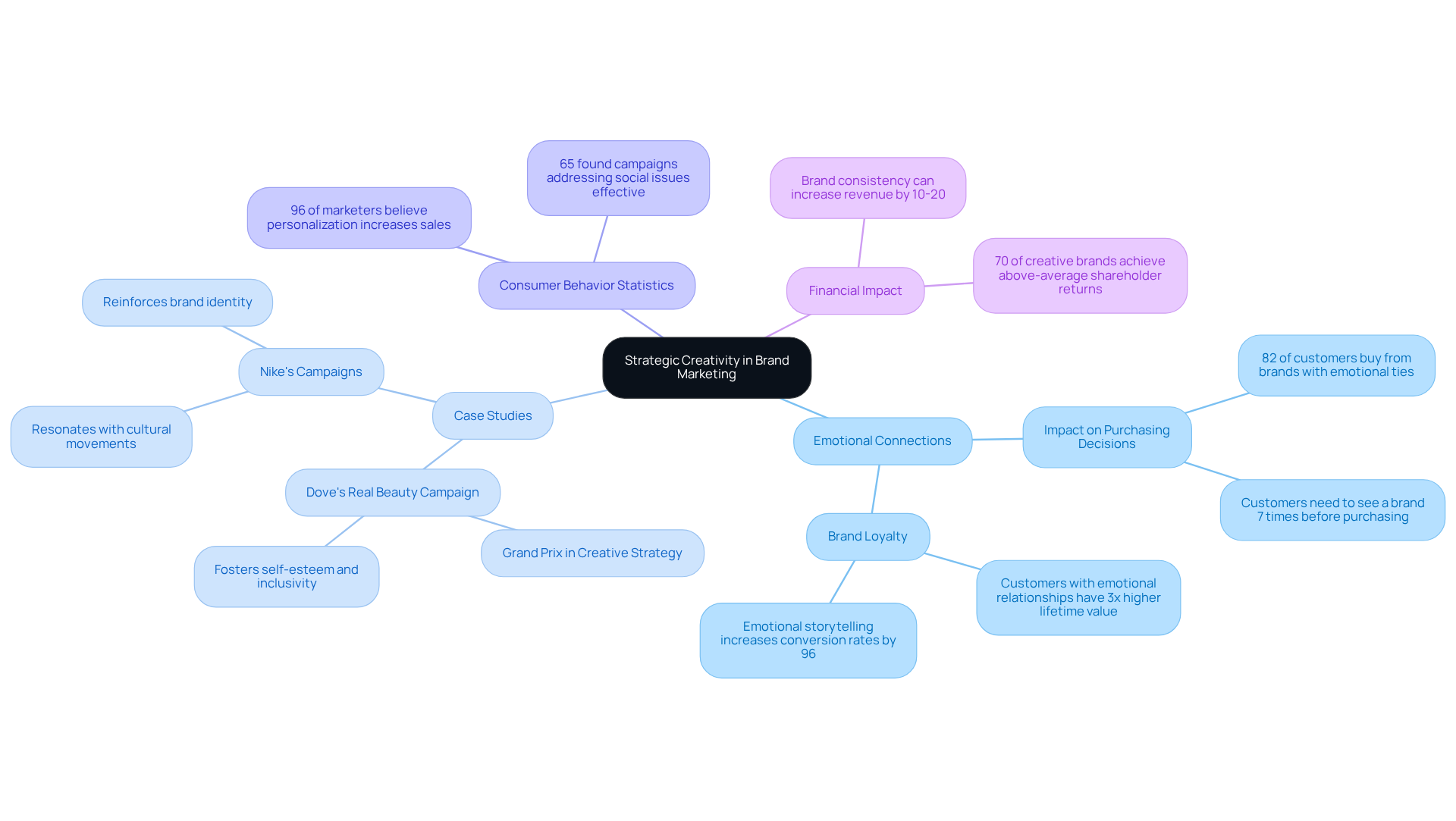
The combination of in marketing is not just a buzzword; it’s a powerful approach that merges innovative concepts with a well-defined strategy, focusing on the core values and target audience of a company. Consider the impact of brands like Nike and Dove, which have adeptly aligned their campaigns with social issues, significantly enhancing . For instance, has not only sparked conversation but also fostered a profound with consumers, establishing the brand as a champion of inclusivity and self-esteem.
Research reveals that a staggering 82% of customers are more likely to purchase from a company when they feel a strong , underscoring the critical role of emotional ties in shaping consumer behavior. Similarly, often resonate with cultural movements, reinforcing its identity and relevance in a competitive landscape. Furthermore, a notable 92% of advertisers plan to maintain or increase their investment in awareness campaigns by 2025, reflecting a growing recognition of the .
Moreover, studies indicate that 70% of companies recognized for their , highlighting the financial benefits of integrating creativity into promotional efforts. However, it’s essential for companies to carefully navigate ; missteps can lead to disconnects with their audience. As marketing leaders assert, are crucial for crafting memorable identities that stand out in a crowded marketplace, making them indispensable elements for .
So, how can your brand harness the power of ? Engage with your audience on a deeper level, and explore innovative ways to connect your values with their needs. The time to act is now.
Leverage Data-Driven Insights for Creative Innovation
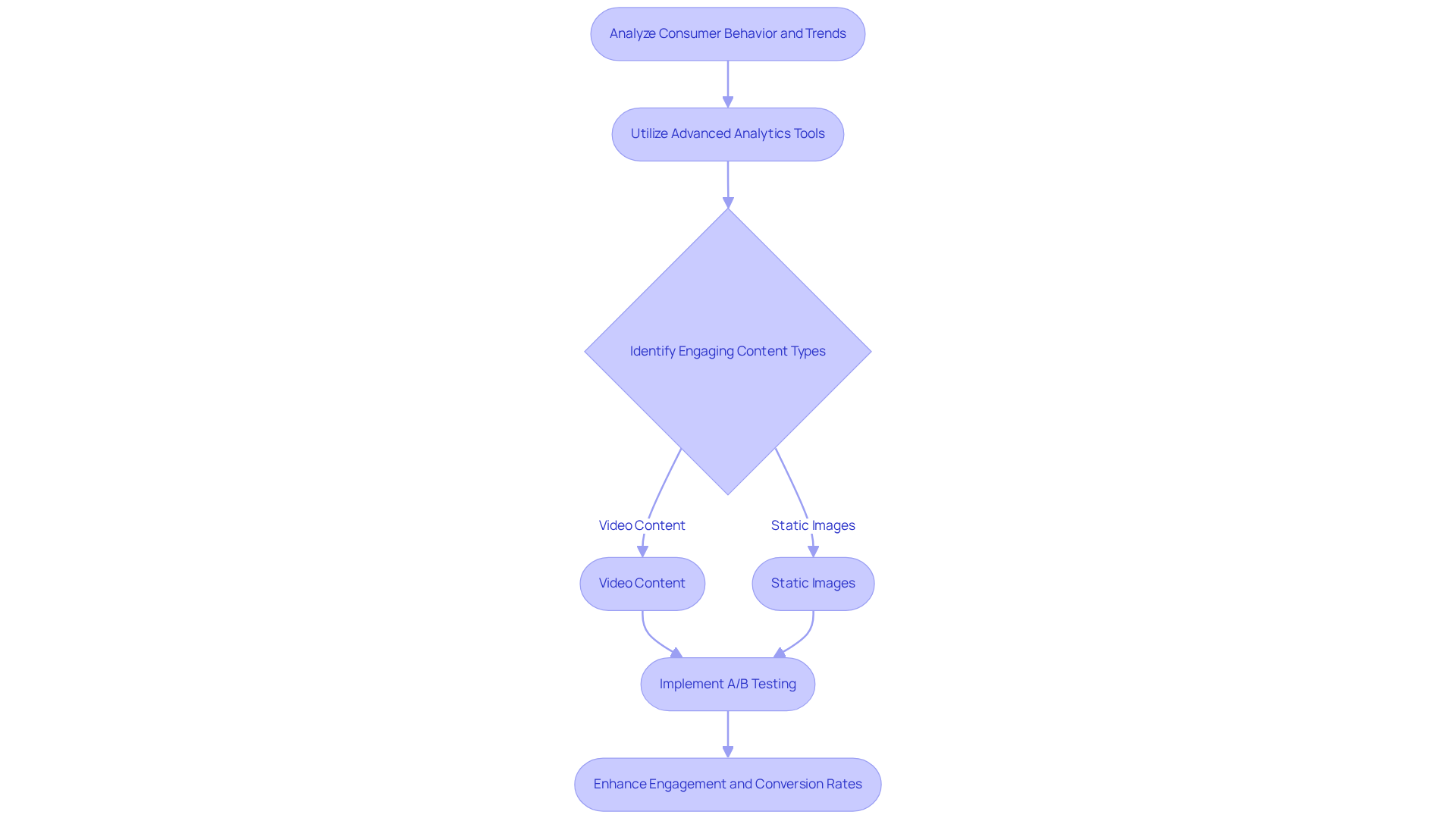
To effectively harness , companies must analyze consumer behavior, preferences, and emerging trends. This process involves utilizing to collect data from diverse sources, including social media interactions and website traffic. For instance, companies may discover that specific demographics engage more with video content than with static images. By focusing on , companies can significantly enhance engagement and conversion rates.
Furthermore, implementing based on these insights enables brands to pinpoint what resonates most with their audience. This approach combines strategy and creativity to while fostering , driving long-term loyalty and growth. Are you ready to leverage these insights for your campaigns? The time to act is now.
Foster Cross-Functional Collaboration for Enhanced Creativity
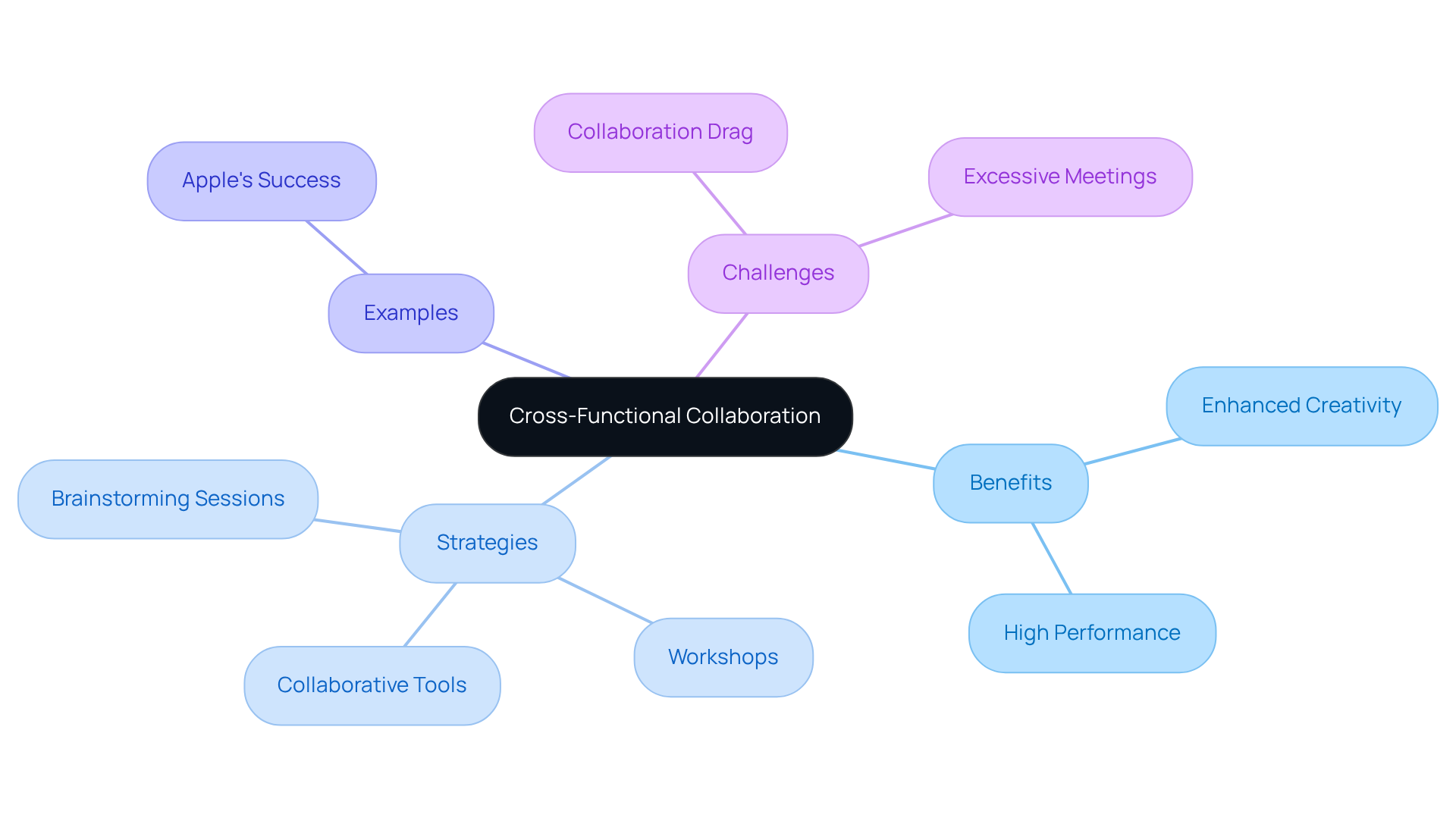
Fostering is not just beneficial; it’s essential for cultivating an environment where team members from diverse departments can freely exchange ideas and insights. Regular brainstorming sessions, workshops, and collaborative tools that enhance communication are key to achieving this goal. For example, when with product developers, they gain a deeper understanding of product features and advantages. This synergy allows them to craft more .
Consider Apple, a company whose remarkable success is largely attributed to the seamless collaboration among its design, engineering, and promotional teams. This partnership not only drives innovation in product development but also results in highly that resonate with consumers. In fact, , underscoring the quantifiable benefits of .
However, organizations must remain vigilant about the potential pitfalls of collaboration, such as excessive meetings and unclear decision-making authority, which can lead to what’s known as '.' As Kristina La-Rocca Cerrone points out, resolving is crucial for maintaining effective communication and ensuring that teams operate efficiently. By prioritizing collaboration and proactively addressing these challenges, companies can unlock new levels of strategy and creativity, ensuring that their marketing efforts align with product capabilities, ultimately paving the way for greater success.
Implement Iterative Testing and Optimization for Creative Assets
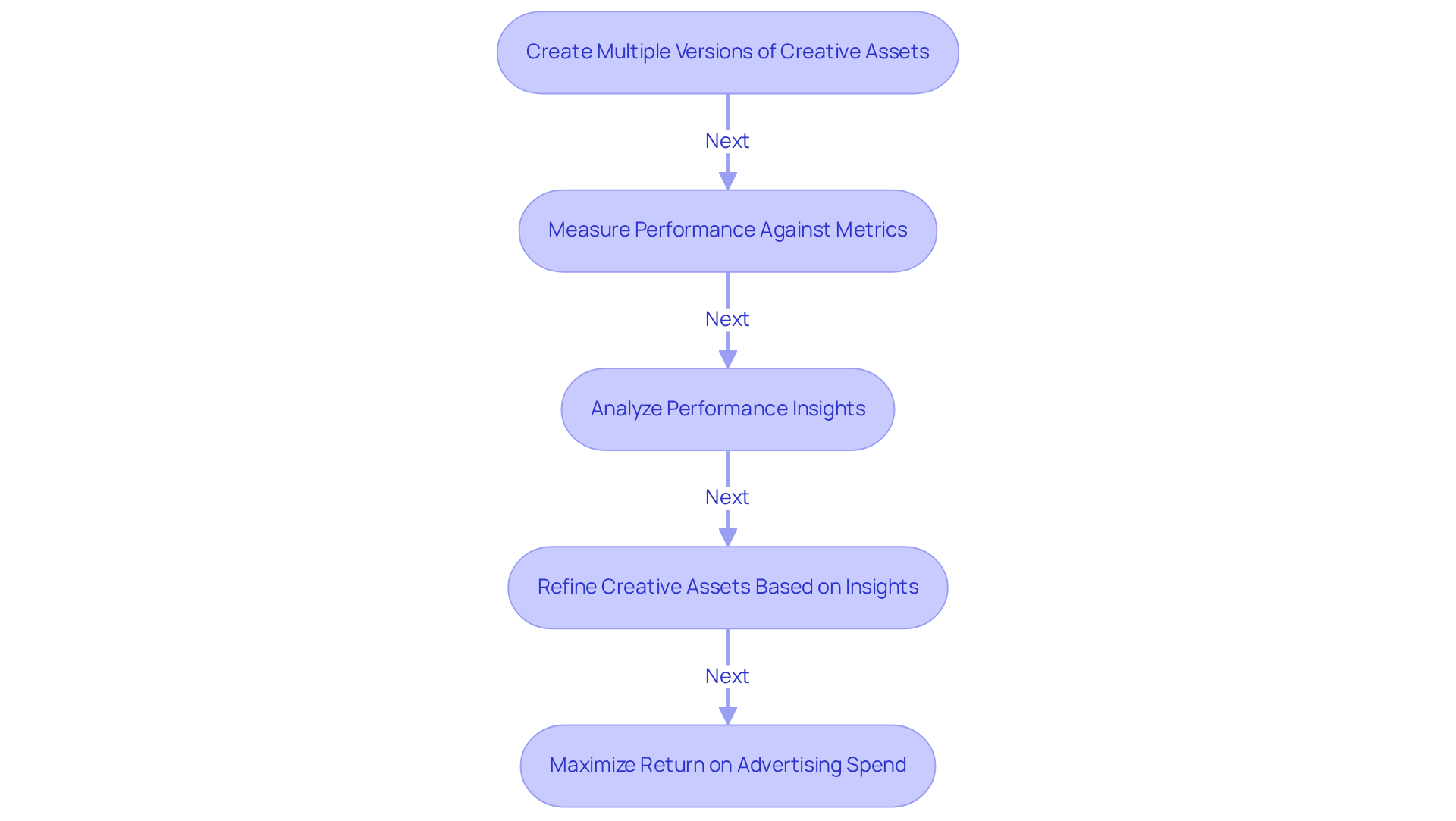
Implementing is crucial for . By creating multiple versions of and measuring their , companies can significantly . For example, testing various headlines, visuals, or calls to action in advertisements allows brands to identify which combinations generate the greatest engagement. Tools like Google Optimize and Facebook Ads Manager facilitate this process, providing into user interactions.
Furthermore, by integrating in continuously refining their based on these insights, brands not only improve their but also ensure their campaigns resonate with their target audience. This approach maximizes the , highlighting the importance of for any business looking to thrive in a competitive landscape.
Are you ready to elevate your marketing efforts? Engage with MediaNug to explore how can transform your campaigns.
Conclusion
The integration of strategy and creativity in brand marketing stands out as a crucial approach that can significantly elevate brand success. By aligning innovative ideas with a clear strategic framework, brands can forge deeper emotional connections with their audiences. This is evident in campaigns from industry leaders like Nike and Dove, which showcase how this synergy not only enhances brand loyalty but also positions companies to thrive in a competitive landscape.
Key insights throughout the article reveal the multifaceted nature of strategic creativity. For instance:
- Leveraging data-driven insights fosters innovative marketing strategies.
- Promoting cross-functional collaboration enhances creative output.
The evidence underscores the importance of a holistic approach. Furthermore, iterative testing proves to be a vital tool in optimizing marketing efforts, ensuring that brands continuously adapt and resonate with their target demographics.
In light of these findings, it becomes clear that embracing strategic creativity is not merely an option but a necessity for brands aiming for long-term success. Companies are encouraged to actively engage with their consumers, harness data insights, and foster collaborative environments that spur innovation. The call to action is unmistakable: brands must prioritize these elements to not only survive but excel in an ever-evolving market landscape.
Frequently Asked Questions
What is strategic creativity in brand marketing?
Strategic creativity in brand marketing refers to the combination of innovative concepts and a well-defined strategy that focuses on a company's core values and target audience.
How have brands like Nike and Dove utilized strategic creativity?
Brands like Nike and Dove have aligned their campaigns with social issues, enhancing customer loyalty and brand awareness. For example, Dove's 'Real Beauty' initiative has created an emotional connection with consumers, while Nike's campaigns resonate with cultural movements.
What impact does emotional connection have on consumer behavior?
Research shows that 82% of customers are more likely to purchase from a company when they feel a strong emotional bond, highlighting the importance of emotional ties in influencing consumer behavior.
What are advertisers planning regarding awareness campaigns by 2025?
A notable 92% of advertisers plan to maintain or increase their investment in awareness campaigns by 2025, indicating a growing recognition of the importance of combining strategy and creativity in marketing.
What financial benefits come from integrating creativity into marketing efforts?
Studies indicate that 70% of companies recognized for their creative excellence achieve above-average shareholder returns, demonstrating the financial advantages of incorporating creativity into promotional strategies.
What risks are associated with missteps in strategic creativity?
Missteps in navigating strategy and creativity can lead to disconnects with the audience, making it essential for companies to carefully manage these elements to avoid alienating their consumers.
How can brands harness the power of strategic creativity?
Brands can harness the power of strategic creativity by engaging with their audience on a deeper level and exploring innovative ways to connect their values with consumer needs.
List of Sources
- Define Strategic Creativity in Brand Marketing
- 26 Fresh Statistics On the Importance of Branding (https://huddlecreative.com/blog/statistics-on-the-importance-of-branding)
- marketingbrew.com (https://marketingbrew.com/stories/2025/11/07/why-brands-like-gushers-pringles-and-columbia-sportswear-are-reviving-archival-campaigns)
- TOP 20 CREATIVE THINKING MARKETING STATISTICS 2025 | Amra And Elma LLC (https://amraandelma.com/creative-thinking-marketing-statistics)
- marketingweek.com (https://marketingweek.com/marketers-creative-effectiveness)
- ogilvy.com (https://ogilvy.com/ideas/dove-ogilvys-decades-long-real-beauty-campaign-wins-creative-strategy-grand-prix)
- Leverage Data-Driven Insights for Creative Innovation
- fifthcolor.com (https://fifthcolor.com/blogs/news/5-data-driven-marketing-trends-to-watch-for-the-rest-of-2025)
- andersoncollaborative.com (https://andersoncollaborative.com/knowledge-base/what-is-data-driven-marketing-strategy-tools-and-trends-for-2025)
- forbes.com (https://forbes.com/councils/forbestechcouncil/2025/07/18/why-the-best-marketing-in-2025-is-data-driven)
- thecontinuum.online (https://thecontinuum.online/features/the-impact-of-analytics-on-creative-marketing-campaigns)
- 2026 Marketing Statistics, Trends, & Data (https://hubspot.com/marketing-statistics)
- Foster Cross-Functional Collaboration for Enhanced Creativity
- gartner.com (https://gartner.com/en/newsroom/press-releases/2024-05-14-gartner-survey-reveals-eighty-four-percent-of-marketers-report-experiencing-high-collaboration-drag-from-cross-functional-work)
- strategicpete.com (https://strategicpete.com/case_studies/accelerated-growth-via-sdrs)
- vibe.us (https://vibe.us/blog/35-quotes-about-communication?srsltid=AfmBOooAWQyb7xlhmOxq0wYRukVa5ABsCvNSk0hg0UXlspXBd41fXtnt)
- omnitas.com (https://omnitas.com/ways-to-improve-cross-department-collaboration-in-marketing-teams)
- Implement Iterative Testing and Optimization for Creative Assets
- zappi.io (https://zappi.io/web/blog/how-to-never-waste-an-ad-again-thanks-to-iterative-research)
- Performance creative: Combining data and creativity (https://appsflyer.com/blog/measurement-analytics/performance-creative)
- mmaglobal.com (https://mmaglobal.com/case-study-hub/case_studies/view/46422)
- unbounce.com (https://unbounce.com/conversion-rate-optimization/iterative-testing)
- askattest.com (https://askattest.com/blog/articles/iterative-creative-testing)