Introduction
Choosing the right digital marketing agency is a pivotal decision for any brand aiming to thrive in today’s competitive landscape. With countless options available, it’s crucial to align an agency’s expertise with your specific marketing goals.
What criteria should brands consider to ensure they select an agency that not only meets their needs but also propels them toward their objectives? This guide delves into the critical factors that can help navigate the complexities of agency selection. By making informed choices, brands can foster effective partnerships and drive measurable results.
Define Your Marketing Goals and Needs
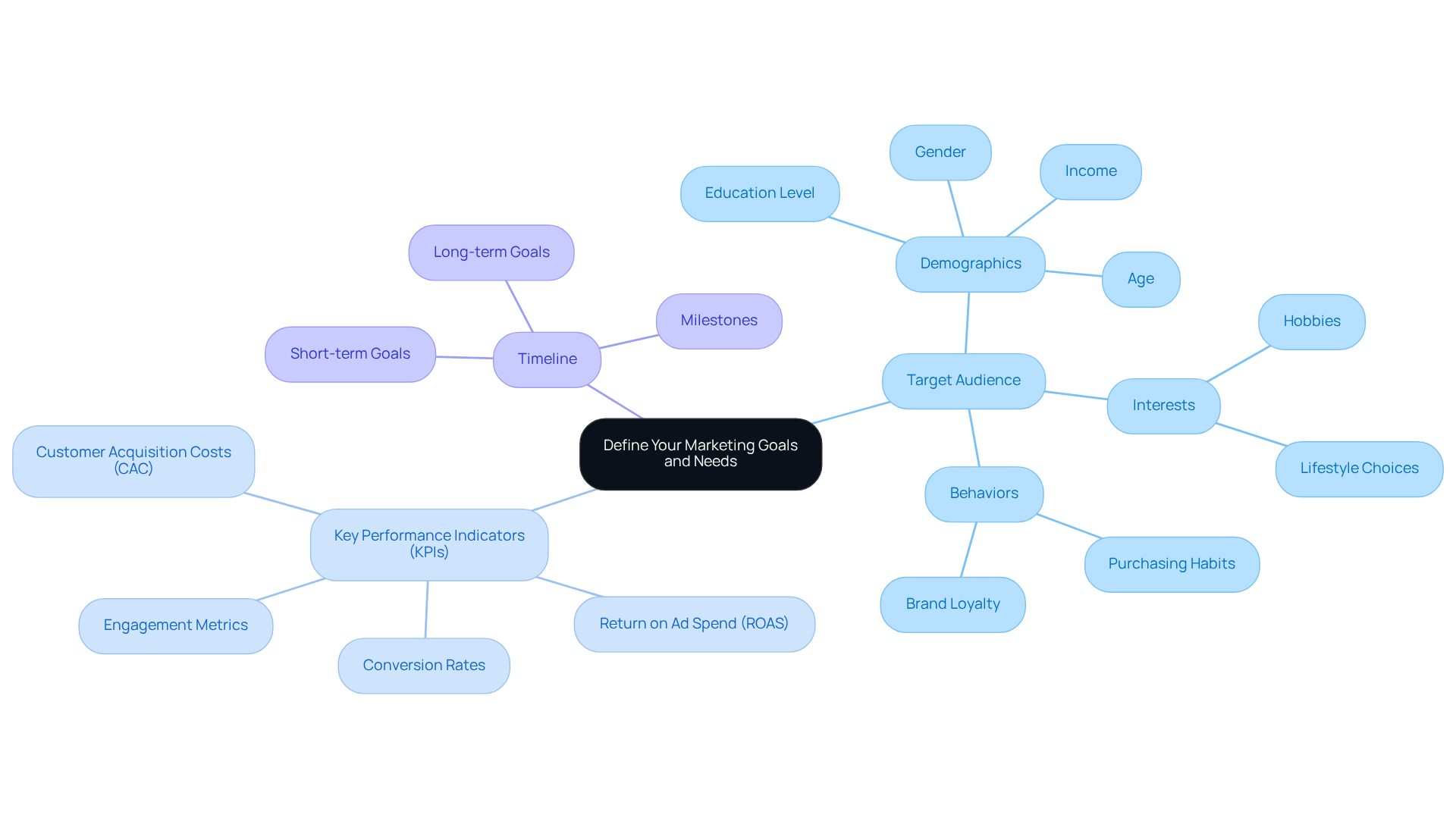
To effectively choose a , begin by clearly defining your marketing objectives. Are you looking to boost product awareness, drive sales, or enhance customer engagement? Document your primary goals and consider these key elements:
- : Identify who you want to reach. Define their demographics, interests, and behaviors. Understanding your audience is crucial; brands that leverage often see significant cost reductions and improved retention rates. As noted, "Brands using see cost reductions and higher retention; a smart, targeted strategy pays off handsomely."
- : Determine the metrics you will use to gauge success. Common KPIs include conversion rates, return on ad spend (ROAS), and customer acquisition costs (CAC). For instance, the average conversion rate across various industries in 2025 highlights the importance of setting realistic benchmarks tailored to your specific market. This is essential for ensuring that your promotional efforts are effective and aligned with your business objectives.
- Timeline: Establish a timeframe for achieving your goals. Setting deadlines not only aids in prioritizing your agency selection but also ensures that your promotional efforts remain focused and in harmony with your business goals.
By articulating your goals and requirements, you position yourself to find a that aligns with your vision and can deliver the desired results. Effective are built on a foundation of clear goals and quantifiable results, allowing brands to navigate the complexities of the digital landscape efficiently. For example, the Levi's Curve ID campaign illustrates the consequences of misalignment with the , emphasizing the need for thorough audience research and understanding.
Moreover, continuous and adaptation to evolving market conditions are essential for maintaining relevance and effectiveness in your promotional approach.
Explore Different Types of Marketing Agencies
Marketing agencies can be categorized into several distinct types, each offering unique advantages that can significantly impact your promotional strategy:
- : These agencies provide a , including strategy development, creative execution, media buying, and analytics. They are especially advantageous for companies seeking a unified approach that simplifies promotional activities and enhances overall efficiency. In 2025, the market share of comprehensive service firms continues to rise, showcasing their ability to adapt to varied client requirements and deliver integrated promotional plans. Industry insights reveal that full-service firms can help organizations boost brand awareness, customer engagement, and sales by crafting cohesive, targeted strategies.
- : Focused on specific fields like social media, SEO, or content marketing, offer extensive expertise in their niche. Brands with highly targeted needs may find these firms more suitable for achieving specific objectives. Marketing professionals suggest that if your needs are particularly specialized, this option could be more effective.
- : These firms prioritize and often operate on a performance-based model. They are ideal for companies that emphasize ROI and , ensuring that investments in promotion yield tangible results. Recent reports highlight that can assist brands in rapidly increasing their presence to seize unforeseen market opportunities.
- : If your primary requirement is , a creative firm may be the best fit. These agencies excel in producing engaging visuals and narratives that resonate with audiences. Insights from industry experts indicate that having a plan is one step, but without creativity, you risk losing your audience's interest.
Understanding these differences is crucial for brands aiming to enhance their promotional efforts with a marketing agency digital. Additionally, it's essential to consider the potential costs associated with promotional firms, as these can vary significantly based on the services offered and the firm's expertise. By investigating these categories, you can determine which organization aligns best with your specific promotional objectives and requirements.

Evaluate Agency Expertise and Track Record
When evaluating potential agencies, it’s crucial to consider several key factors that can significantly influence your decision-making process:
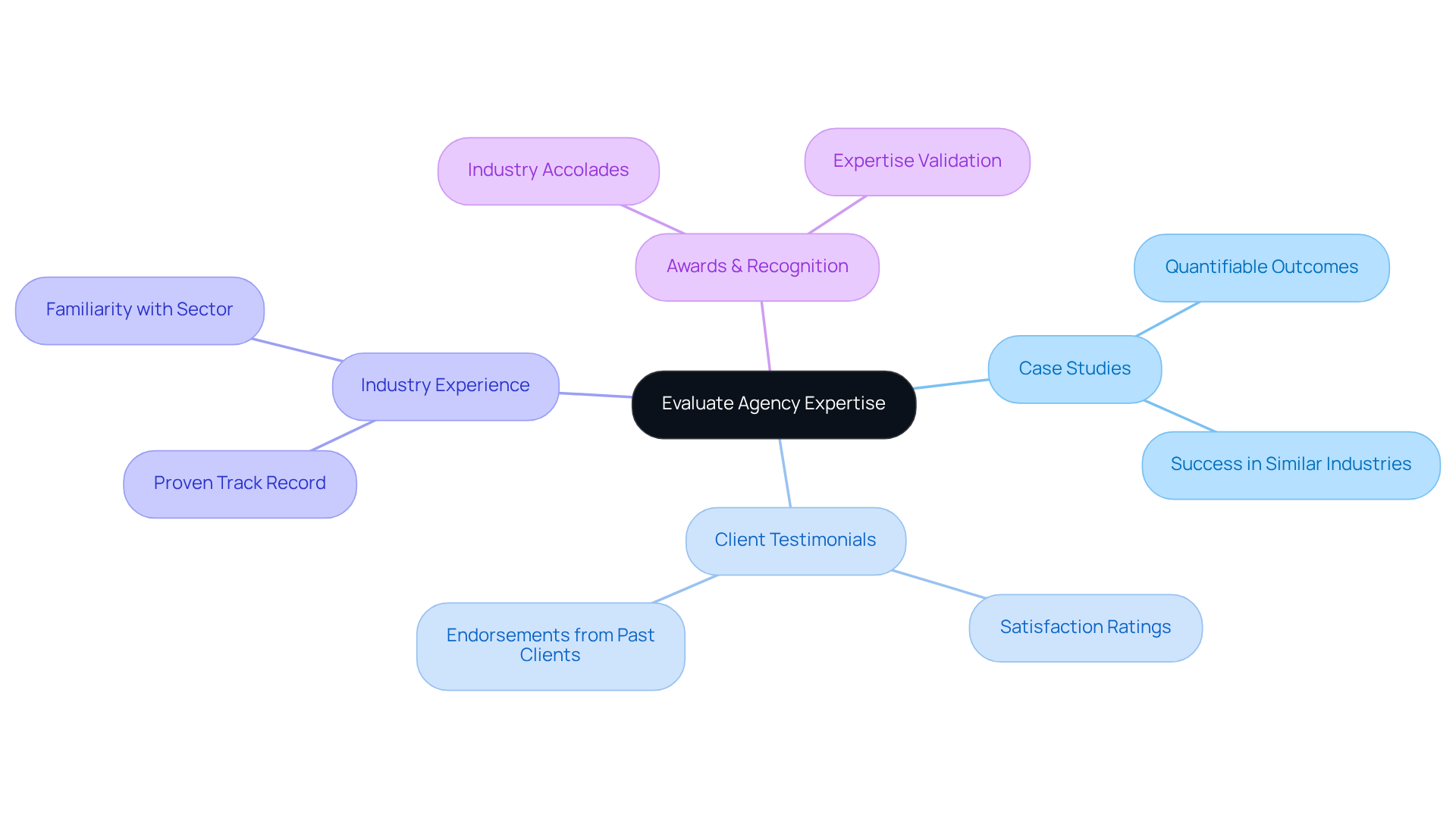
- : Request that showcase the agency's success with brands in similar industries. Look for . These examples provide valuable insight into the firm's effectiveness and strategy. Notably, 88% of CMOs expect their firms to deliver , underscoring the importance of measurable outcomes in client satisfaction.
- : Take a close look at feedback and endorsements from past clients to gauge satisfaction levels and the firm's overall impact. High client satisfaction ratings often reflect a firm's ability to produce tangible results.
- : Ensure the firm has a proven track record in your specific industry. Familiarity with your sector can lead to more tailored and effective promotional strategies, increasing the likelihood of achieving your goals.
- : Investigate whether the organization has received any industry awards or accolades. Such recognition serves as a testament to their expertise and credibility in the field.
Furthermore, integrating perspectives from industry leaders can enhance your evaluation. For instance, consider the statement, " and moving beyond guesswork." This highlights the critical role of data-driven evaluations. By thoroughly assessing these factors, including the growth of and the , you can make a more informed decision about which marketing agency digital is best suited to help you achieve your marketing objectives. This approach not only simplifies the selection process but also aligns with the growing trend of companies seeking data-driven outcomes and proven success in their partnerships.
Understand Pricing Models and Budgeting
Agencies typically operate under several pricing models that can significantly impact your :
- Retainer Fees: This model involves a fixed monthly fee for ongoing services, making it ideal for companies that require continuous support.
- Project-Based Fees: A one-time fee for specific projects suits businesses with short-term needs, allowing for flexibility and targeted efforts.
- : Here, payment is contingent on results achieved, such as a percentage of sales generated. This model effectively aligns the agency's incentives with your success, fostering a collaborative environment.
- Hourly Rates: Charges based on the time spent on your account can be beneficial for brands needing ad-hoc services, providing a straightforward approach to budgeting.
Before collaborating with a , it’s crucial to establish a clear budget and understand how their pricing structure aligns with your financial capabilities and marketing objectives. This proactive approach helps you avoid unexpected costs and ensures a fruitful partnership. Are you ready to take the next step in optimizing your agency collaboration?

Establish Clear Communication and Expectations
To cultivate a successful partnership with your chosen agency, consider these essential strategies:
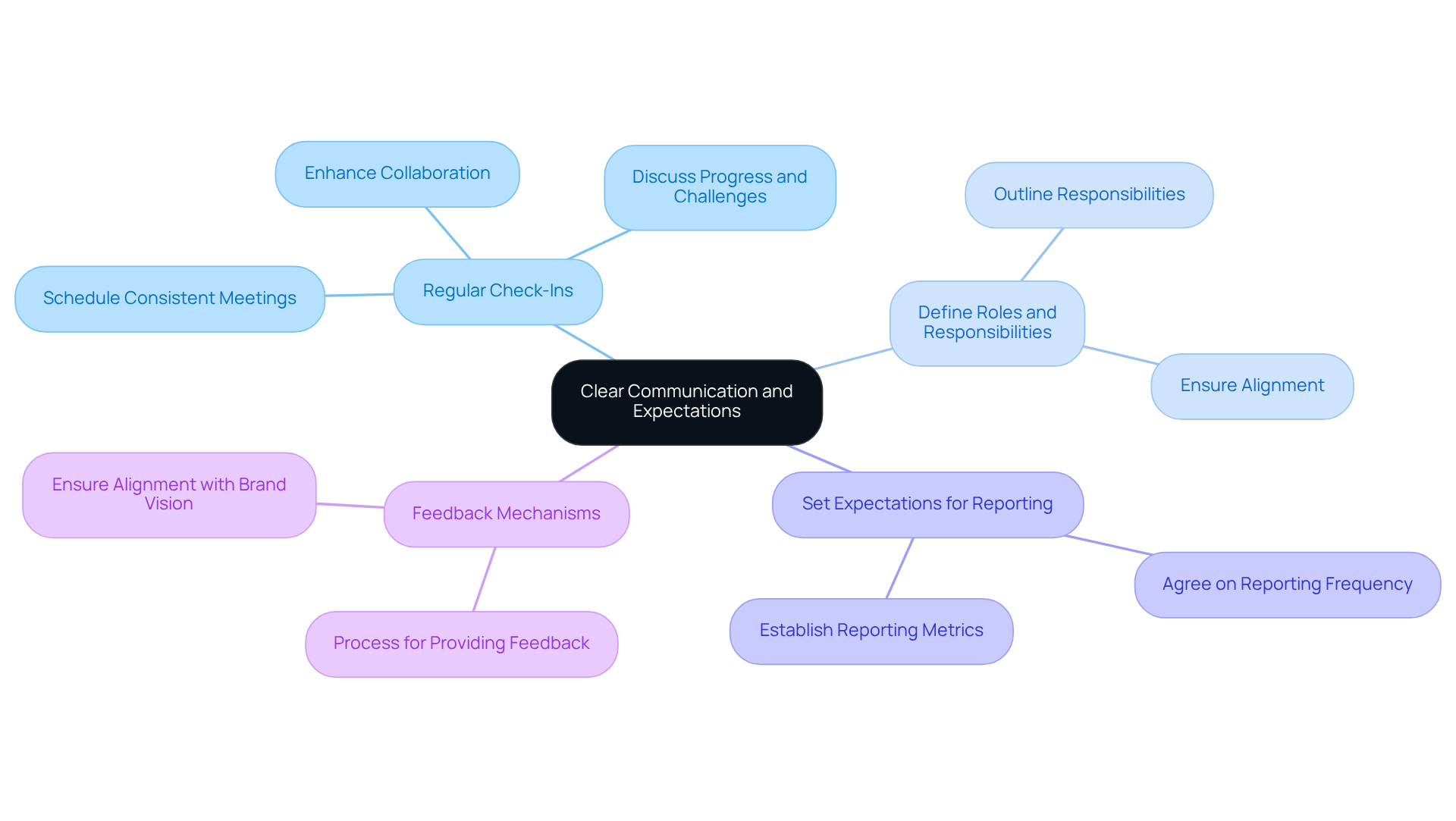
- Regular Check-Ins: Schedule consistent meetings to discuss progress, challenges, and necessary adjustments in strategy. This practice not only fosters accountability but also enhances collaboration. In fact, 72% of project management tool users report improved customer experience through . Are you ready to elevate your engagement?
- : Clearly outline who is responsible for what within both your team and the agency. This clarity helps ensure that everyone is aligned toward common goals, which is crucial for effective campaign execution. How can you ensure everyone knows their role?
- : Agree on how often you will receive performance reports and what metrics will be included. Establishing a clear reporting framework ensures transparency and allows for ongoing assessment of campaign effectiveness. This is vital for maintaining trust and accountability. What metrics matter most to you?
- : Establish a process for providing feedback on campaigns and creative work to ensure alignment with your brand vision. This structured approach allows for timely adjustments based on performance metrics. How will you facilitate this feedback loop?
By prioritizing and setting expectations, you can enhance collaboration and drive better results from your efforts. Remember, are built on and mutual understanding, which lead to improved and measurable growth. Are you ready to take your marketing to the next level?
Conclusion
Choosing the right digital marketing agency is a pivotal decision that can significantly influence a brand's success in the competitive digital landscape. Have you clearly defined your marketing goals? Understanding the various types of agencies available and evaluating their expertise is essential for making informed choices that align with your unique needs and objectives.
Establishing clear marketing goals is crucial. What specific requirements does your brand have? The article highlights the different types of agencies, from full-service to specialized firms, and underscores the necessity of evaluating their track records and client testimonials. Furthermore, it discusses the various pricing models available and the significance of maintaining open communication and setting expectations for a fruitful partnership.
Ultimately, selecting the right digital marketing agency involves a strategic approach that prioritizes alignment with business objectives. Are you ready to thoroughly evaluate agency capabilities and foster effective communication? By taking these steps, brands can enhance their marketing efforts and ensure a collaborative relationship that drives measurable results. Embracing this process will empower businesses to navigate the digital marketing landscape with confidence and achieve their desired outcomes.
Frequently Asked Questions
What should I consider when defining my marketing goals and needs?
When defining your marketing goals, consider your objectives such as boosting product awareness, driving sales, or enhancing customer engagement. Additionally, identify your target audience, determine key performance indicators (KPIs) to measure success, and establish a timeline for achieving your goals.
Why is understanding my target audience important?
Understanding your target audience is crucial because it helps tailor your marketing strategies effectively. Brands that leverage audience insights often see significant cost reductions and improved retention rates. Knowing demographics, interests, and behaviors allows for a smart, targeted strategy that pays off.
What are some common key performance indicators (KPIs) for marketing?
Common KPIs include conversion rates, return on ad spend (ROAS), and customer acquisition costs (CAC). Setting realistic benchmarks tailored to your specific market is essential for ensuring effective promotional efforts.
How can I ensure my marketing efforts are aligned with my business goals?
To ensure alignment, articulate your goals and requirements clearly. Establish a timeline for achieving these goals, which helps prioritize agency selection and keeps promotional efforts focused.
What types of marketing agencies are available?
Marketing agencies can be categorized into several types: Full-Service Agencies offer a comprehensive suite of services for a unified approach; Specialized Organizations focus on specific fields like social media or SEO, providing niche expertise; Performance Marketing Firms prioritize measurable outcomes and often operate on a performance-based model; Creative Firms excel in content creation, producing engaging visuals and narratives.
What are the advantages of using a full-service marketing agency?
Full-service agencies provide a comprehensive suite of services that simplify promotional activities and enhance overall efficiency. They can help boost brand awareness, customer engagement, and sales by crafting cohesive, targeted strategies.
When should I consider a specialized organization for my marketing needs?
Consider a specialized organization if your marketing needs are highly targeted and require extensive expertise in a specific area, such as social media, SEO, or content marketing.
What is the focus of performance marketing firms?
Performance marketing firms focus on measurable outcomes and often operate on a performance-based model, making them ideal for companies that emphasize ROI and data-driven strategies.
Why might I choose a creative firm for my marketing?
Choose a creative firm if your primary requirement is compelling content creation. These agencies excel in producing engaging visuals and narratives that resonate with audiences, which is essential for maintaining interest.
How do I determine which type of marketing agency aligns best with my needs?
Investigate the different types of marketing agencies and consider your specific promotional objectives and requirements. Assess the potential costs associated with each type, as they can vary significantly based on the services offered and the firm's expertise.
List of Sources
- Define Your Marketing Goals and Needs
- extension.psu.edu (https://extension.psu.edu/marketing-research-basics-identifying-your-target-market)
- emplifi.io (https://emplifi.io/resources/blog/target-audience-analysis-guide-everything-digital-marketers-need-to-know)
- adobe.com (https://adobe.com/express/learn/blog/target-audience)
- asana.com (https://asana.com/resources/target-audience)
- How To Start in Digital Marketing? The 2025 Guideline (https://imd.org/blog/marketing/digital-marketing)
- Explore Different Types of Marketing Agencies
- goodmediaideas.com (https://goodmediaideas.com/case_studies)
- The Complete Guide to Working With a Marketing Agency: Unlock Your Business Advantage (https://armanino.com/articles/guide-to-working-with-marketing-agency)
- itvibes.com (https://itvibes.com/case_studies)
- gumgum.com (https://gumgum.com/case-studies)
- mmaglobal.com (https://mmaglobal.com/case-study-hub/case_studies/index/search:/page:5)
- Evaluate Agency Expertise and Track Record
- amraandelma.com (https://amraandelma.com/top-marketing-agencies-statistics)
- Marketing Statistics: 100+ Insights for 2026 (https://salesforce.com/marketing/marketing-statistics)
- Marketing Agency Statistics 2026 – 55 Key Figures (https://mycodelesswebsite.com/marketing-agency-statistics)
- Establish Clear Communication and Expectations
- 17 Smart Ways Agencies Set Client Expectations Around Campaign Success (https://forbes.com/councils/forbesagencycouncil/2023/08/25/17-smart-ways-agencies-set-client-expectations-around-campaign-success)
- The Complete Guide to Working With a Marketing Agency: Unlock Your Business Advantage (https://armanino.com/articles/guide-to-working-with-marketing-agency)
- sociabble.com (https://sociabble.com/blog/employee-communications/communications-statistics)
- Business Communication Statistics 2026 | Project.co (https://project.co/communication-statistics)
- sevenfigureagency.com (https://sevenfigureagency.com/14-key-strategies-to-build-client-trust-in-marketing-agencies)