Introduction
In the dynamic realm of brand marketing, companies encounter a crucial choice: should they engage external marketing agencies or develop in-house teams? This decision is not merely operational; it shapes marketing strategies and influences the overarching brand narrative. This article offers a detailed comparison between marketing agencies and internal teams, examining how brands can harness the strengths of each to enhance their marketing efforts. As organizations seek to align with their objectives and adapt to market changes, one question persists: which model truly paves the way for sustained growth and innovation?
Defining Marketing Agencies and In-House Teams
, delivering such as strategy development, creative production, media buying, and analytics. Their diverse teams bring a wealth of expertise, allowing them to tailor services effectively to meet specific client needs. Conversely, internal teams consist of individuals dedicated solely to a company's promotional efforts. This structure fosters a deep understanding of the organization’s culture, goals, and audience, resulting in highly aligned and .
As of 2026, approximately 60% of companies in the are leveraging , while 40% rely on internal teams. This trend underscores the growing recognition of the distinct advantages each approach provides. Agencies offer scalability and specialized skills, making them ideal for companies looking to expand their reach or penetrate new markets. In contrast, and immediate access to insights, enhancing responsiveness to market fluctuations.
Marketing professionals highlight the effectiveness of in-house teams, pointing out that they can cultivate stronger brand alignment and facilitate quicker decision-making. One expert noted, "When promotion is strongly aligned with business objectives, it becomes a growth engine rather than a fortunate risk." However, the benefits of the are equally significant; they provide that can yield impactful results. In 2026, companies that successfully integrate the strengths of both agencies and internal teams are poised to achieve exceptional outcomes.

Evaluating Pros and Cons of Each Approach
When evaluating the , one of the standout advantages is its access to a . In the , agencies typically house specialists across various fields - think SEO, , and - leading to more innovative and . Furthermore, companies in the can scale their services swiftly to meet changing demands, making them ideal for businesses poised for .
However, it’s crucial to consider the drawbacks. Communication gaps may arise, and a lack of deep understanding of the company can lead to . Conversely, internal teams enjoy a and culture, fostering cohesive messaging and quicker decision-making. Yet, they often face , particularly in , which can stifle their ability to innovate and adapt to market changes.
In conclusion, while agencies offer a wealth of expertise and flexibility, internal teams provide alignment and cultural understanding. The choice between the two should be guided by your organization's specific needs and goals.

Identifying Suitability for Brand Marketing Goals
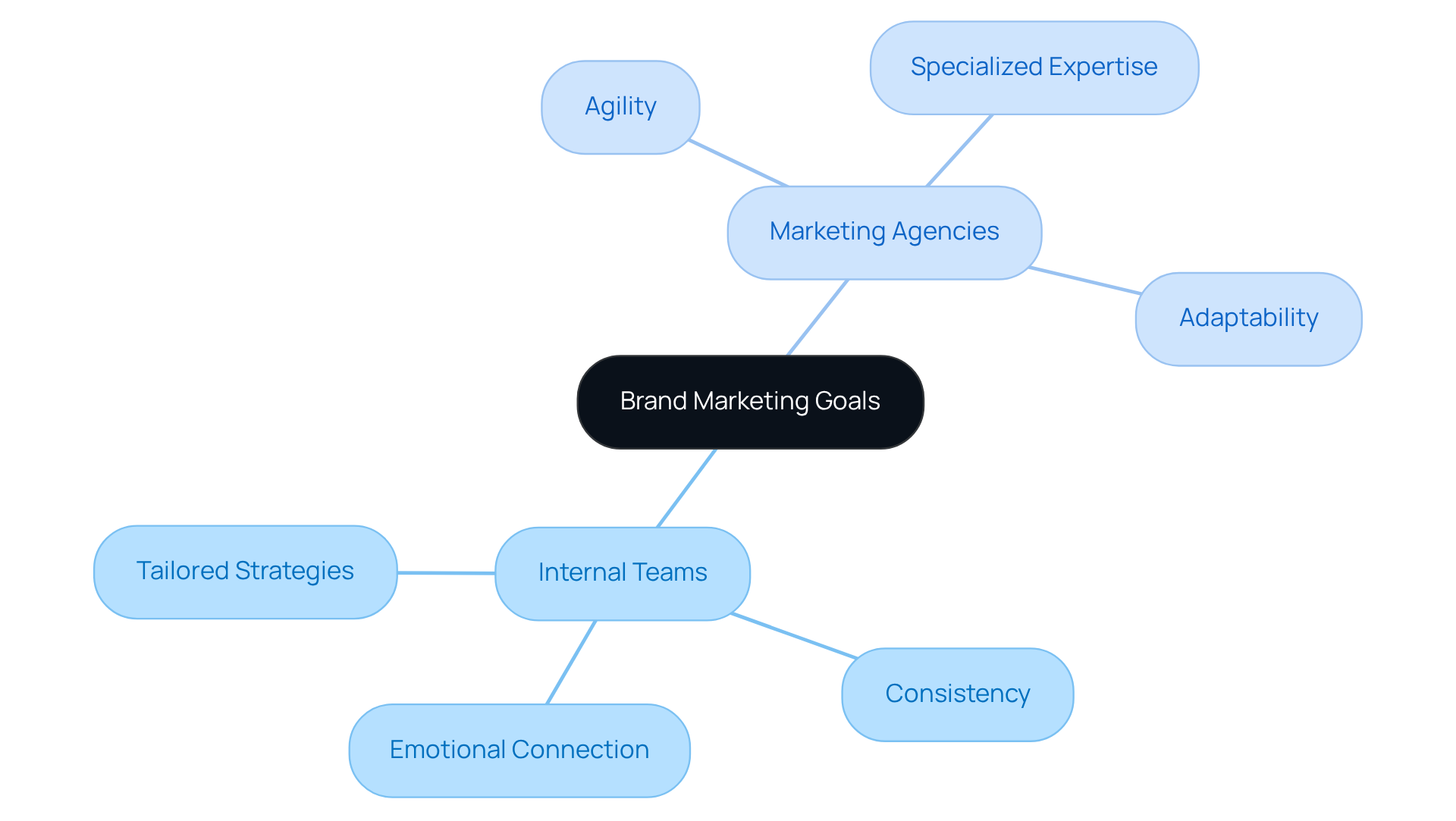
Brands with specific, niche marketing objectives often find that internal groups are better equipped to meet their needs. These teams can craft , ensuring consistency and a deep understanding of its motivations and products. For example, companies focused on reap the benefits of the continuity and alignment that in-house teams provide, fostering a strong emotional connection with consumers. In fact, nearly three-quarters of advertisers (73%) plan to increase their investments in promotional efforts in 2026, highlighting a growing recognition of the importance of .
Conversely, companies targeting rapid expansion or entering new markets may lean towards the . The marketing agency industry can quickly adapt to shifting market dynamics and capitalize on the latest trends, enabling companies to seize emerging opportunities. Additionally, 60% of marketers anticipate boosting their investments in performance promotion in 2026, further underscoring the demand for specialized execution.
Ultimately, the decision between agency and internal resources should be guided by the company's , available resources, and the over marketing activities. It's also vital to consider potential , such as salaries, benefits, and training expenses, which can impact overall budget considerations. As companies navigate the complexities of the market, understanding when to leverage external expertise versus internal capabilities will be essential for achieving sustainable growth.
Analyzing Cost and ROI Considerations
When it comes to evaluating expenses, hiring a often proves to be a more in the short term. Companies can sidestep the overhead costs associated with salaries, benefits, and training that come with . In the , agencies typically operate on a project or retainer basis, allowing brands to tailor their spending to immediate needs. In fact, according to OBA PR, the is 40-60% more affordable than while delivering superior outcomes.
However, it’s essential to recognize that can yield by cultivating institutional knowledge and loyalty. This can significantly enhance the effectiveness of over time. In terms of ROI, the frequently delivers due to their specialized expertise and resources. For instance, companies that engage agencies achieve tier-one placements 4.3 times more often than those relying solely on during the first two years, as highlighted in LinkedIn’s 2025 PR Industry Report.
Conversely, in-house teams may ultimately generate higher returns by fostering . Brands must carefully weigh these factors, balancing immediate costs against . By doing so, they can make informed decisions between these two approaches, ensuring they choose the path that aligns best with their strategic goals.

Conclusion
The decision between marketing agencies and in-house teams is crucial, significantly impacting a brand's success. Each option presents distinct advantages tailored to various business needs. Agencies offer specialized expertise and scalability, while internal teams shine in brand alignment and cultural understanding. The effectiveness of either model depends on the organization's specific objectives and resources.
Marketing agencies can deliver innovative strategies and adapt quickly, making them ideal for businesses aiming for rapid growth or entering new markets. Conversely, in-house teams cultivate deeper connections and a cohesive brand message, which is essential for companies focused on long-term identity development. Financial considerations also play a vital role; agencies often provide a more cost-effective short-term solution, while internal teams may yield greater long-term returns through enhanced loyalty and institutional knowledge.
Ultimately, brands must evaluate their goals, available resources, and the level of control they desire over marketing activities to determine the best approach. Recognizing when to leverage external expertise versus internal capabilities is crucial for navigating market complexities. By making informed decisions, companies can position themselves for sustainable growth and success in an increasingly competitive landscape.
Frequently Asked Questions
What is the role of advertising agencies?
Advertising agencies serve as external partners that provide specialized services in areas such as strategy development, creative production, media buying, and analytics.
How do internal marketing teams differ from advertising agencies?
Internal marketing teams consist of individuals dedicated solely to a company's promotional efforts, which allows for a deep understanding of the organization's culture, goals, and audience, leading to consistent messaging.
What is the current trend in the marketing industry regarding the use of agencies versus internal teams?
As of 2026, approximately 60% of companies in the marketing agency industry are using marketing agencies, while 40% rely on internal teams, highlighting the advantages of both approaches.
What are the advantages of using marketing agencies?
Marketing agencies offer scalability and specialized skills, making them ideal for companies looking to expand their reach or enter new markets.
What benefits do internal marketing teams provide?
Internal teams provide greater control over messaging and immediate access to insights, which enhances responsiveness to market changes.
How do in-house teams contribute to brand alignment?
In-house teams can cultivate stronger brand alignment and facilitate quicker decision-making, aligning promotions closely with business objectives.
What unique advantages do advertising agencies bring to marketing efforts?
Advertising agencies provide fresh perspectives and innovative strategies that can lead to impactful results.
What is the potential outcome for companies that integrate both marketing agencies and internal teams?
Companies that successfully integrate the strengths of both agencies and internal teams are likely to achieve exceptional outcomes.
List of Sources
- Defining Marketing Agencies and In-House Teams
- marketingaiinstitute.com (https://marketingaiinstitute.com/blog/new-report-for-agencies)
- Unpacking the marketing industry trends forecast for 2026 (https://marketingdive.com/news/marketing-trends-outlook-2026/810740)
- 2026 Marketing Strategy: What Brands Should Prioritize This Year (https://mandr-group.com/2026-marketing-strategy-what-brands-should-prioritize-this-year)
- 2026 Marketing Statistics, Trends, & Data (https://hubspot.com/marketing-statistics)
- prweek.co.uk (https://prweek.co.uk/article/1950221/one-fifth-in-house-pros-think-agency-budgets-will-increase-2026)
- Evaluating Pros and Cons of Each Approach
- fellowstudio.com (https://fellowstudio.com/services/strategy/insight/6-examples-of-great-brand-strategy-case-studies)
- 40 Marketing Quotes To Inspire You and Your Team (https://salesforce.com/blog/marketing-quotes)
- embryo.com (https://embryo.com/blog/100-digital-marketing-quotes-to-inspire-you-and-your-business)
- valueleaf.com (https://valueleaf.com/blog/marketing-case-studies)
- linkedin.com (https://linkedin.com/business/marketing/blog/trends-tips/75-quotes-to-inspire-marketing-greatness)
- Identifying Suitability for Brand Marketing Goals
- digiday.com (https://digiday.com/marketing/digiday-research-brand-marketing-will-be-the-priority-in-2026-after-revenues-fell-short-of-expectations)
- boilingpointmedia.com (https://boilingpointmedia.com/blog/why-choose-a-marketing-agency-over-an-in-house-team)
- ramotion.com (https://ramotion.com/blog/branding-quotes)
- clicksgeek.com (https://clicksgeek.com/marketing-agency-vs-in-house-team)
- medium.com (https://medium.com/@locallycreativelab/branding-case-studies-analysing-successful-branding-campaigns-9b35a663f58f)
- Analyzing Cost and ROI Considerations
- firstpagesage.com (https://firstpagesage.com/seo-blog/digital-marketing-agency-vs-in-house-marketing-pros-cons-costs-fc)
- obapr.com (https://obapr.com/resources/in-house-pr-vs-pr-agency-complete-cost-benefit-analysis-2026)
- azquotes.com (https://azquotes.com/quotes/topics/roi.html)
- trinityp3.com (https://trinityp3.com/case-study/complex-inhouse-issues)
- 183degrees.com (https://183degrees.com/in-house-vs-agency-a-comprehensive-cost-and-capability-comparison-for-modern-marketing-teams)