
Introduction
In the fast-paced realm of digital marketing, brands often grapple with the overwhelming array of strategies available to connect with their audiences. With innovative techniques and platforms emerging constantly, understanding the effectiveness of various digital marketing advertising companies is crucial for achieving success.
We’ll explore how leading agencies compare, showcasing their unique approaches and success metrics. How can brands use these insights to choose the right partner and boost their marketing results in a competitive landscape?
Fundamentals of Digital Marketing Strategies
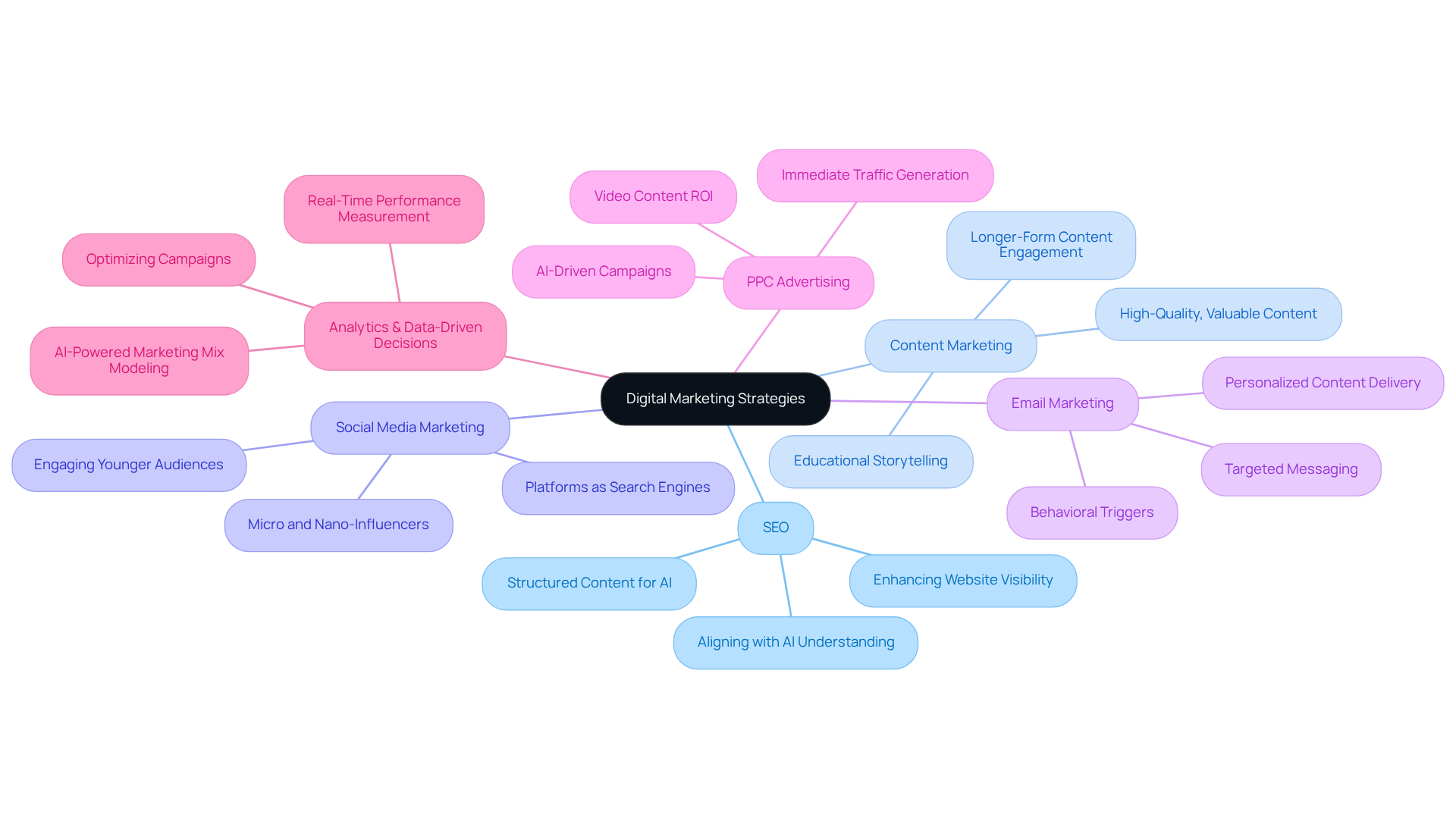
In a rapidly evolving digital landscape, brands must adopt multifaceted promotion strategies to effectively engage their target audiences. The key components include:
- Search Engine Optimization (SEO): Enhancing website visibility on search engines is crucial. By aligning with AI's understanding of intent and context, brands can attract organic traffic more effectively.
- Content Marketing: High-quality, valuable content is essential for engaging users and driving conversions. Focusing on longer-form content has shown to yield higher engagement and ROI.
- Social Media Marketing: Platforms like Facebook, Instagram, and TikTok are not just for social interaction; they serve as powerful search engines. Brands can connect with audiences and promote products effectively through these channels.
- Email Marketing: Targeted messaging nurtures leads and retains customers. Increasingly, this is driven by behavioral triggers, allowing for timely and personalized content delivery.
- Pay-Per-Click (PPC) Advertising: Running paid ads on search engines and social media provides immediate traffic. Notably, AI-driven campaigns deliver a 17% higher return on ad spend for video content.
- Analytics and Data-Driven Decisions: Leveraging data analytics is crucial for optimizing campaigns and improving ROI. AI-powered Marketing Mix Modeling can reduce time-to-insight from weeks to days.
These fundamentals are crucial for evaluating how different digital marketing advertising companies prioritize their strategies based on expertise and client needs. How can structured approaches to digital promotion, as seen in case studies like Avianca Airlines and Adobe, unlock significant revenue and enhance brand visibility? As the digital landscape evolves, brands that embrace these evolving strategies will not only enhance their visibility but also secure a competitive edge in the marketplace.
Comparative Analysis of Digital Marketing Strategies
In the competitive realm of digital marketing, understanding the unique strategies of leading digital marketing advertising companies is paramount for success.
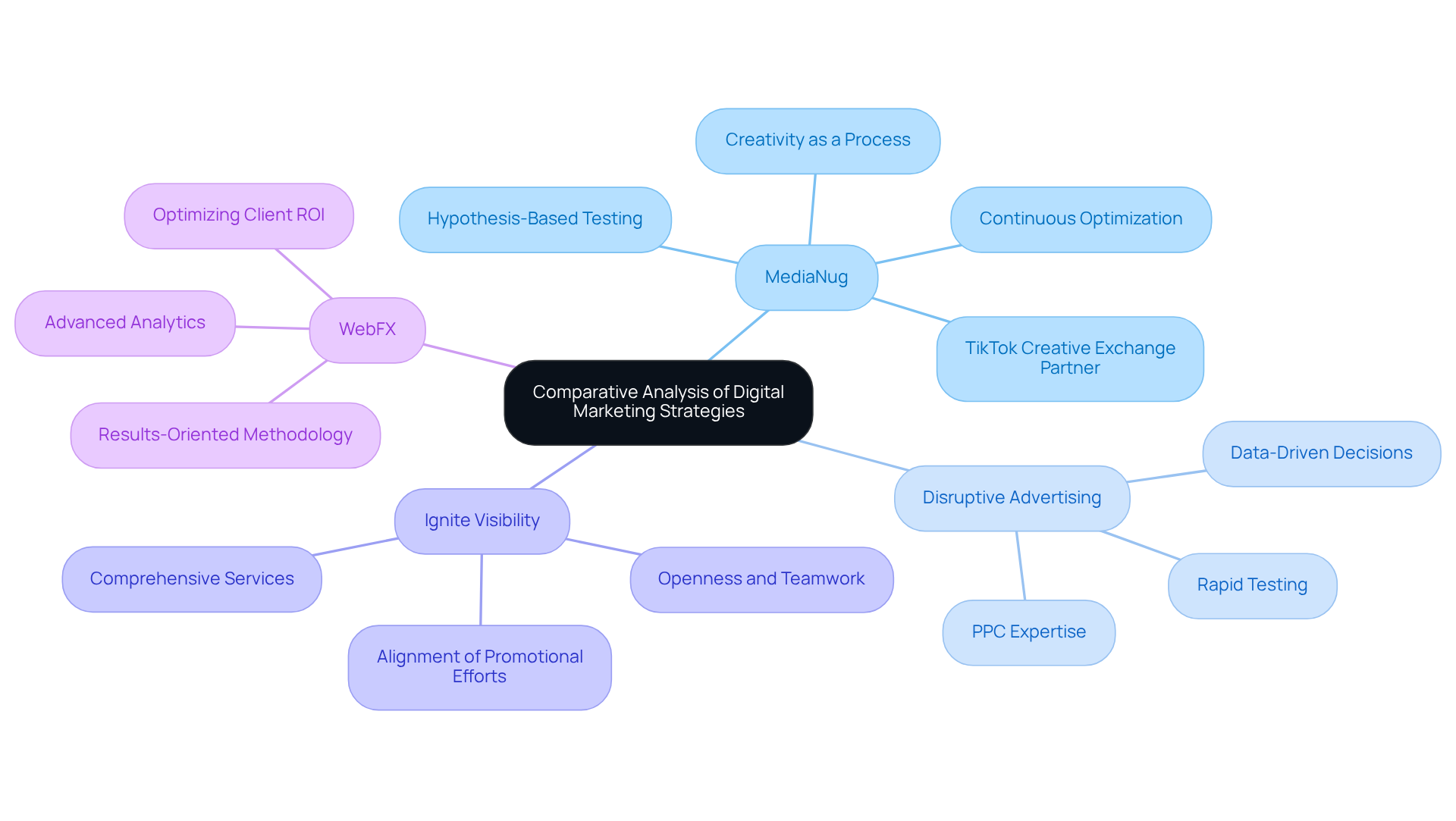
- MediaNug: MediaNug stands out in the industry by treating creativity as a systematic execution process, directly addressing the creative fatigue that often hampers media effectiveness. This agency specializes in structured creative solutions, utilizing hypothesis-based testing and continuous optimization. With over $400 million in ad expenditure and more than 7,000 promotional videos produced, MediaNug demonstrates its expertise. Furthermore, as the #1 top partner on TikTok Creative Exchange, MediaNug offers fully funded creative opportunities that enhance its offerings.
- Disruptive Advertising: Renowned for its expertise in PPC and conversion science, Disruptive Advertising emphasizes data-driven decision-making and rapid testing. This approach allows for swift adjustments to enhance ad performance, making it a strong contender in the competitive landscape.
- Ignite Visibility: Providing a complete range of services, such as SEO, social media, and email promotion, Ignite Visibility emphasizes openness and teamwork with customers. Their comprehensive approach ensures that all promotional efforts are aligned and effectively executed.
- WebFX: Known for its results-oriented methodology, WebFX leverages advanced analytics to drive campaign success and optimize client ROI. Their emphasis on quantifiable results establishes them as a trustworthy ally for brands aiming to enhance their promotional investments.
Many brands find themselves hindered by creative fatigue, leading to wasted resources and ineffective campaigns. Each organization's strategy reflects its fundamental strengths and target audience, demonstrating how diverse approaches by digital marketing advertising companies can lead to varying levels of effectiveness in digital promotion. By recognizing these distinct strategies, brands can align their marketing efforts with the right agency, ensuring optimal results. As the digital landscape evolves, aligning with the right agency could be the difference between mediocrity and market leadership.
Evaluating Success Rates of Digital Marketing Companies
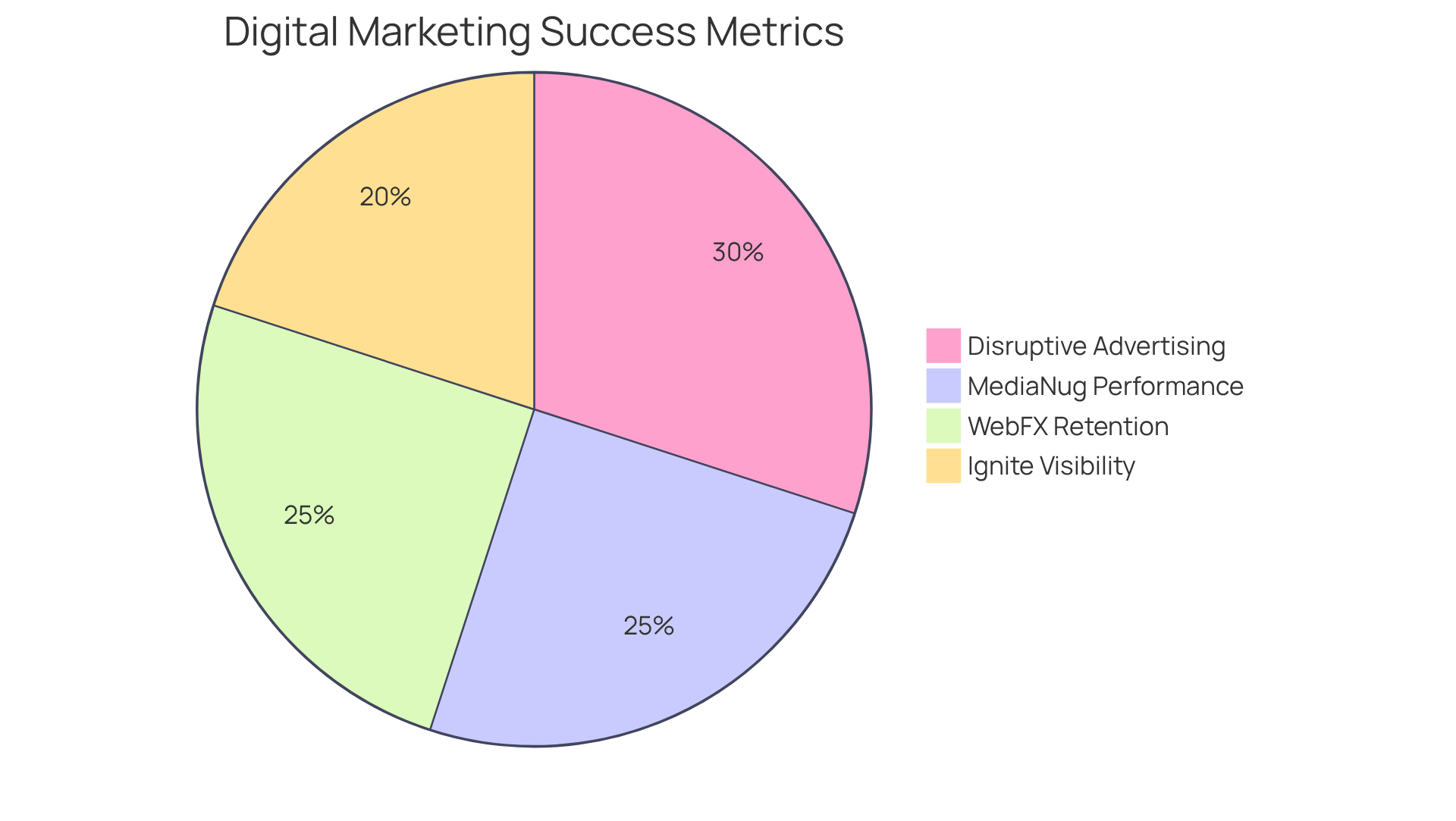
In a landscape where digital marketing advertising companies achieve success, understanding the metrics that define it is crucial. Success rates in digital marketing can be measured through various metrics, including ROI, conversion rates, and client retention. Here’s how some leading agencies stack up:
- MediaNug: Supports over $400 million in ad expenditure and has produced more than 7,000 promotional videos, concentrating on attaining lower CPAs and higher conversion rates through organized creative testing. MediaNug employs a hypothesis-based testing framework that emphasizes angle exploration and controlled variable sequencing, ensuring that each creative iteration is optimized for performance. Notable partnerships with brands like Nike and L’Oréal further illustrate MediaNug's effectiveness in delivering top-performing creative solutions.
- Disruptive Advertising: Reports a consistent track record of enhancing customer conversion rates by up to 30% through targeted PPC campaigns.
- Ignite Visibility: Claims an average ROI of 5:1 for those they serve, showcasing their effectiveness in driving measurable results.
- WebFX: Highlights a customer retention rate of over 90%, indicating strong satisfaction and success in their campaigns.
How do these metrics align with your business goals, and which partner can help you achieve them? Ultimately, choosing the right digital marketing advertising companies as a partner can significantly impact your business's growth trajectory.
Choosing the Right Digital Marketing Partner: Key Considerations
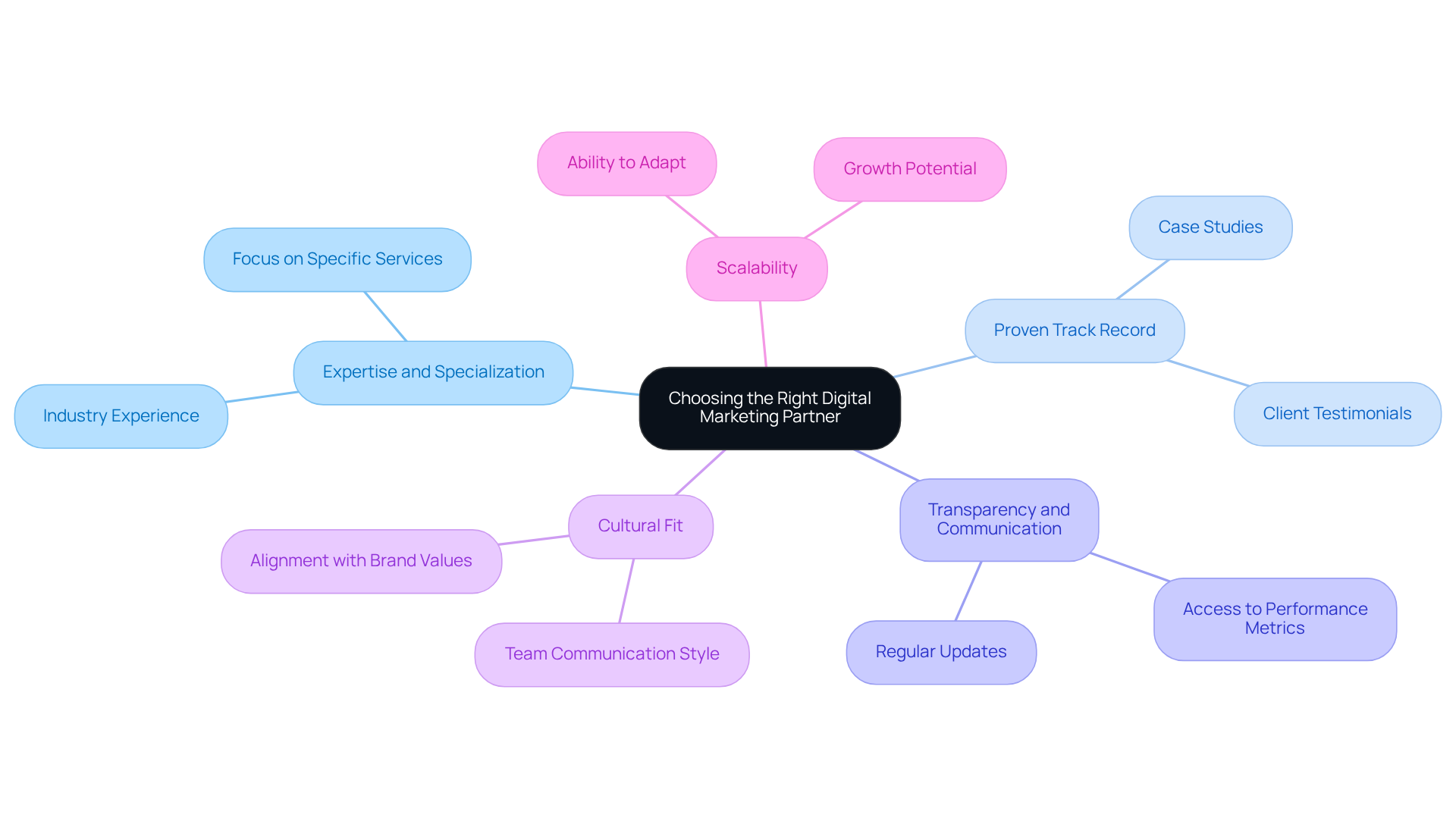
With countless agencies vying for your attention, how do you choose the right one? When selecting a digital marketing agency, consider these key factors:
- Expertise and Specialization: Consider seeking out firms that specialize in the services you truly need, whether that's SEO, PPC, or social media marketing.
- Proven Track Record: Evaluate case studies and client testimonials to assess the firm's success in delivering results.
- Transparency and Communication: Choose a partner that values open communication and provides regular updates on campaign performance.
- Cultural Fit: Ensure that the organization's values align with your brand's mission and vision for a more cohesive partnership.
- Scalability: Consider whether the agency can grow with your business and adapt to changing needs over time.
By focusing on these considerations, you can make informed decisions that align with your marketing objectives. Making the right choice can elevate your brand's marketing efforts and drive measurable results.
Conclusion
In a crowded digital marketplace, the right advertising partner can make or break your brand's success. This article underscores the importance of understanding the unique strategies employed by leading digital marketing companies, such as MediaNug, Disruptive Advertising, Ignite Visibility, and WebFX. Each agency brings distinct strengths to the table, demonstrating how tailored approaches can lead to varying levels of effectiveness in digital promotion.
Key insights reveal that MediaNug excels in structured creative solutions, leveraging hypothesis-based testing and a robust understanding of client needs. With a proven track record of supporting over $400 million in ad spend and producing more than 7,000 performance videos, MediaNug stands out as a leader in the industry. Other agencies, like Disruptive Advertising and Ignite Visibility, also showcase their effectiveness through data-driven strategies and comprehensive service offerings, emphasizing the need for brands to align their marketing efforts with the right agency.
Many brands find themselves overwhelmed by the multitude of options available in digital marketing. Choosing the wrong partner can lead to wasted resources and missed opportunities. Ultimately, choosing the right digital marketing partner can significantly shape your brand's growth trajectory. By considering factors like expertise, proven success, and cultural fit, brands can make informed decisions that not only enhance their marketing strategies but also secure a competitive edge in an ever-evolving digital landscape. Embracing these insights and aligning with the right agency can transform marketing efforts into measurable success, paving the way for future growth and innovation. Choosing wisely today can set the stage for unprecedented growth tomorrow.
Frequently Asked Questions
What are the key components of digital marketing strategies?
The key components include Search Engine Optimization (SEO), Content Marketing, Social Media Marketing, Email Marketing, Pay-Per-Click (PPC) Advertising, and Analytics and Data-Driven Decisions.
How does Search Engine Optimization (SEO) benefit brands?
SEO enhances website visibility on search engines, helping brands attract organic traffic by aligning with AI's understanding of intent and context.
Why is content marketing important in digital marketing?
High-quality, valuable content is essential for engaging users and driving conversions, with longer-form content showing higher engagement and return on investment (ROI).
What role does social media marketing play in digital strategies?
Social media platforms like Facebook, Instagram, and TikTok serve as powerful search engines, allowing brands to connect with audiences and promote products effectively.
How does email marketing contribute to digital marketing efforts?
Email marketing involves targeted messaging that nurtures leads and retains customers, increasingly driven by behavioral triggers for timely and personalized content delivery.
What is the advantage of Pay-Per-Click (PPC) advertising?
PPC advertising provides immediate traffic through paid ads on search engines and social media, with AI-driven campaigns delivering a 17% higher return on ad spend for video content.
Why is analytics important in digital marketing?
Leveraging data analytics is crucial for optimizing campaigns and improving ROI, with AI-powered Marketing Mix Modeling reducing time-to-insight from weeks to days.
How can structured approaches to digital promotion enhance brand visibility?
Structured approaches, as demonstrated in case studies like Avianca Airlines and Adobe, can unlock significant revenue and enhance brand visibility by prioritizing strategies based on expertise and client needs.
List of Sources
- Fundamentals of Digital Marketing Strategies
- Top digital marketing trends for 2026: What professionals need to know (https://ie.edu/uncover-ie/master-in-digital-marketing-trends)
- The Most Important Digital Marketing Trends You Need to Know in 2026 | Digital Marketing Institute (https://digitalmarketinginstitute.com/blog/digital-marketing-trends-2026)
- Digital Marketing Trends & Predictions 2026 (https://neilpatel.com/blog/digital-marketing-trends-predictions)
- 5 Digital Marketing Trends to Master in 2026 (https://adcellerant.com/blogs/digital-marketing-trends-2026)
- 10 Forward-Looking Strategies for Your Digital Marketing Plan | Mailchimp (https://mailchimp.com/resources/digital-marketing-strategies)
- Comparative Analysis of Digital Marketing Strategies
- The Five Biggest Digital Marketing Trends in 2026 - Precision Strategies (https://precisionstrategies.com/the-five-biggest-digital-marketing-trends-in-2026)
- Marketing Trends 2026 | Gartner (https://gartner.com/en/articles/future-of-marketing)
- 10 Forward-Looking Strategies for Your Digital Marketing Plan | Mailchimp (https://mailchimp.com/resources/digital-marketing-strategies)
- Top Digital Marketing Trends for 2026: What’s New and What Works (https://linkedin.com/pulse/top-digital-marketing-trends-2026-whats-new-what-works-tarannum-khan-sdxvc)
- Smartly | 2026 Digital Advertising Trends Report (https://smartly.io/digital-advertising-trends/2026)
- Evaluating Success Rates of Digital Marketing Companies
- 125 Digital Marketing Statistics for 2026 | SeoProfy (https://seoprofy.com/blog/digital-marketing-statistics)
- Digital Marketing Statistics for 2026 (https://digitalthirdcoast.com/blog/digital-marketing-statistics)
- 2026 State of Digital Marketing Agencies Report: Challenges and Opportunities | Andrew Foxwell posted on the topic | LinkedIn (https://linkedin.com/posts/andrew-foxwell-2a533b7_the-2026-state-of-digital-marketing-agencies-activity-7435366767264350209-dNix)
- Top Digital Marketing Agencies in 2026 | The Ad Firm (https://theadfirm.net/top-digital-marketing-agencies-in-2026)
- Top 16 Digital Marketing Agencies in 2026: Evaluated by AI Search Readiness, Technical Depth, and Measurable Visibility Impact - Onely (https://onely.com/blog/best-digital-marketing-agencies)
- Choosing the Right Digital Marketing Partner: Key Considerations
- How to Choose a Digital Marketing Agency in 2026 (https://vanguard86.com/blog/choose-a-digital-marketing-agency-in-2026)
- Top Digital Marketing Agencies in 2026 to Grow Your Business (https://jlbworks.com/digital-marketing-news/best-digital-marketing-agencies-2026)
- How to Choose the Right Digital Marketing Agency (2026 Guide) (https://improvado.io/blog/how-to-choose-digital-marketing-agency)
- What Makes a Marketing Agency Worth the Investment in 2026? - YellowStone (https://yellowstoneaccounts.com/blog/what-makes-a-marketing-agency-worth-the-investment-in-2026)
- What separates agencies winning 2026 reviews—and how specialization is leading them to success (https://adage.com/agencies/aa-2026-new-business-specialties)