Introduction
In an era where digital interactions reign supreme, the roles of digital creators and content creators stand out as both vital and distinct. These two groups play crucial parts in shaping the vast landscape of online media, yet understanding their unique functions and skill sets is essential for anyone eager to navigate this dynamic environment.
What key differences set digital creators apart from content creators? How do these distinctions influence monetization strategies and audience engagement? Delving into these questions not only uncovers the evolving nature of content production but also highlights the myriad opportunities available for brands and creators alike in this burgeoning digital economy.
Define Digital Creators and Content Creators
Online producers are individuals dedicated to creating and distributing content specifically for digital platforms, including social networks, blogs, and video-sharing sites. Their work often encompasses multimedia formats - videos, graphics, and text - all designed to engage effectively. In contrast, the broader category of includes anyone generating content, highlighting the differences between , whether for online or traditional formats. While all online producers are , not all focus on online content; some may specialize in print or . This distinction underscores the vs content creators in the fast-evolving .
Looking ahead to 2026, the number of is projected to grow significantly, reflecting the increasing demand for . The is anticipated to surpass $800 billion in 2026, highlighting the crucial role of online contributors in this space. , such as Emma Chamberlain, exemplify how these individuals can monetize their passions while maintaining creative control - she launched her coffee brand leveraging her social media influence. Similarly, fitness influencers like Sydney Cummings Houdyshell have built sustainable businesses by combining advertising revenue with community memberships, showcasing the diverse opportunities within the online content economy. Notably, 75% of content creators are utilizing AI for content creation or planning, demonstrating the technological tools that digital producers are embracing. As this landscape continues to evolve, understanding these distinctions will be vital for brands seeking to connect effectively with their target audiences.

Compare Skills and Tools for Each Role
Digital producers are essential in today’s media landscape, requiring a robust skill set that includes , graphic design, and . They utilize powerful tools like Adobe Creative Suite, Final Cut Pro, and various social media management platforms to create engaging, visually appealing content that resonates with online audiences.
Conversely, often need a broader range of skills encompassing writing, storytelling, and . They frequently rely on tools such as WordPress, Canva, and Google Analytics to track performance and enhance their content's reach. While there is some overlap in skills, the distinction between vs is evident, as online producers specialize in while engage in diverse formats, including written articles and offline materials.
This distinction is increasingly significant, especially as 70% of news executives express concern over audience attention shifting towards individuals who can deliver high-quality, engaging narratives across platforms. Furthermore, the rise of and platforms like ChatGPT and Canva is reshaping the landscape for both online and content professionals, underscoring the need for flexibility in their skill sets.
As the media environment evolves, it’s crucial for professionals to adapt and refine their abilities to stay relevant and effective in capturing audience attention.

Analyze Monetization Strategies of Each Role
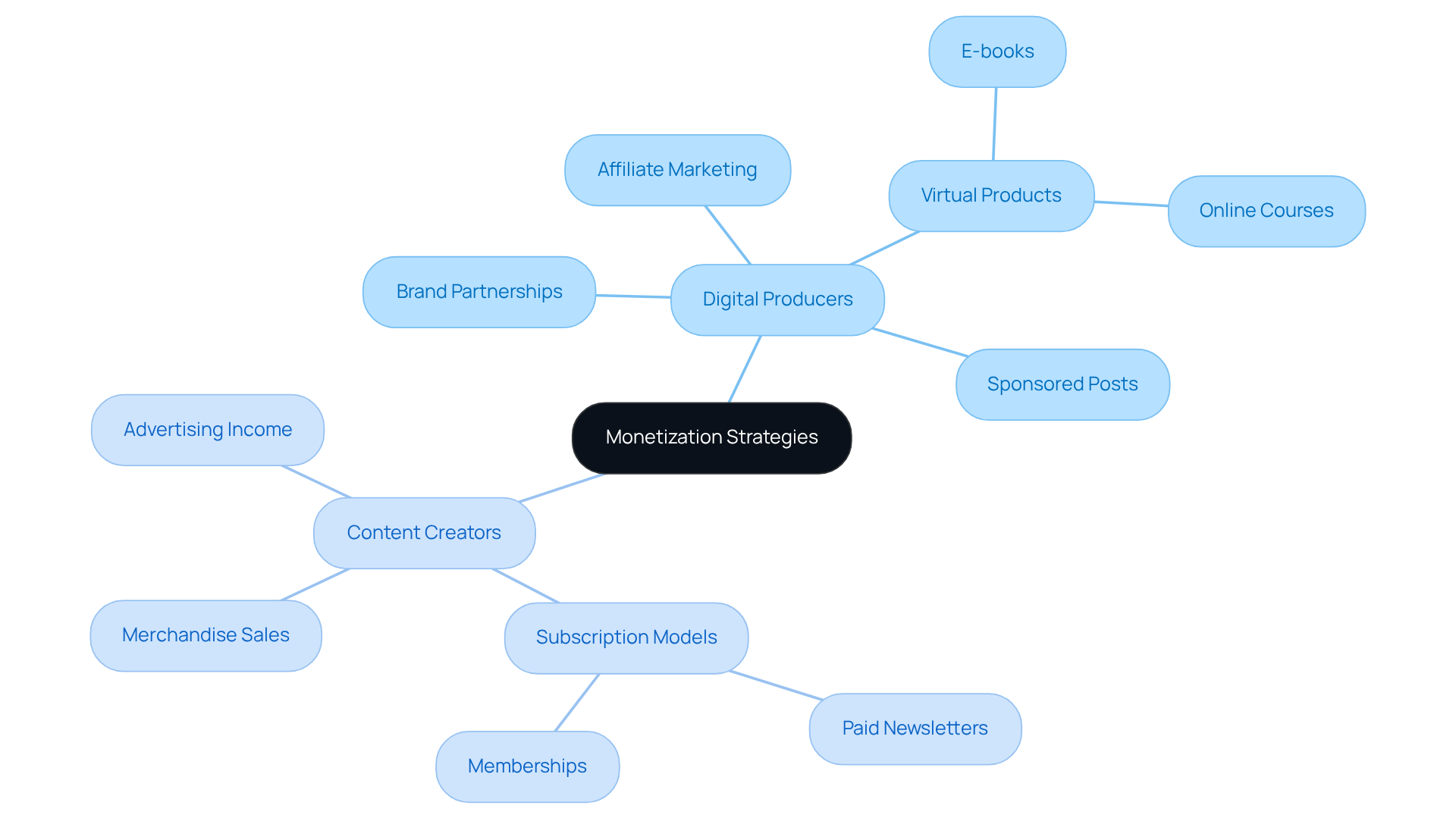
Digital producers are increasingly monetizing their content through brand partnerships, sponsored posts, and affiliate marketing, effectively leveraging their online presence to attract advertisers. They also create and sell virtual products, such as online courses or e-books, capitalizing on their expertise. For instance, , aiming to boost their earnings to $12,000 by incorporating a VOD library and premium online products. Conversely, , subscription models, and merchandise sales. While both roles can generate substantial income, the comparison of often shows that digital influencers typically enjoy more due to their focus on , which offer various monetization options tailored to their engagement with viewers.
Looking ahead to 2026, , with global earnings from these individuals expected to reach $500 billion by 2027. This growth highlights the importance of understanding consumer intent and adapting accordingly, especially considering that . Successful innovators view monetization as an ongoing experiment, continually refining their strategies based on viewer feedback and market trends. Are you ready to explore how these insights can enhance your own monetization efforts?
Evaluate Impact on Brands and Audiences
Digital producers significantly influence brand interaction by creating relatable and authentic content tailored for specific online communities. This targeted strategy often leads to and conversions, making their contributions both measurable and impactful. For instance, brands collaborating with have reported , as these individuals effectively connect with their audiences, fostering .
Danielle Wiley, CEO of Sway Group, highlights that data can inform the for brands, enhancing the effectiveness of these partnerships. Conversely, while may reach a broader audience that includes offline demographics, their effectiveness can fluctuate depending on the medium employed. Case studies, such as Starbucks utilizing coffee artisans to capture coffee culture, illustrate that the authenticity of strengthens viewer connections, resulting in . This approach allowed Starbucks to genuinely connect with its audience, demonstrating the power of employing individuals who resonate with the target demographic.
Moreover, brands are increasingly prioritizing metrics like click-through rates and conversion rates, indicating a shift towards evaluating with the same rigor as paid media. This evolution underscores the necessity of understanding the distinct roles of vs content creator in achieving marketing objectives. As brands adapt to the changing landscape, hiring creators as employees to ensure consistency and engagement becomes essential.

Conclusion
Understanding the distinctions between digital creators and content creators is crucial in today’s rapidly evolving media landscape. These roles, while both integral to content production, diverge significantly in focus, skills, and monetization strategies. Digital creators excel in crafting multimedia content specifically for online platforms, utilizing advanced tools and techniques to engage their audiences effectively. Conversely, content creators operate across a broader spectrum, producing various formats, including offline materials, and often employing diverse skill sets to connect with their audience.
Key insights throughout this discussion reveal the unique skills required for each role, the varied monetization strategies they adopt, and their respective impacts on brands and audiences. Digital creators leverage platforms and tools that enhance their online visibility, while content creators often merge traditional methods with digital approaches. The anticipated growth of the content creator economy underscores the importance of recognizing these distinctions, as brands strive to connect authentically with their target demographics.
For brands looking to optimize their marketing strategies, acknowledging the differences between digital and content creators is essential. As the landscape continues to evolve, embracing these distinctions can foster more effective collaborations and enhance audience engagement. Whether you’re a creator or a brand, grasping these nuances is vital for navigating the future of content production and consumption.
Frequently Asked Questions
What are digital creators and content creators?
Digital creators are individuals who create and distribute content specifically for digital platforms, such as social networks, blogs, and video-sharing sites. Their work includes multimedia formats like videos, graphics, and text aimed at engaging online audiences. Content creators, in a broader sense, include anyone generating content, whether for online or traditional formats.
How do digital creators differ from other media makers?
While all digital creators are media makers, not all media makers focus on online content. Some may specialize in print or offline media. This distinction emphasizes the specialized role of digital creators in the digital landscape.
What is the projected growth of online content producers by 2026?
The number of online content producers is projected to grow significantly, with the global content producer economy expected to surpass $800 billion by 2026, indicating a rising demand for engaging internet material.
Can you give examples of successful online influencers?
Successful online influencers include Emma Chamberlain, who monetized her passion by launching a coffee brand leveraging her social media influence, and fitness influencer Sydney Cummings Houdyshell, who built a sustainable business through advertising revenue and community memberships.
How are content creators utilizing technology in their work?
Notably, 75% of content creators are using AI for content creation or planning, showcasing the technological tools that digital producers are embracing to enhance their work.
Why is it important for brands to understand the distinctions between digital creators and content creators?
Understanding these distinctions is vital for brands seeking to connect effectively with their target audiences, as it helps them identify the right creators to collaborate with in the evolving digital landscape.
List of Sources
- Define Digital Creators and Content Creators
- emarketer.com (https://emarketer.com/content/creator-economy-2026)
- Creator Economy Statistics for 2026 | Circle Blog (https://circle.so/blog/creator-economy-statistics)
- Digital Creator vs. Content Creator: What's the Difference? (https://indeed.com/career-advice/finding-a-job/digital-creator-vs-content-creator)
- salesforce.com (https://salesforce.com/blog/what-is-a-digital-creator)
- memberful.com (https://memberful.com/blog/digital-creator)
- Compare Skills and Tools for Each Role
- niemanlab.org (https://niemanlab.org/2026/01/publishers-prepare-to-be-squeezed-by-ai-and-creators-in-2026)
- Journalism, media, and technology trends and predictions 2026 (https://reutersinstitute.politics.ox.ac.uk/journalism-media-and-technology-trends-and-predictions-2026)
- heraldnews.com (https://heraldnews.com/press-release/story/99841/top-5-ai-tools-for-content-creators-driving-efficiency-in-2026)
- coursera.org (https://coursera.org/articles/digital-content-creator-skills)
- mediabistro.com (https://mediabistro.com/climb-the-ladder/skills-expertise/digital-skills-for-media-pros)
- Analyze Monetization Strategies of Each Role
- uscreen.tv (https://uscreen.tv/blog/digital-content-monetization)
- fourthwall.com (https://fourthwall.com/blog/smart-monetization-strategies)
- beehiiv.com (https://beehiiv.com/blog/how-to-monetize-your-content?srsltid=AfmBOoqVh3PsbJ9Qzyt9IFEpsPIcx1ikgmKOzuSZ4yQaCgJGNRaMXtBQ)
- emarketer.com (https://emarketer.com/content/faq-on-creator-economy--how-marketers-stand-2026-)
- linkedin.com (https://linkedin.com/pulse/how-influencers-creators-can-make-money-2026-monetizedeal-gmrjc)
- Evaluate Impact on Brands and Audiences
- emarketer.com (https://emarketer.com/content/brands-turn-influencer-marketing-2026--key-issues-remain)
- 5 Marketing Trends Brands Can’t Ignore in 2026 | News & Blog (https://thepointgroup.com/5-marketing-trends-brands-cant-ignore-in-2026)
- forbes.com (https://forbes.com/sites/taylorreilly/2026/02/06/why-brands-are-paying-creators-six-figures-to-run-their-social-media)
- togetheragency.co.uk (https://togetheragency.co.uk/news/influencer-marketing-trends-for-2026)
- The Creator Economy In 2026: The Era Of Consolidation (https://forbes.com/sites/jasondavis/2026/01/26/the-creator-economy-in-2026---the-era-of-consolidation)