
Introduction
User-generated content has revolutionized the digital landscape, fostering dynamic ecosystems where brands and creators unite to craft compelling material. As the content economy expands, grasping the best content creator platforms available in 2025 is essential for brands aiming to elevate their marketing strategies. With a plethora of platforms like TikTok, Instagram, and YouTube, each boasting unique features and advantages, how can brands effectively select the right one to meet their specific objectives?
Furthermore, understanding these platforms is not just about choosing one; it’s about aligning with your brand’s vision and goals. For instance, TikTok’s short-form video format thrives on creativity and engagement, while Instagram offers a visually-driven experience that can enhance brand storytelling. In addition, YouTube provides a long-form content avenue that can establish authority and foster deeper connections with audiences.
As we delve deeper into this topic, consider how these platforms can be leveraged to not only reach but resonate with your target audience. What strategies have you seen work effectively? Your insights could pave the way for a more informed choice in this evolving landscape.
Understanding Content Creator Platforms
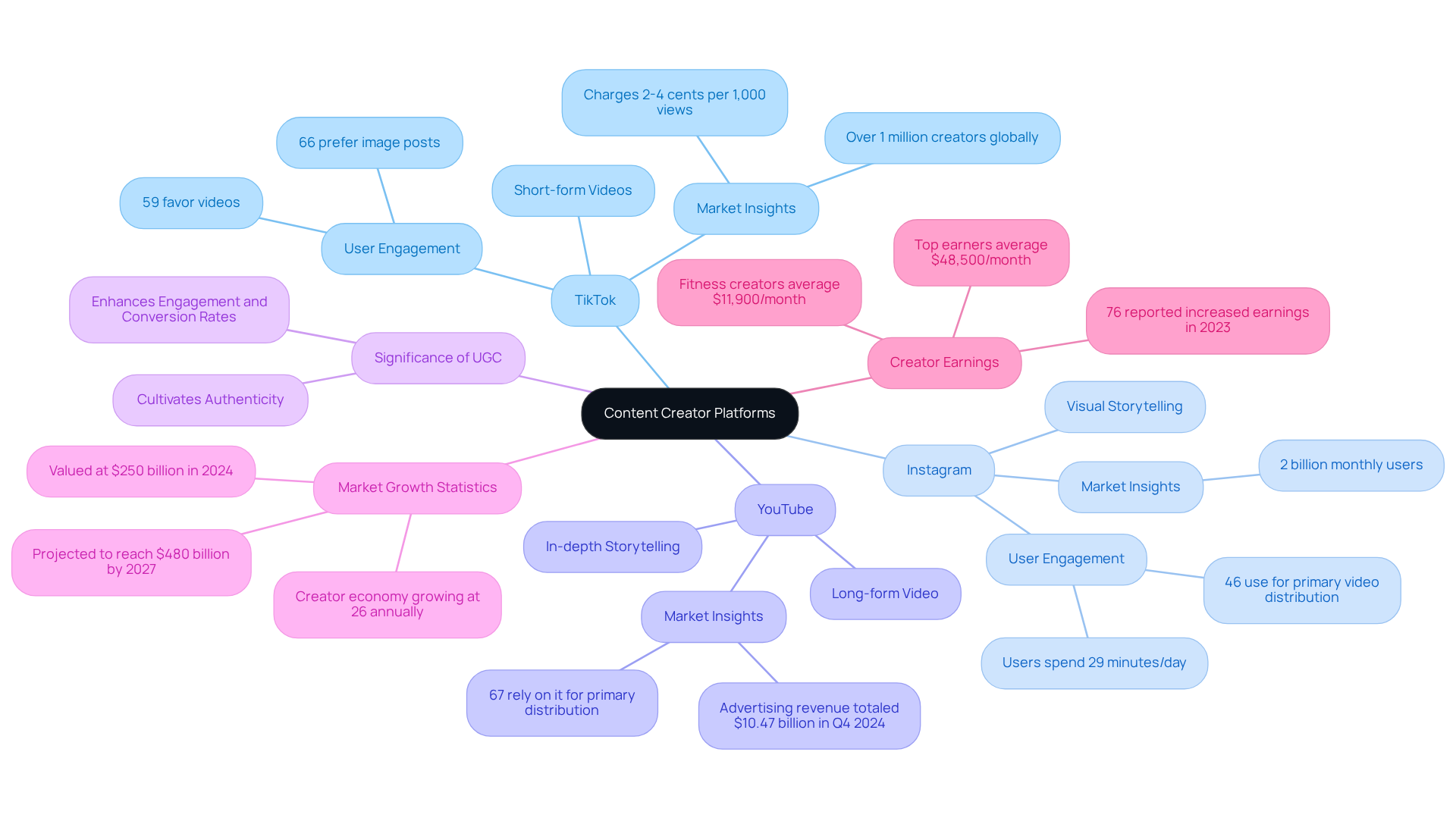
User-generated media ecosystems are essential digital environments and some of the that enable the creation, management, and sharing of . These serve as marketplaces where brands can seamlessly connect with creators to produce engaging material tailored for their target audiences. In 2025, the , including TikTok, Instagram, and YouTube, remain at the forefront, each offering distinct features that cater to various content types and audience engagement strategies.
- TikTok, for instance, excels in short-form videos, tapping into the .
- Instagram shines in , making it ideal for brands looking to craft visually striking content that resonates with users.
- Meanwhile, YouTube continues to lead in , providing a space for in-depth storytelling and brand narratives, with 67% of relying on it for primary video distribution.
The significance of UGC is immense; it cultivates authenticity and relatability, essential for building consumer trust. Brands that leverage UGC often see , as content generated by real users tends to forge deeper connections with potential customers. With over 200 million worldwide, the is rapidly expanding, projected to grow from a valuation of $250 billion in 2024 to a market size of $480 billion by 2027. By embracing UGC and collaborating with the , companies can enhance their marketing strategies and nurture a loyal community around their offerings. Furthermore, 76% of reported earning more in 2023 compared to the previous year, highlighting the that partner with them.
Criteria for Choosing the Right Platform
When selecting a , brands must evaluate several critical criteria:
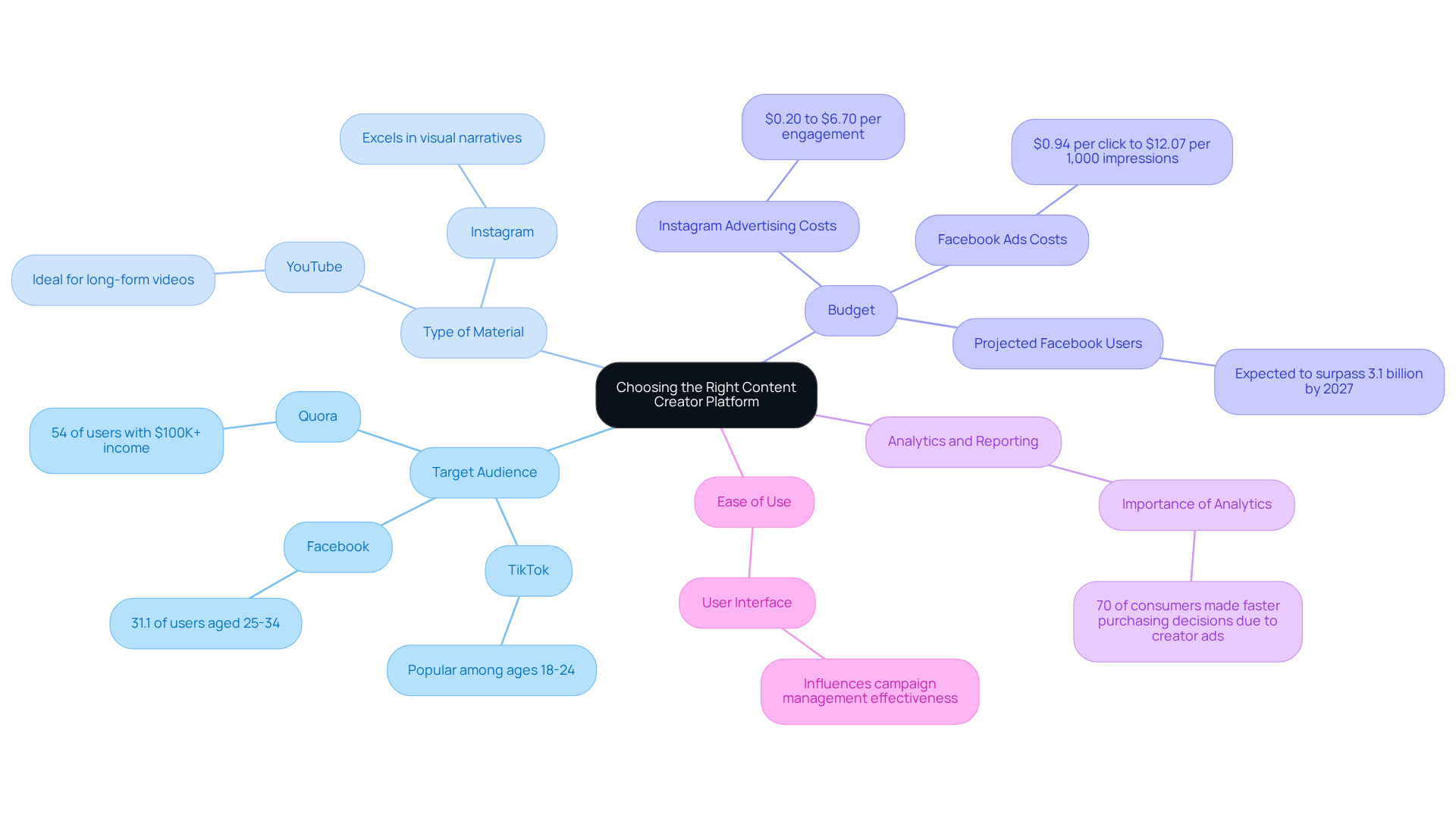
- Target Audience: Understanding where your audience spends their time is essential. For instance, TikTok is particularly popular among younger users, with a . In contrast, Facebook caters more to older demographics, with 31.1% of users aged 25-34. Furthermore, 54% of adult users on Quora have a household income of $100K, suggesting a potential audience for companies targeting higher-income consumers.
- : Different platforms support various media formats. is renowned for . On the other hand, Instagram excels in visual narratives, appealing to brands that want to showcase products attractively.
- Budget: The costs associated with utilizing content production services can vary significantly. For example, Instagram advertising costs range from $0.20 to $6.70 per engagement, while Facebook ads can cost between $0.94 per click to $12.07 per 1,000 impressions. Brands must carefully evaluate their budget for influencer collaborations and platform charges to ensure effective resource allocation. Notably, Facebook is expected to surpass 3.1 billion monthly active users by 2027, which may influence budget considerations for long-term campaigns.
- : and return on investment (ROI). Platforms that provide detailed insights enable companies to optimize their strategies effectively, ensuring that every ad dollar is spent wisely. For instance, 70% of consumers made purchasing decisions faster thanks to creator ads, underscoring the importance of effective analytics in tracking such impacts.
- : The user interface and overall experience of the service can significantly influence how effectively companies manage their campaigns. A can streamline the process of content creation and distribution, enhancing overall efficiency.
By considering these criteria, companies can make informed choices about the that align with their marketing objectives and audience preferences. As marketing expert [insert name] mentions, "[insert quote about choosing content networks].
Comparative Analysis of Leading Content Creator Platforms
In 2025, several emerge as leaders, each offering distinct advantages:
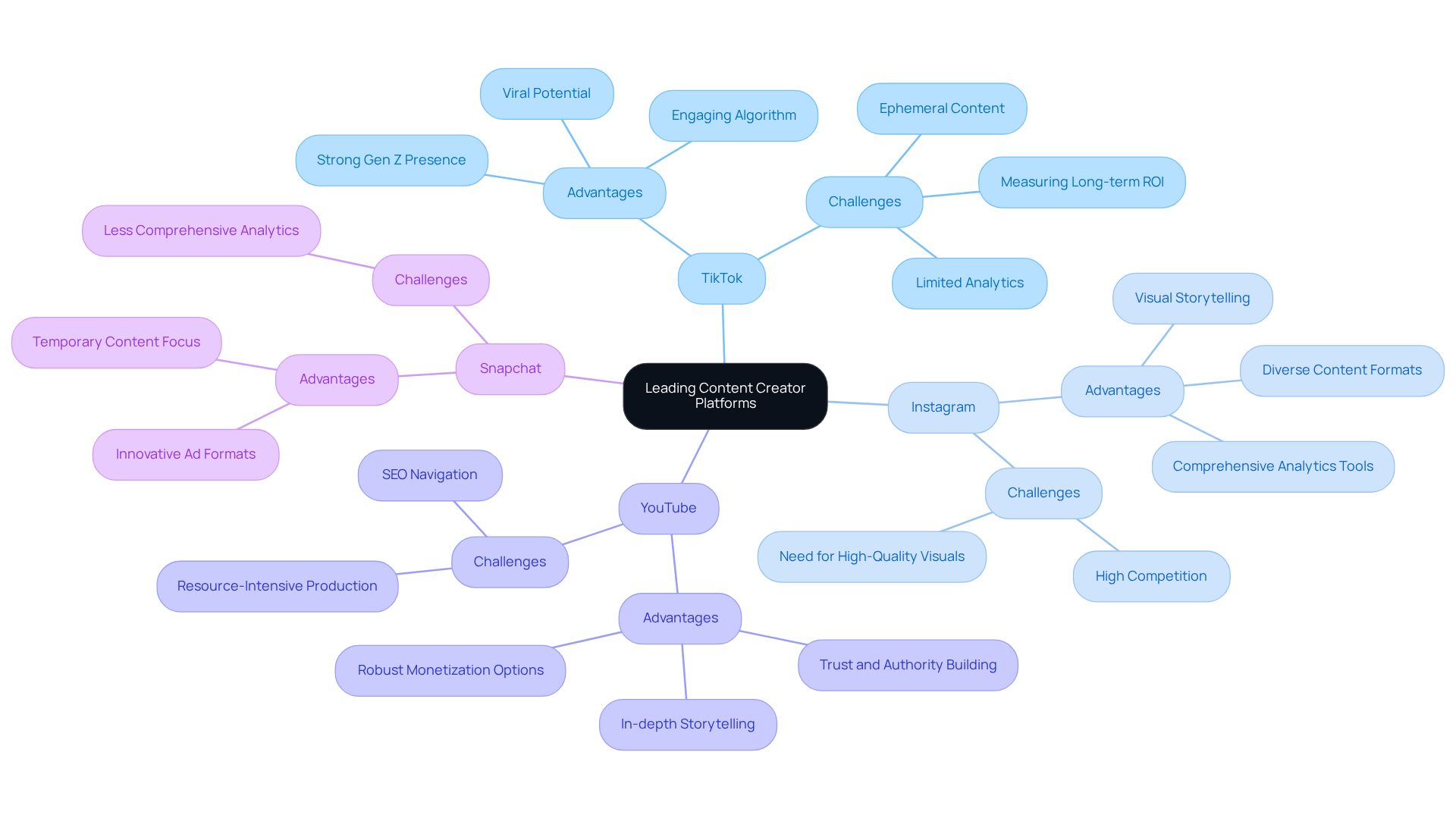
- TikTok: Renowned for its , TikTok is the go-to platform for brands aiming to connect with younger audiences. Its algorithm prioritizes , facilitating visibility for creators. However, companies may face challenges in measuring long-term ROI due to the platform's ephemeral nature.
- Instagram: This platform excels in , providing a diverse array of formats such as Stories, Reels, and IGTV. Brands can harness Instagram's to monitor engagement and performance. Yet, the competition is intense, and distinguishing oneself demands and strategic foresight.
- YouTube: As the , YouTube allows brands to cultivate trust and authority through . Its monetization options are robust, but producing high-quality content can be resource-intensive. Additionally, brands must navigate SEO intricacies to ensure their videos reach the desired audience.
- Snapchat: With a focus on , Snapchat proves effective for brands targeting Gen Z. Its innovative ad formats, including AR lenses, can significantly boost engagement. However, the platform's analytics are less comprehensive than others, complicating performance tracking.
Overall, the best present . It is essential for brands to align their strategies with their target audiences and marketing objectives to maximize impact.
Aligning Platform Features with Brand Goals
To maximize the effectiveness of the , brands must strategically align their features with specific marketing goals.
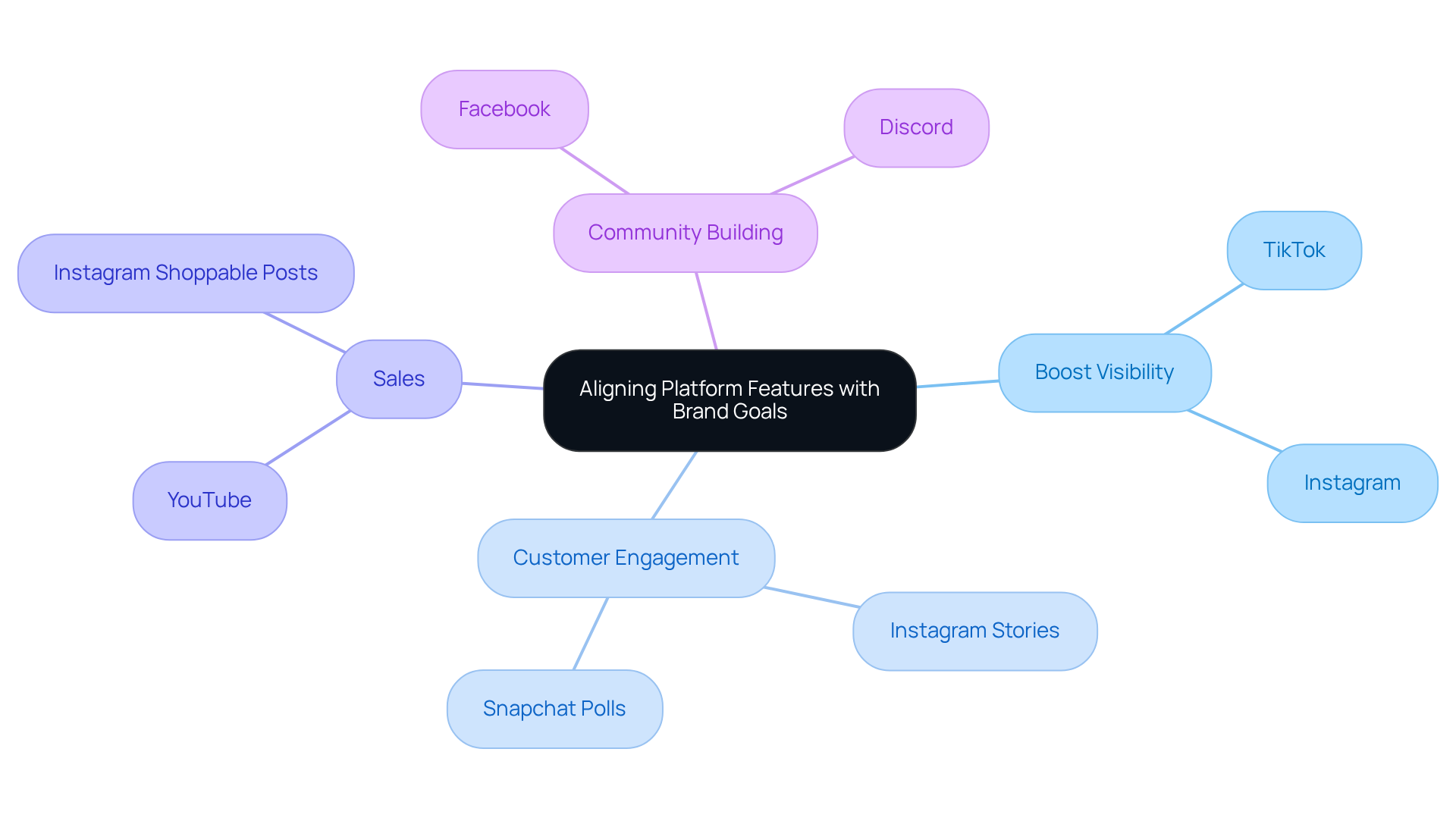
For brands aiming to , the , like TikTok and Instagram, stand out due to their high engagement rates and viral potential. By utilizing trending challenges or , brands can significantly amplify their reach.
: Brands should concentrate on the that support , like Instagram Stories or Snapchat polls, to enhance customer involvement. Creating material that encourages audience participation is essential for fostering deeper connections.
Companies prioritizing sales can benefit from YouTube, one of the , which allows for through long-form content. Additionally, Instagram's facilitate direct purchases, enabling brands to leverage these features effectively to .
For organizations focused on community building and , the such as Facebook and Discord are ideal. These platforms offer tools for creating groups and , helping brands build strong communities.
Conclusion
The exploration of content creator platforms underscores their pivotal role in shaping modern marketing strategies. Understanding the unique features and benefits of platforms like TikTok, Instagram, and YouTube enables brands to effectively engage with their target audiences. By harnessing the power of user-generated content, companies can foster authenticity and trust, essential elements in today’s digital landscape.
Key insights reveal that selecting the right platform hinges on:
- Target demographics
- Content type
- Budget considerations
- Analytics capabilities
Each platform presents distinct advantages and challenges that must be navigated to optimize marketing efforts. For instance, TikTok excels in short-form engagement, while YouTube offers a robust space for detailed storytelling, and Instagram thrives on visual appeal. How can brands leverage these strengths to their advantage?
Ultimately, aligning platform features with specific brand goals is crucial for maximizing impact. Brands are encouraged to leverage the strengths of each platform to enhance visibility, drive customer engagement, and boost sales. By strategically choosing the right content creator platforms, companies can navigate the evolving content landscape and build lasting connections with their audiences. This approach not only ensures long-term success in the competitive digital marketplace but also positions brands as leaders in their respective fields. Are you ready to take the next step in your marketing strategy?
Frequently Asked Questions
What are content creator platforms?
Content creator platforms are digital environments that enable the creation, management, and sharing of user-generated content (UGC), serving as marketplaces for brands to connect with creators to produce engaging material.
Which content creator platforms are considered the best in 2025?
The best content creator platforms in 2025 include TikTok, Instagram, and YouTube, each offering distinct features for various content types and audience engagement strategies.
What type of content does TikTok specialize in?
TikTok specializes in short-form videos, catering to the growing demand for bite-sized, captivating media.
How does Instagram serve brands?
Instagram excels in visual storytelling, making it ideal for brands that want to create visually striking content that resonates with users.
What is YouTube known for?
YouTube is known for long-form video content, providing a platform for in-depth storytelling and brand narratives, with 67% of content creators using it as their primary video distribution channel.
Why is user-generated content (UGC) significant for brands?
UGC is significant because it cultivates authenticity and relatability, which are essential for building consumer trust. Brands leveraging UGC often experience enhanced engagement and conversion rates.
How many content creators are there worldwide?
There are over 200 million content creators worldwide.
What is the projected growth of the content economy?
The content economy is projected to grow from a valuation of $250 billion in 2024 to a market size of $480 billion by 2027.
What financial trends are observed among content creators in 2023?
In 2023, 76% of content creators reported earning more compared to the previous year, indicating financial growth potential for both creators and brands that collaborate with them.
List of Sources
- Understanding Content Creator Platforms
- spiralytics.com (https://spiralytics.com/blog/content-creator-statistics-2025)
- uscreen.tv (https://uscreen.tv/blog/creator-economy-statistics)
- tribegroup.co (https://tribegroup.co/blog/top-creator-marketing-trends-2025)
- 75 Creator Economy Statistics Every Marketer Needs in 2026 - inBeat Agency (https://inbeat.agency/blog/creator-economy-statistics)
- Criteria for Choosing the Right Platform
- holistiquetraining.com (https://holistiquetraining.com/en/news/a-guide-to-thriving-as-a-content-creator-in-2024)
- spiralytics.com (https://spiralytics.com/blog/content-creator-statistics-2025)
- Social media demographics to inform your 2026 strategy (https://sproutsocial.com/insights/new-social-media-demographics)
- convinceandconvert.com (https://convinceandconvert.com/social-media/how-to-choose-the-right-platform-for-your-social-media-marketing)
- Comparative Analysis of Leading Content Creator Platforms
- TikTok User Age, Gender, & Demographics (2026) (https://explodingtopics.com/blog/tiktok-demographics)
- 46 TikTok stats to inform your 2026 strategy (https://sproutsocial.com/insights/tiktok-stats)
- pewresearch.org (https://pewresearch.org/internet/2025/11/20/americans-social-media-use-2025)
- cleveland.com (https://cleveland.com/news/2025/11/one-platform-still-dominates-as-americans-social-media-habits-shift.html)
- demandsage.com (https://demandsage.com/tiktok-user-statistics)
- Aligning Platform Features with Brand Goals
- TikTok marketing: The complete guide for brands in 2026 (https://sproutsocial.com/insights/tiktok-marketing)
- everything-pr.com (https://everything-pr.com/marketing-on-tiktok-in-2025-why-tiktok-is-a-game-changer-for-brands-and-how-to-use-it-effectively)
- regancomm.com (https://regancomm.com/boosting-brand-awareness-with-viral-marketing-on-tiktok-and-instagram-reels)
- newsroom.tiktok.com (https://newsroom.tiktok.com/en-us/tiktok-whats-next-2025-trend-report-us)
- 120+ Must-know social media marketing statistics for 2026 (https://sproutsocial.com/insights/social-media-statistics)