Introduction
The rise of visual content in marketing is not merely a trend; it’s a powerful force reshaping how brands connect with consumers. As companies increasingly embrace video marketing, they harness a tool that captivates audiences and drives measurable results. But with a plethora of formats and platforms at their disposal, one pressing question lingers: does video marketing truly deliver the promised impact, or is it just another fleeting fad?
Exploring this dynamic landscape reveals both the challenges and immense benefits that video marketing offers. Brands aiming to thrive in a competitive digital environment must recognize that video is not just an option; it’s essential. By understanding the intricacies of video marketing, companies can position themselves to engage effectively with their audience and achieve significant growth.
Defining Video Marketing: An Overview
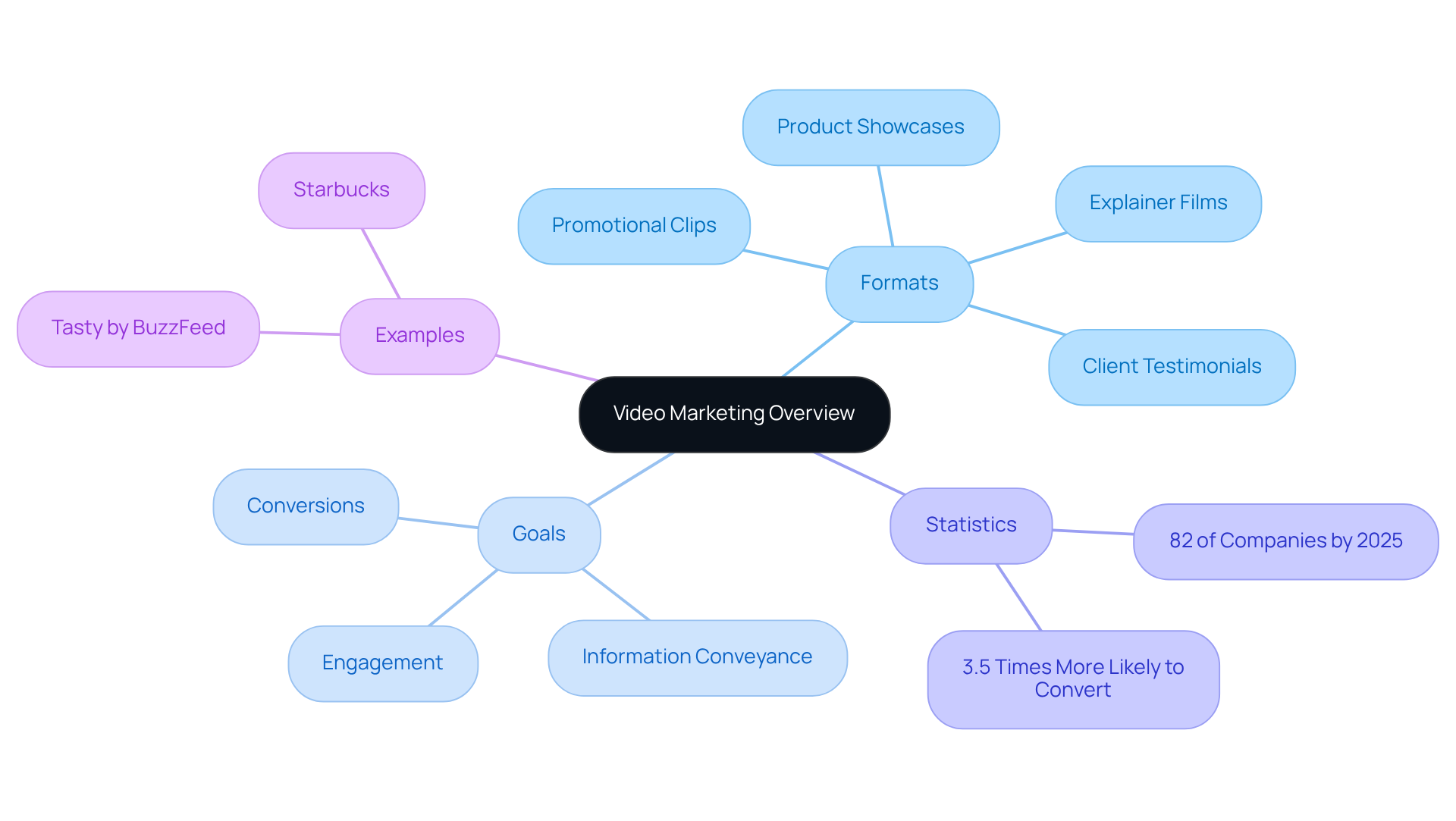
stands as a strategic powerhouse, leveraging to elevate a company, product, or service. This encompasses a range of formats, including promotional clips, , product showcases, and client testimonials. The primary goal? To engage viewers, convey information effectively, and drive conversions. As digital consumption habits evolve, companies are exploring whether video marketing works as a crucial element of integrated marketing strategies, enabling them to connect with their audiences in a visually compelling way.
By 2025, an impressive into their promotional efforts, underscoring its growing significance in the digital landscape. Marketing experts emphasize the importance of visual marketing, highlighting that customized clips are 3.5 times more likely to convert viewers into clients, leading to the question of whether . This highlights the urgent need for companies to adopt that resonate with their target audiences.
Various media formats have proven effective in enhancing engagement. For instance, serve as vital resources that align narratives with company objectives, maximizing both reach and return on investment. , offering authentic insights into a product or service's benefits, rank among the most impactful content strategies, with .
Consider Tasty by BuzzFeed, which exemplifies effective tactics. Their brief, shareable recipe clips have garnered millions of shares, significantly boosting visibility. Similarly, Starbucks employs short, mobile-optimized clips on social media to engage consumers and promote new products, leading to increased interaction and sales. These examples illustrate the transformative power of on brand engagement and raise the question of how effectively video marketing works for brands to forge deeper connections with their audiences. Furthermore, with over 75% of all views originating from mobile devices, optimizing media for mobile viewing is essential for enhancing reach and effectiveness.
The Evolution of Video Marketing: From Traditional to Digital
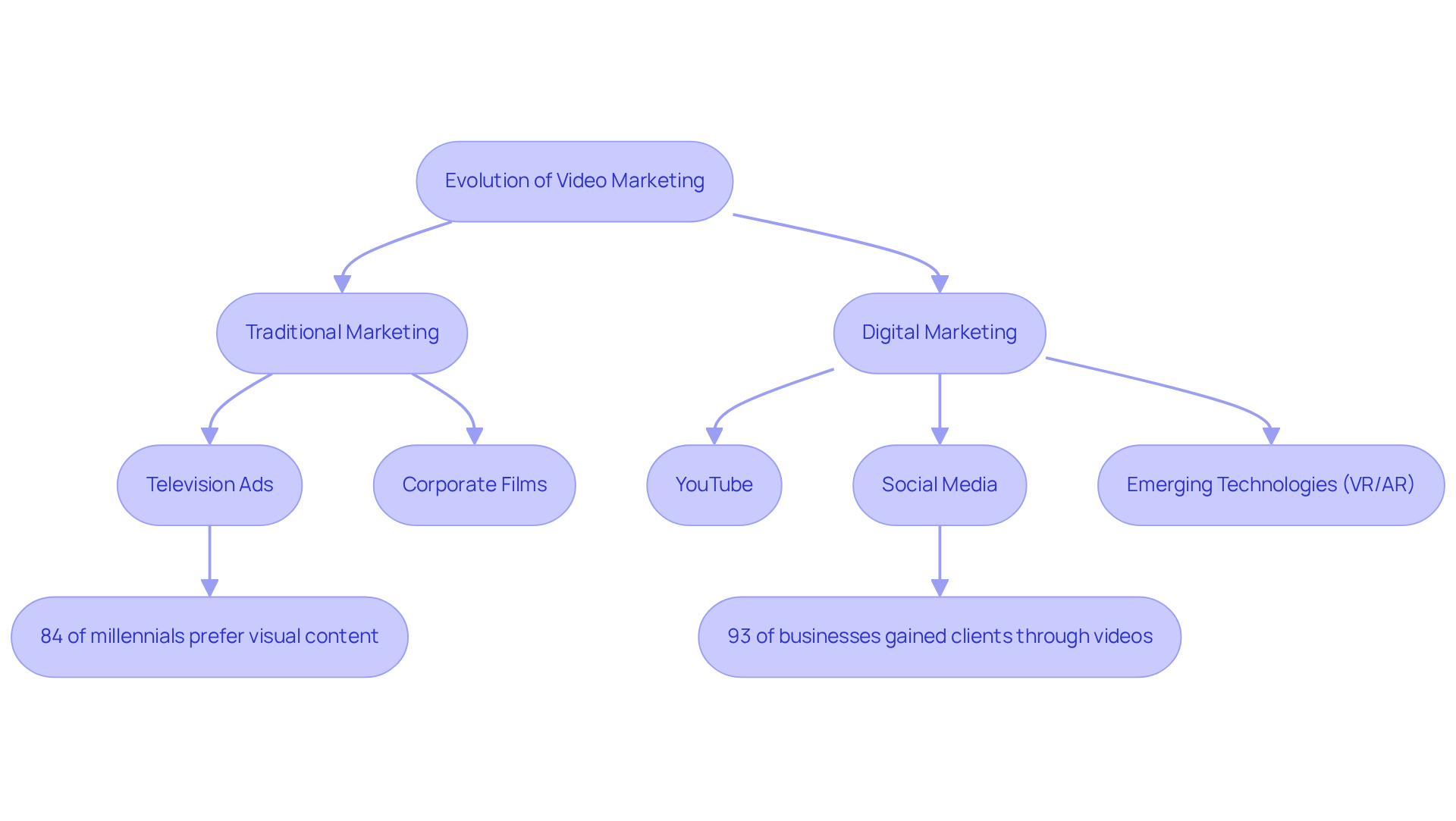
Marketing through visual content has dramatically evolved, shifting from traditional television advertisements and corporate films to a dynamic digital landscape. The rise of the internet and platforms like YouTube in the early 2000s revolutionized brand-consumer interactions, paving the way for more engaging and interactive material. Today, the focus has transitioned to , catering to the rapid consumption habits of modern audiences. This shift is underscored by statistics revealing that:
- 84% of millennials prefer over traditional TV.
- 59% of Generation Z prefer over traditional TV.
This marks a significant change in consumer preferences. Furthermore, 93% of businesses have gained new clients through social media videos, which demonstrates that the question of is crucial in engaging these demographics.
As companies adapt to these trends, there’s a growing emphasis on personalization and authenticity in marketing strategies. has proven effective, with companies witnessing up to a 28% increase in engagement when leveraging such content. In addition, the increasing prevalence of immersive technologies like virtual reality (VR) and augmented reality (AR) presents new opportunities for brands to captivate audiences and enhance consumer engagement. By 2025, the number of VR users is expected to reach 82.6 million, while AR users are projected to exceed 3.5 billion, with the augmented reality sector valued at $85 billion. This signals a substantial market for innovative promotional strategies.
Expert insights underscore the necessity for brands to embrace these digital film trends to evaluate if and remain competitive. As Palash Aman aptly notes, "." is crucial, as companies must navigate a landscape where audiovisual content is anticipated to account for over 82.5% of all consumer internet traffic by 2023. Ignoring these trends could result in companies falling behind their competitors. This evolution not only highlights the importance of adapting to new technologies but also emphasizes the need for brands to continually innovate in their promotional efforts to effectively engage their target audiences.
Key Characteristics of Effective Video Marketing
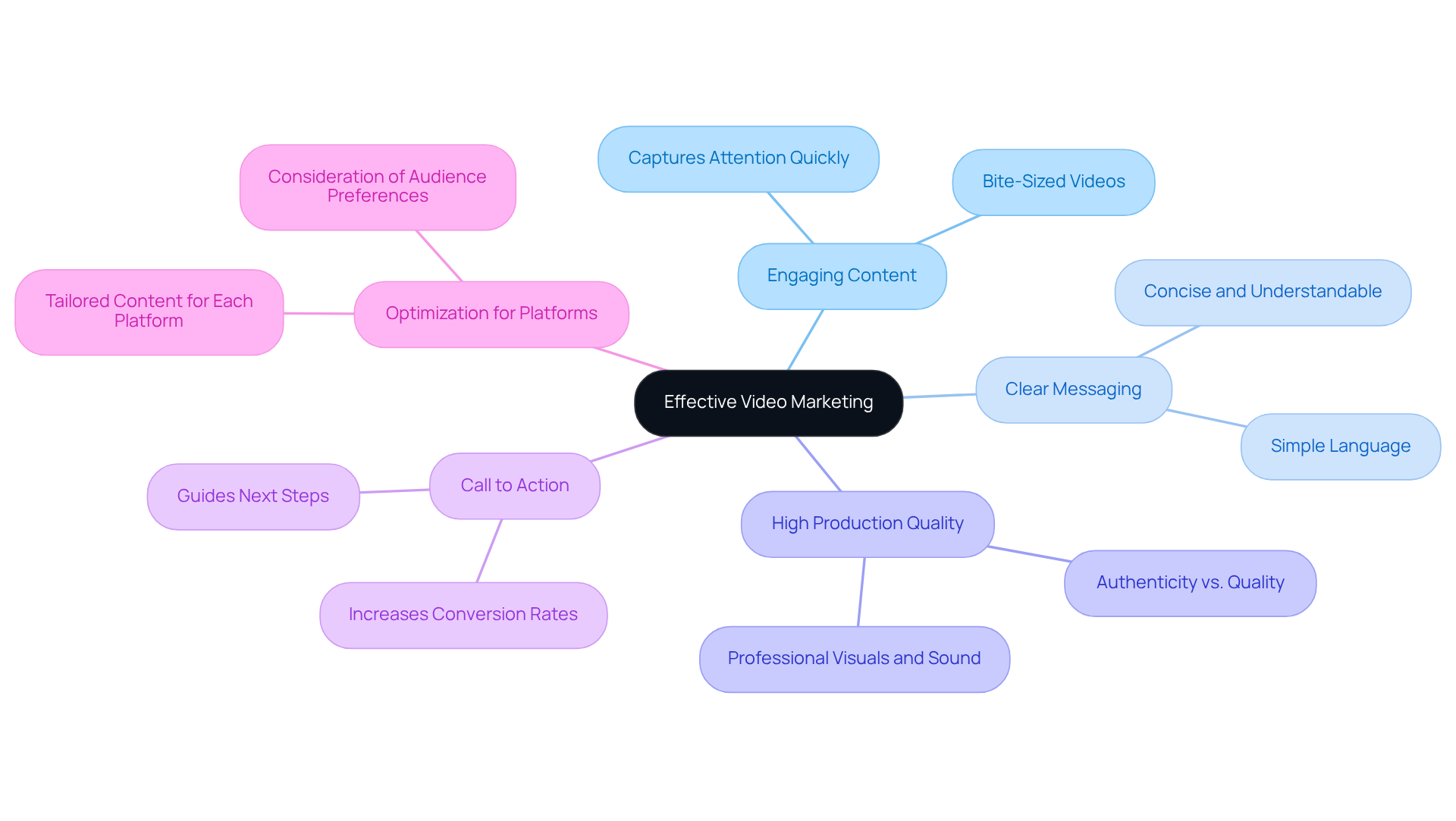
Effective hinges on several key elements:
- : Videos must capture attention swiftly - often within the first few seconds - to retain viewer interest. This immediacy is crucial in a world where distractions abound.
- : The message should be concise and easily understood, ensuring that viewers grasp the intended takeaway. Clarity is paramount; if the audience doesn’t understand, they won’t engage.
- : While authenticity is valued, poor production quality can detract from the message. Investing in good visuals and sound is essential to convey professionalism and credibility.
- : Successful videos often include a clear , guiding viewers on the next steps - whether it’s visiting a website or making a purchase. This direction is vital for understanding how works in converting interest into action.
- : Videos should be they are shared on, considering factors like length, format, and audience preferences. This customization enhances viewer engagement and effectiveness.
Practical Applications and Benefits of Video Marketing
Many brands are often asked, does work as a powerful tool that offers a range of practical applications and benefits to significantly enhance their presence in the market.
- : Did you know that videos are far more likely to be shared and engaged with than static materials? This increased interaction leads to greater visibility and reach for your brand.
- : Consistent visual content plays a crucial role in developing brand recognition and fostering loyalty among consumers. By utilizing video, brands can create a memorable identity that resonates with their audience.
- : Studies reveal that incorporating video on landing pages can boost conversions by an impressive 80%. This statistic underscores the in driving consumer action.
- : Video content is not just engaging; it also enhances search engine rankings. Search engines prioritize rich media, making video a vital component of any SEO strategy.
- Versatility: One of the greatest advantages of video is its versatility. It can be adapted for various platforms and formats, from social media to email promotions, making it an essential tool in any promotional strategy.
- : provides brands with detailed analytics, allowing them to measure performance and optimize future campaigns based on viewer behavior. This data-driven approach ensures that marketing efforts are continually refined for maximum impact.
In conclusion, it is clear and compelling that and offers numerous benefits. Brands looking to enhance their marketing strategies should consider integrating video to leverage these advantages effectively.

Conclusion
Video marketing has emerged as a powerful force in the promotional landscape, establishing itself as an essential strategy for businesses looking to connect with their audiences in meaningful ways. By leveraging engaging visual content, brands can effectively convey their messages, enhance consumer interaction, and ultimately drive conversions. The increasing reliance on video as a core component of marketing strategies underscores its undeniable impact on consumer behavior and brand recognition.
Throughout this discussion, we explored various facets of video marketing, tracing its evolution from traditional formats to the dynamic digital environment we see today. Key insights highlighted the effectiveness of personalized content, the importance of high production quality, and the necessity of optimizing videos for specific platforms. Real-world examples, such as BuzzFeed's Tasty and Starbucks, illustrate how brands can harness the power of video to increase engagement and visibility. Furthermore, statistics revealing the preference of younger demographics for visual content reinforce the need for brands to adapt and innovate.
As companies navigate an ever-evolving digital landscape, embracing video marketing is not just an option; it’s a necessity for sustained growth and relevance. The benefits are clear: enhanced interaction, improved conversion rates, and valuable data-driven insights all contribute to a more robust marketing strategy. Businesses are encouraged to integrate video into their promotional efforts, ensuring they remain competitive and effectively engage their target audiences in a visually compelling manner.
Frequently Asked Questions
What is video marketing?
Video marketing is the use of visual content, such as promotional clips, explainer films, product showcases, and client testimonials, to elevate a company, product, or service. Its primary goal is to engage viewers, convey information effectively, and drive conversions.
Why is video marketing becoming increasingly important?
By 2025, it is expected that 82% of companies will incorporate visual content into their promotional efforts. This trend highlights the growing significance of video marketing in the digital landscape as companies seek to connect with their audiences in a visually compelling way.
How effective is customized video content in converting viewers?
Customized video clips are 3.5 times more likely to convert viewers into clients compared to standard content, emphasizing the need for companies to adopt creative audiovisual strategies.
What types of video content are most effective for engagement?
Effective types of video content include explainer films, which align narratives with company objectives, and customer testimonials, which provide authentic insights into a product or service's benefits. 89% of marketers advocate for the use of customer testimonials.
Can you provide examples of successful video marketing strategies?
Tasty by BuzzFeed utilizes brief, shareable recipe clips that have garnered millions of shares, boosting visibility. Starbucks employs short, mobile-optimized clips on social media to engage consumers and promote new products, which leads to increased interaction and sales.
Why is mobile optimization important for video marketing?
Over 75% of all views originate from mobile devices, making it essential to optimize media for mobile viewing to enhance reach and effectiveness in engaging audiences.
List of Sources
- Defining Video Marketing: An Overview
- firework.com (https://firework.com/blog/video-marketing-future-trends)
- wordstream.com (https://wordstream.com/blog/video-marketing-trends-2025)
- beigemedia.ai (https://beigemedia.ai/the-impact-of-video-marketing-on-brand-awareness)
- 2025 Video Marketing Statistics and Consumer Trends (https://idomoo.com/blog/2025-video-marketing-statistics-and-consumer-trends)
- vidico.com (https://vidico.com/news/why-is-video-marketing-so-effective)
- The Evolution of Video Marketing: From Traditional to Digital
- nationalmediaconnection.com (https://nationalmediaconnection.com/the-evolution-of-video-marketing-combining-infomercials-and-digital-strategies)
- leadnicely.com (https://leadnicely.com/the-evolution-of-video-marketing-what-changed-over-time)
- goatagency.com (https://goatagency.com/blog/video-marketing-evolution)
- 2025 Digital Media Trends: Social platforms are becoming a dominant force in media and entertainment (https://deloitte.com/us/en/insights/industry/technology/digital-media-trends-consumption-habits-survey/2025.html)
- digitalmarketinginstitute.com (https://digitalmarketinginstitute.com/blog/the-evolution-of-digital-video-marketing)
- Key Characteristics of Effective Video Marketing
- vidico.com (https://vidico.com/news/why-is-video-marketing-so-effective)
- The 2024 guide to video marketing (https://corp.kaltura.com/blog/video-marketing)
- cardboard-spaceship.com (https://cardboard-spaceship.com/video-marketing-trends-2025)
- ashworthcreative.com (https://ashworthcreative.com/blog/2025/04/why-video-is-no-longer-optional-in-marketing-2025)
- blog.convertri.com (https://blog.convertri.com/5-video-marketing-trends-in-2025)
- Practical Applications and Benefits of Video Marketing
- vidico.com (https://vidico.com/news/why-is-video-marketing-so-effective)
- blog.hubspot.com (https://blog.hubspot.com/marketing/video-marketing-statistics)
- speedworksocial.com (https://speedworksocial.com/the-benefits-of-b2b-video-marketing-for-brand-awareness)
- claap.io (https://claap.io/blog/benefits-of-video-marketing)
- atlassian.com (https://atlassian.com/blog/loom/benefits-of-video-marketing)