
Introduction
The landscape of eCommerce is evolving rapidly. Online retail sales are projected to soar to $1.17 trillion in the U.S. by 2025. This remarkable growth underscores the critical role that effective marketing tools play in helping brands navigate the competitive digital marketplace.
By evaluating essential criteria such as:
- Functionality
- Integration
- User experience
Businesses can identify the right tools to enhance their marketing strategies. Yet, with so many options available, how can brands ensure they choose the most suitable tools for their specific needs and objectives?
Key Criteria for Evaluating eCommerce Marketing Tools
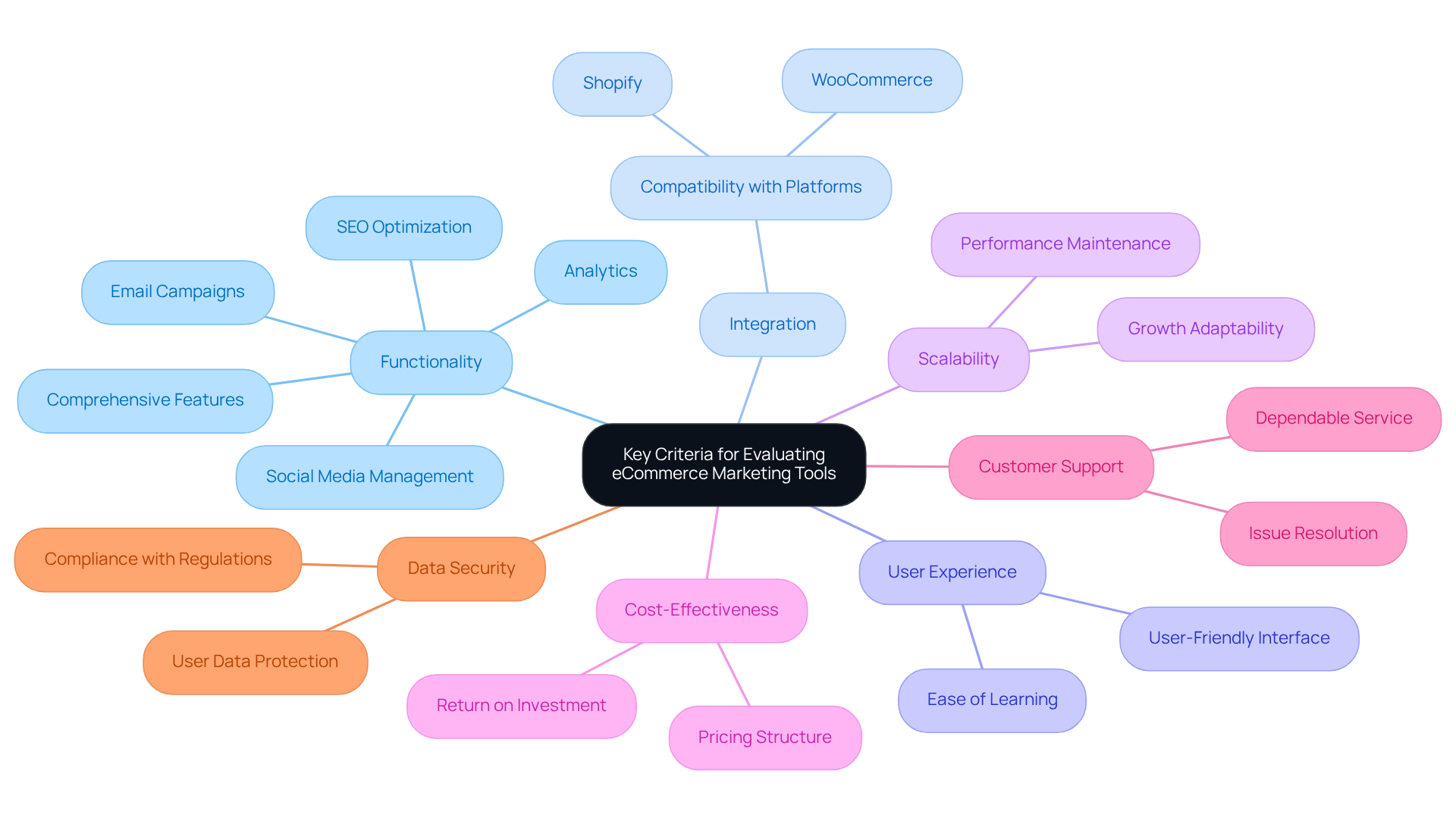
When it comes to evaluating , several key criteria demand your attention:
- Functionality: The tool must offer a comprehensive range of features that cater to various promotional needs, including email campaigns, social media management, SEO optimization, and analytics.
- Integration: Ensuring compatibility with existing platforms like Shopify and WooCommerce is essential for smooth operations.
- User Experience: A can significantly boost productivity and ease the learning curve for your team.
- Scalability: As your business grows, your effectively without compromising performance.
- Cost-Effectiveness: It's crucial to assess the provided to guarantee a solid return on investment.
- : Dependable customer service is vital for quickly resolving issues, minimizing downtime and frustration.
- Data Security: With increasing concerns about , solutions must comply with regulations and ensure user data is protected.
These criteria provide a robust framework for effectively evaluating various marketing tools for ecommerce. By considering these factors, you can make informed decisions that enhance your eCommerce strategy.
Overview of Top eCommerce Marketing Tools and Their Features
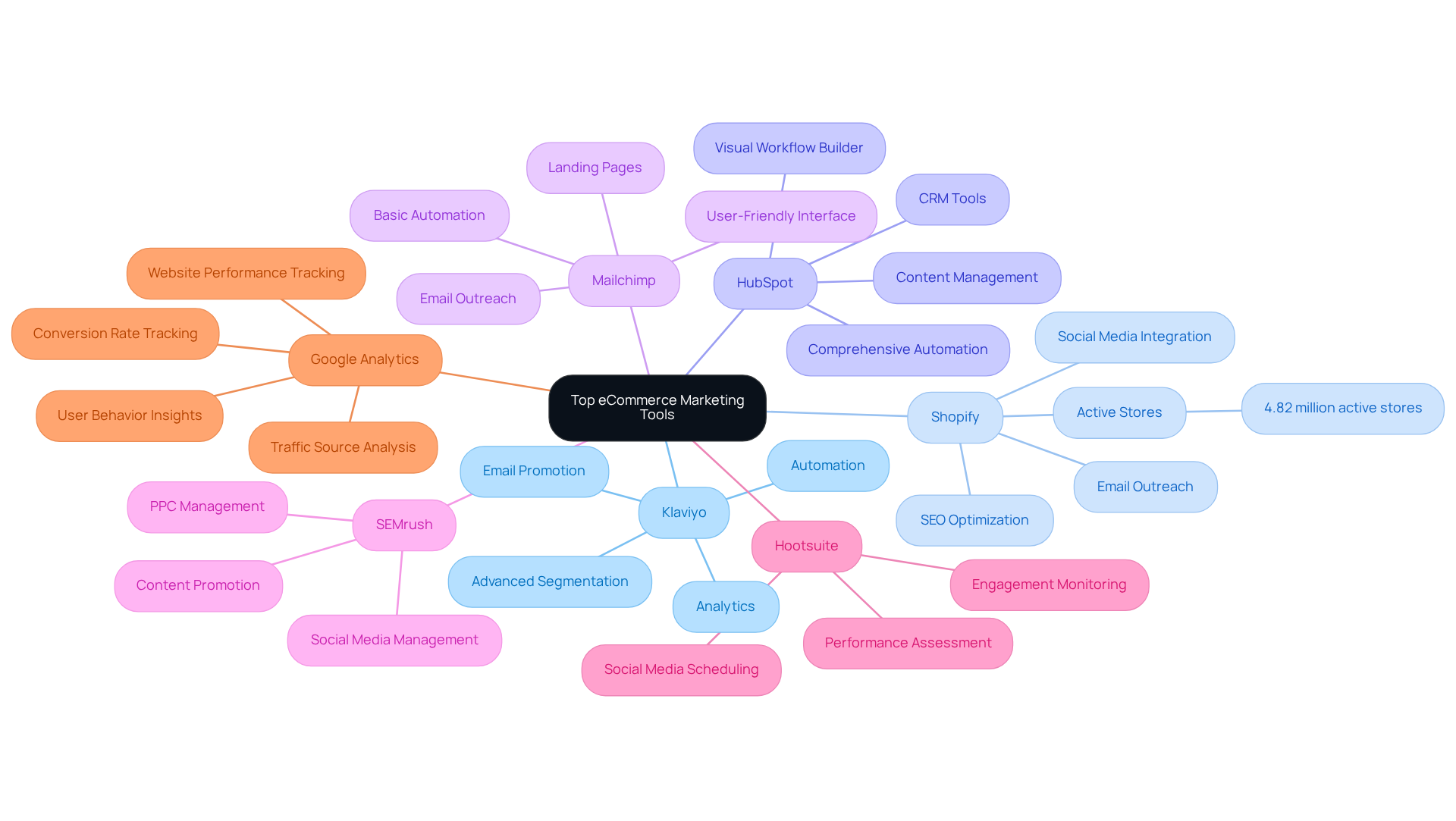
In 2025, several stand out for their capabilities and features:
- Klaviyo: This platform excels in email promotion for online retail, offering that enhance customer engagement and drive sales. Its deep integration with online retail platforms allows for precise targeting based on customer behavior.
- Shopify: While mainly an eCommerce platform, Shopify offers strong promotional features, including . With approximately , it remains a leading choice for brands looking to enhance their online presence.
- HubSpot: Renowned for its comprehensive automation features, HubSpot combines email outreach, content management, and . Its visual workflow builder enables businesses to design customized to customer interactions.
- Mailchimp: A preferred choice for small to medium-sized enterprises, Mailchimp provides email outreach, landing pages, and basic automation features. Its user-friendly interface and clear pricing structure make it accessible for startups aiming to establish their promotional efforts.
- SEMrush: While primarily recognized as an SEO resource, SEMrush also offers marketing tools for ecommerce, such as content promotion, PPC, and social media management, making it a flexible option for eCommerce companies aiming to improve their online visibility and engagement.
- Hootsuite: This social media management application allows companies to schedule posts, monitor engagement, and assess performance across various platforms, promoting a cohesive social media strategy that enhances customer interaction.
- Google Analytics: Essential for tracking website performance, Google Analytics provides insights into user behavior, traffic sources, and conversion rates. This information is crucial for companies aiming to enhance their promotional strategies and boost overall performance.
These marketing tools for ecommerce together provide a wide array of functionalities that address different facets of online marketing, enabling brands to improve their digital strategies efficiently. Significantly, online retail sales in the United States are anticipated to hit $1.17 trillion by the conclusion of 2025, emphasizing the growth potential of the market. Furthermore, the worldwide eCommerce market is expected to achieve $6.42 trillion in sales by 2025, highlighting the importance of these resources in a swiftly growing environment. With an average shopping cart abandonment rate of approximately 70%, effective marketing strategies are crucial for enhancing conversion rates. As Plerdy mentions, 'Track, analyze, and convert visitors into customers with AI-powered insights,' which corresponds with the functionalities of these resources. Moreover, , propelled by heightened smartphone usage, rendering these tools increasingly significant in today's digital landscape.
Pros and Cons of Leading eCommerce Marketing Tools
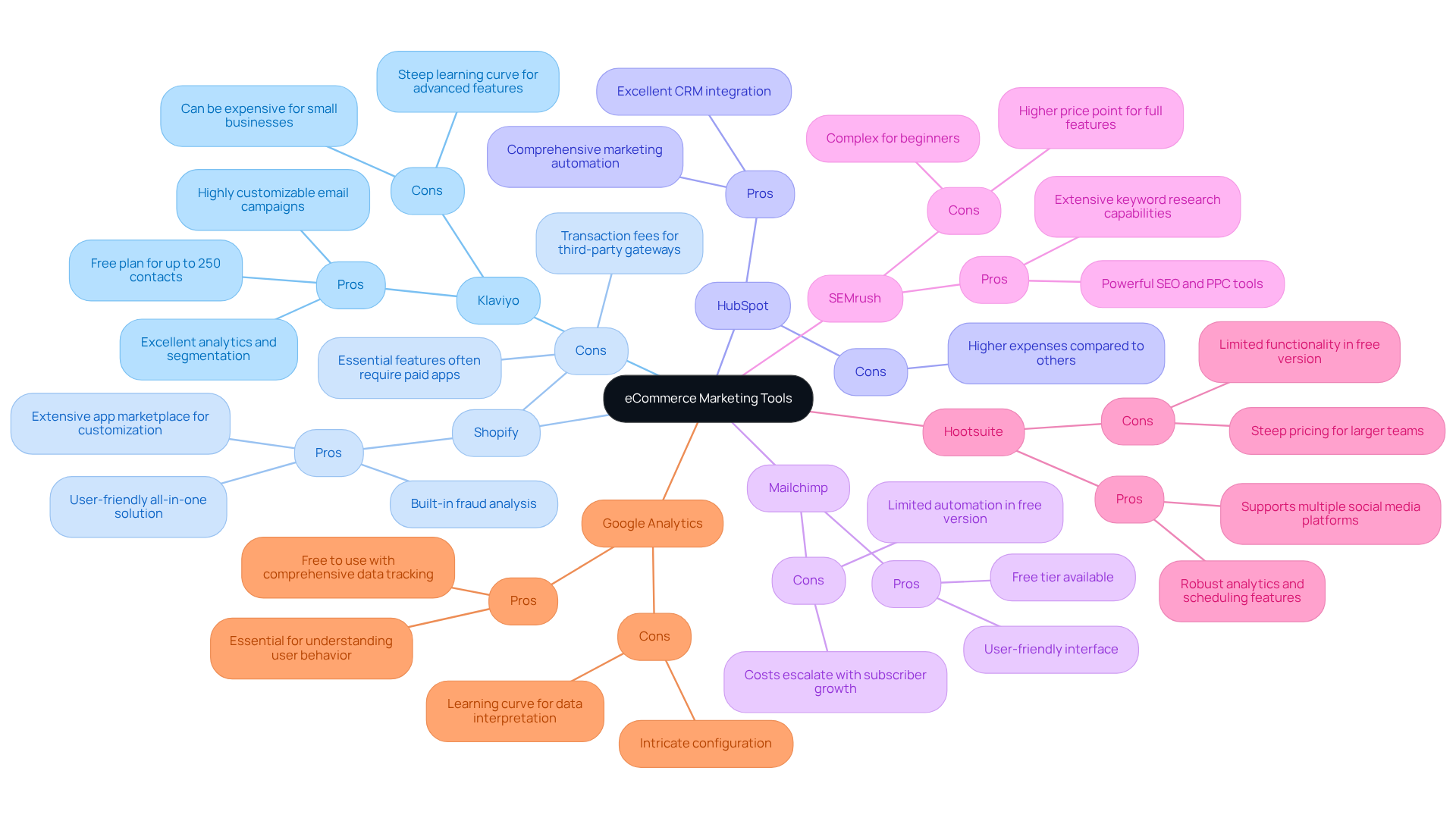
Here’s a breakdown of the pros and cons of some leading :
-
Klaviyo
- Pros: , excellent analytics, and segmentation capabilities that allow for targeted marketing strategies. The free plan allows up to 250 contacts and 500 monthly emails, making it a cost-effective option for small businesses.
- Cons: Can be expensive for smaller businesses, with a starting price of $20/month for its first paid plan and a steep learning curve for users aiming to leverage advanced features effectively.
-
Shopify
- Pros: that is user-friendly, enabling quick store setup and management. Its and scalability as businesses grow. Additionally, Shopify includes built-in fraud analysis, which flags orders based on risk factors, enhancing security.
- Cons: Users may face transaction fees ranging from 0.5% to 2% when using third-party payment gateways, and many essential features often require additional paid apps, leading to potential hidden costs that can accumulate quickly.
-
HubSpot
- Pros: , excellent CRM integration, and robust analytics that provide valuable insights into customer interactions.
- Cons: Higher expenses in comparison to other resources, which may be overwhelming for small enterprises just beginning.
-
Mailchimp
- Pros: , making it accessible for basic email marketing needs.
- Cons: Limited automation features in the free version, and costs can escalate as the subscriber list grows.
-
SEMrush
- Pros: with extensive keyword research capabilities that are essential for optimizing online visibility.
- Cons: Can be complex for beginners to navigate, and the higher price point for full features may deter some users.
-
Hootsuite
- Pros: Supports multiple social media platforms, offering robust analytics and scheduling features that streamline social media management.
- Cons: Pricing can be steep for larger teams, and the free version has limited functionality.
-
Google Analytics
- Pros: Free to use with comprehensive data tracking, essential for understanding user behavior and optimizing marketing strategies.
- Cons: The configuration can be intricate, and understanding the data may need a learning curve, as it lacks direct promotional abilities.
This examination assists companies in recognizing which align best with their promotional strategies and budget, ensuring knowledgeable choices in their online business efforts.
Choosing the Right Tool: Suitability for Different Brand Strategies
When selecting an , brands must carefully consider their specific strategies and goals:
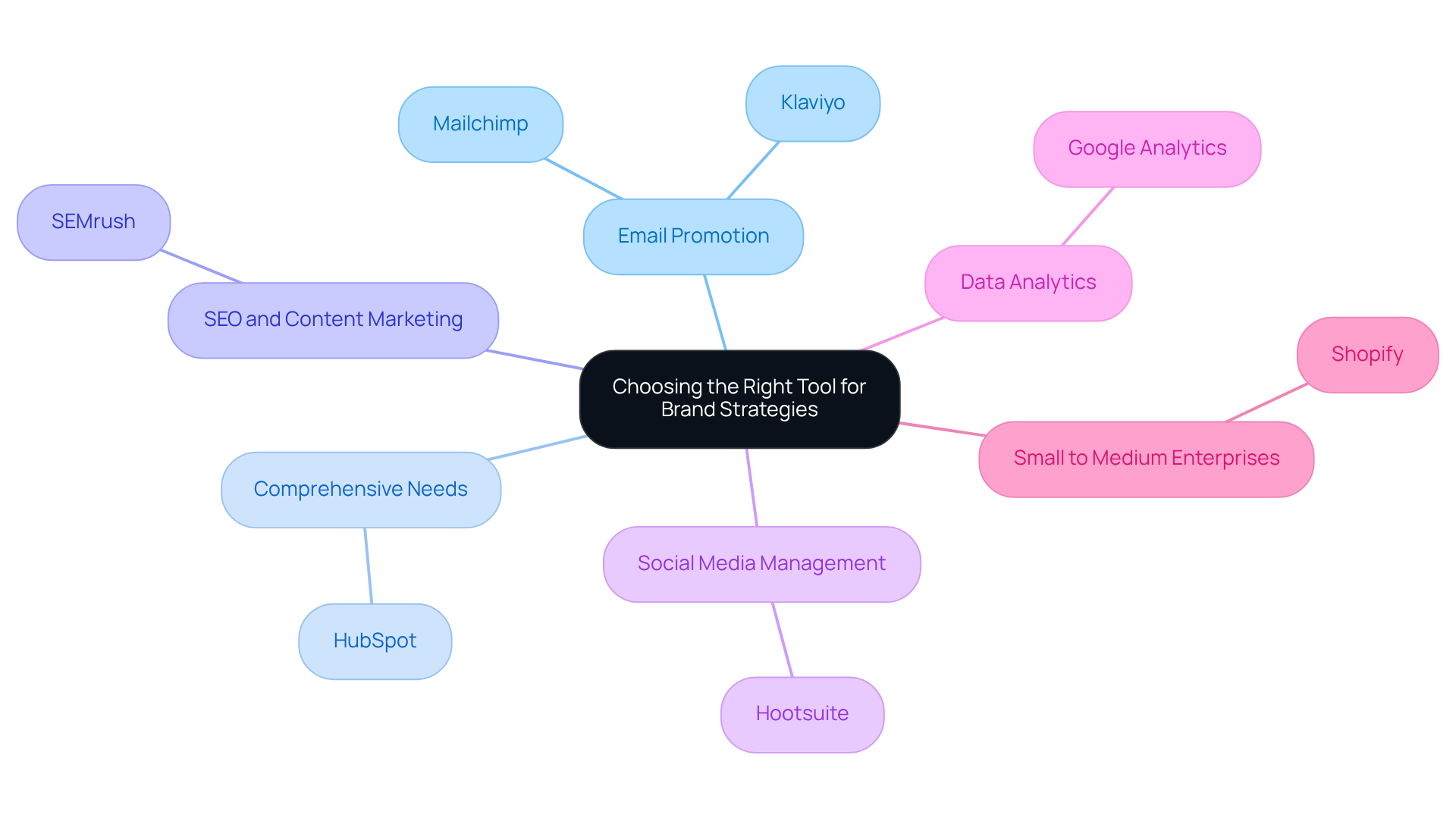
- For Email Promotion Focus: Brands prioritizing email outreach should consider Klaviyo or Mailchimp. Klaviyo excels in , making it ideal for personalized campaigns. In contrast, Mailchimp offers user-friendly features that cater to a broad audience. Research indicates that 60% of users shopping online will use a coupon if they know one is available, underscoring the effectiveness of .
- For Comprehensive Promotion Needs: HubSpot stands out as an all-in-one solution, . This platform is especially advantageous for companies aiming to simplify their promotional efforts and improve . As HubSpot emphasizes, a thorough marketing strategy addresses all aspects, making it crucial for companies seeking to enhance their marketing efforts.
- For SEO and Content Marketing: SEMrush is the preferred resource for companies looking to . With , employing a strong SEO resource like SEMrush is essential for boosting organic reach.
- For Social Media Management: Hootsuite is recommended for companies managing multiple social media accounts. Its capabilities in tracking engagement and scheduling posts help maintain a consistent online presence, which is crucial for driving customer interaction. In the U.S., an estimated 110.4 million people will make a purchase via social media in 2025, highlighting the relevance of in today’s market landscape.
- For Data Analytics: Google Analytics is vital for companies seeking deep insights into user behavior and website performance. Understanding these metrics is essential for optimizing and enhancing conversion rates, especially given the elevated shopping cart abandonment rates that necessitate .
- For Small to Medium Enterprises: Shopify offers an intuitive platform with integrated promotional resources, making it suitable for smaller companies aiming to expand their operations efficiently. The subscription economy is projected to grow to $1.5 trillion by 2025, making resources that support subscription models increasingly significant for businesses.
By aligning the selection of marketing tools for ecommerce with brand strategies, businesses can significantly enhance their marketing effectiveness and drive better results. Integrating case studies of successful implementations can further reinforce the credibility of these recommendations.
Conclusion
Evaluating the right marketing tools is not just important; it’s crucial for achieving success in the competitive landscape of eCommerce. Selecting tools that meet functional needs while aligning with specific business strategies can significantly enhance marketing effectiveness. By focusing on key criteria - functionality, integration, user experience, scalability, cost-effectiveness, customer support, and data security - businesses can make informed decisions that drive results.
The exploration of top eCommerce marketing tools, including Klaviyo, Shopify, HubSpot, Mailchimp, SEMrush, Hootsuite, and Google Analytics, reveals a diverse array of features tailored to various marketing needs. Each tool offers unique strengths, from advanced email automation to comprehensive analytics and social media management. This enables brands to craft targeted strategies that resonate with their audiences. The insights provided underscore the importance of aligning marketing tools with brand objectives, ensuring that every resource contributes to growth and customer engagement.
In a rapidly evolving eCommerce environment, leveraging the right marketing tools is essential for long-term success. With projections indicating substantial growth in online retail sales, businesses must prioritize their marketing strategies to remain competitive. By carefully assessing and selecting tools that fit their unique needs, brands can effectively navigate the complexities of digital marketing and capitalize on emerging opportunities. Embracing these essential marketing tools will not only enhance operational efficiency but also foster meaningful connections with customers, ultimately leading to increased sales and brand loyalty.
Frequently Asked Questions
What are the key criteria for evaluating eCommerce marketing tools?
The key criteria include functionality, integration, user experience, scalability, cost-effectiveness, customer support, and data security.
Why is functionality important in eCommerce marketing tools?
Functionality is important because the tool must offer a comprehensive range of features that cater to various promotional needs, such as email campaigns, social media management, SEO optimization, and analytics.
How does integration affect the choice of eCommerce marketing tools?
Integration is crucial as it ensures compatibility with existing platforms like Shopify and WooCommerce, which is essential for smooth operations.
What role does user experience play in evaluating marketing tools?
A user-friendly interface can significantly boost productivity and ease the learning curve for your team, making user experience a vital consideration.
Why is scalability important for eCommerce marketing tools?
Scalability is important because as your business grows, your marketing resources should be able to scale effectively without compromising performance.
How should cost-effectiveness be assessed when evaluating marketing tools?
Cost-effectiveness should be assessed by evaluating the pricing structure in relation to the features provided, ensuring a solid return on investment.
What is the significance of customer support in eCommerce marketing tools?
Dependable customer service is vital for quickly resolving issues, minimizing downtime, and reducing frustration for users.
Why is data security a critical factor in choosing marketing tools?
Data security is critical due to increasing concerns about data privacy; solutions must comply with regulations and ensure that user data is protected.
List of Sources
- Key Criteria for Evaluating eCommerce Marketing Tools
- influencermarketinghub.com (https://influencermarketinghub.com/ecommerce-marketing-tools)
- salesmanago.com (https://salesmanago.com/blog/best-ecommerce-marketing-tools)
- 60 Ecommerce Statistics (2026): Global, Mobile, B2B Data (https://flowlu.com/blog/productivity/ecommerce-statistics)
- hostinger.com (https://hostinger.com/tutorials/ecommerce-statistics)
- Top Ecommerce Trends to Watch in 2026 (https://bigcommerce.com/articles/ecommerce/ecommerce-trends)
- Overview of Top eCommerce Marketing Tools and Their Features
- 60 Ecommerce Statistics (2026): Global, Mobile, B2B Data (https://flowlu.com/blog/productivity/ecommerce-statistics)
- plerdy.com (https://plerdy.com/blog/must-have-e-commerce-marketing-tools)
- hq.quikly.com (https://hq.quikly.com/blog/best-marketing-automation-tools)
- The Top 25 Digital Commerce Statistics to Know for 2025 - Cimulate AI (https://cimulate.ai/resources/digital-commerce-statistics)
- omnisend.com (https://omnisend.com/blog/best-tools-ecommerce)
- Pros and Cons of Leading eCommerce Marketing Tools
- ecomheroes.dev (https://ecomheroes.dev/blogs/shopify-help/shopify-pros-and-cons-2025-review)
- ecorn.agency (https://ecorn.agency/blog/pros-and-cons-of-shopify)
- networksolutions.com (https://networksolutions.com/blog/pros-cons-shopify)
- forbes.com (https://forbes.com/advisor/in/business/software/shopify-review)
- moosend.com (https://moosend.com/blog/klaviyo-review)
- Choosing the Right Tool: Suitability for Different Brand Strategies
- sixthcitymarketing.com (https://sixthcitymarketing.com/ecommerce-marketing-stats)
- stackinfluence.com (https://stackinfluence.com/best-ecommerce-marketing-tools-and-trends-2025)
- salesmanago.com (https://salesmanago.com/blog/best-ecommerce-marketing-tools)
- theretailexec.com (https://theretailexec.com/tools/best-ecommerce-marketing-tools)
- emailtooltester.com (https://emailtooltester.com/en/blog/best-email-marketing-for-ecommerce)