
Introduction
User-generated content (UGC) has emerged as a pivotal force in shaping modern marketing strategies, offering brands an authentic connection to their audience. As consumers increasingly seek genuine interactions, harnessing UGC not only boosts engagement but also builds trust - critical elements in today’s competitive landscape. But how can brands effectively encourage their customers to contribute this valuable content? Exploring practical strategies to foster user participation reveals not just the benefits of UGC, but also the transformative impact it can have on consumer behavior and brand loyalty.
Define User-Generated Content and Its Importance
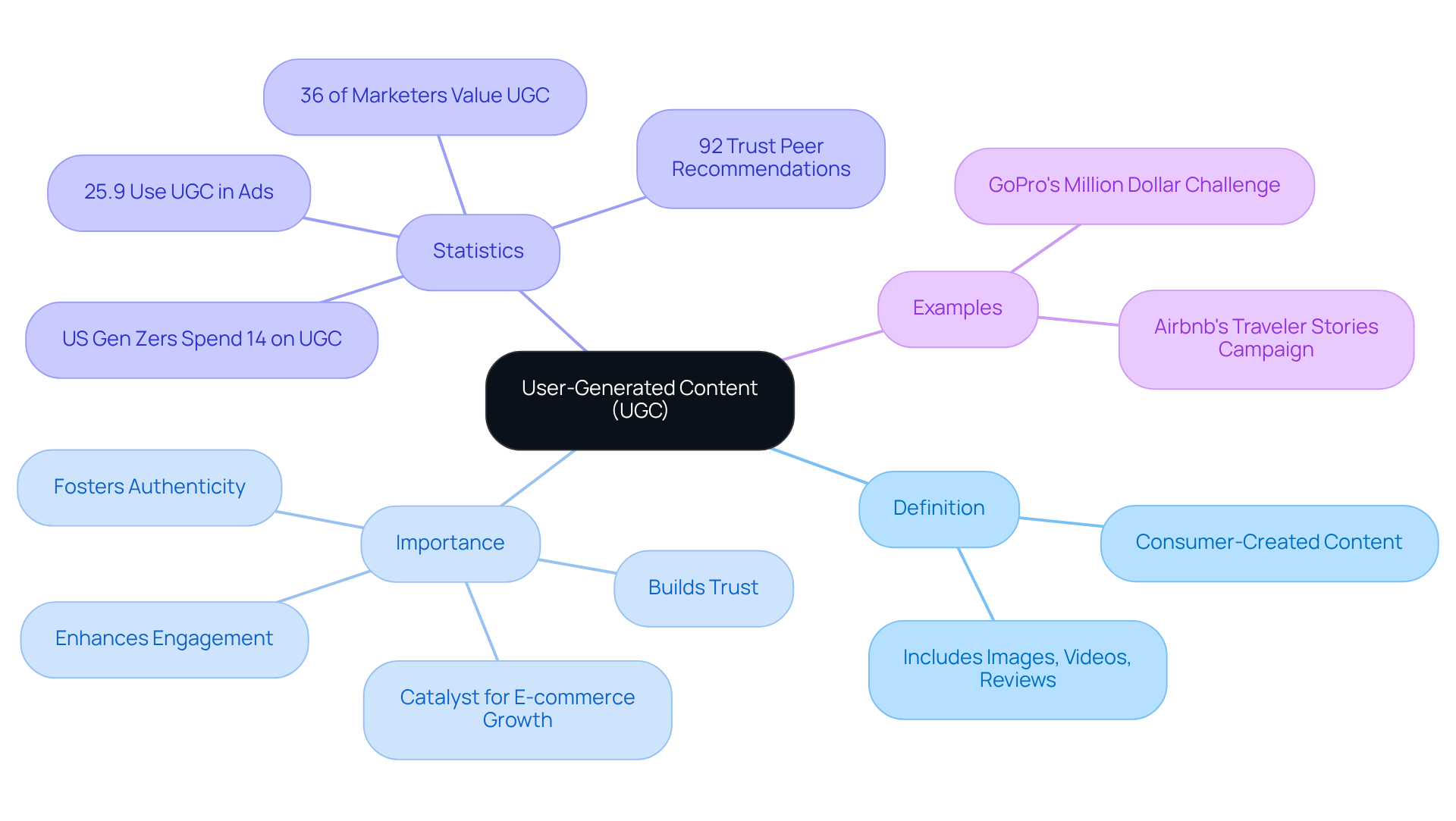
encompasses any materials created by consumers, including images, videos, reviews, and social media posts, rather than by companies themselves. This type of content is crucial in today’s marketing landscape, as it fosters authenticity and trust; potential customers often regard UGC as more credible than traditional brand-generated content. In fact, research indicates that 92% of consumers trust peer recommendations over company advertising, highlighting the significant . Moreover, 36% of marketers deem UGC extremely important to their social media strategies, underscoring its relevance in modern marketing.
Brands that effectively harness UGC demonstrate by and cultivating a around their products, encouraging customers to share their experiences and insights. Successful examples include:
- GoPro's Million Dollar Challenge, which invites users to submit their best footage
- Airbnb's campaigns that showcase traveler stories
Both initiatives illustrate the power of UGC in enhancing relatability and consumer trust.
Furthermore, knowing serves as a potent catalyst for , helping companies build trust, enhance engagement, and elevate conversion rates. As businesses navigate the evolving digital landscape, understanding can be a game-changer in connecting with audiences and driving sales.
Explore Different Types of User-Generated Content
User-created material (UGC) encompasses various types that can significantly enhance product visibility and foster consumer trust, illustrating how to encourage . Consider the following key types:
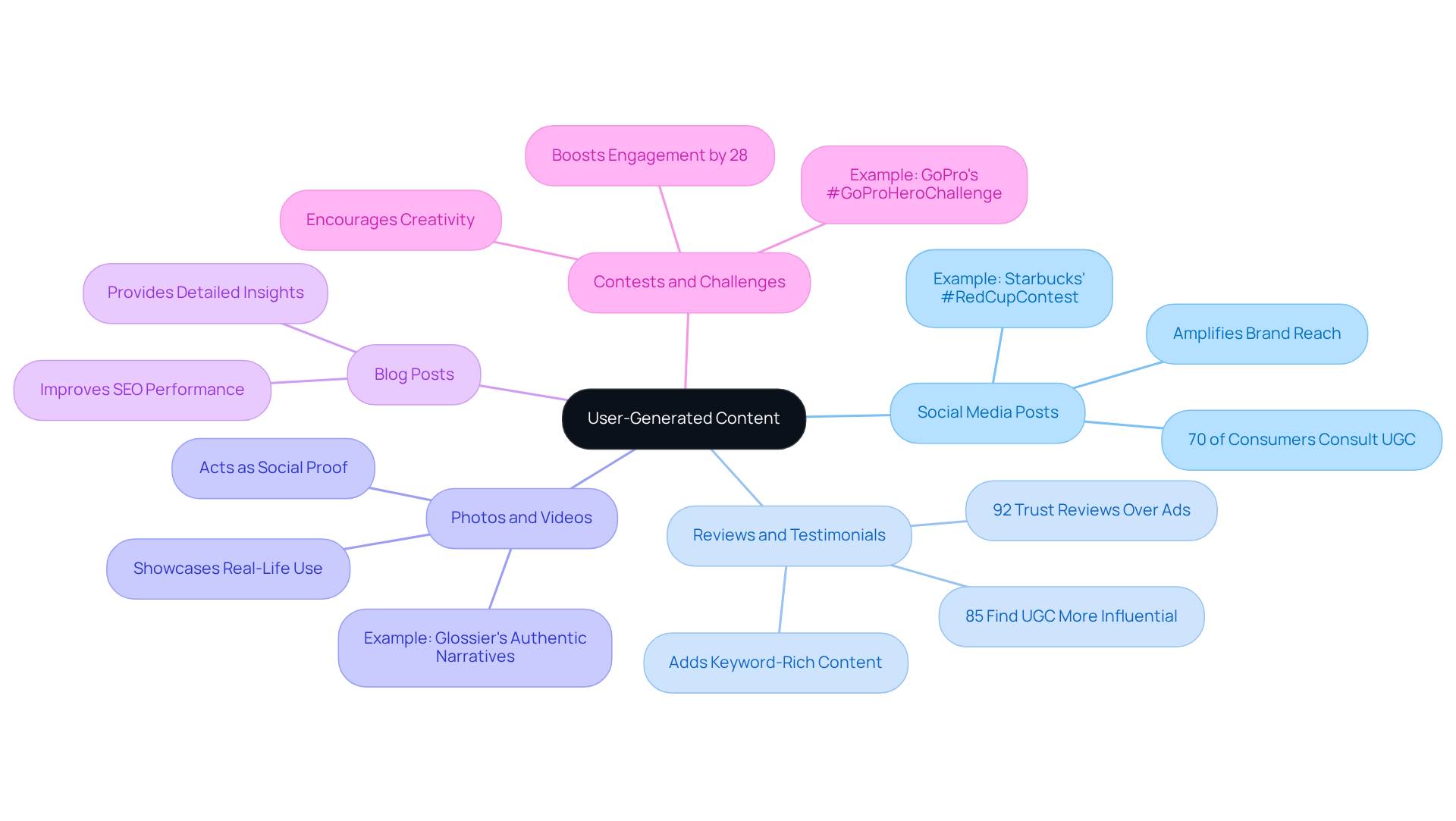
- : Customers sharing their experiences on platforms like Instagram and TikTok can greatly amplify brand reach. For instance, brands such as Starbucks have effectively utilized customer-created content to engage their audience and promote seasonal products. Research indicates that 70% of consumers consult UGC posts before making purchase decisions, underscoring their influence.
- : Written feedback from customers serves as powerful endorsements. Studies show that 92% of consumers trust reviews more than traditional advertising, making them essential for building credibility. Additionally, .
- : Visual content created by users showcases products in real-life scenarios, enhancing relatability. Brands like Glossier leverage authentic customer narratives to build trust and relatability, resonating with potential buyers. UGC acts as social proof, demonstrating real individuals using and loving a company's offerings.
- Blog Posts: Articles penned by customers about their experiences provide detailed insights into a company's offerings, further improving SEO performance and increasing organic traffic.
- : Engaging users through themed contests encourages creativity and participation. Campaigns like GoPro's #GoProHeroChallenge not only highlight user experiences but also foster community engagement and customer loyalty. Combining UGC with branded material can boost engagement by 28%, making these campaigns particularly impactful.
Each form of UGC plays a unique role in marketing strategies, contributing to a more authentic image and showcasing that fosters deeper connections with consumers. Integrating UGC into your marketing efforts is essential for understanding , which can enhance brand credibility and drive consumer engagement.
Implement Strategies to Encourage User Participation
To effectively encourage user participation in creating , consider implementing the following strategies:
- : Generate enthusiasm by offering rewards for the best contributions from users. This not only incentivizes participation but also fosters a competitive spirit that can lead to higher quality submissions.
- : Motivate users to tag your brand with specific hashtags. This approach allows you to easily track and share their content, amplifying your brand's reach and visibility.
- : Highlight user-generated content on your brand's social media platforms or website. By showcasing these contributions, you inspire others to join in and share their own experiences.
- : Actively respond to and interact with users who create content. This engagement and encourages more users to participate, knowing their efforts are valued.
- : Offer specific instructions on the type of content you are seeking. Clear guidelines make it easier for users to contribute meaningfully, aligning their submissions with your brand's goals.
Implementing these strategies can significantly enhance how to , improving both the volume and quality your company receives, ultimately driving greater engagement and brand loyalty.

Ensure Quality Control for User-Generated Content
To uphold high standards for , brands must implement effective strategies that demonstrate how to , enhancing their reputation and driving engagement.
- : Clearly defining what constitutes acceptable content-including style, tone, and subject matter-is crucial. This clarity helps users understand expectations and fosters the creation of relevant submissions.
- : Regularly reviewing ensures alignment with company values and messaging. Effective monitoring prevents unsuitable material from being shared, safeguarding the brand's image.
- : Offering constructive feedback to users whose submissions may require adjustments is essential. This practice not only enhances quality but also fosters user engagement and loyalty.
- Use : Implementing AI-powered can filter and manage UGC submissions efficiently. These tools automate categorization and identify unsuitable content, ensuring adherence to company guidelines. By leveraging AI-driven tools, companies can effectively handle substantial amounts of , improving the moderation process.
- Seek Permissions: Always obtaining explicit permission from users before sharing their material respects creators' rights and fosters trust, which is vital for building a loyal community.
By adopting these quality control measures, companies can learn that enhances their reputation and drives engagement rather than detracting from it. Successful brands like GoPro, which saw a notable increase in brand exposure and sales through customer-created material, and Airbnb, which filled its social media feeds with genuine content, illustrate how effective monitoring and clear guidelines can lead to impactful contributions. Furthermore, it's essential to recognize that than conventional marketing campaigns, emphasizing its efficiency in engaging audiences.

Leverage User-Generated Content in Marketing Campaigns
To effectively leverage (UGC) in your marketing campaigns, consider these powerful approaches:
- : Authentic can significantly enhance credibility and relatability. Why not let your customers tell your story?
- : Dedicate a specific area on your website to showcase from users. This not only highlights their creativity but also demonstrates through additional submissions.
- : Understanding how to in your newsletters fosters a sense of community and builds trust among your subscribers. It’s a great way to keep your audience engaged.
- Share on Social Media: Regularly posting on your social media channels is an effective way to learn and engage your audience for further participation. Are you showcasing your customers’ voices?
- : is crucial. Understanding its impact allows you to refine your strategies effectively.
By integrating UGC into your marketing efforts, you will discover , creating a more authentic and engaging brand presence that resonates deeply with consumers. Take action today and start harnessing the power of your audience!

Conclusion
User-generated content (UGC) is not just a trend; it’s a cornerstone of modern marketing that offers brands a powerful way to boost authenticity and cultivate trust with their audiences. By tapping into the creativity and experiences of consumers, brands can forge deeper connections, drive engagement, and ultimately increase sales and loyalty.
Throughout this article, we’ve explored various strategies to encourage user-generated content. These strategies include:
- Running contests
- Utilizing specific hashtags
- Showcasing user contributions
- Actively engaging with audiences
- Providing clear guidelines for submissions
Moreover, the importance of quality control measures - like monitoring submissions and obtaining permissions - has been highlighted to ensure that UGC aligns with brand values and enhances credibility.
Incorporating user-generated content into marketing campaigns not only elevates brand visibility but also fosters a sense of community among consumers. As brands aim to resonate with their audiences, embracing UGC can turn marketing efforts into authentic narratives that reflect genuine customer experiences. By taking decisive action to implement these strategies, brands can unlock the full potential of user-generated content, creating marketing initiatives that are both impactful and meaningful.
Frequently Asked Questions
What is user-generated content (UGC)?
User-generated content (UGC) refers to materials created by consumers, such as images, videos, reviews, and social media posts, instead of being produced by companies themselves.
Why is UGC important in marketing?
UGC is crucial in marketing because it fosters authenticity and trust. Consumers often view UGC as more credible than traditional brand-generated content, with 92% trusting peer recommendations over company advertising.
How does UGC influence purchasing decisions?
Research shows that 70% of consumers consult UGC posts before making purchases, highlighting its significant impact on consumer decisions. Additionally, 36% of marketers find UGC extremely important for their social media strategies.
What are some successful examples of UGC campaigns?
Successful examples include GoPro's Million Dollar Challenge, which invites users to submit their best footage, and Airbnb's campaigns that showcase traveler stories, both enhancing relatability and consumer trust.
What types of UGC can enhance product visibility?
Key types of UGC include social media posts, reviews and testimonials, photos and videos, blog posts, and contests and challenges, all of which can significantly boost brand visibility and consumer trust.
How do social media posts as UGC affect brand reach?
Customers sharing their experiences on platforms like Instagram and TikTok can greatly amplify brand reach. Brands like Starbucks effectively utilize customer-created content to engage their audience and promote products.
Why are reviews and testimonials important?
Reviews and testimonials serve as powerful endorsements, with 92% of consumers trusting them more than traditional advertising. They are essential for building credibility, as 85% of consumers find UGC more influential than brand-created materials.
How does visual UGC contribute to marketing?
Visual content created by users showcases products in real-life scenarios, enhancing relatability. Brands like Glossier use authentic customer narratives to build trust and resonate with potential buyers.
What role do contests and challenges play in UGC?
Contests and challenges engage users through themed activities, encouraging creativity and participation. Campaigns like GoPro's #GoProHeroChallenge highlight user experiences and foster community engagement and customer loyalty.
How does integrating UGC into marketing strategies benefit brands?
Integrating UGC enhances brand credibility, drives consumer engagement, and contributes to a more authentic image, ultimately helping businesses connect with audiences and drive sales.
List of Sources
- Define User-Generated Content and Its Importance
- emarketer.com (https://emarketer.com/content/social-media-strategists-value-ugc-over-ai)
- 36 User-Generated Content Statistics That You Can’t Ignore | EveryoneSocial (https://everyonesocial.com/blog/user-generated-content-statistics)
- How User Generated Content Drives Ecommerce Success (https://americaneagle.com/insights/blog/post/how-user-generated-content-drives-ecommerce-success)
- The Impact of User-Generated Content on Customer-Centric Digital Marketing (https://thriveagency.com/news/the-impact-of-user-generated-content-on-customer-centric-digital-marketing)
- emarketer.com (https://emarketer.com/content/why-user-generated-content-matters-how-brands-boost-effectiveness)
- Explore Different Types of User-Generated Content
- The Impact of User-Generated Content on Customer-Centric Digital Marketing (https://thriveagency.com/news/the-impact-of-user-generated-content-on-customer-centric-digital-marketing)
- emarketer.com (https://emarketer.com/content/social-media-marketers-eye-ugc-influencer-content-growth-burnout-threatens)
- sevenatoms.com (https://sevenatoms.com/blog/ugc-marketing-examples)
- UGC Is Redefining Social Media Marketing in 2025—Here’s How to Leverage It • The Shelf (https://theshelf.com/the-blog/ugc-is-redefining-social-media-marketing-in-2025-heres-how-to-leverage-it)
- Implement Strategies to Encourage User Participation
- insense.pro (https://insense.pro/blog/create-ugc-contest)
- evergreenfeed.com (https://evergreenfeed.com/blog/user-generated-content-strategies)
- billo.app (https://billo.app/blog/ugc-contests)
- slateteams.com (https://slateteams.com/blog/user-generated-content)
- socialfirm.com (https://socialfirm.com/blog/how-to-encourage-user-generated-content)
- Ensure Quality Control for User-Generated Content
- socialfirm.com (https://socialfirm.com/blog/how-to-encourage-user-generated-content)
- UGC Content 101: A Comprehensive Introduction (https://ama.org/marketing-news/user-generated-content)
- The Complete Guide to User-Generated Content (https://thriveagency.com/news/the-complete-guide-to-user-generated-content)
- cmswire.com (https://cmswire.com/digital-marketing/8-tips-for-effective-user-generated-content-moderation)
- slateteams.com (https://slateteams.com/blog/user-generated-content)
- Leverage User-Generated Content in Marketing Campaigns
- forbes.com (https://forbes.com/councils/forbesbusinesscouncil/2024/06/13/harnessing-the-power-of-user-generated-content-ugc)
- warc.com (https://warc.com/content/feed/news-faces-a-ugc-tipping-point-as-advertisers-look-elsewhere/en-GB/10494)
- winslowranch.com (https://winslowranch.com/news/leveraging-user-generated-content)
- UGC Is Redefining Social Media Marketing in 2025—Here’s How to Leverage It • The Shelf (https://theshelf.com/the-blog/ugc-is-redefining-social-media-marketing-in-2025-heres-how-to-leverage-it)
- The Impact of User-Generated Content on Customer-Centric Digital Marketing (https://thriveagency.com/news/the-impact-of-user-generated-content-on-customer-centric-digital-marketing)