
Introduction
Understanding the landscape of influencer marketing is crucial for brands that want to connect meaningfully with their target audiences. The right influencer can significantly enhance visibility and foster genuine engagement. But how can brands identify individuals whose values align with their own? With a myriad of influencer types and platforms available, selecting the most effective partners for campaigns becomes essential. This article explores the strategies and criteria necessary for identifying influencers that can elevate a brand's marketing efforts, ultimately paving the way for successful collaborations.
Understand Influencer Discovery
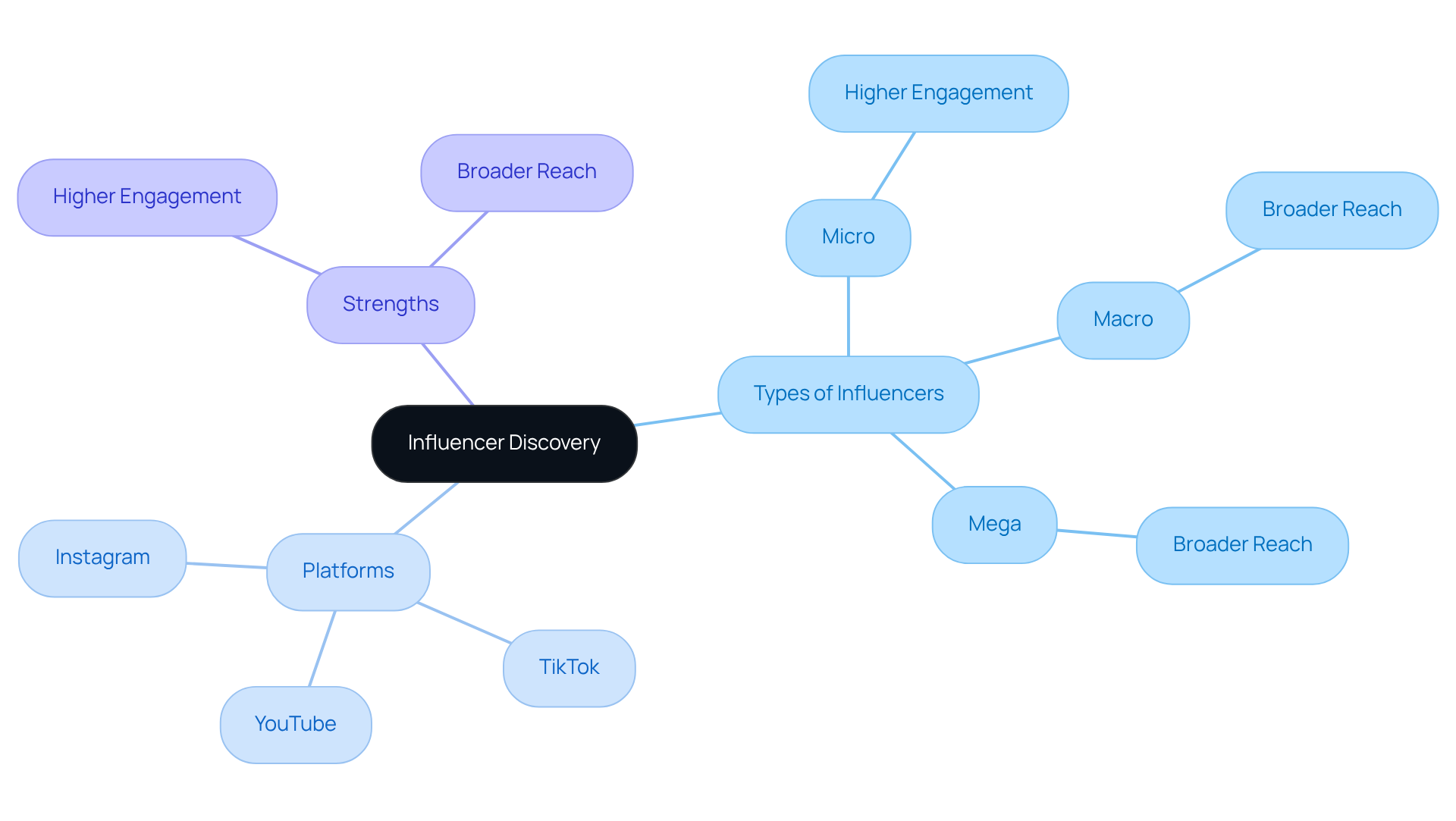
Knowing how to identify influencers for your brand is crucial for effectively connecting with your target audience. Have you ever wondered how the right influencer can elevate your brand's visibility? Understanding the different types of influencers - micro, macro, and mega - can significantly impact your marketing strategy. Micro-influencers, for example, often boast higher engagement rates despite having fewer followers, making them particularly valuable for niche markets.
Furthermore, it's essential to familiarize yourself with the platforms where these content creators thrive. Instagram, TikTok, and YouTube each have distinct cultures and viewer dynamics that can influence your choice of influencer. By grasping these nuances, you can learn how to identify influencers for your brand who resonate with your brand values and target audience.
In addition, consider the unique strengths of each influencer type. Macro and mega influencers may offer broader reach, but micro-influencers often foster deeper connections with their followers. This foundational knowledge will help you understand how to identify influencers for your brand, ensuring they align with your marketing goals. Ready to take the next step? Engage with MediaNug to discover how we can assist you in finding the perfect influencers for your brand.
Define Your Campaign Goals
Before you dive into selecting social media personalities, it’s crucial to define your campaign objectives clearly. What do you want to achieve? Common goals include:
- Increasing product awareness
- Driving website traffic
- Boosting sales
To articulate your goals effectively, employ the SMART criteria - Specific, Measurable, Achievable, Relevant, and Time-bound. For example, instead of simply stating 'increase brand awareness,' specify your aim: 'boost brand recognition by 30% in three months through partnerships with key figures.' This level of clarity not only guides your selection of promoters but also sets a benchmark for measuring the campaign's success.

Identify Key Selection Criteria
When selecting influencers, it’s crucial to understand how to identify influencers for your brand, considering several key criteria that can significantly impact your brand's success.
- Relevance is paramount; ensure the influencer's content aligns seamlessly with your brand's values and messaging.
- Next, evaluate the Engagement Rate; don’t just look at follower count; assess how actively their audience interacts with their content.
- Additionally, examine Viewer Demographics to confirm that their followers match your target group in terms of age, gender, location, and interests.
- Furthermore, review the Content Quality of the influencer's previous work to ensure it meets your brand's standards.
- Lastly, prioritize Authenticity; choose individuals who have a genuine connection with their audience, as this fosters trust and credibility.
By establishing these criteria, you can streamline your search and understand how to identify influencers for your brand who are likely to deliver tangible results.

Explore Methods for Finding Influencers
Finding the right influencers for your brand is crucial, and there are several effective methods to do just that:
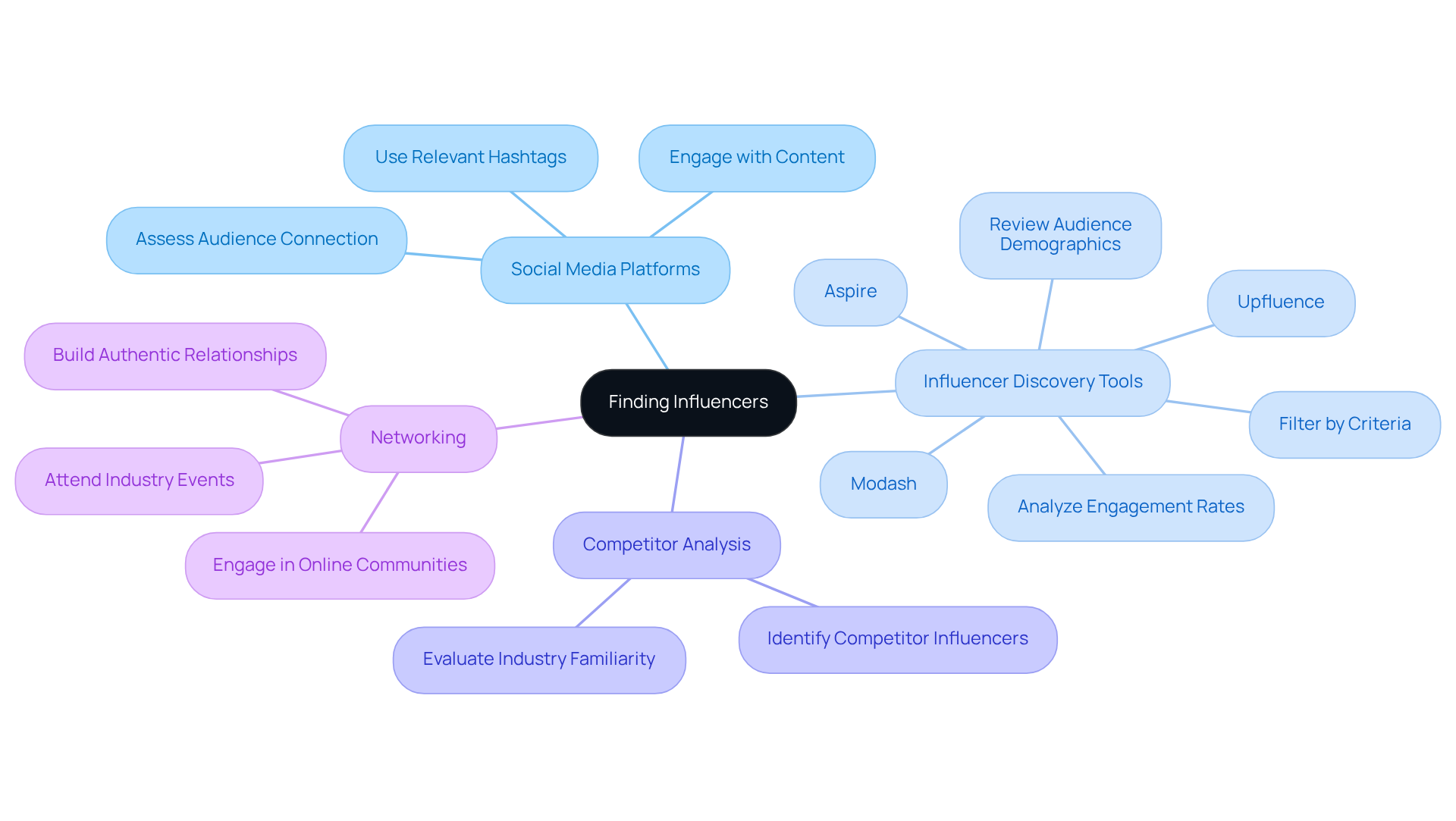
- Social Media Platforms: Harness the power of platforms like Instagram, TikTok, and YouTube. Search for content creators using relevant hashtags and keywords. Engaging with their content allows you to gauge their authenticity and connection with their audience.
- Influencer Discovery Tools: Utilize tools such as Modash, Upfluence, or Aspire. These platforms enable you to filter creators based on your specific criteria, providing valuable insights into engagement rates and audience demographics that can inform your choices.
- Competitor Analysis: Take a close look at the influencers your competitors are collaborating with. This analysis can reveal potential partners who are already familiar with your industry, giving you a strategic advantage.
- Networking: Attend industry events and engage in online communities. Connecting directly with key figures can lead to more authentic partnerships, fostering relationships that benefit both parties.
By employing these methods, you will understand how to identify influencers for your brand to approach for your campaign. Are you ready to take your influencer marketing strategy to the next level?
Evaluate Authenticity and Brand Fit
To forge a successful influencer partnership, it’s crucial to evaluate both authenticity and brand fit.
- Conduct a thorough content review. Analyze the influencer's past content to ensure it aligns with your company's messaging and values. Look for consistency in tone and style, as this is foundational for a genuine partnership.
- Engage in an in-depth engagement analysis. Examine the quality of interactions on their posts. Genuine engagement-like comments and shares-serves as a strong indicator of authenticity.
- Consider their past collaborations. Review previous partnerships to assess how well they align with your brand identity. Influencers who have worked with comparable companies are often more suitable for your needs.
- Monitor audience sentiment. Understanding how their followers perceive them is vital; positive sentiment often indicates a strong connection with their audience.
By meticulously evaluating these factors, you can select influencers who will authentically represent your brand and significantly contribute to your campaign's success.

Conclusion
Identifying the right influencers for a brand is not just a skill; it's a crucial asset that can significantly amplify marketing efforts. By understanding the diverse types of influencers and their unique strengths, brands can create impactful connections with their target audiences. This article underscores the necessity of aligning influencer selections with campaign goals, ensuring that each partnership is both strategic and effective.
Key insights reveal the importance of establishing clear objectives through the SMART criteria, which acts as a guiding framework for selecting the most appropriate influencers. Moreover, grasping essential selection criteria - such as relevance, engagement rate, viewer demographics, content quality, and authenticity - empowers brands to refine their search and make informed choices. Techniques for discovering influencers, including:
- leveraging social media platforms
- utilizing discovery tools
- conducting competitor analysis
- networking
equip brands with the strategies needed to elevate their influencer marketing initiatives.
Ultimately, the effectiveness of influencer partnerships relies heavily on authenticity and brand alignment. By thoroughly assessing influencers, brands can ensure their collaborations resonate with audiences and reflect their core values. Adopting these strategies not only enhances marketing campaigns but also cultivates genuine connections that can lead to long-term success. As the influencer marketing landscape evolves, staying informed and adaptable will be essential for leveraging these powerful partnerships effectively.
Frequently Asked Questions
Why is understanding influencer discovery important for my brand?
Understanding influencer discovery is crucial for effectively connecting with your target audience and elevating your brand's visibility through the right influencers.
What are the different types of influencers?
The different types of influencers include micro, macro, and mega influencers. Micro-influencers typically have higher engagement rates and are valuable for niche markets, while macro and mega influencers offer broader reach.
Which platforms should I consider when identifying influencers?
Important platforms to consider are Instagram, TikTok, and YouTube, as each has distinct cultures and viewer dynamics that can influence your choice of influencer.
How can I determine the strengths of different influencer types?
Macro and mega influencers provide broader reach, while micro-influencers often create deeper connections with their followers, which can impact your marketing strategy.
What should I do before selecting social media influencers for my campaign?
Before selecting influencers, it's crucial to clearly define your campaign objectives, such as increasing product awareness, driving website traffic, or boosting sales.
What is the SMART criteria for defining campaign goals?
The SMART criteria stands for Specific, Measurable, Achievable, Relevant, and Time-bound, which helps articulate clear goals for your campaign.
Can you provide an example of a SMART goal?
An example of a SMART goal is: "Boost brand recognition by 30% in three months through partnerships with key figures," which provides clarity and a benchmark for measuring success.