
Introduction
Understanding the nuances of reach and impressions in digital marketing is crucial for brand managers who want to elevate their visibility and engage their audience effectively. As brands navigate the complexities of various social media platforms, the ability to measure and interpret these metrics opens up significant opportunities for growth. However, differing definitions and measurement methods across platforms raise a pressing question: how can marketers effectively leverage these insights to refine their strategies and maximize their impact?
Furthermore, grasping these metrics not only enhances brand visibility but also fosters deeper audience connections. By analyzing reach and impressions, marketers can tailor their content to resonate more with their target demographics. This strategic approach not only drives engagement but also cultivates brand loyalty.
In addition, successful case studies illustrate how brands that prioritize these metrics see tangible results. For instance, a recent campaign that focused on optimizing reach led to a 30% increase in audience interaction. Such examples underscore the importance of these metrics in shaping effective marketing strategies.
Ultimately, the challenge lies in translating these insights into actionable strategies. Marketers must ask themselves: how can they harness this data to refine their approach and achieve greater impact? Engaging with these questions can lead to innovative solutions and enhanced marketing effectiveness.
Define Reach and Impressions in Digital Marketing
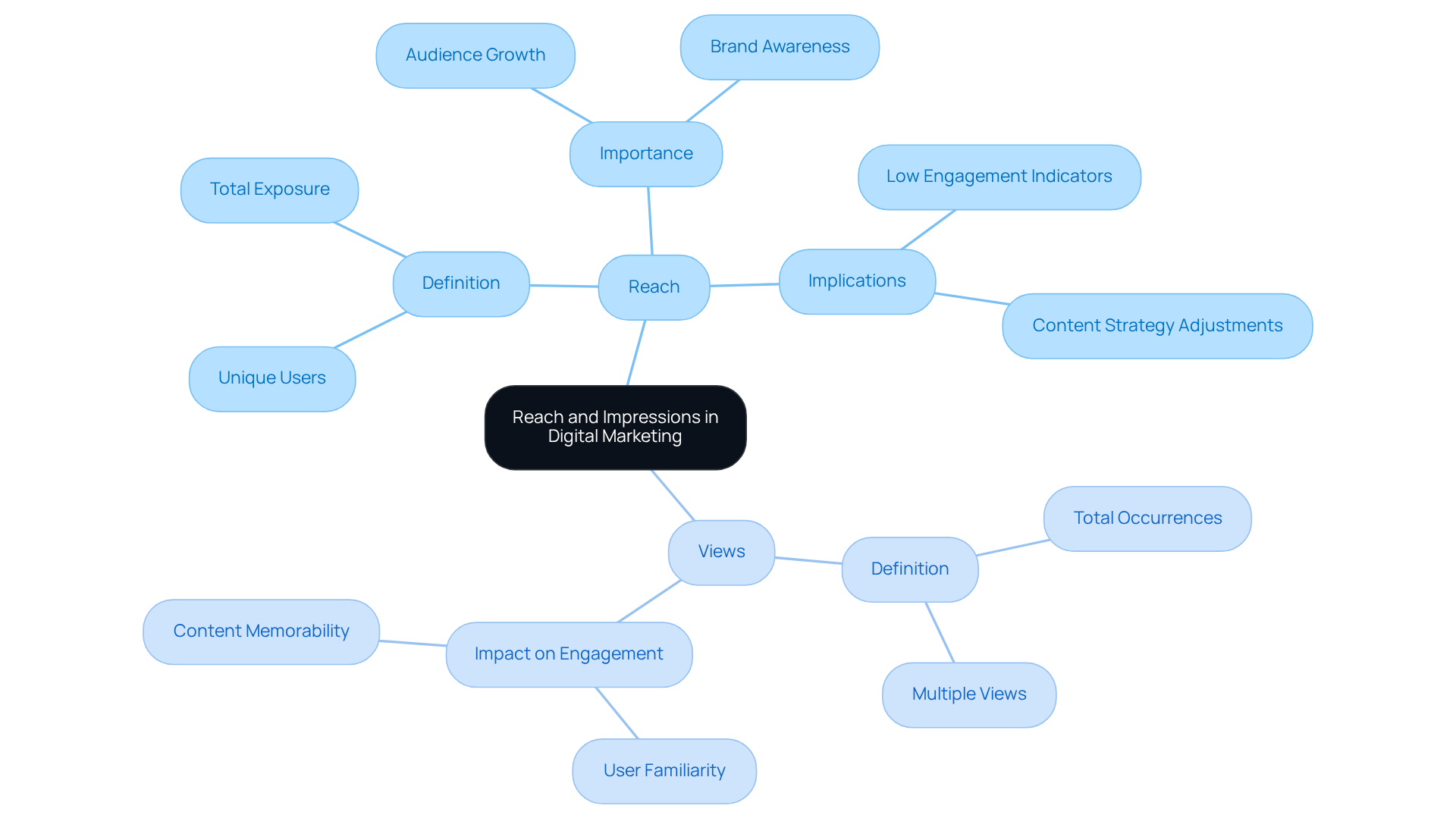
In digital marketing, is a critical metric defined as the . This measurement is vital for gauging exposure and . Conversely, views quantify the total occurrences of your material being displayed, irrespective of user engagement. For instance, if one person watches the same content multiple times, each viewing adds to the overall view count.
Understanding these definitions is essential for and optimizing future strategies. If are roughly equivalent, it indicates that users are seeing your post just once on average. Furthermore, may suggest that the content lacks sufficient appeal, raising concerns about audience involvement.
Different platforms may define these metrics uniquely, making it crucial to grasp their implications across various . Brands that effectively leverage can significantly enhance their visibility and engagement, ultimately in digital marketing efforts. Are you ready to and maximize your reach?
Explain the Importance of Reach and Impressions
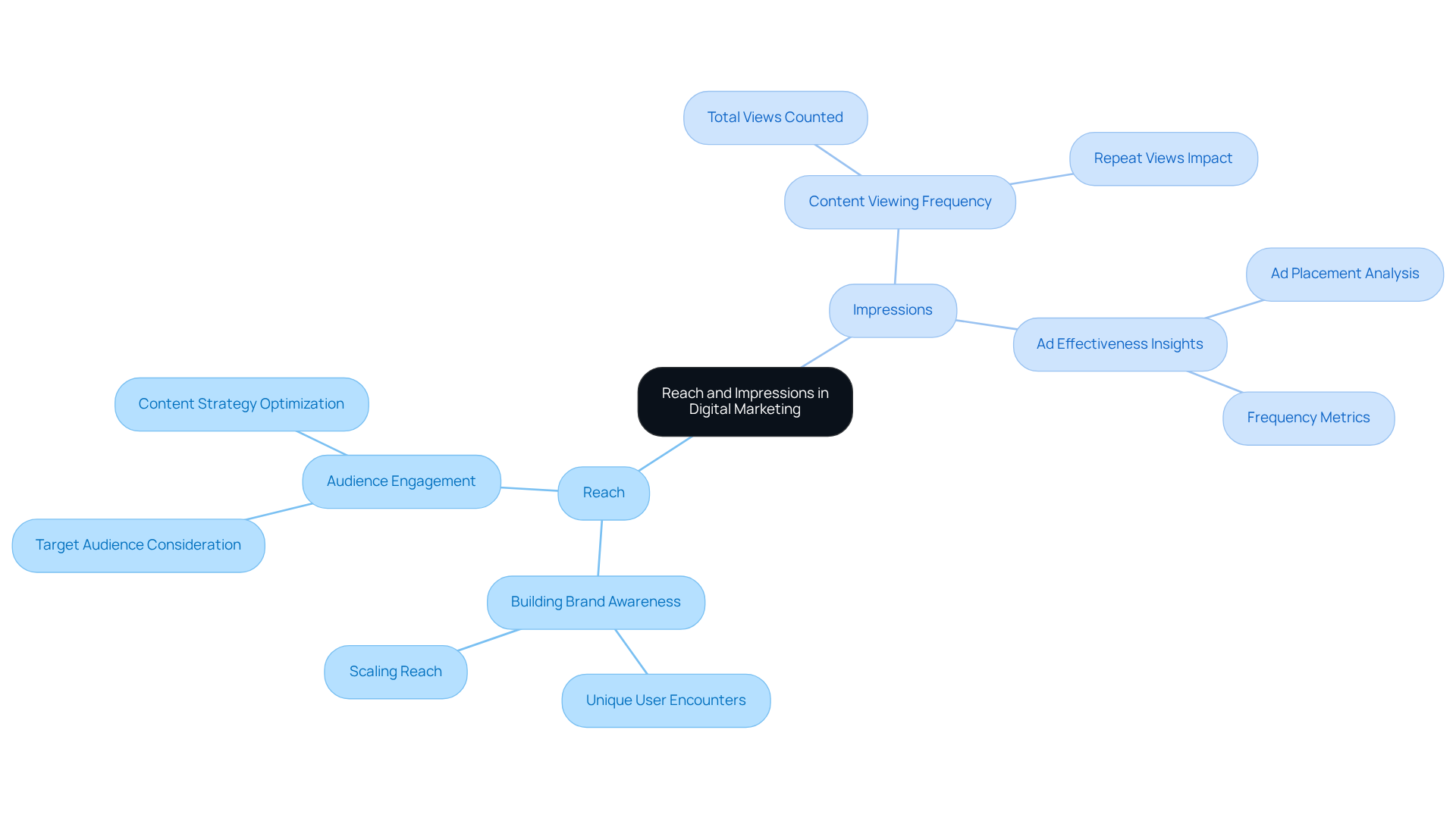
In the realm of , and that directly influence visibility and . Have you ever considered how encountering your content? This is crucial for building . While impressions may not fully capture unique engagement, they reveal how frequently your content is viewed, offering insights into the and frequency.
Furthermore, these metrics empower marketers to gauge their audience's exposure to campaigns, allowing for . By understanding the interplay between reach in and impressions, you can enhance your marketing efforts and drive better results. So, how are you measuring your digital presence? It's time to take a closer look at these and leverage them for your success.
Compare Measurement Methods Across Social Media Platforms
Measurement techniques for engagement and visibility vary significantly across platforms, each offering unique insights essential for companies to understand their performance. Have you ever wondered how these platforms stack up against each other? Let’s explore.
Facebook stands out with its Ads Manager, delivering , and demographic breakdowns. An effective reach in for Facebook hovers around 6%, allowing companies to gauge how many distinct users have viewed their content compared to the total number of impressions. This metric is crucial for assessing the effectiveness of strategies.
Instagram mirrors this approach with its Insights feature, enabling brands to differentiate between unique viewers and overall interactions. A is approximately 8%, while Stories experience around 1%. This highlights the importance of tailoring content for each format. Brands like Fenty Beauty exemplify success on this platform by optimizing their profiles, captions, and hashtags with relevant keywords, showcasing a strategic implementation that drives engagement.
Twitter places a strong emphasis on impressions, focusing on how often tweets appear in users' feeds. This strategy underscores the need for brands to create captivating content that encourages interaction, as higher engagement can lead to increased visibility. Are your tweets making an impact?
TikTok provides that reveal how many unique accounts interact with content, alongside total views. Notably, TikTok boasts higher engagement rates than Instagram, particularly among smaller creators, with figures reaching up to 7.5%. This platform offers brands a powerful avenue to expand their audience effectively.
Understanding these differences is vital for companies aiming to in accurately across platforms. Additionally, frequency metrics—calculated by dividing —are essential for grasping how often users encounter ads. can assist brands in tracking these metrics efficiently. As Brandwatch aptly states, ' indicates how many people saw your content on , making it a key metric for measuring your marketing efforts and understanding your audience.'
Are you ready to leverage these insights for your brand's success?

Identify Tools for Monitoring Reach and Impressions
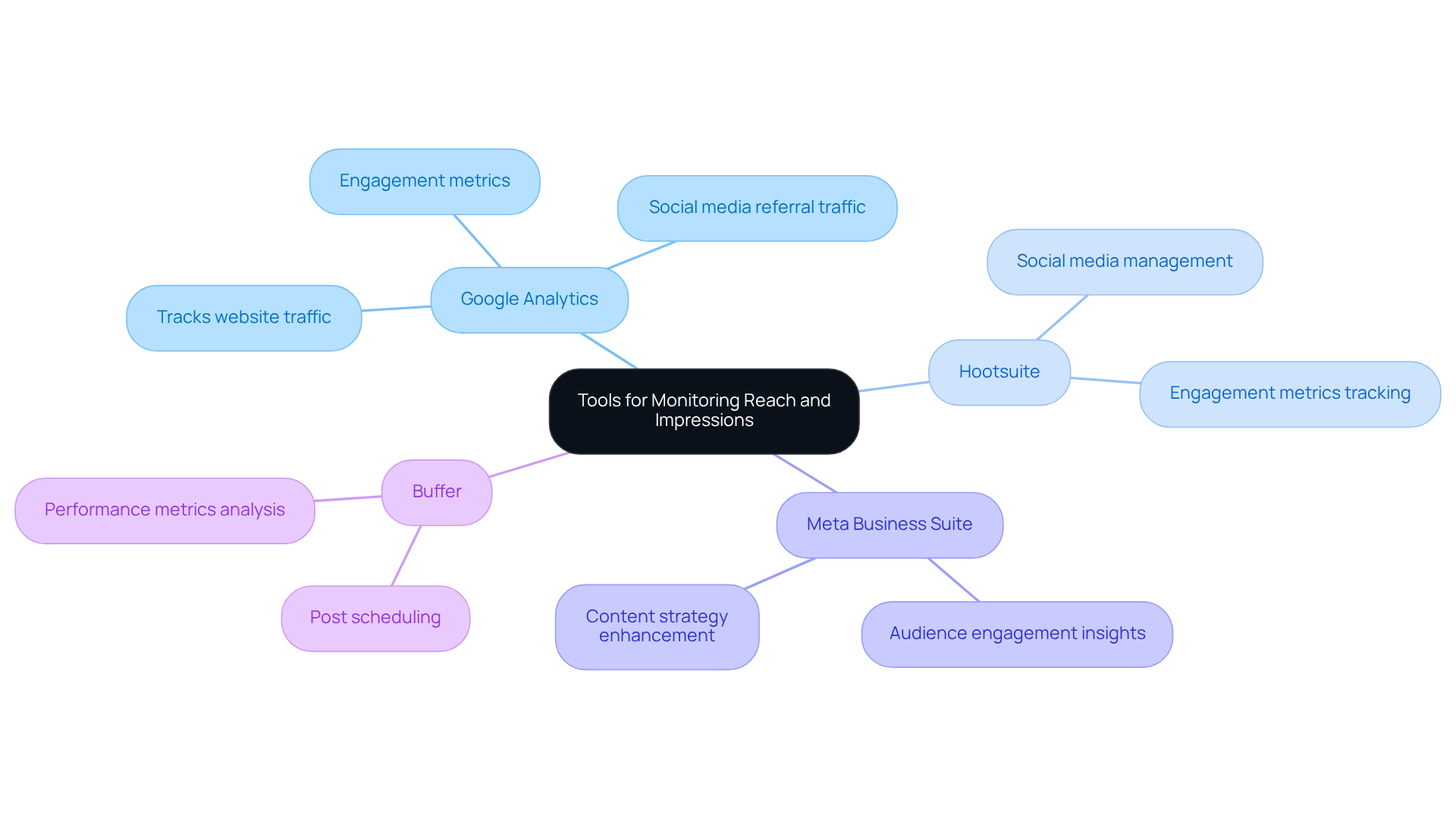
can effectively monitor reach and impressions using several powerful :
- Google Analytics: While primarily focused on website traffic, Google Analytics also tracks and engagement metrics. This provides valuable insights into how social efforts drive website visits. According to the 2025 Sprout Social Index, a staggering 65% of marketing leaders need to prove 's support for business goals to gain leadership buy-in, making this tool indispensable for . , including detailed metrics on and impressions across various channels. As noted by Sprout, aligning metrics with business goals is crucial for demonstrating value and ensuring that efforts translate into tangible results.
- Hootsuite: Renowned for its management capabilities, Hootsuite also offers robust analytics features that track engagement metrics. This assists companies in understanding their audience interactions, making it especially beneficial for tracking how content resonates with users.
- Meta Business Suite: Tailored for Facebook and Instagram, this tool provides comprehensive insights into audience engagement and visibility. It enables companies to enhance their content strategies based on performance data, helping them determine which posts generate the highest engagement.
- Buffer: This tool not only facilitates post scheduling but also analyzes performance metrics, including and impressions. By utilizing Buffer, companies can streamline the process of tracking marketing effectiveness and easily assess the impact of their efforts.
Utilizing these tools can significantly enhance the ability to , ensuring that can make data-driven decisions. Furthermore, understanding the difference between the number of unique users who view a post and the total occurrences of a post being displayed is essential for assessing content effectiveness. Are you ready to leverage these insights for your brand's success?
Adapt Marketing Strategies Based on Reach and Impressions Insights
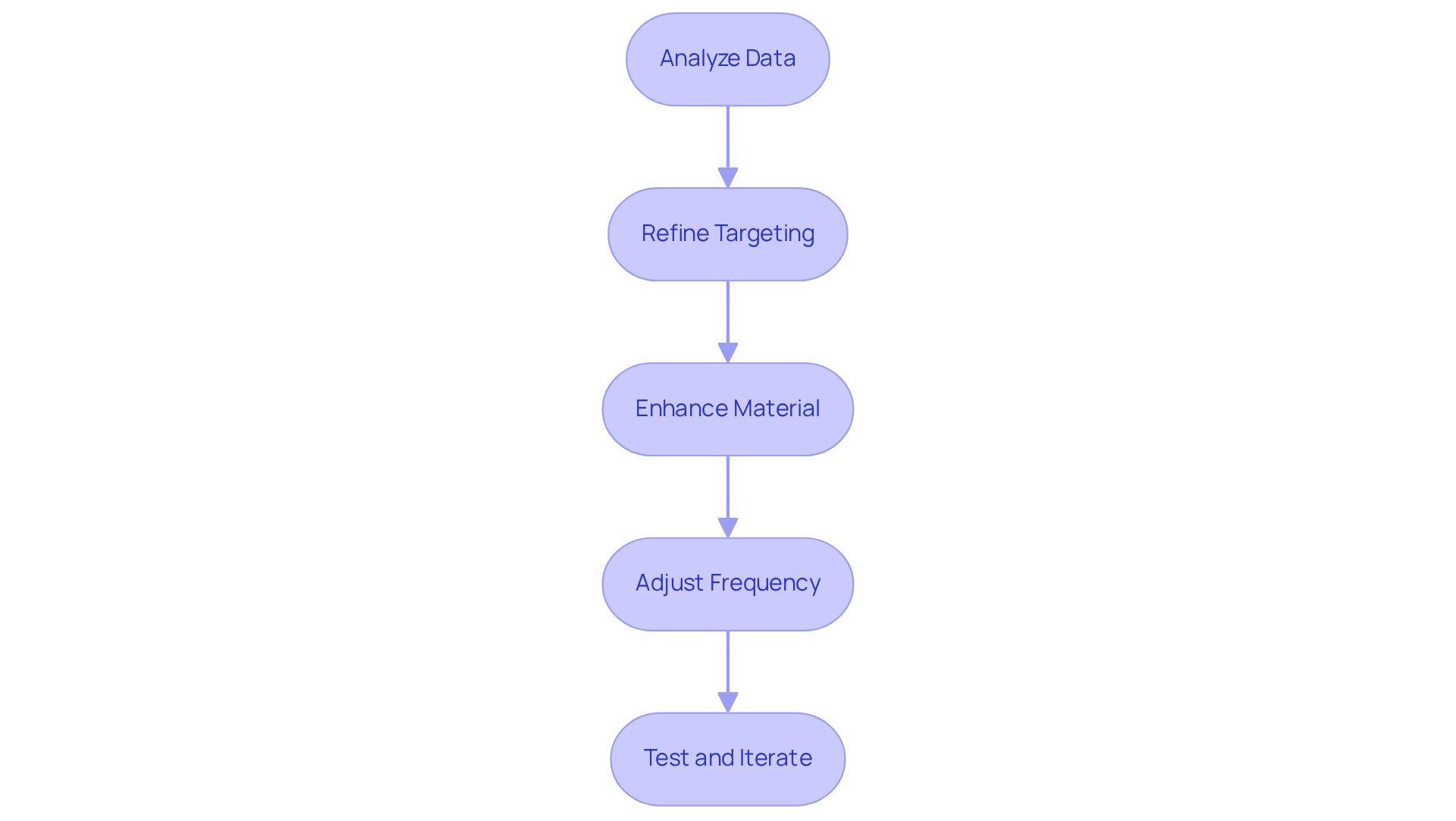
Adapting marketing strategies based on insights from reach and impressions involves several key steps:
- : Regularly reviewing and is crucial. This analysis uncovers trends and patterns, revealing how various . Such insights enable more informed decisions that can significantly impact your .
- : Utilize these insights to modify your audience targeting. By ensuring that your material connects with the most relevant users, you can enhance . For instance, focusing on specific age groups or interests that demonstrate higher engagement rates can lead to better results.
- : Experiment with different types of media—videos, images, and text—to discover which formats yield the greatest engagement and visibility. Notably, achieves four times higher click-through rates compared to branded content, making it a valuable asset in your optimization process.
- Adjust Frequency: If views are high but exposure is low, consider lowering the frequency of your posts to prevent audience fatigue. Striking the right balance is essential to maintain engagement without overwhelming your followers.
- Test and Iterate: Continuously test various strategies based on data insights. Iterating on what works best allows you to maximize both reach and impressions. This agile approach keeps your company responsive to audience preferences and market trends.
By applying these insights, brands can improve their reach in and craft more effective marketing campaigns that resonate with their target audience, ultimately driving better performance and ROI.
Conclusion
Understanding the nuances of reach and impressions in digital marketing is crucial for brand managers looking to elevate their marketing strategies. By grasping these essential concepts, brands can effectively measure their visibility and audience engagement, ensuring their messages resonate with the right users. This knowledge forms the backbone for crafting campaigns that not only reach a broader audience but also foster meaningful interactions.
Throughout this article, we've shared key insights into the definitions of reach and impressions, their significance in building brand awareness, and the various measurement methods across social media platforms. Tools like Google Analytics, Hootsuite, and Meta Business Suite stand out as invaluable resources for monitoring these metrics, empowering brands to make data-driven decisions. Furthermore, adapting marketing strategies based on insights from reach and impressions can significantly enhance campaign effectiveness, leading to improved performance and ROI.
Ultimately, the importance of mastering reach in digital marketing cannot be overstated. As brands navigate an increasingly competitive landscape, leveraging these insights will be pivotal not only in measuring success but also in optimizing future strategies. Embracing a proactive approach to analyzing reach and impressions will empower brand managers to refine their tactics, engage their audiences, and drive sustainable growth. Are you ready to harness these insights and elevate your digital marketing efforts?
Frequently Asked Questions
What is reach in digital marketing?
Reach in digital marketing is defined as the total number of unique users who have viewed your material at least once. It is a critical metric for gauging exposure and understanding how many individuals engage with your brand's message.
How are views different from reach?
Views quantify the total occurrences of your material being displayed, regardless of user engagement. For example, if one person watches the same content multiple times, each viewing adds to the overall view count, whereas reach counts only unique users.
Why are reach and views important in digital marketing?
Understanding reach and views is essential for analyzing the effectiveness of marketing campaigns and optimizing future strategies. They help marketers assess audience engagement and the appeal of content.
How do different platforms define reach and impressions?
Different platforms may define reach and impressions uniquely, making it crucial to understand their implications across various social media channels to accurately measure and optimize marketing efforts.
What does it indicate if exposure and views are roughly equivalent?
If exposure and views are roughly equivalent, it suggests that users are seeing your post just once on average, indicating a potential lack of repeated engagement with the content.
How can brands leverage reach and views effectively?
Brands that effectively leverage reach and views can enhance their visibility and engagement, ultimately driving better outcomes in their digital marketing efforts. Understanding these metrics allows for strategic refinements in campaigns.
List of Sources
- Define Reach and Impressions in Digital Marketing
- meltwater.com (https://meltwater.com/en/blog/reach-vs-impressions)
- klipfolio.com (https://klipfolio.com/resources/kpi-examples/digital-marketing/reach-vs-impressions)
- blog.hootsuite.com (https://blog.hootsuite.com/reach-vs-impressions)
- navazondigital.com (https://navazondigital.com/impressions-vs-reach-whats-the-real-difference-and-why-it-matters-in-2025)
- Explain the Importance of Reach and Impressions
- brandwatch.com (https://brandwatch.com/blog/reach-vs-impressions)
- wisernotify.com (https://wisernotify.com/blog/branding-stats)
- 2026 Marketing Statistics, Trends, & Data (https://hubspot.com/marketing-statistics)
- emplifi.io (https://emplifi.io/resources/blog/reach-vs-impressions)
- sproutsocial.com (https://sproutsocial.com/insights/reach-vs-impressions)
- Compare Measurement Methods Across Social Media Platforms
- brandwatch.com (https://brandwatch.com/blog/reach-vs-impressions)
- socialinsider.io (https://socialinsider.io/blog/social-media-reach)
- emplifi.io (https://emplifi.io/resources/blog/reach-vs-impressions)
- Key Social Media Marketing Statistics for 2025 | Sprinklr (https://sprinklr.com/blog/social-media-marketing-statistics)
- Identify Tools for Monitoring Reach and Impressions
- llmrefs.com (https://llmrefs.com/blog/digital-marketing-analytics-tools)
- dashsocial.com (https://dashsocial.com/blog/social-media-analytics-tools)
- 17 of the best social media analytics tools for your brand in 2026 (https://sproutsocial.com/insights/social-media-analytics-tools)
- The social media metrics to track in 2026 (and why) (https://sproutsocial.com/insights/social-media-metrics)
- Adapt Marketing Strategies Based on Reach and Impressions Insights
- brandwatch.com (https://brandwatch.com/blog/reach-vs-impressions)
- 120+ Must-know social media marketing statistics for 2026 (https://sproutsocial.com/insights/social-media-statistics)
- Key Social Media Marketing Statistics for 2025 | Sprinklr (https://sprinklr.com/blog/social-media-marketing-statistics)
- The State of Marketing Strategy: Key Stats, Effectiveness, and Lessons from Top Performers (https://linkedin.com/pulse/state-marketing-strategy-key-stats-effectiveness-lessons-smith-f7e6c)
- seo.com (https://seo.com/blog/digital-marketing-statistics)