
Introduction
Video retargeting has become a cornerstone of digital marketing, allowing brands to reconnect with users who have previously engaged with their content. This powerful strategy not only enhances engagement but also significantly boosts conversion rates, making it essential for any marketer's toolkit. However, as consumer behaviors evolve and video content continues to rise, brands face the challenge of effectively implementing and optimizing these campaigns.
How can marketers ensure their video retargeting efforts not only reach but resonate with their target audience? This question is crucial as it highlights the need for a strategic approach in a rapidly changing landscape. By leveraging data-driven insights and understanding audience preferences, brands can craft compelling video retargeting campaigns that truly connect with viewers.
In addition, successful case studies demonstrate the effectiveness of tailored video content in driving conversions. Marketers must not only focus on reaching their audience but also on creating meaningful interactions that foster brand loyalty. As we delve deeper into the nuances of video retargeting, it becomes clear that a thoughtful strategy is key to standing out in a crowded digital space.
Define Video Retargeting and Its Importance
is a pivotal that delivers to users who have previously engaged with your brand-whether by visiting your site, watching your videos, or interacting with your social media content. This approach is essential for re-engaging potential customers who have already shown interest, significantly boosting the chances of conversion.
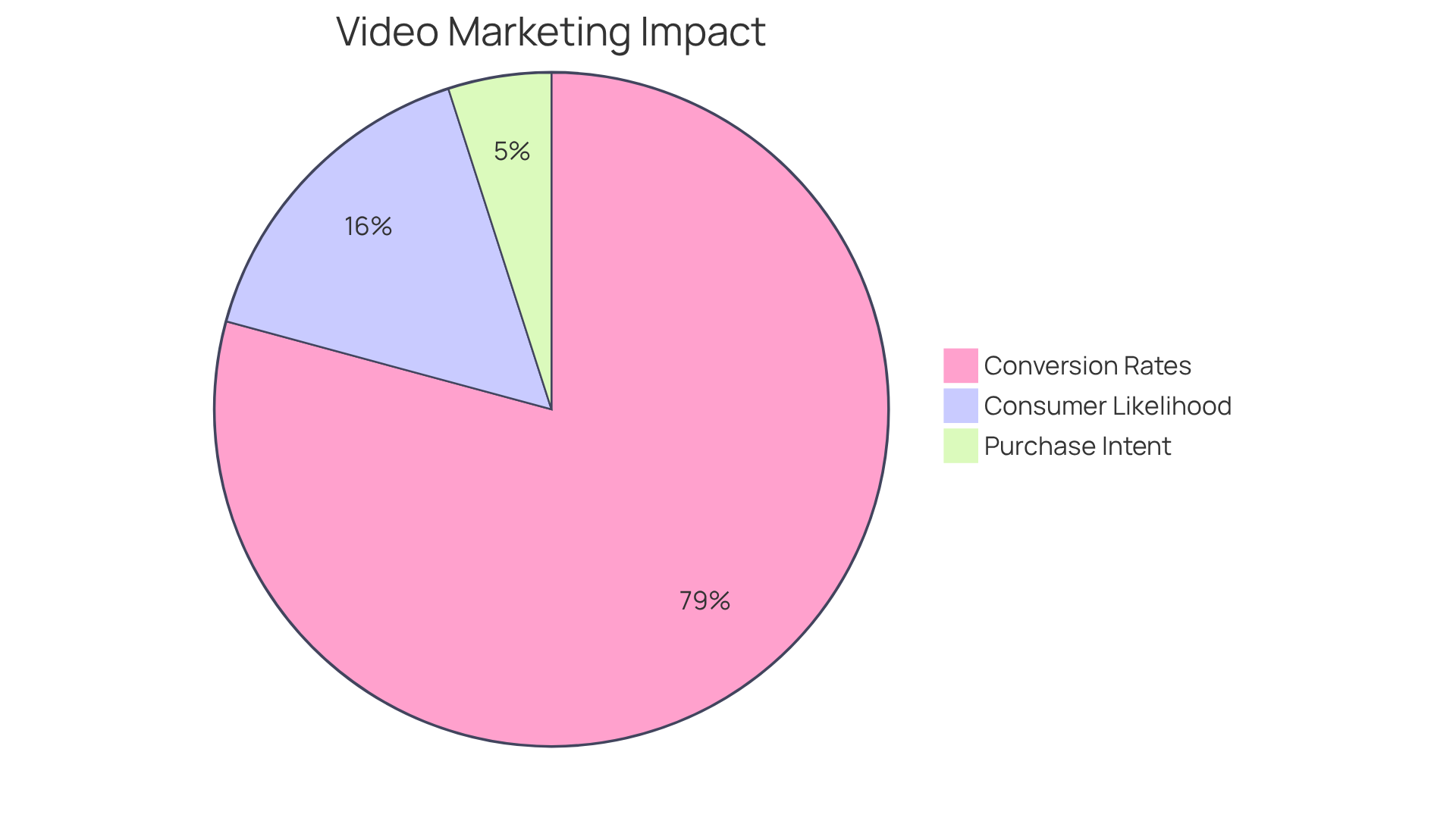
As content consumption continues to rise, leveraging this method can dramatically enhance engagement rates and drive higher returns on investment (ROI). Recent studies reveal that through moving image advertisements can elevate purchase intent by 20% more than static ads, underscoring the power of as a vital component of any marketer's strategy.
Furthermore, brands employing systematic visual frameworks have reported soaring by up to 320%, illustrating the effectiveness of structured visual marketing in achieving measurable results. Moreover, purchasable motion ads are projected to grow at a compound annual growth rate (CAGR) of 21% from 2024 to 2029, highlighting the increasing importance of as a strategy in response to evolving and preferences.
Significantly, 64% of consumers are more likely to purchase items after viewing , further validating the effectiveness of visual advertising strategies. Are you ready to harness the power of to elevate your brand's engagement and ?
Set Up Video Retargeting Campaigns: Step-by-Step Guide
- Define Your Goals: Begin by pinpointing what you aim to achieve with your campaign. Common objectives include , driving traffic to your website, or . Setting clear goals is essential; it not only guides your strategy but also helps measure your success.
- Choose your platform for by selecting from options like Facebook, Instagram, YouTube, or TikTok. Each platform caters to distinct audiences and ad formats, so choose based on where your target demographic is most engaged.
- Install Tracking Pixels: Implement tracking pixels or tags on your website to effectively . This step is vital for creating based on interactions with your content, enabling more targeted advertising.
- Create : Leverage the data collected to build . For instance, target users who viewed a specific percentage of your content or visited a particular product page. This precision enhances the relevance of your ads, significantly increasing the likelihood of conversion.
- Create : Design captivating advertisements that resonate with your audience. Focus on storytelling, ensuring your message is both clear and concise. Engaging content is crucial; visitors who experience video retargeting are 70% more likely to convert when presented with relevant ads.
- Set Your Budget and Bidding Strategy: Determine your campaign budget and select a bidding strategy that aligns with your goals, whether it’s cost-per-click (CPC) or cost-per-impression (CPM). The typical budget for film remarketing campaigns in 2025 is approximately 20% of total digital advertising expenditure, underscoring the growing importance of visual content.
- Launch Your Campaign: Once everything is set, launch your campaign and monitor its performance closely. Employ A/B testing to refine your ads and boost engagement, ensuring your content remains fresh and appealing.
- Analyze and Optimize: After your campaign has run for a sufficient period, analyze the results. Focus on key metrics such as view-through rates, click-through rates, and conversions to evaluate performance. Use these insights to make necessary adjustments, for improved results.

Optimize Video Retargeting: Strategies for Success
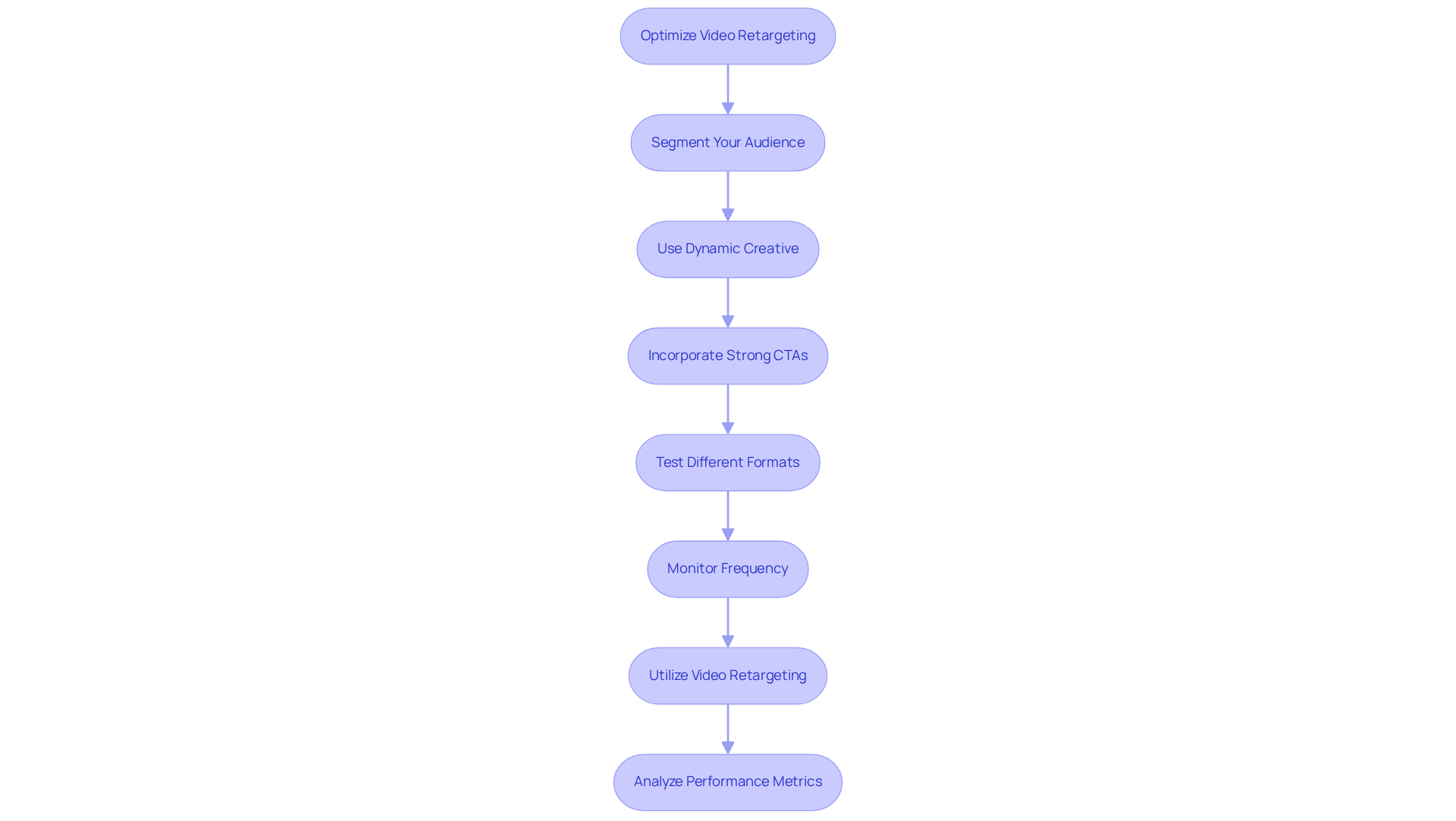
- : To maximize your marketing effectiveness, break down your audience into distinct segments based on their interactions and behaviors with your brand. This targeted approach enables , significantly boosting engagement rates and conversion potential. In fact, personalized ads can improve conversion rates by up to 202%. Clearly, relies on effective segmentation.
- Use Dynamic Creative: Consider utilizing that adjust according to user behavior. For instance, showcase different products to users based on their previous site interactions. This enhances relevance and encourages action. Furthermore, advanced techniques like with AI can further personalize these ads, increasing their effectiveness.
- : Ensure your advertisements feature clear and compelling calls-to-action (CTAs). These should guide viewers on their next steps, whether that involves visiting your website or making a purchase.
- Test Different Formats: Experiment with various video formats, including short clips, testimonials, and product demonstrations. This will help you identify which formats resonate most effectively with your audience.
- : It's essential to keep track of how often your ads are shown to the same individuals. Excessive impressions can lead to ad fatigue, so implementing frequency caps is vital for sustaining engagement. Establishing these limits helps avoid overwhelming individuals and upholds a favorable brand image.
- Utilize : Leverage to engage users who have interacted with your content but have not yet converted. Tailor your messaging to address their specific interests or concerns, thereby increasing the likelihood of conversion.
- : Regularly assess your campaign performance metrics, such as engagement rates, conversion rates, and cost-per-acquisition (CPA). This data-driven approach will inform future campaigns and optimize your overall strategy. As Avram Gonzales notes, retargeting is one of the most cost-effective ways to stay top of mind with potential customers.
Conclusion
Video retargeting stands out as a crucial digital marketing strategy, enabling brands to reconnect with users who have previously engaged with their content. This approach not only enhances customer engagement but also boosts conversion rates, ultimately driving a stronger return on investment. The significance of visual remarketing is immense, tapping into the rising trend of video consumption and the proven effectiveness of structured visual content.
This article provides a comprehensive step-by-step guide for establishing video retargeting campaigns. It emphasizes the importance of defining clear goals, selecting the right platforms, and analyzing performance metrics. Key optimization strategies - such as audience segmentation, dynamic creative usage, and compelling calls-to-action - further enhance the effectiveness of these campaigns. The statistics presented underscore the substantial impact video retargeting can have on conversion rates and customer behavior, making it an essential tactic for brands aiming to thrive in a competitive marketplace.
In a time when consumer preferences are shifting rapidly, embracing video retargeting is not just beneficial; it is imperative. Brands that adopt this strategy can anticipate significant improvements in engagement and conversion metrics, thereby solidifying their market presence. As the digital marketing landscape continues to evolve, the call to action is unmistakable: invest in video retargeting to elevate brand visibility and cultivate lasting customer relationships.
Frequently Asked Questions
What is video retargeting?
Video retargeting is a digital marketing strategy that delivers targeted advertisements to users who have previously engaged with a brand, such as visiting a website, watching videos, or interacting with social media content.
Why is video retargeting important?
Video retargeting is important because it helps re-engage potential customers who have already shown interest in a brand, significantly increasing the chances of conversion and enhancing overall engagement rates.
How does video retargeting compare to static ads?
Video retargeting through moving image advertisements can elevate purchase intent by 20% more than static ads, demonstrating the effectiveness of visual remarketing.
What are the reported conversion rates for brands using visual frameworks?
Brands that employ systematic visual frameworks have reported conversion rates soaring by up to 320%, indicating the success of structured visual marketing.
What is the projected growth rate for purchasable motion ads?
Purchasable motion ads are projected to grow at a compound annual growth rate (CAGR) of 21% from 2024 to 2029, highlighting the increasing importance of video retargeting.
How do consumers respond to structured visual content?
64% of consumers are more likely to purchase items after viewing structured visual content, validating the effectiveness of visual advertising strategies.
List of Sources
- Define Video Retargeting and Its Importance
- intelegencia.com (https://intelegencia.com/blog/technology/video-advertising-2025-trends-platforms-and-strategies-win)
- vidico.com (https://vidico.com/news/why-is-video-marketing-so-effective)
- vidico.com (https://vidico.com/news/video-marketing-trends)
- 2025 Digital Media Trends: Social platforms are becoming a dominant force in media and entertainment (https://deloitte.com/us/en/insights/industry/technology/digital-media-trends-consumption-habits-survey/2025.html)
- The power of video in news media: how increased audience engagement drives success | The Associated Press (https://ap.org/insights/the-power-of-video-in-news-media-how-increased-audience-engagement-drives-success)
- Set Up Video Retargeting Campaigns: Step-by-Step Guide
- searchrepublic.co.nz (https://searchrepublic.co.nz/blog/retargeting-ads-101-for-marketers-in-2025)
- papercraftemg.com (https://papercraftemg.com/retargeting-ads)
- iab.com (https://iab.com/news/nearly-90-of-advertisers-will-use-gen-ai-to-build-video-ads)
- leadsbridge.com (https://leadsbridge.com/blog/facebook-retargeting-ads)
- The expert's guide to retargeting - 2024 edition (https://funnel.io/blog/retargeting)
- Optimize Video Retargeting: Strategies for Success
- socalnewsgroup.com (https://socalnewsgroup.com/2025/05/22/retargeting-strategies-for-b2b-businesses)
- digitalharvest.io (https://digitalharvest.io/effective-retargeting-strategies-to-win-back-lost-customers)
- leadsbridge.com (https://leadsbridge.com/blog/facebook-retargeting-ads)
- wisernotify.com (https://wisernotify.com/blog/ads-retargeting-strategy)