Introduction
In a competitive landscape, aligning paid media strategies with brand objectives is not just important; it’s essential for driving impactful marketing results. By understanding the intricate relationship between organizational goals and media efforts, brands can leverage actionable strategies to maximize their reach and effectiveness.
But how can companies make sure their paid media initiatives resonate with their target audience and lead to real success? Let’s explore some best practices for effective paid media consulting that can truly make a difference, including:
- Structured testing frameworks
- Continuous optimization
- Creating performance-driven assets to elevate your brand visibility and engagement
Align Paid Media Consulting with Brand Objectives
Aligning paid media strategies with specific company objectives is not just beneficial; it's essential for maximizing impact and achieving measurable success. This alignment requires a thorough understanding of the organization's mission, target audience, and key performance indicators (KPIs). Here are actionable steps to achieve this alignment:
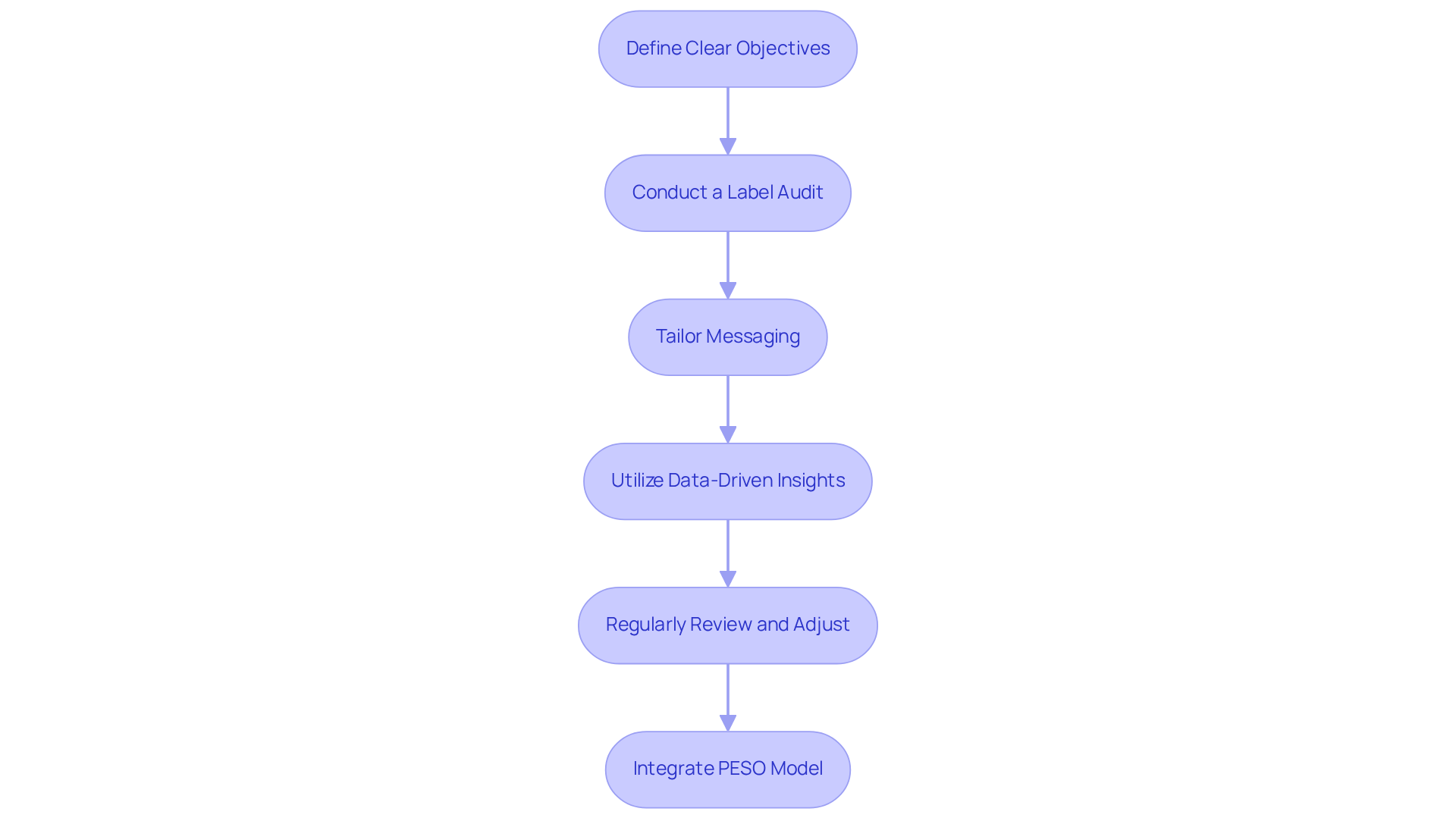
- Define Clear Objectives: Establish what the company aims to achieve through paid media, whether it's increasing awareness, driving sales, or generating leads. Clear objectives serve as a roadmap for all subsequent strategies, enabling focused efforts that can lead to measurable outcomes.
- Conduct a Label Audit: Analyze the current positioning, strengths, weaknesses, and market opportunities. This audit identifies how paid media can effectively support the organization's goals, ensuring that campaigns are strategically aligned with the overall narrative.
- Tailor Messaging: Ensure that the messaging in paid media campaigns reflects the company's voice and resonates with the target audience. This alignment enhances engagement and conversion rates, as consistent messaging fosters a stronger connection with potential customers.
- Utilize Data-Driven Insights: Leverage analytics to understand audience behavior and preferences. MediaNug emphasizes the importance of aligning creative strategy with media objectives, producing variations designed for controlled, hypothesis-based testing. Data-informed insights direct the creation of targeted campaigns that correspond with company objectives, enabling more efficient resource distribution and enhanced campaign outcomes. As noted by marketing expert Molly Watters, 'Measure what matters: Move beyond vanity metrics to track how channels influence each other.'
- Regularly Review and Adjust: Continuously monitor campaign performance against the defined objectives. Many companies struggle to effectively align their paid media strategies with their overarching goals, leading to wasted resources and missed opportunities. Frequent assessments allow companies to enhance approaches based on real-time insights, ensuring continuous alignment with organizational objectives and adjusting to market shifts. Furthermore, sales ought to serve as a source of real-time market intelligence, offering valuable insights that can guide marketing approaches.
When companies apply these steps, they can ensure that their paid media consulting initiatives are effective and truly contribute to their business goals. Ultimately, without a strategic alignment, companies may find their marketing efforts falling short of their true potential. Furthermore, integrating the PESO model - Paid, Earned, Shared, and Owned media - can enhance the overall effectiveness of marketing strategies, ensuring a balanced approach that maximizes visibility and engagement.
Implement Structured Creative Testing Frameworks
To truly elevate paid media consulting, brands must embrace structured design testing frameworks that drive measurable results in their campaigns. This systematic method allows for the assessment of various imaginative elements, ultimately optimizing ad performance. Here’s how to establish an effective framework:
- Define Hypotheses: Start by formulating hypotheses about which imaginative elements - like visuals, copy, and calls to action - are likely to resonate with your target audience. This foundational step sets the stage for focused testing.
- Create Variations: Develop multiple variations of ad creatives based on these hypotheses. This could involve different headlines, images, or formats, enabling companies to determine which combinations yield the best outcomes. Research indicates that brands typically operate variations of 2 to 3 formats and 4 to 5 hook types, enhancing the diversity of imaginative content.
- Utilize Controlled Testing: Implement A/B testing to compare the effectiveness of different creative variations. It’s essential to modify only one variable at a time to accurately evaluate its impact on results. A/B tests are considered significant after reaching approximately 25,000 visitors, ensuring reliable data for analysis. This method focuses on learning what works best, rather than just chasing superficial metrics, allowing brands to concentrate on what truly drives performance.
- Analyze Results: After conducting tests, examine the data to identify which design elements performed best. Key metrics to focus on include click-through rates, conversion rates, and engagement levels. Brands that implement a structured testing framework can enhance their return on ad spend (ROAS) by 20 to 35 percent within the first quarter due to consistently higher-quality content.
- Iterate and Optimize: Use the insights gained from testing to refine and enhance future assets. This iterative process is crucial for continuously improving advertisement effectiveness and minimizing content fatigue. Brands should aim to launch 3 to 5 new variants weekly, ensuring fresh ideas enter the pipeline before existing content becomes tiresome. By coordinating innovative approaches with media goals and incorporating results data into each iteration cycle, companies can enhance their artistic effectiveness.
When companies adopt a systematic testing framework, they can make data-driven decisions that maximize their advertising performance and improve their paid media consulting. As the landscape of advertising evolves, those who adapt their strategies will not only survive but thrive in a competitive market.

Focus on Continuous Optimization and Real-Time Feedback
In a landscape where consumer behavior shifts rapidly, brands must prioritize continuous optimization to stay ahead. This approach enables swift adaptation to changes in market dynamics. Here are key strategies to implement:
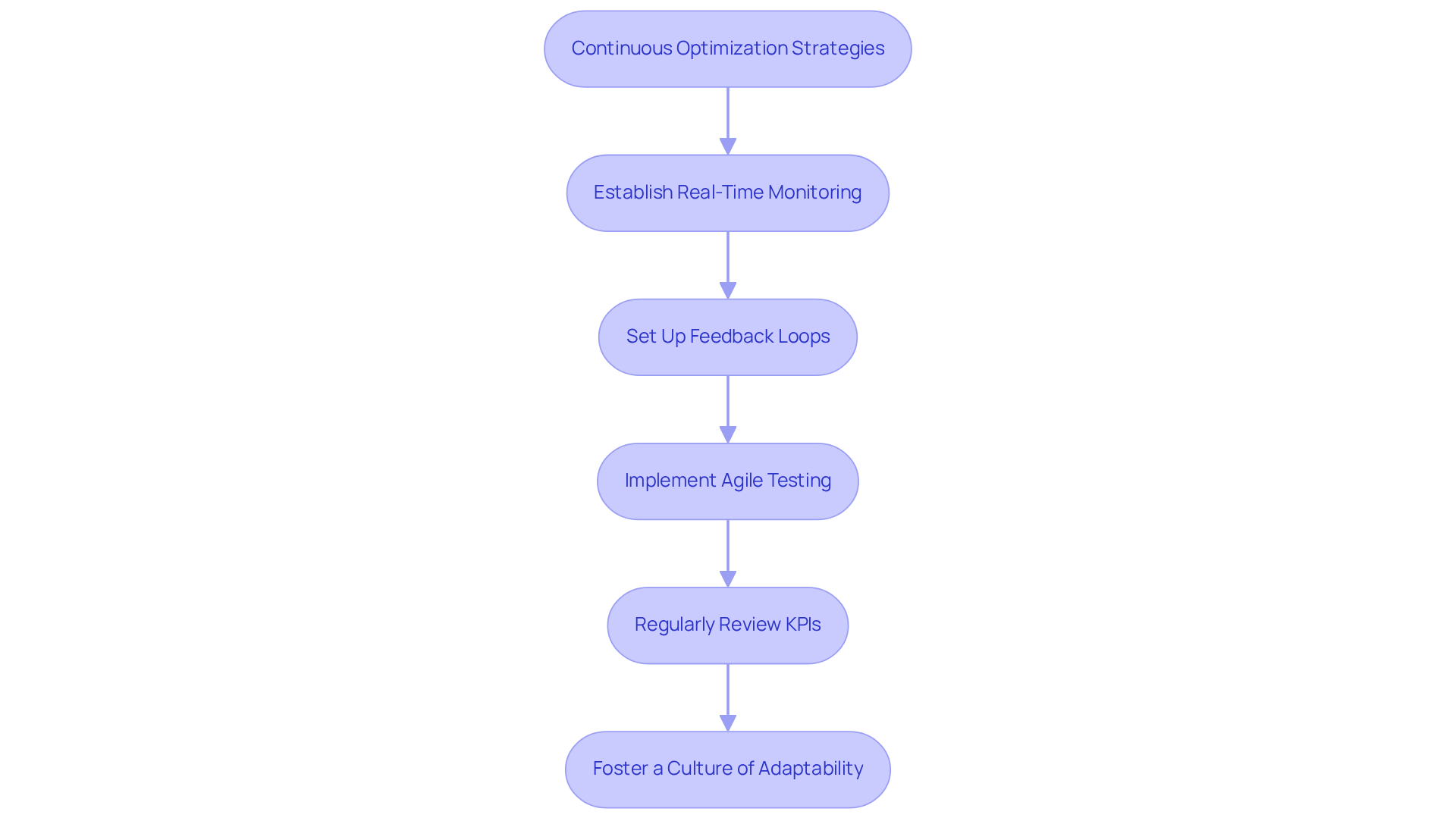
- Establish Real-Time Monitoring: Leverage analytics tools to track campaign results in real-time. This practice gives you quick insights into what’s working and what needs tweaking, facilitating swift adjustments. Real-time data allows businesses to react to customer interactions at each touchpoint in the conversion process, enhancing overall campaign effectiveness.
- Set Up Feedback Loops: Develop mechanisms for collecting feedback from diverse sources, including audience interactions, engagement metrics, and sales data. This feedback should guide ongoing campaign refinements. MediaNug highlights the significance of incorporating performance data into each iteration cycle, ensuring that strategies align with media objectives.
- Implement Agile Testing: Embrace an agile testing methodology, allowing for quick and efficient experimentation with new concepts and innovative variations. Dynamic creative optimization can enhance click-through rates by 10-15%, offering a persuasive reason for companies to embrace this strategy. MediaNug's organized testing framework emphasizes learning speed over vanity metrics, allowing brands to adjust their approaches based on real-time insights.
- Regularly Review KPIs: Continuously evaluate key metrics (KPIs) to ensure alignment with campaign objectives. Modify approaches according to results in relation to these metrics, ensuring that the campaign stays effective and pertinent.
- Foster a Culture of Adaptability: Cultivate an organizational culture that embraces change and encourages experimentation with new concepts. A group that prioritizes adaptability will improve the efficiency of its paid media consulting approaches.
Failing to adapt could mean losing your competitive edge in the market. By adopting these strategies, you not only enhance your campaign effectiveness but also position your brand for sustained success in a competitive market.
Produce High-Volume Performance-Driven Creative Assets
To truly excel in the competitive landscape of paid media, companies must prioritize the creation of high-volume, performance-driven assets. Without a steady stream of fresh, performance-driven assets, campaigns can quickly become stale and ineffective. MediaNug empowers brands by applying organized artistic testing and data-informed approaches that convert creativity into a performance system. Here are key strategies to achieve this:
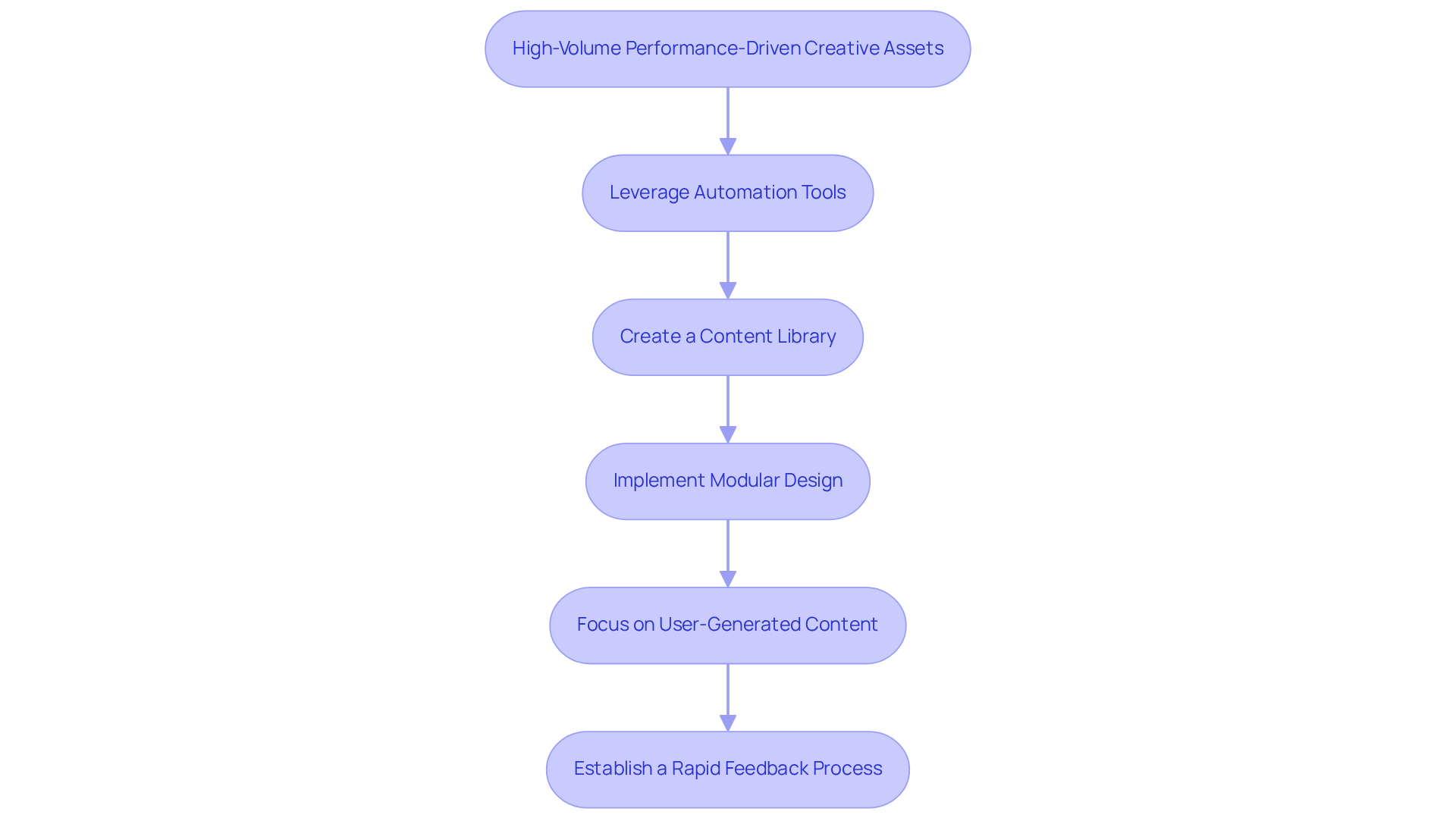
- Leverage Automation Tools: Implement automation tools like Synter and Holo to streamline the production process. These tools facilitate the rapid generation of ad variations, enabling quick testing and deployment, which is essential for adapting to market changes. As Roos Moolhuijsen observes, automation distinguishes the imaginative design process from repetitive production tasks, allowing teams to focus on strategic innovation.
- Create a Content Library: Imagine having a centralized library of creative assets at your fingertips, ready to be adapted for any campaign. This approach minimizes production time and ensures consistency across all advertising efforts.
- Implement Modular Design: Adopt modular design principles to create flexible ad formats that can be customized swiftly. This allows for rapid adjustments based on performance data and audience insights, enhancing responsiveness to market dynamics.
- Focus on User-Generated Content (UGC): Encourage customers to contribute content that showcases their identity. UGC serves as a cost-effective method for generating genuine and engaging assets, fostering community involvement and brand loyalty.
- Establish a Rapid Feedback Process: Develop a system for quickly gathering feedback on artistic assets from internal teams and target audiences. This feedback loop should guide future production efforts, enhancing strategies to better meet audience expectations.
By emphasizing high-volume, performance-driven creative production and leveraging MediaNug's structured testing framework, companies can significantly enhance their effectiveness in paid media consulting and drive scalable growth. The choice is clear: embrace these strategies to transform your paid media initiatives and drive unprecedented growth.
Conclusion
To truly maximize brand impact, businesses must adopt effective paid media consulting strategies that drive measurable success. By aligning paid media efforts with clear objectives, companies can create focused campaigns that resonate with their target audience and yield significant results. This alignment is essential; without it, marketing initiatives may fail to contribute meaningfully to overarching business goals.
The article outlines several key strategies to achieve this alignment, including:
- Defining clear objectives
- Conducting thorough audits
- Tailoring messaging
- Utilizing data-driven insights
- Implementing structured creative testing frameworks
Each of these components plays a vital role in enhancing campaign effectiveness and ensuring that paid media strategies remain relevant in a rapidly evolving market. Furthermore, continuous optimization and real-time feedback are crucial for maintaining a competitive advantage and adapting to changing consumer behaviors.
By embracing these best practices, brands not only enhance the effectiveness of their paid media consulting but also position themselves for sustained growth and success. Companies that prioritize alignment, creativity, and adaptability in their paid media strategies will not only stand out in a crowded marketplace but also cultivate deeper connections with their audience, leading to long-term loyalty and brand advocacy.
Frequently Asked Questions
Why is it important to align paid media strategies with brand objectives?
Aligning paid media strategies with brand objectives is essential for maximizing impact and achieving measurable success. It ensures that campaigns are focused and contribute effectively to the organization's goals.
What are the first steps to align paid media with company objectives?
The first steps include defining clear objectives, conducting a label audit to analyze current positioning, tailoring messaging to reflect the company's voice, and utilizing data-driven insights to inform campaign strategies.
How do clear objectives benefit paid media strategies?
Clear objectives serve as a roadmap for all subsequent strategies, enabling focused efforts that lead to measurable outcomes such as increased awareness, sales, or lead generation.
What is a label audit and why is it necessary?
A label audit analyzes the current positioning, strengths, weaknesses, and market opportunities of a company. It is necessary to identify how paid media can effectively support organizational goals and ensure strategic alignment.
How should messaging be tailored in paid media campaigns?
Messaging should reflect the company's voice and resonate with the target audience, enhancing engagement and conversion rates by fostering a stronger connection with potential customers.
What role do data-driven insights play in paid media strategies?
Data-driven insights help understand audience behavior and preferences, allowing for the creation of targeted campaigns that align with company objectives and improve resource distribution and campaign outcomes.
Why is it important to regularly review and adjust paid media campaigns?
Regular reviews of campaign performance against defined objectives help companies enhance their approaches based on real-time insights, ensuring continuous alignment with organizational goals and adapting to market shifts.
What is the PESO model and how does it enhance marketing strategies?
The PESO model stands for Paid, Earned, Shared, and Owned media. Integrating this model enhances marketing strategies by ensuring a balanced approach that maximizes visibility and engagement across different media types.
List of Sources
- Align Paid Media Consulting with Brand Objectives
- goelement.com (https://goelement.com/blog/paid-media-balanced-marketing-approach)
- How to Create a Successful Paid Media Strategy (https://matternow.com/blog/how-to-create-successful-paid-media-strategy)
- 52 sales and marketing alignment statistics for 2026 (https://sopro.io/resources/blog/sales-marketing-alignment-statistics)
- linkedin.com (https://linkedin.com/posts/lisaraehsler_if-you-are-thinking-about-launching-ppc-in-activity-7404890218597765121-ej7Y)
- hallam.agency (https://hallam.agency/blog/b2b-paid-media-strategy-when-google-ads-linkedin-programmatic-work-together)
- Implement Structured Creative Testing Frameworks
- medianug.com (https://medianug.com/blog/understanding-the-creative-testing-framework-importance-and-key-components)
- The Meta Creative Testing Frameworks Top Brands Use in 2026 (https://linkedin.com/pulse/meta-creative-testing-frameworks-top-brands-use-2026-andrew-foxwell-xijec)
- 30 Key A/B Testing Statistics: A Comprehensive Guide | Wingify (https://vwo.com/blog/ab-testing-statistics)
- Creative Fatigue Testing Framework for Paid Media 2026 (https://darkroomagency.com/observatory/creative-fatigue-performance-testing-framework)
- Focus on Continuous Optimization and Real-Time Feedback
- aimediagroup.com (https://aimediagroup.com/post/top-metrics-to-track-in-your-paid-media-campaigns-and-how-to-optimize-them)
- marketingtechnews.net (https://marketingtechnews.net/news/why-you-should-be-demanding-real-time-feedback-your-advertisements)
- supermetrics.com (https://supermetrics.com/blog/real-time-marketing)
- lotame.com (https://lotame.com/resources/real-time-data-can-change-marketing-strategy)
- britopian.com (https://britopian.com/data/paid-media-optimization)
- Produce High-Volume Performance-Driven Creative Assets
- Paid Media Trends Shaping 2026 Advertising: How to Add Them into Your Marketing Strategy – Devaney & Associates (https://devaneyagency.com/paid-media-trends-shaping-2026-advertising-how-to-add-them-into-your-marketing-strategy)
- storyteq.com (https://storyteq.com/blog/how-do-you-scale-creative-production-with-automation)
- syntermedia.ai (https://syntermedia.ai/blog/best-ai-ad-creative-automation-tools)
- tryholo.ai (https://tryholo.ai/blog/creative-automation-tools)
- 100 ad leaders predict 2026 marketing trends—what’s next for AI, agencies, creativity, media and more (https://tritondigital.com/news-item/January-05-2026/100-ad-leaders-predict-2026-marketing-trends-what-s-next-for-ai-agencies-creativity-media-and-more)
Need Better Performing Social Content?
MediaNug helps brands scale through creator partnerships, performance creative, and platform-native content strategies built for modern social platforms.
Continue Reading
Influencer & Creator Marketing
- The Complete Guide to Influencer Marketing Strategy & Operations
- The Complete Guide to UGC Content Strategy for Brands
- Master UGC Creator Tools: Best Practices for Brand Success
Paid Social & Performance Creative
- The Complete Guide to Paid Social Creative Strategy
- Why Your Brand Needs a Performance Creative Agency for Growth
- What is an Ad Creative Agency and Why It Matters for Brands
Platform & Trend Insights
- UGC Creators for Paid Social Ads: How to Find, Vet, and Scale Winning Creative
- 4 Best Practices for Effective TikTok Creatives That Drive Engagement
- 10 Key Insights on Instagram Demographics for Brand Strategies
- The Role Of Visual Storytelling In Social Media
Strategy & Growth
- Understanding Creative Strategy: Key Concepts and Examples
- 6 Steps to Create an Effective Creative Strategy Sample
- Understanding eCommerce Brand Strategy: Importance and Key Components