
Introduction
User-generated content (UGC) has emerged as a powerful force in the marketing landscape, fundamentally reshaping how brands connect with their audiences. As consumers increasingly seek authenticity and trust, UGC presents a unique opportunity for companies to engage with their customers in a genuine manner. However, with the vast array of content types and the potential for both positive and negative implications, how can brands effectively harness this powerful tool to maximize their marketing success? This article delves into best practices for leveraging UGC, exploring its significance, diverse forms, and the strategic approaches that can elevate brand engagement in 2025 and beyond.
Define User-Generated Content and Its Importance
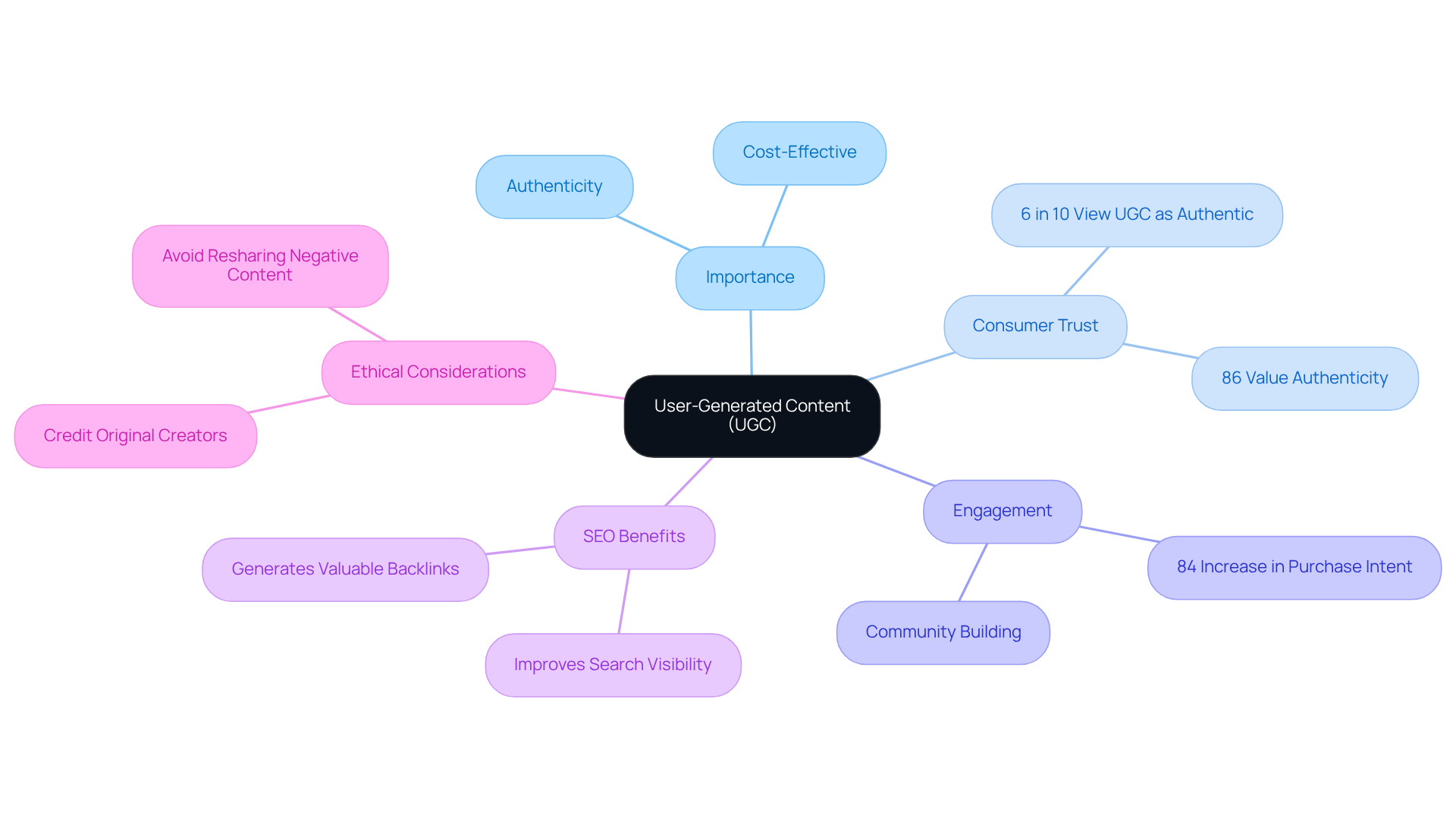
encompasses any items—like images, videos, reviews, and testimonials—created by consumers rather than companies. This type of is essential in modern marketing, as it among audiences. Did you know that 86% of consumers value when choosing brands? This statistic highlights as a aiming to with their customers.
Research indicates that approximately 6 in 10 consumers view as the most authentic form of marketing content available. This underscores its effectiveness in . By showcasing real experiences and opinions as , companies can significantly enhance their relatability, . In fact, studies show that UGC can boost purchase intent by 84%, especially when emotional connections are established through storytelling.
As consumers become increasingly skeptical of traditional advertising, the emergence of represents a pivotal shift in how brands communicate with their audience. It’s not just a trend; it’s a vital element of any effective marketing strategy today. Furthermore, can by generating valuable backlinks and fresh, keyword-rich material, which improves online visibility.
It’s crucial for companies to credit when resharing UGC to uphold ethical marketing practices and nurture community engagement. However, brands must tread carefully; can tarnish their reputation. In summary, serves as more than just a marketing tool—it's an essential strategy for building trust and driving engagement in today's digital landscape.
Explore Different Types of User-Generated Content
manifests in various influential forms, each playing a crucial role in engagement and marketing success. Understanding these types can significantly enhance your strategy:
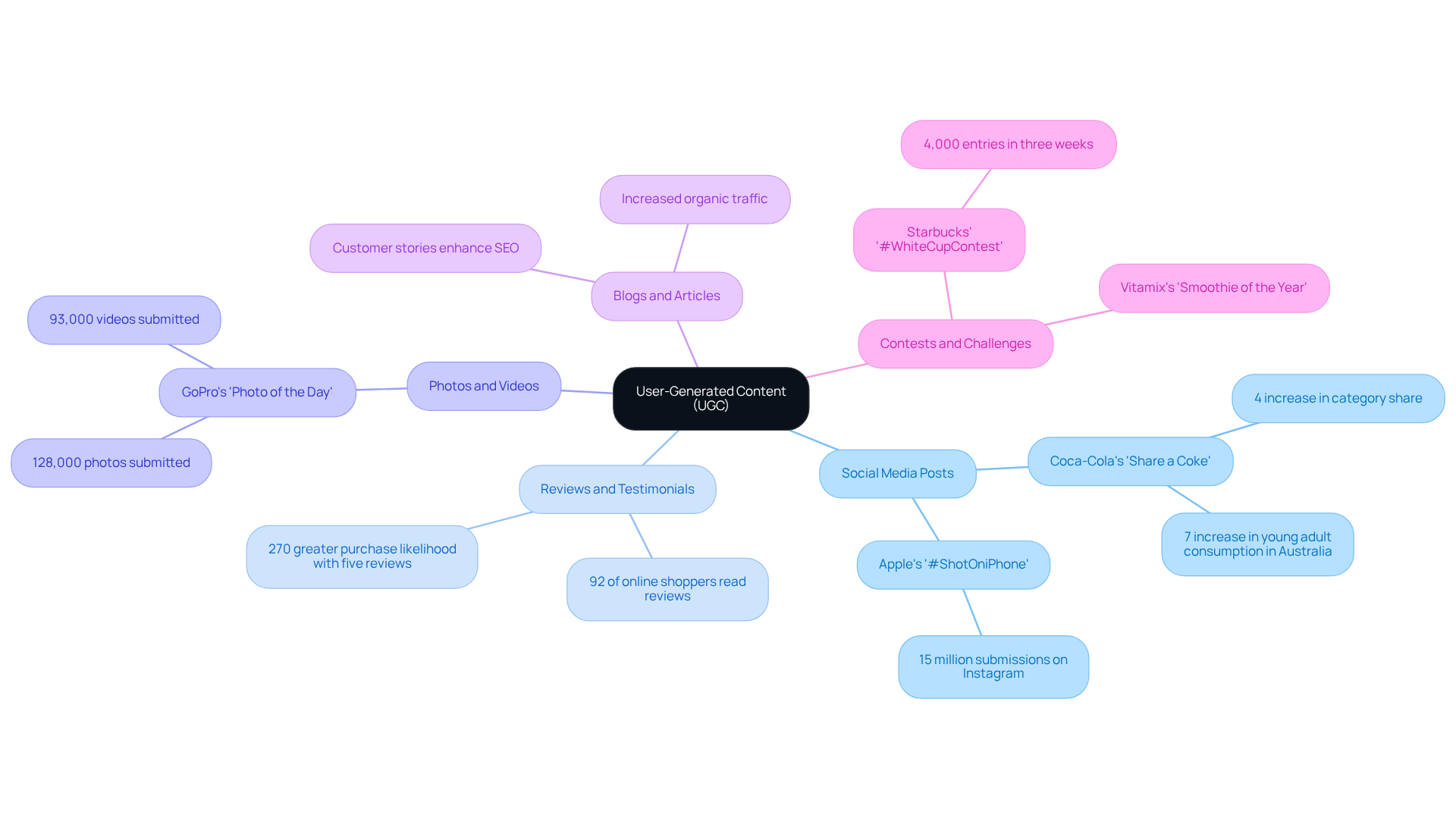
- : Content shared by individuals on platforms like Instagram, TikTok, and Facebook often showcases products in real-life contexts. For instance, Coca-Cola's 'Share a Coke' campaign effectively utilized individual posts to boost brand visibility, resulting in a 4% rise in their category share and a 7% increase in young adult consumption in Australia. Similarly, Apple's '#ShotOniPhone' campaign flourished, garnering over 15 million submissions on Instagram, demonstrating its effectiveness in capturing participant attention.
- : Written feedback from customers prominently displayed on websites or social media is invaluable. Research shows that 92% of online shoppers read reviews before making a purchase, highlighting their critical role in building trust.
- : Visual material produced by individuals, such as unboxing films or lifestyle images, showcases products in authentic environments. GoPro's 'Photo of the Day' campaign encouraged users to submit their best shots, exemplifying how visual UGC can effectively promote a company's offerings, resulting in over 128,000 photos and 93,000 videos submitted by 2013.
- : that offers in-depth insights or personal experiences related to a product can significantly improve SEO and attract organic traffic. Companies that showcase on their blogs often see enhanced engagement.
- : Campaigns that motivate users to create content centered on a specific theme or product, often incentivized by rewards, can drive participation. Starbucks' '#WhiteCupContest' serves as a prime example, generating over 4,000 entries in just three weeks and fostering community engagement.
By recognizing and leveraging these diverse types of , companies can effectively engage their audiences, encourage participation, and cultivate a dynamic ecosystem that propels marketing success into 2025.
Highlight the Benefits of User-Generated Content
presents a remarkable array of benefits that can profoundly influence brand success:
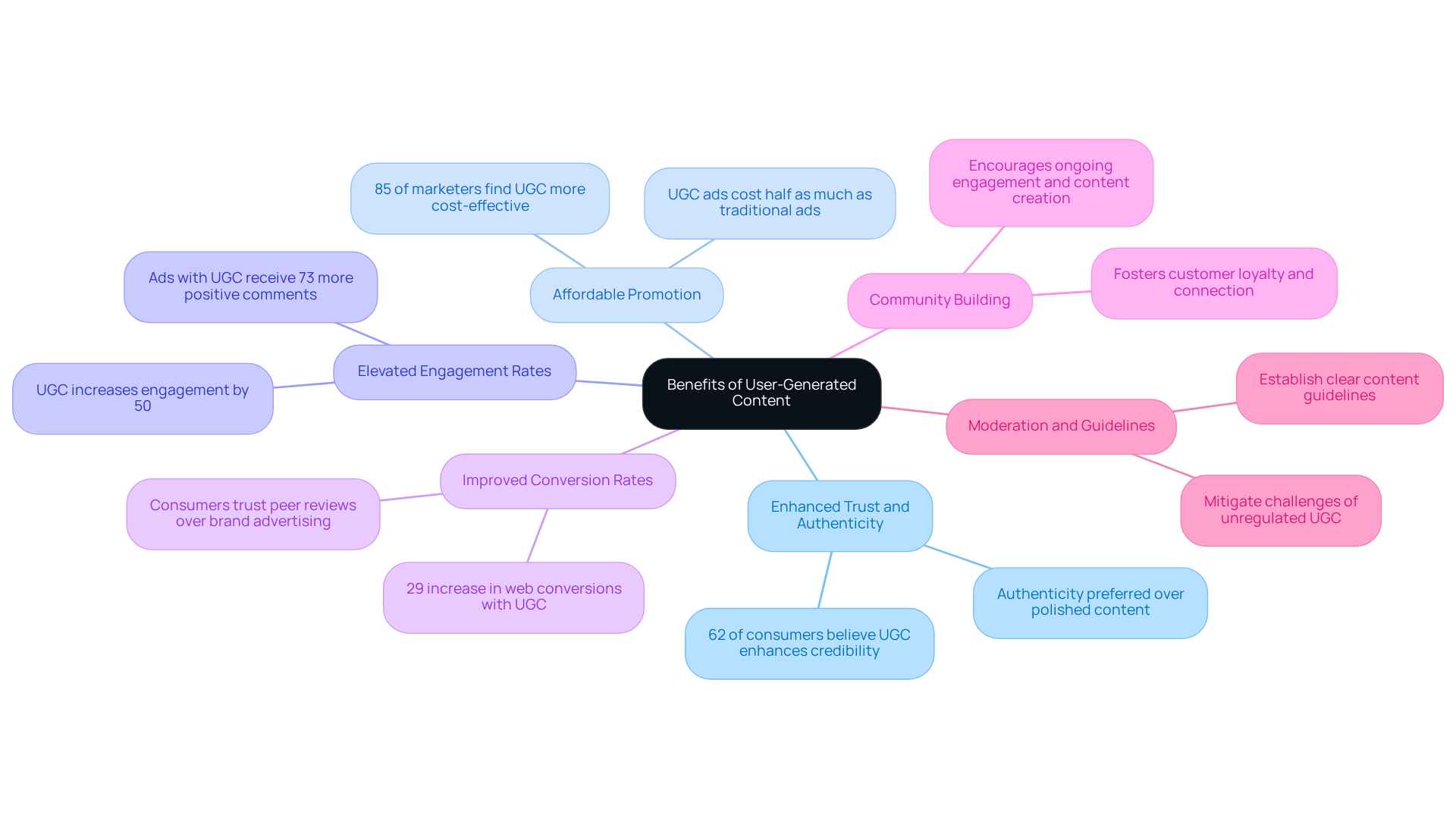
- : UGC serves as powerful social proof, demonstrating that real customers endorse the brand. This authenticity significantly boosts consumer trust, with 62 percent of consumers believing that UGC enhances a company's credibility. Moreover, the growing preference for raw, genuine over polished productions underscores the vital role of in building trust.
- : By leveraging user-generated content, companies can substantially lower their production costs while maintaining a consistent flow of engaging content. In fact, 85 percent of marketers consider UGC to be more cost-effective than traditional advertising methods. ads are particularly beneficial, costing half as much and achieving four times the click-through rate compared to conventional ads.
- Campaigns that integrate often see elevated engagement rates. Content that feels authentic and relatable resonates more with consumers, leading to increased interactions. For example, ads that utilize can reduce by 50 percent while enhancing engagement.
- occur because directly influences conversion rates, as consumers are more inclined to purchase products that have received positive reviews or endorsements from their peers. Brands that utilize experience a 29 percent increase in web conversions, demonstrating its effectiveness in driving sales.
- : Encouraging fosters a sense of community among customers, making them feel valued and connected to the brand. This connection not only fortifies customer loyalty but also encourages ongoing engagement and content creation from consumers.
- : While UGC offers numerous advantages, it is crucial for companies to establish clear content guidelines and moderation processes to ensure alignment with their identity and values. This approach helps mitigate potential challenges associated with unregulated UGC.
These compelling benefits underscore the importance of integrating into marketing strategies, positioning as a critical component for brands aiming to thrive in today's competitive digital landscape. Notable examples, such as LaCroix's relatable UGC and Uniqlo's successful #LifeWear campaign, illustrate how companies can effectively harness UGC to boost engagement and foster trust.
Implement Best Practices for UGC in Campaigns
To effectively implement in marketing campaigns, brands should consider the following :
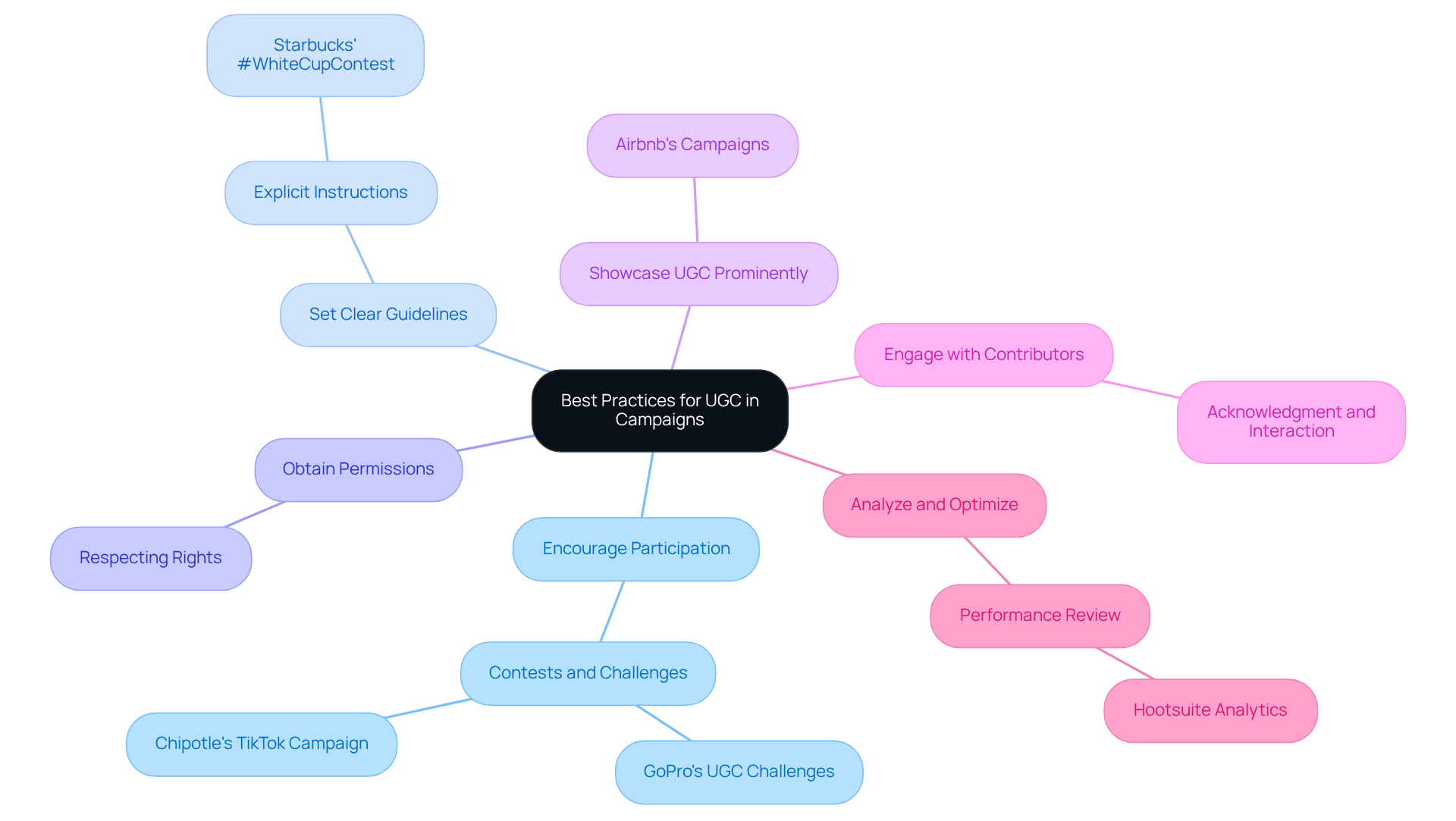
- : Launch campaigns that invite individuals to share their experiences, such as contests or challenges. For instance, Chipotle's TikTok campaign, which offered a year of complimentary meals as a reward, significantly boosted . Similarly, GoPro's UGC challenges highlight the brand's adventurous spirit and community involvement, motivating individuals to share their best footage.
- : Provide explicit instructions on the type of material desired, including themes or formats. This clarity helps individuals understand how to contribute effectively, as demonstrated by Starbucks' #WhiteCupContest, which garnered over 4,000 submissions.
- : Always request approval from individuals before using their material in marketing efforts. This practice not only respects their rights but also , encouraging more users to participate in future campaigns. It's crucial to ensure legal compliance when using UGC, checking for copyright issues and obtaining consent from individuals depicted.
- : Feature across your website, social media, and advertising channels. Highlighting customer voices enhances company relatability and authenticity, as illustrated by Airbnb's campaigns that showcase travelers' photos and stories. As noted by the Slate Team, UGC content serves as social proof by showcasing real individuals utilizing and enjoying a company's offerings.
- : Acknowledge and thank users for their contributions. This fosters a sense of community and encourages further participation, creating a loyal audience that feels valued. Making social media posts interactive, such as asking questions and conducting polls, can also stimulate engagement and encourage UGC creation.
- : Regularly review the performance of UGC in your campaigns to identify what resonates with your audience. By leveraging insights from tools like Hootsuite Analytics, companies can refine their strategies to enhance engagement and effectiveness. Furthermore, companies should be cautious about resharing negative or off-message content, as this can harm their reputation.
By following these , brands can harness the full potential of UGC content, which drives engagement and builds stronger connections with their audience.
Conclusion
User-generated content (UGC) stands as a cornerstone of modern marketing strategies, fostering authenticity and trust between brands and their consumers. By leveraging the creativity and experiences of customers, brands can craft a more relatable and engaging narrative that truly resonates with their audience. This shift towards valuing real voices over polished advertisements is not merely a trend; it represents a fundamental change in how brands connect with their customers.
Throughout this article, we've explored various aspects of UGC, including its definition, types, benefits, and best practices for implementation. From social media posts and reviews to contests and testimonials, each form of UGC plays a vital role in enhancing brand visibility and credibility. The benefits of UGC are substantial, ranging from increased trust and lower promotional costs to improved engagement and conversion rates. By following best practices—such as encouraging participation, setting clear guidelines, and showcasing contributions prominently—brands can effectively harness the power of UGC to drive their marketing success.
As brands navigate the competitive digital landscape, embracing user-generated content is not just advantageous; it is essential. By prioritizing authenticity and community engagement, organizations can cultivate deeper connections with their audience, fostering loyalty and driving growth. Now is the time for brands to fully embrace UGC, leveraging its potential to create meaningful interactions that resonate with consumers and elevate their marketing efforts.
Frequently Asked Questions
What is user-generated content (UGC)?
User-generated content (UGC) refers to any items created by consumers, such as images, videos, reviews, and testimonials, rather than by companies.
Why is UGC important in modern marketing?
UGC is essential in modern marketing because it fosters authenticity and trust among audiences, making it a powerful tool for organizations to connect genuinely with their customers.
How do consumers perceive the authenticity of UGC?
Approximately 6 in 10 consumers view UGC as the most authentic form of marketing content available, highlighting its effectiveness in building trust and credibility.
What impact does UGC have on purchase intent?
UGC can boost purchase intent by 84%, especially when emotional connections are established through storytelling.
How does UGC influence brand communication?
As consumers become more skeptical of traditional advertising, UGC represents a pivotal shift in how brands communicate, becoming a vital element of effective marketing strategies.
Can UGC improve SEO performance?
Yes, UGC can enhance SEO performance by generating valuable backlinks and fresh, keyword-rich material, which improves online visibility.
What ethical considerations should companies keep in mind when using UGC?
Companies should credit original creators when resharing UGC to uphold ethical marketing practices and nurture community engagement.
What risks do brands face when resharing UGC?
Brands must be cautious, as resharing negative content can tarnish their reputation.
List of Sources
- Define User-Generated Content and Its Importance
- User-Generated Content: UGC Types, Benefits & Best Practices (https://business.com/articles/user-generated-content)
- The Impact of User-Generated Content on Customer-Centric Digital Marketing (https://thriveagency.com/news/the-impact-of-user-generated-content-on-customer-centric-digital-marketing)
- socalnewsgroup.com (https://socalnewsgroup.com/2025/02/24/2025-content-marketing-trends)
- socialpilot.co (https://socialpilot.co/blog/user-generated-content-ugc)
- Complete guide to user-generated content (UGC) in 2025 (https://blog.hootsuite.com/user-generated-content-ugc)
- Explore Different Types of User-Generated Content
- 36 User-Generated Content Statistics That You Can’t Ignore | EveryoneSocial (https://everyonesocial.com/blog/user-generated-content-statistics)
- Complete guide to user-generated content (UGC) in 2025 (https://blog.hootsuite.com/user-generated-content-ugc)
- 12 Examples of User-Generated Content (UGC) That Work (https://go.photoshelter.com/ask-photoshelter/user-generated-content-examples)
- storychief.io (https://storychief.io/blog/user-generated-content-guide)
- wisernotify.com (https://wisernotify.com/blog/ugc-examples)
- Highlight the Benefits of User-Generated Content
- User-Generated Content: UGC Types, Benefits & Best Practices (https://business.com/articles/user-generated-content)
- How User-Generated Content Helps You Build Trust and Credibility (https://entrepreneur.com/growing-a-business/how-user-generated-content-helps-you-build-trust-and/487866)
- Complete guide to user-generated content (UGC) in 2025 (https://blog.hootsuite.com/user-generated-content-ugc)
- UGC Is Redefining Social Media Marketing in 2025—Here’s How to Leverage It • The Shelf (https://theshelf.com/the-blog/ugc-is-redefining-social-media-marketing-in-2025-heres-how-to-leverage-it)
- smarketershub.com (https://smarketershub.com/blog/user-generated-content-key-to-brand-growth-in-2025)
- Implement Best Practices for UGC in Campaigns
- The Impact of User-Generated Content on Customer-Centric Digital Marketing (https://thriveagency.com/news/the-impact-of-user-generated-content-on-customer-centric-digital-marketing)
- Complete guide to user-generated content (UGC) in 2025 (https://blog.hootsuite.com/user-generated-content-ugc)
- slateteams.com (https://slateteams.com/blog/user-generated-content)
- forbes.com (https://forbes.com/councils/forbescommunicationscouncil/2025/01/30/18-tips-for-incorporating-user-generated-content-in-your-marketing)
- designity.com (https://designity.com/blog/the-best-practices-for-user-generated-content-campaigns)