
Introduction
The rise of video marketing has fundamentally transformed brand promotion, establishing itself as an essential tool for companies eager to connect with their audiences. With visual content consumption soaring, brands that leverage the power of video can anticipate enhanced engagement, improved visibility, and increased conversions. But with a plethora of options and strategies at their disposal, how can businesses effectively navigate this dynamic medium to achieve their marketing goals?
Furthermore, understanding the landscape of video marketing is crucial. Companies that embrace this medium not only stand out but also foster deeper connections with their target demographics. In addition, successful case studies demonstrate that brands utilizing video marketing strategies often see a significant uptick in customer interaction and loyalty.
As we delve deeper into this topic, consider how your business can harness the potential of video marketing. What strategies will you implement to ensure your brand thrives in this competitive environment?
Defining Video Marketing: An Overview
stands as a tactical method that leverages audiovisual material to effectively advertise a company, product, or service. This encompasses a variety of formats, including:
- Promotional recordings
- Explainer presentations
- Product demonstrations
- Customer testimonials
The primary goal of visual promotion is to engage audiences, enhance brand recognition, and drive conversions. With digital consumption increasingly favoring visual content, has become a vital component of modern marketing strategies, particularly on platforms like TikTok, Instagram, and YouTube, where filmed content thrives.
In 2025, it is projected that around , underscoring its growing importance in the digital landscape. The include boosting visibility for companies and fostering stronger relationships with consumers. Notably, , emphasizing its effectiveness in capturing audience attention.
are actively employing diverse visual marketing strategies to promote their products. Companies like Nike and Apple have masterfully utilized storytelling in their campaigns, forging emotional connections through notable examples such as:
- Nike's 'Just Do It' initiative
- Apple's product launch presentations
Additionally, 93% of Gen Z consumers express a preference for customized visual content, indicating that personalized visual experiences can significantly enhance engagement and loyalty.
Marketing experts recognize the critical role of visual content in contemporary strategies. As one specialist aptly noted, "The companies that adjust quickly will succeed the most in 2025." This sentiment is further supported by the fact that , highlighting the potential of visual content to elevate sales and engagement.
To optimize visual content for social media platforms, companies should consider adopting a 9:16 aspect ratio for vertical formats and integrating captions for silent viewing. Overall, the demonstrate that visual promotion is not merely a trend; it is an essential element of effective product advertising in today's digital era.

The Evolution of Video Marketing: From Concept to Mainstream
has undergone a remarkable since its early days. Initially, was primarily confined to television advertising, where companies poured substantial resources into high-production commercials. However, the rise of the internet and social media platforms in the early 2000s revolutionized how businesses interacted with visual media. The launch of YouTube in 2005 democratized content creation, allowing brands of all sizes to produce and share their stories.
Fast forward to 2025, and have surged in popularity, driven by consumer demand for authentic and engaging material. This shift mirrors broader changes in consumer behavior, with audiences increasingly favoring over traditional text-based formats. In fact, the benefits of are highlighted by the , which is set to reach an astounding $214.76 billion by 2025, with .
Moreover, a staggering 96% of marketers view and its benefits of as a vital element of their marketing strategy, and 87% believe it has a direct, positive effect on sales. The trend towards is also noteworthy, as consumers are drawn to material that resonates with their unique interests and values. Additionally, the emergence of is reshaping viewing habits, with forecasts indicating that by 2026, CTV will capture 20.0% of daily media consumption time among adults in the US.
This their promotional strategies in response to evolving consumer preferences. Are you ready to embrace the future of ?

Key Benefits of Video Marketing: Enhancing Engagement and Conversions
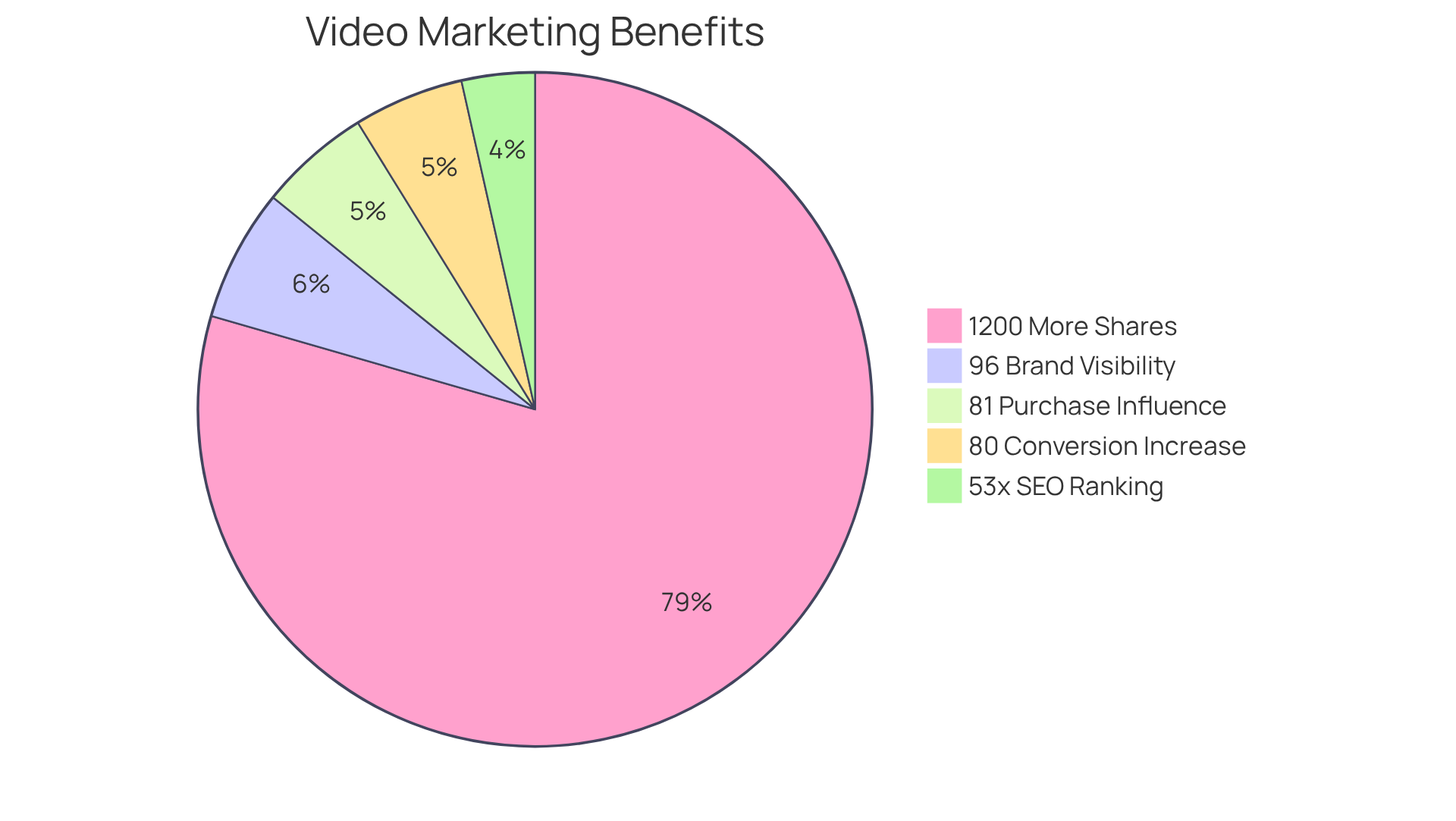
Research firmly backs the extensive in . Did you know that social media posts featuring visuals generate a staggering 1200% more shares than those with just text? This statistic alone highlights the power of . Furthermore, landing pages that incorporate video can see , demonstrating the in driving user actions.
Consider this:
- 81% of individuals have made a purchase or downloaded an app after watching a related video, which demonstrates the .
- This statistic underscores the , highlighting the on consumer behavior.
- Additionally, the play a crucial role in ; a remarkable 96% of marketers acknowledge that such content has increased their brand visibility.
- In fact, 93% of marketers recognize the as an , emphasizing its significance in modern promotional practices.
Moreover, the positively influence SEO rankings. Search engines favor websites that showcase visual media, with . This leads to higher organic traffic, demonstrating the as an indispensable element of effective digital strategies. As companies continue to leverage the , it's clear that is here to stay.
Interestingly,
- 36% of advertisers believe that the costs associated with are decreasing, making it a more economically viable option for brands.
- As we approach 2025, the trend is unmistakable: 68% of marketers who did not utilize visuals last year plan to start incorporating them.
- This shift highlights the growing recognition of the value of visual promotion.
Are you ready to embrace the power of ?
Characteristics of Effective Video Marketing: What Makes It Work
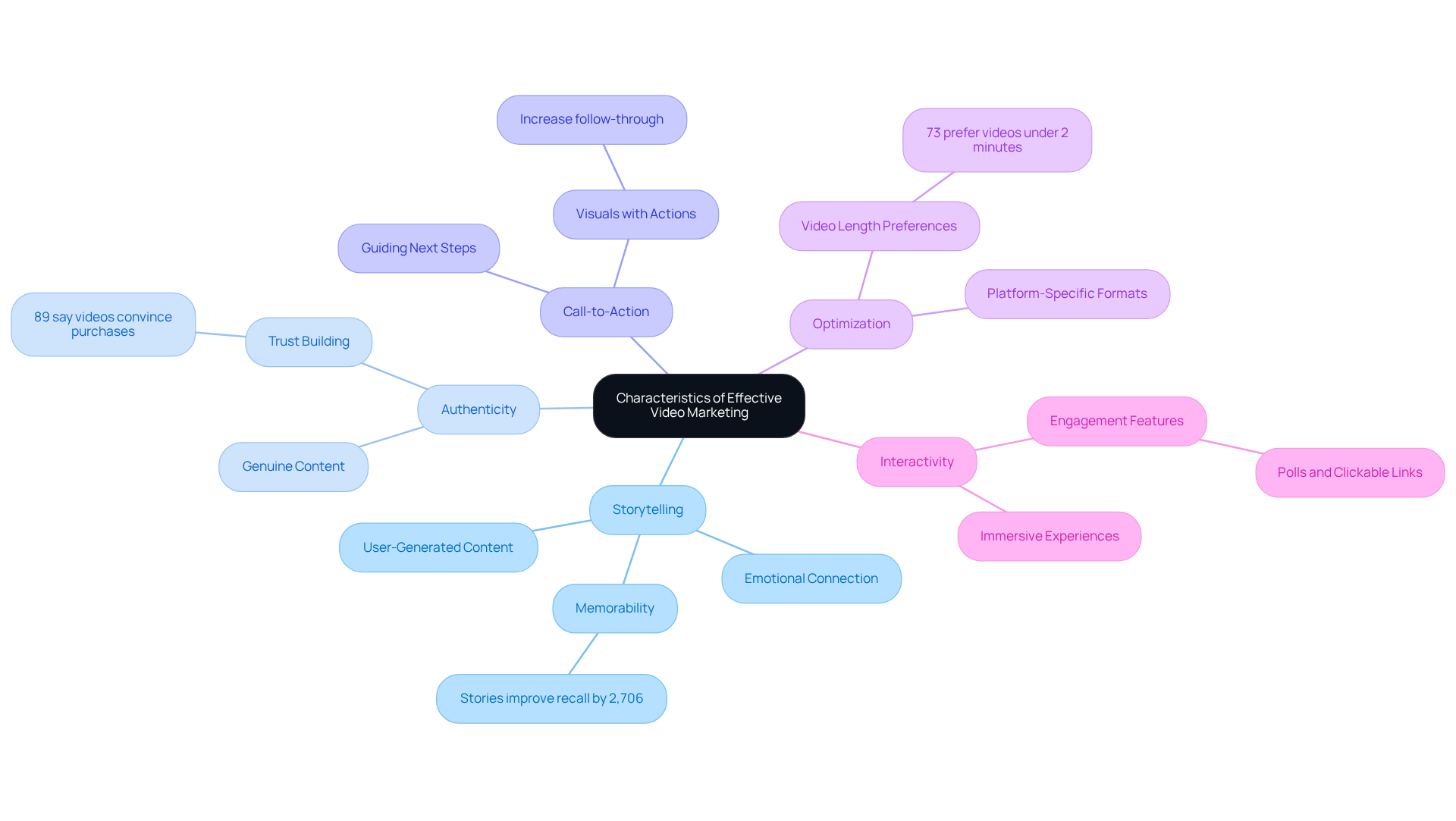
Effective hinges on several key elements. First and foremost, ; narratives that convey a compelling story resonate deeply with audiences, fostering emotional connections that drive engagement. Have you ever noticed how a well-told story can linger in your mind long after you've seen it? This is the in marketing.
Authenticity also plays a vital role; audiences gravitate towards rather than overly polished advertisements. In a world saturated with marketing noise, authenticity cuts through and builds trust. Furthermore, a clear is essential, guiding viewers on the next steps after engaging with the content. Without a strong CTA, even the most captivating visuals can fall flat.
In addition, - considering factors like length, format, and audience preferences - ensures that your content effectively reaches its intended audience. Each platform has its nuances, and understanding these can significantly enhance your marketing efforts. Finally, incorporating , such as polls or clickable links, can further elevate viewer engagement and participation. By inviting your audience to interact, you create a more immersive experience that encourages deeper connections.
Conclusion
The significance of video marketing in today’s digital landscape is paramount. It stands as a formidable tool for brands looking to boost visibility, forge connections with consumers, and drive conversions. With visual content reigning supreme in consumer preferences, integrating video into marketing strategies is not merely advantageous; it’s essential for achieving brand success.
Key points throughout this discussion highlight the evolution of video marketing, showcasing its transformation from traditional advertising to a dynamic, interactive medium that truly resonates with audiences. Impressive statistics underscore the effectiveness of video marketing, revealing its capacity to enhance engagement rates and conversions. Additionally, the rising trend of personalized content that aligns with consumer interests is noteworthy. The article also emphasizes the critical components of effective video marketing - storytelling, authenticity, and optimized content - as essential for success.
In light of these insights, brands must embrace the power of video marketing as a core element of their promotional strategies. As the digital landscape continues to evolve, leveraging video content will not only elevate brand awareness but also foster lasting relationships with consumers. The future of marketing is undeniably visual, and those who adapt and innovate will thrive in 2025 and beyond.
Frequently Asked Questions
What is video marketing?
Video marketing is a tactical method that uses audiovisual material to promote a company, product, or service. It includes formats such as promotional recordings, explainer presentations, product demonstrations, and customer testimonials.
What are the primary goals of video marketing?
The primary goals of video marketing are to engage audiences, enhance brand recognition, and drive conversions.
Why is video marketing becoming increasingly important?
Video marketing is becoming increasingly important due to the rise in digital consumption of visual content, especially on platforms like TikTok, Instagram, and YouTube. It is projected that 85%-90% of companies will incorporate visual content into their strategies by 2025.
What are the benefits of video marketing?
The benefits of video marketing include boosting visibility for companies, fostering stronger relationships with consumers, and achieving a favorable return on investment (ROI), with 93% of marketers reporting positive results from visual content.
Can you provide examples of successful brands using video marketing?
Successful brands like Nike and Apple have effectively used storytelling in their video marketing campaigns, with notable examples including Nike's 'Just Do It' initiative and Apple's product launch presentations.
What do Gen Z consumers prefer in terms of visual content?
93% of Gen Z consumers express a preference for customized visual content, indicating that personalized visual experiences can enhance engagement and loyalty.
How can companies optimize their visual content for social media?
To optimize visual content for social media, companies should consider using a 9:16 aspect ratio for vertical formats and integrating captions for silent viewing.
What is the future outlook for companies using video marketing?
Marketing experts suggest that companies that adapt quickly to incorporate visual content will succeed the most in 2025. Additionally, 78% of companies utilizing social selling outperform those that do not, highlighting the potential of visual content to elevate sales and engagement.
List of Sources
- Defining Video Marketing: An Overview
- wordstream.com (https://wordstream.com/blog/video-marketing-trends-2025)
- firework.com (https://firework.com/blog/video-marketing-future-trends)
- Video Marketing Statistics 2026 (12 Years of Data) | Wyzowl (https://wyzowl.com/video-marketing-statistics)
- 2026 Marketing Statistics, Trends, & Data (https://hubspot.com/marketing-statistics)
- 2025 Video Marketing Statistics and Consumer Trends (https://idomoo.com/blog/2025-video-marketing-statistics-and-consumer-trends)
- The Evolution of Video Marketing: From Concept to Mainstream
- quickframe.mountain.com (https://quickframe.mountain.com/blog/top-social-media-video-marketing-trends)
- baerpm.com (https://baerpm.com/2025/01/16/2025s-game-changing-video-marketing-strategies)
- statista.com (https://statista.com/outlook/amo/advertising/tv-video-advertising/digital-video-advertising/worldwide?srsltid=AfmBOoreNEyzQjD3hGsFvU3RNh48yJDEZhZIBiCDWWhyvtgdGmDAkGIg)
- Short Form Video Statistics 2026: 97+ Stats & Insights [Expert Analysis] - Marketing LTB (https://marketingltb.com/blog/statistics/short-form-video-statistics)
- thesocialshepherd.com (https://thesocialshepherd.com/blog/video-marketing-statistics)
- Key Benefits of Video Marketing: Enhancing Engagement and Conversions
- blog.hubspot.com (https://blog.hubspot.com/marketing/video-marketing-statistics)
- Video Marketing Statistics 2026 (12 Years of Data) | Wyzowl (https://wyzowl.com/video-marketing-statistics)
- sundaysky.com (https://sundaysky.com/blog/2025-video-marketing-statistics)
- Characteristics of Effective Video Marketing: What Makes It Work
- Storytelling Statistics 2026: 94+ Stats & Insights [Expert Analysis] - Marketing LTB (https://marketingltb.com/blog/statistics/storytelling-statistics)
- sundaysky.com (https://sundaysky.com/blog/2025-video-marketing-statistics)
- martechedge.com (https://martechedge.com/interview/authentic-video-storytelling-for-brand-trust)
- rankings.io (https://rankings.io/blog/storytelling-for-video-marketing)
- blog.hubspot.com (https://blog.hubspot.com/marketing/video-marketing-statistics)