
Introduction
User-generated content (UGC) has become a formidable force in digital marketing, with brands increasingly turning to authentic contributions from creators to engage their audiences. But what makes these collaborations truly effective? The answer lies in the clarity and fairness of UGC contracts, which are the backbone of these partnerships.
As the landscape continues to evolve, grasping the key elements, challenges, and benefits of UGC agreements is essential for both brands and creators. What happens when these contracts fall short? How can both parties navigate the complexities to foster successful and equitable collaborations? Understanding these dynamics is crucial for maximizing the potential of UGC in your marketing strategy.
Define UGC Contract: Key Elements and Structure
A is a legally binding document that outlines the terms of collaboration between a brand and an individual, ensuring clarity and mutual understanding. It is essential for both parties involved to understand the structure of a . It typically encompasses several key elements:
- : This section clearly defines the content the creator will produce, specifying the type, format, and quantity of content required. A well-defined scope helps prevent misunderstandings and aligns expectations.
- : It is essential to specify how and when the individual will be compensated, whether through a flat fee, commission, or product exchange. Clear contribute to a positive working relationship, as 60% of marketers believe that transparent compensation structures enhance collaboration.
- : This section explains how the company can use the content, including the duration, platforms, and any limitations on usage. Properly outlining safeguards both parties and ensures that the author's work is used as intended.
- Ownership: Clarifying ownership rights is crucial to avoid disputes later. The agreement should outline who holds the rights to the produced content, which is essential for both brand protection and recognition of the author.
- Attribution: This outlines how the author will be credited for their work, if applicable. Proper attribution fosters goodwill and motivates individuals to produce high-quality content.
- : This provides conditions under which either party can terminate the agreement, ensuring that both sides have a clear exit strategy if needed.
- : Addressing in UGC agreements is essential, specifying what information is confidential and how it will be protected, including personal data handling.
- : Including a plan for resolving disputes is crucial, outlining steps for legal and ensuring compliance with relevant laws.
Grasping these components is essential for both companies and individuals to enable seamless cooperation as outlined in the and safeguard their respective rights and interests. With , having a is vital for enhancing the impact of UGC campaigns.

Explore the Importance of UGC Contracts for Brands and Creators
are essential for several key reasons:
- Protection of Rights: These contracts safeguard the intellectual property rights of both brands and creators, ensuring that content is utilized according to agreed terms. This protection is vital in avoiding potential legal disputes and issues, which can be costly for both parties. By clearly outlining specific terms, the helps prevent misunderstandings and disputes. This clarity enables both companies and artists to concentrate on creative collaboration instead of managing conflicts. Building trust is essential, and a well-structured fosters trust between companies and creators, demonstrating a commitment to fair treatment and transparency. This trust is crucial in a market where authenticity is highly valued; in fact, 79% of consumers report that UGC significantly influences their purchasing decisions.
- : s ensure adherence to legal standards, thereby reducing the risk of and other legal complications. Companies that fail to obtain proper permissions for UGC can encounter severe penalties, as emphasized by significant legal cases in the industry. Furthermore, companies can utilize downloadable checklists for to ensure that all necessary permissions are secured prior to campaign launches.
- Performance Measurement: UGC agreements can include metrics for assessing the success of the content, allowing companies to evaluate campaign effectiveness and make data-informed choices. Organizations leveraging UGC report a , underscoring the importance of measuring performance.
In a landscape where authenticity and consumer trust are paramount, in establishing and maintaining productive relationships between brands and contributors. By ensuring that both parties' rights are protected and expectations are clear, these agreements contribute to a more effective and trustworthy marketing ecosystem. Furthermore, with MediaNug's , creators can earn fair compensation for their work through streamlined payment processes, empowering them to showcase their unique styles while fostering a collaborative environment.

Identify Challenges in UGC Contracts and Solutions for Creators
are crucial for setting clear expectations, yet they often come with significant challenges that creators must navigate:
- Ambiguity in Terms: Vague language can lead to misunderstandings about content usage and payment. Creators should demand clarity in all terms before signing to avoid future disputes.
- Ownership Disputes: Disagreements over content ownership frequently arise when rights are not explicitly outlined in the agreement. It’s essential for creators to ensure that to prevent conflicts. The can lead to serious issues, making this clarity even more vital.
- : Creators may face delays in receiving payment if the terms are not clearly defined. Including specific payment timelines in the agreement is advisable to guarantee timely compensation.
- Limited Usage Rights: Some agreements may grant brands extensive rights to utilize content, which can restrict the originator's ability to showcase their work elsewhere. Negotiating fair usage rights that allow producers to retain some control over their content is essential.
- Legal Risks: Without proper legal guidance, individuals may inadvertently agree to unfavorable terms. Consulting with a legal professional before signing can help mitigate risks and ensure that agreements are advantageous.
Awareness of these challenges, combined with , empowers creators to safeguard their interests and foster successful collaborations. For example, a case study involving City Beauty illustrates how , enabling the effective use of over 3,000 unique influencer pieces while ensuring compliance with . Furthermore, brands that implement structured can enhance engagement and reduce costs, as evidenced by Papier's 57% reduction in cost per acquisition after refining their UGC process. Notably, UGC is also five times more likely to generate a conversion compared to professional content, underscoring the significance of effective in driving conversions. By addressing these common issues, individuals can navigate the complexities of more effectively.

Highlight Collaborative Advantages of Fair UGC Contracts
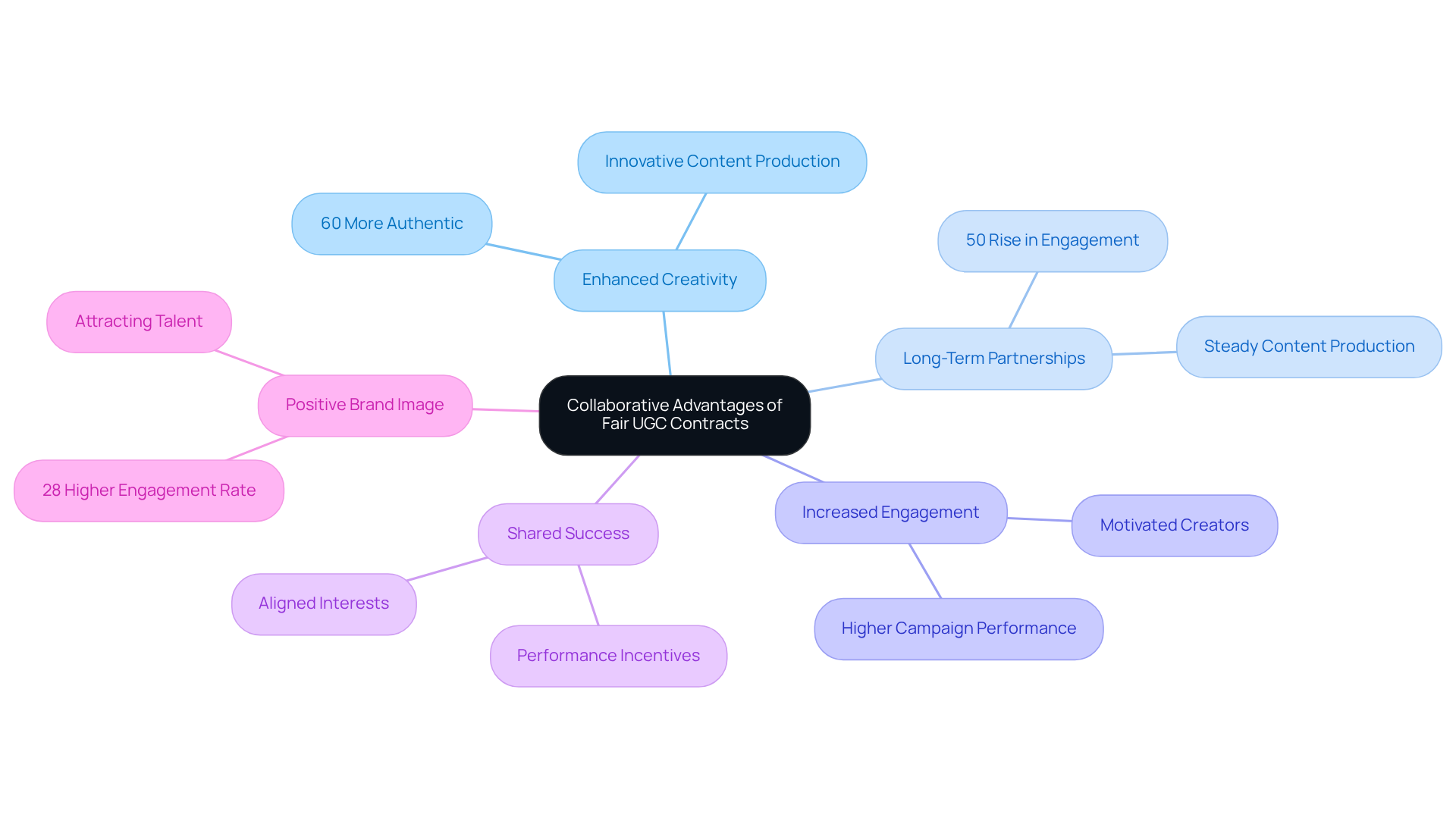
present a wealth of collaborative advantages that can significantly elevate marketing efforts:
- Enhanced Creativity: When creators feel secure and valued, they’re more likely to produce innovative and engaging content that truly resonates with audiences. This is crucial, as , driving higher engagement rates.
- : Equitable agreements cultivate confidence, resulting in lasting connections between companies and artists. Such collaborations can lead to steady content production, with companies benefiting from the dedication of influencers committed to their success. For instance, , supported by the statistic that social campaigns featuring UGC witness a 50% increase in engagement.
- Increased Engagement: Creators who are treated fairly are more motivated to promote the brand authentically, leading to higher engagement rates and better campaign performance. can experience up to a , underscoring the effectiveness of equitable agreements in driving results.
- : Equitable contracts can include performance incentives, aligning the interests of both parties and encouraging collaboration towards common goals. This model not only boosts morale but also enhances the overall quality of content produced.
- : Brands that prioritize fair treatment of contributors enhance their reputation, attracting more talent and fostering a community of advocates. , as interaction improves by 28% when customers see both UGC and official company content.
In summary, not only protect the rights of both parties but also foster an environment conducive to . This ultimately drives better results for brands and creators alike.
Conclusion
User-generated content (UGC) contracts are essential tools that foster productive relationships between brands and creators. By setting clear expectations and protections, these agreements not only safeguard the rights of both parties but also enhance the effectiveness of marketing campaigns. A well-structured UGC contract can yield significant benefits, including improved collaboration, increased engagement, and ultimately, better business outcomes.
This article highlights several key components of UGC contracts, such as:
- The scope of work
- Payment terms
- Usage rights
- Ownership
It also emphasizes the importance of legal compliance and performance measurement. Furthermore, it identifies common challenges faced by creators, including:
- Ambiguity in terms
- Ownership disputes
- Payment delays
While offering practical solutions to navigate these issues, the focus on fair and equitable contracts underscores the potential for fostering long-term partnerships and shared success.
In an environment where authenticity and consumer trust are paramount, understanding the intricacies of UGC contracts is crucial. Brands and creators alike are encouraged to prioritize clear and fair agreements, as they not only protect individual rights but also elevate the quality of content produced. Embracing these principles can lead to a more collaborative and innovative marketing landscape, ultimately driving growth and engagement in an increasingly competitive digital market.
Frequently Asked Questions
What is a User-Generated Content (UGC) contract?
A UGC contract is a legally binding document that outlines the terms of collaboration between a brand and an individual, ensuring clarity and mutual understanding regarding the creation and use of content.
What are the key elements of a UGC contract?
The key elements of a UGC contract include the scope of work, payment terms, usage rights, ownership, attribution, termination clause, confidentiality and privacy, and dispute resolution.
What does the "Scope of Work" section entail?
The "Scope of Work" section clearly defines the content the creator will produce, specifying the type, format, and quantity of content required to align expectations and prevent misunderstandings.
Why are payment terms important in a UGC contract?
Payment terms are important because they specify how and when the individual will be compensated, contributing to a positive working relationship and enhancing collaboration.
What are usage rights in a UGC contract?
Usage rights explain how the company can use the content, including the duration, platforms, and any limitations on usage, safeguarding both parties and ensuring proper use of the author's work.
How does a UGC contract address ownership rights?
The contract clarifies who holds the rights to the produced content, which is essential for brand protection and recognition of the author, helping to avoid disputes later.
What is the significance of attribution in a UGC contract?
Attribution outlines how the author will be credited for their work, fostering goodwill and motivating individuals to produce high-quality content.
What is included in the termination clause of a UGC contract?
The termination clause provides conditions under which either party can terminate the agreement, ensuring that both sides have a clear exit strategy if needed.
Why is confidentiality and privacy addressed in UGC agreements?
Addressing confidentiality and privacy is essential to specify what information is confidential and how it will be protected, including the handling of personal data.
What is the purpose of including a dispute resolution plan in a UGC contract?
Including a dispute resolution plan outlines steps for resolving legal disputes and ensures compliance with relevant laws, providing a clear process for both parties.
List of Sources
- Define UGC Contract: Key Elements and Structure
- linkedin.com (https://linkedin.com/pulse/all-ugc-contracts-complete-guide-brands-creators-free-template-csklf)
- 24 Key User-Generated Content (UGC) Statistics for 2026 (https://backlinko.com/ugc-statistics)
- User Generated Content Statistics: UGC Stats Compilation - Flowbox (https://getflowbox.com/blog/user-generated-content-statistics)
- fraggellproductions.com (https://fraggellproductions.com/blogs/ugc-contract)
- inbeat.agency (https://inbeat.agency/blog/ugc-statistics)
- Explore the Importance of UGC Contracts for Brands and Creators
- 25 User-Generated Content (UGC) Engagement Statistics: Essential Data for Modern Brands in 2026 (https://archive.com/blog/user-generated-content)
- socialtargeter.com (https://socialtargeter.com/blogs/legal-considerations-for-brands-utilizing-ugc-a-deep-dive-into-copyright-and-permissions)
- 70+ UGC Statistics to Shape Your 2026 Marketing Strategy (https://showca.se/post/ugc-statistics)
- 24 Key User-Generated Content (UGC) Statistics for 2026 (https://backlinko.com/ugc-statistics)
- Identify Challenges in UGC Contracts and Solutions for Creators
- User Generated Content Statistics: UGC Stats Compilation - Flowbox (https://getflowbox.com/blog/user-generated-content-statistics)
- usetwirl.com (https://usetwirl.com/insights/legal-risks-of-ugc-and-how-to-avoid-them)
- 55+ UGC Statistics (2026): Consumer Trust, Conversions, and Market Data - Billo (https://billo.app/blog/ugc-statistics)
- grin.co (https://grin.co/blog/user-generated-content-rights-dos-and-donts)
- inbeat.agency (https://inbeat.agency/blog/ugc-statistics)
- Highlight Collaborative Advantages of Fair UGC Contracts
- Why User-Generated Content Is Winning (https://forbes.com/councils/forbesbusinesscouncil/2023/03/13/why-user-generated-content-is-winning)
- inbeat.agency (https://inbeat.agency/blog/ugc-statistics)
- 55+ UGC Statistics (2026): Consumer Trust, Conversions, and Market Data - Billo (https://billo.app/blog/ugc-statistics)
- krausgroupmarketing.com (https://krausgroupmarketing.com/social-media/the-impact-of-ugc-creators-on-influencer-marketing)
- Creators Are Making More User-Generated Content Than Ever. That's Good News for Brands (https://inc.com/annabel-burba/creators-are-making-more-user-generated-content-than-ever-thats-good-news-for-brands/91147522)