
Introduction
User-Generated Content (UGC) stands as a transformative force in the digital marketing landscape, fundamentally reshaping how brands connect with their audiences. By harnessing the creativity and authenticity of consumers, UGC not only enhances brand credibility but also significantly drives engagement and conversion rates.
However, as businesses embrace this powerful tool, they encounter the challenge of navigating the complexities of content quality and brand messaging.
How can companies effectively leverage UGC to foster genuine connections while maintaining control over their narrative? This question is crucial for brands aiming to thrive in a competitive market.
Define User-Generated Content (UGC)
(UGC) embodies the , as it consists of any content - text, images, videos, or audio - that individuals create and share instead of companies. This type of material is predominantly found on social media platforms and includes , testimonials, and that showcase a brand's products. The holds as it offers authentic perspectives that resonate more deeply with potential customers compared to traditional marketing messages. In fact, approximately 92% of consumers trust UGC more than brand-generated content, and 60% believe UGC reflects the most genuine marketing messaging. This highlights its crucial role in .
As consumers increasingly seek , the has become a cornerstone of in 2025. Brands like GoPro, through initiatives such as the Million Dollar Challenge, and Dunkin' Donuts, with their engaging social media strategies, effectively leverage UGC to foster community engagement and enhance their marketing efforts. This demonstrates the powerful influence of genuine customer interactions on consumer trust and purchasing decisions. Furthermore, UGC can lead to a , underscoring its effectiveness in driving sales.
In conclusion, embracing UGC is not just a trend; it is a strategic move that can significantly enhance a brand's credibility and engagement. Brands should actively encourage and showcase UGC to connect with their audience on a deeper level.

Explore Types of User-Generated Content
encompasses various types, each tailored to fulfill distinct marketing objectives:
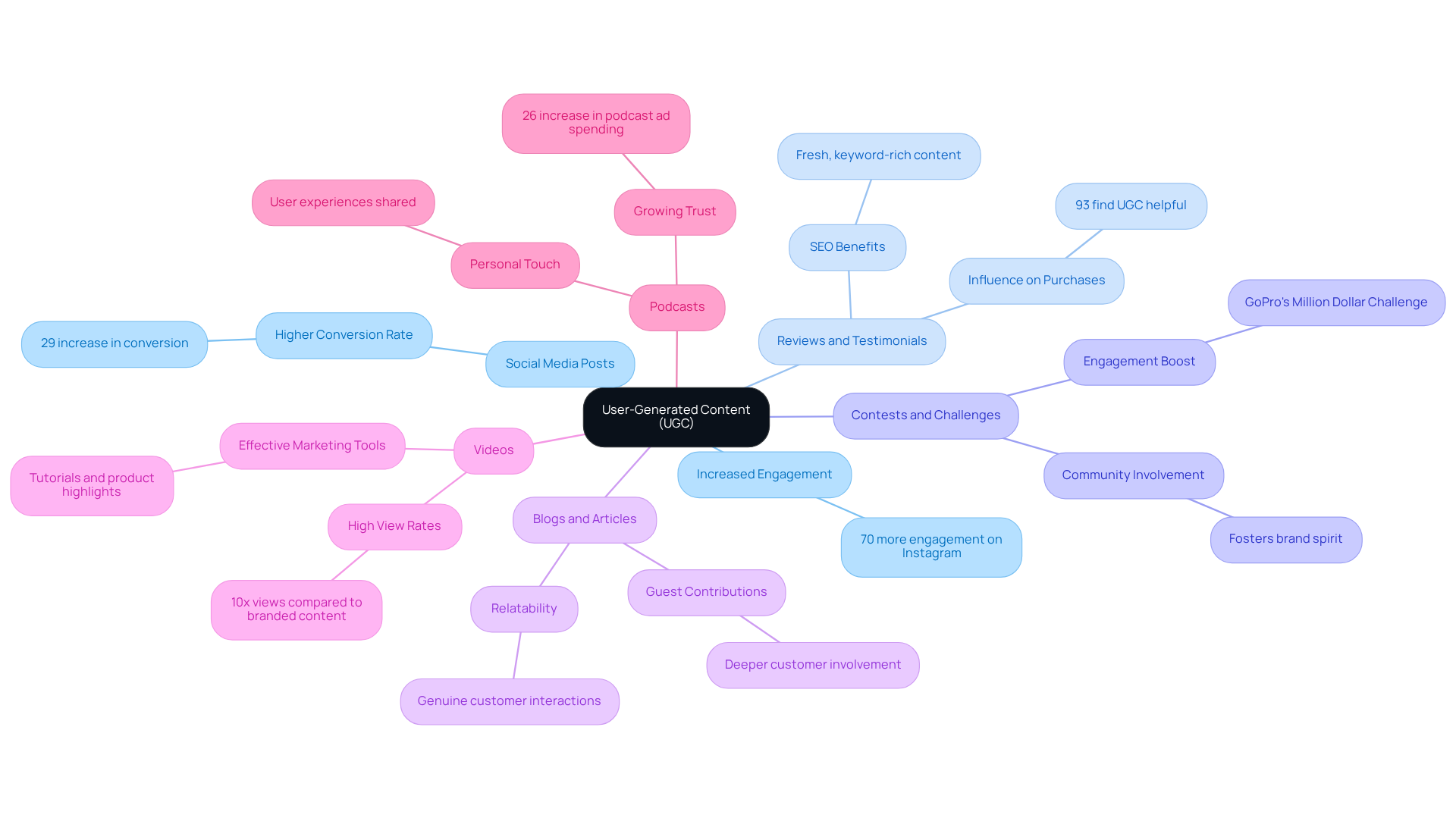
- : These include photos, videos, and stories shared by users on platforms like Instagram, TikTok, and Facebook. Brands often encourage users to tag them in their posts, creating a rich repository of authentic content that resonates with potential customers. Did you know that posts featuring UGC can lead to a ? This statistic showcases their effectiveness in driving sales. Furthermore, Instagram posts that incorporate UGC achieve 70% more engagement, emphasizing the .
- : Written feedback from customers about their experiences with a product or service can be found on e-commerce sites, Google, and social media. Positive reviews significantly influence potential buyers, with 93% of consumers stating that the plays a helpful role in their purchasing decisions. This kind of material adds fresh, keyword-rich elements that improve searchability and SEO performance.
- : Brands often launch campaigns inviting users to submit their content for a chance to win prizes. This strategy not only generates UGC but also enhances engagement and visibility of the company, illustrating the . For instance, GoPro's Million Dollar Challenge encourages users to share their best footage, fostering community involvement and highlighting the company's adventurous spirit.
- Blogs and Articles: Some companies invite customers to contribute guest posts or share their stories on the company's blog. This method offers a foundation for deeper involvement and enables brands to emphasize genuine customer interactions, further boosting relatability.
- , are user-generated content that highlights products, tutorials, or interactions and serve as effective marketing tools, especially on platforms like YouTube and TikTok. UGC videos garner nearly compared to branded materials. Isn’t that a compelling reason to incorporate more UGC into your strategy?
- Podcasts: Audio material produced by users sharing their experiences with a company or product adds a personal touch to company narratives. As as companies experiment with discipline, incorporating UGC into this medium can improve authenticity and trust.
While UGC provides numerous advantages, companies must also navigate challenges such as ensuring content quality and maintaining control over creative direction. By leveraging these diverse types of UGC, companies can foster community engagement, enhance authenticity, and ultimately drive conversions.
Implement Best Practices for User-Generated Content
To effectively implement in marketing strategies, brands must adopt several that align with the , which can significantly enhance their outreach and engagement.
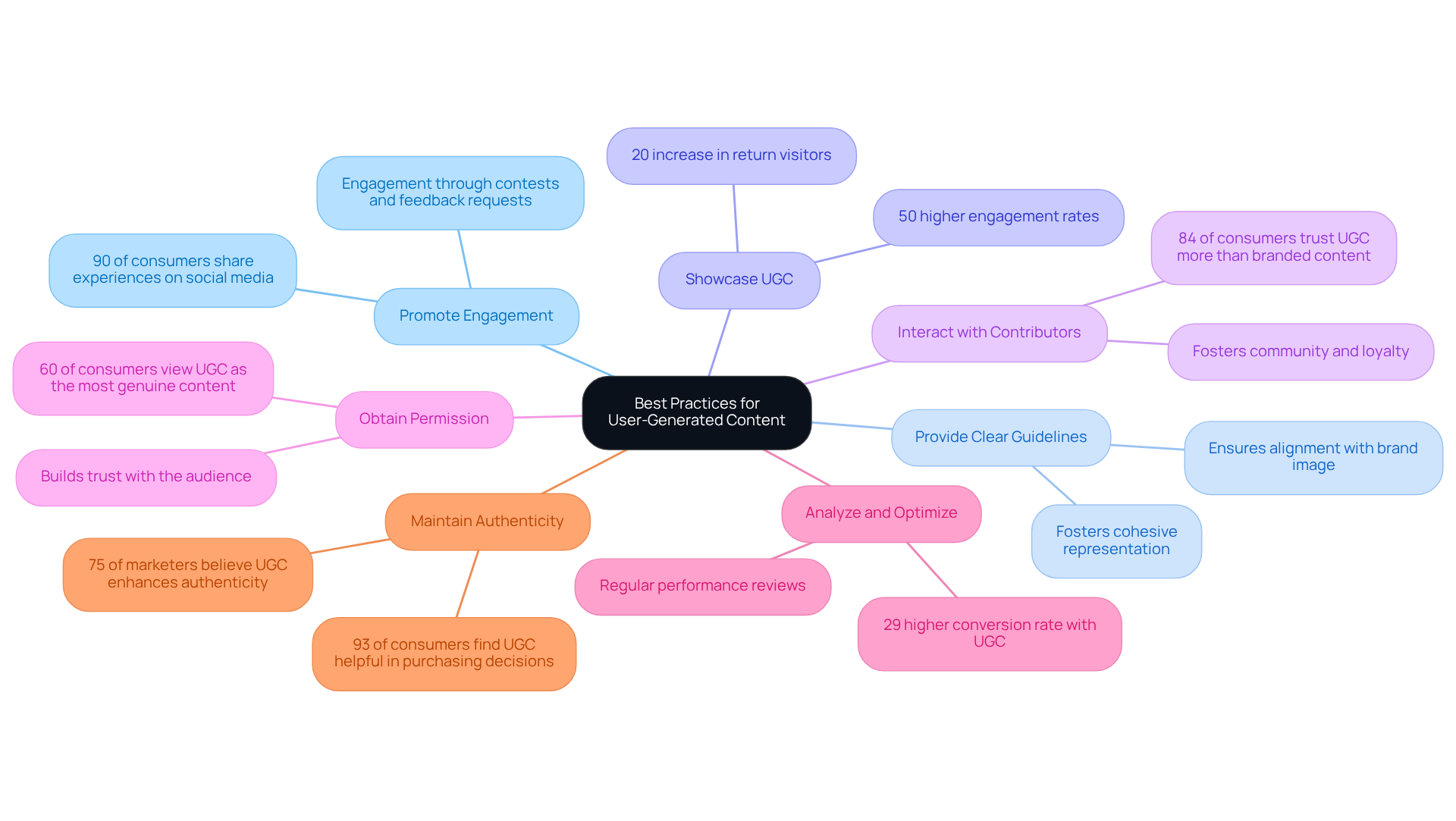
- Promote Engagement: Actively invite customers to share their stories and materials related to your company. This can be achieved through social media campaigns, contests, or simply by requesting feedback. Engaging nearly 90% of consumers who have shared an experience with a product on social media underscores the potential reach and impact of encouraging participation.
- Provide Clear Guidelines: When seeking UGC, it’s crucial to offer clear instructions on the type of material desired. This ensures submissions align with your company's image and messaging, fostering a more cohesive representation of your organization.
- Showcase UGC: Highlight user-generated material on your website and social media channels. This not only acknowledges contributors but also motivates others to participate. Websites featuring UGC see a , and UGC increases by 50% compared to non-UGC campaigns.
- Interact with Contributors: Reply to users who generate material regarding your company. Engaging with them fosters a sense of community and encourages further participation, enhancing loyalty to the organization. Notably, , which highlights the in fostering relationships with contributors to improve brand credibility.
- Obtain Permission: Always seek approval before using someone else's material. This respects the creator's rights and fosters trust with your audience, which is essential as 60% of consumers view UGC as the .
- : Regularly review the performance of UGC campaigns. Analyze which types of content resonate most with your audience and optimize future campaigns accordingly. Companies that strategically incorporate UGC see a 29% higher conversion rate, providing a compelling reason for companies to frequently assess and enhance their UGC tactics.
- Maintain Authenticity: Ensure that the UGC shared reflects genuine customer experiences. Understanding the is key to building trust and credibility with your audience, as 93% of consumers find UGC helpful when making purchasing decisions. Furthermore, 75% of marketers believe UGC enhances brand authenticity, further emphasizing the importance of authenticity in UGC.
Conclusion
User-Generated Content (UGC) has become a cornerstone of modern marketing strategies, providing brands with an authentic avenue to connect with their audience. By harnessing content created by users, brands not only enhance their credibility but also foster deeper engagement. The power of UGC lies in its ability to resonate with consumers, who increasingly favor genuine interactions over conventional marketing tactics.
This article explores the multifaceted nature of UGC, including its definition, types, and best practices for effective implementation. It underscores how social media posts, reviews, contests, and other forms of UGC can significantly drive engagement and conversions. Moreover, it highlights the critical role of authenticity and community interaction in building trust and loyalty among consumers. Brands that actively promote and showcase UGC not only boost their visibility but also enjoy heightened consumer trust and improved conversion rates.
In a marketplace saturated with brand messages, embracing UGC transcends mere marketing tactics; it is an essential strategy for cultivating lasting relationships. Brands are urged to actively seek, showcase, and engage with user-generated content to forge a more authentic and engaging brand experience. By doing so, they can tap into the power of genuine customer voices, ultimately paving the way for greater success in their marketing endeavors.
Frequently Asked Questions
What is User-Generated Content (UGC)?
User-Generated Content (UGC) refers to any content, such as text, images, videos, or audio, created and shared by individuals rather than companies. It is commonly found on social media platforms and includes customer reviews, testimonials, and user-generated photos and videos showcasing a brand's products.
Why is UGC considered valuable in marketing?
UGC is valuable because it offers authentic perspectives that resonate more deeply with potential customers compared to traditional marketing messages. Approximately 92% of consumers trust UGC more than brand-generated content, and 60% believe it reflects the most genuine marketing messaging, which enhances credibility.
How has UGC influenced digital marketing strategies?
As consumers increasingly seek authentic interactions, UGC has become a cornerstone of digital marketing strategies in 2025. Brands leverage UGC to foster community engagement and enhance their marketing efforts, demonstrating its powerful influence on consumer trust and purchasing decisions.
Can UGC impact conversion rates?
Yes, UGC can lead to a 29% higher conversion rate, highlighting its effectiveness in driving sales and influencing purchasing decisions.
What are some examples of brands successfully using UGC?
Brands like GoPro and Dunkin' Donuts effectively leverage UGC through initiatives like the Million Dollar Challenge and engaging social media strategies to enhance their marketing efforts and foster community engagement.
Should brands actively encourage UGC?
Yes, brands should actively encourage and showcase UGC as it can significantly enhance their credibility and engagement, allowing them to connect with their audience on a deeper level.
List of Sources
- Define User-Generated Content (UGC)
- 37 Latest User-Generated Content Statistics (New Report) (https://wiserreview.com/blog/user-generated-content-statistics)
- affiversemedia.com (https://affiversemedia.com/why-user-generated-content-is-the-future-of-digital-marketing)
- socalnewsgroup.com (https://socalnewsgroup.com/2025/02/24/2025-content-marketing-trends)
- The Impact of User-Generated Content on Customer-Centric Digital Marketing (https://thriveagency.com/news/the-impact-of-user-generated-content-on-customer-centric-digital-marketing)
- 2025 Digital Media Trends: Social platforms are becoming a dominant force in media and entertainment (https://deloitte.com/us/en/insights/industry/technology/digital-media-trends-consumption-habits-survey/2025.html)
- Explore Types of User-Generated Content
- 37 Latest User-Generated Content Statistics (New Report) (https://wiserreview.com/blog/user-generated-content-statistics)
- The Impact of User-Generated Content on Customer-Centric Digital Marketing (https://thriveagency.com/news/the-impact-of-user-generated-content-on-customer-centric-digital-marketing)
- emarketer.com (https://emarketer.com/content/social-media-marketers-eye-ugc-influencer-content-growth-burnout-threatens)
- UGC Is Redefining Social Media Marketing in 2025—Here’s How to Leverage It • The Shelf (https://theshelf.com/the-blog/ugc-is-redefining-social-media-marketing-in-2025-heres-how-to-leverage-it)
- npr.org (https://npr.org/2025/11/13/nx-s1-5608271/disney-ai-user-generated-content)
- Implement Best Practices for User-Generated Content
- inbeat.agency (https://inbeat.agency/blog/ugc-statistics)
- npr.org (https://npr.org/2025/11/13/nx-s1-5608271/disney-ai-user-generated-content)
- amraandelma.com (https://amraandelma.com/user-generated-content-statistics)
- lbbonline.com (https://lbbonline.com/news/user-generated-content-5-tips-for-winning-gen-z-customers)