
Introduction
In today's fiercely competitive landscape, brands must master the dynamics of modern marketing to capture consumer attention. We will explore four exemplary ad campaigns that showcase successful strategies and offer actionable insights for optimizing your marketing efforts. As audiences evolve and preferences shift, how can you ensure your campaigns resonate effectively while fostering collaboration and continuous improvement?
Identify and Understand Your Target Audience
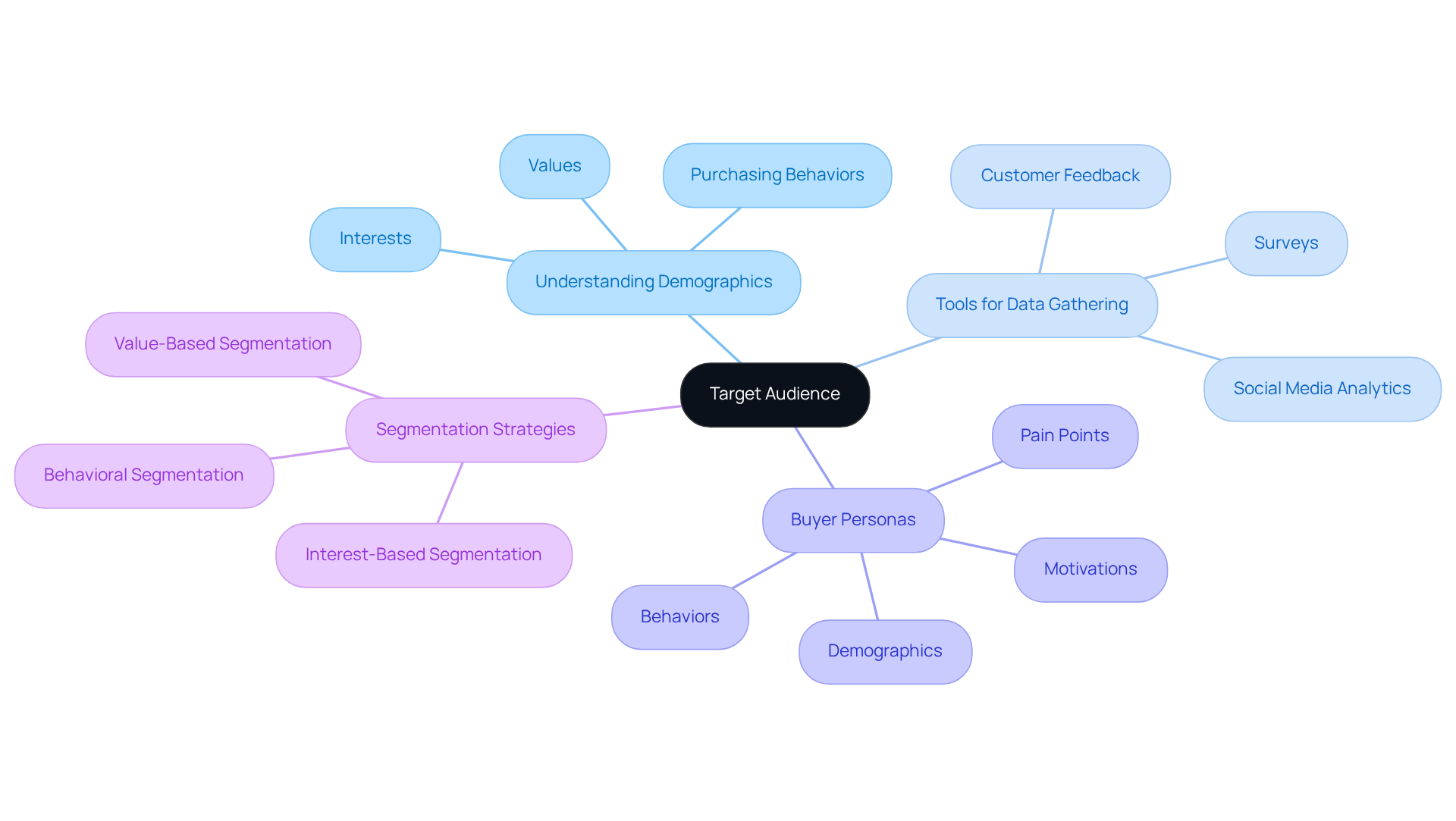
Understanding your target demographic is not just beneficial; it's essential for crafting a successful marketing strategy. To achieve this, leverage tools such as surveys, social media analytics, and customer feedback to gather data on demographics, interests, and purchasing behaviors. Creating detailed buyer personas that define your ideal customers is essential. This approach allows you to tailor your messaging and creative assets to align with their specific needs and preferences.
For instance, if your target group consists mainly of millennials who prioritize sustainable products, your campaigns should prominently feature eco-friendly practices and values. Segmenting your audience based on behaviors and preferences enables the creation of more tailored promotional experiences. This targeted strategy enhances engagement and improves campaign effectiveness, leading to a better return on investment (ROI).
With 62% of Gen Z consumers favoring eco-friendly brands and 73% prepared to spend extra for sustainable products, aligning your promotional efforts with these values can nurture stronger connections and enhance customer loyalty. Aligning your marketing efforts with consumer values isn't just a strategy; it's a necessity for building lasting customer relationships.
Implement Structured Creative Testing Frameworks
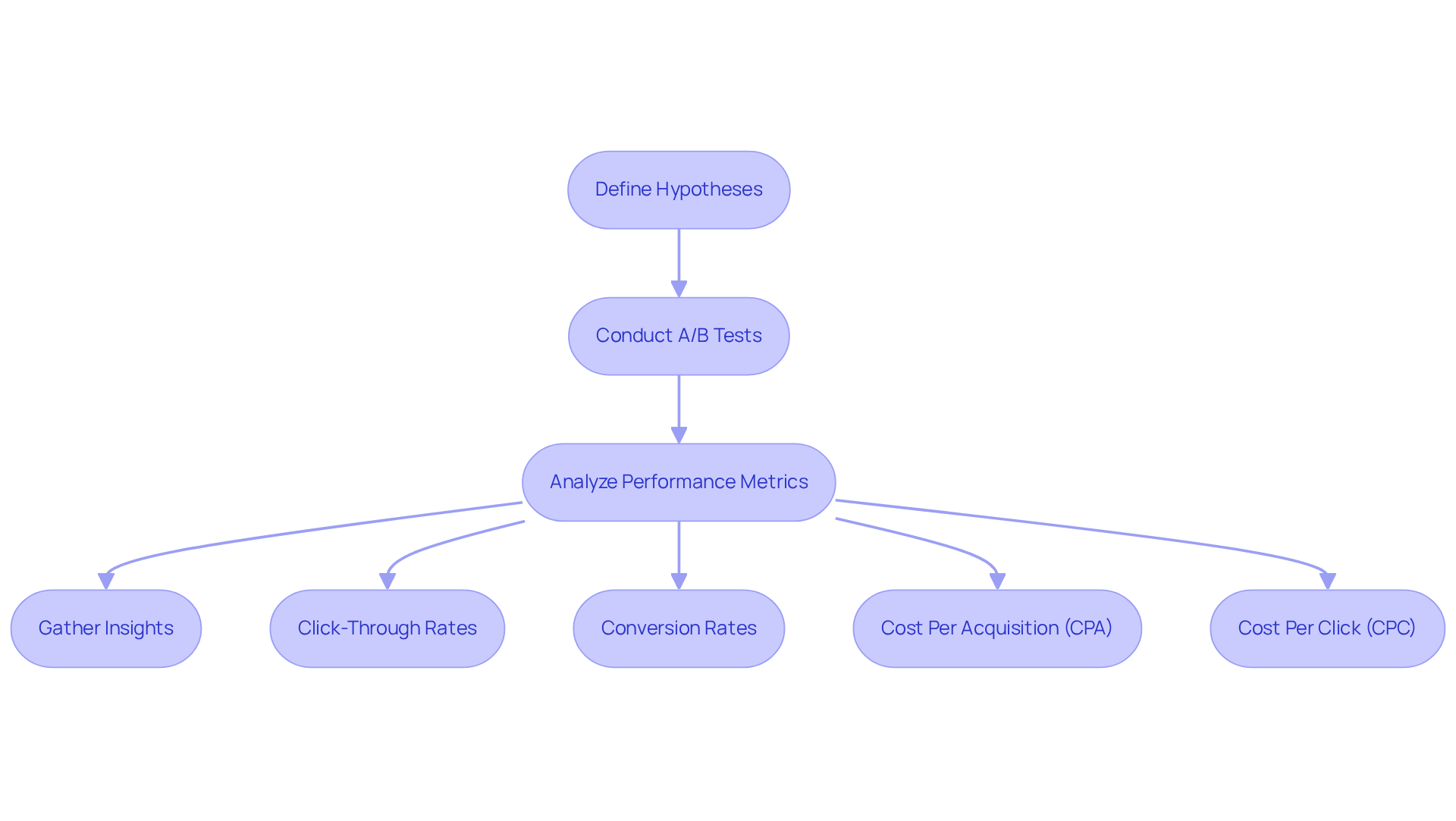
To elevate your marketing strategy, it's crucial to implement organized creative evaluation frameworks that facilitate systematic experimentation with ad creatives. Begin by defining clear hypotheses for each test, focusing on variations in messaging, visuals, or calls to action. Implement A/B trials to compare different versions of your ads, analyzing key performance metrics such as click-through rates, conversion rates, cost per acquisition (CPA), and cost per click (CPC).
For instance, when testing two distinct headlines for a product ad, run both versions concurrently to determine which one generates higher engagement. Insights gained from these tests can guide future innovative decisions, enabling continuous optimization of your campaigns. This method not only highlights top-performing creatives but also helps keep your content fresh, reducing the risk of artistic fatigue.
In 2026, effective A/B evaluation demands a nuanced approach. It requires both laboratory analysis and system deployment. Brands should strive for a volume of trials that enables significant data collection, with larger advertisers aiming for 100 ads per month or more. Furthermore, it is essential to recognize that innovative experimentation is not advantageous for campaigns producing fewer than 30 conversions weekly. By adhering to these principles and addressing assessment backlogs, marketers can enhance their ad performance and drive better outcomes while being mindful of potential pitfalls, such as invalid traffic skewing results. MediaNug's structured testing framework emphasizes the importance of aligning creative strategy with media objectives, ensuring that performance data feeds back into every iteration cycle, ultimately unlocking creative performance and driving revenue-driven success.
Embrace Continuous Optimization for Performance Enhancement
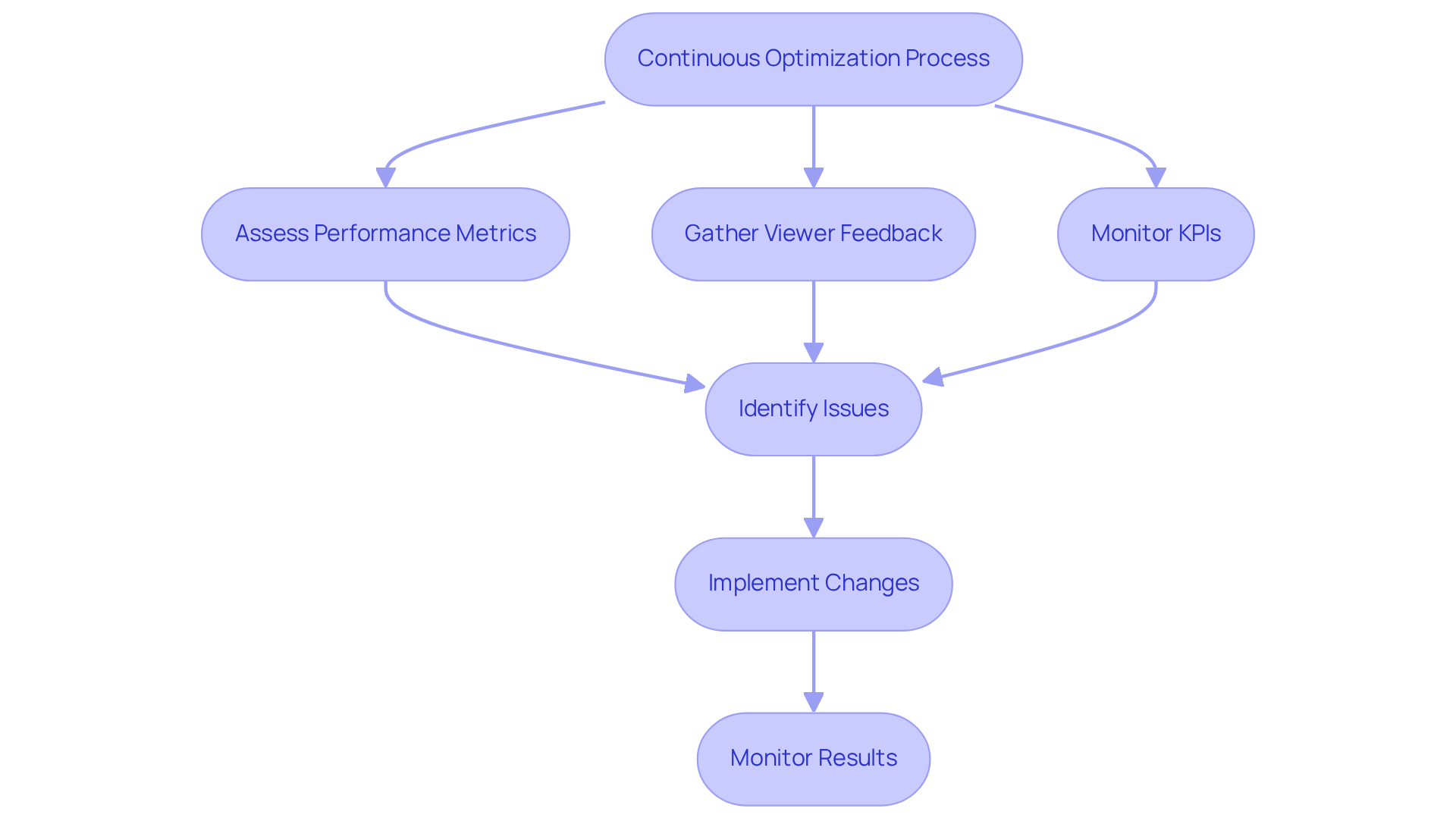
To truly excel in your marketing campaigns, a commitment to continuous optimization is non-negotiable. Consistently assess performance metrics and gather feedback from your viewers to pinpoint areas for enhancement. Use analytics tools to monitor key performance indicators (KPIs). These include return on ad spend (ROAS), typically ranging from 2:1 to 4:1, along with engagement and conversion rates.
For instance, if you notice a drop in engagement on a specific ad, take a closer look at the design elements and demographic targeting to identify potential issues. Ignoring low ROAS can lead to wasted resources and missed opportunities, so it’s essential to investigate further. Implement changes based on your findings and monitor the results closely. By making informed adjustments, you can significantly improve campaign performance and ROI. Additionally, ensure consistent UTM tagging and proper installation of tracking pixels, as these are crucial for capturing accurate conversion data.
This ongoing process helps you fine-tune your strategies over time, ensuring that your promotional efforts remain aligned with audience expectations and market trends. Building adaptable systems and fostering a culture of continuous learning will further enhance your long-term strategic growth. Ultimately, the ability to adapt and learn will define your success in an ever-evolving market landscape.
Foster Collaboration Across Cross-Functional Teams
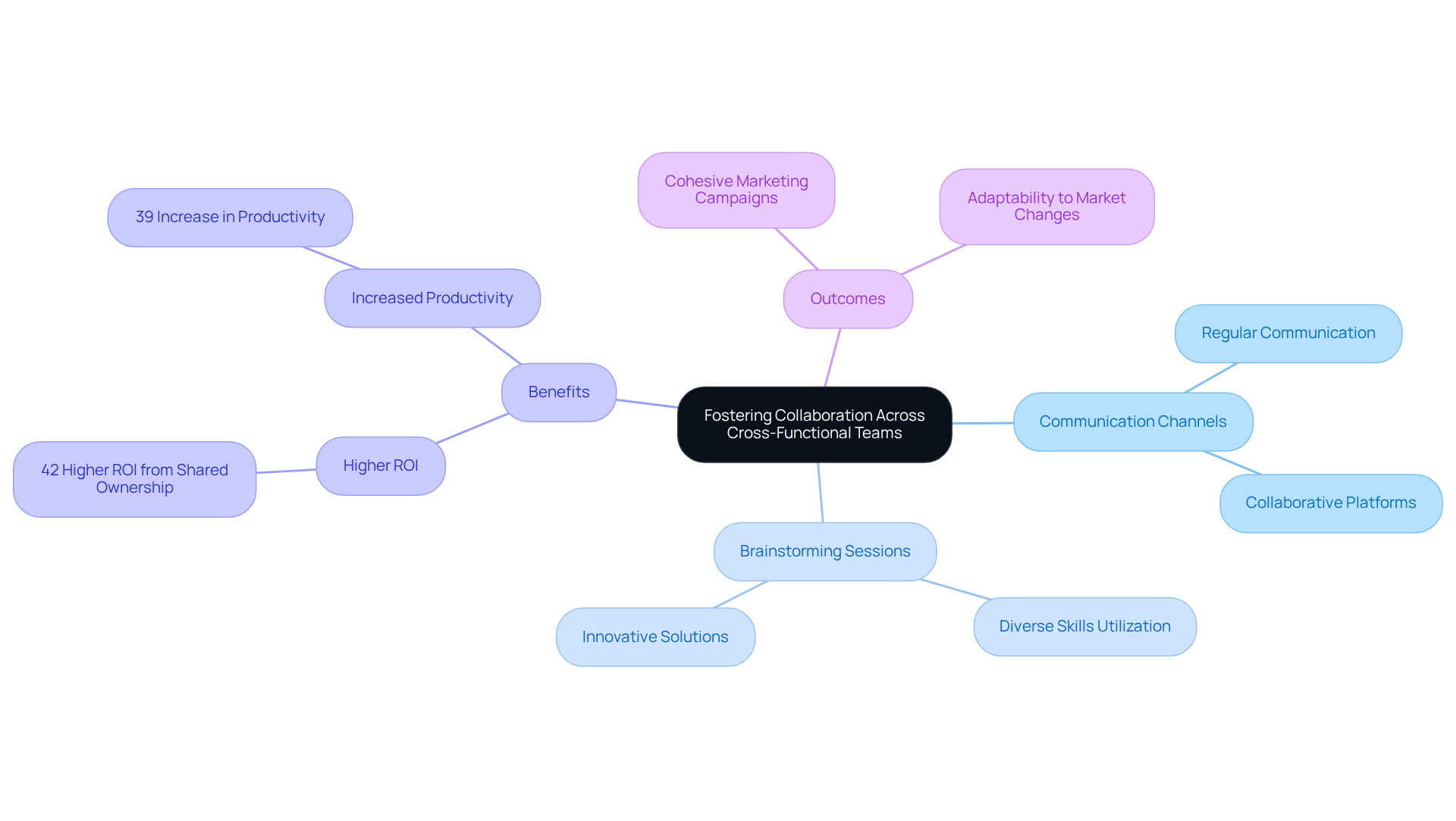
To elevate your promotional strategy, fostering collaboration among cross-functional teams is essential. Regular communication channels and collaborative platforms enable team members to share insights, feedback, and ideas effectively. Have you considered how brainstorming sessions can harness the diverse skills and perspectives of your team for innovative solutions?
For instance, engaging your inventive team in conversations about insights collected from analytics ensures that messaging aligns with viewer expectations. Research shows that campaigns where creative and promotional teams share ownership of outcomes achieve a 42% higher ROI. Additionally, companies that strengthen team collaboration see a 39% increase in productivity. Without effective collaboration, your ad campaign examples may not achieve their full potential. By breaking down silos and promoting teamwork, you can create cohesive and effective marketing campaigns, which can include ad campaign examples that resonate with your target audience and drive better results. This shift in teamwork not only enhances campaign effectiveness but also drives measurable results, allowing teams to adapt quickly to changing market conditions. Ultimately, embracing teamwork can transform your marketing efforts and lead to unprecedented success.
Conclusion
In a landscape where competition is fierce, mastering marketing strategies is not just beneficial; it's imperative for survival. Understanding and optimizing these strategies is crucial for achieving success in today’s competitive environment. This article emphasizes the importance of:
- Identifying and understanding your target audience
- Implementing structured creative testing frameworks
- Embracing continuous optimization
- Fostering collaboration across cross-functional teams
Each of these elements plays a vital role in enhancing campaign effectiveness and ensuring alignment with consumer expectations.
Key insights include:
- The necessity of creating detailed buyer personas to tailor messaging effectively
- The value of organized testing to refine ad creatives
- The ongoing assessment of performance metrics to drive improvements
Furthermore, collaboration among diverse teams fosters innovation and enhances productivity, resulting in campaigns that resonate more deeply with audiences.
By embracing these strategies, brands position themselves not just to survive but to thrive in an ever-evolving marketplace. Prioritizing audience understanding, continuous improvement, and teamwork allows brands to navigate the complexities of the market, adapt to evolving trends, and build lasting relationships with customers. Embracing these practices will not only optimize ad campaigns but also drive sustainable growth in an ever-changing environment.
Frequently Asked Questions
Why is understanding your target audience important for marketing?
Understanding your target audience is essential for crafting a successful marketing strategy as it allows you to tailor your messaging and creative assets to align with their specific needs and preferences.
What tools can be used to identify and understand a target audience?
Tools such as surveys, social media analytics, and customer feedback can be leveraged to gather data on demographics, interests, and purchasing behaviors.
What are buyer personas and why are they important?
Buyer personas are detailed profiles that define your ideal customers. They are important because they help tailor marketing efforts to meet the specific needs and preferences of different segments of your audience.
How can audience segmentation enhance marketing efforts?
Segmenting your audience based on behaviors and preferences enables the creation of more tailored promotional experiences, which enhances engagement and improves campaign effectiveness, leading to a better return on investment (ROI).
What specific values should marketers consider when targeting Gen Z consumers?
Marketers should consider eco-friendly values, as 62% of Gen Z consumers favor eco-friendly brands and 73% are willing to spend extra for sustainable products.
How does aligning marketing efforts with consumer values impact customer relationships?
Aligning marketing efforts with consumer values is necessary for building lasting customer relationships, as it nurtures stronger connections and enhances customer loyalty.
List of Sources
- Identify and Understand Your Target Audience
- The State of Consumer Spending: Gen Z Shoppers Demand Sustainable Retail (https://firstinsight.com/white-papers-posts/gen-z-shoppers-demand-sustainability)
- How to Find Your Brand’s Audience in 2026: A Guide (https://medium.com/creative-black-pug-studio/how-to-find-your-brands-audience-in-2026-a-guide-eafd55c2f1a1)
- 52 Huge Environmentally Conscious Consumer Statistics 2026 (https://theroundup.org/environmentally-conscious-consumer-statistics)
- 10 Powerful Quotes on the Importance of Knowing Your Audience | The StoryStudio (https://hearststorystudio.com/post/10-powerful-quotes-on-the-importance-of-knowing-your-audience)
- kadence.com (https://kadence.com/en-us/knowledge/why-gen-z-values-sustainability-tips-for-marketing-to-the-eco-conscious-generation)
- Implement Structured Creative Testing Frameworks
- fiveninestrategy.com (https://fiveninestrategy.com/creative-testing-algorithmic-campaigns)
- 7 A/B testing best practices to drive greater ad performance (https://lunio.ai/blog/ab-testing-best-practices)
- Meta Creative Testing Framework: The 3-3-3 Approach to Finding Winners - Pilothouse Digital (https://pilothouse.co/post/meta-creative-testing-framework-the-3-3-3-approach-to-finding-winners)
- The Meta Creative Testing Frameworks Top Brands Use in 2026 (https://linkedin.com/pulse/meta-creative-testing-frameworks-top-brands-use-2026-andrew-foxwell-xijec)
- sovran.ai (https://sovran.ai/blog/creative-testing-software)
- Embrace Continuous Optimization for Performance Enhancement
- lseo.com (https://lseo.com/blog/digital-marketing/2026-and-beyond-predictions-for-the-next-decade-of-digital-marketing)
- ROAS Statistics 2026 – First Page Sage (https://firstpagesage.com/reports/roas-statistics)
- liftoff.ai (https://liftoff.ai/blog/what-is-a-good-roas)
- Return on Ad Spend (ROAS): Formula & Benchmarks 2026 (https://improvado.io/blog/return-on-ad-spend)
- Foster Collaboration Across Cross-Functional Teams
- linkedin.com (https://linkedin.com/pulse/driving-market-success-power-cross-functional-shail-desai-joc4f)
- linkedin.com (https://linkedin.com/advice/3/how-can-you-foster-collaboration-between-creative-lf4sf)
- cape.io (https://cape.io/news/breaking-barriers-why-media-and-creative-teams-should-work-together-more)
- Workplace Collaboration Statistics to Up Your Team’s Productivity (https://cake.com/blog/workplace-collaboration-statistics)
- 90+ Workplace Collaboration Statistics That Matter in 2026 (https://hireborderless.com/post/workplace-collaboration-statistics)
Need Better Performing Social Content?
MediaNug helps brands scale through creator partnerships, performance creative, and platform-native content strategies built for modern social platforms.
Continue Reading
Influencer & Creator Marketing
- The Complete Guide to Influencer Marketing Strategy & Operations
- The Complete Guide to UGC Content Strategy for Brands
- Master UGC Creator Tools: Best Practices for Brand Success
Paid Social & Performance Creative
- The Complete Guide to Paid Social Creative Strategy
- Why Your Brand Needs a Performance Creative Agency for Growth
- What is an Ad Creative Agency and Why It Matters for Brands
Platform & Trend Insights
- UGC Creators for Paid Social Ads: How to Find, Vet, and Scale Winning Creative
- 4 Best Practices for Effective TikTok Creatives That Drive Engagement
- 10 Key Insights on Instagram Demographics for Brand Strategies
- The Role Of Visual Storytelling In Social Media
Strategy & Growth
- Understanding Creative Strategy: Key Concepts and Examples
- 6 Steps to Create an Effective Creative Strategy Sample
- Understanding eCommerce Brand Strategy: Importance and Key Components