
Introduction
Launching a successful social media campaign is much like conducting a symphony; every note must align to create a harmonious experience that resonates with your audience. Did you know that 81% of consumers recognize the impact of social media on their purchasing decisions? With such a significant statistic, the stakes are higher than ever for brands looking to leave a lasting impression. This article explores four best practices that not only streamline the launch process but also enhance engagement and drive measurable results.
What strategies can brands implement to ensure their social media debut captivates their target audience and stands out in an increasingly crowded digital landscape?
Establish a Strategic Launch Plan
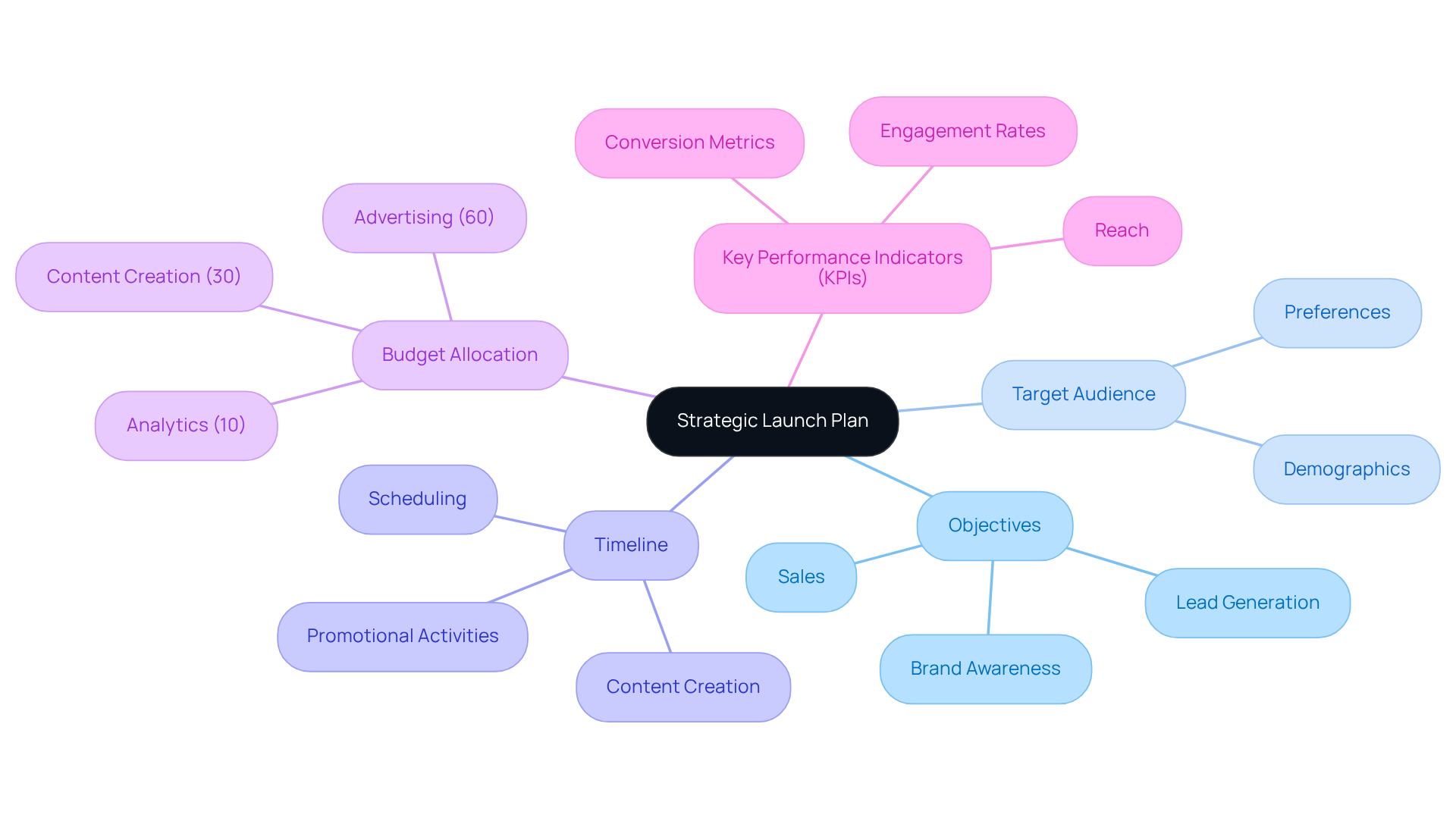
To ensure a , it is important to start by defining clear objectives. What do you want to achieve? Whether it’s brand awareness, lead generation, or sales, having will effectively guide your strategy. For instance, , underscoring the importance of targeted messaging.
Next, . Utilize tools like Google Analytics and social media insights to gather demographic data and understand their preferences. This information will assist in customizing your messaging and materials to connect with your audience. Brands that excel in product introductions balance promotional content with authentic interactions, fostering trust and engagement.
Develop a comprehensive timeline highlighting key milestones leading up to the social media launch, which includes , scheduling, and promotional activities. Using can help keep track of tasks and deadlines, ensuring smooth execution. Furthermore, create a multi-tiered hashtag strategy to enhance visibility during the launch, incorporating unique branded hashtags, trending industry tags, and community-focused hashtags.
Additionally, establish , such as engagement rates, reach, and conversion metrics. Consider a strategic budget distribution framework of:
- 60% for advertising
- 30% for
- 10% for analytics
to ensure effective resource allocation. This structured approach not only provides clarity and direction but also increases the likelihood of achieving your launch objectives, ultimately driving measurable growth. Remember to test different post formats, caption styles, and posting times to optimize your social media strategy.
Create Engaging and Relevant Content
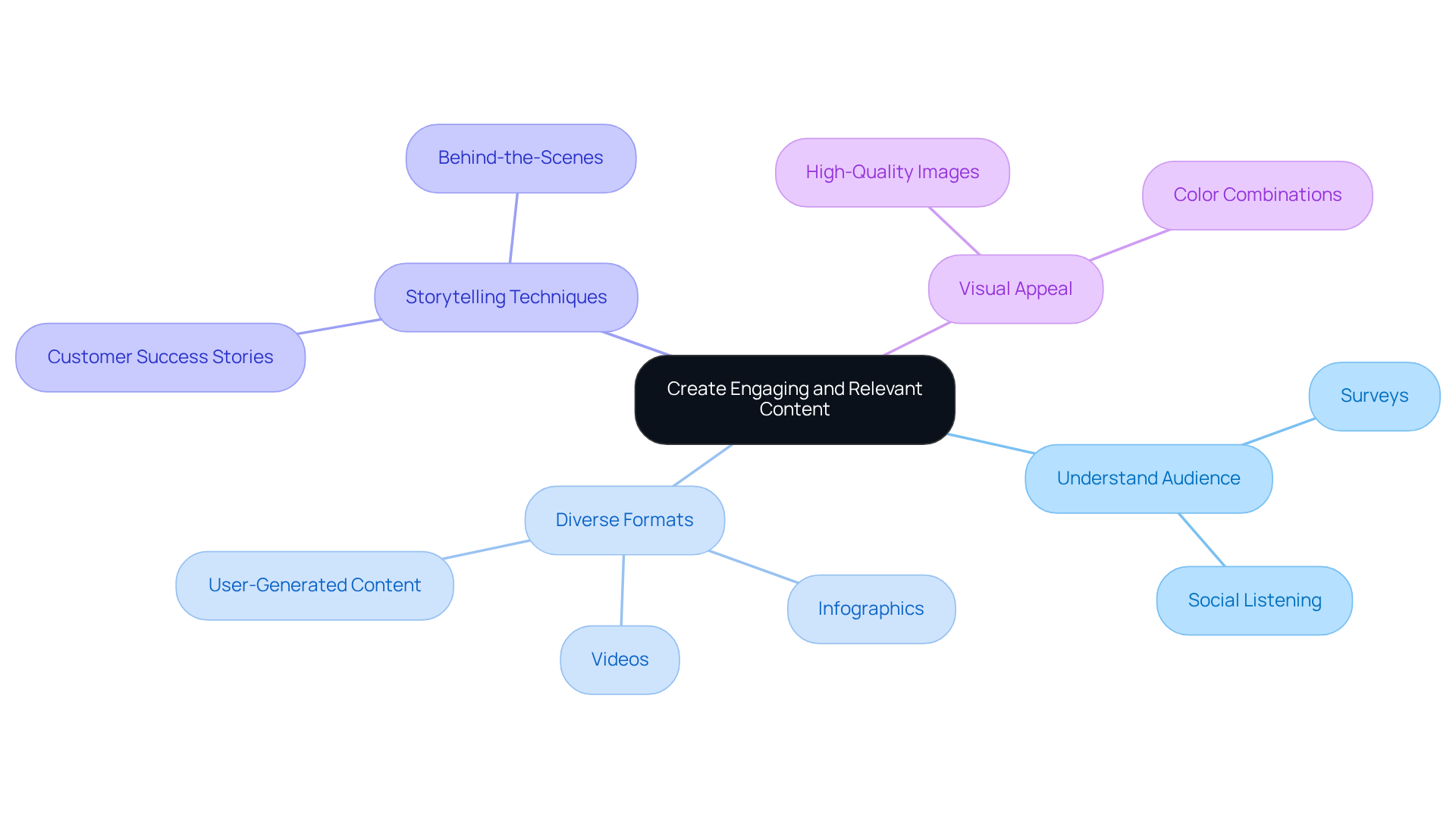
To create material that truly connects, start by understanding your audience's interests and challenges. Conduct surveys or engage in social listening to gather valuable insights. Use this information to craft that address your listeners' needs. Incorporate diverse formats, such as:
- Videos
- Infographics
to keep your feed dynamic and engaging.
Utilize to forge emotional connections with your audience. For example, share or provide of your brand. Furthermore, leverage to boost visibility. Tools like BuzzSumo can help identify popular themes. Finally, ensure your content is visually appealing; are more likely to capture attention and drive engagement.
Optimize Logistics and Scheduling
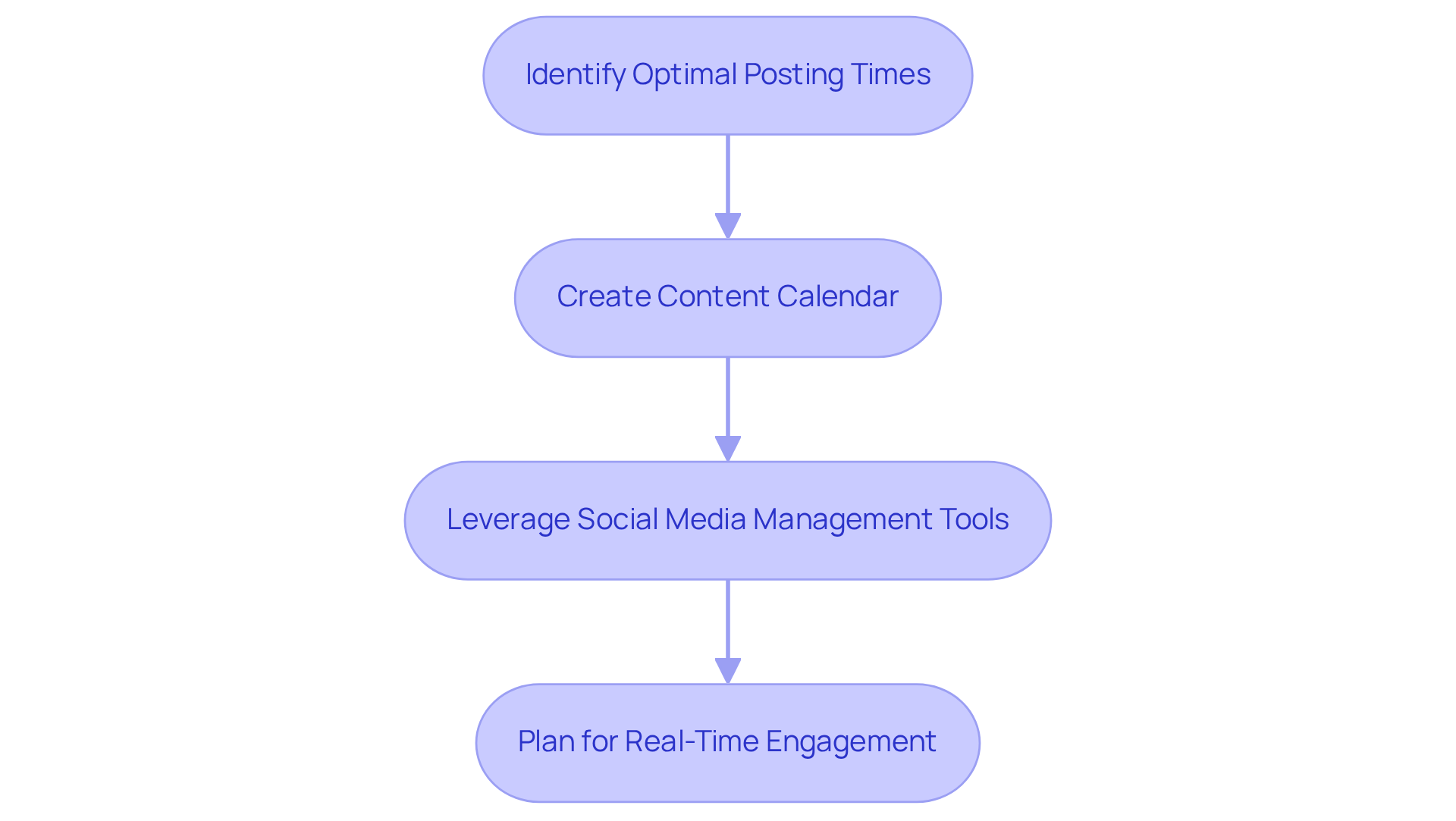
To optimize logistics, begin by identifying the based on your . Insights from tools like Sprout Social indicate that the are Tuesdays from 5-9 p.m., while Facebook engagement peaks on Wednesdays and Thursdays. By creating a , you ensure a balanced mix of promotional and engaging content, which helps maintain .
Furthermore, consider leveraging to schedule posts in advance. These platforms simplify approval workflows and enable consistent posting without the need for daily manual updates. In addition, plan for by allocating resources to monitor comments and messages, ensuring prompt responses that foster community interaction. As Neil Patel aptly states, 'Sharing content when your viewers aren’t online is like throwing a party when no one can attend.' This proactive approach not only enhances audience engagement but also builds a positive brand image.
Measure Performance and Adapt Strategies
After launching, it’s crucial to closely monitor such as , reach, and . Utilize like Google Analytics and native platform insights to gather essential data. allows you to identify trends and pinpoint .
For instance, if certain media types outperform others, consider reallocating resources to focus on those formats. Additionally, from your audience through polls or surveys to gauge their perceptions and preferences. This feedback is invaluable in shaping future . Finally, be ready to based on performance data. Flexibility is vital in the fast-paced realm of social media, and adapting strategies in real-time can significantly enhance outcomes.

Conclusion
A successful social media launch is built on a well-structured strategy that includes clear objectives, engaging content, optimized logistics, and performance measurement. By honing in on these essential elements, brands can effectively connect with their target audience and achieve their desired outcomes-whether that’s increasing brand awareness, generating leads, or driving sales.
This article outlines four best practices that serve as a roadmap for launching a social media campaign:
- Establish a strategic launch plan with specific goals.
- Create relevant and engaging content tailored to audience interests.
- Optimize logistics and scheduling for maximum reach.
- Measure performance to adapt strategies.
Each of these components is vital in ensuring that the launch not only reaches its intended audience but also resonates with them.
The significance of a successful social media launch cannot be overstated. As consumer behavior increasingly leans towards social media influence, implementing these best practices becomes essential for brands aiming to thrive in a competitive landscape. By taking the time to strategize, create compelling content, and adapt based on performance, brands can foster meaningful connections with their audience and drive sustainable growth. Embrace these practices and elevate your next social media launch to new heights.
Frequently Asked Questions
What is the first step in creating a successful social media launch plan?
The first step is to define clear objectives, such as brand awareness, lead generation, or sales, which will guide your strategy.
Why is it important to identify a target group for a social media launch?
Identifying a target group is crucial because it allows you to gather demographic data and understand preferences, helping to customize messaging and materials that connect with your audience.
How can brands effectively balance promotional content and interactions during a product launch?
Brands can excel by balancing promotional content with authentic interactions, which fosters trust and engagement with their audience.
What should be included in a comprehensive timeline for a social media launch?
A comprehensive timeline should highlight key milestones, including content creation, scheduling, and promotional activities.
What tools can assist in managing tasks and deadlines for a social media launch?
Project management tools like Trello or Asana can help keep track of tasks and deadlines.
What is a multi-tiered hashtag strategy and why is it important?
A multi-tiered hashtag strategy enhances visibility during the launch by incorporating unique branded hashtags, trending industry tags, and community-focused hashtags.
What are key performance indicators (KPIs) and why should they be established?
KPIs are metrics such as engagement rates, reach, and conversion metrics that measure success post-launch. Establishing them helps assess the effectiveness of the launch.
How should a strategic budget be distributed for a social media launch?
A suggested budget distribution framework is 60% for advertising, 30% for content creation, and 10% for analytics.
What approach increases the likelihood of achieving launch objectives?
A structured approach that provides clarity and direction, along with testing different post formats, caption styles, and posting times, increases the likelihood of achieving launch objectives.
List of Sources
- Establish a Strategic Launch Plan
- canva.com (https://canva.com/learn/10-tactics-for-launching-a-product-using-social-media)
- revuze.it (https://revuze.it/blog/product-launch-on-social-media-strategies-for-maximum-impact)
- sociallyin.com (https://sociallyin.com/resources/social-media-strategy-for-product-launch)
- How to Build a Winning Social Media Strategy in 8 Simple Steps (https://ama.org/marketing-news/social-media-marketing-strategy)
- 120+ Must-know social media marketing statistics for 2026 (https://sproutsocial.com/insights/social-media-statistics)
- Create Engaging and Relevant Content
- engageinteractive.co.uk (https://engageinteractive.co.uk/blog/your-guide-to-creating-high-performing-social-media-content-in-2025)
- hootsuite.com (https://hootsuite.com/research/social-trends?srsltid=AfmBOorm7ZgXos4RRBgbqPGCxLUCiaWyISu9w_Pfrqjd-Pz4tFGETjxo)
- smallbiztrends.com (https://smallbiztrends.com/how-to-generate-content-for-social-media)
- forbes.com (https://forbes.com/councils/forbescommunicationscouncil/2025/01/30/18-tips-for-incorporating-user-generated-content-in-your-marketing)
- 7 social media trends you need to know in 2026 (https://sproutsocial.com/insights/social-media-trends)
- Optimize Logistics and Scheduling
- sproutsocial.com (https://sproutsocial.com/insights/social-media-calendar)
- socialpilot.co (https://socialpilot.co/blog/best-times-to-post-on-social-media)
- socialfirm.com (https://socialfirm.com/blog/how-using-a-content-calendar-makes-your-social-content-better)
- Best times to post on social media in 2026 (https://sproutsocial.com/insights/best-times-to-post-on-social-media)
- smallbusinessxchange.com (https://smallbusinessxchange.com/news/how-to-create-a-social-media-content-calendar/129969)
- Measure Performance and Adapt Strategies
- camphouse.io (https://camphouse.io/blog/social-media-kpis)
- searchenginejournal.com (https://searchenginejournal.com/measuring-social-media-impact/536484)
- loomly.com (https://loomly.com/blog/social-media-kpis)
- emplifi.io (https://emplifi.io/resources/blog/social-media-kpis)
- getbuzzmonitor.com (https://getbuzzmonitor.com/en/social-media-kpis-analysis)