Introduction
In today’s fast-paced digital landscape, brands are on a relentless quest to connect with their audiences and distinguish themselves from the competition. This article explores ten innovative marketing ideas that showcase how companies can elevate their brand strategies through creativity and authenticity. By harnessing the power of user-generated content, leveraging storytelling, and fostering community engagement, these examples not only highlight successful campaigns but also raise a pivotal question:
- How can brands adapt these strategies to resonate more deeply with their consumers in an ever-evolving market?
MediaNug: Transforming Brand Strategies with Creator-Led Content
MediaNug is at the forefront of digital marketing, harnessing the power of creator-led content to significantly boost visibility and drive measurable performance across platforms like TikTok, Meta, and YouTube Shorts. By focusing on high-performing , MediaNug empowers companies to lower and improve . Companies leveraging UGC have seen a remarkable 30% reduction in and an impressive 10.38 times higher conversion rates compared to company-generated posts.
Furthermore, 64% of customers are more likely to share content about a company when it reposts their contributions, fostering a sense of community engagement. MediaNug's proprietary ensure that every piece of content is meticulously and iterative testing, enabling companies to effectively. As we look ahead to 2026, integrating UGC is not just a trend; it’s a necessity for companies striving to excel in a competitive market.
Are you ready to elevate your digital marketing strategy? Engage with MediaNug today and discover how we can help you thrive.

CeraVe's Anti-Advertising Campaign: Emphasizing Authenticity
CeraVe's anti-advertising campaign has fundamentally transformed how skincare companies engage with their audiences, placing authenticity at the forefront of their communication strategies. This innovative approach resonates particularly well with Gen Z and millennials, who prioritize . By leveraging relatable content, CeraVe not only cultivates trust but also fosters a vibrant community, making it a top choice among younger consumers.
According to an Ipsos report, over 70 percent of global respondents prefer companies that align with their values and purpose. This statistic underscores the critical in marketing. Expert insights from Melanie Vidal highlight that . Similarly, Philip Kotler emphasizes that is essential.
Other brands, such as Patagonia and Dove, have also successfully embraced authenticity in their promotional strategies, showcasing that can significantly enhance . The CeraVe campaign exemplifies , serving as one of the that resonate deeply with consumers who seek real, meaningful interactions. As brands navigate this landscape, the call to action is clear: with your audience.

UNIQLO's 'Uncover' Campaign: Engaging Customers Through Storytelling
UNIQLO's 'Uncover' campaign stands as a masterclass in storytelling, effectively engaging individuals by weaving narratives that resonate with their lifestyles. This campaign , showcasing its effectiveness in reaching a vast audience. By concentrating on the and the functionality of their products, UNIQLO crafts a captivating story that motivates consumers to engage with the company on a deeper level.
Furthermore, this method not only enhances customer interaction but also strengthens loyalty, illustrating the significant impact of . As companies increasingly acknowledge the value of narrative, the ongoing trend of becomes evident. With over 3 billion active users engaging with globally, it’s clear that storytelling plays a crucial role in modern marketing strategies.
In addition, the success of UNIQLO's campaign serves as a powerful example for other brands looking to . By leveraging personal narratives and focusing on functionality, businesses can and . Are you ready to harness the power of storytelling in your marketing efforts?

American Express OPEN Forum: Building Community Engagement
American Express's OPEN Forum exemplifies how companies can effectively foster and networking opportunities. By creating a platform for small business owners to exchange insights and share experiences, American Express cultivates a sense of belonging among its users. This community-driven approach not only enhances but also positions American Express as a trustworthy ally within the business ecosystem.
As Loren Feldman points out, many businesses mistakenly focus on promoting their own products. However, it is the nurturing of that truly motivates clients to engage. In 2026, successful brands will view clients as partners rather than mere transactions, reflecting a significant shift in consumer expectations. Such initiatives underscore the effectiveness of , demonstrating that and sustained loyalty.
For instance, a local coffee shop's community blood drive resulted in a remarkable 40% increase in foot traffic, showcasing the tangible benefits of . By embracing transparency and actively seeking feedback, American Express builds trust and reinforces its commitment to . This approach not only strengthens relationships but also encourages ongoing engagement, inviting businesses to consider how they can similarly connect with their communities.

Slack's Word-of-Mouth Marketing: Leveraging User Recommendations
Slack's word-of-mouth promotion strategy has emerged as a pivotal force in its growth journey. By prioritizing and crafting a product that users genuinely love, Slack has effectively turned its satisfied customers into passionate advocates. This not only boosts visibility but also cultivates trust among potential users, showcasing the power of in today's digital landscape.
Research reveals that yield high-quality leads, with advocate referrals exhibiting an 18% lower churn rate and a 16% higher lifetime value. Furthermore, Slack's 'Wall of Love' campaign exemplifies how can bolster support for the company, highlighting positive experiences and encouraging community engagement. By monitoring metrics like , Slack can evaluate loyalty and advocacy potential, reinforcing the connection between and brand growth.

Lyft's Referral Program: Incentivizing Customer Acquisition
Lyft's referral program showcases the remarkable effectiveness of . By rewarding both referrers and new users, Lyft not only broadens its user base but also fosters a sense of . This dual-incentive approach significantly enhances identity and recall value for first-time users, which is crucial for building loyalty. Furthermore, Lyft's partnership with Vistaprint simplifies the sharing of referral links, addressing common challenges users face when promoting their codes.
Marketing experts recognize that is vital for evaluating success. High engagement levels are indicative of loyalty and effectiveness. As Amy Wilder, a Community Manager, aptly states, "By offering rewards, you’re not just attracting clients - you’re ." This insight underscores the , which are excellent in modern marketing strategies.
In conclusion, Lyft's approach not only attracts new users but also cultivates a , making it a prime example of how effective can drive .

Sephora: Merging Online and In-Store Experiences for Engagement
Sephora stands as a prime example of how to effectively blend online and in-store experiences, creating a for its clientele. By leveraging advanced technology and , Sephora ensures smooth transitions between digital and physical touchpoints. This not only enhances but also fortifies loyalty to the brand, underscoring the importance of a in today’s competitive retail landscape.
Notably, 69% of US consumers favor companies that deliver a , highlighting the urgent need for retailers to adapt. As Nick Odom points out, brands must rethink their interactions across channels to align with .
Furthermore, investing in is crucial; well-prepared staff can significantly elevate , ensuring that the seamless experience Sephora aims to provide is fully realized.

JetBlue: Using Technology for Instant Customer Service
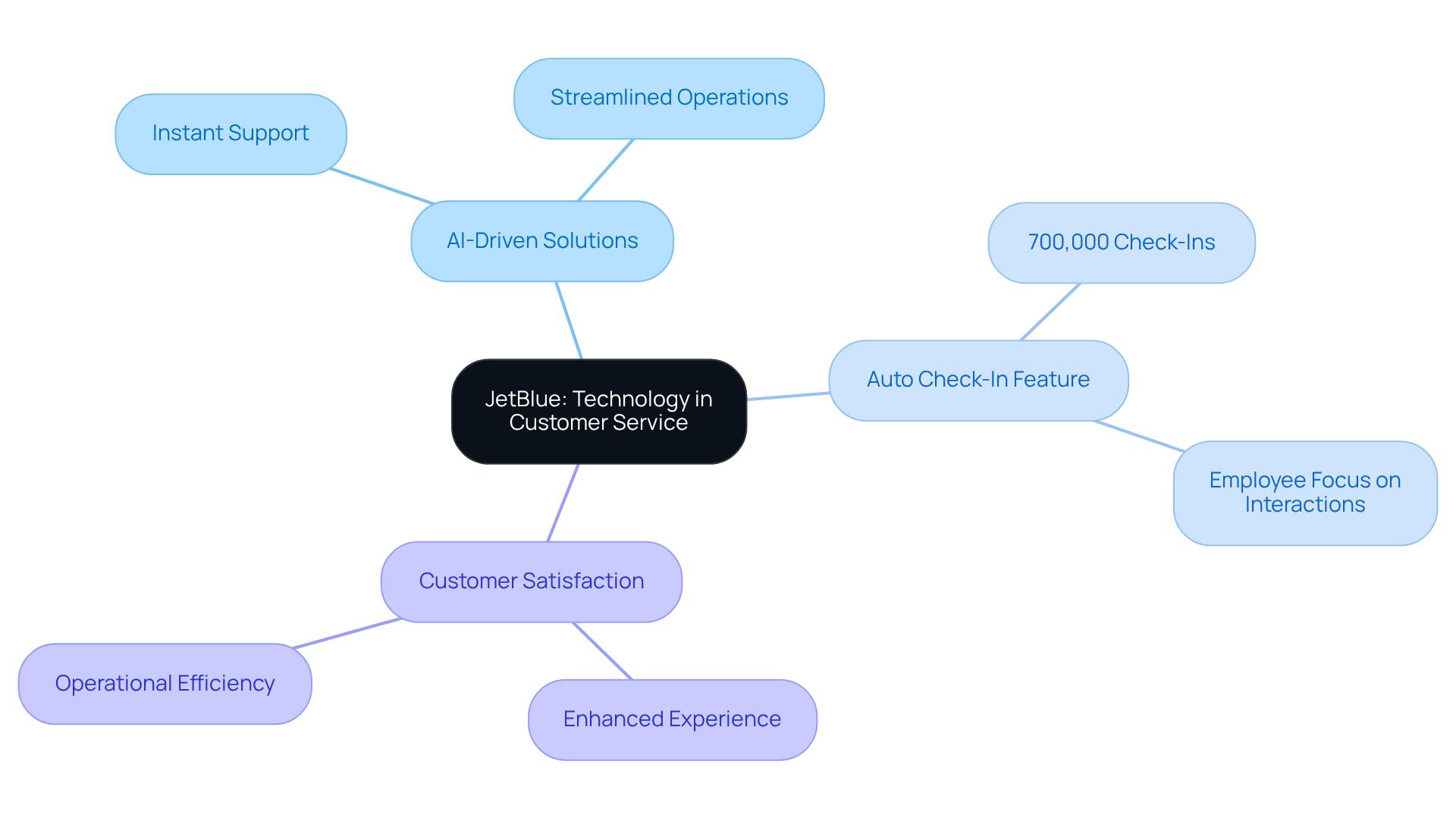
JetBlue has revolutionized its service experience by harnessing technology, particularly through that deliver instant support and streamline operations. This focus on client satisfaction, combined with cutting-edge tools, has transformed JetBlue's service approach significantly. For instance, the airline's Auto Check-In feature, launched in 2025, has facilitated over 700,000 check-ins since its inception, allowing employees to concentrate on essential interactions. This strategic shift not only boosts but also markedly enhances , underscoring the vital role of technology in contemporary .
As Ginni Rometty, former CEO of IBM, aptly states, "Some people call this , but the reality is this ." This perspective emphasizes the transformative potential of AI, making it imperative for companies to adopt such innovations to stay competitive in the service sector. By embracing these advancements, JetBlue not only sets a benchmark for operational excellence but also paves the way for a more engaging and satisfying customer experience.
Dove's #Faceof10 Campaign: Promoting Body Positivity
Dove's #Faceof10 campaign stands as a powerful example of how can effectively foster . By boldly confronting societal pressures and , Dove creates a profound emotional connection with its consumers. This initiative not only reinforces the organization's but also cultivates a supportive community among its audience.
Furthermore, the campaign aligns seamlessly with current trends that emphasize authenticity and representation. It showcases how can significantly enhance consumer engagement. Notably, Dove's sales doubled from $2 billion to $4 billion within just three years of launching the '' in 2004. This remarkable growth underscores both its commercial success and its enduring dedication to redefining beauty standards.
As Emily Pires aptly states, "Dove set out to redefine what beauty meant in the context of everyday life, using real women, not models, in its campaigns." This unwavering commitment has positioned Dove as a leader in the , further solidifying its values and fostering trust with consumers. How can your brand leverage similar strategies to connect with its audience?

Heineken's The Boring Phone Campaign: Humor in Marketing
Heineken's 'The Boring Phone' campaign stands out as a masterclass in using humor to drive and foster genuine social interactions. By introducing a phone case that flips the device face down upon hearing the word 'cheers,' Heineken effectively encourages individuals to put aside their smartphones and immerse themselves in . This innovative strategy not only captures attention but also reinforces Heineken's identity as a .
Consider this: research shows that 62% of young adults check social media while socializing, and a staggering . This campaign directly addresses a growing desire for . Furthermore, , underscoring the relevance of Heineken's message.
By leveraging humor, Heineken not only entertains but also cultivates a deeper connection with its audience, showcasing the powerful impact of innovative promotional campaigns on . Brands aiming to enhance their marketing strategies should seriously consider , to resonate with their audience and promote meaningful interactions. What steps will you take to engage your audience more effectively?

Conclusion
Elevating brand strategy in today’s competitive landscape demands innovative approaches that truly resonate with consumers. This article presents ten impactful marketing ideas that showcase how brands can connect with their audiences through authenticity, storytelling, community engagement, and humor. By embracing these strategies, companies can enhance their visibility and foster lasting relationships with their customers.
Consider MediaNug’s focus on creator-led content, which not only reduces costs but also significantly boosts conversion rates. CeraVe exemplifies a commitment to authenticity that builds trust with younger consumers. These examples illustrate the transformative power of modern marketing techniques. UNIQLO’s storytelling approach, American Express’s community-focused initiatives, and Lyft’s referral program further demonstrate how brands can leverage unique strategies to engage consumers and drive loyalty. Each case study serves as a testament to the effectiveness of innovative marketing practices that align with consumer values and preferences.
As brands navigate the evolving marketing landscape, the call to action is clear: prioritize creativity and authenticity in your marketing efforts. Embrace the insights shared in these examples to inspire fresh strategies that resonate with your audience. By doing so, brands can elevate their marketing game and cultivate a community of loyal advocates who share their message. This ultimately leads to sustained growth and success.
Frequently Asked Questions
What is MediaNug and how does it help brands?
MediaNug is a digital marketing platform that utilizes creator-led content to enhance brand visibility and performance on platforms like TikTok, Meta, and YouTube Shorts. It empowers companies to reduce client acquisition costs and improve return on ad spend by focusing on high-performing user-generated content.
What are the benefits of using user-generated content (UGC) according to MediaNug?
Companies using UGC have experienced a 30% reduction in content creation expenses and a 10.38 times higher conversion rate compared to company-generated posts. Additionally, 64% of customers are more likely to share content when their contributions are reposted by the company.
How does MediaNug optimize content for advertising?
MediaNug employs its proprietary PerformanceNug Creative Packages, which optimize content through data analysis and iterative testing, helping companies maximize their advertising budgets effectively.
What is CeraVe's anti-advertising campaign focused on?
CeraVe's anti-advertising campaign emphasizes authenticity in marketing, targeting Gen Z and millennials who value genuine connections with brands. This approach helps build trust and fosters a vibrant community around the brand.
Why is authenticity important in marketing according to the article?
Authenticity is crucial because over 70% of global respondents prefer companies that align with their values and purpose. It enhances brand engagement and loyalty, as seen in successful campaigns by brands like Patagonia and Dove.
What role does storytelling play in UNIQLO's 'Uncover' campaign?
UNIQLO's 'Uncover' campaign uses storytelling to engage customers by sharing narratives that resonate with their lifestyles. This approach generated 719 million media impressions and strengthens customer loyalty.
What can other brands learn from UNIQLO's campaign?
Other brands can learn the importance of leveraging personal narratives and focusing on product functionality to foster deeper connections with their audiences and drive engagement.
What is the significance of digital storytelling in modern marketing?
Digital storytelling is increasingly recognized as a valuable marketing strategy, as it helps brands connect with consumers on a personal level, enhancing engagement and loyalty in a competitive market.
List of Sources
- MediaNug: Transforming Brand Strategies with Creator-Led Content
- 6 Predictions That Will Shape Social Media Strategies In 2026 (https://forbes.com/councils/forbescommunicationscouncil/2026/01/02/the-next-social-wave-the-top-6-predictions-that-will-shape-social-media-strategies-in-2026)
- 10 User-Generated Content Statistics for 2026 (https://buzzinly.com/post/user-generated-content-statistic-2026)
- almcorp.com (https://almcorp.com/blog/digital-marketing-news-february-1-10-2026)
- Journalism, media, and technology trends and predictions 2026 (https://reutersinstitute.politics.ox.ac.uk/journalism-media-and-technology-trends-and-predictions-2026)
- The Impact of User-Generated Content on Customer-Centric Digital Marketing (https://thriveagency.com/news/the-impact-of-user-generated-content-on-customer-centric-digital-marketing)
- CeraVe's Anti-Advertising Campaign: Emphasizing Authenticity
- Brand Authenticity Statistics: Marketing Stats That Prove It Works (https://brandedagency.com/blog/marketing-statistics-for-branding)
- zappi.io (https://zappi.io/web/blog/quotes-from-marketing-leaders-2025)
- marketingdive.com (https://marketingdive.com/news/how-cerave-built-a-2b-brand-by-blending-education-and-entertainment/753085)
- ramotion.com (https://ramotion.com/blog/branding-quotes)
- 40 Marketing Quotes To Inspire You and Your Team (https://salesforce.com/blog/marketing-quotes)
- UNIQLO's 'Uncover' Campaign: Engaging Customers Through Storytelling
- hearststorystudio.com (https://hearststorystudio.com/post/10-compelling-quotes-about-the-power-of-storytelling-for-brands)
- 2026 Marketing Statistics, Trends, & Data (https://hubspot.com/marketing-statistics)
- The Strongest Signals Yet Of Brand Storytelling’s Entertainment Future (https://forbes.com/sites/brandstorytelling/2026/01/22/the-strongest-signals-yet-of-brand-storytellings-entertainment-future)
- American Express OPEN Forum: Building Community Engagement
- americanexpress.com (https://americanexpress.com/en-us/business/trends-and-insights/articles/community-involvement-for-year-round-sales-success)
- medium.com (https://medium.com/@maryamsimpson/why-community-led-brands-are-winning-in-2026-523ce19e566b)
- socialtargeter.com (https://socialtargeter.com/blogs/the-impact-of-community-centric-marketing-on-brand-engagement-in-local-businesses)
- Slack's Word-of-Mouth Marketing: Leveraging User Recommendations
- quotefancy.com (https://quotefancy.com/quote/2842483/Jonah-Berger-Word-of-mouth-is-more-effective-than-traditional-advertising-for-two-key)
- 10 successful examples of digital marketing campaigns (https://business.adobe.com/blog/basics/digital-marketing-campaign-examples)
- cxtoday.com (https://cxtoday.com/contact-center/50-of-the-best-customer-experience-quotes-to-inspire-you)
- sybill.ai (https://sybill.ai/blogs/turning-customers-into-advocates-saas-sales)
- unboundb2b.com (https://unboundb2b.com/blog/customer-satisfaction-quotes)
- Lyft's Referral Program: Incentivizing Customer Acquisition
- blog.appvirality.com (https://blog.appvirality.com/lessons-app-marketers-can-learn-from-lyfts-referral-program)
- vcita.com (https://vcita.com/blog/small-business-marketing/incentive-marketing)
- Sephora: Merging Online and In-Store Experiences for Engagement
- cxnet.in (https://cxnet.in/2025/01/31/sephora-inventing-an-omnichannel-strategy-to-revolutionize-the-retail-experience-for-cosmetics)
- studocu.com (https://studocu.com/pt-br/document/conquer-business-school/marketing/omnichannel-marketing-strategies-of-sephora-a-case-study-om-ii/151658379)
- The Value of Retail Customer Experience: 10 Quotes from Industry Leaders (https://edume.com/blog/retail-customer-experience-quotes)
- 23+ Omnichannel Marketing Statistics You Need to Know in 2026 (https://emarsys.com/learn/blog/omnichannel-marketing-statistics)
- 101 Of The Best Customer Experience Quotes (https://forbes.com/sites/blakemorgan/2019/04/03/101-of-the-best-customer-experience-quotes)
- JetBlue: Using Technology for Instant Customer Service
- renascence.io (https://renascence.io/journal/customer-experience-cx-quotes-lessons-learned-from-experts)
- nisum.com (https://nisum.com/nisum-knows/top-10-thought-provoking-quotes-from-experts-that-redefine-the-future-of-ai-technology)
- cio.com (https://cio.com/article/246797/how-jetblue-uses-tech-to-help-customers-take-flight.html)
- 35 AI Quotes to Inspire You (https://salesforce.com/artificial-intelligence/ai-quotes)
- Dove's #Faceof10 Campaign: Promoting Body Positivity
- prnewswire.com (https://prnewswire.com/news-releases/dove-together-with-its-community-unites-for-thefaceof10-campaign-to-protect-girls-self-esteem-from-anti-aging-skincare-pressures-302079010.html)
- winstonrowe.co.uk (https://winstonrowe.co.uk/insights/dove-campaign-for-real-beauty-purpose-driven-growth)
- Heineken's The Boring Phone Campaign: Humor in Marketing
- studocu.vn (https://studocu.vn/vn/document/swinburne-university-of-technology/introduction-to-public-relations-theory-and-practice/case-study-presentation-pub10001/110192183)
- greenbook.org (https://greenbook.org/insights/research-methodologies/the-potential-psychology-of-using-humor-in-research)
- adsoftheworld.com (https://adsoftheworld.com/campaigns/the-boring-phone)
- odney.com (https://odney.com/news/using-humor-to-grow-marketing-effectiveness)