Introduction
In a rapidly changing advertising landscape, the choice of media partners can make or break a brand's market presence. With advertising practices evolving at an unprecedented pace, understanding how to select compatible collaborators is essential for achieving marketing success.
How can brands strategically select partners that not only align with their goals but also cultivate relationships that yield significant results?
Let’s explore how to:
- Identify the right media advertising partners
- Establish clear communication
- Leverage data-driven insights
- Implement continuous feedback to optimize your advertising efforts
Identify Compatible Media Advertising Partners
Are you struggling to find the right media advertising partners to elevate your brand? Selecting the appropriate media advertising partners begins with a thorough evaluation of compatibility. Here are key steps to identify suitable collaborators:
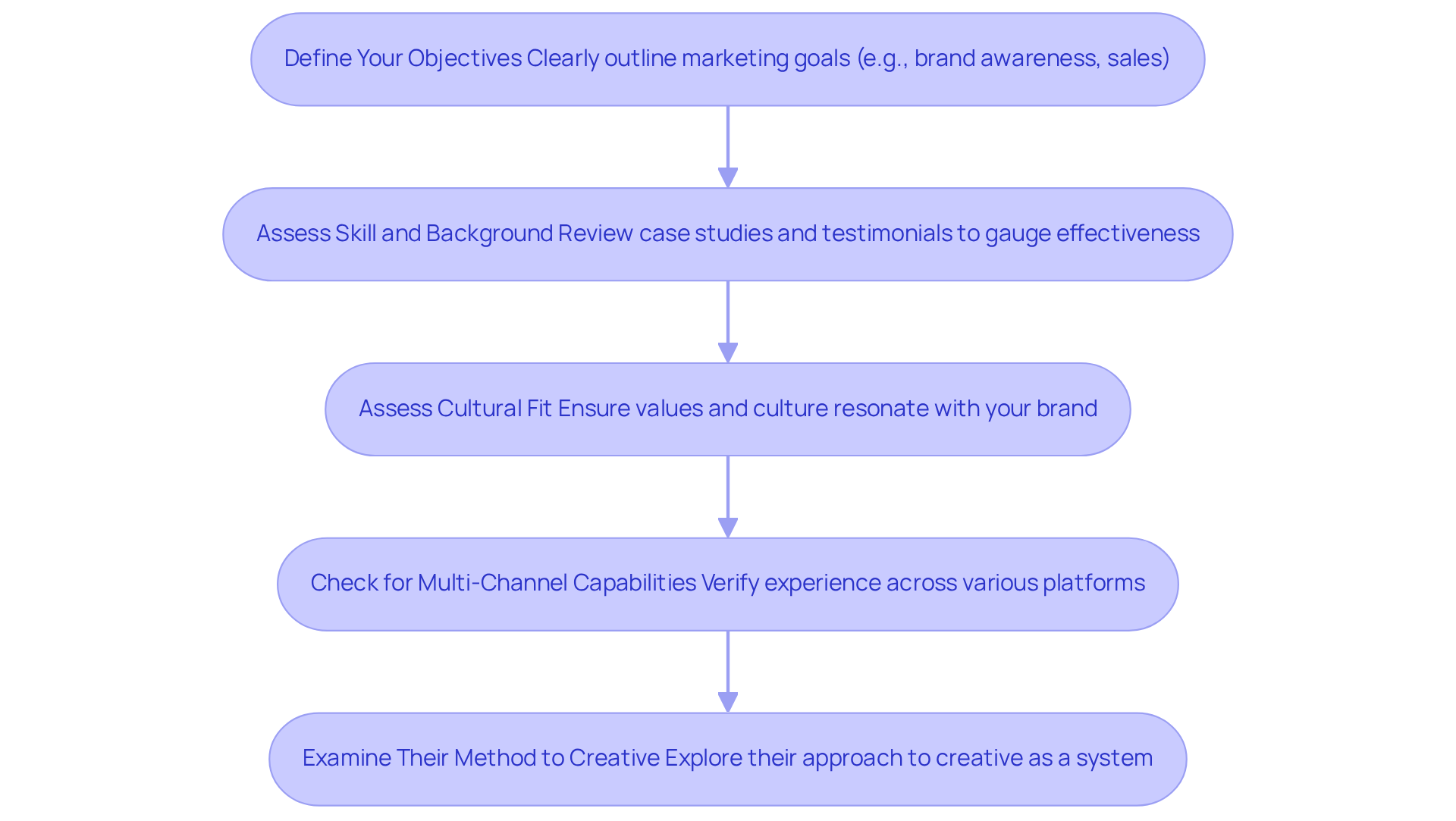
- Define Your Objectives: Clearly outline your marketing goals, such as increasing brand awareness, driving sales, or enhancing customer engagement. This clarity will assist you in finding collaborators who align with your objectives. Over 29% of marketers aim to increase sales and revenue as their primary goal in 2026, highlighting the importance of clear objectives.
- Assess Skill and Background: Look for partners who have proven their worth in your industry. Review case studies and client testimonials to gauge their effectiveness in delivering results similar to what you seek. For instance, 85% of marketers with a service level agreement (SLA) believe their marketing strategy is effective, indicating that established partnerships can lead to better outcomes.
- Assess Cultural Fit: A collaborator's values and culture should resonate with your brand. This alignment fosters better collaboration and understanding, which is vital for creative execution. The chemistry between teams is an unquantifiable element that can significantly influence the success of your initiatives.
- Check for Multi-Channel Capabilities: Ensure that potential partners have experience across various platforms (e.g., social media, display, video) to maximize your campaign's reach and effectiveness. In 2026, 37% of middle-market and 36% of enterprise marketers reported using social media shopping tools, underscoring the need for diverse media strategies.
- Examine Their Method to Creative: Explore how they regard creative as a functioning system instead of merely a production task. This approach is essential for optimizing media performance and achieving scalable growth. Agencies that prioritize strategic thinking and multi-channel expertise are more likely to deliver impactful results.
By following these steps, brands can recognize collaborators who not only comprehend their needs but also offer the essential expertise to propel successful initiatives. The right partner can transform your marketing efforts, leading to unprecedented growth and success.
Establish Clear Communication and Expectations
In the realm of media advertising partners, the success of partnerships hinges on effective communication. Here are best practices to establish clear communication and set expectations:
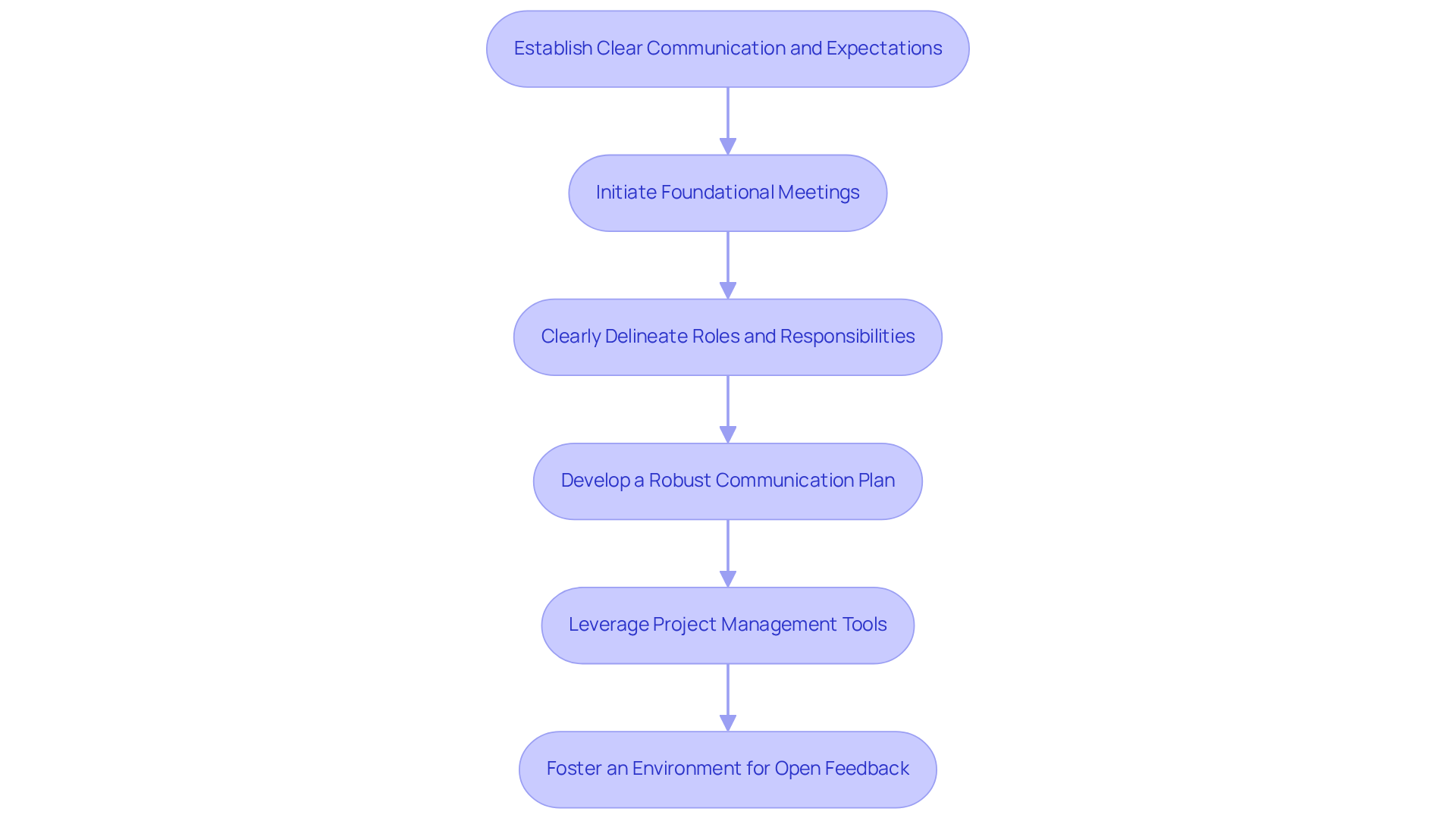
- Initiate foundational meetings: Organize kick-off meetings to align on goals, timelines, and deliverables. This foundational step ensures both parties are on the same page from the outset, paving the way for a productive collaboration.
- Clearly delineate roles and responsibilities: Clearly outline the responsibilities of each partner. This clarity prevents overlap and enhances accountability, ensuring that all tasks are managed efficiently.
- Develop a robust communication plan: Establish regular check-ins and updates to discuss progress, challenges, and necessary adjustments. This ongoing dialogue promotes collaboration and keeps all stakeholders informed, enhancing the partnership's effectiveness.
- Leverage project management tools: Implement tools such as Trello or Asana to track tasks and deadlines. These platforms improve transparency and facilitate real-time updates on project status, making it easier to manage workflows. Research indicates that effective project management can lead to a 20-50% increase in key metrics such as traffic and conversions.
- Foster an environment that encourages open feedback: Cultivate an atmosphere where both parties feel comfortable sharing feedback. Constructive input is essential for ongoing enhancement and optimizing initiative outcomes. As Richard E. Brown, Chief Growth and Innovation Officer, states, "Successful news media sales go beyond viewing clients as numbers. Building meaningful connections is critical to understanding their perspectives, motivations, and challenges."
By prioritizing clear communication and setting well-defined expectations, brands can forge strong partnerships with their media advertising partners that lead to successful advertising outcomes. Without clear communication, even the best strategies can falter, leaving potential untapped.
Utilize Data-Driven Insights for Campaign Optimization
Are you truly maximizing your advertising potential through data-driven insights? Data-driven insights are essential for enhancing advertising strategies. Here are steps to effectively leverage data:
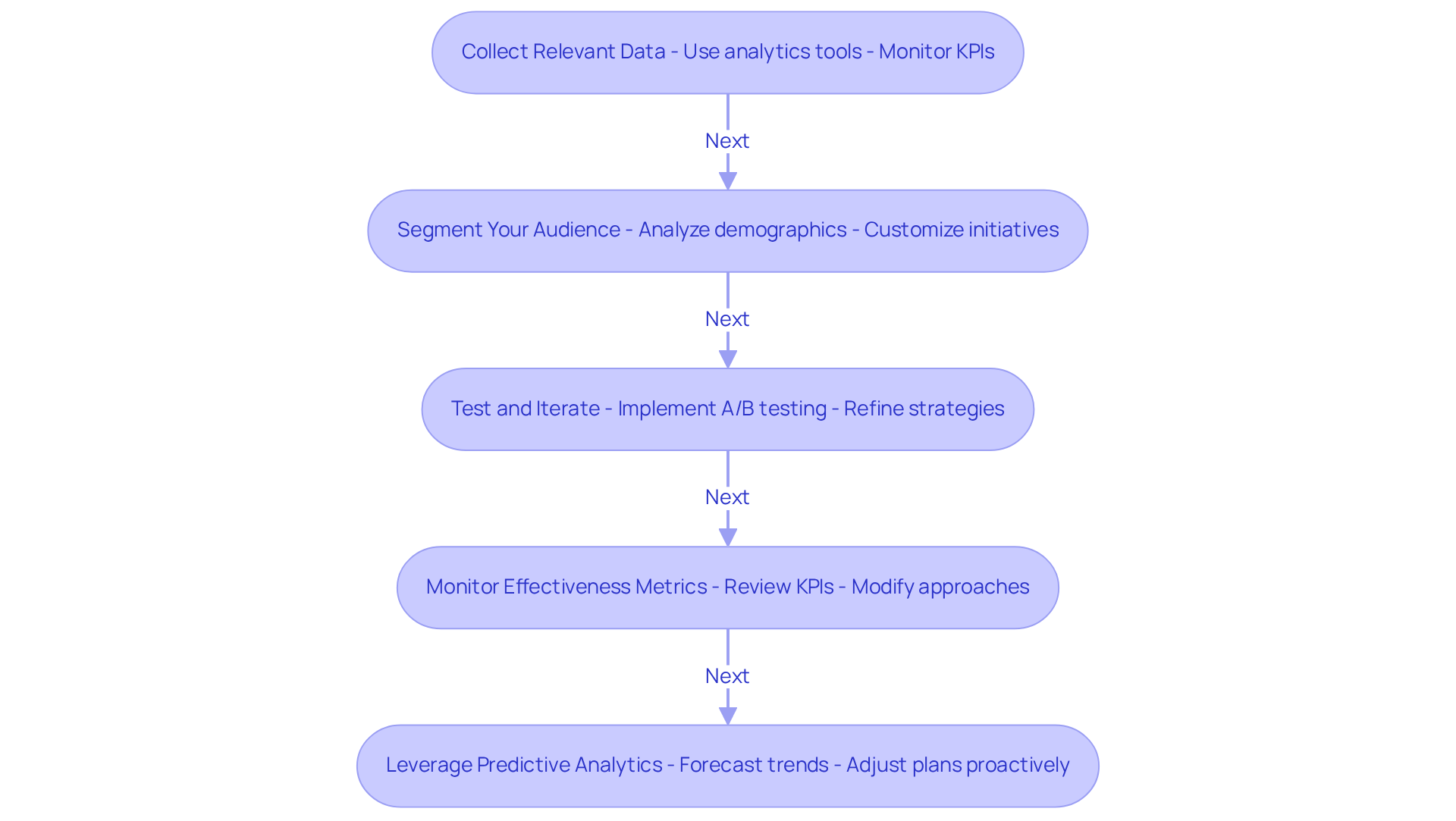
- Collect Relevant Data: Use analytics tools to gather comprehensive data on audience behavior, engagement rates, and conversion metrics. This information is vital for understanding what works and what doesn’t. It's essential to monitor key success indicators (KPIs) like conversion rate, customer acquisition cost (CAC), return on ad spend (ROAS), and customer lifetime value (CLV) to evaluate effectiveness. MediaNug highlights that performance creative is not only about ad design; it aligns creative planning with media goals, generating variations intended for controlled, hypothesis-based testing.
- Segment Your Audience: Analyze data to identify different audience segments based on demographics, interests, and behaviors. Customizing initiatives for particular segments boosts relevance and effectiveness. Successful case studies from MediaNug, like the TikTok campaign that garnered 4.38M impressions and a 50% reduction in customer acquisition expenses, illustrate that thorough audience segmentation approaches result in notably higher engagement rates. Have you considered how audience segmentation can transform your campaigns?
- Test and Iterate: Implement A/B testing to compare different creative approaches and messaging. Use the results to refine your strategies continuously. Ongoing testing allows brands to adapt quickly to audience preferences and market changes. MediaNug's structured testing framework prioritizes learning velocity over vanity metrics, ensuring that creative efficacy is optimized based on real data.
- Monitor Effectiveness Metrics: Regularly review key indicators (KPIs) to assess campaign success. Modify approaches according to what the data shows regarding audience engagement and conversion rates. Continuous tracking of metrics is crucial for optimizing results and ensuring alignment with business objectives. MediaNug's approach feeds performance data back into every iteration cycle, making performance predictable and scalable.
- Leverage Predictive Analytics: Utilize predictive analytics to forecast future trends and consumer behaviors. This proactive approach helps brands stay ahead and adjust their plans as needed. Insights from industry experts highlight the significance of predicting market changes to sustain a competitive advantage, a principle that MediaNug integrates into its promotional approaches.
By incorporating these data-driven insights into promotional strategies, brands can improve their advertising effectiveness and attain better results. Without addressing data quality and governance, your insights may lead to misguided strategies and lost revenue.
Implement Continuous Feedback and Iterative Improvements
In a fast-paced market, brands that neglect continuous feedback risk falling behind their competitors. Here’s how to implement effective feedback and iterative enhancements:
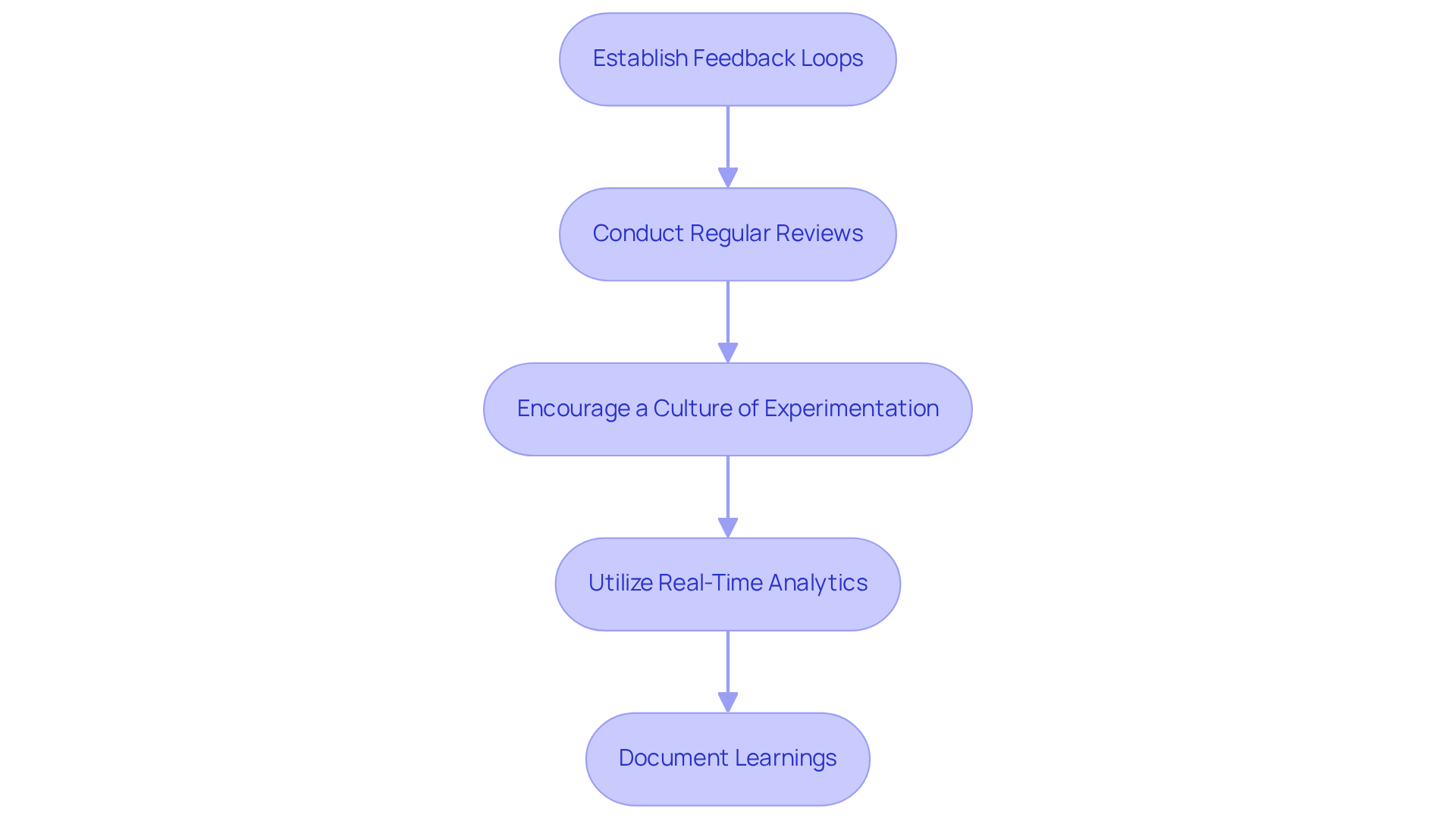
- Establish Feedback Loops: Create mechanisms for collecting feedback from both internal teams and external partners. Consistent feedback helps identify areas for enhancement and innovation, ensuring initiatives align with changing consumer preferences.
- Conduct Regular Reviews: Schedule periodic evaluations of initiative results to determine what’s effective and what needs modification. Focus on analyzing key metrics, such as conversion rates and customer acquisition costs, to inform strategic pivots and new ideas.
- Encourage a Culture of Experimentation: Foster an environment where team members feel empowered to test new ideas and approaches. A culture of experimentation fosters innovative solutions and better results, enabling teams to adapt quickly to market changes.
- Utilize Real-Time Analytics: Implement tools that provide real-time analytics to monitor initiative performance. This allows for quick adjustments based on immediate feedback and results, helping to prevent wasted budgets and missed optimization opportunities.
- Document Learnings: Keep a record of insights gained from feedback and testing. This documentation can guide future initiatives and help prevent repeating past errors, ultimately improving the effectiveness of marketing strategies.
Embracing a culture of feedback not only drives innovation but also secures a brand's position in the market.
Conclusion
Finding the right media advertising partners can be a daunting task for brands aiming to elevate their marketing efforts. Brands can significantly enhance their advertising strategies by identifying compatible partners, establishing clear communication, using data-driven insights, and fostering continuous feedback.
This article outlines key practices:
- Define marketing goals to find aligned partners
- Assess the skills and cultural fit of potential collaborators
- Ensure multi-channel capabilities for broader reach
Clear communication and setting expectations lay the groundwork for successful partnerships. Emphasizing data-driven insights allows brands to optimize their campaigns, while continuous feedback mechanisms ensure that strategies remain relevant and effective.
However, many brands struggle to identify the right partners amidst a sea of options. Without a strategic approach, brands risk ineffective advertising and wasted resources. The journey to finding the right media advertising partners requires a strategic approach. This includes thorough evaluation, open communication, and a commitment to data-driven decision-making. By implementing these best practices, brands can not only enhance their advertising effectiveness but also foster partnerships that lead to sustainable growth and innovation in an ever-evolving market. The right partnerships can transform your advertising landscape, driving growth and innovation in ways you may not have imagined.
Frequently Asked Questions
How can I identify suitable media advertising partners for my brand?
To identify suitable media advertising partners, start by defining your marketing objectives, assessing their skills and background, evaluating cultural fit, checking for multi-channel capabilities, and examining their approach to creative processes.
Why is it important to define my marketing objectives when selecting partners?
Clearly outlining your marketing goals, such as increasing brand awareness or driving sales, helps you find collaborators who align with your objectives, which is crucial for successful partnerships.
What should I look for in a partner's skills and background?
Look for partners with proven success in your industry by reviewing case studies and client testimonials to gauge their effectiveness in delivering results similar to your goals.
How does cultural fit influence the success of a partnership?
A collaborator's values and culture should resonate with your brand, fostering better collaboration and understanding, which is vital for effective creative execution.
Why is it necessary for partners to have multi-channel capabilities?
Partners with experience across various platforms (e.g., social media, display, video) can maximize your campaign's reach and effectiveness, which is essential in today's diverse media landscape.
What does it mean for a partner to have a creative approach as a functioning system?
It means they view creative processes as integral to optimizing media performance and achieving scalable growth, rather than just a production task. This strategic thinking is key to delivering impactful results.
How can the right media advertising partner impact my marketing efforts?
The right partner can transform your marketing initiatives, leading to unprecedented growth and success by providing the essential expertise to understand and meet your needs.
List of Sources
- Identify Compatible Media Advertising Partners
- coxmedia.com (https://coxmedia.com/learning-hub/insights/choosing-the-right-media-partner-5-factors-to-consider)
- 2026 Marketing Statistics, Trends, & Data (https://hubspot.com/marketing-statistics)
- info.zimmercommunications.com (https://info.zimmercommunications.com/blog/how-to-choose-the-right-advertising-partner)
- oohology.com (https://oohology.com/the-foundry/choosing-the-right-adversting-agency-partner)
- Establish Clear Communication and Expectations
- Data shows advertising on news brings major benefits to ad performance. So why don’t brands advertise on news? (https://newsguardtech.com/insights/data-shows-advertising-on-news-brings-major-benefits-to-ad-performance-so-why-dont-brands-advertise-on-news)
- timesintelligence.com (https://timesintelligence.com/insights-solutions/why-partnerships-matter-in-modern-media)
- Why News Advertising is Good for Brands (https://comcastadvertising.com/insights/blog/news-advertising-good-for-brands)
- 20 Stats on Digital Advertising (https://integralads.com/insider/20-stats-on-digital-advertising)
- From ambiguity to trust: Building connections in news media advertising - Editor and Publisher (https://editorandpublisher.com/stories/from-ambiguity-to-trust-building-connections-in-news-media-advertising,253300)
- Utilize Data-Driven Insights for Campaign Optimization
- Data Driven Marketing Insights for Better Decisions in 2026 | Improvado (https://improvado.io/blog/data-driven-marketing-decisions)
- almcorp.com (https://almcorp.com/blog/marketing-trends-2026-data-driven-insights-industry-leaders)
- 100 ad leaders predict 2026 marketing trends—what’s next for AI, agencies, creativity, media and more (https://tritondigital.com/news-item/January-05-2026/100-ad-leaders-predict-2026-marketing-trends-what-s-next-for-ai-agencies-creativity-media-and-more)
- Implement Continuous Feedback and Iterative Improvements
- marketingdive.com (https://marketingdive.com/news/why-dove-turned-reddit-product-feedback-into-a-real-world-campaign/814523)
- How to Measure the Effectiveness of Marketing Campaigns (https://siteimprove.com/blog/measuring-marketing-campaign-effectiveness)
- zappi.io (https://zappi.io/web/blog/how-to-never-waste-an-ad-again-thanks-to-iterative-research)
Need Better Performing Social Content?
MediaNug helps brands scale through creator partnerships, performance creative, and platform-native content strategies built for modern social platforms.
Continue Reading
Influencer & Creator Marketing
- The Complete Guide to Influencer Marketing Strategy & Operations
- The Complete Guide to UGC Content Strategy for Brands
- Master UGC Creator Tools: Best Practices for Brand Success
Paid Social & Performance Creative
- The Complete Guide to Paid Social Creative Strategy
- Why Your Brand Needs a Performance Creative Agency for Growth
- What is an Ad Creative Agency and Why It Matters for Brands
Platform & Trend Insights
- UGC Creators for Paid Social Ads: How to Find, Vet, and Scale Winning Creative
- 4 Best Practices for Effective TikTok Creatives That Drive Engagement
- 10 Key Insights on Instagram Demographics for Brand Strategies
- The Role Of Visual Storytelling In Social Media
Strategy & Growth
- Understanding Creative Strategy: Key Concepts and Examples
- 6 Steps to Create an Effective Creative Strategy Sample
- Understanding eCommerce Brand Strategy: Importance and Key Components