
Introduction
In a world flooded with content, how can corporate videos truly captivate and engage audiences? Crafting compelling corporate videos is no longer just about capturing footage; it’s about strategically engaging audiences through a well-defined production process. By understanding the critical stages of video production - from pre-production planning to post-production refinement - brands can create impactful content that resonates with viewers. Without these best practices, your corporate videos risk being lost in the noise, failing to connect with your audience in a meaningful way.
Understand the Stages of Corporate Video Production
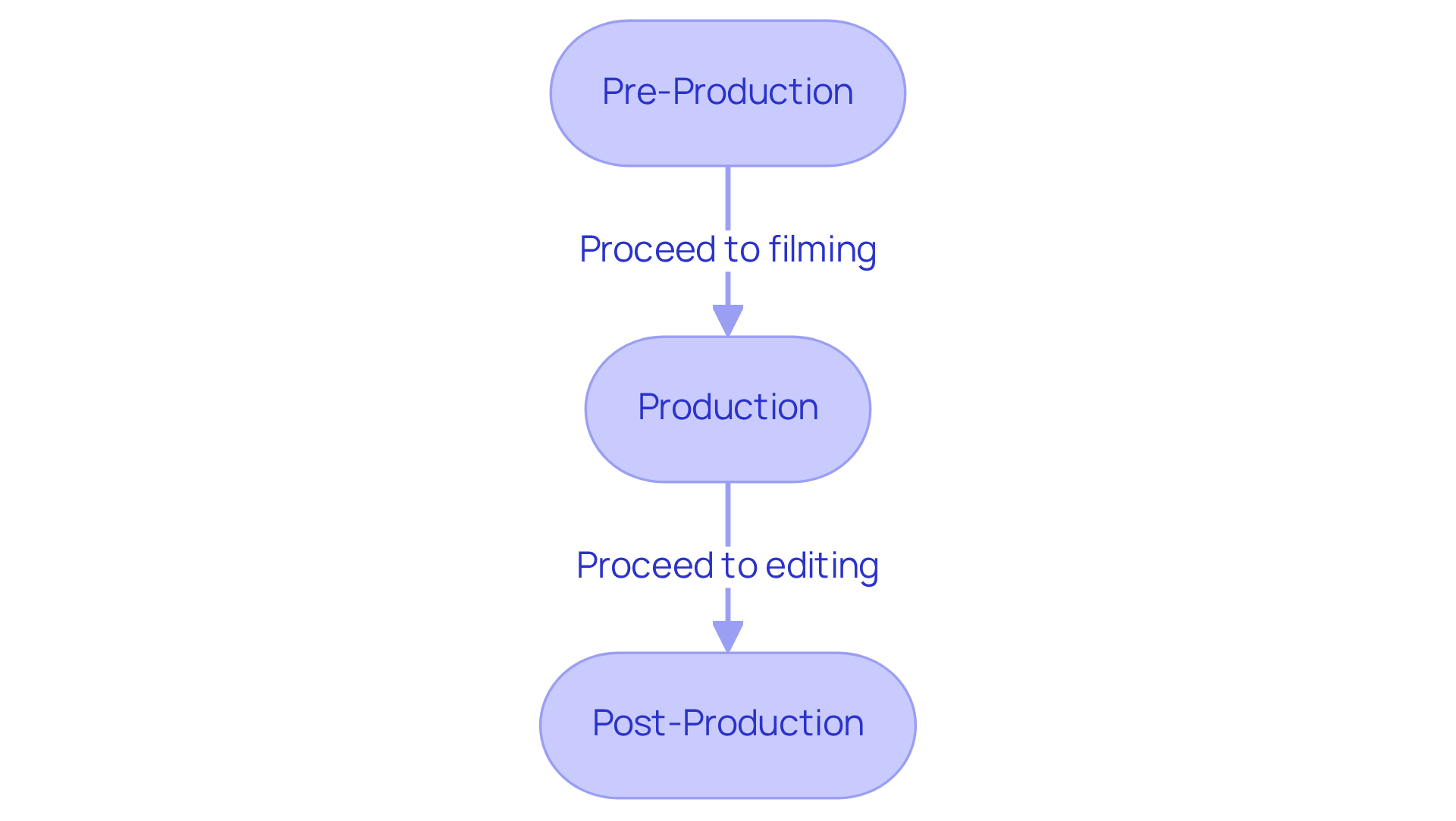
Navigating the complexities of video production corporate requires a strategic approach across three pivotal stages: pre-production, production, and post-production.
- Pre-Production: This initial phase is essential for establishing the foundation for a successful film. Key activities include defining the project's objectives, identifying the target audience, scripting, storyboarding, and scheduling shoots. A solid pre-production plan saves time and resources down the line. Studies show that more than 80% of marketers believe a clear pre-production process minimizes errors and leads to more successful films. Effective pre-production choices greatly improve project success and budget efficiency, establishing a solid groundwork for the entire filming process. Have you ever considered how crucial proper pre-production is for your project's success?
- Production: This execution phase is where the actual filming occurs. It’s vital to ensure that all equipment is set up correctly, and the crew is aligned with the vision. During this stage, capturing high-quality audio and visuals is paramount. The filming stage usually spans 1 to 2 days, and strict adherence to agreed-upon schedules is essential for timely completion. A detailed shot list can help organize necessary footage and prevent wasted time during shoots. Remember, the success of your film hinges on how well this phase is executed.
- Post-Production: In this final phase, the footage is edited, sound is mixed, and graphics are added. This stage is crucial for refining the content to ensure it meets the initial objectives and resonates with the audience. In fact, post-production can take as much time, if not more, than the entire production phase. A structured feedback process during this phase is essential for minimizing the length of revisions and ensuring that the final product is polished and engaging. Effective post-production can significantly enhance the overall quality of the video, making it more impactful and aligned with brand messaging. Ultimately, the success of your corporate film in video production corporate hinges on the meticulous execution of each phase, ensuring your message resonates powerfully with your audience.
Plan Strategically for Audience Engagement
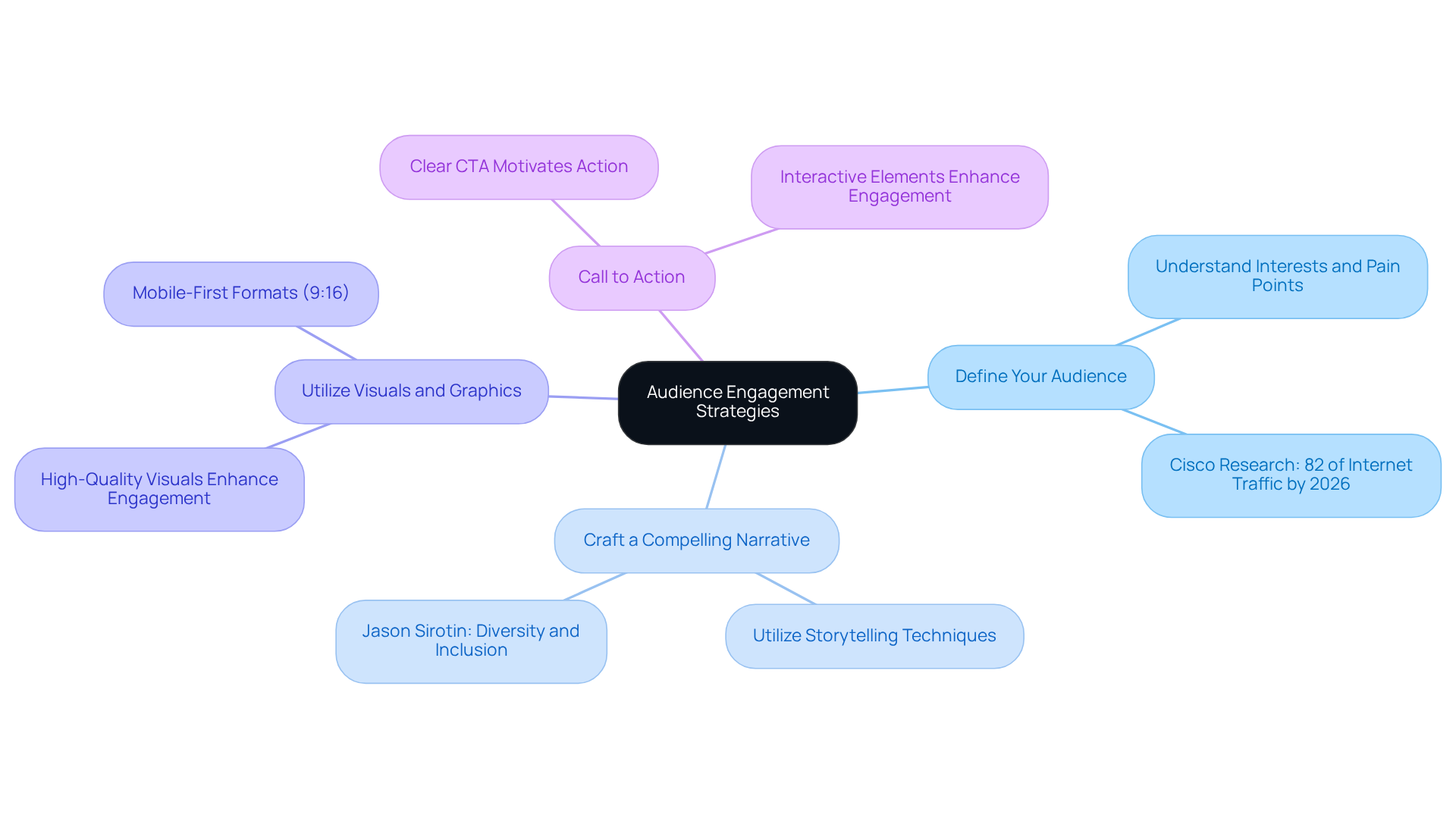
Are you struggling to engage your audience effectively? To effectively engage your audience, consider the following strategies:
- Define Your Audience: It's essential to know who your audience is, what they care about, and what challenges they face. Understanding your target viewers, their interests, and pain points guides your content development process, ensuring that your productions connect with them. Cisco research indicates that by the conclusion of 2026, online videos will represent over 82% of all consumer internet traffic, emphasizing the significance of video content in engaging viewers.
- Craft a Compelling Narrative: Utilize storytelling techniques to create a narrative that captivates your listeners. A well-structured story not only engages viewers but also enhances message retention, making it more likely they will remember your key points. As Jason Sirotin states, "Genuine diversity and inclusion in casting and storytelling are no longer optional," emphasizing the need for authentic narratives that connect with varied groups.
- Utilize Visuals and Graphics: To enhance storytelling, high-quality visuals and graphics are a must. They assist in communicating intricate information more efficiently, sustaining viewer interest and involvement throughout the presentation. Incorporating mobile-first vertical formats (9:16) is crucial, as over 75% of corporate content is viewed on phones, making it essential for engaging audiences effectively on social media platforms.
- Call to Action: What action do you want your viewers to take after watching your video? Always include a clear call to action at the end of your video. This motivates audiences to take the next step, whether it’s visiting a website, subscribing to a newsletter, or making a purchase. Incorporating interactive elements, such as clickable CTAs, can further enhance viewer engagement and drive conversions.
By integrating these strategies, you can significantly boost audience engagement in your corporate video production. For instance, the TJX case study showcases how organized methods enhance messaging around trust, demonstrating the effectiveness of these strategies in real-world applications. Without these strategies, your brand's message risks being overlooked in a crowded digital landscape.
Incorporate Technology and Innovation in Production
Are you ready to elevate your corporate film production to new heights? Integrating technology into corporate film creation can greatly enhance the quality and impact of your content. Here are some best practices to consider:
- Invest in High-Quality Equipment: Utilizing advanced cameras, lighting, and sound equipment is essential for achieving professional-grade results. High-resolution footage, defined as 4K and beyond, enhances visual clarity, while high-frame-rate capture at 60 or 120 frames per second ensures smooth motion and stunning slow-motion sequences. With the corporate film production services market projected to soar from USD 7.73 billion in 2025 to USD 12.73 billion by 2032, the stakes have never been higher for quality investment.
- Utilize State-of-the-Art Editing Software: Advanced editing tools such as Adobe Premiere Pro and Final Cut Pro streamline the post-production process, allowing for improved quality and efficiency. AI-assisted search functions in cloud platforms can expedite editing by quickly locating specific shots based on content descriptions, further improving workflow.
- Explore Innovative Formats: Embrace new formats such as 360-degree recordings and augmented reality to create immersive viewer experiences. These formats not only differentiate your content but also engage audiences in unique ways, catering to the growing demand for interactive and visually captivating media. With over 75% of corporate footage viewed on mobile devices, optimizing content for mobile formats is crucial.
- Utilize Video Analytics Tools: Implementing analytics tools enables you to track viewer engagement and performance metrics effectively. Comprehending viewer interactions with your clips can guide future creation strategies, enhancing content for improved outcomes. The proportion of marketers who regard visual content as essential rose from 88% in 2024, emphasizing the importance of employing analytics for upcoming development strategies.
By leveraging these practices, brands can refine their content strategies, leading to greater audience engagement and satisfaction. Embracing these technological advancements could be the key to staying ahead in a competitive market.

Measure Impact and Optimize for Future Success
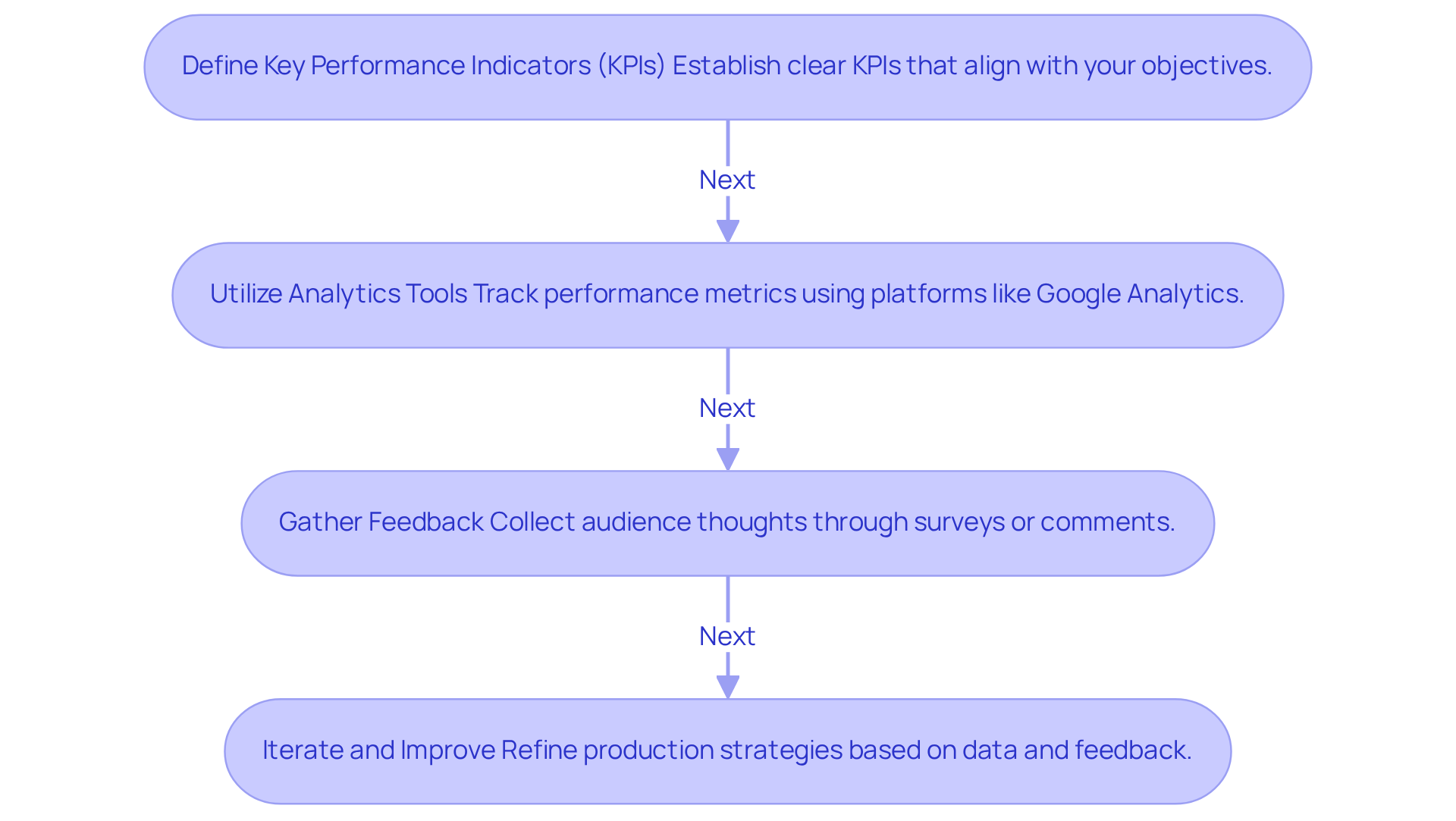
Are your corporate videos truly making an impact, or are they falling flat? To ensure their effectiveness, implement the following measurement strategies:
- Define Key Performance Indicators (KPIs): Establish clear KPIs that align with your objectives for the content. Common metrics include view count, engagement rate, and conversion rate. For example, a high engagement rate - likes, shares, comments, and other interactions - shows how well your content resonates with the audience. Aim for a view-through rate (VTR) of over 60% for videos under 60 seconds, as this is a benchmark for effective engagement.
- Utilize Analytics Tools: Use analytics platforms to track performance metrics. Tools such as Google Analytics and Vimeo Analytics offer valuable information on audience behavior and engagement. For instance, monitoring audience retention helps you see which parts of your video keep viewers engaged and which may need improvement.
- Gather Feedback: Why not ask your audience for their thoughts through surveys or comments? Knowing what your audience thinks helps you see what works and what doesn’t. This qualitative data complements quantitative metrics, refining your approach. For example, feedback can highlight areas where audiences feel the content could be more engaging or informative.
- Iterate and Improve: Use the data collected to refine your production strategies. Ongoing enhancement driven by audience feedback and performance metrics can lead to more effective content in the future. For instance, A/B testing various components of your content can reveal elements that boost viewer engagement and conversions, improving overall campaign effectiveness. As Sem Maltsev observes, monitoring the appropriate metrics and linking them to actual objectives is essential for transforming visual content into a growth engine.
By neglecting these measurement strategies, you risk missing out on valuable insights that could elevate your content to new heights.
Conclusion
In a competitive landscape, effective corporate video production is more than just creativity; it requires a strategic approach. Understanding the critical stages of production is key to success. By focusing on pre-production, production, and post-production, brands can create a solid foundation for their video projects. Each phase is essential in ensuring that the final product not only meets objectives but also resonates with the intended audience.
Key strategies for enhancing audience engagement include:
- Defining the target demographic
- Crafting compelling narratives
- Utilizing high-quality visuals
- Incorporating clear calls to action
These elements are crucial for capturing attention and driving viewer interaction. Furthermore, leveraging technology and innovative formats can elevate production quality, making content more immersive and appealing. The use of analytics tools to measure performance and gather feedback is vital for continuous improvement, allowing brands to refine their strategies based on real data.
In a crowded market, how can brands ensure their videos capture attention? Adopting these best practices is not just beneficial but necessary for success. By prioritizing creative excellence and strategic execution, brands can ensure their corporate videos stand out and effectively communicate their messages. Failing to embrace these strategies could mean losing potential customers to competitors.
Frequently Asked Questions
What are the three main stages of corporate video production?
The three main stages of corporate video production are pre-production, production, and post-production.
What activities are involved in the pre-production phase?
The pre-production phase involves defining the project's objectives, identifying the target audience, scripting, storyboarding, and scheduling shoots.
Why is pre-production important for a video project?
Pre-production is important because it establishes a solid foundation for the project, minimizes errors, and leads to more successful films, ultimately saving time and resources.
How long does the production phase typically last?
The production phase typically lasts 1 to 2 days.
What is crucial during the production phase?
During the production phase, it is crucial to ensure that all equipment is set up correctly, the crew is aligned with the vision, and high-quality audio and visuals are captured.
What is the focus of the post-production phase?
The post-production phase focuses on editing the footage, mixing sound, and adding graphics to refine the content and ensure it meets the initial objectives.
How does post-production impact the overall quality of the video?
Effective post-production can significantly enhance the overall quality of the video, making it more impactful and aligned with brand messaging.
Why is a structured feedback process important in post-production?
A structured feedback process is important in post-production to minimize the length of revisions and ensure that the final product is polished and engaging.
List of Sources
- Understand the Stages of Corporate Video Production
- The Essential 5 Stages of Video Production (https://awakenedfilms.com/stages-of-video-production)
- Corporate Video Production Best Practices: Give Yourself a Smooth Experience - Crews Control (https://crewscontrol.com/blog-central/corporate-video-production-best-practices-give-yourself-a-smooth-experience)
- The 6-Stage Corporate Video Production Process Explained (https://ihglobal.co/corporate-video-production-process)
- Top Strategies for Effective Video Production for Corporate Success (https://letsbackflip.com/video-production-for-corporate-a-practical-guide-for-wisconsin-brands)
- AI SEO Strategies for Google and AI Search Engines in 2026 (https://corporate-videoproduction.com/the-complete-video-production-process-step-by-step-guide)
- Plan Strategically for Audience Engagement
- The power of video in news media: how increased audience engagement drives success | The Associated Press (https://ap.org/insights/the-power-of-video-in-news-media-how-increased-audience-engagement-drives-success)
- How to Use Video for Audience Engagement (https://linkedin.com/top-content/user-experience/audience-engagement-techniques/how-to-use-video-for-audience-engagement)
- Corporate Video Trends in 2025: How to Stay... (https://ecgprod.com/corporate-video-trends-whats-working-in-2025)
- (PDF) The Impact of Video Marketing on Audience Engagement (https://researchgate.net/publication/385263209_The_Impact_of_Video_Marketing_on_Audience_Engagement)
- Trends in Corporate Video Production | Levy Production Group (https://levyproductiongroup.com/trends-in-corporate-video-production)
- Incorporate Technology and Innovation in Production
- Video Marketing Trends to Watch in 2025 (https://studios.amspictures.com/dallas-video-marketing-trends-to-watch-in-2025)
- The Latest Technology Used to Make Corporate Videos (https://intelligentliving.co/latest-technology-corporate-videos)
- Trends in Video Production Services That Will Shape 2026 (https://connect.na.panasonic.com/blog/av/proav/trends-in-video-production-services-that-will-shape-2026?srsltid=AfmBOoophA2lDRO9QgEAzbjiz9Gh-bl2Bbf23x8uLXczVtbRQeisDToE)
- Corporate Video Trends in 2025: How to Stay... (https://ecgprod.com/corporate-video-trends-whats-working-in-2025)
- Six Trends in Corporate Video Production - Direct Images Interactive (https://directimages.com/insites/trends-in-corporate-video-production)
- Measure Impact and Optimize for Future Success
- How Can I Measure the Success of a Video Campaign? | LAI Video (https://laivideo.com/blog/measuring-the-success-of-a-video-campaign)
- The 8 Most Important Video Marketing KPIs to Track Your Performance - Crews Control (https://crewscontrol.com/blog-central/the-8-most-important-video-marketing-kpis-to-track-your-performance)
- Ultimate Guide to Video KPIs – Track Performance with Analytics (https://movingimage.com/blog/video-analytics-metrics-ultimate-guide-to-video-kpis)
- Video Marketing KPIs That Actually Matter for Your Business — Image Media Lab (https://imagemedialab.com/video-blog/video-marketing-kpis)
- Using Data and Analytics to Improve Video Content Performance (https://mangomedia.ie/blog/using-data-and-analytics-to-improve-video-content-performance)