
Introduction
Navigating the dynamic landscape of influencer marketing demands more than just a catchy slogan or a well-placed ad. Brands today must connect authentically with their target audiences, making it essential to understand the relationship between influencer selection and audience alignment. This article explores four best practices that not only enhance the effectiveness of influencer marketing ads but also ensure brands resonate deeply with consumers.
With the rapid evolution of social media trends and shifting consumer expectations, how can companies sidestep the pitfalls of inauthentic partnerships and genuinely engage their audience?
Define Your Target Audience and Brand Alignment
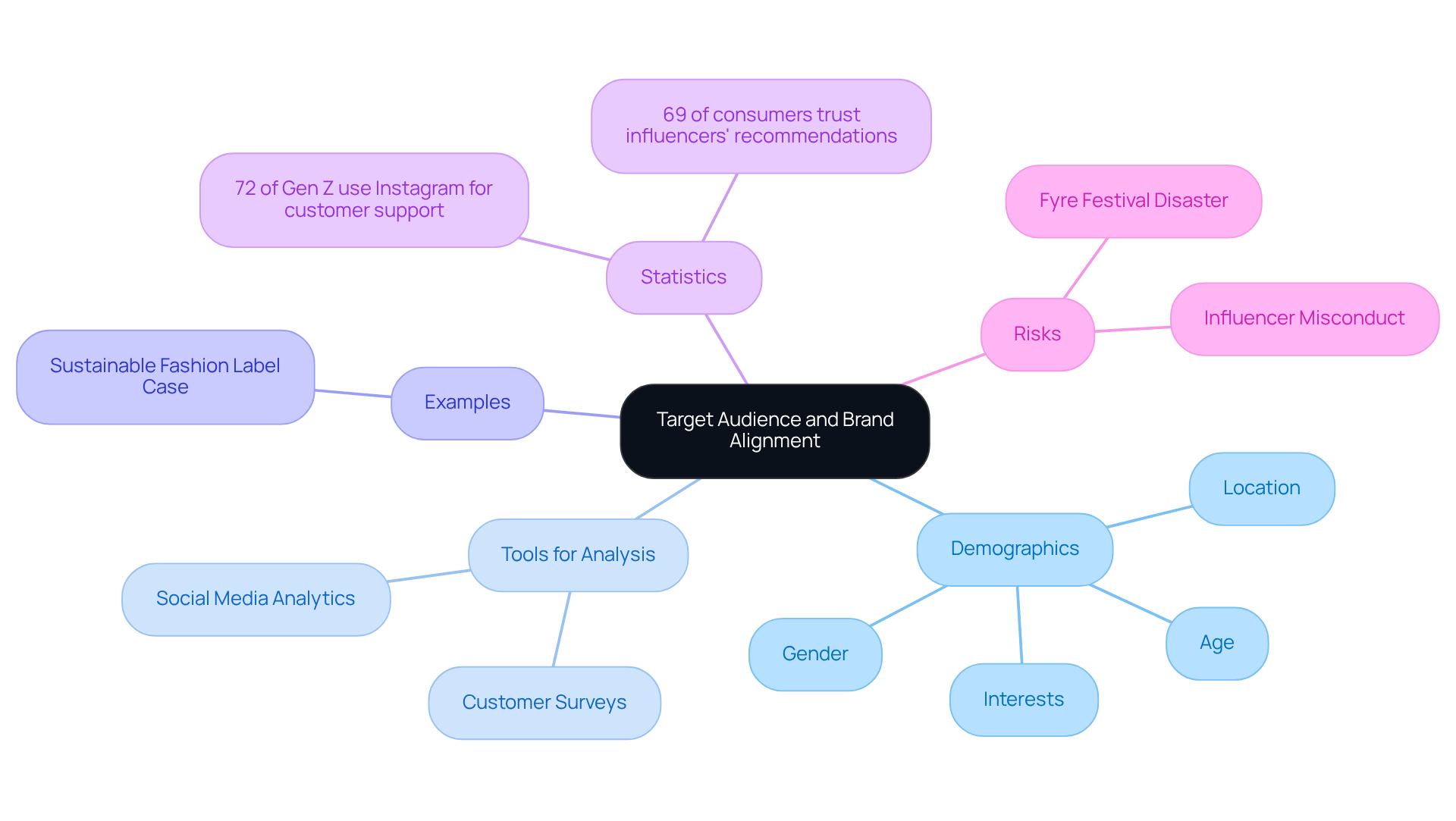
To effectively connect with consumers through , companies must first identify their target market by examining . Utilizing tools like and customer surveys can yield valuable insights into viewer preferences and behaviors. Once the target audience is identified, it is essential for companies to . This alignment fosters authenticity, a cornerstone of successful .
For instance, consider a who advocate for eco-friendly practices. This not only enhances credibility but also resonates with followers, creating a genuine connection. In 2025, as , companies that emphasize this alignment are more likely to gain attention and boost engagement, especially among younger demographics who increasingly seek authenticity in partnerships.
Statistics reveal that:
- 72% of Gen Z users depend on Instagram for customer support, highlighting the necessity for companies to be responsive and in tune with their values.
- 69% of consumers trust influencers' recommendations, underscoring the importance of audience alignment and authenticity.
However, companies must also be aware of the and promotional partnerships. The Fyre Festival disaster serves as a cautionary tale about the consequences of neglecting authenticity. Ethical practices in collaboration with social media personalities are essential for sustaining consumer trust. Companies should adjust their strategies to the changing environment of social media platforms, ensuring they remain relevant and credible.
Choose Influencers That Match Your Brand and Audience
When selecting influencers for , companies must prioritize and demographic characteristics rather than just follower counts. This strategic focus not only enhances the but also drives better ROI. By leveraging marketing platforms, businesses can easily identify creators whose followers align closely with their .
Furthermore, assessing the content style and values of potential influencers is crucial to ensure consistency with the company's image. For instance, a tech company may achieve greater success by partnering with a known for , rather than a celebrity boasting a large but less engaged following. This alignment fosters a more authentic connection with consumers, particularly among younger demographics who increasingly value genuine interactions over instead of traditional advertising.
As we look ahead to 2025, the trend is unmistakable: are better positioned to resonate with their audiences. Individuals with often yield more significant results in terms of conversions and customer loyalty. Are you ready to embrace this strategy and elevate your efforts?

Craft Engaging and Authentic Ad Content
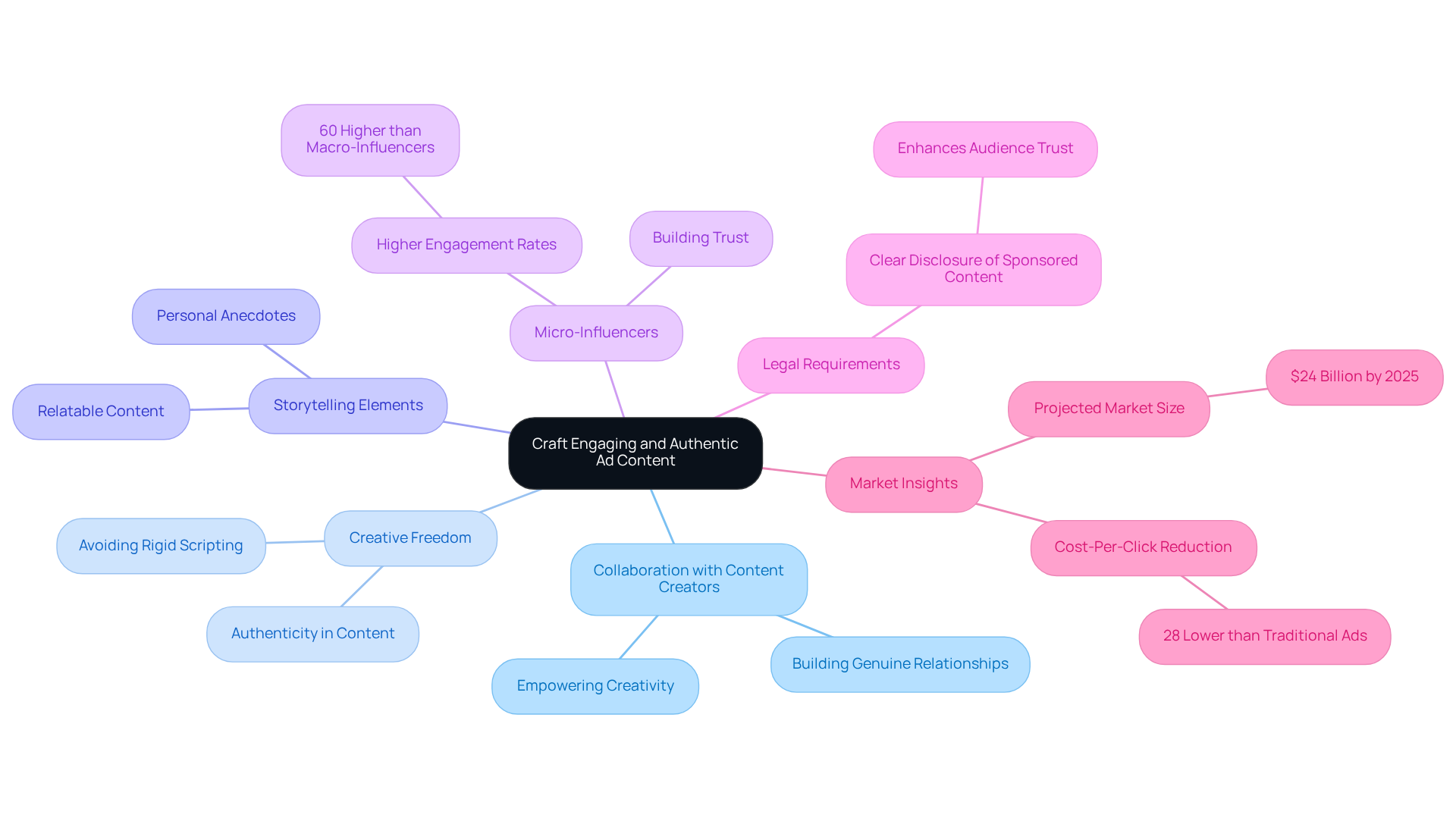
To create persuasive , companies must collaborate closely with to ensure that the material feels authentic and resonates with their audience. Allowing the freedom to express their creativity is essential; this empowers them to showcase products in a way that aligns with their unique style. For instance, a beauty brand might provide individuals with a product to review, encouraging them to share their honest opinions and experiences. This strategy not only fosters authenticity but also , as studies indicate that influencer content can compared to traditional ads.
Furthermore, incorporating amplifies this effect; individuals can share personal anecdotes related to the product, making the content both relatable and memorable. In fact, micro-influencers, who typically have between 5,000 to 50,000 followers, generate engagement rates that are 60% higher than those of macro-influencers, highlighting the significance of . As of 2025, has become a legal requirement that enhances audience trust. By emphasizing and narrative, companies can craft powerful campaigns that resonate deeply with consumers.
The social media personality economy is no longer optional; it’s essential for companies aiming to thrive in today's market, especially as the sector is projected to exceed $24 billion. Are you ready to leverage these insights and ?
Analyze Performance and Optimize for Future Campaigns
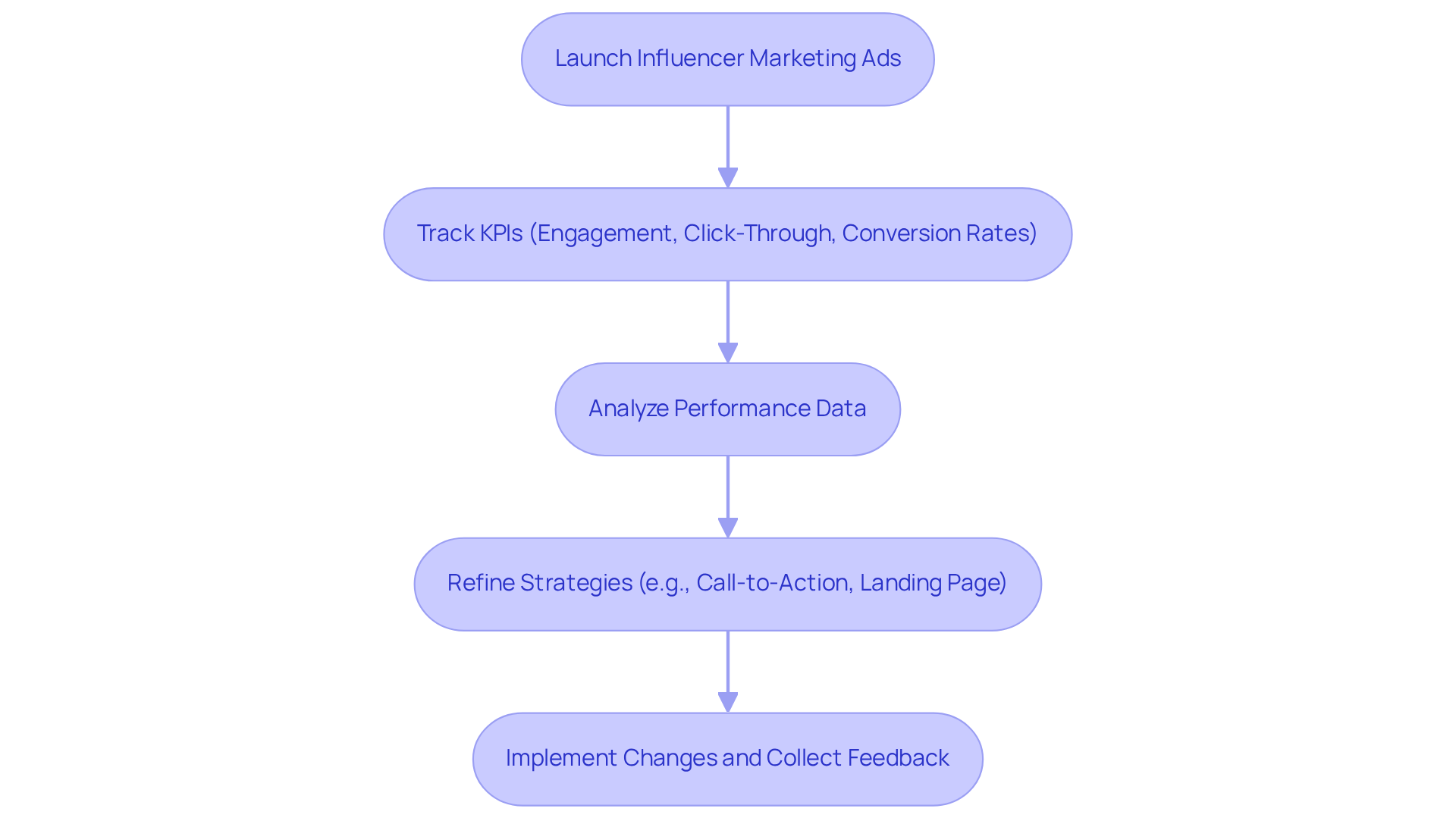
After launching ads featuring social media personalities, companies must meticulously track like engagement rates, click-through rates, and conversion rates. Advanced analytics tools play a crucial role in effectively monitoring these metrics. For example, if a campaign achieves but results in low conversions, it may indicate a need to or redesign the landing page. Furthermore, collecting feedback from influencers about their audience's reactions to the content can yield invaluable insights. This iterative analysis and optimization process not only sharpens the targeting of future campaigns but also significantly boosts .
With over 75% of companies increasing their collaborations over the past year and planning to expand partnerships further in 2026, the focus on is more critical than ever. Statistics reveal that campaigns leveraging and - now recognized as the most effective tools for capturing attention - amplified through paid advertising, are among the top performers in driving conversions. By continuously refining their strategies based on performance data, brands can transform into a formidable growth channel.
Conclusion
Effective influencer marketing ads hinge on a strategic blend of authenticity, audience alignment, and continuous optimization. By prioritizing these elements, brands can cultivate meaningful connections with their target consumers, ultimately driving engagement and conversions.
Identifying the right audience and aligning brand values with influencer messaging are crucial first steps. Companies that understand their demographic and select influencers based on engagement rather than mere follower counts set themselves up for success. Furthermore, crafting authentic content that resonates with audiences-through storytelling and creative freedom-can significantly enhance the effectiveness of campaigns. The importance of analyzing performance metrics cannot be overstated, as it allows brands to refine their strategies and maximize ROI.
As the landscape of influencer marketing continues to evolve, embracing these best practices is essential for staying relevant and impactful. Companies must not only adapt to changing consumer expectations but also proactively seek innovative ways to engage their audiences. By implementing these strategies, brands can unlock the full potential of influencer marketing, ensuring they stand out in a competitive marketplace.
Are you ready to elevate your influencer marketing strategy? Engage with MediaNug today to explore how these insights can transform your campaigns and drive measurable results.
Frequently Asked Questions
What is the first step companies should take in influencer marketing?
Companies should first identify their target market by examining demographic information such as age, gender, location, and interests.
How can companies gather insights about their target audience?
Companies can utilize tools like social media analytics and customer surveys to gain valuable insights into viewer preferences and behaviors.
Why is brand alignment important in influencer marketing?
Brand alignment is essential because it fosters authenticity, which is a cornerstone of successful influencer marketing ads. Aligning values and messaging with the audience enhances credibility and resonates with followers.
Can you provide an example of effective brand alignment?
An example is a sustainable fashion label collaborating with influencers who advocate for eco-friendly practices. This alignment enhances credibility and creates a genuine connection with followers.
What are some statistics that highlight the importance of influencer marketing?
Statistics reveal that 72% of Gen Z users depend on Instagram for customer support, and 69% of consumers trust influencers' recommendations, emphasizing the importance of audience alignment and authenticity.
What risks should companies be aware of in influencer marketing?
Companies must be aware of potential risks, such as the consequences of neglecting authenticity, as illustrated by the Fyre Festival disaster. Ethical practices in collaboration are essential for sustaining consumer trust.
How should companies adjust their strategies for influencer marketing?
Companies should adjust their strategies to the changing environment of social media platforms to ensure they remain relevant and credible.
List of Sources
- Define Your Target Audience and Brand Alignment
- newsbywire.com (https://newsbywire.com/influencer-marketing-news-trends-challenges-and-maximising-pr-synergy)
- The Role of Influencers in Innovative Brand Strategies (https://councils.forbes.com/blog/the-role-of-influencers-in-innovative-brand-strategies)
- Aligning Brands and Creators to Drive Influencer Marketing and Brand Trust - PRNEWS (https://prnewsonline.com/aligning-brands-and-creators-to-drive-influencer-marketing-and-trust-in-2024)
- Social media demographics to inform your 2026 strategy (https://sproutsocial.com/insights/new-social-media-demographics)
- viralnation.com (https://viralnation.com/resources/blog/influencer-marketing-trends-2025-what-marketers-need-to-know)
- Choose Influencers That Match Your Brand and Audience
- openinfluence.com (https://openinfluence.com/the-continued-rise-of-micro-and-nano-influencers)
- newswise.com (https://newswise.com/articles/goldilocks-influencers-why-high-follower-count-may-not-be-the-best-driver-of-engagement-on-social-media)
- stackinfluence.com (https://stackinfluence.com/influencer-marketing-stats-2025-key-numbers)
- entrepreneur.com (https://entrepreneur.com/growing-a-business/forget-follower-counts-influence-is-now-about/494761)
- prnewswire.com (https://prnewswire.com/news-releases/influencer-marketing-in-2025-new-data-reveals-what-works-what-costs-and-whats-next-302490369.html)
- Craft Engaging and Authentic Ad Content
- torro.io (https://torro.io/blog/why-influencer-marketing-beats-traditional-ads-in-2025)
- New Research Unveils Key Strategies for influencer authenticity - Georgia State University News - Press Releases, Robinson College of Business - (https://news.gsu.edu/2025/02/20/influencer-authenticity)
- mblm.com (https://mblm.com/blog/from-saturation-to-authenticity-rethinking-influencer-marketing-in-2025)
- prnewswire.com (https://prnewswire.com/news-releases/influencer-marketing-in-2025-new-data-reveals-what-works-what-costs-and-whats-next-302490369.html)
- fleishmanhillard.com (https://fleishmanhillard.com/2025/01/co-creation-with-influencers-is-key-to-unlocking-authenticity-and-trust-in-2025)
- Analyze Performance and Optimize for Future Campaigns
- adage.com (https://adage.com/studio-30/aa-how-ai-helps-major-brands-optimize-campaigns-and-hit-key-kpis)
- Latest Trends & News from Marketing Influencers & Creators (https://adweek.com/category/influencers-creators)
- fashionunited.com (https://fashionunited.com/news/business/influencers-as-kpis-in-2026-brands-will-demand-marketing-not-promises/2025120569506)
- thecirqle.com (https://thecirqle.com/blog-post/why-performance-teams-are-taking-over-influencer-marketing)