
Introduction
In today's information-saturated landscape, crafting compelling product content is more crucial than ever. Brands that focus on best practices can significantly boost their engagement and conversion rates, ensuring their message resonates with the right audience. But how can companies effectively balance the need for consistent branding with the demand for innovative, engaging content? This article explores four essential practices that can transform product content creation into a powerful tool for connection and success.
Define Your Target Audience for Effective Engagement
To create impactful product material, start by pinpointing your . This requires thorough research to grasp their demographics, interests, and pain points. Utilize tools like surveys, social media analytics, and to gather insights; in fact, 77% of teams through direct interaction. Develop detailed that encapsulate the traits of your ideal customers. This foundational step guarantees that your material resonates with the audience's needs, boosting the chances of engagement and conversion.
For instance, a company targeting Gen Z consumers might focus on , while an organization aimed at professionals may prioritize LinkedIn articles. As Hannah McDonald asserts, "In 2026, and invest in creating meaningful connections before they need them." By aligning your strategy with the preferences of your audience, you can enhance relevance and achieve better outcomes.

Establish a Consistent Content Cadence to Maintain Interest
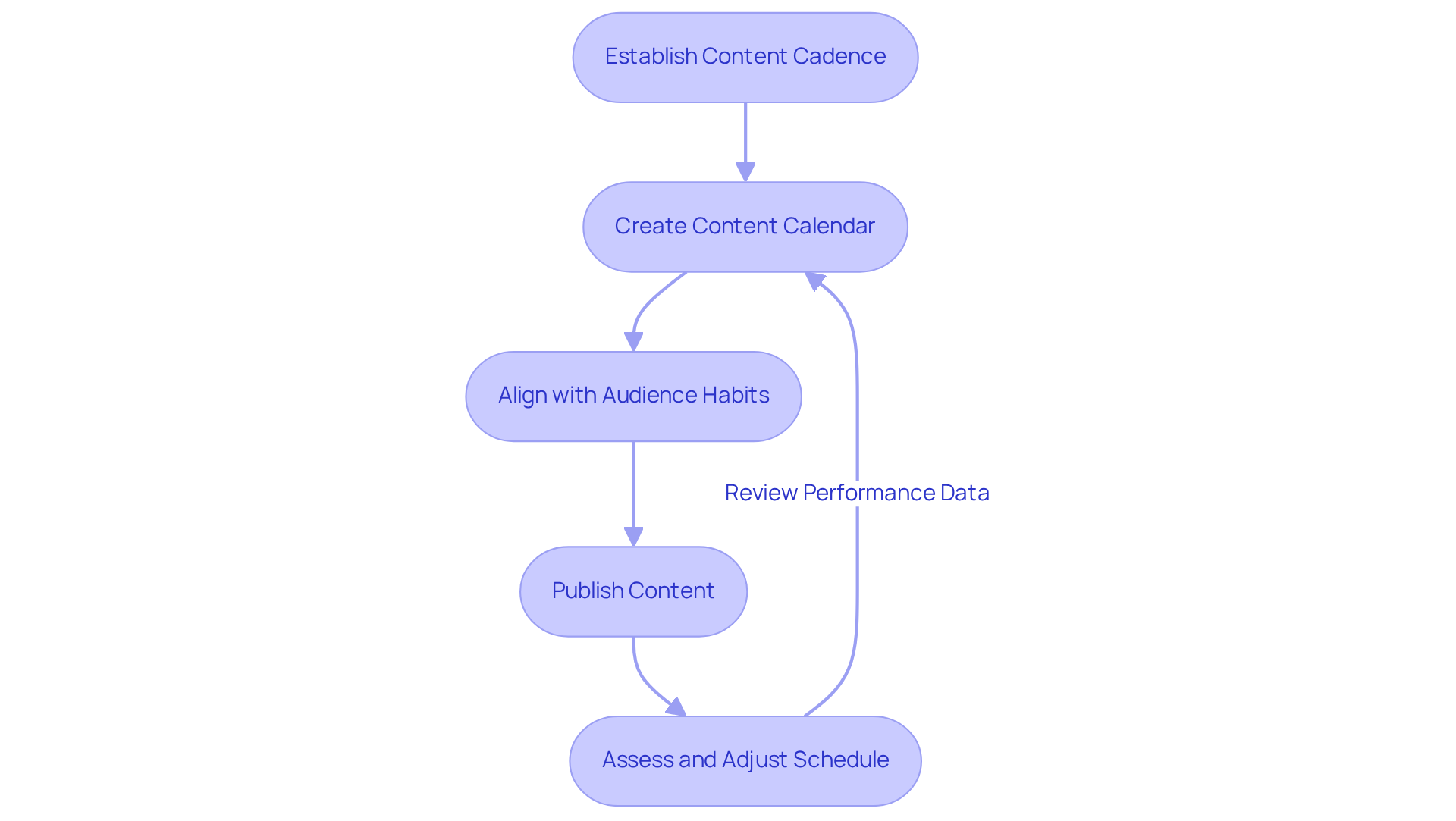
To maintain viewer interest, establishing a is crucial. that clearly outlines when and where new material will be published is essential. Aim for a frequency that aligns with your - be it daily, weekly, or bi-weekly. Consistency not only fosters recognition but also builds trust with viewers. For example, a brand might choose to share engaging stories on Instagram daily while publishing in-depth blog posts weekly. By adhering to this schedule, you ensure that your audience knows when to expect new content, significantly .
Indeed, 56% of enterprises globally plan to increase their investment in , underscoring the that resonates with public interests. Successful examples, such as Updater's collaboration with providers, demonstrate how a can enhance and foster customer loyalty. Furthermore, regularly based on performance data is vital for refining your strategy, ensuring that your content meets your audience's needs and preferences.
Utilize Data-Driven Insights to Optimize Content Performance
Harness to elevate your material performance. Begin by pinpointing that resonate with your marketing goals, such as engagement rates, click-through rates, and conversion rates. Employ analytics tools to track how your material performs across diverse platforms. Regularly to uncover trends and patterns that can inform your strategy. For instance, if you notice that , consider ramping up your efforts. After all, 82% of video marketers report a strong ROI from .
Furthermore, different formats and messaging can provide invaluable insights into what resonates best with your audience. In fact, 56% of marketers find it easier to today compared to a decade ago, highlighting the power of this iterative approach. By continuously refining your strategy based on these insights, you can and drive higher conversion rates, making your more effective as we move into 2026.

Balance Brand Consistency with Creative Innovation
To effectively connect with your viewers, it’s essential to balance with . Start by establishing . This fosters trust and recognition among your audience. For instance, companies can maintain their core messaging while innovating through , which significantly enhance . This strategy allows for creativity within an established framework, keeping content fresh and relevant.
Furthermore, by , brands empower individuals to monetize their passion while aligning with . This not only boosts creativity but also ensures fair compensation for creators, driving and loyalty. By taking these steps, brands can cultivate a , ultimately leading to .

Conclusion
Understanding and implementing effective product content creation practices is crucial for capturing audience attention and driving conversions. By defining your target audience, establishing a consistent content cadence, utilizing data-driven insights, and balancing brand consistency with creative innovation, brands can craft compelling content that resonates deeply with their customers.
Key strategies include:
- Thorough audience research to tailor content that meets their needs
- A well-planned content schedule to maintain engagement
- Leveraging analytics to refine content performance
- Fostering creativity while staying true to brand identity
Each of these elements is vital in developing a successful content strategy that not only attracts but also retains customer interest.
As the landscape of product content creation evolves, it becomes increasingly essential for brands to adopt these practices. Embracing these strategies enhances engagement and positions brands for long-term success in a competitive market. By prioritizing effective content creation, brands can build meaningful connections with their audience, ultimately leading to sustained growth and loyalty.
Frequently Asked Questions
Why is defining a target audience important for engagement?
Defining a target audience is crucial because it ensures that product material resonates with the audience's needs, which boosts engagement and conversion rates.
What methods can be used to identify a target audience?
Methods to identify a target audience include conducting thorough research, utilizing surveys, analyzing social media analytics, and gathering customer feedback.
What percentage of teams collect data through direct interaction with customers?
77% of teams collect data through direct interaction with customers.
What are buyer personas and why are they important?
Buyer personas are detailed profiles that encapsulate the traits of ideal customers. They are important because they help tailor marketing strategies to meet the specific needs and preferences of the target audience.
How should content strategies differ based on the target audience?
Content strategies should differ based on the target audience's preferences; for example, targeting Gen Z consumers might involve short-form video content on platforms like TikTok, while targeting professionals may involve LinkedIn articles.
What does Hannah McDonald suggest about brand communication in the future?
Hannah McDonald suggests that in 2026, successful brands will be those that communicate clearly with their customers and invest in creating meaningful connections before they are needed.
List of Sources
- Define Your Target Audience for Effective Engagement
- The Importance of Social Media Marketing in 2026 - JCT Growth (https://jctgrowth.com/why-social-media-marketing-matters-more-than-ever-in-2026)
- designrush.com (https://designrush.com/agency/content-marketing/trends/content-marketing-statistics)
- 2026 Marketing Statistics, Trends, & Data (https://hubspot.com/marketing-statistics)
- konstructdigital.com (https://konstructdigital.com/content-marketing/content-marketing-statistics)
- 60+ social media statistics marketers need to know in 2026 (https://blog.hootsuite.com/social-media-statistics)
- Establish a Consistent Content Cadence to Maintain Interest
- forbes.com (https://forbes.com/sites/estherchoy/2019/02/03/5-quotes-engaging-your-audience)
- clearvoice.com (https://clearvoice.com/resources/case-studies-to-inspire-content-marketing)
- clubmarketing.com (https://clubmarketing.com/blog/35-inspiring-quotes-from-content-marketing-experts)
- dotdigital.com (https://dotdigital.com/blog/marketing-content-calendar-guide)
- Utilize Data-Driven Insights to Optimize Content Performance
- Unpacking the marketing industry trends forecast for 2026 (https://marketingdive.com/news/marketing-trends-outlook-2026/810740)
- March 2026 Marketing News: Key Trends & Insights Revealed (https://seafoammedia.com/march-2026-marketing-news-trends-insights)
- 2026 Marketing Statistics, Trends, & Data (https://hubspot.com/marketing-statistics)
- inmotionmktg.com (https://inmotionmktg.com/blog/content-marketing-stats)
- medium.com (https://medium.com/@meghrajp008/19-inspirational-quotes-about-data-wisdom-for-a-data-driven-world-fcfbe44c496a)
- Balance Brand Consistency with Creative Innovation
- The Future of Branding: Key Trends, Challenges, and Breakthroughs for 2026 (https://admindagency.com/the-future-of-branding-key-trends-challenges-and-breakthroughs-for-2026)
- medium.com (https://medium.com/@locallycreativelab/branding-case-studies-analysing-successful-branding-campaigns-9b35a663f58f)
- 50+ Branding Statistics for 2026 That Explain Brand Loyalty (https://wearetenet.com/blog/branding-statistics)
- Branding Statistics 2026: 98+ Stats & Insights [Expert Analysis] - Marketing LTB (https://marketingltb.com/blog/statistics/branding-statistics)