Introduction
Capturing the essence of a product through photography and videography isn’t merely an art; it’s a strategic advantage in today’s competitive marketplace. Effective visuals can significantly elevate a brand's appeal, leading to notable increases in sales and customer engagement. Yet, many businesses struggle to translate this potential into reality, often overlooking essential techniques and equipment that can make all the difference. What best practices can transform ordinary product images into captivating visual stories that truly resonate with consumers?
Furthermore, understanding the nuances of visual storytelling is crucial. By leveraging the right techniques, brands can create images that not only attract attention but also foster a deeper connection with their audience. In addition, successful case studies demonstrate how strategic visual content can drive engagement and conversion rates.
As we delve deeper into this topic, consider how your current approach to product imagery aligns with these insights. Are you ready to elevate your brand's visual narrative?
Understand the Fundamentals of Product Photography
The art of involves capturing visuals that showcase items in their best light, which can . Lighting plays a crucial role in this process. Proper lighting not only highlights product features but also creates an inviting atmosphere. While natural light is often preferred, offers consistency. Professional studios often mimic natural sunlight in their to enhance authenticity, resulting in a remarkable 25% increase in sales compared to amateur photographs. Additionally, are essential for social media engagement, with posts featuring such images experiencing engagement rates 60% higher than those with lower-quality graphics.
Composition is another key element that influences perception. The arrangement of elements within the frame can enhance visual interest, with techniques like the rule of thirds proving effective. Research shows that different camera angles and compositions can significantly sway purchasing decisions, particularly when odd-numbered subjects are used, which tend to create more appealing images. For instance, Warby Parker has successfully leveraged imagery to create a seamless online shopping experience, resulting in a .
The background of an image is equally important. A clean, distraction-free backdrop allows the item to stand out. Common choices include white, gray, or textured backgrounds that complement the item. Matching backgrounds to the item’s hues can evoke feelings of richness and luxury, enhancing the overall presentation.
Understanding is essential for capturing clear, well-exposed images in . For instance, a low ISO (100-200) combined with a moderate aperture (f/8-f/11) is often ideal for . This technical knowledge empowers photographers to create visuals that not only attract attention but also effectively convey the item’s value.
By mastering these fundamentals, photographers can produce images that resonate with potential customers. Furthermore, incorporating techniques like by online shoppers-can further elevate the shopping experience.

Master Key Techniques for Captivating Product Shots
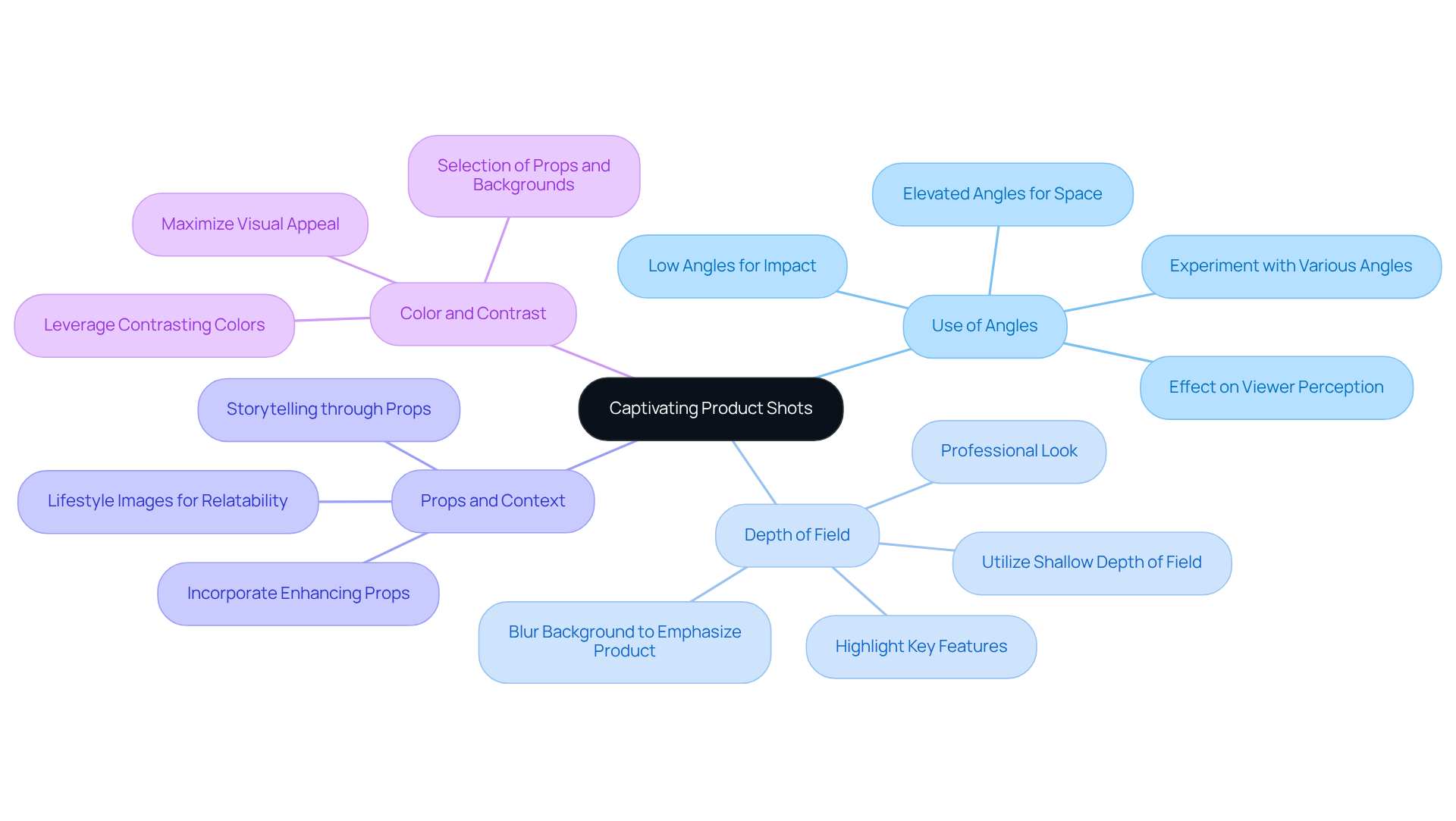
To create , consider these :
- Use of Angles: Experiment with various angles to discover the most flattering perspective for your product. Elevated angles can evoke a sense of space, while low angles can make items appear more imposing. Have you considered how the angle affects the viewer's perception?
- : Utilize a shallow to blur the background and draw attention to the item. This technique not only creates a more professional look but also emphasizes key features. Imagine how much more appealing your product could be with this simple adjustment.
- : Incorporate props that enhance the item and provide context. For instance, lifestyle images showcasing the item in use can significantly boost relatability and appeal. What props could you use to ?
- : Leverage contrasting colors to make the item stand out against the background. This can be achieved through careful selection of props and backgrounds that enhance the item's visual appeal. Are you maximizing color contrast to capture attention?
Applying these methods can greatly elevate the quality of your and videography, making your pictures not only more captivating but also more effective in boosting sales. Don't underestimate the power of a well-composed image!
Select the Right Equipment for Optimal Results
Choosing the right equipment is crucial for achieving outstanding results in . Did you know that can lead to a 94% higher conversion rate? Here are the key components to consider:
- Camera: Select a , like the Canon EOS R50 or Nikon Z5, which provide versatility and exceptional image quality. Models with excellent low-light performance and are particularly beneficial for capturing intricate item shots.
- Lenses: A , making it perfect for items that need close-up shots. Additionally, a standard zoom lens offers the flexibility required for various item sizes, allowing for diverse compositions.
- Tripod: A for maintaining stability, especially in low-light situations or when using slower shutter speeds. This equipment minimizes camera shake, ensuring sharp and clear images, which is critical for professional-quality work.
- : Investing in softboxes or LED panels is key to effectively managing lighting. These tools help eliminate harsh shadows and create a that enhances the item's appearance, significantly improving the overall quality of the photos.
- Backdrops: Use to create a clean shooting environment. White or neutral colors are often preferred in , as they keep the focus on the item itself, enhancing its visual appeal. A seamless white background can greatly elevate the professional look of merchandise visuals.
By carefully selecting the right equipment, photographers can significantly boost their ability to produce , particularly in , that resonate with consumers. Remember, 75% of online shoppers rely on visuals to make purchasing decisions, highlighting the importance of investing in the right tools for success.

Enhance Visuals with Effective Post-Production Techniques
Post-production is where item photography can truly shine. Did you know that can boost conversion rates by as much as 60%? Here are effective techniques to enhance your images:
- Editing Software: Utilize , renowned for their robust features in color correction, cropping, and retouching. These applications are essential for achieving high-quality visuals that resonate with consumers. In addition, consider using Luminar Neo, rated as the , for its innovative AI tools that can streamline your editing process.
- Color Correction: Adjusting white balance and exposure is crucial for ensuring that colors are accurate and vibrant. This is especially important for items where can greatly affect buying choices. Furthermore, , highlighting the effectiveness of advanced .
- Retouching: is vital. This involves that can lessen the item's appeal. but also builds consumer trust, reducing return rates. It's essential to recognize that 67% of consumers anticipate brands to reveal when AI is utilized in visuals, addressing concerns about authenticity.
- Sharpening and Noise Reduction: Apply sharpening techniques to enhance details, but exercise caution to avoid over-sharpening. Additionally, apply noise reduction techniques to eliminate graininess, particularly in low-light visuals, ensuring clarity and professionalism in your pictures.
- Consistent Style: across all items is essential for creating a cohesive brand identity. This consistency strengthens brand awareness and enhances overall presentation, making your offerings more attractive to potential buyers.
By mastering these post-production techniques, photographers can elevate their product photography and videography, ensuring the images are not only visually stunning but also more effective in driving sales.

Conclusion
Mastering the art of product photography and videography is not just beneficial; it’s essential for businesses looking to elevate their visual marketing strategies. By grasping the fundamentals - lighting, composition, and background - photographers can craft compelling images that not only capture attention but also drive sales. High-quality visuals wield significant influence over consumer decisions, making it imperative for brands to dedicate time and resources to honing their photography skills.
Key techniques, such as:
- Utilizing various angles
- Depth of field
- Thoughtfully chosen props
can elevate ordinary product shots into captivating visuals. Furthermore, selecting the right equipment - from cameras to lighting tools - is crucial for achieving professional-quality results. Post-production techniques, including color correction and retouching, further enhance the allure of product images, ensuring they resonate with potential buyers.
Ultimately, the importance of effective product photography and videography cannot be overstated. As competition intensifies, businesses must prioritize high-quality visuals to distinguish themselves in the marketplace. Embracing these best practices will not only enhance the aesthetic quality of product images but also cultivate greater consumer trust and engagement, leading to increased sales and brand loyalty. Now is the time to invest in your visual marketing - don’t let your brand blend into the background.
Frequently Asked Questions
What is the main purpose of product photography and videography?
The main purpose of product photography and videography is to capture visuals that showcase items in their best light, significantly impacting sales.
Why is lighting important in product photography?
Lighting is crucial because it highlights product features and creates an inviting atmosphere. Proper lighting can enhance authenticity and result in increased sales.
What type of lighting is often preferred for product photography?
While natural light is often preferred, controlled studio lighting offers consistency and can mimic natural sunlight to enhance the quality of images.
How much can professional product photography increase sales compared to amateur photographs?
Professional product photography can result in a remarkable 25% increase in sales compared to amateur photographs.
What role do high-resolution visuals play in social media engagement?
High-resolution visuals are essential for social media engagement, with posts featuring such images experiencing engagement rates 60% higher than those with lower-quality graphics.
What is the significance of composition in product photography?
Composition affects perception and visual interest. Techniques like the rule of thirds and using odd-numbered subjects can sway purchasing decisions and create more appealing images.
Can you provide an example of a company that successfully uses imagery in product photography?
Warby Parker has successfully leveraged imagery to create a seamless online shopping experience, resulting in a 30% boost in conversion rates.
How does the background of an image influence product photography?
A clean, distraction-free background allows the item to stand out. Common choices include white, gray, or textured backgrounds that complement the item, enhancing its presentation.
What camera settings are ideal for product photography?
Ideal camera settings for product photography include a low ISO (100-200) and a moderate aperture (f/8-f/11) to capture clear, well-exposed images.
What is 360 photography and why is it beneficial for online shoppers?
360 photography is a technique that provides a comprehensive view of a product and is considered the 'most helpful' form of imagery by online shoppers, enhancing their shopping experience.
List of Sources
- Understand the Fundamentals of Product Photography
- productphotography.co.uk (https://productphotography.co.uk/stats-and-facts-on-the-importance-of-good-product-photography)
- speedecam.com (https://speedecam.com/the-role-of-product-photography-in-digital-marketing)
- digital-photography-school.com (https://digital-photography-school.com/photography-quotes)
- prodoto.com (https://prodoto.com/behind-prodoto/blog/product-photography-trends-2026)
- shootdotedit.com (https://shootdotedit.com/blogs/news/best-photography-quotes-photographers)
- Master Key Techniques for Captivating Product Shots
- commercialphotographersnetwork.com (https://commercialphotographersnetwork.com/news/commercial-product-photography-case-study)
- shootdotedit.com (https://shootdotedit.com/blogs/news/best-photography-quotes-photographers)
- digitalcameraworld.com (https://digitalcameraworld.com/features/100-quotes-about-photography-by-famous-photographers)
- petapixel.com (https://petapixel.com/photography-quotes)
- Select the Right Equipment for Optimal Results
- digitalcameraworld.com (https://digitalcameraworld.com/buying-guides/best-camera-for-product-photography)
- thestudiopod.com (https://thestudiopod.com/photography-industry-statistics)
- intelmarketresearch.com (https://intelmarketresearch.com/macro-lenses-market-13362)
- smartli.ai (https://smartli.ai/blog/product-photography)
- en.canon-cna.com (https://en.canon-cna.com/get-inspired/tips-and-techniques/photography-quotes-captions)
- Enhance Visuals with Effective Post-Production Techniques
- imageretouchinglab.com (https://imageretouchinglab.com/importance-of-retouching-for-product-photography)
- photoroom.com (https://photoroom.com/blog/ai-image-statistics)
- autophoto.ai (https://autophoto.ai/blog/ai-product-photography-photo-editing-stats)
- Best Photo Editing Software in 2026: I Found a Surprising Winner (https://themframes.com/features/the-best-photo-editing-software)
- The Best Photo Editing Software We've Tested for 2026 (https://pcmag.com/picks/the-best-photo-editing-software)