
Introduction
Understanding the nuances of social media advertising is crucial for brands aiming to thrive in a rapidly evolving digital landscape. Effective social media ads not only capture attention but also resonate deeply with target audiences, leading to increased engagement and conversion rates. However, the challenge lies in mastering the art of audience segmentation, content creation, and data-driven optimization.
What best practices can brands adopt to elevate their social media advertising strategies and ensure they connect meaningfully with consumers? By focusing on these key areas, brands can enhance their advertising efforts and drive significant results. Furthermore, leveraging data analytics can provide insights that refine targeting and improve ad performance.
In addition, successful case studies illustrate how brands have transformed their social media presence through strategic advertising. These examples not only inspire but also demonstrate the tangible benefits of a well-executed social media strategy. As brands navigate this complex landscape, the need for effective engagement becomes paramount.
Ultimately, the goal is to create ads that not only inform but also inspire action. By adopting these strategies, brands can ensure they remain relevant and impactful in the digital space.
Identify and Understand Your Target Audience
Creating impactful starts with a profound understanding of your . Brands must segment their consumers based on demographics, interests, behaviors, and purchasing patterns. By employing and customer surveys, companies can gather essential data on the preferences and pain points of their . For example, platforms like Facebook and Instagram offer extensive insights into user interactions, enabling companies to refine their targeting strategies effectively.
Developing comprehensive consumer profiles allows companies to craft customized content that resonates with the specific needs and desires of their target market. This tailored approach not only of the but also enhances . Take Oatly, for instance; they exemplify the power of refined group segmentation by engaging with various subcultures and adapting their messaging to align with community expectations. By actively participating in ongoing discussions and respecting established online environments, companies can foster genuine connections that drive interaction and loyalty.
Moreover, leveraging qualitative metrics alongside traditional performance data provides brands with a holistic view of their customers. As Perez emphasizes, grasping target reach and engagement through qualitative metrics and data storytelling is crucial for effective segmentation. This deeper understanding informs campaign strategies, ensuring that messaging remains relevant and timely. Companies like Lay's have effectively captured attention through innovative strategies, such as using WhatsApp to create group chats for World Cup enthusiasts, showcasing practical applications of target segmentation.
As consumer preferences shift rapidly, companies must remain agile by continuously analyzing insights with a to adapt their advertising strategies and enhance effectiveness. However, it’s vital to steer clear of common pitfalls in , such as relying solely on basic metrics or overlooking the nuances of audience behavior. By addressing these challenges, companies can refine their advertising strategies and achieve greater success.

Create Engaging and Relevant Ad Content
To maximize the effectiveness of their , brands must prioritize creating . This means utilizing , concise messaging, and . Incorporating storytelling elements that resonate with the audience's emotions and experiences is crucial. Notably, stands out as particularly effective; it is perceived as more authentic and trustworthy than traditional ads, showcasing real customer experiences and fostering trust. For instance, initiatives like GoPro's Million Dollar Challenge have successfully leveraged UGC to enhance brand visibility and interaction, demonstrating the power of .
Furthermore, is vital. Utilizing native formats such as Instagram Stories or TikTok videos can significantly boost interaction. Regularly testing different content types and formats is essential to identify what resonates best with your audience. Research shows that 79% of consumers are influenced by UGC in their purchasing decisions, and . This makes UGC a . By integrating UGC into a , brands can cultivate a more relatable and credible image, ultimately leading to increased interaction and enhanced effectiveness of their advertisements.

Leverage Data Analytics for Continuous Optimization
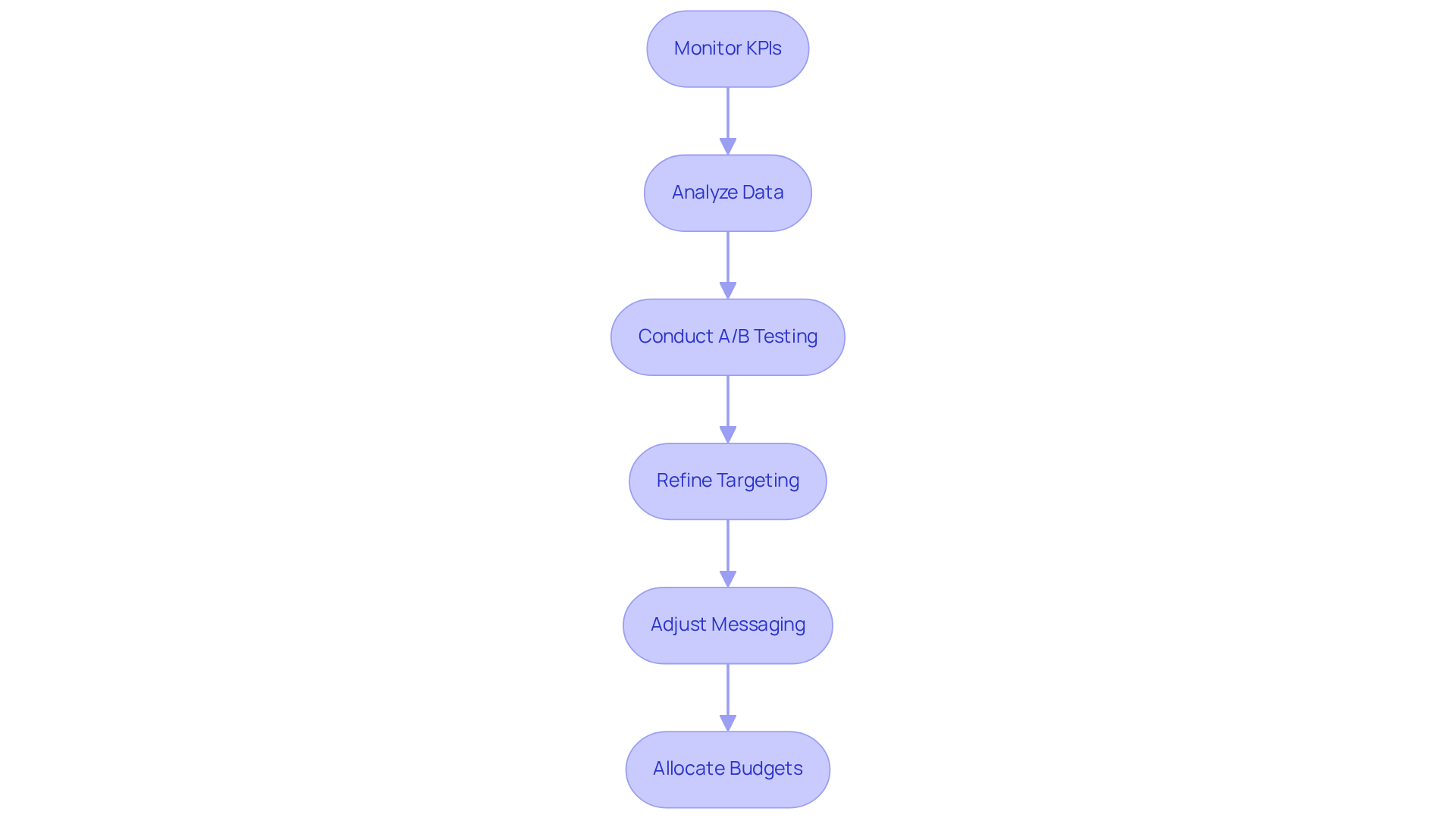
is essential for the ongoing optimization of social media ads. Brands must consistently monitor (KPIs) like click-through rates (CTR), conversion rates, and engagement metrics. By leveraging tools such as Google Analytics and social media insights, companies can and extract actionable insights.
For example, can uncover . This data-driven approach allows companies to , adjust their messaging, and allocate budgets more effectively. Ultimately, this ensures that every advertising dollar spent on the is utilized wisely, .
Furthermore, by examining these metrics, brands can not only enhance their advertising strategies but also foster deeper connections with their audience. Are you ready to take your social media advertising to the next level? to explore how can transform your ad performance.
Integrate Cross-Channel Strategies for Broader Reach
To maximize the impact of the , companies must adopt that foster a seamless . This approach involves aligning communication and across platforms like , Instagram, and YouTube using a . For example, a campaign could kick off with an , transition to a more in-depth video on YouTube, and wrap up with a compelling call-to-action on . Such a sequence not only captures attention but also guides users through their journey, enhancing awareness of the company.
Furthermore, applying is essential. It strengthens communication with users who have previously engaged with the company across different channels. Did you know that half of consumers frequently engage with over four brand touchpoints before making a purchase? This statistic underscores the significance of . When remain consistent, interaction rates significantly improve, as consumers are more inclined to respond positively when they encounter familiar content across various touchpoints.
As Susan Ganeshan, CMO at Emplifi, states, "Brands that will define the new standard in consumer engagement." This insight highlights the need for companies to embrace these strategies to stay ahead in the competitive landscape.

Conclusion
Understanding and implementing effective social media advertising practices is crucial for brands looking to connect with their audience and drive engagement. By identifying and understanding the target audience, creating relevant and engaging ad content, leveraging data analytics for continuous optimization, and integrating cross-channel strategies, brands can significantly enhance their social media advertising efforts and achieve superior results.
Key insights reveal the necessity of:
- Segmenting consumers for tailored messaging
- The effectiveness of user-generated content in building trust
- The pivotal role of data analytics in refining advertising strategies
Furthermore, employing cross-channel strategies ensures a cohesive customer experience, maximizing reach and interaction. These practices not only boost engagement but also improve return on ad spend, ultimately leading to greater success in social media advertising.
As the landscape of social media evolves, brands must remain proactive and adaptable. Embracing these best practices will enhance advertising effectiveness and foster deeper connections with consumers. Companies are encouraged to explore innovative strategies and continuously analyze their performance to stay ahead in the competitive market of social media advertising. What innovative approaches will you adopt to elevate your brand's presence?
Frequently Asked Questions
Why is understanding the target audience important for social media ads?
Understanding the target audience is crucial because it allows brands to create impactful ads that resonate with specific demographics, interests, behaviors, and purchasing patterns, ultimately enhancing the effectiveness of their advertising strategies.
How can companies gather data about their target audience?
Companies can gather data on their target audience by using social media analytics tools, conducting customer surveys, and analyzing user interactions on platforms like Facebook and Instagram.
What is the benefit of developing comprehensive consumer profiles?
Developing comprehensive consumer profiles enables companies to craft customized content that meets the specific needs and desires of their target market, which boosts the effectiveness of social media ads and enhances return on ad spend (ROAS).
Can you provide an example of a brand that effectively segments its audience?
Oatly is an example of a brand that effectively segments its audience by engaging with various subcultures and adapting their messaging to align with community expectations, fostering genuine connections that drive interaction and loyalty.
What role do qualitative metrics play in audience segmentation?
Qualitative metrics provide brands with a holistic view of their customers, helping them understand target reach and engagement beyond traditional performance data, which is crucial for effective segmentation and campaign strategies.
How can companies adapt their advertising strategies as consumer preferences change?
Companies can adapt their advertising strategies by continuously analyzing insights through social media ads services, allowing them to refine their targeting and enhance the effectiveness of their campaigns.
What common pitfalls should companies avoid in audience segmentation?
Companies should avoid common pitfalls such as relying solely on basic metrics or overlooking the nuances of audience behavior, as these can hinder the refinement of advertising strategies and reduce overall success.
List of Sources
- Identify and Understand Your Target Audience
- digiday.com (https://digiday.com/sponsored/why-brands-are-seeking-more-nuanced-humanized-audience-segmentation-for-campaign-success-2)
- sproutsocial.com (https://sproutsocial.com/insights/social-media-audience-insights)
- 2026 Marketing Statistics, Trends, & Data (https://hubspot.com/marketing-statistics)
- Create Engaging and Relevant Ad Content
- netconnectdigital.com (https://netconnectdigital.com/impact-of-user-generated-content-in-brand-marketing)
- The Impact of User-Generated Content on Customer-Centric Digital Marketing (https://thriveagency.com/news/the-impact-of-user-generated-content-on-customer-centric-digital-marketing)
- How UGC Transforms Modern Advertising Campaigns (https://mediacomponents.com/how-user-generated-content-ugc-is-changing-advertising-campaigns)
- Audiences overwhelmingly prefer user-generated content over standard ads, AI (https://emarketer.com/content/audiences-overwhelmingly-prefer-user-generated-content-over-standard-ads--ai)
- Leverage Data Analytics for Continuous Optimization
- digitaltwentyfour.com (https://digitaltwentyfour.com/news/the-importance-of-a-b-testing-in-your-facebook-ads-campaigns)
- sociummedia.com (https://sociummedia.com/blog/a-b-testing)
- 10 Key Benefits of A/B Testing Your Campaigns (https://bayareanewsgroup.com/10-key-benefits-of-a/b-testing-your-campaigns)
- A/B Testing: A Powerful Tool For Optimizing Your Google Ads (https://forbes.com/councils/forbesagencycouncil/2024/10/30/ab-testing-a-powerful-tool-for-optimizing-your-google-ads)
- Integrate Cross-Channel Strategies for Broader Reach
- 6 Predictions That Will Shape Social Media Strategies In 2026 (https://forbes.com/councils/forbescommunicationscouncil/2026/01/02/the-next-social-wave-the-top-6-predictions-that-will-shape-social-media-strategies-in-2026)
- Cross-channel marketing strategies for 2026: A practical guide for small teams | Criteo (https://criteo.com/blog/cross-channel-marketing-strategies-for-2026-a-practical-guide-for-small-teams)
- news.designrush.com (https://news.designrush.com/cross-channel-marketing-brand-growth)
- 120+ Must-know social media marketing statistics for 2026 (https://sproutsocial.com/insights/social-media-statistics)
- business.com (https://business.com/articles/omnichannel-customer-journey)