
Introduction
Creating impactful video content isn't just about being creative; it's about mastering a structured production process. By implementing best practices in pre-production, production, and post-production, brands can significantly enhance viewer engagement and drive marketing success. But how can brands keep their video strategies effective and continuously optimized for maximum impact? Let’s explore four essential practices that can truly elevate your video production efforts, offering insights that can transform any project from ordinary to extraordinary.
Establish a Comprehensive Pre-Production Plan
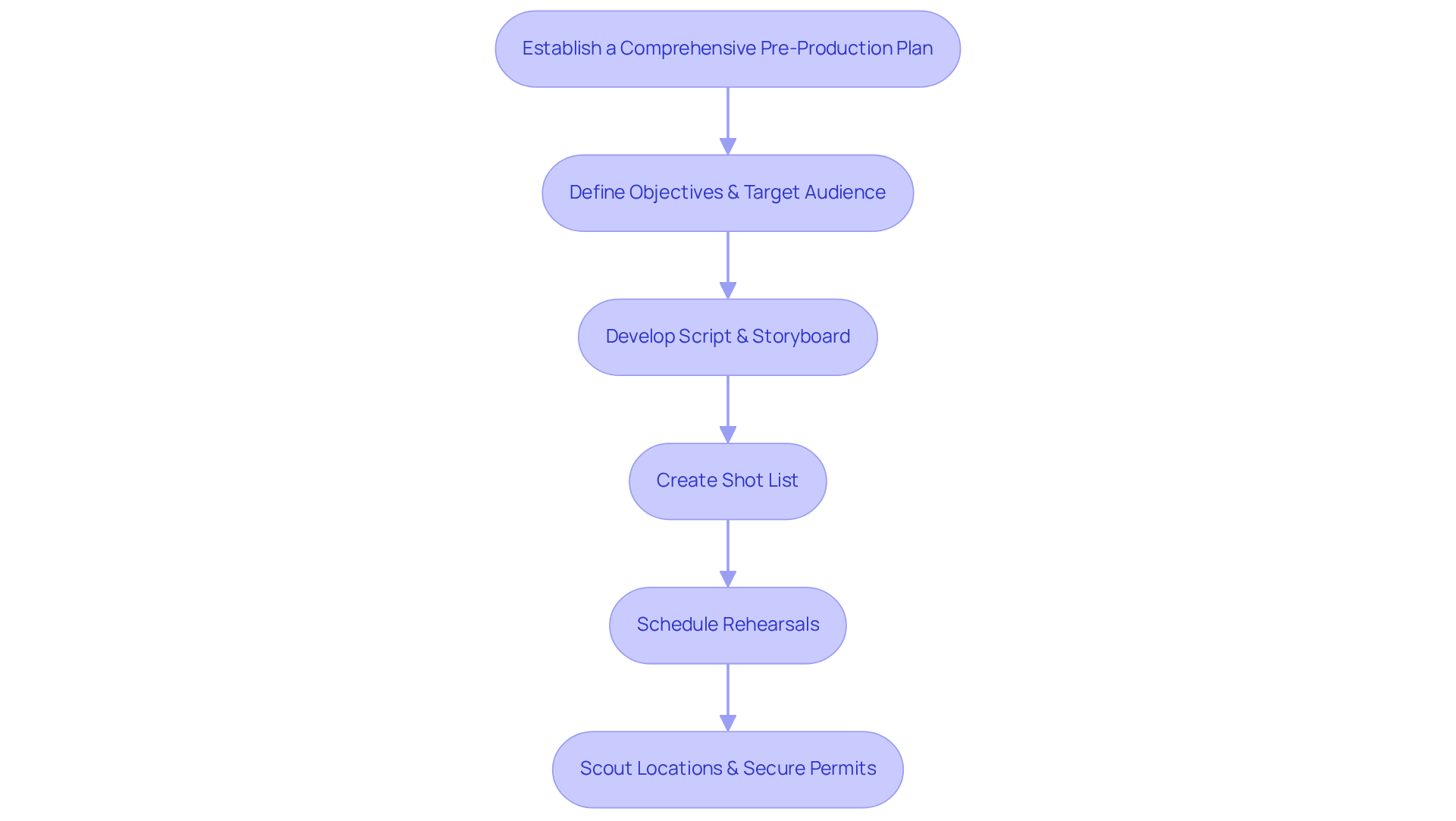
Have you ever wondered why some videos captivate audiences while others fall flat? A thorough pre-production strategy is essential for successful filming. Begin by defining the video's objectives and target audience. Develop a detailed script and storyboard to visualize the narrative flow. Create a shot list that outlines each scene and the necessary equipment. Schedule rehearsals with actors to ensure they are comfortable with their lines and actions. Furthermore, scout locations to assess lighting and sound conditions, and secure any necessary permits. This preparation can mean the difference between a mediocre video and one that captivates audiences.
For instance, consider this: a well-known brand increased viewer engagement by 30% after implementing a structured pre-production strategy that included detailed storyboarding and location scouting.
How could a similar approach benefit your projects?
Execute a Structured Production Process
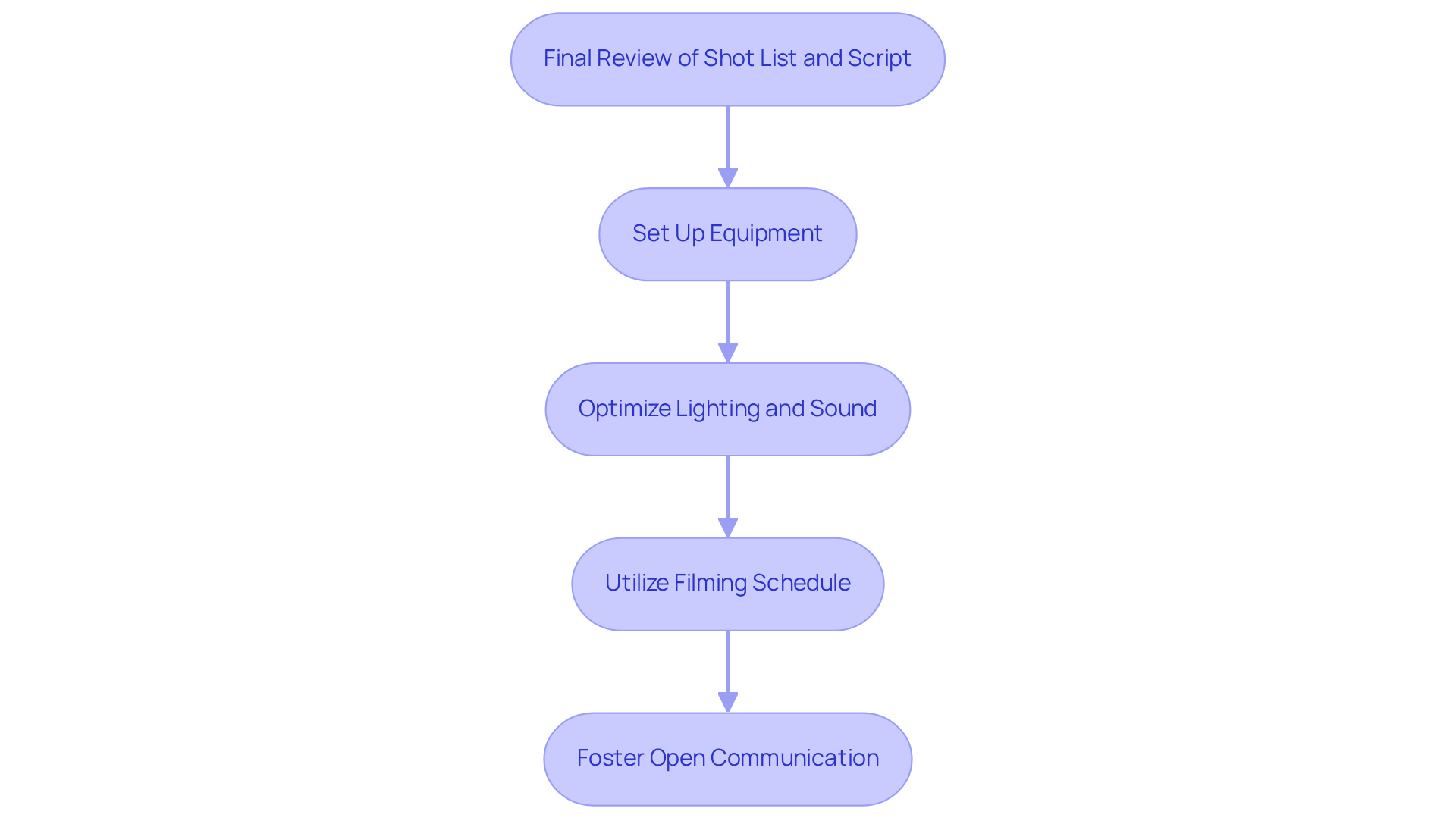
To achieve a successful production, a structured process is non-negotiable. Begin by conducting a final review of the shot list and script with the crew. Set up equipment according to the planned shots, ensuring that lighting and sound are optimized for each scene. Utilize a filming schedule to keep track of time and ensure that all scenes are captured within the allotted timeframe. Fostering open communication among the crew allows for quick resolution of any issues that may arise, keeping the production on track.
For instance, a tech firm effectively introduced a product film by adhering to a rigorous schedule, leading to a prompt launch that matched their marketing strategy. Ultimately, a well-organized approach can be the difference between a successful launch and a missed opportunity.
Optimize Content Through Effective Post-Production Techniques
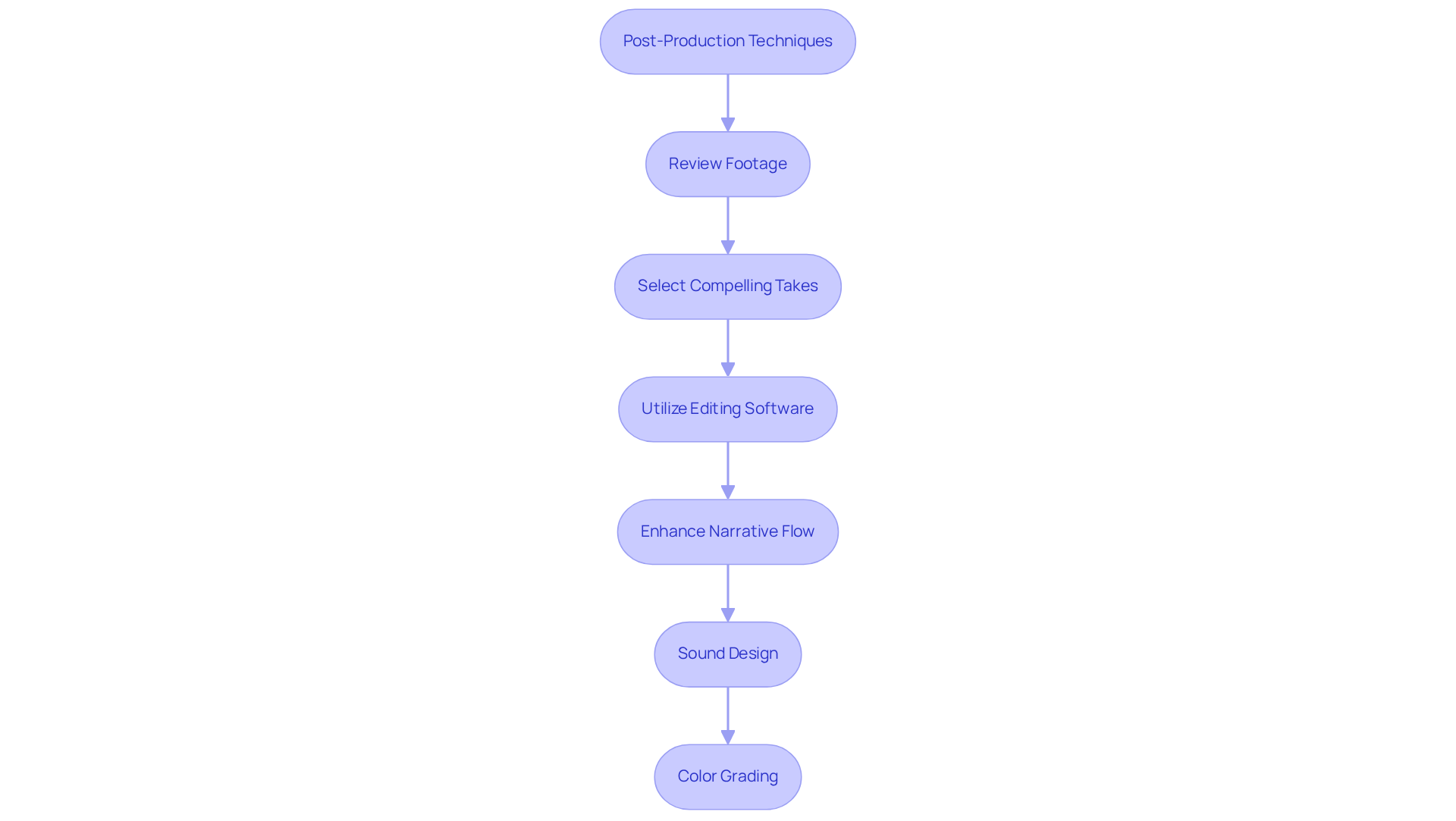
Post-production is not just a phase; it's the transformative process that turns raw footage into a compelling narrative. Start with a thorough review of all footage to select only the most compelling takes. Utilize advanced editing software, including AI-powered tools, to eliminate unnecessary scenes and enhance narrative flow, creating a cohesive story that resonates with viewers. Sound design, including background music and sound effects, elevates the viewing experience, making it immersive and engaging. Furthermore, color grading is essential for attaining visual consistency and improving the overall aesthetic charm of the footage.
For instance, a lifestyle brand enhanced its visual engagement by 40% after applying professional editing techniques that included dynamic transitions and captivating soundtracks. This case underscores the effectiveness of strategic post-production in driving viewer interaction and retention. Statistics indicate that clips with high-quality editing can result in an 86% rise in website traffic, emphasizing the significance of investing in skilled post-production to enhance the effectiveness of marketing efforts. As Dawn M. Deguzman, Director of Global Visual and Audio Products, observes, "The incorporation of visual material into marketing strategies is not solely focused on boosting engagement - it’s also about enhancing the speed and effectiveness of production." By mastering these post-production techniques, brands can not only enhance their visuals but also significantly impact their marketing success.
Implement Continuous Testing and Optimization Strategies
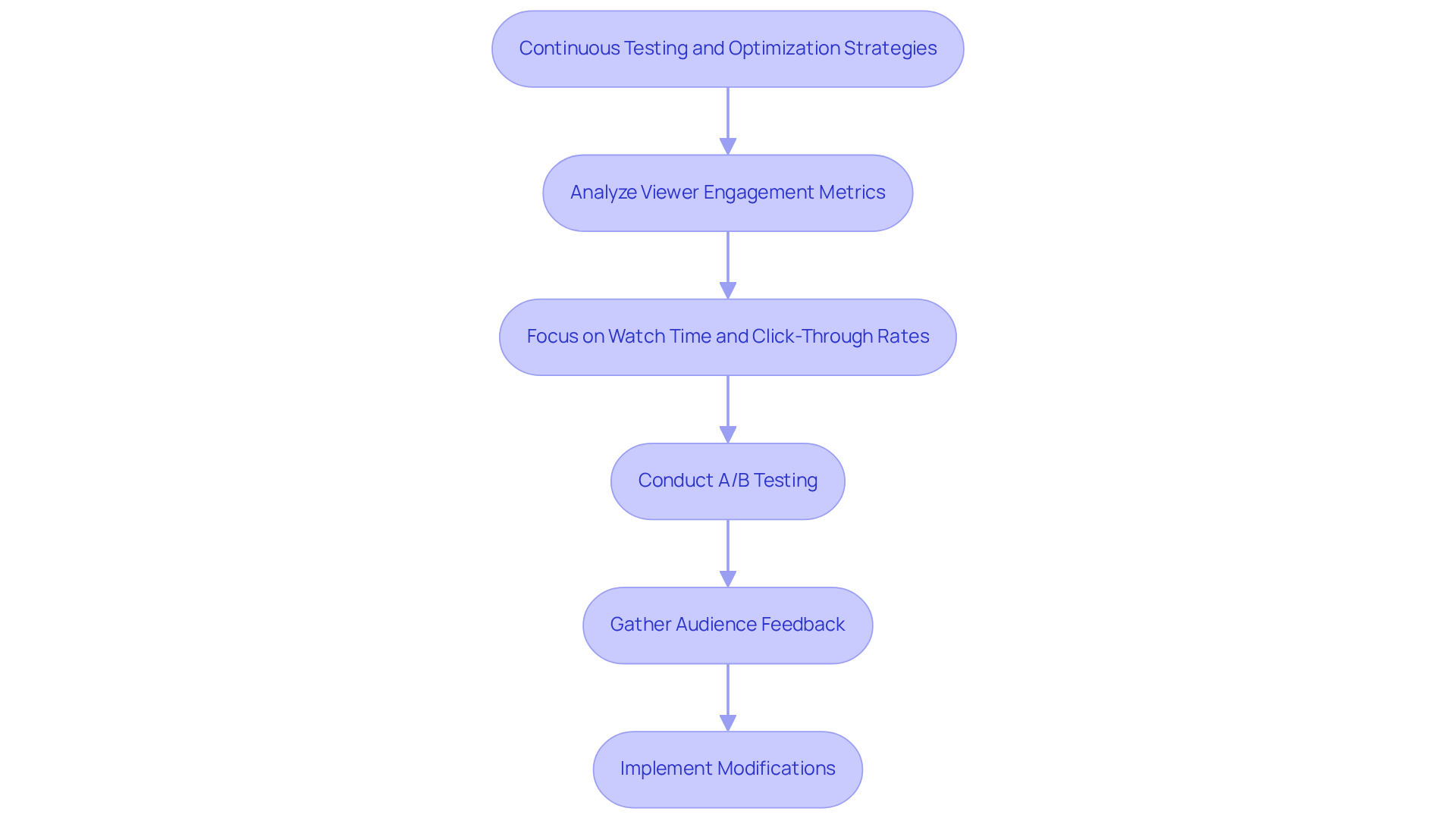
To truly harness the power of visual material, brands must prioritize continuous testing and optimization strategies. Begin with a thorough analysis of viewer engagement metrics. Focus on watch time and click-through rates to identify areas for improvement. Conduct A/B testing on various elements, including thumbnails, titles, and calls to action, to discover which variations yield the best performance. Audience feedback should also guide modifications to future visual content.
For instance, MediaNug has effectively partnered with companies such as Nike and L’Oréal, assisting them in achieving substantial growth in conversion rates through customized visual strategies. A retail label, for example, saw a remarkable 25% rise in conversion rates after testing various film formats and optimizing based on viewer preferences.
Did you know that 84% of marketers believe visual content directly boosts sales? This highlights the critical need for ongoing testing in your marketing strategy. Regular A/B testing not only enhances engagement but also improves ROI. In a rapidly evolving market, those who commit to regular testing will not only enhance their engagement but also secure their position as industry leaders.
Conclusion
In a world where video content dominates marketing strategies, meticulous planning is not just beneficial; it's essential for success. A comprehensive pre-production plan sets the stage for captivating content. It ensures that brands resonate with their target audience. This step clarifies objectives and ensures every detail, from scripting to location scouting, is carefully considered, ultimately leading to a more engaging final product.
The structured production process is equally vital, facilitating seamless collaboration among the crew and adherence to timelines. By maintaining open communication and following a rigorous filming schedule, brands can capture high-quality footage that aligns with their marketing strategies. Furthermore, the post-production phase transforms raw material into a polished narrative. Effective editing techniques and sound design significantly enhance viewer engagement.
How can brands maximize the impact of their video content? Continuous testing and optimization strategies are key. By analyzing viewer metrics and conducting A/B tests, brands can refine their visual strategies and improve conversion rates. MediaNug's partnerships with industry leaders like Nike and L’Oréal exemplify the power of tailored visual content in driving substantial growth. By prioritizing creativity and strategic planning, brands can not only enhance their video production quality but also secure a competitive edge in the market.
Frequently Asked Questions
Why is a pre-production plan important for video production?
A thorough pre-production plan is essential for successful filming as it helps define the video's objectives, target audience, and overall narrative flow, which can significantly impact audience engagement.
What are the key components of a comprehensive pre-production plan?
Key components include defining the video's objectives and target audience, developing a detailed script and storyboard, creating a shot list, scheduling rehearsals with actors, scouting locations, and securing necessary permits.
How does storyboarding contribute to the pre-production process?
Storyboarding helps visualize the narrative flow of the video, allowing for better planning and organization of scenes.
What is the purpose of creating a shot list?
A shot list outlines each scene and the necessary equipment, ensuring that all aspects of filming are accounted for and organized.
Why is it important to schedule rehearsals with actors?
Scheduling rehearsals allows actors to become comfortable with their lines and actions, which can enhance their performance and the overall quality of the video.
What should be considered when scouting locations for filming?
When scouting locations, it is important to assess lighting and sound conditions to ensure they are suitable for the video production.
Can you provide an example of the benefits of a structured pre-production strategy?
Yes, a well-known brand increased viewer engagement by 30% after implementing a structured pre-production strategy that included detailed storyboarding and location scouting.
List of Sources
- Establish a Comprehensive Pre-Production Plan
- The Video Production Process in 2026: How Brands Can Create Content That Builds Trust, Performs on Social, and Shows Up in AI Search (https://50pros.com/blog/the-video-production-process-in-2026-how-brands-can-create-content-that-builds-trust-performs-on-social-and-shows-up-in-ai-search)
- The Importance of Pre-Production in Video Production (https://piximpress.com/post/a-good-pre-production-is-the-key-to-a-successful-marketing-and-branding-video)
- Pre-Production Planning Checklist for Video (2026) (https://storimaticstudio.com/blog/pre-production-planning-checklist)
- Execute a Structured Production Process
- Master 2026 Video Production Best Practices for High Engagement (https://shortgenius.com/blog/video-production-best-practices)
- Video Production Process: Complete Guide for 2026 - QuickFrame (https://quickframe.com/blog/video-production-process)
- How To Set Your Video Production Timeline | Capterra (https://capterra.com/resources/video-production-timeline)
- What is Production Schedule and Why is it Important? (https://deskera.com/blog/production-schedule-importance)
- What is production scheduling, and why is it important? | Nulab (https://nulab.com/learn/project-management/production-scheduling-important)
- Optimize Content Through Effective Post-Production Techniques
- Faster and more efficient content production: the role of video in modern newsrooms | The Associated Press (https://ap.org/insights/faster-and-more-efficient-content-production-the-role-of-video-in-modern-newsrooms)
- Twelve Best Practices to Optimize Video Content (https://medresponsive.com/blog/12-most-effective-ways-optimize-video-content)
- Video Marketing Statistics 2025: Key Data and Trends | Rev (https://rev.com/blog/video-marketing-statistics)
- Video Production Trends for 2026 that SME and Corporate Teams Need to Know - The Visla Blog (https://visla.us/blog/listicles/2026-video-production-trends)
- Implement Continuous Testing and Optimization Strategies
- 30 Key A/B Testing Statistics: A Comprehensive Guide | VWO (https://vwo.com/blog/ab-testing-statistics)
- A/B Testing — What it is, examples, and best practices (https://business.adobe.com/blog/basics/learn-about-a-b-testing)
- How Businesses Should Rethink Video Strategy for 2026 (https://entrepreneur.com/growing-a-business/how-businesses-should-rethink-video-strategy-for-2026/500810)
- Creating Effective Video Ads for A/B Testing in Digital Campaigns — Bunker Hill Media (https://bunkerhillmedia.com/blog/creating-effective-video-ads-for-ab-testing-in-digital-campaigns)
- How A/B Testing Can Improve Your Videos | Powtoon Blog (https://powtoon.com/blog/ab-video-testing-guide)