
Introduction
Successful influencer campaigns can significantly elevate a brand's presence. Yet, many companies struggle to navigate the complexities involved. By implementing best practices - such as defining clear goals and understanding their audience - brands can fully harness the potential of influencer partnerships. But the challenge remains: how can companies ensure they select the right influencers and create compelling content that resonates?
This article delves into essential strategies for executing successful influencer campaigns. It offers insights that can transform marketing efforts and drive measurable results. Are you ready to elevate your brand's influence?
Define Clear Goals and Understand Your Audience
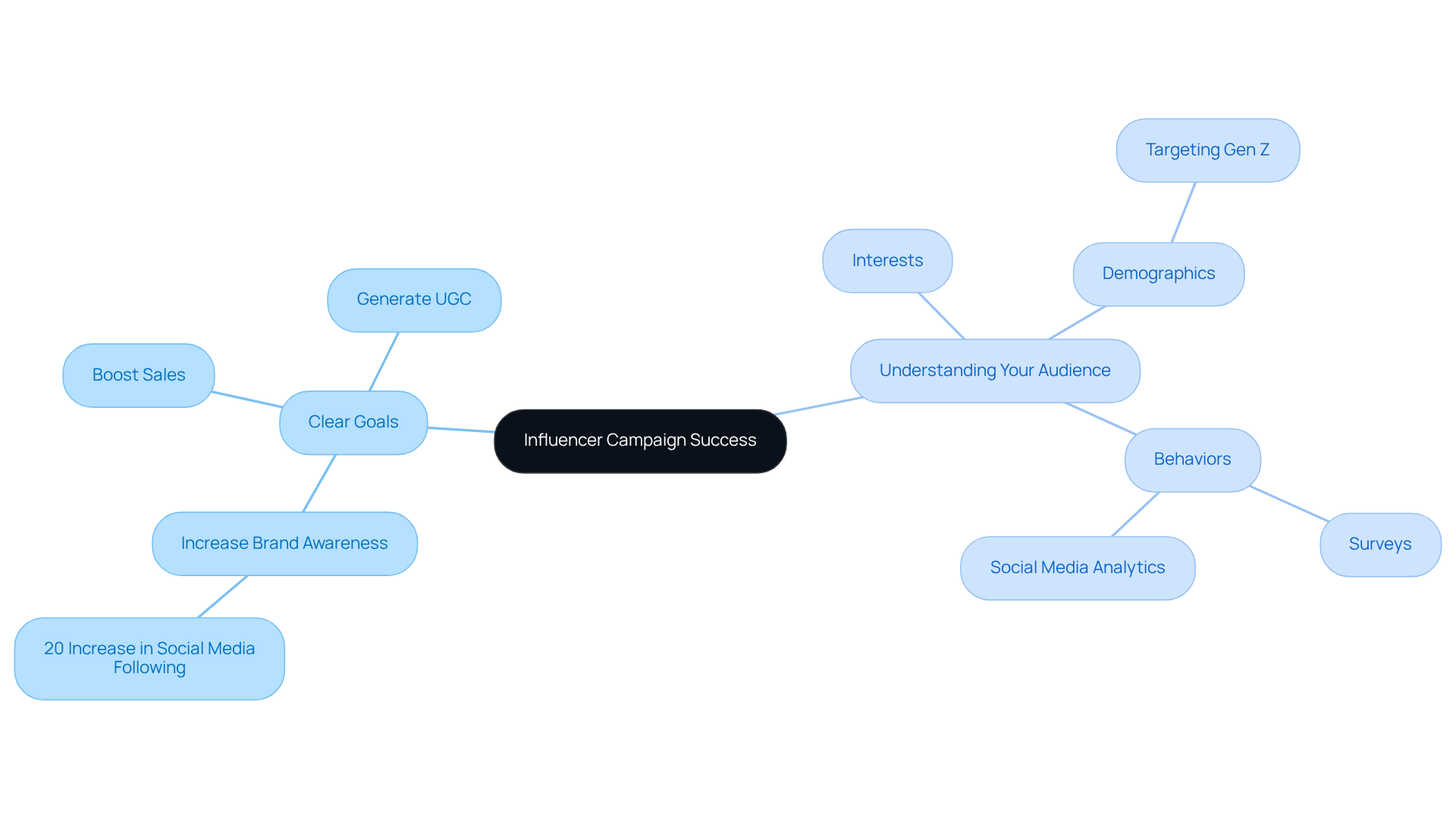
To kick off , companies must first establish . These objectives can range from enhancing brand awareness to boosting sales or generating . For instance, a company might set a goal to increase its following by 20% within three months or to achieve a specific number of conversions from a campaign. In fact, , according to the National Advertising Division (NAD) of BBB National Programs. This statistic underscores the critical importance of having well-defined objectives.
Equally vital is understanding your audience. Conducting thorough audience research is essential to identify demographics, interests, and behaviors. Leverage tools like surveys, analytics, and market research to gather valuable insights. For example, if targeting Gen Z, , where this demographic is most active. Notably, , highlighting the need to align with audience insights. By crafting tailored content that resonates, companies can drive higher engagement and conversion rates. Moreover, there is a growing trend for companies to prioritize quantifiable outcomes and over temporary sponsorships, further emphasizing the necessity for clear goals.
Choose Authentic Influencers Aligned with Your Brand
Choosing is not just important; it’s essential for any effective . Brands must prioritize authenticity over mere popularity in their , seeking those who genuinely embody their values and maintain a loyal following. For example, a sustainable fashion label should who actively advocate for sustainability. This alignment not only fosters but also meets the increasing in marketing.
To identify the best match for their , companies should thoroughly examine the content, , and audience demographics of potential influencers. Tools like HypeAuditor can be invaluable in and the quality of their audience, enabling companies to make informed decisions. By engaging in that resonate with their values, companies can cultivate authentic connections that enhance trust and drive significant engagement. This strategy not only boosts credibility but also aligns with the growing consumer preference for relatable and honest narratives over polished corporate messaging. Furthermore, brands should steer clear of the common pitfall of selecting influencers based solely on follower counts, as this can severely undermine the authenticity of their partnerships.

Develop Compelling Content that Engages Your Audience
Creating is fundamental to the success of in marketing. Brands must engage in to produce content that is visually appealing and resonates deeply with their audience. This can encompass:
- Storytelling
- Behind-the-scenes glimpses
- Interactive elements like polls and challenges
For example, a might partner with an influencer to create a tutorial that showcases their products in action. Furthermore, leveraging can significantly enhance authenticity and engagement. By encouraging influencers to invite their followers to share their experiences with your products, you foster a sense of community around your brand. This strategy not only boosts authenticity but also drives .
Statistics reveal that greatly enhances engagement, with 78% of companies investing more in marketing than the previous year. Additionally, COSMEDIX achieved an impressive 527% return on investment through focused on skincare education, underscoring the effectiveness of .
By concentrating on captivating content, companies can cultivate deeper connections with their audience and drive . However, it is crucial to avoid common pitfalls in promotion, such as:
- Misalignment with company values
- Neglecting to assess the effectiveness of
By prioritizing these strategies, companies can achieve successful partnership outcomes.

Monitor Performance and Optimize Campaigns Continuously
To succeed in marketing campaigns that involve social media personalities, brands must implement robust . Did you know that leveraging analytics tools is crucial for tracking like engagement rates, reach, and conversion metrics? For example, Google Analytics effectively monitors website traffic generated from , while social media insights deliver valuable data on post engagement.
Brands need to stay their strategies based on the data collected. If certain content types or influencers are underperforming, reallocating resources to more effective areas can significantly enhance campaign outcomes. is not just important; it’s essential. It improves and maximizes . In fact, companies that test variables instead of merely focusing on creatives see performance improvements that are three times faster. By adopting a , brands can refine their campaigns for influencers, ensuring in an ever-evolving marketing landscape.

Conclusion
A successful influencer campaign is built on a foundation of critical practices that ensure alignment, authenticity, and engagement. At the heart of effective campaigns is the necessity of setting clear objectives and gaining a deep understanding of the audience. This approach allows brands to craft tailored content that resonates with their target demographic, ultimately boosting both engagement and conversions.
Key insights reveal the significance of selecting authentic influencers who genuinely embody brand values, rather than merely chasing popularity. Engaging content - encompassing storytelling and user-generated experiences - plays a crucial role in forging connections with audiences. Moreover, continuous performance monitoring and optimization are vital for refining strategies and maximizing return on investment.
In today’s fast-paced marketing landscape, brands must prioritize these best practices to navigate influencer partnerships effectively. By defining goals, understanding audiences, collaborating with authentic influencers, and creating compelling content, companies can achieve not only successful outcomes but also cultivate lasting relationships with their consumers. Embracing these strategies will enhance brand credibility and position businesses for sustained success in influencer marketing.
Frequently Asked Questions
What are the first steps for launching successful influencer campaigns?
The first steps include establishing clear and measurable objectives, such as enhancing brand awareness or boosting sales, and understanding your audience through thorough research.
What types of objectives can companies set for influencer campaigns?
Companies can set objectives that range from increasing social media following, achieving specific conversions, to generating user-generated content (UGC).
Why is it important to have well-defined objectives in influencer campaigns?
Well-defined objectives are critical as they guide the campaign's direction and effectiveness, with promotional campaigns projected to elevate product awareness by an average of 58% in 2026.
How can companies understand their target audience better?
Companies can understand their target audience by conducting thorough audience research using tools like surveys, social media analytics, and market research to gather insights on demographics, interests, and behaviors.
Which platforms should companies focus on when targeting Gen Z?
Companies should focus on platforms such as TikTok and Instagram, where Gen Z is most active.
What is the significance of consumer trust in influencer marketing?
A significant 69% of consumers trust recommendations from social media personalities more than direct messages from companies, highlighting the importance of aligning campaign goals with audience insights.
What is the trend regarding influencer partnerships?
There is a growing trend for companies to prioritize quantifiable outcomes and long-term partnerships with influencers over temporary sponsorships.
List of Sources
- Define Clear Goals and Understand Your Audience
- emarketer.com (https://emarketer.com/content/brands-turn-influencer-marketing-2026--key-issues-remain)
- ampfluence.com (https://ampfluence.com/influencer-marketing-in-2026-secrets-trends-and-strategies-you-cant-afford-to-miss)
- sixthcitymarketing.com (https://sixthcitymarketing.com/influencer-marketing-statistics)
- stackinfluence.com (https://stackinfluence.com/2026-influencer-marketing-predictions)
- FAQ on influencer marketing: Why brands are betting on it in 2026 (https://emarketer.com/content/faq-on-influencer-marketing--what-how-brands-use)
- Choose Authentic Influencers Aligned with Your Brand
- agilitypr.com (https://agilitypr.com/pr-news/social-media-influencer-marketing/the-new-power-trio-pr-influencers-and-authentic-storytelling)
- shopify.com (https://shopify.com/blog/influencer-marketing-smb-playbook)
- theinfluencermarketingfactory.com (https://theinfluencermarketingfactory.com/influencer-marketing-in-the-age-of-consumer-skepticism-how-to-build-authenticity)
- How to Build Better Influencer Partnerships in 2026: What Brands Must Focus on Next - Faulhaber Agency (https://faulhaber.agency/how-to-build-better-influencer-partnerships-in-2026-what-brands-must-focus-on-next)
- New Research Unveils Key Strategies for influencer authenticity - Georgia State University News - Press Releases, Robinson College of Business - (https://news.gsu.edu/2025/02/20/influencer-authenticity)
- Develop Compelling Content that Engages Your Audience
- Influencer Marketing Trends 2026 (https://creatoriq.com/blog/influencer-marketing-trends-2026)
- marketingspecialists.co.za (https://marketingspecialists.co.za/blog/digital-marketing-insights/content-marketing-examples-for-2026)
- Influencer Marketing Trends 2026: Enhance your 2026 Strategy (https://goatagency.com/blog/influencer-marketing-trends-2026)
- socialrails.com (https://socialrails.com/blog/influencer-marketing-campaign-examples)
- Monitor Performance and Optimize Campaigns Continuously
- usatoday.com (https://usatoday.com/story/special/contributor-content/2024/11/20/maximizing-impact-with-data-driven-influencer-marketing/76455880007)
- 26 Fascinating Influencer Marketing Statistics for 2026 (https://backlinko.com/influencer-marketing-stats)
- theshelf.com (https://theshelf.com/the-blog/attribution-to-optimization-building-a-performance-system-for-influencer-marketing)
- influenceflow.io (https://influenceflow.io/resources/average-influencer-marketing-metrics-by-industry-2026-guide)
- brandlyglobal.com (https://brandlyglobal.com/role-data-optimizing-influencer-marketing-campaigns)