
Introduction
In the dynamic realm of digital marketing, achieving peak performance goes beyond mere creativity; it necessitates strategic precision and data-driven insights. By adopting effective practices - such as establishing clear goals, comprehending target audiences, and utilizing analytics - marketers can significantly boost their effectiveness and drive measurable success. Yet, a pressing question remains: how can marketers continuously adapt and refine their strategies to maintain a competitive edge in this ever-evolving landscape? This article explores four essential practices that can elevate performance marketing efforts and ensure sustained growth.
Define Clear Goals and Understand Your Audience
To achieve top , it is crucial to define clear, that align with your overall business objectives. By employing the SMART criteria, you ensure that your goals are specific, measurable, achievable, relevant, and time-bound. For instance, instead of a vague goal like 'increase sales,' specify 'increase sales by 20% in Q1 through targeted .' Research shows that marketers who set goals are 376% more likely to report success than those who don’t. This statistic underscores the importance of . Such clarity not only provides direction but also facilitates tracking progress and making necessary adjustments.
Understanding your audience is equally critical. Conduct thorough to create detailed that accurately reflect the demographics, interests, and behaviors of your target customers. Utilize tools like surveys, social media analytics, and customer feedback to gather valuable insights. This knowledge enables you to craft that resonate with your readers, ultimately driving engagement and conversions. For example, if your primary audience is Gen Z, prioritize platforms like TikTok and Instagram, where they are most active, and create content that aligns with their values and preferences. Notably, social media is the preferred product discovery platform for consumers aged 18 to 44, highlighting the significance of targeting the right platforms based on audience demographics. By focusing on these strategies, marketers can significantly enhance their effectiveness in top and achieve measurable success.

Utilize Data Analytics for Informed Decision-Making
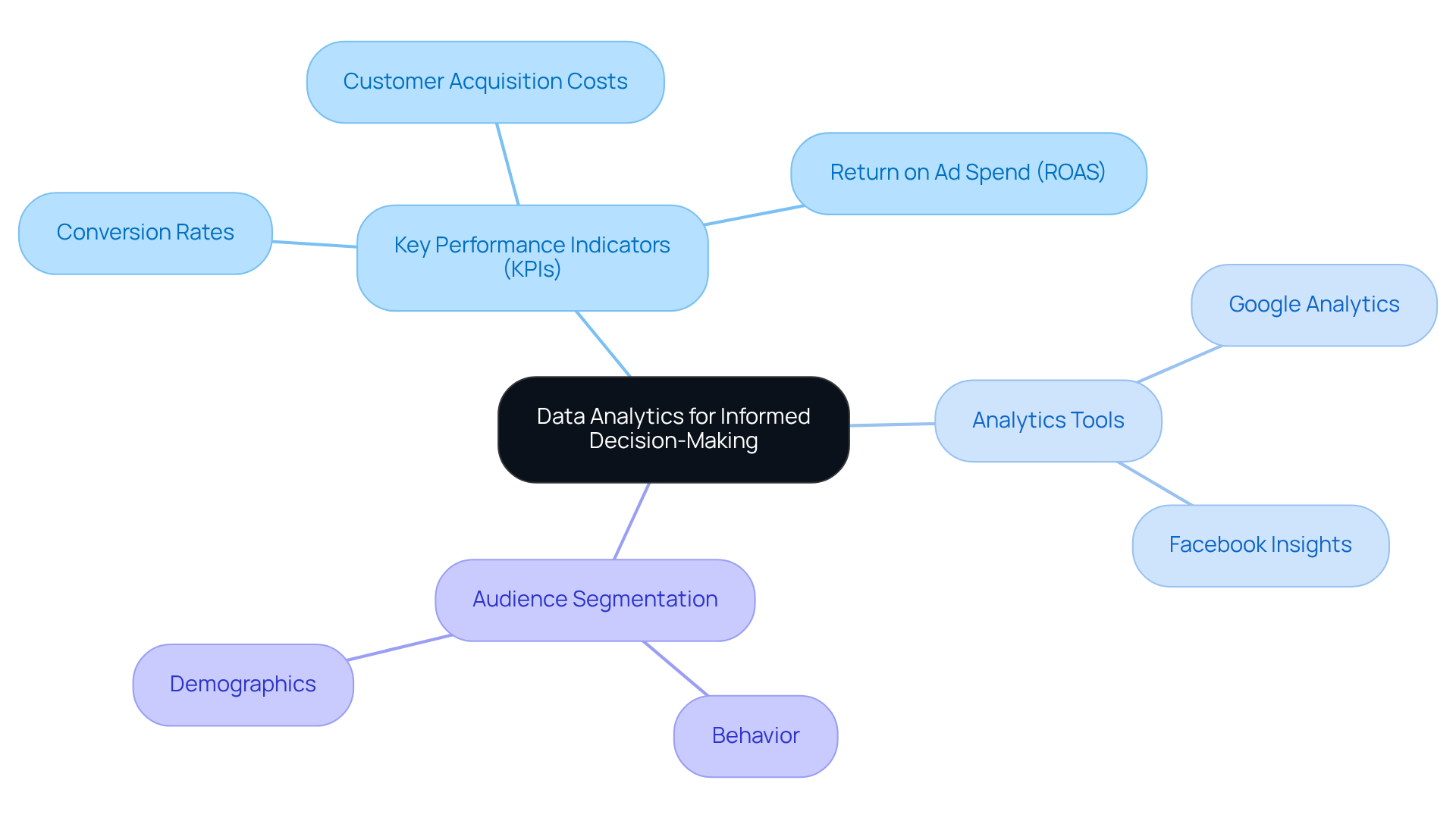
Integrating into your promotional approach is essential for making informed choices that lead to and enhance . Start by pinpointing (KPIs) that align with your objectives - think conversion rates, , and . As Tatev Malkhasyan aptly notes, "The critical difference is alignment: true performance indicators are explicitly tied to core business goals like revenue growth, market share, and customer retention."
Leverage analytics tools such as Google Analytics and Facebook Insights to effectively monitor these metrics. By consistently examining this data, you can identify trends and patterns that will guide your promotional strategies. For example, if you notice a high drop-off rate on a specific landing page, it may be time to A/B test different layouts or calls to action to . Furthermore, organizations that actively monitor and evaluate their performance metrics are 2.3 times more likely to exceed their revenue objectives, underscoring the importance of data analytics in achieving success.
Additionally, segmenting your target audience based on behavior and demographics allows you to , optimizing ad spend and improving overall . Brands that strategically utilize KPIs often see measurable enhancements in their outcomes, highlighting the vital role of in achieving .
Create Engaging and High-Quality Content
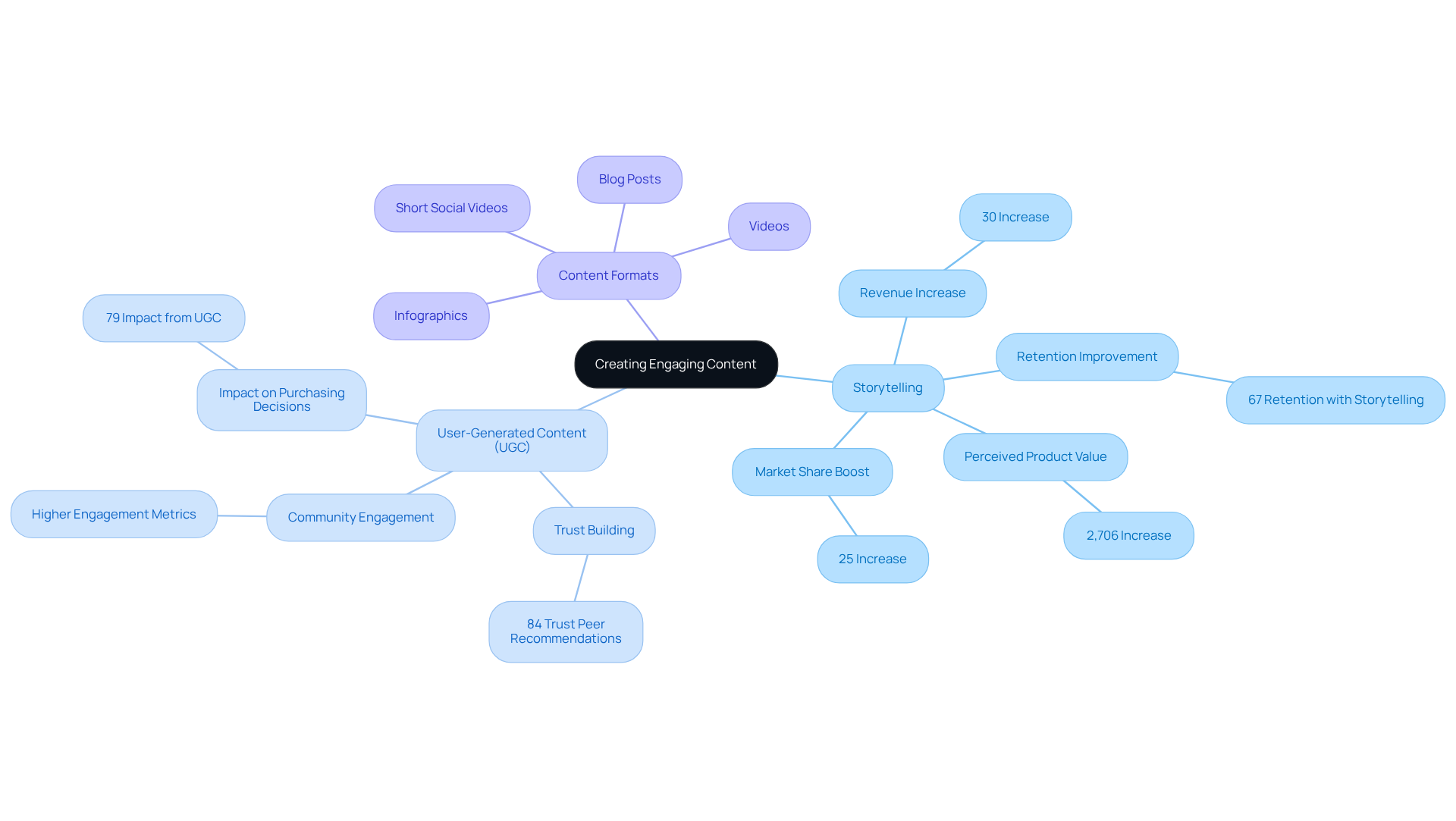
To create , prioritize . Develop narratives that resonate with your audience's needs and interests, utilizing a variety of formats such as videos, infographics, and blog posts to cater to diverse preferences.
(UGC) stands out as a powerful tool for . Encouraging customers to share their experiences on social media not only fosters but also enhances brand credibility. In fact, studies reveal that . By incorporating UGC into your promotional efforts, you can significantly enhance perceived product value. . Moreover, storytelling can enhance perceived product value by an astonishing 2,706%, underscoring its vital role in marketing strategies.
Ensure your content is visually appealing and optimized for the platforms you are using. For instance, short, attention-grabbing videos excel on TikTok and Instagram, while in-depth articles are more suited for LinkedIn. Consistently examine engagement metrics to refine your content plan, ensuring it aligns with viewer preferences and maximizes impact. Notably, 67% of marketers assert that , emphasizing the necessity of . Remember, authenticity in storytelling remains essential; audiences will penalize perceived inauthentic narratives.
Implement Continuous Optimization and Testing
and testing is essential for enhancing your marketing approach. Consistently assessing performance and making can lead to improved outcomes. Did you know that is a powerful tool for comparing different versions of ads, landing pages, and content? It helps identify which variations yield the highest .
For instance, experimenting with different headlines, images, or calls to action can reveal the most effective combinations. Insights from these assessments should guide future initiatives, enabling a refined overall approach. Establishing a to consistently review and adjust tactics is crucial. This iterative approach not only boosts but also nurtures agility and responsiveness to evolving market dynamics.
Statistics underscore the value of this method:
- A mobile homepage redesign can lead to a staggering 68.8% increase in conversions.
- Strategic changes to product pages have resulted in transaction improvements of up to 25%.
- A cruise tour aggregator experienced a remarkable 35.4% increase in after adding TrustPilot reviews, demonstrating the undeniable impact of social proof.
By adopting a , marketers can ensure that their efforts are grounded in data, leading to sustained growth and enhanced user engagement.
Moreover, maintaining thorough documentation of tests can provide valuable insights for future strategies, as highlighted in various . Are you ready to take your marketing efforts to the next level?

Conclusion
Success in performance marketing is not just a goal; it’s a strategic endeavor that demands clear goal-setting, a profound understanding of the audience, data analytics, engaging content creation, and relentless optimization. By honing in on these essential practices, marketers can significantly boost their effectiveness and achieve measurable results that resonate with their business objectives.
It’s imperative to define specific, measurable goals and to truly understand the target audience. Data analytics plays a pivotal role, informing decision-making and enabling marketers to adapt their strategies based on real-time insights. Moreover, crafting high-quality, engaging content that strikes a chord with the audience is vital for building trust and nurturing connections. Finally, fostering a culture of continuous optimization and A/B testing ensures that marketing efforts remain agile and responsive to the ever-changing market landscape.
Incorporating these best practices into performance marketing strategies is crucial for maintaining competitiveness and achieving sustained growth. Marketers must embrace these insights and take actionable steps to refine their approaches. By doing so, they can unlock the full potential of their campaigns and pave the way for long-term success in the dynamic realm of performance marketing.
Frequently Asked Questions
What is the importance of defining clear goals in performance marketing?
Defining clear, measurable goals is crucial as it aligns with overall business objectives and provides direction. Using the SMART criteria ensures goals are specific, measurable, achievable, relevant, and time-bound, which helps in tracking progress and making necessary adjustments.
What is the SMART criteria?
The SMART criteria stands for Specific, Measurable, Achievable, Relevant, and Time-bound, which are essential qualities that goals should possess to be effective.
How much more likely are marketers who set goals to report success?
Research shows that marketers who set goals are 376% more likely to report success compared to those who do not set goals.
Why is understanding your audience important in performance marketing?
Understanding your audience is critical because it allows marketers to create detailed buyer personas that reflect the demographics, interests, and behaviors of target customers, leading to more effective and engaging marketing strategies.
What tools can be used to understand the audience better?
Tools such as surveys, social media analytics, and customer feedback can be utilized to gather valuable insights about the audience.
How can audience insights improve marketing effectiveness?
By using audience insights, marketers can craft customized messages that resonate with their readers, driving engagement and conversions.
Which social media platforms should be prioritized for targeting Gen Z?
For targeting Gen Z, platforms like TikTok and Instagram should be prioritized, as these are where they are most active.
What demographic is highlighted as preferring social media for product discovery?
Consumers aged 18 to 44 are noted as the demographic that prefers social media as a platform for product discovery.
List of Sources
- Define Clear Goals and Understand Your Audience
- thesocialshepherd.com (https://thesocialshepherd.com/blog/digital-marketing-statistics)
- ironmarkusa.com (https://ironmarkusa.com/setting-smart-goals-2025)
- 2026 Marketing Statistics, Trends, & Data (https://hubspot.com/marketing-statistics)
- searchenginejournal.com (https://searchenginejournal.com/buyer-personas/232341)
- Key Social Media Marketing Statistics for 2025 | Sprinklr (https://sprinklr.com/blog/social-media-marketing-statistics)
- Utilize Data Analytics for Informed Decision-Making
- calltrackingmetrics.com (https://calltrackingmetrics.com/blog/marketing/analytics/6-key-performance-indicators-you-can-track-within-ctm)
- Data Analytics Statistics 2026 | Latest Insights & Trends (https://data.folio3.com/blog/data-analytics-stats)
- 15 Essential Digital Marketing KPIs to Track in 2026 (https://aidigital.com/blog/digital-marketing-kpi)
- 10 Eye Opening AI Marketing Stats | Digital Marketing Institute (https://digitalmarketinginstitute.com/blog/10-eye-opening-ai-marketing-stats-in-2025)
- Create Engaging and High-Quality Content
- The Power Of Storytelling In Modern Marketing (https://forbes.com/councils/forbescommunicationscouncil/2024/08/05/the-power-of-storytelling-in-modern-marketing)
- Storytelling Statistics 2026: 94+ Stats & Insights [Expert Analysis] - Marketing LTB (https://marketingltb.com/blog/statistics/storytelling-statistics)
- 25 User-Generated Content (UGC) Engagement Statistics: Essential Data for Modern Brands in 2026 (https://archive.com/blog/user-generated-content)
- 36 User-Generated Content Statistics That You Can’t Ignore | EveryoneSocial (https://everyonesocial.com/blog/user-generated-content-statistics)
- inbeat.agency (https://inbeat.agency/blog/ugc-statistics)
- Implement Continuous Optimization and Testing
- contentful.com (https://contentful.com/blog/ab-testing-best-practices)
- conversionteam.com (https://conversionteam.com/case_studies)
- oceanmediainc.com (https://oceanmediainc.com/case_studies/viator)
- suisseo.ch (https://suisseo.ch/en/case_studies/a-law-firm-increases-conversions-by-56-through-the-restructuring-of-its-google-ads-campaigns)
- blog.embertribe.com (https://blog.embertribe.com/conversion-rate-optimization/3-inspiring-quotes-to-help-you-master-conversion-rate-optimization)