Introduction
As marketing evolves, influencer marketing emerges as a leader in innovation, especially as brands gear up for 2026. This article delves into four pivotal trends poised to redefine how companies engage with influencers:
- The significance of long-term partnerships
- The necessity of authenticity
- The integration of AI
- The development of innovative metrics
However, as brands navigate this dynamic landscape, they face the pressing challenge of ensuring their strategies resonate with increasingly skeptical audiences. What essential practices can elevate influencer marketing to new heights while fostering genuine connections? Let's explore.
Establish Long-Term Partnerships with Influencers
In 2026, the trend is increasingly defined by rather than fleeting collaborations. Brands are now prioritizing relationships with advocates who genuinely resonate with their values and target audiences. This not only bolsters credibility but also empowers influencers to craft that deeply engages their followers. For example, companies like Nike and Adidas have successfully engaged in ongoing collaborations with athletes, resulting in consistent messaging and heightened loyalty. Research supports the trend , revealing that 94% of organizations utilizing it report a compared to traditional digital ads.
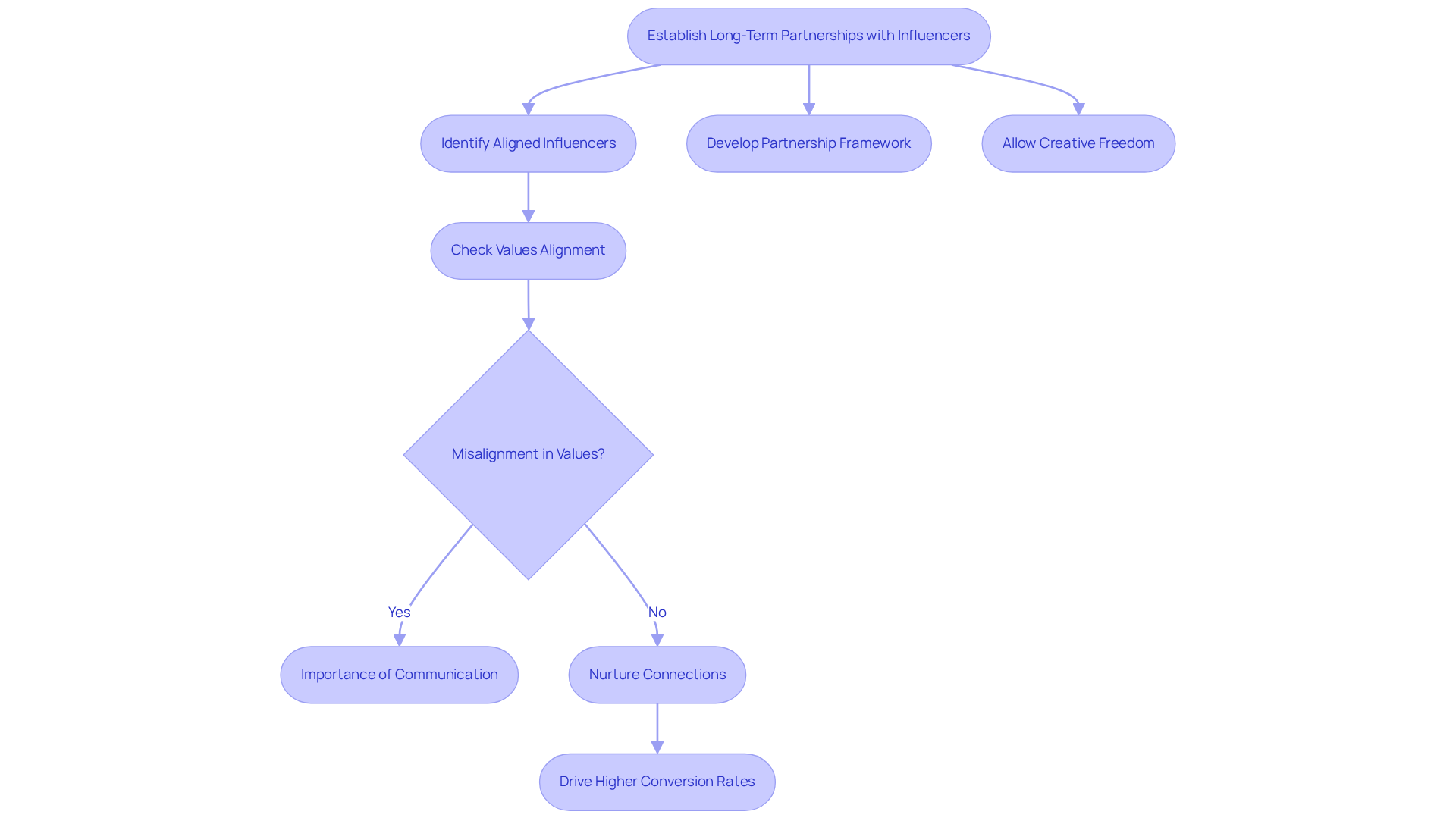
To effectively implement this approach, brands should:
- Identify influencers whose values align with their brand ethos.
- Develop a structured partnership framework that includes regular check-ins and collaborative content planning.
- Allow influencers the to express their unique voice while promoting the company.
By , companies can cultivate increased trust and engagement, ultimately driving higher conversion rates and fostering . As specialists in promotion emphasize, "the basis of endorsement partnerships has always been trust," making these long-term collaborations essential for sustained success. However, brands must remain vigilant about , such as misalignment in values or insufficient communication, which can undermine the effectiveness of these partnerships.
Prioritize Authenticity in Influencer Collaborations
Authenticity is paramount in , especially in 2026, as consumers grow increasingly discerning about the content they engage with. Brands must focus on partnering with individuals who genuinely connect with their products and can convey that relationship authentically. For instance, beauty brands like Glossier have successfully collaborated with individuals passionate about skincare, resulting in content that feels both authentic and relatable. This underscores a significant shift, as , highlighting the necessity of .
To ensure , brands should:
- to assess their values and past partnerships.
- Encourage key figures to share , enhancing relatability and connection.
- Avoid overly scripted content, allowing influencers the within company guidelines.
By prioritizing authenticity, companies can cultivate trust and foster deeper connections with their audience, ultimately leading to . Research indicates that , with companies earning $5.78 for every $1 spent on such promotions, and leading campaigns achieving returns of $18 to $20 per dollar invested. This trend emphasizes the critical role of through authentic partnerships in driving business success.

Leverage AI Tools to Enhance Influencer Marketing Strategies
As we approach 2026, in trend , particularly through . These technologies empower companies to leverage data strategically, analyzing vast datasets to identify the right influencers, predict campaign outcomes, and refine content strategies. For example, platforms like HypeAuditor and CreatorIQ harness AI to evaluate the authenticity and engagement metrics of creators, enabling informed decision-making. As CX expert Shep Hyken aptly puts it, "," highlighting the collaborative role of AI in enhancing marketing efforts.
To fully harness the potential of AI in , brands should take the following steps:
- Utilize to pinpoint influencers based on audience demographics and engagement rates.
- Implement to forecast and adjust strategies accordingly.
- such as outreach and reporting, freeing teams to concentrate on strategic planning.
Moreover, with social media advertising projected to rise by over 18% in 2026, integrating AI tools into trend strategies is more crucial than ever. By doing so, companies can improve targeting accuracy, enhance campaign efficiency, and ultimately achieve better ROI. Furthermore, as Konstanze Alex emphasizes, is vital, ensuring that AI complements rather than replaces the human touch in promotion.

Adopt Innovative Metrics for Measuring Campaign Success
In 2026, companies must embrace to effectively evaluate the success of their marketing campaigns with social media personalities. Conventional metrics like reach and impressions simply won't cut it anymore; businesses need to focus on . For instance, measuring the impact of influencer campaigns on website traffic, , and can provide a clearer picture of ROI. In fact, a staggering 62% of companies cite as their biggest challenge, highlighting the urgent need for a more robust approach.
To implement this strategy, brands should take the following steps:
- Define clear campaign objectives and align metrics accordingly, such as tracking sales growth or .
- Utilize to measure engagement quality, including time spent on site and interaction rates.
- Regularly review and adjust metrics based on to ensure continuous improvement.
- Track daily metrics during campaigns, as 60% of marketers struggle to determine campaign returns, making this practice essential.
By adopting these innovative metrics, brands can gain deeper insights into their promotional efforts, enabling more strategic decision-making and enhanced campaign results. With 74% of marketers planning to increase their budgets for in 2026, leveraging advanced analytics will be crucial for maximizing ROI, which averages $5.78 for every dollar spent on influencer marketing. Furthermore, case studies have demonstrated that prioritizing engagement rates over follower counts can significantly enhance campaign effectiveness.

Conclusion
In 2026, influencer marketing is poised for a significant transformation, focusing on long-term partnerships, authenticity, the integration of AI tools, and innovative metrics for measuring success. Brands that prioritize building genuine relationships with influencers who share their values will not only enhance their credibility but also cultivate deeper connections with their audience. This strategic shift is essential for driving engagement and loyalty, as demonstrated by successful case studies from industry leaders.
Several key strategies emerge for brands navigating this evolving landscape:
- Establishing enduring partnerships facilitates authentic content creation.
- Prioritizing genuine connections ensures that campaigns resonate with consumers.
- Leveraging AI tools can enhance targeting and efficiency, providing valuable insights into influencer performance.
- Adopting innovative metrics empowers brands to measure the true impact of their campaigns, moving beyond traditional metrics to focus on real engagement and conversion rates.
As influencer marketing continues to expand, embracing these trends will be vital for brands aiming to thrive in the competitive digital landscape. By fostering authentic collaborations, utilizing advanced technology, and redefining success metrics, companies can optimize their marketing strategies and build lasting relationships that drive meaningful results. The future of influencer marketing is bright for those who adapt and innovate, ensuring they remain relevant and impactful in the eyes of their consumers.
Frequently Asked Questions
What is the current trend in influencer marketing as of 2026?
The trend in influencer marketing is increasingly focused on long-term partnerships rather than short-term collaborations. Brands prioritize relationships with influencers who resonate with their values and target audiences.
What are the benefits of long-term partnerships with influencers?
Long-term partnerships bolster credibility, empower influencers to create authentic content, and lead to deeper engagement with their followers. This approach can also drive higher conversion rates and foster customer loyalty.
Can you provide examples of brands successfully using long-term influencer partnerships?
Companies like Nike and Adidas have successfully engaged in ongoing collaborations with athletes, which has resulted in consistent messaging and heightened loyalty.
What does research indicate about the effectiveness of influencer marketing?
Research shows that 94% of organizations utilizing influencer marketing report a higher return on investment (ROI) compared to traditional digital ads.
How can brands effectively implement long-term influencer partnerships?
Brands can implement this approach by identifying influencers whose values align with their brand ethos, developing a structured partnership framework with regular check-ins and collaborative content planning, and allowing influencers creative freedom to express their unique voice while promoting the company.
What are some potential pitfalls to avoid in influencer partnerships?
Brands should be cautious of potential pitfalls such as misalignment in values or insufficient communication, as these can undermine the effectiveness of the partnerships.
Why is trust important in influencer partnerships?
Trust is the foundation of endorsement partnerships, making long-term collaborations essential for sustained success in influencer marketing.
List of Sources
- Establish Long-Term Partnerships with Influencers
- togetheragency.co.uk (https://togetheragency.co.uk/news/influencer-marketing-trends-for-2026)
- 40+ Influencer Marketing Stats for 2026 Strategy (https://driveresearch.com/market-research-company-blog/influencer-marketing-statistics)
- medium.com (https://medium.com/@ara_ohanian/99-inspiring-influencer-marketing-quotes-54db4b924341)
- Influencer ads emerge as buyers’ top ad priority for 2026 (https://emarketer.com/content/influencer-ads-emerge-buyers--top-ad-priority-2026)
- Prioritize Authenticity in Influencer Collaborations
- Does influencer marketing really work in 2026? (https://imperial.ac.uk/business-school/ib-knowledge/marketing/does-influencer-marketing-really-work-2026)
- How Influencer Marketing Is Moving Into Scalable Performance Channels (https://forbes.com/councils/forbesagencycouncil/2026/02/09/beyond-the-feed-the-evolution-of-influencer-marketing-into-scalable-performance-channels)
- How Influencer Marketing Is Changing in 2026 (https://vogue.com/article/how-influencer-marketing-is-changing-in-2026)
- later.com (https://later.com/blog/top-influencer-trends-2026-how-brands-should-respond)
- Influencer ads emerge as buyers’ top ad priority for 2026 (https://emarketer.com/content/influencer-ads-emerge-buyers--top-ad-priority-2026)
- Leverage AI Tools to Enhance Influencer Marketing Strategies
- 12 Quotes About AI—And How It Makes Us Better (https://forbes.com/sites/shephyken/2026/03/01/twelve-quotes-about-ai-and-how-it-makes-us-better)
- 28 Best Quotes About Artificial Intelligence | Bernard Marr (https://bernardmarr.com/28-best-quotes-about-artificial-intelligence)
- toprankmarketing.com (https://toprankmarketing.com/blog/15-wise-b2b-influencer-marketing-quotes)
- Influencer Marketing Trends 2026 (https://creatoriq.com/blog/influencer-marketing-trends-2026)
- Adopt Innovative Metrics for Measuring Campaign Success
- archive.com (https://archive.com/blog/campaign-tracking-statistics)
- aspire.io (https://aspire.io/guides/the-state-of-influencer-marketing-2026)
- influenceflow.io (https://influenceflow.io/resources/influencer-performance-metrics-the-complete-2026-guide-to-measuring-campaign-success)