
Introduction
In today's fast-paced market, where consumer attention is fleeting and competition is fierce, brands must find innovative ways to stand out. This article explores four transformative practices that can elevate brand campaigns to new heights:
- The integration of AI
- Rapid ideation techniques
- Creative freedom
- Iterative testing
But the pressing question remains: how can brands effectively harness these strategies to not only capture attention but also foster genuine engagement? As marketers navigate this complex landscape, the answer may lie in embracing creativity as a core component of their approach. By doing so, brands can not only attract interest but also build lasting connections with their audience.
Leverage AI for Enhanced Creativity
Incorporating AI into inventive processes significantly . Did you know that to uncover trends and consumer preferences? This capability allows marketers to craft more targeted and relevant content. For instance, platforms like Jasper AI facilitate the generation of compelling copy, while Canva AI aids in creating striking visuals. By automating repetitive tasks, toward strategic thinking and innovation.
Brands like Coca-Cola have successfully utilized AI in initiatives such as 'Create Real Magic,' which encouraged fans to create digital artwork. This initiative resulted in . Furthermore, , underscoring the effectiveness of AI in enhancing campaign performance. To effectively implement AI, begin by pinpointing areas within your workflow that could . Seek out AI tools that align with your creative objectives.
However, it is crucial to stay mindful of potential pitfalls, such as the . This strategic approach not only enhances super creative output but also improves overall performance. In fact, 93% of CMOs indicate that GenAI is providing clear ROI for their organizations. Are you ready to embrace AI and elevate your marketing strategy?

Implement Rapid Ideation Techniques
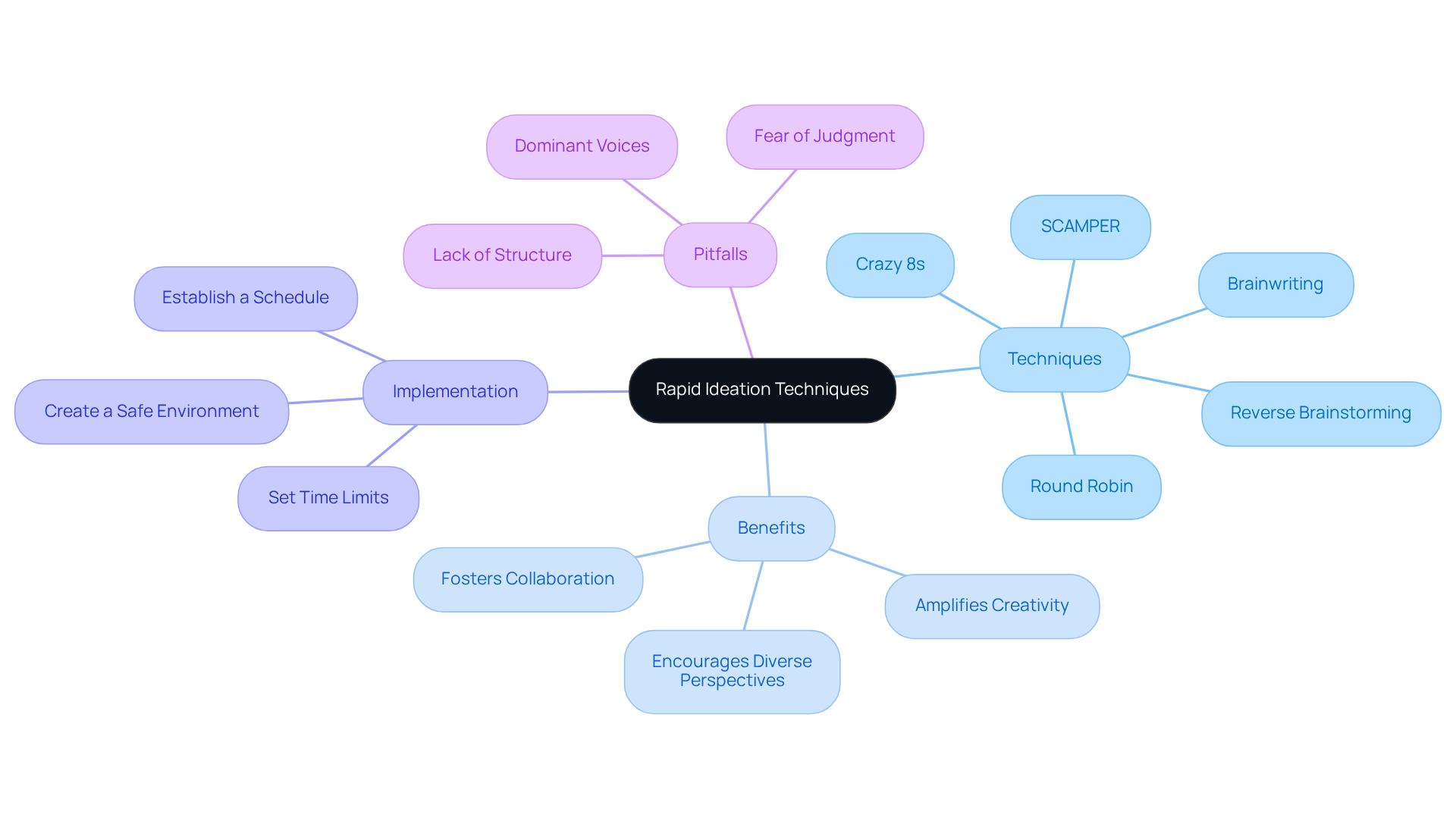
, such as time-boxed , empower teams to generate a multitude of ideas in a condensed timeframe. Consider methods like 'Crazy 8s' and 'Brainwriting' - they encourage participants to quickly sketch or jot down concepts, promoting a free flow of creativity without the burden of immediate critique. For instance, a marketing team might set a timer for 10 minutes, challenging members to generate as many as possible. This approach is super creative as it not only amplifies creativity but also among team members.
In fact, initiatives that utilize have seen . Take Atlantic Water World's 'Ride the Tide' effort, which achieved over 96 million impressions and a remarkable 100% growth in Instagram followers. To effectively implement rapid ideation, it’s crucial to establish a consistent schedule for and cultivate a where all contributions are valued and explored.
Furthermore, be mindful of common pitfalls, such as allowing dominant voices to overshadow quieter team members, which can stifle creativity. Embracing these practices can lead to that resonate with audiences and drive brand success. Are you ready to harness the power of rapid ideation in your team?
Encourage Creative Freedom in Campaign Development
Enabling groups that are to investigate their concepts significantly enhances innovation and engagement in initiatives. Brands must establish clear guidelines while giving the freedom to express their unique visions. Consider that are and empower creators to shape their narratives; these tend to resonate more deeply with audiences. A prime example is Nike's collaborations with athletes, where the company provided a structured framework yet encouraged personal storytelling. In fact, 80.5 percent of brand-side marketers believe that being is crucial for campaign success, underscoring the .
To nurture this freedom, brands should:
- Promote open communication
- Offer constructive feedback
- Celebrate unique ideas - even those that may initially seem unconventional
As Barbara Duffek, an assistant professor, notes, influencers do not need to be experts to provide valuable insights, as long as they consistently engage with their audience on relevant topics. This balance fosters authenticity and enhances the effectiveness of outreach through .
Furthermore, with 76% of marketing leaders spending more time on dashboards than on , it is essential for companies to manage the tension between analytics and creativity to maximize impact. How can brands strike this balance? By prioritizing alongside data-driven insights, they can drive more meaningful connections with their audiences.

Adopt Iterative Testing and Learning Practices
is essential for marketers aiming to refine their campaigns using real-time data and consumer feedback. By implementing , companies can effectively compare different versions of ads to identify which performs better. For instance, a brand might test two distinct headlines or visuals to determine which one generates more engagement. This method not only optimizes current campaigns but also informs .
To successfully adopt , it’s crucial to:
- Establish a framework for
- Be prepared to pivot based on the insights gained
Brands like Airbnb exemplify the power of , having successfully enhanced and increased conversion rates through this approach.
Are you ready to elevate your ? Embrace and watch your campaigns transform.

Conclusion
Incorporating innovative practices into brand campaigns is not just beneficial; it’s essential for achieving standout results in today’s competitive landscape. By embracing AI, rapid ideation, creative freedom, and iterative testing, brands can significantly elevate their marketing strategies. This approach enables deeper connections with audiences and drives meaningful engagement.
Key insights from this discussion underscore the transformative potential of AI in enhancing creativity. Rapid ideation techniques foster collaboration and idea generation, proving effective in today’s fast-paced environment. Moreover, allowing creative freedom within structured frameworks empowers teams to produce authentic and resonant content. The importance of iterative testing cannot be overstated; it serves as a critical mechanism for refining campaigns based on real-time feedback and data analysis.
Ultimately, the call to action is clear: brands must adopt these practices to not only keep pace with evolving consumer expectations but also to lead in the realm of creative marketing. By integrating these strategies, companies can unlock new levels of creativity and effectiveness in their campaigns, ensuring they remain relevant and impactful in the ever-changing marketing landscape.
Frequently Asked Questions
How does AI enhance creativity in marketing?
AI enhances creativity in marketing by improving the quality and efficiency of marketing efforts, allowing marketers to analyze extensive datasets to uncover trends and consumer preferences, which helps in crafting targeted and relevant content.
What are some examples of AI tools used in marketing?
Examples of AI tools used in marketing include Jasper AI for generating compelling copy and Canva AI for creating striking visuals.
How does AI contribute to the efficiency of creative teams?
AI contributes to the efficiency of creative teams by automating repetitive tasks, enabling them to focus more on strategic thinking and innovation.
Can you provide an example of a brand successfully using AI in their marketing?
Coca-Cola successfully used AI in their 'Create Real Magic' initiative, which encouraged fans to create digital artwork, resulting in significant increases in engagement and conversion rates.
What are the conversion rate benefits of using AI in ads?
AI-driven ads achieve 41% higher conversion rates compared to traditional methods, highlighting the effectiveness of AI in enhancing campaign performance.
What should brands consider when implementing AI in their marketing strategies?
Brands should identify areas within their workflow that could benefit from automation and seek AI tools that align with their creative objectives.
What concerns do industry leaders have regarding AI?
Industry leaders express concerns about GenAI hallucinations, with 73% acknowledging this issue, which indicates the need for careful implementation of AI tools.
What is the perceived return on investment (ROI) from GenAI according to CMOs?
93% of CMOs indicate that GenAI is providing clear ROI for their organizations, emphasizing its effectiveness in marketing strategies.
List of Sources
- Leverage AI for Enhanced Creativity
- therankmasters.com (https://therankmasters.com/insights/benchmarks/top-ai-marketing-statistics)
- 10 Eye Opening AI Marketing Stats | Digital Marketing Institute (https://digitalmarketinginstitute.com/blog/10-eye-opening-ai-marketing-stats-in-2025)
- rollingstone.com (https://rollingstone.com/culture-council/articles/rise-of-ai-generated-advertising-how-brands-are-redefining-creativity-1235492141)
- 39 Content Marketing Statistics for 2026: Budgets, AI, Video, Search, ROI | Digital Elevator (https://thedigitalelevator.com/blog/content-marketing-stats)
- loopexdigital.com (https://loopexdigital.com/blog/ai-marketing-statistics)
- Implement Rapid Ideation Techniques
- inkadvertising.in (https://inkadvertising.in/blog/creative-campaign-case-study-from-ideation-to-execution)
- innosabi.com (https://innosabi.com/resources/post/ideation-techniques-for-team-creativity)
- TOP 20 CREATIVE THINKING MARKETING STATISTICS 2025 | Amra And Elma LLC (https://amraandelma.com/creative-thinking-marketing-statistics)
- blog.uxtweak.com (https://blog.uxtweak.com/run-an-ideation-session-with-ideation-techniques)
- linkedin.com (https://linkedin.com/top-content/design/mobile-design-challenges/rapid-ideation-techniques)
- Encourage Creative Freedom in Campaign Development
- ana.net (https://ana.net/miccontent/show/id/aa-2024-11-creative-effectiveness)
- New Research Unveils Key Strategies for influencer authenticity - Georgia State University News - Press Releases, Robinson College of Business - (https://news.gsu.edu/2025/02/20/influencer-authenticity)
- TOP 20 CREATIVE THINKING MARKETING STATISTICS 2025 | Amra And Elma LLC (https://amraandelma.com/creative-thinking-marketing-statistics)
- quenchagency.com (https://quenchagency.com/the-importance-of-giving-influencers-their-creative-freedom)
- Adopt Iterative Testing and Learning Practices
- 30 Key A/B Testing Statistics: A Comprehensive Guide | VWO (https://vwo.com/blog/ab-testing-statistics)
- prnewswire.com (https://prnewswire.com/news-releases/despite-promise-of-ai-and-growing-pressure-to-perform-only-1-in-5-marketers-see-fast-growth-302485218.html)
- The Rise Of 'Always-On Testing' In Marketing (https://forbes.com/councils/forbesagencycouncil/2026/02/11/the-rise-of-always-on-testing-in-marketing-from-campaign-bursts-to-continuous-growth)
- b2brocket.ai (https://b2brocket.ai/blog-posts/a-b-testing-strategies-for-b2b-marketing-unlocking-success)
- 99firms.com (https://99firms.com/2025/08/01/ab-testing-statistics)