
Introduction
In today’s digital landscape, content creation stands as a formidable avenue for both expression and income. Understanding the nuances of various creator platforms is not just beneficial; it’s essential. This article explores the unique features, advantages, and limitations of leading platforms like TikTok, YouTube, Patreon, and Instagram. By offering insights into these platforms, we aim to help brands navigate their marketing strategies effectively.
With so many options available, how can brands determine which platform aligns best with their goals and audience engagement needs?
Define Content Creator Platforms
represent dynamic digital environments that empower individual artists and brands to produce, manage, and monetize content effectively. These serve as marketplaces, enabling individuals to connect with audiences, showcase their work, and generate income through diverse . Key functionalities encompass , , analytics, and payment processing, all meticulously designed to enhance the experience for .
Consider significant instances like TikTok, YouTube, Patreon, and Instagram. Each of these platforms offers unique features tailored to different types of material and user requirements. For instance, TikTok thrives on short-form video content, while YouTube caters to longer, more in-depth productions. sets itself apart by providing innovators with opportunities to partner with reliable companies, ensuring equitable remuneration for each project while fostering a respectful atmosphere.
Understanding these systems is crucial for companies aiming to in their material. They offer the essential framework for successful interaction and . As brands increasingly rely on to cultivate genuine connections and measurable growth, the significance of these networks will only continue to expand in our rapidly evolving digital landscape.

Compare Key Features of Leading Platforms
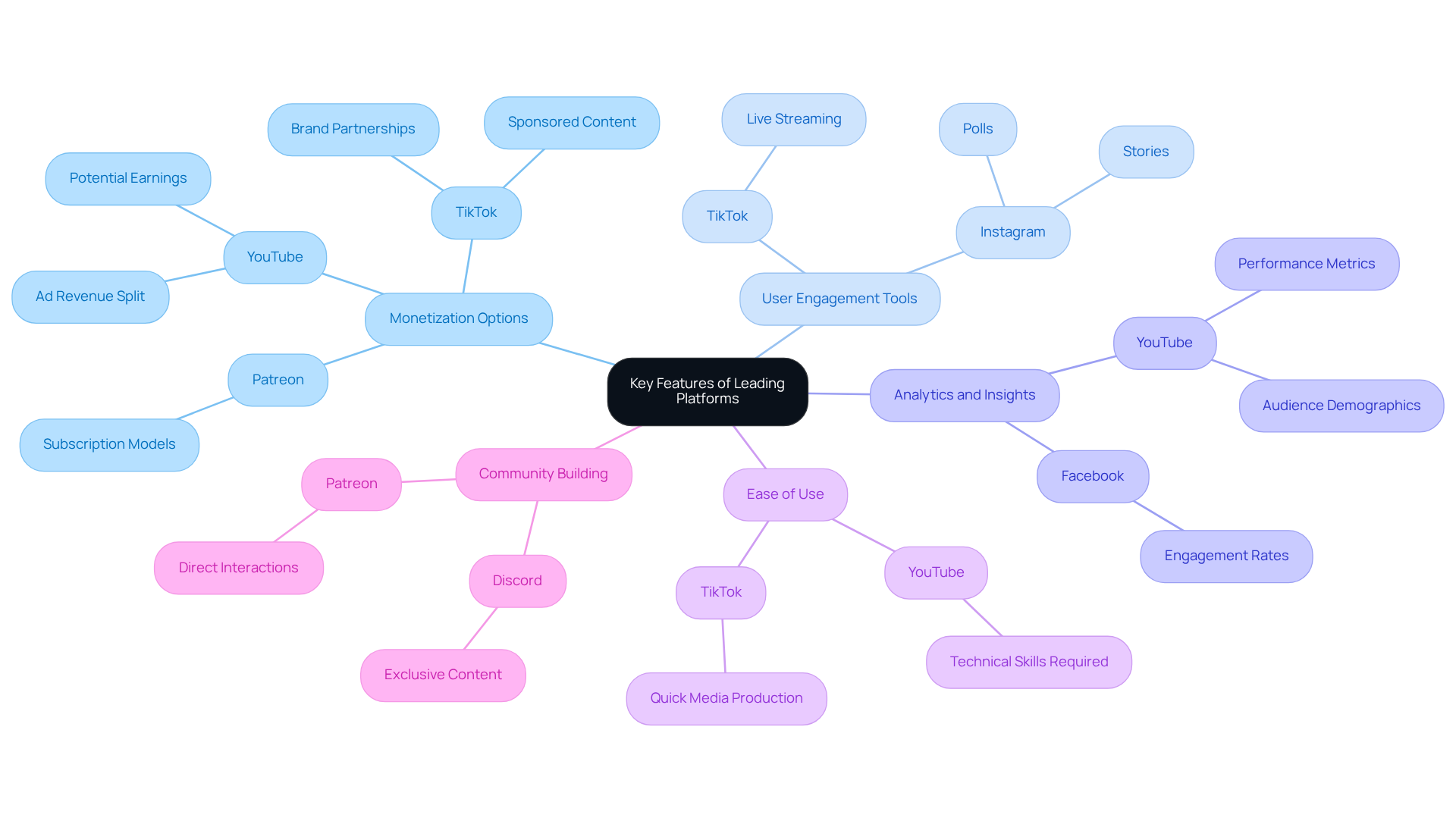
When evaluating prominent content , several essential features stand out:
- : Platforms like YouTube and Patreon offer diverse monetization strategies, including subscriptions, ad revenue, and merchandise sales. For instance, YouTube provides a 55% advertisement revenue split, allowing creators to earn between $10 and $30 per 1,000 views. This translates to potential earnings of $1,000 to $3,000 for a video with 100,000 views. Conversely, TikTok focuses on brand partnerships and sponsored content, reflecting its emphasis on growth and commerce.
- : Instagram and TikTok excel in delivering such as stories, polls, and live streaming. These tools significantly enhance interaction between content creators and their audiences. In 2026, user engagement statistics reveal that these features are crucial for building community and fostering viewer loyalty.
- : Comprehensive analytics tools on platforms like YouTube and Facebook empower content creators to track performance metrics, audience demographics, and engagement rates. This data-driven approach enables creators to make informed decisions that refine their content strategy, as highlighted by industry experts.
- : The user interface and experience can vary greatly; TikTok is designed for quick media production, making it accessible for all creators, while YouTube may require more technical skills for video editing and production, appealing to those seeking a more polished outcome.
- : Platforms such as Discord and Patreon prioritize community involvement, allowing creators to cultivate dedicated audiences through exclusive content and direct interactions. This focus on community can lead to stronger connections and sustained audience interest, underscoring the importance of community engagement for content creators.
These characteristics are vital in determining which align best with a company's marketing strategy, influencing both influencer success and audience interaction.
Evaluate Pros and Cons of Each Platform
Each content creator platform presents distinct advantages and disadvantages that brands must consider:
-
YouTube:
- Pros: YouTube boasts extensive , including ad revenue sharing and fan funding, making it a lucrative platform for creators. With almost 3 billion users and integration with Google Search, it provides a vast audience base for product visibility and information discovery. Its powerful analytics tools offer valuable insights into viewer behavior, allowing producers to enhance their material effectively.
- Cons: However, the service is characterized by , making it challenging for new creators to gain visibility. Additionally, the associated with mastering video production and SEO can be daunting for beginners.
-
TikTok:
- Pros: , allowing brands to reach a wider audience quickly. Users spend an average of 95 minutes per day on the platform, providing ample opportunities for engagement. The user-friendly interface fosters creativity, making it simpler for companies to create genuine material that resonates with younger demographics, with 63% of its users under 30. Moreover, TikTok's user-created culture fosters authenticity and transparency, which can improve trust in products.
- Cons: Despite its advantages, TikTok has compared to YouTube, which can restrict revenue generation for companies. The service also encounters difficulties with content saturation, as videos tend to peak within 48 hours, necessitating a constant flow of fresh material to maintain visibility. Additionally, the lack of sophisticated analytics and measurement tools makes it difficult for brands to track ROI and assess marketing effectiveness. Brands should also be aware of the minimum ad spend of $500 for TikTok campaigns, which may be prohibitive for smaller businesses, and the potential risks associated with the ongoing legal battles surrounding the service, including a possible US ban.
-
Patreon:
- Pros: Patreon allows creators to generate direct revenue from their fans, fostering a sense of community and loyalty. This system is perfect for providing unique material, which can improve subscriber involvement and loyalty.
- Cons: However, the reliance on a loyal subscriber base can be a double-edged sword, as income may fluctuate based on subscriber retention and engagement levels.
-
Instagram:
- Pros: As a visually-driven platform, Instagram excels in , making it effective for brand partnerships and influencer marketing. Its features, such as Stories and Reels, enable dynamic presentation of material.
- Cons: Conversely, Instagram's algorithm is infamous for frequent changes, which can significantly affect the visibility of posts. Furthermore, monetization choices are restricted in comparison to services like YouTube, making it more challenging for creators to profit from their content.
Understanding these advantages and disadvantages allows companies to align their marketing strategies with creator platforms that best fit their objectives and audience.

Assess Platform Suitability for Brand Needs
When evaluating platform suitability, brands must focus on several key factors:
- Target Audience: Understanding where your audience engages most is crucial. Did you know that ? Users are 1.4 times more inclined to buy products discovered on the site. It draws a younger audience, with 68% of U.S. teens aged 13-17 utilizing the service. In contrast, YouTube appeals to a wider age group, with 93% of U.S. adults aged 18-49 engaged on it. may find TikTok more effective, whereas those aiming for older audiences might benefit from YouTube's extensive reach, where 66% of Gen Z interact with brands.
- Type of Material: The characteristics of your material play a significant role in platform selection. Brands that create visually appealing content often excel on Instagram, which boasts high engagement rates. Conversely, those focusing on in-depth storytelling or tutorials may find YouTube's long-form video format more advantageous. , and by 2026, audiences will prefer fast and meaningful content, which video provides.
- Marketing Goals: Aligning system capabilities with marketing objectives is essential. For instance, if the aim is to enhance brand recognition, networks like TikTok, recognized for its high engagement rates, are perfect. On the other hand, for direct sales, services that enable e-commerce, such as Instagram and Facebook, should be prioritized. Additionally, , emphasizing the need for measurable performance metrics.
- Budget and Resources: Evaluating the financial implications of each platform is essential. and advertising fees. For example, TikTok and Instagram offer various organic growth opportunities that can be leveraged without significant investment.
By thoughtfully considering these factors, to optimize their marketing strategies and achieve their goals.

Conclusion
The exploration of content creator platforms underscores their crucial role in shaping the digital landscape for both creators and brands. Understanding how these platforms operate allows brands to leverage their unique features to engage audiences effectively and drive revenue. Each platform - from TikTok's dynamic short-form content to YouTube's extensive monetization options - offers distinct advantages tailored to various marketing strategies and target demographics.
Key insights from the comparative analysis reveal the necessity of selecting the right platform based on audience engagement, content type, and specific marketing goals. While YouTube excels in monetization opportunities and analytics, TikTok thrives on rapid virality and user engagement. Patreon fosters community loyalty through direct support, whereas Instagram capitalizes on visual storytelling and influencer collaborations. Each platform presents its own set of pros and cons that brands must evaluate carefully.
Ultimately, the choice of which creator platform to utilize should align with a brand's objectives and audience preferences. As the creator economy evolves, staying informed about the strengths and weaknesses of each platform is essential for maximizing marketing effectiveness. Brands are encouraged to embrace these digital marketplaces, leveraging their unique capabilities to foster meaningful connections and drive growth in this vibrant and ever-changing environment.
Frequently Asked Questions
What are content creator platforms?
Content creator platforms are dynamic digital environments that empower individual artists and brands to produce, manage, and monetize content effectively, serving as marketplaces for connecting with audiences and generating income.
What key functionalities do content creator platforms offer?
Key functionalities include video hosting, audience engagement tools, analytics, and payment processing, all designed to enhance the experience for content producers.
Can you provide examples of content creator platforms?
Significant examples of content creator platforms include TikTok, YouTube, Patreon, and Instagram, each offering unique features tailored to different types of content and user needs.
How does TikTok differ from YouTube in terms of content?
TikTok thrives on short-form video content, while YouTube caters to longer, more in-depth productions.
What is unique about NugVerse as a content creator platform?
NugVerse sets itself apart by providing innovators with opportunities to partner with reliable companies, ensuring equitable remuneration for each project while fostering a respectful atmosphere.
Why is understanding content creator platforms important for companies?
Understanding these systems is crucial for companies looking to leverage the influence of creator platforms for successful interaction and revenue generation strategies, especially as brands increasingly rely on influencer collaborations.
How are content creator platforms evolving in the digital landscape?
The significance of content creator platforms is expanding as brands seek to cultivate genuine connections and measurable growth through influencer collaborations in the rapidly evolving digital landscape.
List of Sources
- Define Content Creator Platforms
- emarketer.com (https://emarketer.com/content/beyond-feed--how-creator-marketing-has-become-essential-brands)
- forbes.com (https://forbes.com/sites/taylorreilly/2026/02/06/why-brands-are-paying-creators-six-figures-to-run-their-social-media)
- The Top Creator Marketing Stats you Need to Know (https://tribegroup.co/blog/top-creator-marketing-statistics)
- The Creator Economy In 2026: The Era Of Consolidation (https://forbes.com/sites/jasondavis/2026/01/26/the-creator-economy-in-2026---the-era-of-consolidation)
- How Creators Are Influencing Every Industry in 2026 (And Not Just Consumer Brands) (https://engageadcom.com/blog/how-creators-are-influencing-every-industry-in-2026)
- Compare Key Features of Leading Platforms
- The Creator Economy In 2026: The Era Of Consolidation (https://forbes.com/sites/jasondavis/2026/01/26/the-creator-economy-in-2026---the-era-of-consolidation)
- getcleva.com (https://getcleva.com/blog/what-content-platforms-offer-the-best-payout-rates-in-2026)
- theinfluencermarketingfactory.com (https://theinfluencermarketingfactory.com/creators-monetization-2026)
- emarketer.com (https://emarketer.com/content/faq-on-creator-economy--how-marketers-stand-2026-)
- Evaluate Pros and Cons of Each Platform
- zavy.co (https://zavy.co/blog/tiktok-pros-cons)
- videoboosters.club (https://videoboosters.club/2026/01/19/youtube-statistics)
- swarmify.com (https://swarmify.com/blog/pros-and-cons-of-youtube)
- scrumball.com (https://scrumball.com/blog/pros-cons-tiktok-influencer-marketing)
- Assess Platform Suitability for Brand Needs
- integralads.com (https://integralads.com/apac/insider/the-2026-industry-pulse-report)
- 2026 Marketing Strategy: What Brands Should Prioritize This Year (https://mandr-group.com/2026-marketing-strategy-what-brands-should-prioritize-this-year)
- wordstream.com (https://wordstream.com/blog/social-media-platforms)
- 60+ social media statistics marketers need to know in 2026 (https://blog.hootsuite.com/social-media-statistics)
- almcorp.com (https://almcorp.com/blog/social-media-trends-2026)
Turn UGC Into a Scalable Content Engine
Posting creator content is easy. Scaling it is not.
If your results depend on a few creators or inconsistent output,
it’s time to build a system.
Explore our complete guide to UGC & creator content strategy.