
Introduction
Understanding the landscape of influencer marketing platforms is crucial for brands eager to harness the power of social media influencers. With countless options available, each platform presents unique features and pricing models that can significantly impact campaign outcomes. This complexity raises an important question: how can companies select the right platform that aligns with their marketing goals while staying within budget?
This article explores the key features, pricing structures, and pros and cons of leading influencer marketing platforms. By providing valuable insights, we aim to equip brands with the knowledge needed to optimize their influencer strategies effectively.
Key Features of Influencer Marketing Platforms
play a crucial role in shaping the effectiveness of a company's promotional strategy. With a variety of features available, can significantly impact usability and success. Here are :
- : Platforms like Aspire and Upfluence provide advanced search filters, enabling brands to pinpoint influencers based on niche, audience demographics, and engagement rates. This targeted approach ensures that for their campaigns.
- : Tools such as Linqia and Traackr offer robust campaign management features. These allow companies to monitor deliverables, timelines, and performance metrics, ensuring that every aspect of the campaign is on track and aligned with business goals.
- : Platforms like HypeAuditor and CreatorIQ excel in delivering comprehensive analytics. They assist companies in measuring the ROI of their campaigns, providing insights that can enhance future strategies and drive better results.
- : Some systems, such as GRIN, offer seamless integration with e-commerce platforms. This capability improves the ability to track sales generated from ambassador campaigns, making it easier to assess the overall impact of influencer partnerships.
- : Efficient payment systems are vital for smooth operations. Services like Collabstr streamline the payment process for both companies and influencers, ensuring prompt transactions and fostering positive relationships.
These features collectively determine how effectively a company's promotional strategy can be met by . By understanding and leveraging these capabilities, businesses can enhance their influencer marketing efforts and achieve greater success.

Pricing Models and Structures Across Platforms
The can significantly influence a company's selection process. Understanding these models is crucial for making informed decisions about . Here are some prevalent options:
- : Platforms like Influencity typically charge a monthly fee, granting access to various tools and features. Prices can range from $100 to several thousand dollars per month, depending on the service level. This model is gaining traction, with 54% of now employing retainer models for , which can cost 40-60% less per post than one-time collaborations. This cost-effectiveness makes an appealing choice for aiming to optimize their marketing budgets.
- Pay-Per-Post: Numerous services, including Upfluence, allow to reward influencers for each post. Rates can vary widely, from $10 for nano-influencers to over $10,000 for celebrity endorsements. This flexibility enables to tailor their spending according to influencer reach and engagement.
- : Some platforms, like Impact, adopt , where companies pay based on results generated, such as sales or leads. This model aligns the interests of both companies and influencers, ensuring that compensation is tied to measurable outcomes. Notably, 60% of marketers agree that marketing through social media personalities yields a higher ROI than traditional advertising, making this model particularly attractive for results-driven companies.
- : Platforms such as Aspire may impose a fee on sales generated through promotional campaigns, directly linking the platform's success to the company's performance. This approach can be especially effective for companies looking to maximize ROI.
It's also essential for companies to consider potential , such as content usage rights, which can increase campaign expenses by up to 39%. Additionally, companies should be aware that pricing can fluctuate seasonally, with Q4 holiday rates being 20-40% higher due to increased demand. Understanding is vital for companies to choose a platform that aligns with their budget and marketing objectives, especially as 62% of companies plan to increase their partnership budgets in 2026.

Pros and Cons of Leading Influencer Marketing Platforms
-
Aspire:
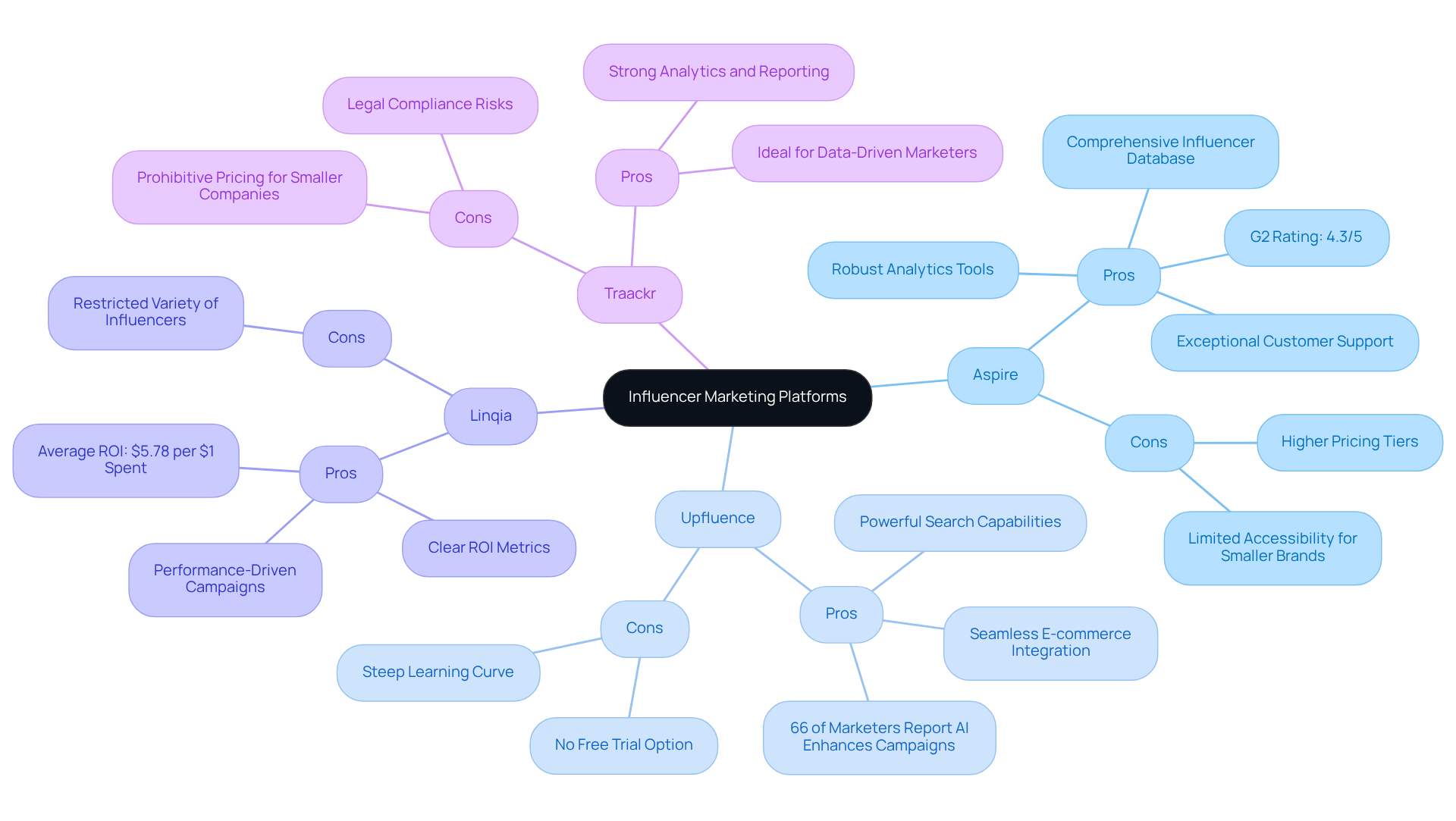
- Pros: Aspire stands out with its , robust analytics tools, and exceptional customer support. This makes it a strong choice for brands seeking detailed insights. With a G2 rating of 4.3/5, user satisfaction is clearly evident.
- Cons: However, the at higher tiers may deter smaller brands, which limits accessibility for those with tighter budgets.
Upfluence:
- Pros: Upfluence is renowned for its powerful search capabilities and seamless integration with e-commerce platforms, facilitating effective influencer collaborations. Notably, 66% of marketers indicate that , significantly improving the system's effectiveness.
- Cons: On the downside, users have reported a steep learning curve, which can pose challenges for newcomers. Additionally, the absence of a free trial option may act as a barrier for potential users.
Linqia:
- Pros: Linqia emphasizes with , appealing to brands focused on measurable outcomes. Companies generate an impressive average of $5.78 for each dollar invested in , underscoring the importance of utilizing such channels.
- Cons: Conversely, it offers a more restricted variety of influencers compared to larger networks, which may limit campaign choices.
Traackr:
- Pros: Traackr features , making it ideal for data-driven marketers looking to optimize their strategies.
- Cons: However, the can be prohibitive for smaller companies or startups, potentially limiting its user base. Additionally, legal compliance risks related to social media endorsements should be considered when utilizing this service.
By thoughtfully assessing these benefits and drawbacks, companies can make informed decisions about which promotional network best aligns with their objectives and budget constraints.
Best Use Cases for Each Influencer Marketing Platform
Selecting the right promotional network is essential for companies aiming to meet their specific objectives. With the projected to reach $480 billion by 2027, can significantly enhance . Here are some top contenders:
- Aspire: This platform stands out for brands looking to scale their swiftly, especially in e-commerce. Its robust integration capabilities streamline campaign management, making it a competitive choice for companies eager to expand their reach quickly.
- Upfluence: For businesses that need in-depth audience insights and analytics, Upfluence is the go-to option. It's particularly effective for B2B campaigns, where understanding the target audience is crucial. With , companies can tailor their strategies effectively. Notably, Upfluence integrates seamlessly with Shopify and WooCommerce, enhancing its value for online retailers.
- Linqia: If are your focus, Linqia is the ideal choice. It allows companies to closely track ROI, making it perfect for product launches or promotional initiatives where . With pricing starting at $99/month, it’s a feasible option for those prioritizing performance.
- Traackr: This service is tailored for companies committed to building long-lasting relationships with advocates and enhancing their brand image. Traackr offers tools that facilitate the management of ongoing partnerships, ensuring sustained engagement and loyalty. Its pricing structure is designed for those seeking comprehensive relationship management.
By aligning these platforms' capabilities with specific marketing objectives, brands can significantly improve their and better understand to achieve improved results. The importance of selecting the right platform cannot be overstated; it’s a critical step toward maximizing impact.

Conclusion
Choosing the right influencer marketing platform is crucial for businesses aiming to elevate their promotional strategies. A thorough comparative analysis of pricing and features reveals that understanding these elements can significantly influence a company's success in influencer marketing. By carefully evaluating the unique offerings of each platform, brands can make informed decisions that align with their specific goals and budget constraints.
Key insights from the article underscore the importance of features such as influencer discovery, campaign management tools, and robust analytics. Platforms like Aspire and Upfluence provide advanced capabilities tailored to diverse marketing needs. Moreover, pricing models - ranging from subscription-based to performance-based options - offer flexibility for companies of all sizes. Weighing the pros and cons of each platform enables businesses to pinpoint the best fit for their objectives, ensuring they maximize their return on investment.
As the influencer marketing landscape evolves, companies must remain proactive in exploring these platforms and adapting their strategies accordingly. Embracing the right tools not only enhances marketing effectiveness but also positions brands to thrive in the expanding creator economy. By prioritizing informed decision-making and leveraging the insights shared, businesses can unlock the full potential of influencer marketing and achieve lasting success in their campaigns.
Frequently Asked Questions
What are influencer marketing platforms?
Influencer marketing platforms are tools that help companies connect with influencers to enhance their promotional strategies through various features and functionalities.
What is the purpose of influencer discovery in these platforms?
Influencer discovery allows brands to use advanced search filters to find influencers based on niche, audience demographics, and engagement rates, ensuring they connect with the right voices for their campaigns.
What tools are available for campaign management in influencer marketing platforms?
Platforms like Linqia and Traackr offer campaign management tools that enable companies to monitor deliverables, timelines, and performance metrics, ensuring campaigns are on track and aligned with business goals.
How do analytics and reporting features benefit companies using influencer marketing platforms?
Analytics and reporting features provided by platforms like HypeAuditor and CreatorIQ help companies measure the ROI of their campaigns, offering insights that can improve future strategies and drive better results.
What are integration features in influencer marketing platforms?
Integration features allow platforms, such as GRIN, to seamlessly connect with e-commerce systems, enhancing the tracking of sales generated from ambassador campaigns and assessing the overall impact of influencer partnerships.
Why is payment processing important in influencer marketing platforms?
Efficient payment processing, as seen in services like Collabstr, is vital for smooth operations, ensuring prompt transactions between companies and influencers, which fosters positive working relationships.
How do these features impact a company's promotional strategy?
Understanding and leveraging the features of influencer marketing platforms can significantly enhance a company's promotional efforts, leading to greater success in their marketing campaigns.
List of Sources
- Key Features of Influencer Marketing Platforms
- influenceflow.io (https://influenceflow.io/resources/influencer-marketing-platforms-comparison-complete-guide-for-brand-marketers-in-2026)
- guideflow.com (https://guideflow.com/blog/influencer-marketing-platforms)
- ampfluence.com (https://ampfluence.com/the-best-influencer-marketing-platforms-to-use-in-2026)
- podcastvideos.com (https://podcastvideos.com/articles/top-16-influencer-marketing-platforms-to-supercharge-your-2026-campaigns)
- finance.yahoo.com (https://finance.yahoo.com/news/influencer-marketing-platforms-market-set-121500588.html)
- Pricing Models and Structures Across Platforms
- influenceflow.io (https://influenceflow.io/resources/influencer-pricing-benchmarks-complete-2026-guide-to-creator-rates)
- Influencer Rates 2026: What to Pay & What to Charge (Nano to Mega) (https://afluencer.com/influencer-rates)
- Influencer Price List! What Brands Pay Per Post in 2026? (https://clickanalytic.com/influencer-price-list)
- How Influencer Marketing Is Changing in 2026 (https://vogue.com/article/how-influencer-marketing-is-changing-in-2026)
- Pros and Cons of Leading Influencer Marketing Platforms
- 8 Best Influencer Marketing Platforms (https://medium.com/@ivanpalii/8-best-influencer-marketing-platforms-39235e05b520)
- statista.com (https://statista.com/topics/2496/influence-marketing?srsltid=AfmBOopLdteO7BEiMKpK0KkKv2kzmm_GyVeRbOQXOtDKQbEsICd5JsUA)
- guideflow.com (https://guideflow.com/blog/influencer-marketing-platforms)
- 20 Surprising Influencer Marketing Statistics | Digital Marketing Institute (https://digitalmarketinginstitute.com/blog/20-influencer-marketing-statistics-that-will-surprise-you)
- 10 Proven Pros And Cons of Influencer Marketing in 2026 (https://iqfluence.io/public/blog/pros-and-cons-of-influencer-marketing)
- Best Use Cases for Each Influencer Marketing Platform
- 8 Best Influencer Marketing Platforms (https://medium.com/@ivanpalii/8-best-influencer-marketing-platforms-39235e05b520)
- podcastvideos.com (https://podcastvideos.com/articles/top-16-influencer-marketing-platforms-to-supercharge-your-2026-campaigns)
- guideflow.com (https://guideflow.com/blog/influencer-marketing-platforms)
- 2026 Influence Trends You Should Care About | Ogilvy (https://ogilvy.com/ideas/2026-influence-trends-you-should-care-about)
- How Influencer Marketing Is Changing in 2026 (https://vogue.com/article/how-influencer-marketing-is-changing-in-2026)