Introduction
Marketing media has undergone a remarkable transformation, presenting brands with a wide range of channels to engage their audiences. As companies navigate this evolving landscape, grasping the strengths and weaknesses of various media types is crucial for effective brand engagement.
What strategies can brands adopt to ensure they are harnessing the most impactful marketing media in an era increasingly defined by digital interactions? Delving into the distinctions between digital and traditional media not only uncovers opportunities for connection but also highlights the challenges brands must address to succeed in a competitive marketplace.
Overview of Marketing Media Types
Marketing media can be categorized into several distinct types, each serving unique purposes and audiences:
- Digital Content: This encompasses online platforms like social networks (e.g., Facebook, Instagram, TikTok), websites, and email promotion. Digital platforms excel as marketing media examples in their ability to connect with large audiences quickly and provide measurable impacts on interaction and conversion rates. In 2025, , reflecting a 10.9% year-over-year increase and a growing reliance on digital platforms for visibility.
- Traditional Media: This includes print (newspapers, magazines), broadcast (television, radio), and outdoor advertising (billboards). While traditional marketing media examples can effectively build trust and engage local audiences, they often lack the real-time interaction capabilities that digital channels offer. In 2025, many consumers still regard , although their effectiveness is increasingly challenged by digital alternatives. A HubSpot study reveals that , compared to the murkier $1.50 from traditional methods.
- Social Media: A subset of digital resources, social media platforms facilitate interactive engagement with consumers. Brands can boost visibility and cultivate community by utilizing marketing media examples like (UGC) and influencer partnerships. Notably, UGC generates 28% more engagement than branded content, and 63% of consumers are likely to visit a business after a positive social media interaction, underscoring its importance in modern promotional strategies.
- Content Marketing: This strategy focuses on creating valuable content (blogs, videos, infographics) to attract and retain a clearly defined audience. By establishing trust and authority, the use of marketing media examples in content marketing ultimately drives customer action. Brands investing in content creation report significantly higher ROI compared to traditional methods.
- Collaborating with influencers is one of the effective marketing media examples that allows brands to tap into their established audiences, providing authentic endorsements that can significantly enhance engagement. As younger generations increasingly favor independent creators over traditional celebrities, has become a vital component of corporate strategies.
- : This approach engages consumers through immersive experiences, enabling them to interact with the brand in memorable ways. Such marketing can forge strong emotional connections and foster loyalty, making it a in a company's arsenal.
Each type of communication presents its own advantages and disadvantages, making it crucial for companies to select the right combination based on their objectives and target audience.

Successful Marketing Media Examples
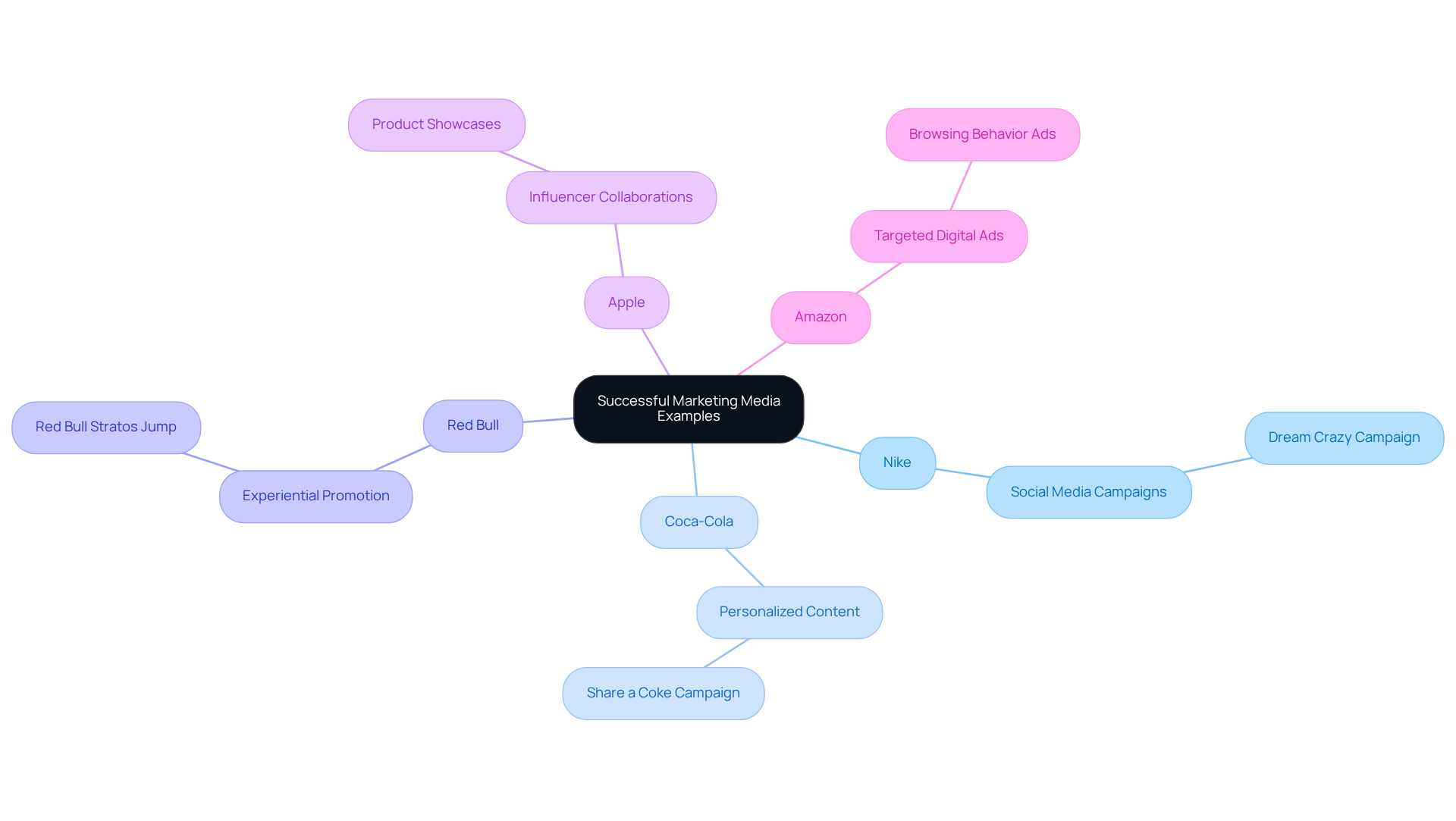
Numerous companies have successfully harnessed various marketing media examples to effectively engage their audiences. Consider these notable examples:
- to initiate campaigns that resonate with their audience. Their 'Dream Crazy' campaign, featuring Colin Kaepernick, sparked significant conversation and engagement, showcasing the power of social media in driving brand narratives.
- : The 'Share a Coke' campaign personalized their product by replacing their logo with popular names. This content promotion strategy not only boosted sales but also encouraged social sharing, demonstrating the effectiveness of .
- Red Bull has mastered with events like the Red Bull Stratos jump. This high-profile event captured global attention and strengthened Red Bull's identity as a leader in extreme sports.
- Apple's : Apple frequently collaborates with influencers to showcase their products in authentic settings. This strategy enhances credibility and reaches diverse audiences, particularly who trust influencer recommendations.
- Amazon's Digital Advertising: Amazon effectively uses targeted digital ads to reach potential customers based on their browsing behavior. Their tailored suggestions and advertisements have greatly enhanced conversion rates, demonstrating the effectiveness of .
These marketing media examples illustrate how brands can leverage various forms of communication to develop effective promotional strategies that connect with their target audiences. What strategies will you implement to enhance your marketing efforts?
Comparative Analysis of Media Effectiveness
When evaluating the effectiveness of various marketing media, several critical factors emerge that demand attention:
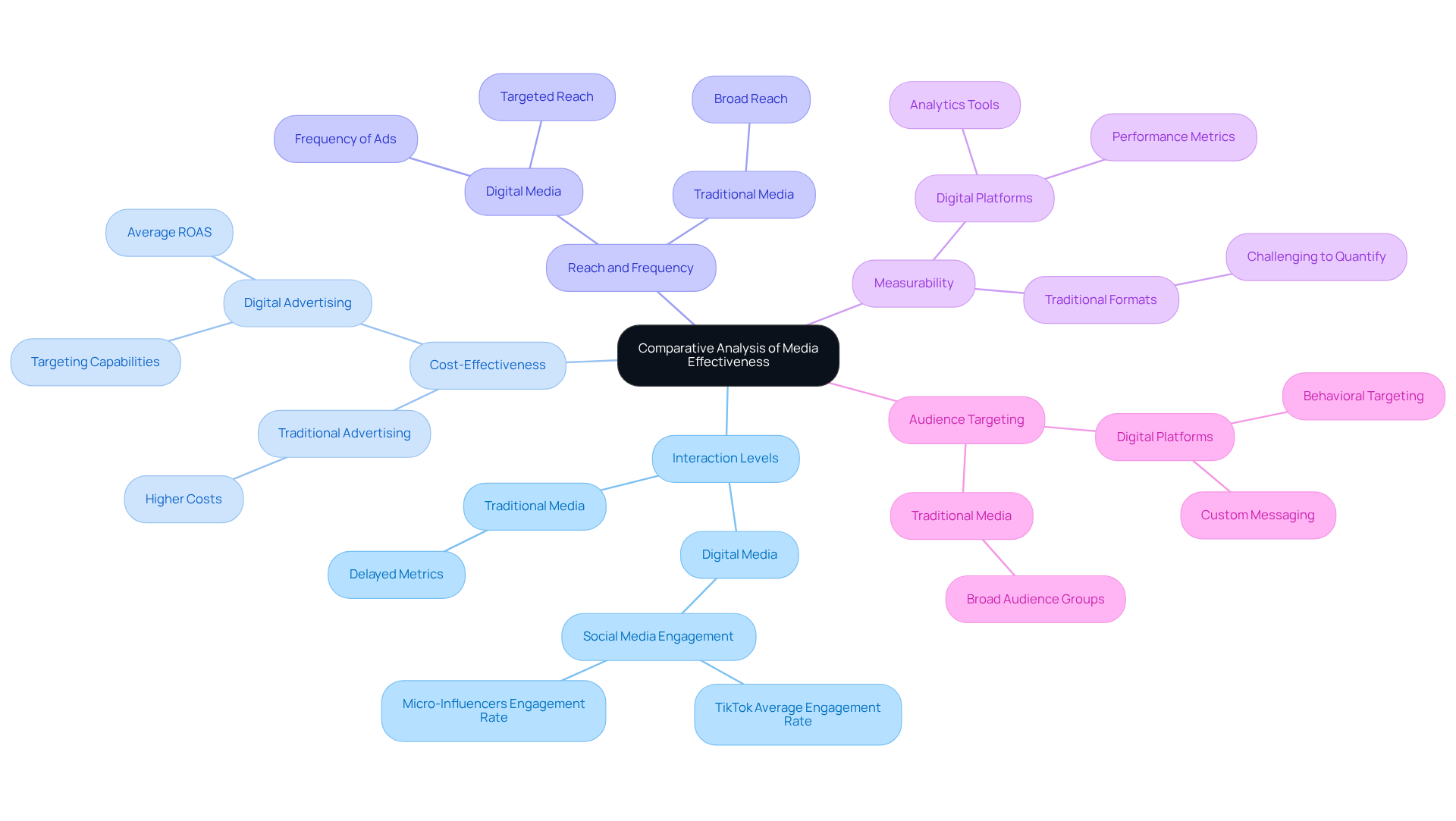
- : Digital content, particularly social networks, consistently demonstrates greater than conventional media. For instance, posts can garner immediate feedback through likes, shares, and comments, while traditional advertisements often rely on delayed metrics such as surveys or sales data. TikTok, for example, boasts an of 2.5% per post, with smaller creators achieving even higher rates. Moreover, micro-influencers have an impressive average engagement rate of 3.86%, significantly outperforming macro-influencers at 1.21%.
- : Digital advertising generally offers reduced expenses per impression and a considerably compared to conventional channels. Brands can target specific demographics and adjust campaigns in real-time, optimizing their budgets effectively. In fact, TikTok ads have shown an average ROAS of 2.4x, surpassing traditional display ads, which underscores the financial advantages of digital strategies. Furthermore, of $5.78 per $1 spent in 2025, highlighting the effectiveness of creator-driven strategies.
- Reach and Frequency: While traditional media can achieve broad reach, particularly in local markets, digital media excels in frequency and targeted reach. For example, a Facebook advertisement can be shown multiple times to the same user, reinforcing messaging and enhancing recall.
- Measurability: that allow companies to monitor performance metrics such as click-through rates, conversion rates, and customer engagement. This degree of measurability is often absent in conventional formats, where effectiveness can be more challenging to quantify. The shift towards digital advertising is evident, with global ad revenue projected to exceed $1 trillion by 2025, driven by the demand for precise measurement and accountability.
- : facilitate precise based on user behavior, interests, and demographics. This level of detail enables companies to customize their messaging efficiently, a feature that conventional media lacks, often depending on broader audience groups.
In summary, while traditional outlets still hold value for awareness, such as typically provide superior interaction, , and measurability. This makes them the preferred option for many companies in today's competitive environment. Are you ready to leverage these insights for your marketing strategy?
Choosing the Right Media for Brand Engagement
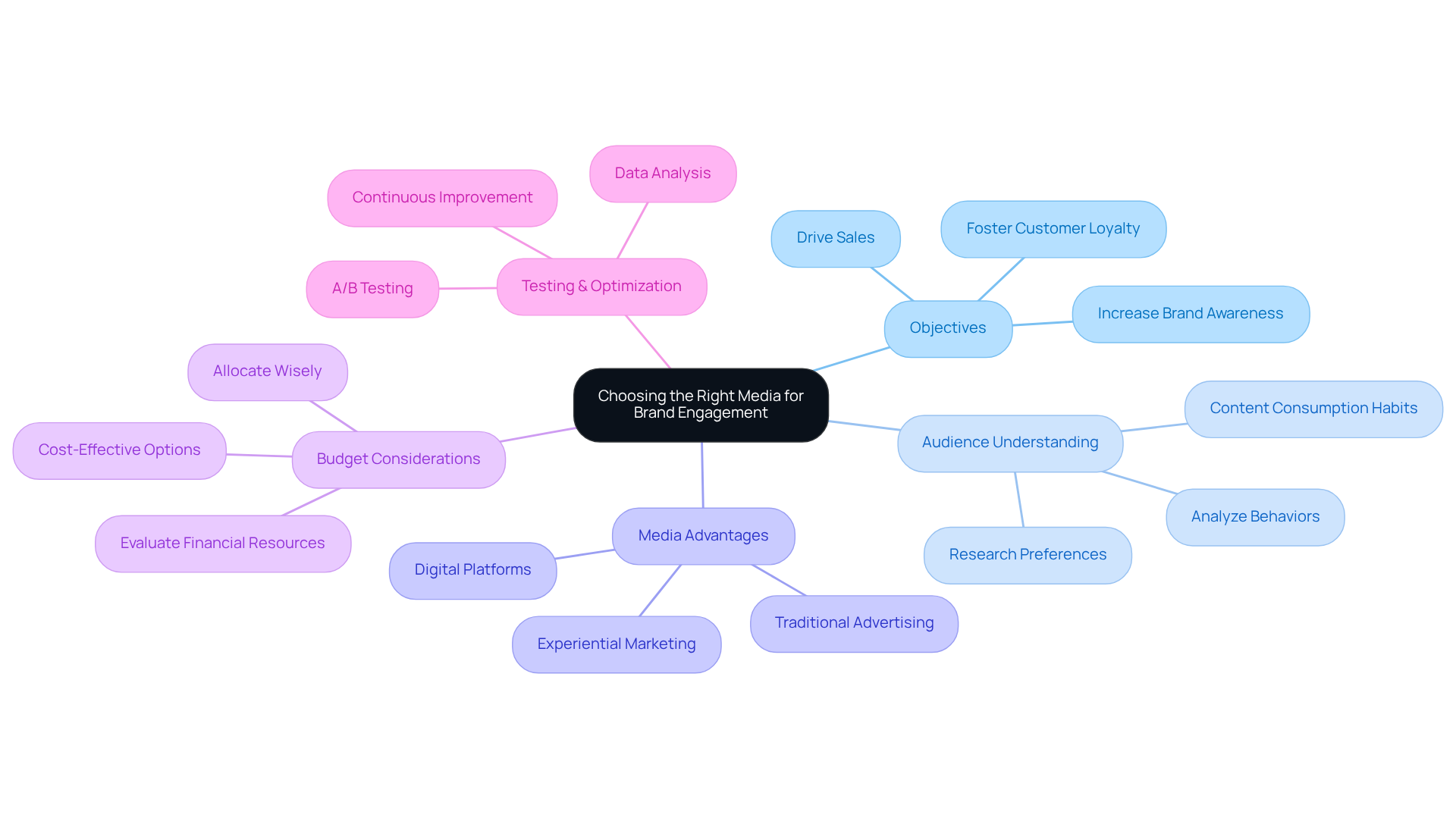
Selecting the right for is crucial for success. What do you want to achieve with your marketing efforts? Whether it's increasing brand awareness, driving sales, or fostering , your objectives will guide your choice of channels.
Understanding your audience is key. Conduct thorough research to grasp their preferences, behaviors, and . This insight will help you select content that resonates with them, making your engagement efforts more effective.
Consider the advantages of each of the . For instance, if your goal is to forge a strong emotional connection, experiential marketing might outperform traditional advertising. Reflect on what each of the can offer to align with your objectives.
Budget plays a significant role in your strategy. Evaluate your financial resources and allocate them wisely. Digital platforms, as , often provide flexibility and cost-effective options, allowing for experimentation and refinement of your approach.
Finally, don’t forget to . Implement to measure the effectiveness of different formats and campaigns. Use to continually enhance your strategies, ensuring you and return on investment.
By adhering to these guidelines, brands can make informed decisions about their media strategies, ultimately enhancing engagement with target audiences and achieving their marketing goals.
Conclusion
In a landscape where brand engagement reigns supreme, grasping the various types of marketing media is crucial for developing effective strategies. Each media type, whether digital or traditional, possesses unique strengths that can be harnessed to connect with target audiences. By understanding the distinct advantages and limitations of these channels, brands can make informed decisions that align with their marketing objectives.
This article has delved into different forms of marketing media, from the interactive nature of social media and the immersive experiences of experiential marketing to the trust-building capabilities of traditional media. Key insights include the measurable impact of digital platforms, the cost-effectiveness of targeted advertising, and the significance of audience understanding in media selection. Noteworthy examples from industry leaders like Nike, Coca-Cola, and Red Bull illustrate how effective engagement can be achieved through tailored strategies that resonate with consumers.
Ultimately, the choice of marketing media should be guided by a clear understanding of brand goals and audience preferences. By adopting a data-driven approach and continually optimizing strategies, brands can enhance their engagement efforts and achieve greater success in an increasingly competitive environment. The future of brand engagement hinges on the ability to adapt and innovate, ensuring that marketing media choices not only reflect current trends but also anticipate the evolving needs of consumers.
Frequently Asked Questions
What are the main types of marketing media?
The main types of marketing media include digital content, traditional media, social media, content marketing, influencer marketing, and experiential marketing.
What is digital content in marketing?
Digital content encompasses online platforms such as social networks (e.g., Facebook, Instagram, TikTok), websites, and email promotions. It allows for quick connection with large audiences and provides measurable impacts on interaction and conversion rates.
How is traditional media defined in marketing?
Traditional media includes print (newspapers, magazines), broadcast (television, radio), and outdoor advertising (billboards). While it can effectively build trust and engage local audiences, it lacks the real-time interaction capabilities of digital channels.
What are the projected expenditures for social advertising in 2025?
In 2025, global social advertising expenditure is projected to exceed $276.72 billion, reflecting a 10.9% year-over-year increase.
How does the ROI of digital marketing compare to traditional marketing?
Businesses using digital marketing media achieve an average ROI of $2.80 for every dollar spent, while traditional methods yield a lower ROI of about $1.50.
What role does social media play in marketing?
Social media facilitates interactive engagement with consumers, allowing brands to boost visibility and cultivate community through user-generated content and influencer partnerships.
What is the impact of user-generated content (UGC) in marketing?
User-generated content generates 28% more engagement than branded content, and 63% of consumers are likely to visit a business after a positive social media interaction.
What is content marketing?
Content marketing focuses on creating valuable content (such as blogs, videos, and infographics) to attract and retain a clearly defined audience, ultimately driving customer action and establishing trust and authority.
How does influencer marketing benefit brands?
Influencer marketing allows brands to tap into established audiences of influencers, providing authentic endorsements that enhance engagement, especially among younger generations who prefer independent creators.
What is experiential marketing?
Experiential marketing engages consumers through immersive experiences, allowing them to interact with the brand in memorable ways, which can forge strong emotional connections and foster loyalty.
Why is it important for companies to choose the right marketing media?
Each type of marketing media has its own advantages and disadvantages, so selecting the right combination is crucial based on a company's objectives and target audience.
List of Sources
- Overview of Marketing Media Types
- Key Social Media Marketing Statistics for 2025 | Sprinklr (https://sprinklr.com/blog/social-media-marketing-statistics)
- 2025 Digital Media Trends: Social platforms are becoming a dominant force in media and entertainment (https://deloitte.com/us/en/insights/industry/technology/digital-media-trends-consumption-habits-survey/2025.html)
- 120+ Must-know social media marketing statistics for 2026 (https://sproutsocial.com/insights/social-media-statistics)
- theblissgrp.com (https://theblissgrp.com/2025-media-relations-trends)
- biondocreative.com (https://biondocreative.com/2025/08/traditional-marketing-vs-digital-marketing-in-2025)
- Successful Marketing Media Examples
- 120+ Must-know social media marketing statistics for 2026 (https://sproutsocial.com/insights/social-media-statistics)
- marketingdive.com (https://marketingdive.com/news/best-marketing-campaigns-2025-navigating-uncertainty/807155)
- coca-colacompany.com (https://coca-colacompany.com/media-center/coca-cola-refreshes-givers-of-the-season-embraces-ai-powered-storytelling-in-global-holiday-campaign)
- inbeat.agency (https://inbeat.agency/blog/social-media-statistics)
- dreamgrow.com (https://dreamgrow.com/21-social-media-marketing-statistics)
- Comparative Analysis of Media Effectiveness
- Key Social Media Marketing Statistics for 2025 | Sprinklr (https://sprinklr.com/blog/social-media-marketing-statistics)
- 2025 Digital Media Trends: Social platforms are becoming a dominant force in media and entertainment (https://deloitte.com/us/en/insights/industry/technology/digital-media-trends-consumption-habits-survey/2025.html)
- iab.com (https://iab.com/news/report-digital-advertising-growth-retail-media-ctv-social)
- finance.yahoo.com (https://finance.yahoo.com/news/big-pivot-digital-ad-budgets-150000230.html)
- ifj.org (https://ifj.org/media-centre/news/detail/article/reuters-digital-report-2025-falling-trust-and-the-rise-of-alternative-media-ecosystems)
- Choosing the Right Media for Brand Engagement
- 2025 Digital Media Trends: Social platforms are becoming a dominant force in media and entertainment (https://deloitte.com/us/en/insights/industry/technology/digital-media-trends-consumption-habits-survey/2025.html)
- 2026 Marketing Statistics, Trends, & Data (https://hubspot.com/marketing-statistics)
- kantar.com (https://kantar.com/north-america/inspiration/advertising-media/media-reactions-2025-where-do-people-prefer-advertising)
- wisernotify.com (https://wisernotify.com/blog/branding-stats)