Introduction
Remarketing is not just a strategy; it's a lifeline for brands aiming to re-engage potential customers who have shown interest in their offerings. By employing advanced techniques like audience segmentation and dynamic ads, businesses can tailor their advertising efforts to effectively engage users and drive conversions.
However, marketers are grappling with increasing privacy regulations and the risk of ad fatigue, which threaten campaign effectiveness. Navigating these complexities is crucial for maximizing remarketing benefits while preserving customer trust.
Define Remarketing: Understanding the Core Concept
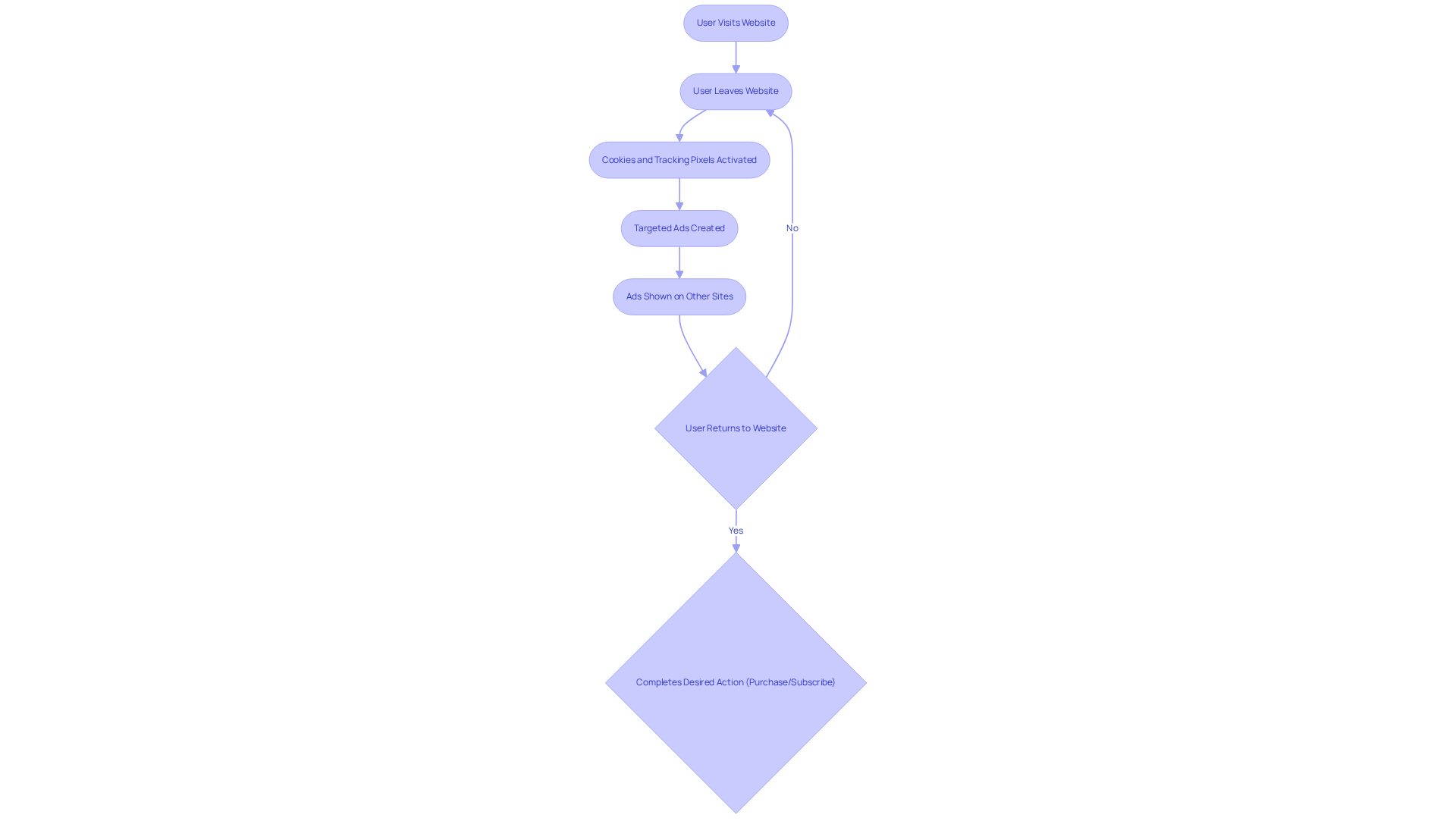
Have you ever left a website only to forget about the product you were considering? The strategy of remarketing is an example of how does remarketing work by bringing those products back to your attention. This digital marketing approach, also known as retargeting, demonstrates how does remarketing work by focusing on re-engaging individuals who have previously interacted with a brand's website or app. Businesses can remind potential customers of their interest in specific products or services by delivering targeted advertisements while they browse other websites or social media platforms, illustrating how does remarketing work. This reminder motivates them to return and complete desired actions, such as making a purchase or subscribing to a newsletter, highlighting how does remarketing work.
In 2026, statistics reveal that 26% of individuals return to a website due to remarketing efforts. This strategy employs cookies and tracking pixels to create tailored ad experiences that resonate with individuals based on their past behaviors, illustrating how does remarketing work. To understand how does remarketing work, it's important to note that it not only boosts conversion rates but also helps businesses maximize their return on investment (ROI).
As the digital marketing landscape evolves, agencies are increasingly adopting sophisticated retargeting strategies to understand how does remarketing work. For instance, segmented funnel-based targeted advertising customizes messages for individuals at various stages of their purchasing journey, significantly enhancing engagement and conversion rates. Furthermore, integrating first-party data is becoming essential for crafting personalized experiences while adhering to privacy regulations. With the global retargeting software market projected to reach $8.87 billion by 2029, businesses that leverage remarketing will not only enhance their customer engagement but also secure their competitive edge.
Explain How Remarketing Works: Mechanisms and Processes
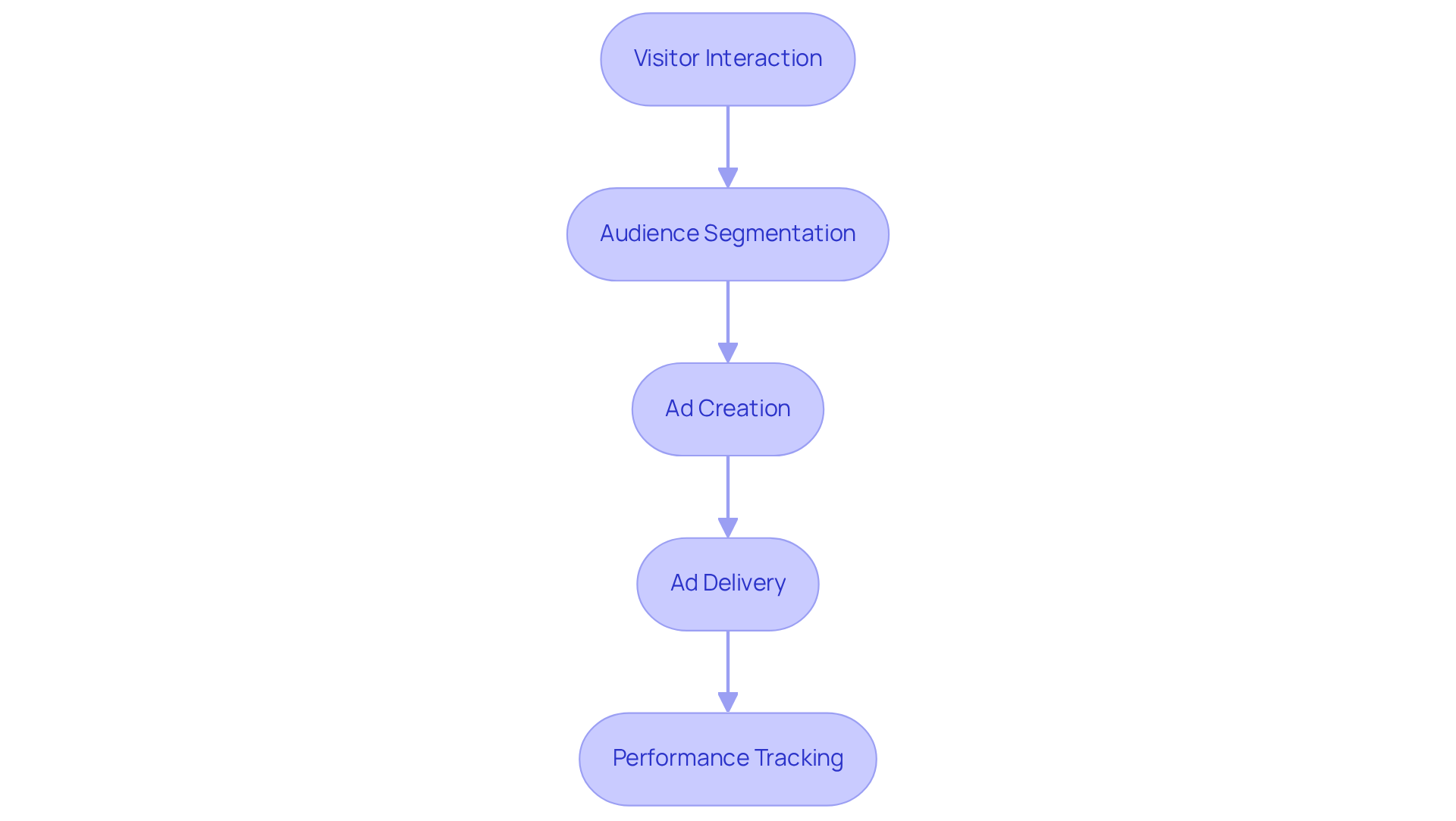
Have you ever wondered why certain ads seem to follow you around the internet? The question of how does remarketing work is the answer. The structured process of monitoring behavior and delivering personalized ads is essentially how does remarketing work. Here’s how it works:
- Visitor Interaction: When an individual visits a website, a tracking pixel or cookie is placed in their browser, enabling the collection of data on their behavior, such as pages visited and products viewed.
- Audience Segmentation: Marketers categorize individuals into distinct audiences based on their interactions. For example, individuals who added items to their cart but did not finalize the purchase can be specifically targeted with customized advertisements, increasing the probability of conversion. Effective segmentation converts raw data into actionable plans, enabling marketers to continuously enhance their targeting.
- Ad Creation: Advertisers craft tailored ads that truly connect with each audience segment. These ads often showcase dynamic content highlighting products previously viewed, making them more relevant and engaging. MediaNug emphasizes that performance creative is not merely about ad design; it aligns creative strategy with media objectives, producing variations designed for controlled, hypothesis-based testing. This approach ensures that the creative layer evolves alongside media spend, addressing creative fatigue and maximizing engagement.
- Ad Delivery: As individuals browse other websites or social media platforms, the targeted ads are shown, reminding them of their past interactions and motivating them to return to fulfill their desired actions. Brands can significantly increase their conversion rates by implementing targeted remarketing strategies, leading to an understanding of how does remarketing work.
- Performance Tracking: Marketers employ analytics tools to observe the effectiveness of their retargeting campaigns, enabling real-time modifications based on user interaction and conversion rates. In today's privacy-aware atmosphere, utilizing first-party data and server-side tracking is essential for effective advertising strategies. By concentrating on these techniques, marketers can create strong retargeting lists without depending on third-party cookies. For instance, retargeted individuals convert 70% more frequently than first-time visitors who receive no follow-up, and retargeting campaigns attain an average ROAS of 4.2x across all sectors in 2025, highlighting the efficiency of tailored advertising efforts. As Alexandra Spiropoulos observes, respecting privacy when collecting first-party data is crucial for maintaining trust and enhancing campaign performance. Embracing these strategies not only boosts conversions but also builds lasting customer relationships.
Explore Effective Remarketing Strategies: Techniques for Success
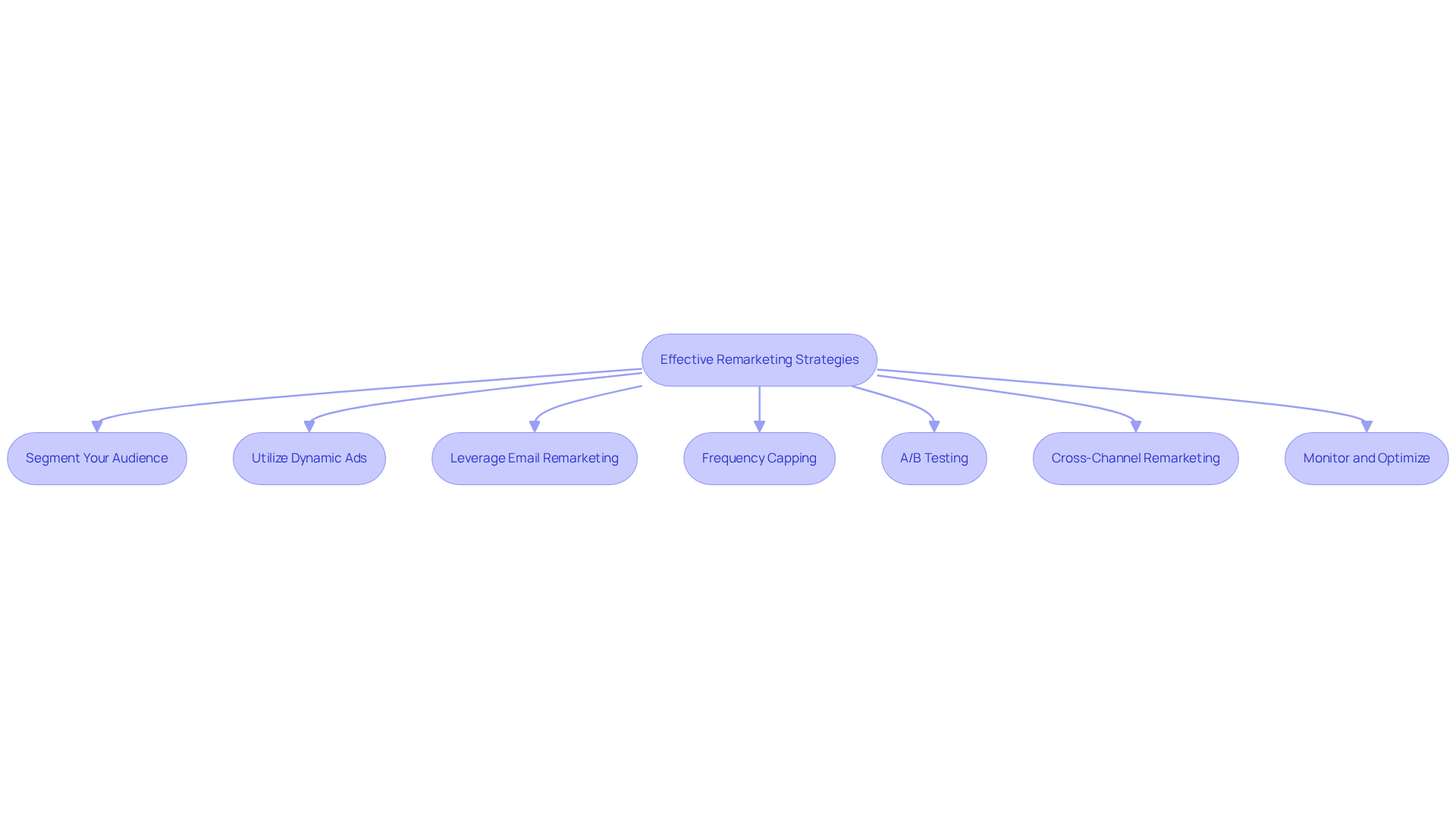
Are your remarketing campaigns effective, and do you understand how does remarketing work? Here are strategies that can elevate your results:
- Segment Your Audience: Divide your audience based on their behavior, such as cart abandoners, frequent visitors, or individuals who engaged with specific content. Tailoring ads to these segments increases relevance and engagement. For instance, targeting Clickers and Quitters with specific product ads can significantly enhance conversion rates. As Naveen Kumar notes, "Users who click the retargeting ads are 70% more likely to convert."
- Utilize Dynamic Ads: Create dynamic advertisements that automatically refresh to display products or services that individuals have previously viewed. This personalization can boost conversion rates by up to 150%, which illustrates how does remarketing work as a key player in your advertising strategy. According to Aaron Brooks, dynamic remarketing is an example of how does remarketing work, as it automatically displays to visitors the exact products or services they looked at on your website, making it significantly more effective than traditional remarketing.
- Leverage Email Remarketing: Utilize email lists to re-engage individuals who have shown interest but did not convert. Sending targeted emails with special offers or reminders can encourage them to return, effectively increasing site visits by 726% over a four-week period, as reported by Sotrender.
- Frequency Capping: Are your ads overwhelming your audience? Set frequency limits to keep them engaged. This helps prevent ad fatigue, which can negatively impact brand perception and conversion rates. Implementing frequency control methods has been shown to maintain user interest and enhance ad performance, leading to questions about how does remarketing work across various channels.
- A/B Testing: Make it a habit to test various ad creatives and messages to see what clicks with your audience. Insights gained from A/B testing can guide continuous refinement of your campaigns, ensuring that you are always optimizing for the best results. Performance-driven creative strategies, which align creative efforts with media objectives, can significantly enhance the effectiveness of these tests.
- Cross-Channel Remarketing: Implement remarketing across multiple platforms, including social media, display networks, and search engines. This approach ensures that your ads reach users wherever they are online, enhancing brand visibility and engagement. A case study on 'Cross-Channel Remarketing: Maintaining Presence Across the Full Journey' demonstrates how does remarketing work by showing how coordinated approaches can enhance conversion opportunities.
- Monitor and Optimize: Without regular checks, your campaigns could fall flat. Continuously track the performance of your remarketing campaigns. Examine metrics like click-through rates, CPA, CPC, and conversion rates to pinpoint areas for enhancement and refine your approaches accordingly. Regular performance assessments are crucial for maintaining campaign effectiveness. By prioritizing learning speed and employing organized innovative approaches, marketers can attain measurable growth and enhance their ad creatives for optimal performance.
Implementing these strategies could be the difference between stagnation and significant growth in your conversion rates.
Address Challenges in Remarketing: Navigating Privacy and Ad Fatigue
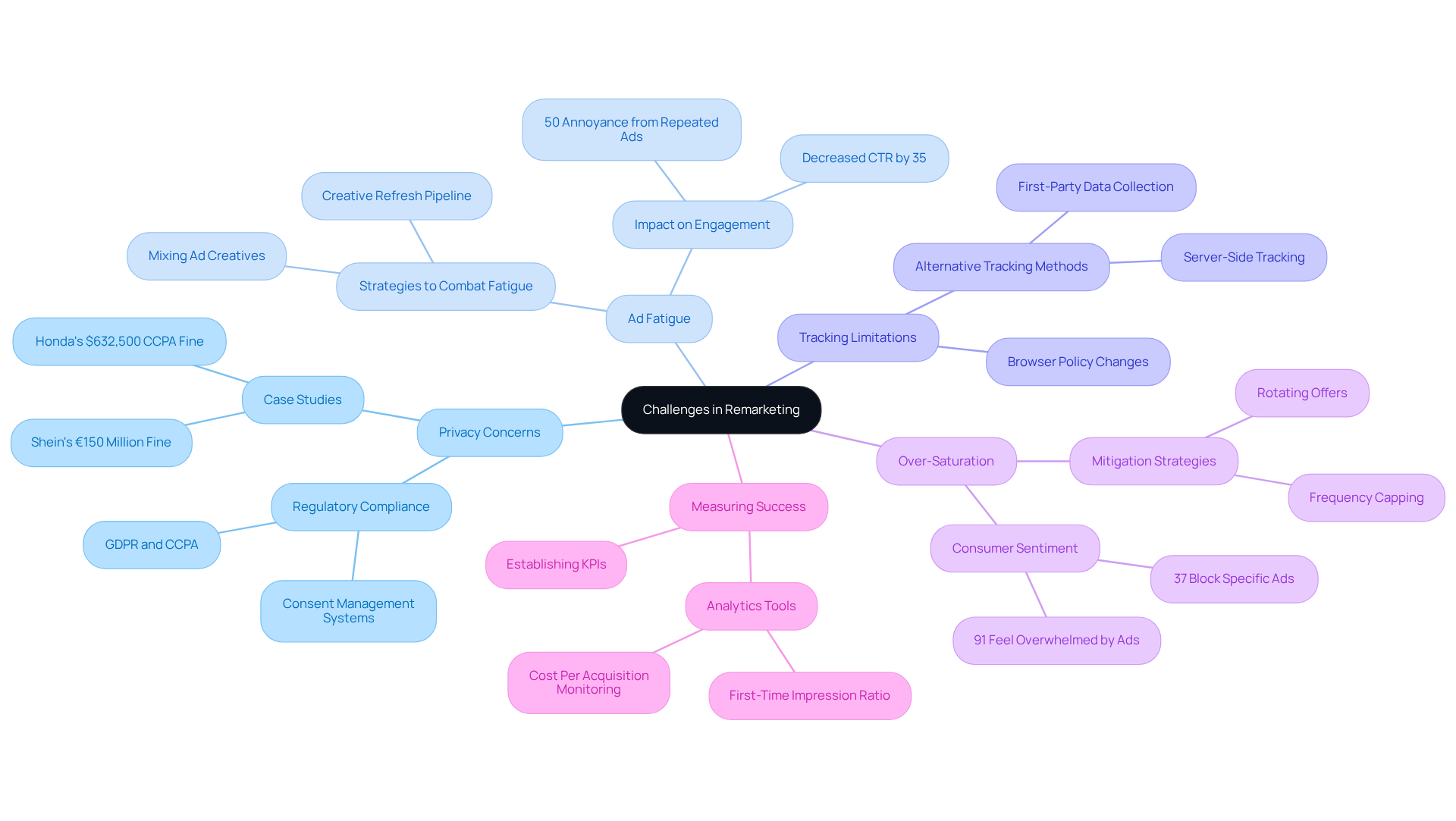
Remarketing offers significant potential, yet it comes with a set of complex challenges that every marketer must navigate:
- Privacy Concerns: With growing regulations regarding data privacy, like GDPR and CCPA, marketers need to comply with regulations when gathering and utilizing consumer data for targeted advertising. This includes obtaining explicit consent and providing clear privacy policies. In 2026, scrutiny surrounding cookie consent has intensified, as seen in cases like Shein's €150 million fine for non-compliance and Honda's $632,500 fine under the CCPA for unlawful data processing. These examples highlight the importance of robust consent management systems.
- Ad Fatigue: Users may experience ad fatigue if they see the same ads repeatedly, leading to decreased engagement and effectiveness. Statistics indicate that ad fatigue can decrease click-through rates (CTR) by up to 35%, and 50% of viewers report annoyance from repeated ads. To tackle this, marketers should mix up their ad creatives and messaging. Implementing a creative refresh pipeline can ensure that new variations are ready before fatigue sets in, allowing for seamless transitions and maintaining audience interest.
- Tracking Limitations: Changes in browser policies and the rise of ad blockers can restrict the effectiveness of tracking pixels, making it more challenging to reach individuals. Marketers should explore alternative tracking methods, such as first-party data collection and server-side tracking, to maintain effective remarketing strategies. Additionally, leveraging MediaNug's data-backed approach can enhance tracking capabilities and ensure compliance with evolving privacy standards.
- Over-Saturation: Flooding individuals with excessive advertisements can result in unfavorable views of the brand. Research shows that 91% of consumers feel overwhelmed by the number of ads they encounter daily. To mitigate this, implement frequency capping and ensure that ads are relevant and valuable to the user. Rotating offers and audience segments can also help maintain freshness and engagement.
- Measuring Success: Accurately assessing the effectiveness of advertising campaigns can be challenging. Marketers should establish clear KPIs and utilize analytics tools to track performance. For instance, monitoring the First-Time Impression Ratio can provide insights into audience engagement and help identify when to refresh ads to prevent rising costs per acquisition (CPA). By integrating MediaNug's performance-driven creative strategies, marketers can enhance their measurement frameworks and achieve measurable growth.
By addressing these challenges head-on, marketers can not only improve their remarketing strategies but also gain insights into how remarketing works to build stronger relationships with their audiences.
Conclusion
In a world where customer attention is fleeting, remarketing emerges as a crucial strategy for re-engaging potential customers. By using tailored advertisements, businesses can spark interest and boost conversions, showcasing the effectiveness of remarketing in enhancing customer engagement and maximizing ROI.
Throughout this article, we explored various aspects of remarketing, including its core mechanisms, effective strategies, and the challenges marketers face. Key insights highlighted the importance of audience segmentation, dynamic ads, and the necessity of monitoring campaign performance. Additionally, addressing privacy concerns and preventing ad fatigue emerged as critical components in crafting successful remarketing campaigns.
As the digital landscape continues to evolve, many businesses find it challenging to keep potential customers engaged after their initial interaction. However, by implementing effective remarketing strategies, businesses can turn potential losses into significant gains. The call to action is clear: prioritize innovative and compliant remarketing approaches to thrive in an increasingly complex advertising environment. The future of advertising hinges on how well businesses adapt their remarketing strategies to meet evolving consumer expectations.
Frequently Asked Questions
What is remarketing?
Remarketing, also known as retargeting, is a digital marketing strategy that focuses on re-engaging individuals who have previously interacted with a brand's website or app by delivering targeted advertisements to remind them of their interest in specific products or services.
How does remarketing work?
Remarketing works by using cookies and tracking pixels to deliver tailored advertisements to individuals as they browse other websites or social media platforms, reminding them of products they considered and motivating them to return and complete actions like making a purchase.
What impact does remarketing have on customer return rates?
Statistics from 2026 indicate that 26% of individuals return to a website due to remarketing efforts, showcasing its effectiveness in driving customer return.
How does remarketing affect conversion rates and ROI?
Remarketing not only boosts conversion rates by reminding potential customers of their interests but also helps businesses maximize their return on investment (ROI) through targeted advertising.
What are some advanced strategies in remarketing?
Advanced remarketing strategies include segmented funnel-based targeted advertising, which customizes messages for individuals at different stages of their purchasing journey, significantly enhancing engagement and conversion rates.
Why is integrating first-party data important in remarketing?
Integrating first-party data is essential for creating personalized experiences in remarketing while ensuring compliance with privacy regulations, enhancing the effectiveness of targeted advertising.
What is the projected growth of the global retargeting software market?
The global retargeting software market is projected to reach $8.87 billion by 2029, indicating significant growth and opportunities for businesses that leverage remarketing strategies.
List of Sources
- Define Remarketing: Understanding the Core Concept
- agencystack.global (https://agencystack.global/why-agencies-are-leveraging-remarketing-services-to-scale-fast-in-2026)
- webfx.com (https://webfx.com/blog/marketing/remarketing-statistics)
- demandsage.com (https://demandsage.com/retargeting-statistics)
- ventureharbour.com (https://ventureharbour.com/advanced-remarketing-techniques-increase-conversions)
- The New Era of Retargeting: Best Practices for 2026 and Beyond | Metadata.io (https://metadata.io/resources/blog/the-new-era-of-retargeting-best-practices)
- Explain How Remarketing Works: Mechanisms and Processes
- The New Era of Retargeting: Best Practices for 2026 and Beyond | Metadata.io (https://metadata.io/resources/blog/the-new-era-of-retargeting-best-practices)
- jentis.com (https://jentis.com/blog/the-ultimate-guide-to-remarketing)
- linkedin.com (https://linkedin.com/pulse/what-audience-segmentation-2026-marketing-guide-veridata-insights-ahxje)
- remarketing.agency (https://remarketing.agency/blog/what-is-remarketing-any-why-brands-need-it-in-2026)
- ventureharbour.com (https://ventureharbour.com/advanced-remarketing-techniques-increase-conversions)
- Explore Effective Remarketing Strategies: Techniques for Success
- ventureharbour.com (https://ventureharbour.com/advanced-remarketing-techniques-increase-conversions)
- The New Era of Retargeting: Best Practices for 2026 and Beyond | Metadata.io (https://metadata.io/resources/blog/the-new-era-of-retargeting-best-practices)
- remarketing.agency (https://remarketing.agency/blog/top-remarketing-strategies-that-actually-convert-in-2026)
- demandsage.com (https://demandsage.com/retargeting-statistics)
- Address Challenges in Remarketing: Navigating Privacy and Ad Fatigue
- imagine.art (https://imagine.art/blogs/how-to-handle-ad-fatigue-refresh-ad-creative)
- emarketer.com (https://emarketer.com/content/digital-privacy-trends-2026)
- Privacy Enforcement Is Surging in 2026 — Key Compliance Failures to Fix Now (https://trustarc.com/resource/privacy-enforcement-surging-2026)
- 10 Proven Strategies to Stop Facebook Ad Fatigue in 2026 (https://medium.com/@mysoftwarestack/10-proven-strategies-to-stop-facebook-ad-fatigue-in-2026-9ab910b47441)
- 14 Ad Fatigue Statistics (2026) (https://tipsonblogging.com/2025/03/ad-fatigue-statistics)
Need Better Performing Social Content?
MediaNug helps brands scale through creator partnerships, performance creative, and platform-native content strategies built for modern social platforms.
Continue Reading
Influencer & Creator Marketing
- The Complete Guide to Influencer Marketing Strategy & Operations
- The Complete Guide to UGC Content Strategy for Brands
- Master UGC Creator Tools: Best Practices for Brand Success
Paid Social & Performance Creative
- The Complete Guide to Paid Social Creative Strategy
- Why Your Brand Needs a Performance Creative Agency for Growth
- What is an Ad Creative Agency and Why It Matters for Brands
Platform & Trend Insights
- UGC Creators for Paid Social Ads: How to Find, Vet, and Scale Winning Creative
- 4 Best Practices for Effective TikTok Creatives That Drive Engagement
- 10 Key Insights on Instagram Demographics for Brand Strategies
- The Role Of Visual Storytelling In Social Media
Strategy & Growth
- Understanding Creative Strategy: Key Concepts and Examples
- 6 Steps to Create an Effective Creative Strategy Sample
- Understanding eCommerce Brand Strategy: Importance and Key Components