
Introduction
Trademark bidding stands as a crucial strategy in the competitive realm of digital marketing, enabling businesses to harness their brand names for greater visibility. By directing paid advertisements toward trademarked terms, companies can effectively capture high-intent traffic while fortifying their market presence against rivals.
But as the digital advertising landscape evolves, it raises an important question: How can marketers navigate the intricate legal terrain while optimizing their bidding strategies? Understanding the nuances of this practice is vital for any brand looking to excel in an increasingly crowded marketplace.
Define Trademark Bidding: Key Concepts and Terminology
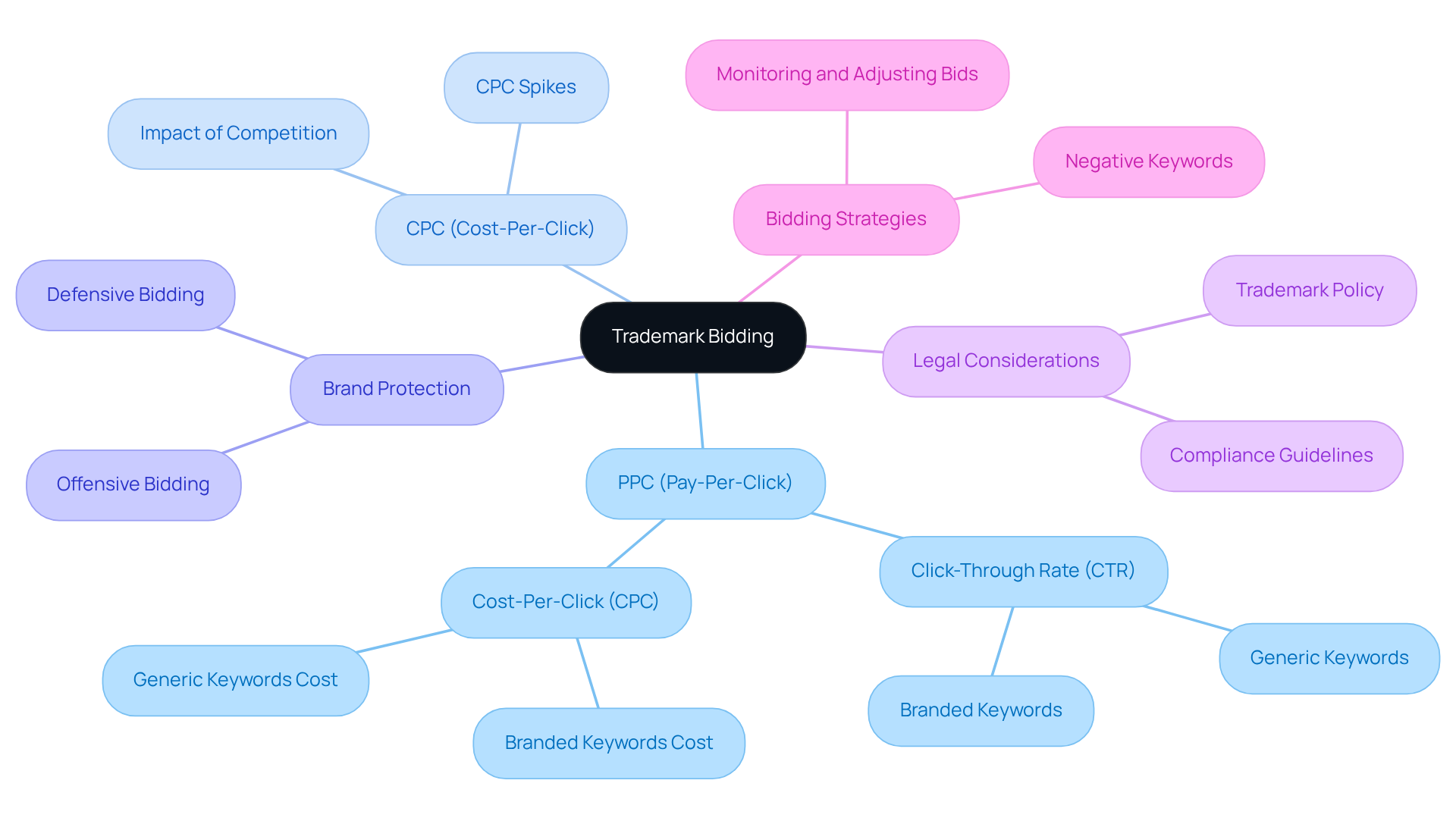
, which is often referred to as label bidding, is a strategic approach that involves targeting . This method allows advertisers to utilize on their own company names or those of competitors, significantly enhancing visibility in search engine results. The primary objective? To capture traffic from users actively searching for specific brands, thereby increasing the likelihood of conversions. Key terms associated with , such as 'PPC' (pay-per-click), 'CPC' (cost-per-click), and '', are essential for understanding how this strategy operates within the broader context of digital marketing.
As we look ahead to 2025, continues to be a formidable tactic. Statistics reveal that branded keywords typically yield a (CTR) exceeding 30%, compared to a mere 3-5% for generic terms. This stark contrast underscores the effectiveness of focusing on brand-specific queries. Case studies illustrate that companies engaging in name auctions not only enhance their visibility but also protect their market share from competitors, solidifying its role as a vital component of modern digital marketing strategies. As Benjamin Paine, Managing Director, aptly notes, "Brand targeting is one of the easiest tools in paid advertising, yet it is frequently misinterpreted."
Moreover, it is crucial for marketers to regularly evaluate search terms, incorporating to filter out irrelevant product combinations and refine their bidding strategies. Legal considerations also play a significant role; while Google allows bidding on trademarked terms, it restricts their use in ad copy without explicit permission. Notably, over 40% of companies encounter rival brand auctions, emphasizing the necessity of adopting effective strategies. Marketers must also remain vigilant about potential risks associated with competitor bids, such as CPC spikes and customer confusion stemming from misleading ads. Understanding these key terms and their implications is vital for marketers aiming to .
Contextualize Trademark Bidding: Importance in Digital Marketing
In the competitive realm of digital marketing, has emerged as a vital strategy for companies looking to solidify their online presence. As internet platforms become the primary avenue for product exploration, businesses increasingly leverage to ensure their advertisements are prominently displayed when customers search for their names or related terms. This tactic not only captures but also serves as a against competitors involved in on similar keywords. Companies that engage in significantly enhance their visibility on , occupying valuable space that increases the likelihood of attracting clicks and boosting overall traffic.
Statistics reveal that companies in the home services sector can lose up to 64,091 clicks each month if they do not actively participate in . This stark reality underscores the necessity of maintaining visibility in a crowded marketplace. Furthermore, success stories illustrate that businesses utilizing not only reclaim top positions in search results but also tailor their messaging to connect more effectively with potential clients, thereby improving their overall . As online commerce continues to grow, the strategic use of intellectual property auctions remains a crucial component of successful marketing strategies, ensuring companies stay relevant and competitive.

Trace the Origins of Trademark Bidding: Historical Development
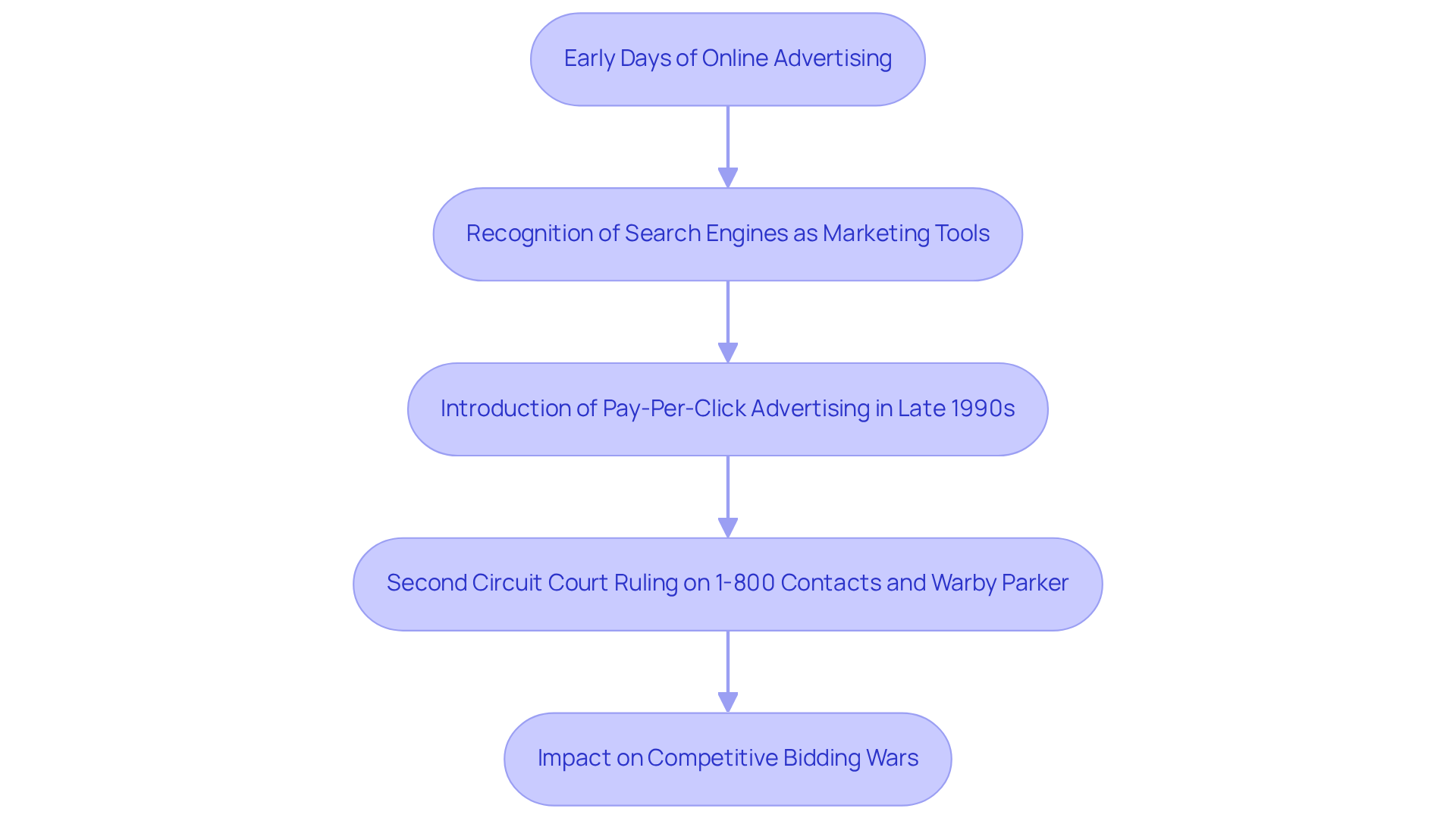
The origins of bidding for identifiers trace back to the early days of online advertising, when companies began to recognize the potential of search engines as powerful marketing tools. As information retrieval systems advanced, advertisers adapted their strategies accordingly. A significant milestone occurred in the late 1990s with the introduction of , allowing companies to bid on keywords, including their own registered names.
A landmark in this evolution was the Second Circuit Court's ruling on 1-800 Contacts and Warby Parker. This ruling established that for search engine advertising is permissible, provided it does not lead to consumer confusion. Such a decision has reshaped the landscape of , prompting companies to engage in to secure their brand names and relevant keywords.
As Eric J. Troutman aptly notes, "The development of illustrates the dynamic interaction between legal structures and promotional tactics." This historical context underscores the ongoing significance of brand auctions in today's digital era.
Identify Key Characteristics of Trademark Bidding: Components and Mechanisms
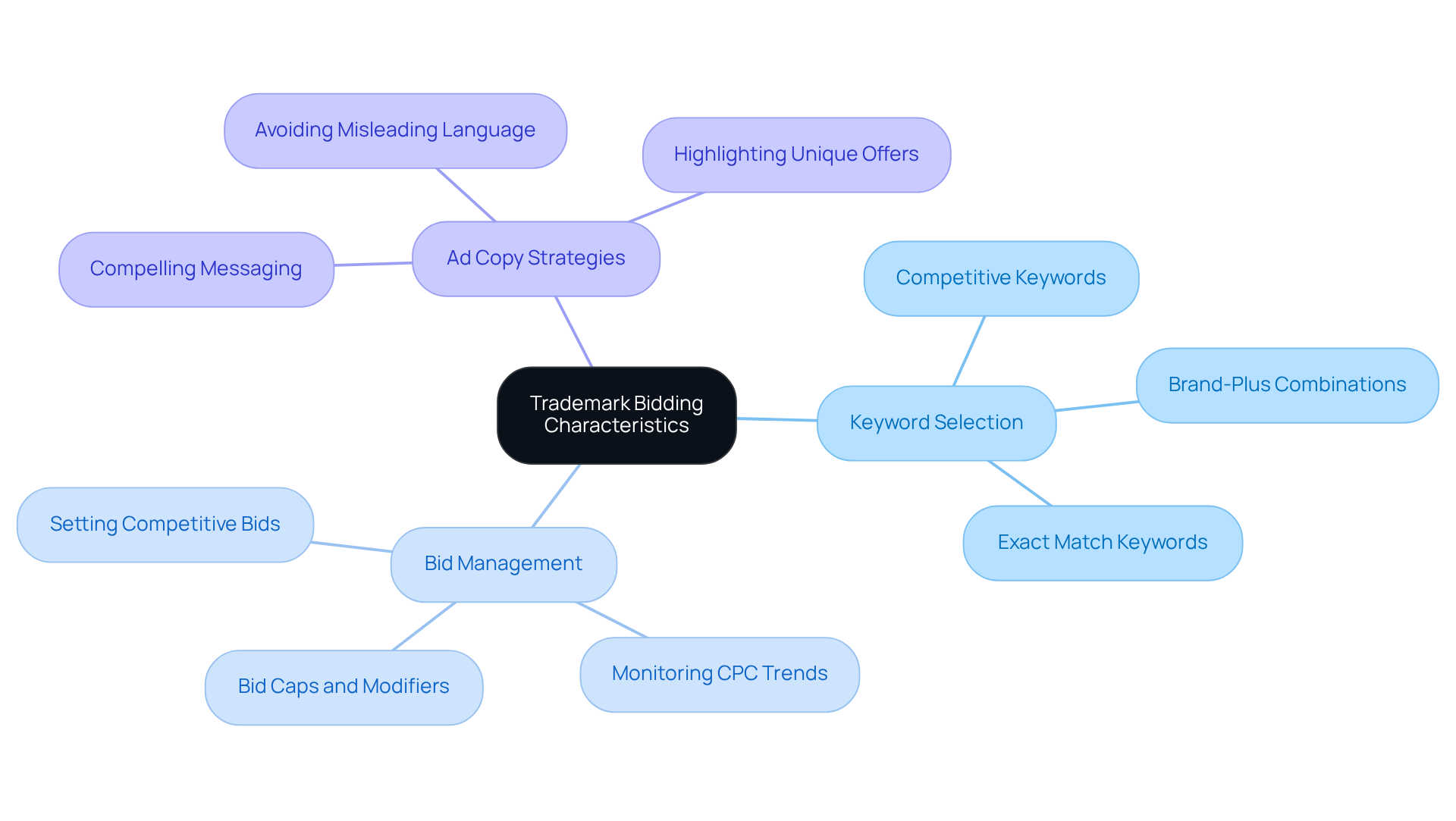
Key characteristics of are pivotal for advertisers aiming to . The selection of keywords, bid management, and play crucial roles in this process. Advertisers must strategically choose which trademarked terms to compete for in , considering the potential for against the associated costs.
Effective management of is essential; setting ensures that ads secure prime positions on search engine results pages. Furthermore, crafting compelling ad copy that resonates with users searching for trademarked terms is vital for maximizing and conversions.
By comprehending these elements, companies can significantly enhance their strategies for . This understanding not only leads to but also positions them ahead of competitors in a crowded marketplace. Are you ready to refine your approach and achieve greater success in your trademark auctions?
Examine Examples of Trademark Bidding: Real-World Applications
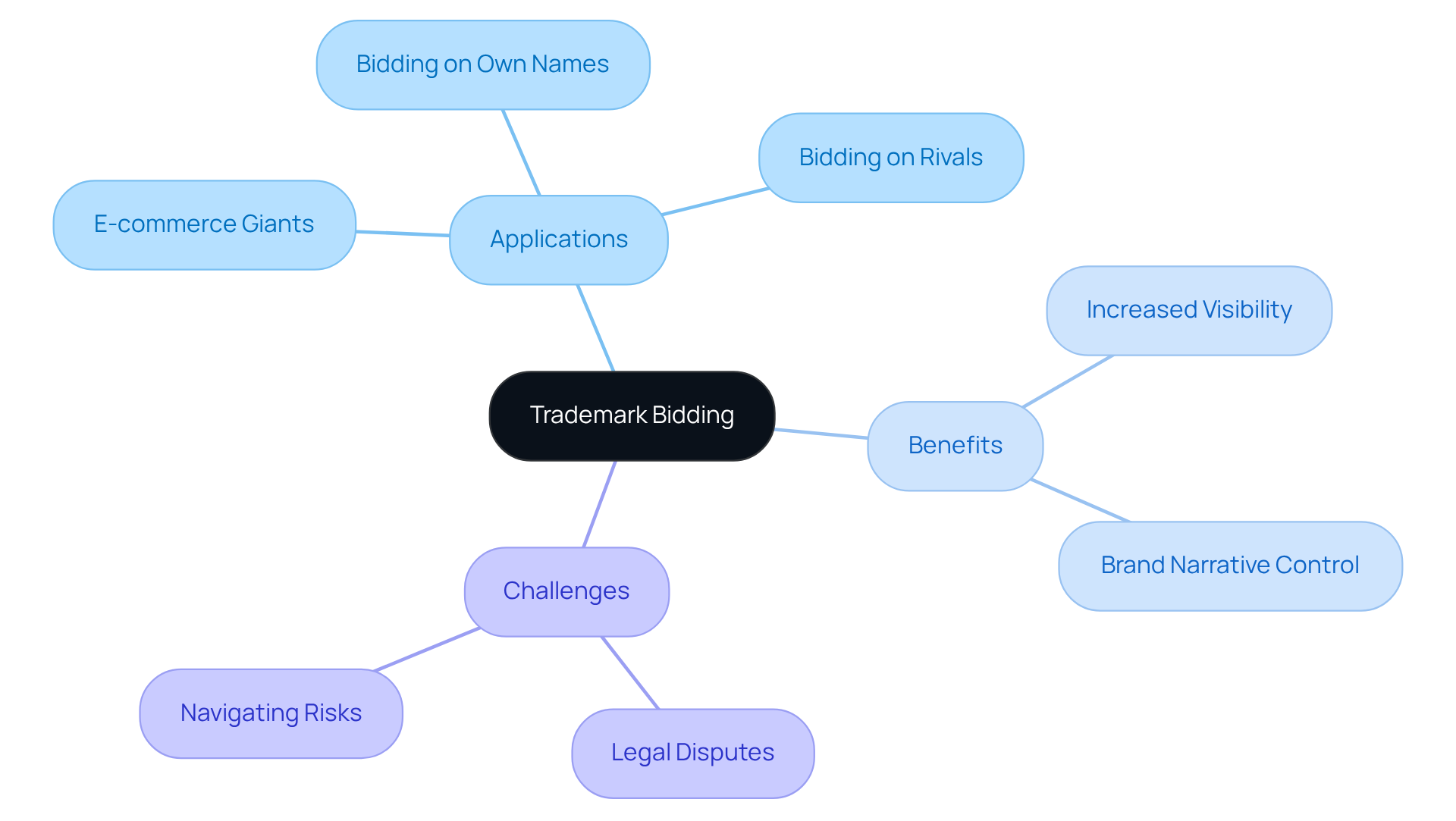
plays a crucial role in various industries, effectively capturing attention through its strategic applications. , for instance, often bid on their own company names to dominate search results, effectively blocking competitors from siphoning off their traffic. Furthermore, companies like Amazon and eBay have been known to bid on rival names, drawing in users searching for specific products. These tactics not only but also empower brands to shape the narrative around their offerings.
However, the practice of brand auctioning is not without its pitfalls. can arise, as evidenced by instances where for infringing on brand rights. This highlights the necessity of navigating , balancing the pursuit of competitive advantage with potential legal ramifications. As businesses engage in this complex landscape, they must remain vigilant and informed, ensuring their strategies align with both market goals and legal standards.
Conclusion
Trademark bidding stands as a crucial strategy in digital marketing, empowering businesses to capitalize on their brand names and those of competitors to boost visibility and drive traffic. This method not only elevates click-through rates but also acts as a defensive tactic against rivals targeting similar keywords. By grasping the nuances of trademark bidding, marketers can adeptly navigate the complexities of online advertising, ensuring their brands consistently lead consumer searches.
Key insights throughout this discussion emphasize the necessity of:
- Selecting the right keywords
- Managing bids effectively
- Crafting compelling ad copy
The historical backdrop of trademark bidding, marked by significant legal rulings and the evolution of online advertising, highlights its importance in today’s competitive arena. Moreover, real-world examples demonstrate how companies leverage trademark bidding to dominate search results and shape consumer perceptions, all while addressing the legal challenges that may arise.
In summary, the strategic implementation of trademark bidding transcends mere marketing tactics; it is an essential element of a comprehensive digital strategy that can profoundly impact a brand's success. As the digital marketplace evolves, staying informed and skilled in utilizing trademark bidding will be vital for businesses striving to maintain their competitive edge. Embracing this approach not only enhances visibility but also strengthens a brand's position in an increasingly crowded online landscape.
Frequently Asked Questions
What is trademark bidding?
Trademark bidding, also known as label bidding, is a strategic approach that targets paid advertisements to keywords that include a company's trademarked terms, enhancing visibility in search engine results.
What is the primary objective of trademark bidding?
The primary objective of trademark bidding is to capture traffic from users actively searching for specific brands, thereby increasing the likelihood of conversions.
What are some key terms associated with trademark bidding?
Key terms associated with trademark bidding include PPC (pay-per-click), CPC (cost-per-click), and brand protection, which help in understanding how this strategy operates in digital marketing.
How effective is trademark bidding compared to generic terms?
Branded keywords typically yield a click-through rate (CTR) exceeding 30%, while generic terms have a CTR of only 3-5%, highlighting the effectiveness of focusing on brand-specific queries.
What role does trademark bidding play in digital marketing strategies?
Trademark bidding is vital for enhancing visibility, protecting market share from competitors, and solidifying a company's online presence in a competitive digital landscape.
Why is it important for marketers to evaluate search terms regularly?
Regular evaluation of search terms allows marketers to incorporate negative keywords to filter out irrelevant product combinations and refine their bidding strategies.
What are the legal considerations regarding trademark bidding?
While Google allows bidding on trademarked terms, it restricts their use in ad copy without explicit permission, making legal compliance crucial for marketers.
What risks are associated with competitor bids in trademark bidding?
Risks include CPC spikes and customer confusion due to misleading ads, which marketers must be vigilant about when engaging in trademark bidding.
How can companies benefit from participating in trademark bidding?
Companies can reclaim top positions in search results, enhance visibility, attract high-intent traffic, and connect more effectively with potential clients through tailored messaging.
List of Sources
- Define Trademark Bidding: Key Concepts and Terminology
- clickpatrol.com (https://clickpatrol.com/trademark-bidding-in-ppc-should-you-protect-or-co)
- brandverity.com (https://brandverity.com/blog/what-is-trademark-bidding-and-why-does-it-matter)
- digitalnomadshq.com.au (https://digitalnomadshq.com.au/blog/brand-bidding)
- entrepreneurhandbook.co.uk (https://entrepreneurhandbook.co.uk/what-is-trademark-bidding-and-why-every-uk-startup-should-care)
- adthena.com (https://adthena.com/resources/blog/complete-guide-to-ppc-brand-bidding)
- Contextualize Trademark Bidding: Importance in Digital Marketing
- imarkinfotech.com (https://imarkinfotech.com/brand-keywords-in-2025-how-to-bid-effectively)
- frizbit.com (https://frizbit.com/blog/digital-marketing-updates-news-from-august-2025)
- northpennnow.com (https://northpennnow.com/news/2025/oct/29/how-digital-marketing-will-change-in-2025-a-practical-look)
- searchenginejournal.com (https://searchenginejournal.com/should-you-be-bidding-on-your-brand-keywords/531890)
- marketingdigest.com (https://marketingdigest.com/study-showcases-adverse-impact-of-trademark-bidding-on-brands-online)
- Trace the Origins of Trademark Bidding: Historical Development
- iipla.org (https://iipla.org/supreme-court-passes-google-trademark)
- goodwinlaw.com (https://goodwinlaw.com/en/insights/publications/2024/11/alerts-technology-second-circuit-sees-eye-to-eye)
- trademarkraft.com (https://trademarkraft.com/blogs/news/75-statistics-on-registered-trademarks-in-the-united-states-and-the-state-of-the-u-s-trademark-register)
- tcpaworld.com (https://tcpaworld.com/2024/10/11/bidding-on-competitors-keywords-court-ruling-helps-marketers-see-more-clearly)
- Identify Key Characteristics of Trademark Bidding: Components and Mechanisms
- searchengineland.com (https://searchengineland.com/best-strategies-to-fight-trademark-abuse-in-paid-search-459548)
- legalblogs.wolterskluwer.com (https://legalblogs.wolterskluwer.com/trademark-blog/trademark-news-what-you-might-have-missed-in-june-2025)
- affiversemedia.com (https://affiversemedia.com/checklist-how-to-detect-and-prevent-brand-bidding-in-ppc)
- growleads.io (https://growleads.io/blog/how-to-master-safe-brand-bidding-in-google-ads-a-legal-first-approach)
- almcorp.com (https://almcorp.com/blog/digital-marketing-news-december-11-20-2025)
- Examine Examples of Trademark Bidding: Real-World Applications
- businessoffashion.com (https://businessoffashion.com/news/marketing-pr/online-marketing-costs-jump-in-bidding-war-with-temu-and-shein)
- ipwatchdog.com (https://ipwatchdog.com/2025/12/24/three-trademark-cases-that-mattered-2025-watch-next-year)
- lawyer-monthly.com (https://lawyer-monthly.com/2025/12/x-sues-block-startup-revive-twitter-trademark)
- usatoday.com (https://usatoday.com/story/tech/news/2025/12/16/elon-musk-x-sues-startup-twitter-trademark-cancellation/87798842007)
- sternekessler.com (https://sternekessler.com/news-insights/news/the-top-trademark-decisions-of-2025)