
Introduction
User-Generated Content (UGC) is revolutionizing the marketing landscape, signaling a crucial shift towards authenticity and consumer trust. As brands strive to forge deeper connections with their audiences, leveraging the power of UGC presents a remarkable opportunity to boost engagement and elevate conversion rates. Yet, the complexities of creating and managing UGC can be daunting.
How can brands effectively harness this resource while ensuring quality and consistency? This guide explores the essential steps and best practices for mastering UGC content, empowering brands to excel in an increasingly competitive market.
Define User-Generated Content (UGC) and Its Importance for Brands
encompasses any content-images, videos, reviews, and testimonials-created by consumers rather than companies. This type of material is increasingly essential for businesses, as it cultivates authenticity and trust among potential customers. , showcasing real experiences with products or services, which can heavily influence purchasing decisions. In fact, statistics reveal that more than professionally crafted content, underscoring UGC's critical role in establishing trust.
Brands that effectively harness UGC can significantly enhance engagement, boost conversion rates, and cultivate a loyal community around their offerings. For example, campaigns like Starbucks' #RedCupContest not only promote products but also encourage customers to share their experiences, creating a virtuous cycle of engagement and trust. Furthermore, UGC can lead to a and an impressive 161% increase when featured on e-commerce product pages, highlighting its indispensable role in contemporary marketing strategies.
Additionally, in their marketing efforts, illustrating its profound impact on consumer behavior. As businesses look to strengthen their marketing strategies, leveraging UGC is not just beneficial-it's essential.

Outline Steps to Start Creating UGC Content
To effectively create , follow these essential steps:
- Identify Your Audience: Understanding your target audience is crucial. What resonates with them? Utilize surveys and analyze existing customer data to . Remember, UGC is nearly , making audience understanding vital.
- : Develop a unique and memorable hashtag that encourages users to share their content related to your brand. This facilitates effective tracking and curation of UGC.
- Launch a Campaign: Initiate a campaign inviting users to generate content. This could be a contest, challenge, or a simple call to action encouraging customers to share their experiences with your products or services. As Roshni Wijayasinha suggests, contests and challenges can incentivize customers in creating , fostering lasting engagement.
- Provide Clear Guidelines: Offer specific instructions on the type of content you seek, including themes, formats, and quality standards. Clear guidelines ensure submissions align with your organization's vision.
- : Actively interact with users participating in your campaign. Reply to their posts, share their content, and express gratitude for their contributions. This fosters a sense of community. Engaging with your audience is crucial; 84% of consumers trust companies more when they focus on creating in their marketing.
- : Regularly review the content shared under your branded hashtag. Curate the best submissions to showcase on your official channels, ensuring you have permission to use them. This not only highlights customer engagement but also builds trust and authenticity. Projections indicate that over 40% of major companies will focus on by 2031, underscoring UGC's vital role in future marketing efforts.
By implementing these steps, companies can effectively harness the power of UGC to enhance engagement, drive participation, and foster deeper connections with their audience.

Implement Best Practices for Collaborating with UGC Creators
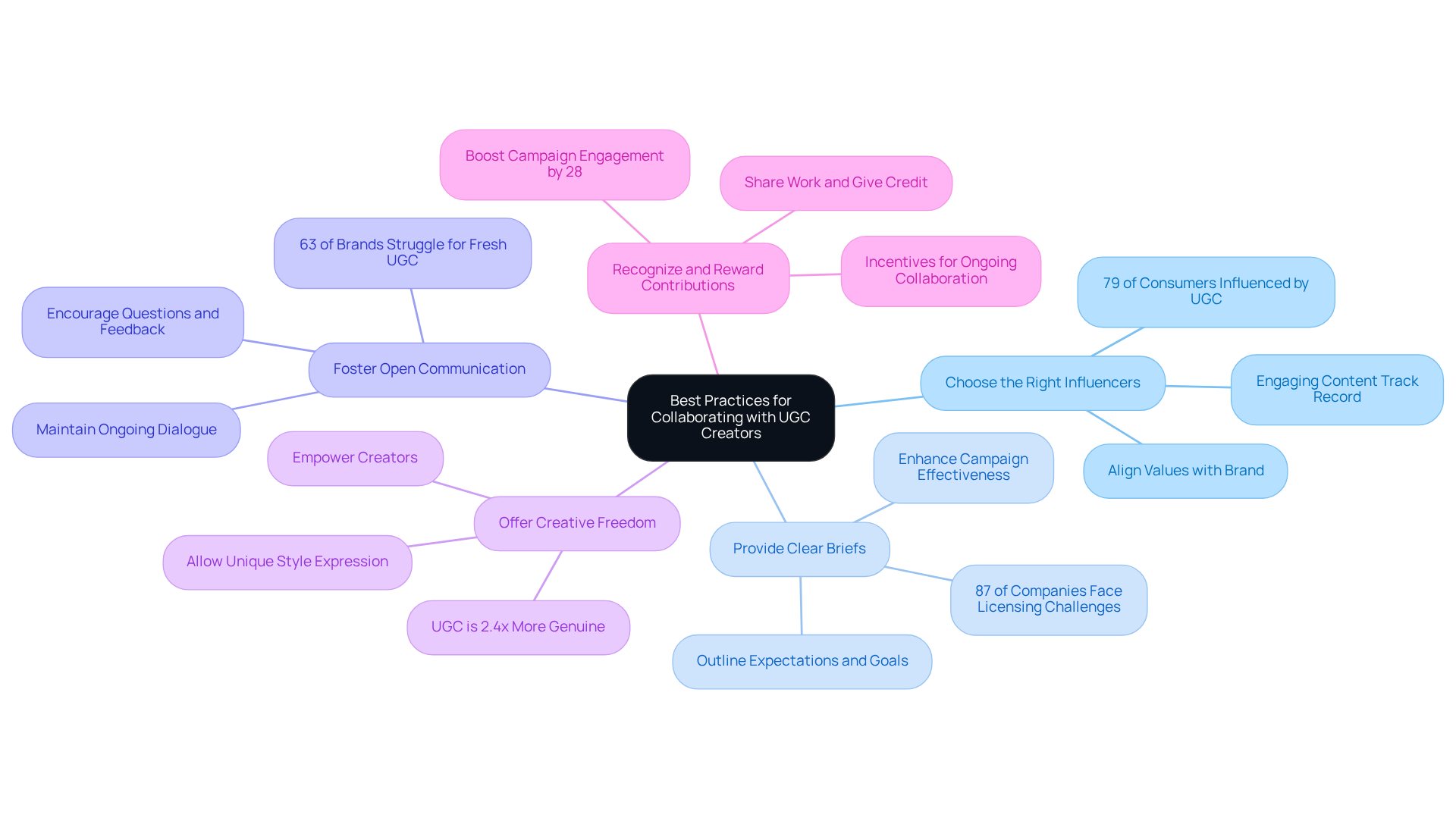
To effectively collaborate with , consider these best practices:
- Choose the Right Influencers: Selecting individuals whose values align with your brand is crucial. Research shows that . Therefore, it’s essential to partner with creators who authentically connect with your target audience and have a proven track record of producing engaging content.
- Provide Clear Briefs: When reaching out to creators, offer a detailed brief that outlines your expectations, , and specific guidelines. Clear communication helps creators produce content, including , that aligns with your company’s vision, ultimately enhancing campaign effectiveness. Notably, , underscoring the need for clear agreements.
- : Keep an open line of communication with contributors throughout the collaboration. Encouraging them to ask questions and provide feedback can lead to better content outcomes. In fact, , highlighting the importance of ongoing dialogue.
- Offer : While guidelines are important, it’s vital to allow creators the freedom to express their unique style. Authenticity is key in , and creators should feel empowered to present your product in a way that feels natural to them. UGC is than brand content, reinforcing the value of this approach.
- : Acknowledge the efforts of creators by sharing their work on your platforms and giving them credit. Consider offering incentives, such as discounts or exclusive access to products, to encourage ongoing collaboration. Recognizing creators can boost campaign engagement by 28%, strengthening relationships and inspiring them to continue producing high-quality content.
Troubleshoot Common Challenges in UGC Content Creation
presents companies with a range of challenges that can impact their effectiveness. Consider these common issues and strategies to tackle them:
- Quality Control: . To combat this, establish clear submission guidelines and implement a review process to vet content before it goes live. This ensures that only are shared, enhancing your reputation and credibility. Research shows that companies utilizing UGC experience than campaigns without it, underscoring the importance of maintaining quality.
- Inconsistent Messaging: Variability in tone and style can lead to mixed messaging that confuses your identity. To maintain consistency, provide contributors with a that outlines your voice, key messages, and visual elements. This alignment helps ensure that fits seamlessly into your overall branding strategy.
- : Securing permission for using UGC is crucial. Obtain explicit consent from creators through a straightforward agreement that clarifies usage rights and responsibilities. This not only protects your reputation but also fosters trust with contributors. Remember, securing explicit permission is essential to avoid potential legal complications.
- : If your UGC campaign isn’t generating the expected engagement, it’s time to reassess your promotional strategies. Actively promote the campaign across all channels and engage with participants to encourage more contributions. Highlighting user submissions can significantly boost visibility and interaction. can drive additional traffic and sales to your website, making effective promotion vital.
- : UGC can attract negative comments or reviews. Address this proactively by responding professionally and constructively. Show that you value customer feedback and are committed to enhancing their experience. This approach can turn negative interactions into opportunities for improvement. Notably, UGC-based ads achieve and a , illustrating the potential benefits of engaging positively with your audience.
By implementing these strategies, brands can effectively navigate the challenges associated with , ensuring that the content is high-quality and engaging for their audience.

Conclusion
User-Generated Content (UGC) stands as a cornerstone of modern marketing, fundamentally reshaping how brands connect with their audiences. By harnessing authentic content created by consumers, brands not only build trust but also enhance engagement and drive conversions. The significance of UGC is profound; it acts as a compelling form of social proof that resonates deeply with potential customers, significantly influencing their purchasing decisions.
This guide outlines essential steps for creating effective UGC, including:
- Identifying your target audience
- Launching engaging campaigns
- Nurturing strong relationships with content creators
Best practices such as:
- Providing clear briefs
- Maintaining open communication
- Recognizing contributors
are crucial for a successful UGC strategy. Moreover, addressing common challenges like quality control and inconsistent messaging is vital for preserving brand integrity and maximizing the impact of UGC.
Incorporating UGC into marketing strategies not only boosts brand authenticity but also fosters a loyal community that actively engages in the brand narrative. As businesses adapt to evolving consumer behaviors, embracing UGC will be essential for achieving long-term success. Brands must take action now by implementing these strategies and cultivating a culture that values customer contributions, ultimately leading to a more engaged and trusting customer base.
Frequently Asked Questions
What is User-Generated Content (UGC)?
User-Generated Content (UGC) refers to any content, such as images, videos, reviews, and testimonials, created by consumers rather than companies.
Why is UGC important for brands?
UGC is important for brands because it cultivates authenticity and trust among potential customers, serving as social proof that showcases real experiences with products or services.
How does UGC influence purchasing decisions?
UGC influences purchasing decisions significantly, as statistics show that 70% of buyers trust reviews and images from fellow consumers more than professionally crafted content.
What are the benefits of harnessing UGC for brands?
Brands that effectively harness UGC can enhance engagement, boost conversion rates, and cultivate a loyal community around their offerings.
Can you provide an example of a successful UGC campaign?
An example of a successful UGC campaign is Starbucks' #RedCupContest, which promotes products and encourages customers to share their experiences, creating a cycle of engagement and trust.
What impact does UGC have on web conversions?
UGC can lead to a 29% increase in web conversions and a 161% increase when featured on e-commerce product pages.
How do consumers feel about brands that use UGC in their marketing?
82% of consumers are more inclined to purchase from brands that incorporate UGC in their marketing efforts, highlighting its impact on consumer behavior.
Is leveraging UGC beneficial for businesses?
Yes, leveraging UGC is not just beneficial for businesses; it is essential for strengthening their marketing strategies.
List of Sources
- Define User-Generated Content (UGC) and Its Importance for Brands
- socialpilot.co (https://socialpilot.co/blog/user-generated-content-ugc)
- 44 UGC Statistics Every Marketer Must Know (2026) (https://influee.co/blog/ugc-statistics)
- meetanshi.com (https://meetanshi.com/blog/user-generated-content-statistics)
- User-Generated Content(UGC) Stats And Facts - 2026 (https://taggbox.com/blog/user-generated-content-facts-and-stats)
- 24 Key User-Generated Content (UGC) Statistics for 2026 (https://backlinko.com/ugc-statistics)
- Outline Steps to Start Creating UGC Content
- inbeat.agency (https://inbeat.agency/blog/ugc-statistics)
- 55+ UGC Statistics (2026): Consumer Trust, Conversions, and Market Data - Billo (https://billo.app/blog/ugc-statistics)
- forbes.com (https://forbes.com/councils/forbescommunicationscouncil/2025/01/30/18-tips-for-incorporating-user-generated-content-in-your-marketing)
- 24 Key User-Generated Content (UGC) Statistics for 2026 (https://backlinko.com/ugc-statistics)
- 70+ UGC Statistics to Shape Your 2026 Marketing Strategy (https://showca.se/post/ugc-statistics)
- Implement Best Practices for Collaborating with UGC Creators
- 44 UGC Statistics Every Marketer Must Know (2026) (https://influee.co/blog/ugc-statistics)
- Proven Brand Outreach Strategies for Influencers & UGC Creators | Popfly Insights (https://popfly.com/post/how-to-reach-out-to-brands-as-influencer)
- User-Generated Content (UGC) Marketing Guide 2026 (https://spintadigital.com/blog/user-generated-content-ugc-marketing-guide-2026)
- 100+ UGC statistics for 2026 (https://whop.com/blog/ugc-statistics)
- User Generated Content Statistics: UGC Stats Compilation - Flowbox (https://getflowbox.com/blog/user-generated-content-statistics)
- Troubleshoot Common Challenges in UGC Content Creation
- inbeat.agency (https://inbeat.agency/blog/ugc-statistics)
- User Generated Content Statistics: UGC Stats Compilation - Flowbox (https://getflowbox.com/blog/user-generated-content-statistics)
- User-Generated Content: UGC Types, Benefits & Best Practices (https://business.com/articles/user-generated-content)
- 55+ UGC Statistics (2026): Consumer Trust, Conversions, and Market Data - Billo (https://billo.app/blog/ugc-statistics)
- 37 Latest User-Generated Content Statistics (New Report) (https://wiserreview.com/blog/user-generated-content-statistics)